
Monologue from The Merchant of Venice by William Shakespeare
Gratiano: “Let me play the fool”
Antonio, the merchant, is melancholy and can't say why. His friend Gratiano tells him what he thinks of men who keep a straight face to seem wise.
- 1 min 30 sec
- Comic
- Man, 20 to 35
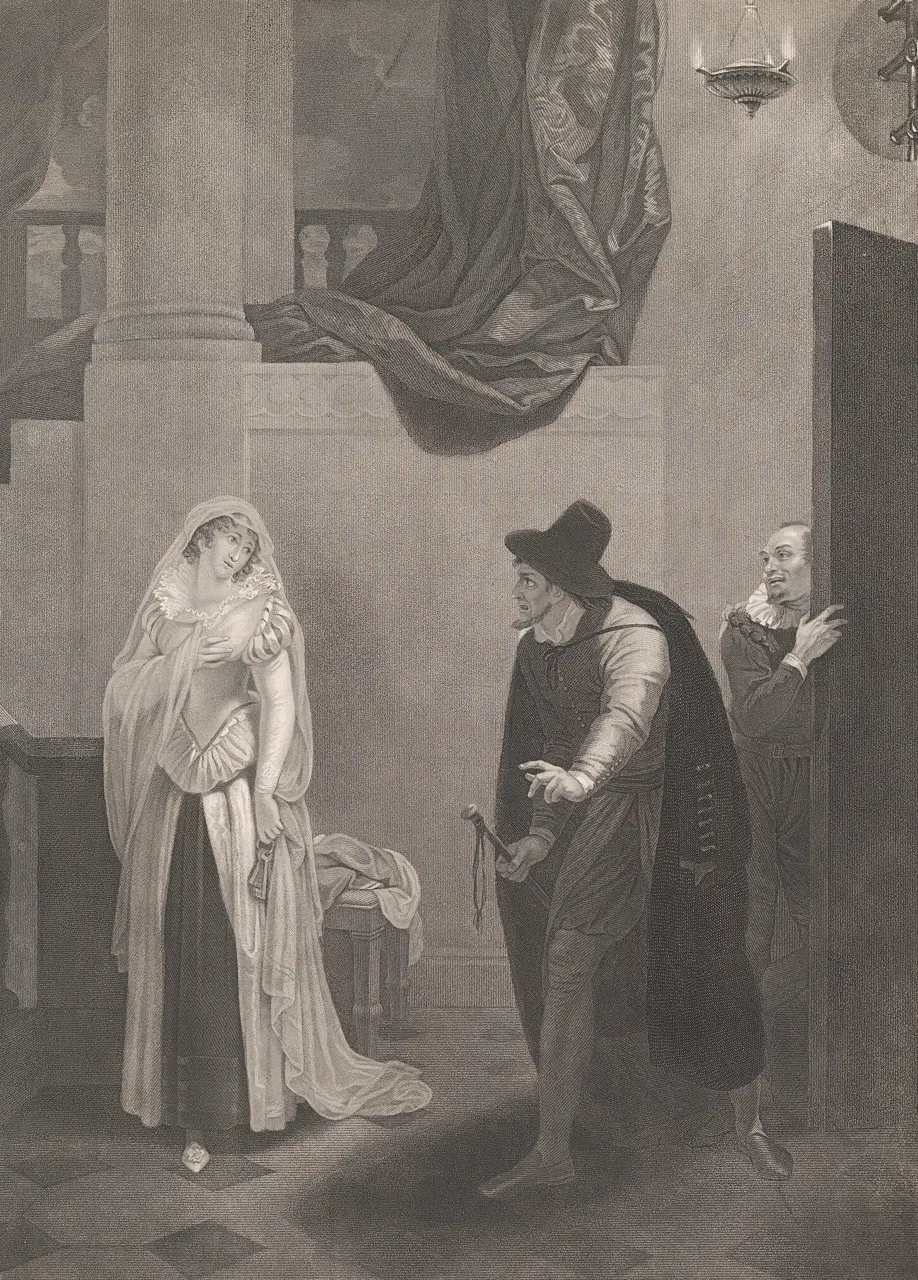

Act 1, Scene 1Venice. A street
Let me play the fool:
With mirth and laughter let old wrinkles come,
And let my liver rather heat with wine
Than my heart cool with mortifying groans.
Why should a man, whose blood is warm within,
Sit like his grandsire cut in alabaster?
Sleep when he wakes and creep into the jaundice
By being peevish? I tell thee what, Antonio--
I love thee, and it is my love that speaks--
There are a sort of men whose visages
Do cream and mantle like a standing pond,
And do a wilful stillness entertain,
With purpose to be dress'd in an opinion
Of wisdom, gravity, profound conceit,
As who should say 'I am Sir Oracle,
And when I ope my lips let no dog bark!'
O my Antonio, I do know of these
That therefore only are reputed wise
For saying nothing; when, I am very sure,
If they should speak, would almost damn those ears,
Which, hearing them, would call their brothers fools.
I'll tell thee more of this another time:
But fish not, with this melancholy bait,
For this fool gudgeon, this opinion.
Come, good Lorenzo. Fare ye well awhile:
I'll end my exhortation after dinner.
More monologues for men
 Hamlet: “O, what a rogue and peasant slave am I!”Hamlet · 3 min 15 sec · Dramatic
- Hamlet: “To be, or not to be”Hamlet · 2 min · Dramatic
 Romeo: “But, soft! what light through yonder window breaks?”Romeo and Juliet · 1 min 30 sec · Dramatic
- Mercutio: “O, then, I see Queen Mab hath been with you”Romeo and Juliet · 2 min 15 sec · Comic