
 The Bridal Crownby August StrindbergA girl hides her baby so that she can be married wearing the bride's crown, and pays for it.
 Creditorsby August StrindbergA stranger befriends a young artist and turns him against his wife, who was once the stranger's.
 The Dance of Death, Part Iby August StrindbergA captain and his wife, twenty-five years into a bitter marriage, draw a visiting cousin into their war.
 The Dance of Death, Part IIby August StrindbergThe Captain sets out to take everything his wife's cousin has, while their children fall in love.

Scene 1
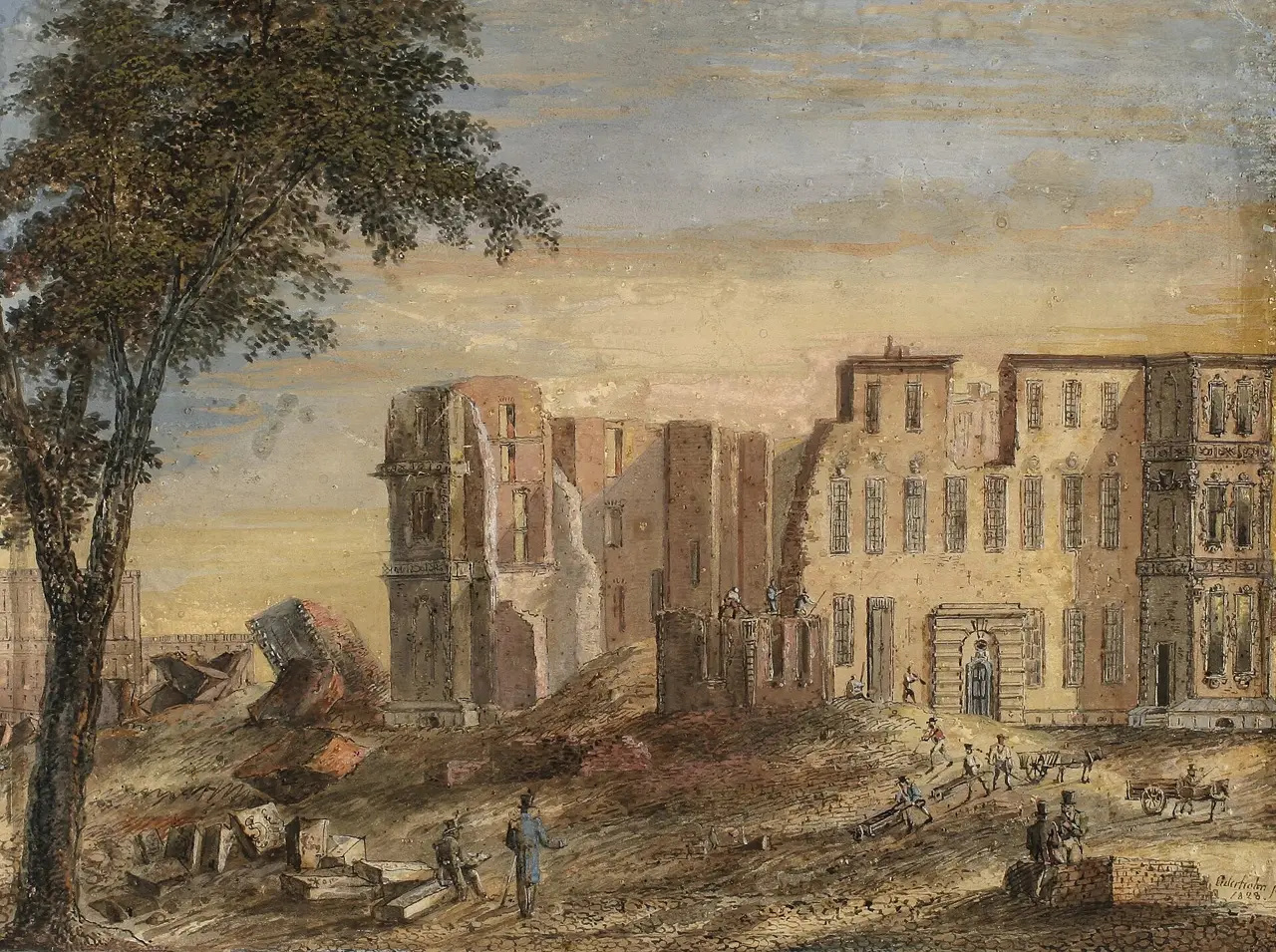
The left half of the background is occupied by the empty shell of a gutted one-story brick house. In places the paper remains on the walls, and a couple of brick stoves are still standing.
Beyond the walls can be seen an orchard in bloom.
At the right is the front of a small inn, the sign of which is a wreath hanging from a pole. Tables and benches are placed outside.
At the left, in the foreground, there is a pile of furniture and household utensils that have been saved from the fire.
SJÖBLOM, the painter, is painting the window-frames of the inn. He listens closely to everything that is said.
ANDERSON, the mason, is digging in the ruins.
The DETECTIVE enters.
Is the fire entirely out?
There isn't any smoke, at least.
Then I want to ask a few more questions. [Pause] You were born in this quarter, were you not?
Oh, yes. It's seventy-five years now I've lived on this street. I wasn't born when they built this house here, but my father helped to put in the brick.
Then you know everybody around here?
We all know each other. There is something particular about this street here. Those that get in here once, never get away from it. That is, they move away, but they always come back again sooner or later, until at last they are carried out to the cemetery, which is way out there at the end of the street.
You have got a special name for this quarter, haven't you?
We call it the Bog. And all of us hate each other, and suspect each other, and blackguard each other, and torment each other [Pause.
The fire started at half past ten in the evening, I hear--was the front door locked at that time?
Well, that's more than I know, for I live in the house next to this.
Where did the fire start?
Up in the attic, where the student was living.
Was he at home?
No, he was at the theatre.
Had he gone away and left the lamp burning, then?
Well, that's more than I know. [Pause.
Is the student any relation to the owner of the house?
No, I don't think so.--Say, you haven't got anything to do with the police, have you?
How did it happen that the inn didn't catch fire?
They slung a tarpaulin over it and turned on the hose.
Queer that the apple-trees were not destroyed by the heat.
They had just budded, and it had been raining during the day, but the heat made the buds go into bloom in the middle of the night--a little too early, I guess, for there is frost coming, and then the gardener will catch it.
What kind of fellow is the gardener?
His name is Gustafson
Yes, but what sort of a man is he?
See here: I am seventy-five--and for that reason I don't know anything bad about Gustafson; and if I knew I wouldn't be telling it! [Pause.
And the owner of the house is named Walström, a dyer, about sixty years old, married
Why don't you go on yourself? You can't pump me any longer.
Is it thought that the fire was started on purpose?
That's what people think of all fires.
And whom do they suspect?
The insurance company always suspects anybody who has an interest in the fire--and for that reason I have never had anything insured.
Did you find anything while you were digging?
Mostly one finds all the door-keys, because people haven't got time to take them along when the house is on fire--except now and then, of course, when they have been taken away
There was no electric light in the house?
Not in an old house like this, and that's a good thing, for then they can't put the blame on crossed wires.
Put the blame?--A good thing?--Listen
Oh, you're going to get me in a trap? Don't you do it, for then I take it all back.
Take back? You can't!
Can't I?
No!
Yes! For there was no witness present.
No?
Naw!
The DETECTIVE coughs. The WITNESS comes in from the left.
Here's one witness.
You're a sly one!
Oh, there are people who know how to use their brains without being seventy-five. [To the WITNESS] Now we'll continue with the gardener.
They go out to the left.
There I put my foot in it, I guess. But that's what happens when you get to talking.
MRS, ANDERSON enters with her husband's lunch in a bundle.
It's good you came.
Now we'll have lunch and be good--you might well be hungry after all this fuss--I wonder if Gustafson can pull through--he'd just got done with his hotbeds and was about to start digging in the open--why don't you eat?--and there's Sjöblom already at work with his putty--just think of it, that Mrs. Westerlund got off as well as she did--morning, Sjöblom, now you've got work, haven't you?
MRS, WESTERLUND comes in.
Morning, morning, Mrs. Westerlund--you got out of this fine, I must say, and then
I wonder who's going to pay me for all I am losing to-day, when there's a big funeral on at the cemetery, which always makes it a good day for me, and just when I've had to put away all my bottles and glassware
Who's that they're burying to-day? I see such a lot of people going out that way--and then, of course, they've come to see where the fire was, too.
I don't think they're burying anybody, but I've heard they're going to put up a monument over the bishop--worst of it is that the stone-cutter's daughter was going to get married to the gardener's son--him, you know, who's in a store down-town--and now the gardener has lost all he had--isn't that his furniture standing over there?
I guess that's some of the dyer's, too, seeing as it came out helter-skelter in a jiffy--and where's the dyer now?
He's down at the police station testifying.
Hm-hm!--Yes, yes!--And there's my cousin now--him what drives the hearse--he's always thirsty on his way back.
[Enters] How do, Malvina! So you've gone and started a little job of arson out here during the night, have you? Looks pretty, doesn't it. Would have been better to get a new shanty instead, I guess.
Oh, mercy me! But whom have you been taking out now?
Can't remember what his name was--only one carriage along, and no flowers on the coffin at all.
Sure and it wasn't any happy funeral, then! If you want anything to drink you'll have to go 'round to the kitchen, for I haven't got things going on this side yet, and, for that matter, Gustafson is coming here with a lot of wreaths--they've got something on out at the cemetery to-day.
Yes, they're going to put up a moniment to the bishop--'cause he wrote books, I guess, and collected all kinds of vermin--was a reg'lar vermin-hunter, they tell me.
What's that?
Oh, he had slabs of cork with pins on 'em, and a lot of flies--something beyond us here--but I guess that's the proper way--can I go out to the kitchen now?
Yes, if you use the back door, I think you can get something wet
But I want to have a word with the dyer before I drive off--I've got my horses over at the stone-cutter's, who's my second cousin, you know. Haven't got any use for him, as you know, too, but we're doing business together, he and I--that is, I put in a word for him with the heirs, and so he lets me put my horses into his yard--just let me know when the dyer shows up--luck, wasn't it, that he didn't have his works here, too
He goes out, passing around the inn.
MRS, WESTERLUND goes into the inn by the front door.
ANDERSON, who has finished eating, begins to dig again.
Do you find anything?
Nails and door-hinges--all the keys are hanging in a bunch over there by the front door.
Did they hang there before, or did you put them there?
No, they were hanging there when I got here.
That's queer--for then somebody must have locked all the doors and taken out the keys before it began burning! That's queer!
Yes, of course, it's a little queer, for in that way it was harder to get at the fire and save things. Yes--yes! [Pause.
I worked for the dyer's father forty years ago, I did, and I know the people, both the dyer himself and his brother what went off to America, though they say he's back now. The father, he was a real man, he was, but the boys were always a little so-so. Mrs. Westerlund over here, she used to take care of Rudolph, and the two brothers never could get along, but kept scrapping and fighting all the time.--I've seen a thing or two, I have--yes, there's a whole lot what has happened in that house, so I guess it was about time to get it smoked out.--Ugh, but that was a house! One went this way and another that, but back they had to come, and here they died and here they were born, and here they married and were divorced.--And Arvid, the brother what went off to America--him they thought dead for years, and at least he didn't take what was coming to him after his father, but now they say he's come back, though nobody has seen him--and there's such a lot of talking--Look, there's the dyer back from the police station!
He doesn't look happy exactly, but I suppose that's more than can be expected--Well, who's that student that lived in the attic? How does he hang together with the rest?
Well, that's more than I know. He had his board there, and read with the children.
And also with the lady of the house?
No-o, they played something what they called tennis, and quarrelled the rest of the time--yes, quarrelling and backbiting, that's what everybody is up to in this quarter.
Well, when they broke the student's door open they found hairpins on the floor--it had to come out, after all, even if the fire had to sweep over it first
I don't think it was the dyer that came, but our brother-in-law, Gustafson
He's always mad, and to-day I suppose he's worse than ever, and so he'll have to come and dun me for what I owe him, seeing what he has lost in the fire
Now you shut up!
[Enters with a basketful of funeral wreaths and other products of his trade] I wonder if I am going to sell anything to-day so there'll be enough for food after all this rumpus?
Didn't you carry any insurance?
Yes, I used to have insurance on the glass panes over my hotbeds, but this year I felt stingy, and so I put in oiled paper instead--gosh, that I could be such a darned fool!--[Scratching his head] I don't get paid for that, of course. And now I've got to cut and paste and oil six hundred paper panes. It's as I have always said: that I was the worst idiot among us seven children. Gee, what an ass I was--what a booby! And then I went and got drunk yesterday. Why in hell did I have to get drunk that day of all days--when I need all the brains I've got to-day? It was the stone-cutter who treated, because our children are going to get married to-night, but I should have said no. I didn't want to, but I'm a ninny who can't say no to anybody. And that's the way when they come and borrow money of me--I can't say no--darned fool that I am! And then I got in the way of that policeman, who snared me with all sorts of questions. I should have kept my mouth shut, like the painter over there, but I can't, and so I let out this, that, and the other thing, and he put it all down, and now I am called as a witness!
What was it you said?
I said I thought--that it looked funny to me--and that somebody must have started it.
Oh, that's what you said!
Yes, pitch into me--I've deserved it, goose that I am!
And who could have started it, do you think?--Don't mind the painter, and my old woman here never carries any tales.
Who started it? Why, the student, of course, as it started in his room.
No--under his room!
Under, you say? Then I have gone and done it!--Oh, I'll come to a bad end, I'm sure!--Under his room, you say--what could have been there--the kitchen?
No, a closet--see, over there! It was used by the cook.
Then it must have been her.
Yes, but don't you say so, as you don't know.
The stone-cutter had it in for the cook last night--I guess he must have known a whole lot
You shouldn't repeat what the stone-cutter says, for one who has served isn't to be trusted
Ash, that's so long ago, and the cook's a regular dragon, for that matter--she'd always haggle over the vegetables
There comes the dyer from the station now--you'd better quit!
The STRANGER enters, dressed in a frock coat and a high hat with mourning on it; he carries a stick.
It wasn't the dyer, but he looks a lot like him.
How much is one of those wreaths?
Fifty cents.
Oh, that's not much.
No, I am such a fool that I can't charge as I should.
[Looking around] Has there--been a fire--here?
Yes, last night.
Good God! [Pause] Who was the owner of the house?
Mr. Walström.
The dyer?
Yes, he used to be a dyer, all right. [Pause.
Where is he now?
He'll be here any moment.
Then I'll look around a bit--the wreath can lie here till I come back--I meant to go out to the cemetery later.
On account of the bishop's monument, I suppose?
What bishop?
Bishop Stecksen, don't you know--who belonged to the Academy.
Is he dead?
Oh, long ago!
I see!--Well, I'll leave the wreath for a while.
He goes out to the left, studying the ruins carefully as he passes by.
Perhaps he came on account of the insurance.
Not that one! Then he would have asked in a different way.
But he looked like the dyer just the same.
Only he was taller.
Now, I remember something--I should have a bridal bouquet ready for to-night, and I should go to my son's wedding, but I have no flowers, and my black coat has been burned. Wouldn't that make you--Mrs. Westerlund was to furnish the myrtle for the bride's crown, being her godmother--that's the myrtle she stole a shoot of from the dyer's cook, who got hers from the dyer's first wife--she who ran away--and I was to make a crown of it, and I've clean forgotten it--well, if I ain't the worst fool that ever walked the earth! [He opens the inn door] Mrs. Westerlund, can I have the myrtle now, and I'll do the job!--I say, can I have that myrtle! Wreath, too, you say--have you got enough for it?--No?--Well, then I'll let the whole wedding go hang, that's all there is to it!--Let them walk up to the minister's and have him splice them together, but it'll make the stone-cutter mad as a hornet.--What do you think I should do?--No, I can't--haven't slept a wink the whole night.--It's too much for a poor human creature.--Yes, I am a ninny, I know--go for me, will you!--Oh, there's the pot--thanks! And then I need scissors, which I haven't got--and wire--and string--where am I to get them from?--No, of course, nobody wants to break off his work for a thing like that.--I'm tired of the whole mess--work fifty years, and then have it go up in smoke! I haven't got strength to begin over again--and the way it comes all at once, blow on blow--did you ever! I'm going to run away from it! [He goes out.
WALSTRÖM. [Enters, evidently upset, badly dressed, his hands discoloured by the dyes] Is it all out now, Anderson?
Yes, now it's out.
Has anything been discovered?
That's a question! What's buried when it snows comes to light when it thaws!
What do you mean, Anderson?
If you dig deep enough you find things.
Have you found anything that can explain how the fire started?
Naw, nothing of that kind.
That means we are still under suspicion, all of us.
Not me, I guess.
Oh, yes, for you have been seen up in the attic at unusual hours.
Well, I can't always go at usual hours to look for my tools when I've left them behind. And I did leave my hammer behind when I fixed the stove in the student's room.
And the stone-cutter, the gardener, Mrs. Westerlund, even the painter over there--we are all of us under suspicion--the student, the cook, and myself more than the rest. Lucky it was that I had paid the insurance the day before, or I should have been stuck for good.--Think of it: the stone-cutter suspected of arson--he who's so afraid of doing anything wrong! He's so conscientious nowadays that if you ask him what time it is he won't swear to it, as his watch may be wrong. Of course, we all know he got two years, but he's reformed, and I'll swear now he's the straightest man in the quarter.
But the police suspect him because he went wrong once--and he ain't got his citizenship back yet.
Oh, there are so many ways of looking at a thing--so many ways, I tell you.--Well, Anderson, I guess you'd better quit for the day, seeing as you're going to the wedding to-night.
Yes, that wedding--There was somebody looking for you a while ago, and he said he would be back.
Who was it?
He didn't say.
Police, was it?
Naw, I don't think so.--There he is coming now, for that matter. [He goes out, together with his wife.
The STRANGER enters.
[Regards him with curiosity at first, then with horror; wants to run away, but cannot move] Arvid!
Rudolph!
So it's you!
Yes. [Pause.
You're not dead, then?
In a way, yes!--I have come back from America after thirty years--there was something that pulled at me-- I wanted to see my childhood's home once more--and I found those ruins! [Pause] It burned down last night?
Yes, you came just in time. [Pause.
[Dragging his words] That's the place--such a tiny place for such a lot of destinies! There's the dining-room with the frescoed walls: palms, and cypresses, and a temple beneath a rose-coloured sky--that's the way I dreamt the world would look the moment I got away from home. And the stove with its pale blossoms growing out of conches. And the chimney cupboard with its metal doors--I remember as a child, when we had just moved in, somebody had scratched his name on the metal, and then grandmother told us it was the name of a man who had killed himself in that very room. I quickly forgot all about it, but when I later married a niece of the same man, it seemed to me as if my destiny had been foretold on that plate of metal.--You don't believe in that kind of thing, do you?--However, you know how my marriage ended!
Yes, I've heard
And there's the nursery--yes!
Don't let us start digging in the ruins!
Why not? After the fire is out you can read things in the ashes. We used to do it as children, in the stove
Come and sit down at the table here!
What place is that? Oh, the tavern--"The Last Nail"--where the hearse-drivers used to stop, and where, once upon a time, condemned culprits were given a final glass before they were taken to the gallows--Who is keeping it?
Mrs. Westerlund, who used to be my nurse.
Mrs. Westerlund--I remember her. It is as if the bench sank from under me, and I was sent tumbling through the past, sixty whole years, down into my childhood. I breathe the nursery air and feel it pressing on my chest. You older ones weighed me down, and you made so much noise that I was always kept in a state of fright. My fears made me hide in the garden--then I was dragged forward and given a spanking--always spankings--but I never knew why, and I don't know it yet. And yet she was my mother
Please!
Yes, you were the favourite, and as such you always had her support--Then we got a stepmother. Her father was an undertaker's assistant, and for years we had been seeing him drive by with funerals. At last he came to know us so well by sight that he used to nod and grin at us, as if he meant to say: "Oh, I'll come for you sooner or later!" And then he came right into our house one day, and had to be called grandfather--when our father took his daughter for his second wife.
There was nothing strange in that.
No, but somehow, as our own destinies, and those of other people, were being woven into one web
Oh, that's what happens everywhere
Exactly! It's the same everywhere. In your youth you see the web set up. Parents, relatives, comrades, acquaintances, servants form the warp. Later on in life the weft becomes visible. And then the shuttle of fate runs back and forth with the thread--sometimes it breaks, but is tied up again, and it goes on as before. The reed clicks, the thread is packed together into curlicues, and one day the web lies ready. In old age, when the eye has learned how to see, you discover that those curlicues form a pattern, a monogram, an ornament, a hieroglyph, which only then can be interpreted: that's life! The world-weaver has woven it! [Pause; he rises] Over there, in that scrap-heap, I notice the family album. [He walks a few steps to the right and picks up a photograph album] That's the book of our family fate. Grandfather and grandmother, father and mother, brothers and sisters, relatives, acquaintances--or so-called "friends"--schoolmates, servants, godparents. And, strange to say, wherever I have gone, in America or Australia, to Hongkong or the Congo, everywhere I found at least one countryman, and as we began to dig it always came out that this man knew my family, or at least some godfather or maid servant--that, in a word, we had some common acquaintances. I even found a relative in the island of Formosa
What has put those ideas into your head?
The fact that life, however it shaped itself--I have been rich and poor, exalted and humbled; I have suffered a shipwreck and passed through an earthquake--but, however life shaped itself, I always became aware of connections and repetitions. I saw in one situation the result of another, earlier one. On meeting this person I was reminded of that one whom I had met in the past. There have been incidents in my life that have come back time and again, so that I have been forced to say to myself: this I have been through before. And I have met with occurrences that seemed to me absolutely inevitable, or predestined.
What have you done during all these years?
Everything! I have beheld life from every quarter, from every standpoint, from above and from below, and always it has seemed to me like a scene staged for my particular benefit. And in that way I have at last become reconciled to a part of the past, and I have come to excuse not only my own but also other people's so-called "faults." You and I, for instance, have had a few bones to pick with each other
RUDOLPH recoils with a darkening face.
Don't get scared now
I never get scared!
You are just the same as ever.
And so are you!
Am I? That's interesting!--Yes, you are still living in that delusion about your own bravery, and I remember exactly how this false idea became fixed in your mind. We were learning to swim, and one day you told how you had dived into the water, and then mother said: "Yes, Rudolph, he has courage!" That was meant for me--for me whom you had stripped of all courage and self-assurance. But then came the day when you had stolen some apples, and you were too cowardly to own up to it, and so you put it on me.
Haven't you forgotten that yet?
I haven't forgotten, but I have forgiven.--From here, where I am sitting, I can see that very tree, and that's what brought it into my mind. It's over there, you see, and it bears golden pippins.--If you look, you'll see that one of its biggest branches has been sawed off. For it so happened that I didn't get angry with you on account of my unjust punishment, but my anger turned against the tree. And two years later that big branch was all dried up and had to be sawed off. It made me think of the fig-tree that was cursed by the Saviour, but I was not led into any presumptuous conclusions.--However, I still know all those trees by heart, and once, when I had the yellow fever in Jamaica, I counted them over, every one. Most of them are still there, I see. There's the snow-apple which has red-striped fruit--a chaffinch used to nest in it. There's the melon-apple, standing right in front of the garret where I used to study for technological examinations; there's the spitzenburg, and the late astrachan; and the pear-tree that used to look like a poplar in miniature; and the one with pears that could only be used for preserves--they never ripened, and we despised them, but mother treasured them above all the rest; and in that tree there used to be a wryneck that was always twisting its head around and making a nasty cry--That was fifty years ago!
[Irately] What are you driving at?
Just as touchy and ill-tempered as ever! It's interesting.--There was no special purpose back of my chatter--my memories insist on pushing forward--I remember that the garden was rented to somebody else once, but we had the right to play in it. To me it seemed as if we had been driven out of paradise--and the tempter was standing behind every tree. In the fall, when the ground was strewn with ripe apples, I fell under a temptation that had become irresistible
You stole, too?
Of course I did, but I didn't put it off on you!--When I was forty I leased a lemon grove in one of the Southern States, and--well, there were thieves after the trees every night. I couldn't sleep, I lost flesh, I got sick. And then I thought of--poor Gustafson here!
He's still living.
Perhaps he, too, stole apples in his childhood?
Probably.
Why are your hands so black?
Because I handle dyed stuffs all the time.--Did you have anything else in mind?
What could that have been?
That my hands were not clean.
Fudge!
Perhaps you are thinking of your inheritance?
Just as mean as ever! Exactly as you were when eight years old!
And you are just as heedless, and philosophical, and silly!
It's a curious thing--but I wonder how many times before we have said just what we are saying now? [Pause] I am looking at your album here--our sisters and brothers--five dead!
Yes.
And our schoolmates?
Some taken and some left behind.
I met one of them in South Carolina--Axel Ericson--do you remember him?
I do.
One whole night, while we were on a train together, he kept telling me how our highly respectable and respected family consisted of nothing but rascals; that it had made its money by smuggling--you know, the toll-gate was right here; and that this house had been built with double walls for the hiding of contraband. Don't you see that the walls are double?
[Crushed] So that's the reason why we had closets everywhere?
The father of that fellow, Ericson, had been in the custom-house service and knew our father, and the son told me a lot of inside stories that turned my whole world of imagined conditions topsyturvy.
You gave him a licking, I suppose?
Why should I lick him?--However, my hair turned grey that night, and I had to edit my entire life over again. You know how we used to live in an atmosphere of mutual admiration; how we regarded our family as better than all others, and how, in particular, our parents were looked up to with almost religious veneration. And then I had to paint new faces on them, strip them, drag them down, eliminate them. It was dreadful! Then the ghosts began to walk. The pieces of those smashed figures would come together again, but not properly, and the result would be a regular wax cabinet of monsters. All those grey-haired gentlemen whom we called uncles, and who came to our house to play cards and eat cold suppers, they were smugglers, and some of them had been in the pillory--Did you know that?
[Completely overwhelmed] No.
The dye works were merely a hiding-place for smuggled yarn, which was dyed in order to prevent identification. I can still remember how I used to hate the smell of the dyeing vat--there was something sickeningly sweet about it.
Why did you have to tell me all this?
Why should I keep silent about it and let you make yourself ridiculous by your boasting about that revered family of yours? Have you never noticed people grinning at you?
No-o! [Pause.
I am now looking at father's bookcase in the pile over there. It was always locked, you remember. But one day, when father was out, I got hold of the key. The books in front I had seen through the glass doors, of course. There were volumes of sermons, the collected works of great poets, handbooks for gardening, compilations of the statutes referring to customs duties and the confiscation of smuggled goods; the constitution; a volume about foreign coins; and a technical work that later determined my choice of a career. But back of those books there was room for other things, and I began to explore. First of all I found the rattan--and, do you know, I have since learned that that bitter plant bears a fruit from which we get the red dye known as "dragon's blood": now, isn't that queer! And beside the rattan stood a bottle labelled "cyanide of potassium."
I suppose it was meant for use over at the works.
Or elsewhere, perhaps. But this is what I had in mind: there were some bundles of pamphlets with illustrated covers that aroused my interest. And, to put it plain, they contained the notorious memoirs of a certain chevalier--I took them out and locked the case again. And beneath the big oak over there I studied them. We used to call that oak the Tree of Knowledge--and it was, all right! And in that way I left my childhood's paradise to become initiated, all too early, into those mysteries which--yes!
You, too?
Yes, I, too! [Pause] However--let us talk of something else, as all that is now in ashes.--Did you have any insurance?
[Angrily] Didn't you ask that a while ago?
Not that I can recall. It happens so often that I confuse what I have said with what I have intended to say, and mostly because I think so intensely--ever since that day when I tried to hang myself in the closet.
What is that you are saying?
I tried to hang myself in the closet.
[Speaking very slowly] Was that what happened that Holy Thursday Eve, when you were taken to the hospital--what the rest of us children were never permitted to know?
[Speaking in the same manner] Yes.--There you can see how little we know about those that are nearest to us, about our own homes and our own lives.
But why did you do it?
I was twelve years old, and tired of life! It was like groping about in a great darkness--I couldn't understand what I had to do here--and I thought the world a madhouse. I reached that conclusion one day when our school was turned out with torches and banners to celebrate "the destroyer of our country." For I had just read a book which proved that our country had been brought to destruction by the worst of all its kings--and that was the one whose memory we had to celebrate with hymns and festivities.
Pause.
What happened at the hospital?
My dear fellow, I was actually put into the morgue as dead. Whether I was or not, I don't know--but when I woke up, most of my previous life had been forgotten, and I began a new one, but in such a manner that the rest of you thought me peculiar.--Are you married again?
I have wife and children--somewhere.
When I recovered consciousness I seemed to myself another person. I regarded life with cynical calm: it probably had to be the way it was. And the worse it turned out the more interesting it became. After that I looked upon myself as if I were somebody else, and I observed and studied that other person, and his fate, thereby rendering myself callous to my own sufferings. But while dead I had acquired new faculties--I could see right through people, read their thoughts, hear their intentions. In company, I beheld them stripped naked--Where did you say the fire started?
Why, nobody knows.
But the newspapers said that it began in a closet right under the student's garret--what kind of a student is he?
[Appalled] Is it in the newspapers? I haven't had time to look at them to-day. What more have they got?
They have got everything.
Everything?
The double walls, the respected family of smugglers, the pillory, the hairpins
What hairpins?
I don't know, but they are there. Do you know?
Naw!
Everything was brought to light, and you may look for a stream of people coming here to stare at all that exposed rottenness.
Lord have mercy! And you take pleasure at seeing your family dragged into scandal?
My family? I have never felt myself related to the rest of you. I have never had any strong feeling either for my fellow men or myself. I think it's interesting to watch them--that's all--What sort of a person is your wife?
Was there anything about her, too?
About her and the student.
Good! Then I was right. Just wait and you'll see!--There comes the stone-cutter.
You know him?
And so do you. A schoolmate--Albert Ericson.
Whose father was in the customs service and whose brother I met on the train--he who was so very well informed about our family.
That's the infernal cuss who has blabbed to the papers, then!
ERICSON enters with a pick and begins to look over the ruins.
What a ghastly figure!
He's been in jail--two years. Do you know what he did? He made some erasures in a contract between him and myself
You sent him to jail! And now he has had his revenge!
But the queerest part of it is that nowadays he is regarded as the most honest man in the whole district. He has become a martyr, and almost a saint, so that nobody dares say a word against him.
That's interesting, indeed!
[Entering, turns to Ericson] Can you pull down that wall over there?
The one by the closet?
That's the one.
That's where the fire started, and I'm sure you'll find a candle or a lamp around there--for I know the people!
Go ahead then!
The closet door was burned off, to be sure, but the ceiling came down, and that's why we couldn't find out, but now we'll use the beak on it! [He falls to with his pick] Ho-hey, ho-ho!--Ho-hey, leggo!--Ho-hey, for that one!--Do you see anything?
Not yet.
[Working away as before] Now I can see something!--The lamp has exploded, but the stand is left!--Who knows this forfeit for his own?--Didn't I see the dyer somewhere around here?
There he is sitting now. [He picks the lamp from the debris and holds it up] Do you recognise your lamp, Mr. Walström?
That isn't mine--it belonged to our tutor.
The student? Where is he now?
He's down-town, but I suppose he'll soon be here, as his books are lying over there.
How did his lamp get into the cook's closet? Did he have anything to do with her?
Probably!
The only thing needed now is that he identify the lamp as his own, and he will be arrested. What do you think of it, Mr. Walström?
I? Well, what is there to think?
What reason could he have for setting fire to another person's house?
I don't know. Malice, or mere mischief--you never can tell what people may do--Or perhaps there was something he wanted to cover up.
That would have been a poor way, as old rottenness always will out. Did he have any grudge against you?
It's likely, for I helped him once when he was hard up, and he has hated me ever since, of course.
Of course? [Pause] Who is he, then?
He was raised in an orphanage--born of unknown parents.
Haven't you a grown-up daughter, Mr. Walström?
[Angered] Of course I have!
Oh, you have! [Pause; then to ERICSON] Now you bring those twelve men of yours and pull down the walls quick. Then we'll see what new things come to light.
He goes out.
That'll be done in a jiffy. [Goes out.
Pause.
Have you really paid up your insurance?
Of course!
Personally?
No, I sent it in as usual.
You sent it--by somebody else! That's just like you!--Suppose we take a turn through the garden and have a look at the apple-trees.
All right, and then we'll see what happens afterward.
Now begins the most interesting part of all.
Perhaps not quite so interesting if you find yourself mixed up in it.
I?
Who can tell?
What a web it is!
There was a child of yours that went to the orphanage, I think?
God bless us!--Let's go over into the garden!
Curtain.
Scene 2
The same setting as before with the exception that the walls have been torn down so that the garden is made visible, with its vast variety of spring flowers--daphnes, deutzias, daffodils, narcissuses, tulips, auriculas--and with all the fruit-trees in bloom.
ERICSON, ANDERSON and his old wife, GUSTAFSON, the HEARSE-DRIVER, MRS, WESTERLUND, and the painter, SJÖBLOM, are standing in a row staring at the spot where the house used to be.
[Entering] There they stand, enjoying the misfortune that's in the air and waiting for the victim to appear--he being the principal item. That the fire was incendiary they take for granted, merely because they want it that way.--And all these rascals are the friends and comrades of my youth. I am even related to the hearse-driver through my stepmother, whose father used to help carry out the coffins--[He speaks to the crowd of spectators] Look here, you people, I shouldn't stand there if I were you. There may have been some dynamite stored in the cellar, and if such were the case an explosion might take place any moment.
The curious crowd scatters and disappears.
[Stoops over the scrap-heap and begins to poke in the books piled there] Those are the student's books--Same kind of rot as in my youth--Livy's Roman history, which is said to be lies, every word--But here's a volume out of my brother's library--"Columbus, or the Discovery of America"! My own book, which I got as a Christmas gift in 1857. My name has been erased. This means it was stolen from me--and I accused one of our maids, who was discharged on that account! Fine business! Perhaps it led to her ruin--fifty years ago! Here is the frame of one of our family portraits; my renowned grandfather, the smuggler, who was put in the pillory--fine!--But what is this? The foot-piece of a mahogany bed--the one in which I was born! Oh, damn!--Next item: a leg of a dinner-table--the one that was an heirloom. Why, it was supposed to be of ebony, and was admired on that account! And now, after fifty years, I discover it to be made of painted maple. Everything had its colours changed in our house to render it unrecognisable, even the clothes of us children, so that our bodies always were stained with various dyes. Ebony--humbug! And here's the dining-room clock--smuggled goods, that, too--which has measured out the time for two generations. It was wound up every Saturday, when we had salt codfish and a posset made with beer for dinner. Like all intelligent clocks, it used to stop when anybody died, but when I died it went on just as before. Let me have a look at you, old friend--I want to see your insides. [As he touches the clock it falls to pieces] Can't stand being handled! Nothing could stand being handled in our home--nothing! Vanity, vanity!--But there's the globe that was on top of the clock, although it ought to have been at the bottom. You tiny earth: you, the densest and the heaviest of all the planets--that's what makes everything on you so heavy--so heavy to breathe, so heavy to carry. The cross is your symbol, but it might just as well have been a fool's cap or a strait-jacket--you world of delusions and deluded!--Eternal One--perchance Thy earth has gone astray in the limitless void? And what set it whirling so that Thy children were made dizzy, and lost their reason, and became incapable of seeing what really is instead of what only seems?--Amen!--And here is the student!
The STUDENT enters and looks around in evident search of somebody.
He is looking for the mistress of the house. And he tells everything he knows--with his eyes. Happy youth!--Whom are you looking for?
[Embarrassed] I was looking
Speak up, young man--or keep silent. I understand you just the same.
With whom have I the honour
It's no special honour, as you know, for once I ran away to America on account of debts
That wasn't right.
Right or wrong, it remains a fact.--So you were looking for Mrs. Walström? Well, she isn't here, but I am sure that she will come soon, like all the rest, for they are drawn by the fire like moths
By a candle!
That's what you say, but I should rather have said "lamp," in order to choose a more significant word. However, you had better hide your feelings, my dear fellow, if you can--I can hide mine!--We were talking of that lamp, were we not? How about it?
Which lamp?
Well, well! Every one of them lies and denies!--The lamp that was placed in the cook's closet and set fire to the house?
I know nothing about it.
Some blush when they lie and others turn pale. This one has invented an entirely new manner.
Are you talking to yourself, sir?
I have that bad habit.--Are your parents still living?
They are not.
Now you lied again, but unconsciously.
I never tell a lie!
Not more than three in these few moments! I know your father.
I don't believe it.
So much the better for me!--Do you see this scarf-pin? It's pretty, isn't it? But I never see anything of it myself--I have no pleasure in its being there, while everybody else is enjoying it. There is nothing selfish about that, is there? But there are moments when I should like to see it in another man's tie so that I might have a chance to admire it. Would you care to have it?
I don't quite understand--Perhaps, as you said, it's better not to wear it.
Perhaps!--Don't get impatient now. She will be here soon.--Do you find it enviable to be young?
I can't say that I do.
No, youth is not its own master; it has never any money, and has to take its food out of other hands; it is not permitted to speak when company is present, but is treated as an idiot; and as it cannot marry, it has to ogle other people's wives, which leads to all sorts of dangerous consequences. Youth--humbug!
That's right! As a child, you want to grow up--that is, reach fifteen, be confirmed, and put on a tall hat. When you are that far, you want to be old--that is, twenty-one. Which means that nobody wants to be young.
And when you grow old in earnest, then you want to be dead. For then there isn't much left to wish for.--Do you know that you are to be arrested?
Am I?
The detective said so a moment ago.
Me?
Are you surprised at that? Don't you know that in this life you must be prepared for anything?
But what have I done?
You don't have to do anything in order to be arrested. To be suspected is enough.
Then everybody might be arrested!
Exactly! The rope might be laid around the neck of the whole race if justice were wanted, but it isn't. It's a disgusting race: ugly, sweating, ill-smelling; its linen dirty, its stockings full of holes; with chilblains and corns--ugh! No, an apple-tree in bloom is far more beautiful. Or look at the lilies in the field--they seem hardly to belong here--and what fragrance is theirs!
Are you a philosopher, sir?
Yes, I am a great philosopher.
Now you are poking fun at me!
You say that to get away. Well, begone then! Hurry up!
I was expecting somebody.
So I thought. But I think it would be better to go and meet
She asked you to tell me?
Oh, that wasn't necessary.
Well, if that's so--I don't want to miss
He goes out.
Can that be my son? Well, if it comes to the worst--I was a child myself once, and it was neither remarkable nor pleasant--And I am his--what of it? And for that matter--who knows?--Now I'll have a look at Mrs. Westerlund. She used to work for my parents--was faithful and good-tempered; and when she had been pilfering for ten years she was raised to the rank of a "trusted" servant. [He seats himself at the table in front of the inn] There are Gustafson's wreaths--just as carelessly made as they were forty years ago. He was always careless and stupid in all he did, and so he never succeeded with anything. But much might be pardoned him on account of his self-knowledge. "Poor fool that I am," he used to say, and then he would pull off his cap and scratch his head.--Why, there's a myrtle plant! [He knocks at the pot] Not watered, of course! He always forgot to water his plants, the damned fool--and yet he expected them to grow.
SJÖBLOM, the painter, appears.
I wonder who that painter can be. Probably he belongs also to the Bog, and perhaps he is one of the threads in my own web.
SJÖBLOM is staring at the STRANGER all this time.
[Returning the stare] Well, do you recognise me?
Are you--Mr. Arvid?
Have been and am--if perception argues being.
Pause.
I ought really to be mad at you.
Well, go on and be so! However, you might tell me the reason. That has a tendency to straighten matters out.
Do you remember
Unfortunately, I have an excellent memory.
Do you remember a boy named Robert?
Yes, a regular rascal who knew how to draw.
And I was to go to the Academy in order to become a real painter, an artist. But just about that time-colour-blindness was all the go. You were studying at the Technological Institute then, and so you had to test my eyes before your father would consent to send me to the art classes. For that reason you brought two skeins of yarn from the dye works, one red and the other green, and then you asked me about them. I answered--called the red green and the green red--and that was the end of my career
But that was as it should be.
No--for the truth of it was, I could distinguish the colours, but not--the names. And that wasn't found out until I was thirty-seven
That was an unfortunate story, but I didn't know better, and so you'll have to forgive me.
How can I?
Ignorance is pardonable! And now listen to me. I wanted to enter the navy, made a trial cruise as mid-shipman, seemed to become seasick, and was rejected! But I could stand the sea, and my sickness came from having drunk too much. So my career was spoiled, and I had to choose another.
What have I got to do with the navy? I had been dreaming of Rome and Paris
Oh, well, one has so many dreams in youth, and in old age too, for that matter. Besides, what's the use of bothering about what happened so long ago?
How you talk! Perhaps you can give me back my wasted life
No, I can't, but I am under no obligation to do so, either. That trick with the yarn I had learned at school, and you ought to have learned the proper names of the colours. And now you can go to--one dauber less is a blessing to humanity!--There's Mrs. Westerlund!
How you do talk. But I guess you'll get what's coming to you!
MRS, WESTERLUND enters.
How d'you do, Mrs. Westerlund? I am Mr. Arvid--don't get scared now! I have been in America, and how are you? I am feeling fine! There has been a fire here, and I hear your husband is dead--policeman, I remember, and a very nice fellow. I liked him for his good humour and friendly ways. He was a harmless jester, whose quips never hurt. I recall once
O, merciful! Is this my own Arvid whom I used to tend
No, that wasn't me, but my brother--but never mind, it's just as well meant. I was talking of your old man who died thirty-five years ago--a very nice man and a particular friend of mine
Yes, he died. [Pause] But I don't know if--perhaps you are getting him mixed up
No, I don't. I remember old man Westerlund perfectly, and I liked him very much.
[Reluctantly] Of course it's a shame to say it, but I don't think his temper was very good.
What?
Well--he had a way of getting around people, but he didn't mean what he said--or if he did he meant it the other way around
What is that? Didn't he mean what he was saying? Was he a hypocrite?
Well, I don't like to say it, but I believe
Do you mean to say that he wasn't on the level?
N--yes--he was--a little--well, he didn't mean exactly what he said--And how have you been doing, Mr. Arvid?
Now a light is dawning on me!--The miserable wretch! And here I have been praising him these thirty-five years. I have missed him, and I felt something like sorrow at his departure--I even used some of my tobacco allowance to buy a wreath for his coffin.
What was it he did? What was it?
The villain! [Pause] Well--he fooled me--it was Shrove Tuesday, I remember. He told me that if one took away every third egg from a hen she would lay so many more. I did it, got a licking, and came near getting into court. But I never suspected him of having told on me.--He was always hanging around our kitchen looking for tid-bits, and so our maids could do just what they pleased about the garbage--oh, now I see him in his proper aspect!--And here I am now getting into a fury at one who has been thirty-five years in his grave?--So he was a satirist, he was--and I didn't catch on--although I understand him now.
Yes, he was a little satirical all right--I ought to know that!
Other things are coming back to me now--and I have been saying nice things about that blackguard for thirty-five years! It was at his funeral I drank my first toddy--And I remember how he used to flatter me, and call me "professor" and "the crown prince"--ugh--And there is the stone-cutter! You had better go inside, madam, or we'll have a row when that fellow begins to turn in his bills. Good-bye, madam--we'll meet again!
No we won't. People ought never to meet again--it is never as it used to be, and they only get to clawing at each other--What business did you have to tell me all those things--seeing everything was all right as it was [She goes out.
ERICSON, the stone-cutter, comes in.
Come on!
What's that?
Come on, I said!
ERICSON stares at him.
Are you looking at my scarf-pin? I bought it in London.
I am no thief!
No, but you practise the noble art of erasure. You wipe out!
That's true, but that contract was sheer robbery, and it was strangling me.
Why did you sign it?
Because I was hard up.
Yes, that is a motive.
But now I am having my revenge.
Yes, isn't it nice!
And now they will be locked up.
Did we ever fight each other as boys?
No, I was too young.
Have we never told lies about each other, or robbed each other, or got in each other's way, or seduced each other's sisters?
Naw, but my father was in the customs service and yours was a smuggler.
There you are! That's something, at least!
And when my father failed to catch yours he was discharged.
And you want to get even with me because your father was a good-for-nothing?
Why did you say a while ago that there was dynamite in the cellar?
Now, my dear sir, you are telling lies again. I said there might be dynamite in the cellar, and everything is possible, of course.
And in the meantime the student has been arrested. Do you know him?
Very little--his mother more, for she was a maid in our house. She was both pretty and good, and I was making up to her--until she had a child.
And were you not its father?
I was not. But as a denial of fatherhood is not allowed, I suppose I must be regarded as a sort of stepfather.
Then they have lied about you.
Of course. But that's a very common thing.
And I was among those who testified against you--under oath!
I have no doubt about it, but what does it matter? Nothing matters at all! But now we had better quit pulling--or we'll get the whole web unravelled.
But think of me, who have perjured myself
Yes, it isn't pleasant, but such things will happen.
It's horrible--don't you find life horrible?
[Covering his eyes with his hand] Yes, horrible beyond all description!
I don't want to live any longer!
Must! [Pause] Must! [Pause] Tell me--the student is arrested, you say--can he get out of it?
Hardly!--And now, as we are talking nicely, I'll tell you something: he is innocent, but he cannot clear himself. For the only witness that can prove him innocent would, by doing so, prove him guilty--in another way.
She with the hairpins, isn't it?
Yes.
The old one or the young one?
You have to figure that out yourself. But it isn't the cook.
What a web this is!--But who put the lamp there?
His worst enemy.
And did his worst enemy also start the fire?
That's beyond me! Only Anderson, the mason, knows that.
Who is he?
The oldest one in the place--some kind of relative of Mrs. Westerlund--knows all the secrets of the house--but he and the dyer have got some secrets together, so he won't tell anything.
And the lady--my sister-in-law--who is she?
Well--she was in the house as governess when the first wife cleared out.
What sort of character has she got?
Hm! Character? I don't quite know what that is. Do you mean trade? The old assessment blanks used to call for your name and "character"--but that meant occupation instead of character.
I mean her temper.
Well, it changes, you know. In me it depends on the person with whom I am talking. With decent people I am decent, and with the cruel ones I become like a beast of prey.
But I was talking of her temper under ordinary circumstances.
Well, nothing in particular. Gets angry if you tease her, but comes around after a while. One cannot always have the same temper, of course.
I mean, is she merry or melancholy?
When things go right, she is happy, and when they go wrong, she gets sorry or angry--just like the rest of us.
Yes, but how does she behave?
Oh, what does it matter?--Of course, being an educated person, she behaves politely, but nevertheless, you know, she can get nasty, too, when her blood gets to boiling.
But that doesn't make me much wiser.
[Patting him on the shoulder] No, sir, we never get much wiser when it's a question of human beings.
Oh, you're a marvel!--And how do you like my brother, the dyer? [Pause.
Oh, his manners are pretty decent. And more than that I don't know, for what he keeps hidden I can't find out, of course.
Excellent! But--his hands are always blue, and yet you know that they are white beneath the dye.
But to make them so they should be scraped, and that's something he won't permit.
Good!--Who are the young couple coming over there?
That's the gardener's son and my daughter, who were to have been married to-night, but who have had to postpone it on account of the fire--Now I shall leave, for I don't want to embarrass them. You understand--I ain't much as a father-in-law. Good-bye! [He goes out.
The Stranger withdraws behind the inn, but so that he remains visible to the spectators.
Alfred and Mathilda enter hand in hand.
I had to have a look at this place--I had to
Why did you have to look at it?
Because I have suffered so much in this house that more than once I wished it on fire.
Yes, I know, it kept the sun out of the garden, and now everything will grow much better--provided they don't put up a still higher house
Now it's open and pleasant, with plenty of air and sunlight, and I hear they are going to lay out a street
Won't you have to move then?
Yes, all of us will have to move, and that's what I like--I like new things--I should like to emigrate
Mercy, no! Do you know, our pigeons were nesting on the roof. And when the fire broke out last night they kept circling around the place at first, but when the roof fell in they plunged right into the flames--They couldn't part from their old home!
But we must get out of here--must! My father says that the soil has been sucked dry.
I heard that the cinders left by the fire were to be spread over the ground in order to improve the soil.
You mean the ashes?
Yes; they say it's good to sow in the ashes.
Better still on virgin soil.
But your father is ruined?
Not at all. He has money in the bank. Of course he's complaining, but so does everybody.
Has he--The fire hasn't ruined him?
Not a bit! He's a shrewd old guy, although he always calls himself a fool.
What am I to believe?
He has loaned money to the mason here--and to others.
I am entirely at sea! Am I dreaming?--The whole morning we have been weeping over your father's misfortune and over the postponement of the wedding
Poor little thing! But the wedding is to take place to-night
Is it not postponed?
Only delayed for a couple of hours so that my father will have time to get his new coat.
And we who have been weeping
Useless tears--such a lot of tears!
I am mad because they were useless--although--to think that my father-in-law could be such a sly one!
Yes, he is something of a joker, to put it mildly. He is always talking about how tired he is, but that's nothing but laziness--oh, he's lazy, I tell you
Don't say any more nasty things about him--but let us get away from here. I have to dress, you know, and put up my hair.--Just think, that my father-in-law isn't what I thought him--that he could be fooling us like that and not telling the truth! Perhaps you are like that, too? Oh, that I can't know what you really are!
You'll find out afterward.
But then it's too late.
It's never too late
All you who lived in this house are bad--And now I am afraid of you
Not of me, though?
I don't know what to think. Why didn't you tell me before that your father was well off?
I wanted to try you and see if you would like me as a poor man.
Yes, afterward they always say that they wanted to try you. But how can I ever believe a human being again?
Go and get dressed now. I'll order the carriages.
Are we to have carriages?
Of course--regular coaches.
Coaches? And to-night? What fun! Come--hurry up! We'll have carriages!
[Gets hold of her hand and they dance out together] Hey and ho! Here we go!
[Coming forward] Bravo!
The DETECTIVE enters and talks in a low tone to the Stranger, who answers in the same way. This lasts for about half a minute, whereupon the DETECTIVE leaves again.
[Enters, dressed in black, and gazes long at the Stranger] Are you my brother-in-law?
I am. [Pause] Don't I look as I have been described--or painted?
Frankly, no!
No, that is generally the case. And I must admit that the information I received about you a while ago does not tally with the original.
Oh, people do each other so much wrong, and they paint each other in accordance with some image within themselves.
And they go about like theatrical managers, distributing parts to each other. Some accept their parts; others hand them back and prefer to improvise.
And what has been the part assigned to you?
That of a seducer. Not that I have ever been one! I have never seduced anybody, be she wife or maid, but once in my youth I was seduced, and that's why the part was given to me. Strange to say, it was forced on me so long that at last I accepted it. And for twenty years I carried the bad conscience of a seducer around with me.
You were innocent then?
I was.
How curious! And to this day my husband is still talking of the Nemesis that has pursued you because you seduced another man's wife.
I fully believe it. But your husband represents a still more interesting case. He has created a new character for himself out of lies. Tell me: isn't he a coward in facing the struggles of life?
Of course he is a coward!
And yet he boasts of his courage, which is nothing but brutality.
You know him pretty well.
Yes, and no!--And you have been living in the belief that you had married into a respected family which had never disgraced itself?
So I believed until this morning.
When your faith crumbled! What a web of lies and mistakes and misunderstandings! And that kind of thing we are supposed to take seriously!
Do you?
Sometimes. Very seldom nowadays. I walk like a somnambulist along the edge of a roof--knowing that I am asleep, and yet being awake--and the only thing I am waiting for is to be waked up.
You are said to have been across to the other side?
I have been across the river, but the only thing I can recall is--that there everything was what it pretended to be. That's what makes the difference.
When nothing stands the test of being touched, what are you then to hold on to?
Don't you know?
Tell me! Tell me!
Sorrow brings patience; patience brings experience; experience brings hope; and hope will not bring us to shame.
Hope, yes!
Yes, hope!
Do you ever think it pleasant to live?
Of course. But that is also a delusion. I tell you, my dear sister-in-law, that when you happen to be born without a film over your eyes, then you see life and your fellow creatures as they are--and you have to be a pig to feel at home in such a mess.--But when you have been looking long enough at blue mists, then you turn your eyes the other way and begin to look into your own soul? There you find something really worth looking at.
And what is it you see?
Your own self. But when you have looked at that you must die.
[Covers her eyes with her hands; after a pause she says] Do you want to help me?
If I can.
Try.
Wait a moment!--No, I cannot. He is innocently accused. Only you can set him free again. But that you cannot do. It's a net that has not been tied by men
But he is not guilty.
Who is guilty? [Pause.
No one! It was an accident!
I know it.
What am I to do?
Suffer. It will pass. For that, too, is vanity.
Suffer?
Yes, suffer! But with hope!
[Holding out her hand to him] Thank you!
And let it be your consolation
What?
That you don't suffer innocently.
MRS, WALSTRÖM walks out with her head bent low.
The STRANGER climbs the pile of debris marking the site of the burned house.
[Comes in, looking happy] Are you playing the ghost among the ruins?
Ghosts feel at home among ruins--And now you are happy?
Now I am happy.
And brave?
Whom have I got to fear, or what?
I conclude from your happiness that you are ignorant of one important fact--Have you the courage to bear a piece of misfortune?
What is it?
You turn pale?
I?
A serious misfortune!
Speak out!
The detective was here a moment ago, and he told me--in confidence
What?
That the premium on your insurance was paid up two hours too late.
Great S----! what are you talking of? I sent my wife to pay the premium.
And she sent the bookkeeper--and he got there too late.
Then I am ruined? [Pause.
Are you crying?
I am ruined!
Well, is that something that cannot be borne?
How am I to live? What am I to do?
Work!
I am too old--I have no friends
Perhaps you'll get some now. A man in misfortune always seems sympathetic. I had some of my best hours while fortune went against me.
[Wildly] I am ruined!
But in my days of success and fortune I was left alone. Envy was more than friendship could stand.
Then I'll sue the bookkeeper.
Don't!
He'll have to pay
How little you have changed! What's the use of living, when you learn so little from it?
I'll sue him, the villain!--He hates me because I gave him a cuff on the ear once.
Forgive him--as I forgave you when I didn't demand my inheritance.
What inheritance?
Always the same! Merciless! Cowardly! Disingenuous!--Depart in peace, brother!
What inheritance is that you are talking of?
Now listen, Rudolph--my brother after all: my own mother's son! You put the stone-cutter in jail because he did some erasing--all right! But how about your own erasures from my book, "Christopher Columbus, or the Discovery of America"?
[Taken aback] What's that? Columbus?
Yes, my book that became yours!
RUDOLPH remains silent.
Yes, and I understand now that it was you who put the student's lamp in the closet--I understand everything. But do you know that the dinner-table was not of ebony?
It wasn't?
It was nothing but maple.
Maple!
The pride and glory of the house--valued at two thousand crowns!
That, too? So that was also humbug!
Yes!
Ugh!
Thus the debt is settled. The case is dropped--the issue is beyond the court--the parties can withdraw
[Rushing out] I am ruined!
[Takes his wreath from the table] I meant to take this wreath to the cemetery--to my parents' grave--but I will place it here instead--on the ruins of what was once their home--my childhood's home! [He bends his head in silent prayer] And now, wanderer, resume thy pilgrimage!
Curtain.