
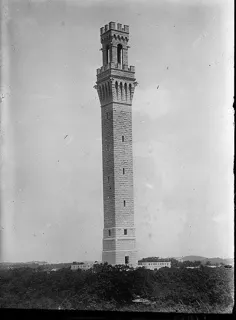
 Berniceby Susan GlaspellA woman has just died, and her husband is told she killed herself, a lie she asked to be told.
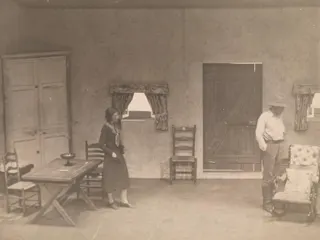 Inheritorsby Susan GlaspellForty years after her grandfather gave his land for a college, a young woman goes to prison for its ideals.
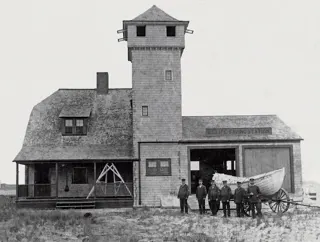 The Outsideby Susan GlaspellIn an old lifesaving station on the dunes, two women who have shut out the world argue over whether to go on living in it.
 Triflesby Susan GlaspellWhile the men hunt for a motive, two women in the kitchen find it, and decide what to do.
Act 1
Scene: The library of the old Stanhope homestead in Iowa, on the Mississippi, where MISS AGATHA STANHOPE still lives. There is a river village near-by, and the small city where the other STANHOPES now live is about ten miles up the river.
It is the room of people who have lived in comfortable circumstances and signifies a family of traditions and cultivation.
Left, just rear of center, a door into the hall. In the rear corner, left, a stone fireplace. In the rear wall a bay-window, the windows coming down to a low seat, and curtained with old plum-colored velvet. Right of this are books, which are continued into an alcove. There is an easy chair near the bay-window, by it a foot-stool and a low table; front, right, a long table. At the left, front of door, a desk. The room is carpeted, a tone deeper than the curtains. On the walls are portraits of an older generation.
The time is eleven in the morning of the last day of the nineteenth century, December 31, 1899. But the furnishings of the library are of a period earlier than this.
As the curtain rises ANN is seated before her Oliver typewriter, near the alcove, behind the long table. She is fair, sensitive looking. She wears a shirt waist and blue skirt, in the manner of 1900. She is about twenty-three, and has gentle manners. She reaches down and takes another old paper from a small horse-hair trunk beside her. Makes a typewritten note. [Enter JENNIE.
[speaking to some one behind her] You had better come in here. Everything is so upset—with the moving. Oh, here is Miss Ann. He says he's a reporter, Miss. I don't know anything about it. [Enter KNOWLES, a young man. JENNIE goes out.]
You wished to see Mr. Stanhope?
Well—yes, some of the family. But most of all, the house.
The house is being broken up.
I want to see it before it's broken up. Especially the room that was used by Miss Alison Stanhope.
I think no one goes in that room, except the family.
You are not—of the family?
Oh, no. I am Mr. Stanhope's secretary.
[going a little nearer] Those papers you're working with—are they by any chance the papers of Miss Alison Stanhope?
They are not.
[with his very nice smile] And it's none of my business what they are. I'm from the Chicago Record Herald. Down to get a little story about the house, because it is being broken up.
[with a smile] Isn't there anything going on in Chicago?
Perhaps not as much as went on in this house.
I'm surprised a metropolitan paper should be interested in the fact Miss Agatha Stanhope is moving up to town to live with her brother.
It isn't Miss Agatha. It's Miss Alison.
But aren't you a little late? Miss Alison has been dead eighteen years.
She isn't dead. Anything about her is alive. She belongs to the world. But the family doesn't seem to know that.
They published her poems.
But anything about where—how—they were written. The desk she sat at. The window she looked from. Is there a bird singing in that tree now? Well, no, probably not, the last day of December. But looking through the dead branches, to meadows sloping to the Mississippi, as she looked.
You cared for the poems.
I'll never forget the day I got them—at the bookshop on the Midway, and walked down through Jackson Park, and saw the lake—because she had seen the river. I write a little poetry myself.
I wish I could. But I can't write it. That's why I'm so grateful to Alison.
I know. Do you read the Record Herald?
Usually.
Did you see it last Wednesday?
I don't remember.
Do you remember a poem—no, verses—Michigan Avenue?
I'm afraid I didn't see that.
[grinning] Well, I did.
You get your poems printed?
I'm no Alison, but—
I suppose you haven't it with you?
Well, since you mention it, I don't seem to remember taking it out of my vest pocket.
I'd love to see it.
You would? Oh, well, I don't mind. [Taking a clipping from his pocket, he hands it to her.] Don't expect anything.
[who is reading] Oh, I think that's nice.
[eagerly looking over her shoulder] Which part?
The lake. “Through all the years you waited for your city—"
Just a fancy. I like best—“Lights snuffed in fog as—" [TED comes in, whistling “A hot time in the old town tonight.”]
Ted! Here is a poem about—[to KNOWLES.] Oh, here is a member of the family, Mr. Edward Stanhope. This gentleman—
Knowles.
Mr. Knowles is a reporter. He's from the Record Herald.
Honest?
[laughing] Honest.
He wants to see the house.
Should have come sooner. Everything's topsy-turvy. Anyway—why?
Because Alison Stanhope lived and died here.
I see. Well, they haven't started on Alison's room yet. Aunt Agatha won't let them.
Won't you let me see it? It isn't just the story. It's—a feeling about it. [to ANN.] You know. And since it's going to be broken up, and won't be any more, why not some one who has a feeling about it to—to hold it in memory, you might say.
[uncertainly] Well, I dunno.
I've been in there. Mr. Stanhope took me when I got here this morning. He said he wanted me to be there—before it ceased. It's just the same. It's as if she might come in the door.
We understand. We three. Why trouble the older folks about it? This is the last day of the nineteenth century.
Well, there's no lie, but—
I can't tell you how I'd appreciate it. How much it would mean to me.
[at the door, looking into the hall] They're all in the dining-room, counting dishes.
Fine!
But if Louise finds out.
She won't. We'll see to it.
[attracted by the idea of stealing a march] S—h. [Goes out, softly, followed by KNOWLES. ANN returns to the poem she had not finished.] [Enter LOUISE.]
[sharply] What is this story of Jennie's—about a reporter?
There was a reporter.
Did you talk to him?
Not much.
Where is he?
He went out just now.
Where?
Why, just out.
You refuse to talk to me—about a family matter?
[examining a paper from the trunk] There is so much for me to do.
Well—really. We'll see about this! [Goes to the door.] Father! Father Stanhope!
Oh—please! Surely that isn't necessary, when he's so busy—troubled.
So am I busy—troubled. Yes, Father. Just a moment, please. [Enter STANHOPE. He has the look of a man who has made a place for himself, who is acquainted with responsibilities. He is vigorous for a man of sixty-three, though troubled at the moment. One soon feels he has a feeling for others that makes him tolerant, though firm.]
[good humoredly] What's the trouble now?
Father, I think you ought to know there's a reporter in the house. Ann knows about it, and won't tell.
Yes? Well, when you've seen as many reporters as I have you'll know they don't usually shoot, or even bite. He probably came down about the Mahoney case.
[to ANN] Where was he from?
Chicago.
Chicago! You see? “The Mahoney case”!
What did he want, Ann?
To see the house.
Why? Why should he see the house?
Because Alison lived here.
I knew that!
Well, and what of it? My dear, you can't have a distinguished person in the family without running into a little public interest. [He takes one of the papers from the trunk.]
Father! Please let's try to do this without—stirring things up. Just because we're breaking up the house do we have to revive the stories about Alison?
To what stories about my sister do you refer?
Now please don't be vexed with me. You know as well as I do—the whole story they've harped on so long— that she was different—a rebel—goodness, I don't know what they do mean.
I think the worst they can say about my dear sister is that she was a great soul, and a poet. It isn't going to hurt my feelings to have it said again.
But you know how they talk—it makes the whole family seem—different. And after Elsa—[At this change.] Oh, forgive me, but you must know how the town does talk about Elsa. You can't run away with a married man—live with a man who has a wife and children and not be talked about.
In making the memoranda of these old contracts am. I =—
STANHOPE moves to her.
And they do link it up with something queer about Alison.
[checking anger, and speaking easily] That would be most unjust to Alison. She never lived with a man who had a wife and children.
[knowing she shouldn't say it] She wanted to, didn't she?
[again checking anger, speaking humorously] Oh we want to do lots of things we don't do. I might want to ask my daughter-in-law to keep still. In fact, I think I shall.
[rather angry, and made the more persistent by it] Where did he go—this reporter?
Why they went out—just a moment ago.
They? Who's with him?
He's with Ted.
Ted! He's already told him enough to fill a page! Where did they go?
[as ANN peers at a paper] Well, where did they go, Ann—the roof—the cellar?
He wanted to see the Alison room.
And you dared—and Ted dared—Oh what management, [She moves to the door, but STANHOPE follows.]
No. Not up there. No disturbance in Alison's room. It is to keep its—serenity, the one day it has left.
Serenity! With reporters prowling around?
He writes poetry himself.
How absurd!
No, it was quite good.
The trouble is, Father, the family has too many—on the outskirts, who like to snatch a little of the sensationalism. I'm amazed you can't see my point. Just now, after Elsa—
I have told you before I did not wish to discuss my daughter with you.
But you act as if I had nothing to do with it. Your daughter is my husband's sister—I'm sorry to say. My children are Stanhopes. I don't want them taunted.
Have they been taunted? They're rather young for that.
They will be.
Well, sufficient unto the day is the taunting thereof.
But if we stir it all up again—
The family china and silver seem more important at the moment than the family disgraces. I hadn't thought you need come down here, Louise, but you were anxious to get your Aunt Agatha moved with the least friction. Now why not a little management in the dining-room? Poor Agatha's all upset.
[starting to go, but turning] It isn't good for Eben, either!
[occupied with a paper] The dining-room?
Oh, Father, why won't you be serious with me?
Because you make me feel too serious, perhaps.
Eben isn't any too well grounded.
Oh Eben has a very good hold on the law.
I mean the law of life.
Oh. Law of life.
He has that same thing. He could just—shake everything loose. I'm sorry to talk before outsiders.
I don't regard Ann an outsider. It was you came where she was working, not Ann who intruded. Now Ann, take these notes, please.
I think a family should stand together.
That's right. Stand by your Aunt Agatha.
[murmuring as she goes out] What can I do?
[sitting down by ANN, she with her pad for dictation] Sometimes I wish I weren't the head of a family. Sometimes I wish there weren't any family. [ANN had begun to take this, tears off the page.] Quite so. Some things we never put down. Even Alison didn't put it all down. [Listening to footsteps in the hall.] Ted! [TED comes to the door.] Come in here. Both of you. [KNOWLES follows TED into the room.]
This is Mr. Knowles, Father.
[curtly] How do you do?
How do you do, sir.
[to TED] What have you been doing?
Just walking around.
Where?
Round the house.
What room of the house?
My fault, sir. I wanted to see Miss Alison's room.
You did, did you? A great many people have wanted to see it, and haven't.
[to TED] I want to thank you for letting me see it.
He had no business to let you see it!
Nevertheless I shall remember it always.
[momentarily touched by the sincerity of his tone] And now you're going to write a lurid story about it.
Not lurid. [With a smile.] That wouldn't be the way to handle this story. But that room belongs to the world, don't you think so? Alison Stanhope's room—holds something. [AGATHA STANHOPE has appeared in the doorway; she retains the manner of strength, though obviously feeble. She is carrying a china tea-pot, and a sugar bowl. She is arrested by KNOWLES' last words.
What does it hold? [Fearful of dropping the tea-pot she holds it against her.] What does it hold?]
Never mind, Agatha. [He tries to take the pieces she carries, but she does not give them to him.]
What is he here for?
It's all right, Agatha. [He guides her to the big chair, would help her seat herself.]
What does he know about it?
Nothing. Nothing at all. [Enter JENNIE, carrying a large basket filled with straw, on the top of which is another piece of the tea set.]
I think this will be all right, Miss Agatha. [She puts it down, goes out. AGATHA still looking at the reporter. With STANHOPE'S help she is seated, as if not knowing it has happened.]
[pulling up the low table for the tea things] You needn't do these things yourself.
What does it hold? It holds nothing, I tell you—nothing. [Making as if to rise.] Did you take something?
Oh, no. Indeed I did not.
[to STANHOPE] He's looking for something.
No, Agatha. Just some one here with Ted. [Low, to TED.] You haven't done so well, you see.
I won't have people looking through Alison's room. I've guarded it for eighteen years. [Changing, cunning.] All right, look. Look again. See what you find.
We'll say good day now, young man.
One question, please. Sorry. I was told to ask it. Have all the poems of Alison Stanhope been published?
[who had begun taking out the straw for packing] What's that? What does he mean?
[soothing her] Never mind. I will answer your question, though I've answered it many times before. All the poems of Alison Stanhope have been published.
Now. You see? He answered you, didn't he?
In going through the house—going through old papers—did you—
It was one question you were to ask.
Please, just this, It is a matter of public concern, you know. Did you find any papers—
What papers? What papers is he talking about?
My sister is not equal to this. No, we found nothing that brings any new light to bear on the life of Alison Stanhope. Everything had been gone through long before.
Everything had been gone through long before.
Thank you, sir. [To AGATHA.] Sorry to have disturbed you.
[sharply] You didn't disturb me.
[to ANN, with a smile] Goodbye.
[holding it out to him] I like the poem.
Would you like to keep it?
Thank you. [KNOWLES goes out, followed by TED.]
Where did he come from? What does he want?
It's nothing—nothing at all. [To himself.] We're lucky to get off this easy.
That's why I didn't want to move. Stirring it all up! I wish they'd let Alison alone.
They will, dear—in time.
Why can't they let her rest in peace?
They will—soon. Though it wasn't in peace Alison rested.
What do you mean? I knew her better than you did.
No you didn't, Agatha. But never mind. Now you don't have to pack these things yourself.
Mother's tea set? I'll pack it myself, and take it with me myself.
Perhaps I could help you, Miss Agatha. [To STANHOPE.] Have I time?
[nodding] We don't make much headway, anywhere. [He sits at the table, discouraged.] It's harder than I thought.
I wouldn't have believed it, John. I just wouldn't have believed that you—our brother John—would break up the old place, turning me out of home.
That's because I want to turn you into my own home. You have to take care of me now, Agatha.
Elsa went away and left you.
[hurt, but again speaking brightly] So you have to step into the breach, as usual.
I looked after Alison—so long. Then looked after what Alison left. Now you're turning her out of home.
Don't say that. She wouldn't say it. Alison was at home in the universe.
Elsa shouldn't have gone away and left her father.
No.
Alison wouldn't have.
No, Alison didn't do it—that way. But we differ. We're all different.
Alison stayed.
Yes. [ANN has been packing the tea set.]
[looking down at it] No—no, those are too near together.
[taking one out] Then I'll fix it—this way. [TED returns. ACT IJ TED Nice fellow.]
[at the table, looking through papers] You exceeded your authority, young man.
We can't keep Alison in a prison.
Who kept Alison in a prison? What do you mean—a prison? She was where she wanted to be, wasn't she?
She doesn't belong to just us. She belongs to the world.
Oh, come Ted. We've heard that times enough, and acted on it.
I say she does not belong to the world! I say she belongs to us. And I'll keep her from the world—I'll keep the world from getting her—if it kills me—and kills you all!
[at first standing there, astonished by the outburst] Well, I hope it doesn't. [Sits at the desk, taking paper and pen.]
[going over to TED] Now that is enough. One more word to agitate her, and you'll answer to me. [Low.] I told you what the doctor said. [As ANN rises, after packing the tea set.] Well, that's in good shape, isn't it, Agatha? Now you finish up here, Ann, and Ted will help you list the books.
Soon's I finish this letter. He won't give me the grade unless I tell him.
Who are you writing to?
My English prof.
What about?
Alison.
Keep quiet or leave the room!
Gee, Father, there's no other room to go to. They're all torn up.
What's he telling him?
Nothing. He's just acting important. Now Agatha—Michael is here with the carriage. There's no reason for your sitting in this confusion. I'm going to have him drive you to the village for the noon train. That will get you to town in twenty minutes. Louise can go with you; or Ann, if you prefer. There you'll be comfortable, and can rest.
Me leave this house—while it is still this house? I shall be the last to step from the door.
Oh, Agatha. You make it so hard for yourself, and for us all.
Leave things for every one else to pry into—looking—prying.
What kind of a pen did Alison use, and where is the pen?
Be still!
Well, gee, she's my aunt, isn't she, and you want me to be flunked in English?
[low, gloatingly] He doesn't know what kind of a pen she used—and I won't tell.
No; why should you?
He goes over to the books. Is looking at titles. For a moment AGATHA watches TED. She gets an idea, shrinks from it; it is terrible to her, but it grows, she faces it, and for a time she is aware of nothing else, does not move.
[as ANN puts aside papers] You are through there now?
I think so.
Suppose we start on the books. We don't have to do it very minutely, but must have something of a catalogue, as they go to different people. [ANN gets ready for this. STANHOPE glances at his sister, but a little bent now, turned from him, he does not see her eyes, their horror, and purpose. Low.] Poetry. The Mermaid series, twelve volumes.
TED tears off his sheet of paper, crumples it, kicks the leg of the desk, rubs his head.
[muttering] What's anybody go to college for? Gee! [Takes another sheet, considers.] Gee, whiz!
Chaucer. [Taking one out.] These are old. [Reads a little.] Alison read it aloud—beautifully. Her voice—[Stands as if listening. Abruptly breaks from this.] Two volumes. [Puts the book back. AGATHA begins to unpack the tea set. Looks around to see that her brother is not watching her. Works carefully, to make no noise. Puts the pieces at the side of her chair, where the others will not see. Presses the straw back in the basket.] Spencer. The Faery Queen. [Waits for her to write.] Greene, Marlowe, Jonson.
All one volume?
Yes.
Oh—rats. [Rubs his head.]
Shakespeare, five volumes. [Takes out the next book, examines it.] This is a nice old edition of Milton. See? [Showing it to ANN.] Alison was fond of this book.
Funny old pictures, aren't they?
AGATHA gets her hands under the basket, which is on the low table. With difficulty rises, and takes it from the room.
But we must get on with it. [Hearing his sister as she is leaving the room.] Agatha? [As she does not pause.] Well, her last day here. Now we come to Robert Burns—good Bobbie.
One volume?
Yes. And Browning—Robert, four volumes; Mrs. Browning— [Enter LOUISE.]
This is the table to be sent to Cousin Marion, isn't it? [Her hand on the low table from which AGATHA has taken the basket.]
Do we need to tear up this room just now?
The man is here—and if we are to finish by day after tomorrow.
Did Alison sleep well?
Really, Ted, sometimes I think you haven't good sense.
I've got sense enough to know how I can make this grade. You ought to hear him. He takes me out for dinner—fills me up on wine—
Who?
Styles—English prof.
Your teachers at Harvard take you out and give you wine?
Only Styles. Ever since he heard I was her nephew. Nearly dropped dead first time he asked me. But it always ends telling me I got no soul—insensitive family—unworthy. He's crazy. Got to get this grade though.
Father, you surely won't permit Ted to write a stranger—telling things—stirring it all up.
Take the table out for Louise, Ted.
What is the tea set doing on the floor? Not a very safe place for valuable old china. [She picks up the tea-pot and puts it on the big table, is getting the other pieces.]
[to ANN] Why I thought you packed that tea set.
I did.
And she unpacked it?
And left it on the floor.
But she was so anxious about it.
I'm afraid. Afraid for Agatha.
Now about what Alison ate.
Seems to me it's Ted whose mind is failing.
We're not in the mood for this nonsense.
It's no nonsense to me—after flunking history. What did she eat, Father? Did she like sweets?
Ted might as well be in town.
Meat. How about meat?
[going back to the books] No one is paying any attention to you. [Firmly.] Tennyson.
Then how am I to get through college?
[who is dusting the small table] I always said Ted should be sent to a western school. At least the professors don't intoxicate the students.
He never got me full but once. Then he was trying to find out about her love affair.
[angrily] Shelley. Four volumes.
You see? All this prying. Why it's as if the family weren't anything else. Why not tell him your grandfather was governor of the state and that your uncle is in Congress?
He says the rest of the family is of interest only because it's so vacuous. Vacuous, is that the word? But about the food, Father. I got to get this letter off before he reads what I handed in. Meat. Sweets. Fruit. [Writes.] Lots of fruit.
And Keats. [He stands looking through the Keats. [a door closes outside.]]
[off] How are you, Jennie?
Why that's Eben.
[off] Oh but you'll like it in town. Lots more going on. You can go to church.
[off, in a dismal voice] I'm out of the habit. [EBEN enters. He is self-assured in manner, though soon one feels the inner uncertainties, hesitations, and the inner beauty.]
How are you, Father? Working hard, Louise?
Certainly.
Hello, Ann. [To TED who stares moodily.] Well, I see you're energetically on the job.
[solemnly] I am doing my best.
Who could do more?
[gloomily] Who?
I thought you weren't coming down till the office closed.
I closed it. Nobody wants to do anything—last day of the year—last day of the century. Nobody's busy but Cousin Marion. She telephoned three times. Thinks her club women might take the house for a museum.
She's thought that for two years. They haven't the money.
She says they could get a little, and pay gradually—give a kermiss or something.
We'll close with Hodges, who doesn't have to give a kermiss.
Her idea would hold the place together.
Hold it together for the public. Agatha would never submit to it.
How is she?
Not well. Over excited, which is just what the doctor warned against. I want to tell you, all of you—are you listening, Ted?—nothing must be said to agitate her. Everything possible must be kept from her. Dr. Lange told me last night her heart is more and more uncertain. And she's getting—well, queer. Ann packed that tea set, and soon as we turned our backs she unpacked it.
[who is looking through articles in a small cabinet, left, rear] Oh I hope she doesn't get too queer. We've had enough. I hate the idea of people thinking we're different.
Nothing very funny about an old lady, who's lived alone too long, getting a bit childish. She'll be all right, once she's up at father's.
It's important to keep telling her she must do it for me. Don't let her think we feel she isn't able to live down here alone. Tell her I'm alone.
[sympathetically] Yes. [Looking around.] Hate like the dickens to see the place go, Father.
Do you think I don't?
The fun we used to have down here as kids—Elsa and I. Especially when Alison was here. Remember how she was always making us presents?
I remember.
An apple—pebbles from the river—little cakes she'd baked. And always her jolly little verses with them. “Alison won't tell,” she'd say, when Elsa and I had run off to the river. “Alison knows,” she'd say.
[repeating softly as he writes] Alison knows.
It was all so darn real today, coming down here for the last time. And the century going—her century. When I got the first glimpse of the place through the trees I had a feeling of the whole century being piled on top of her, that she couldn't get out from under.
How morbid. Don't let your mind run on such things!
Who am I—to tell my mind where to run? You know, Father, I'd like to hear her say once more—right now—here—Alison understands, because—I'll be darned if I do.
Was Alison a virgin?
Father!
See here now!
Getting fresh, aren't you?
It isn't me. Why won't you understand? He wants to know—and I got to make this grade.
There is such a thing as taste, young man.
Just what I told him—women of one's family—and he almost slapped me. Well, was she a virgin?
[violently] Yes!
Oh, gee, I hoped she wasn't. [Starting to write, turning.] How do you know?
Leave the room!
Where'll I go? I don't see how you can be sure—
[going to him, taking him by the collar, lifting him to his feet and shaking him back and forth] You miserable little fool! And you're the baby Alison used to say got through from heaven. The hell you did! Didn't you get anything from her? [Shaking him.] Didn't you?
Say! Leave me alone, will you? I guess I was only two years old when she died! What do I know about her?
Nothing. Absolutely nothing, and never will. Why that prof ought to kill you. If your soul wasn't a shriveled peanut something from her would have made you a human being!
Come now, Eben. That's enough.
Whats the use of having had an Alison in the family? Sometimes I think I'll run away from all this—and find her.
You haven't been drinking, have you?
No, but I will.
If you haven't been drinking there's even less excuse for this raving.
You think it's raving, Father?
I think it is too uncontrolled.
The last day we'll ever be in her house—the last day it will be her house—how can we help but think of her—and feel her—and wonder what's the matter with us—that something from her didn't—oh Lord, make us something!
ELSA, wearing coat, furs, hat, has stepped inside the door. She has beauty, a soft radiance.
[in low thrilling voice] Yes, Eben. Yes!
Elsa!
Elsa! [set i ELSA Father, may I—come in? [One hand, palm up. Goes out toward him, timidly, but eloquent.]]
Certainly you may not—not while—[But is afraid to go on, STANHOPE is staring So strangely at his daughter.]
Hello, Elsa. How'd you get here?
[gratefully] Hello, Ted. [To her father.] Perhaps I shouldn't have come. But Eben wrote me the place was being broken up and—
You wrote to her?
Yes, I write to my sister.
I had to be here once more. I thought—perhaps it's too much to ask—but I hoped you would let me stay here, Just tonight. It would—do me good.
[with a shrill laugh] Now that's—funny. [Laughs again.]
[advancing a little to her father] It doesn't mean you forgive me, Father, if—if you don't. If you can't. But won't you just do it—because Alison would do it? She'd take my hands. She'd say—Little Elsa. She'd say—Elsa has come home.
From upstairs a wild cry from JENNIE.
[above] Mr. Stanhope—everybody '—help! [EBEN hurries out.]
[off] Everybody—quick—the house—burning!
Fire! I smelled it! [He runs out, LOUISE goes, and ANN. STANHOPE does not pass his daughter without pausing a moment, looking at her.]
Outside a confusion of voices, a running about. Only ELSA remains as she was, as if she cannot move.
Just as I stepped into the house. As if—as if—[Shaking this off.] Oh, no—no. [She looks around the room. Softly.] Don't burn. Don't. [After another moment, having looked from one thing to another, she goes to the books, runs her hand over them. Stands there. But at a noise of something falling upstairs, she becomes frightened, suddenly takes an armful of books. Is starting out, but stopped by a confident shout from EBEN.]
[off] It's all right. We're getting it! Two more buckets, Ted!
ELSA sits down where ANN had sat, still holding the books, bent over them, her back to the door. [After a moment AGATHA comes in. ELSA does not hear her, and AGATHA, in a curious, fixed state has not seen ELSA. She sits where she sat before. She is white, rigid. ELSA, moving a little, drops one of the books.
[not turning] What's that? Who's here?
Aunt Agatha!
[still not turning, as if she can not] Who's that? Who's here? [ELSA goes to her, and as still AGATHA does not look up, sits on a stool beside her.] Elsa.
Yes—Elsa.
Elsa went away.
She came back. [Timidly.] Are you—glad?
Alison was so afraid of fire.
[off] That fixes it!
They are getting the fire out.
No. Burning. All burning. All at once.
[trying to take her hand] No, Aunt Agatha. You see the boys are here. They are getting the fire out. There's nothing to be afraid of.
I am not afraid—now.
[outside] Agatha! Where is she? [ELSA starts up, but AGATHA takes her hand in a fierce grip, forcing her down.]
[still off] Jennie! Where's Miss Agatha? Agatha!
[freeing herself, going to the door] Here, Father. Aunt Agatha is in here with me. [STANHOPE comes in.]
[gently, as he sees her there rigid, white] It's all right, Agatha. Just a little blaze. Nothing whatever to worry about. The boys have it out already. [After staring at him, AGATHA leans back with a wail that goes into a whimper.] You understand, don't you, Agatha? They have put the fire out.
[with horror] They have put the fire out. [Enter EBEN, coat off, flushed, much excited. + EBEN That fire was set, Father.]
What?
We found the charred straw—in the closet that breaks through to Alison's room—coal oil there—and in Alison's room. Some one was trying to burn the house.
But that's—incredible. Why? Oh, no—you're mistaken.
It's undeniable. The evidence is right there.
[going to the door] Jennie! [AGATHA leans away, as if avoiding something. ELSA holds her hands.] Jennie! [Turning.] I don't believe a word of it! [Enter JENNIE.] What do you know about this fire?
[distraught, almost crying] 1 don't know anything about it. I smelled the smoke. I ran up. It was burning—in the closet. [Enter LOUISE.]
The fire was set. Some one tried to burn the house.
[to JENNIE] Who's been here?
Nobody. Nobody. Just the family—and me—and Michael.
Who's been upstairs?
That reporter was upstairs.
Why you've all lost your wits! What possible reason?
But no other stranger was upstairs. [STANHOPE looks at her a moment, incredulous, dazed. Starts for the door. ANN comes in.]
Ann, what do you know about this reporter?
Why, I don't know anything about him.
Perhaps it isn't a reporter. Perhaps it's—some hostility to the family.
[angrily] That is ridiculous.
Well, who did it? Why?
How did the fellow seem to you?
He seemed all right. I thought he was—just what he said he was. I'm sure he's all right. He showed me a poem he had written.
As if that proves anything! Had you known him before?
[indignant at the tone] I had never seen him before.
[going to the door. Sharply] Ted!
[from above] Staying up here to make sure!
Leave Michael on watch. Come down here at once!
I can't make head or tail of it. Who would want to burn the house?
[distressed] Mightn't it have just—happened?
[scornfully] “Happened?” Straw—saturated with kerosene? [Enter TED. i STANHOPE Now what about you and this reporter?]
Well, what about us?
Answer my question!
What question, Father? What about us?
You were the only people in that part of the house—and a fire was set.
For—Pete's—sake! Talk about me being crazy! You think I set a fire to burn the house?
[violently] No! I don't think anything of the kind! But what did you do up there?
We looked at Aunt Alison's room. And he talked about her that crazy way people do talk about her. And that's all.
Did you have any straw up there?
[tolerantly] Oh, Father, what would I be doing with straw?
[furiously] I don't know what you'd be doing with straw! You Just might have had some idea of making yourself useful!
Useful enough to burn the house.
Be still! [Turning to JENNIE who stands by the door, frightened.] Who had straw upstairs?
Nobody. Nobody's I know of.
Did you take coal oil upstairs?
[beginning to cry] I did not. I did not take coal oil upstairs.
Very well, Jennie, I believe you. But who—[In looking around, bewildered, his eye falls on the tea set. Slowly he moves over to it, then looks at his sister, who is still in that strange, fixed state. An idea comes to him that is a shock. Ponders, incredulous, but the idea is growing.]
[to EBEN] Straw—you say? [Moves nearer AGATHA. Speaks gently.] Agatha, why did you unpack the tea set, after Ann had packed it for you?
Oh!
All look at her. She goes from the room.
What? What's that you say? Tea set?
Yes. Why did you unpack it, after Ann had packed it for you?
I can pack my own mother's tea set, can't I?
[gently] But you let her do it for you. [Silence, after which he speaks carefully.] Agatha, what did you do with the straw the dishes were packed in?
[as a wail] O-h! I wish you'd all go away—and leave me here alone! Why couldn't you let it burn?
[slowly] You love the house so much you would burn it—rather than—leave it?
[not speaking to any of them now] What could I do? I tried—and tried. Burn them? All by themselves? [In a whisper.] It was—too lonely. [She falls back.]
Get brandy, quick. And the doctor. [Louise goes out, and TED.]
[resolutely sitting up] I don't want the doctor. [But she again falls back.]
Are you all right, Aunt Agatha?
[looking up at ELSA] Couldn't take them away—and couldn't—couldn't—
Act 2
Scene: The scene is as Act I. It is the same day, three o'clock in the afternoon. ANN is at her typewriter, STANHOPE at the table, on which is a box of papers. He crumples the one he was looking at, throws it to the floor, where there is a heap of discarded papers. He takes some of them to the fireplace, stands watching them burn.
[turning] Well, we must get on with it. [Sitting down, examines another paper.] Receipt for a carriage, twenty-eight years old. People used to keep everything. [Crumples it, throws it to the floor.] I sometimes took your mother driving in that carriage.
You were so good to Mother.
[softly, with a sigh] I hope so. [After a moment of dreaming.] Remember how she used to come toward you—her hands out?
[her hands out] I can see them.
And sitting by the fire, in the blue velvet dress, in that chair she liked—
Chippendale.
Leaning back a little, yet erect, her hands, so long and white, loosely clasped on an arm of it.
I can see her.
You look like her, Ann.
Not so good-looking.
[smiling] Not quite. But who could be?
It will be nine years in January.
Nine years. [With an effort coming from this, handing her a package of old papers.] Just make the lists of what these deeds are, keep the latest one of each and put the others in an envelop marked Old Deeds. [EBEN enters carrying a large box.]
This finishes in the attic. Seems to be mostly old newspapers.
[taking one] James G. Blaine.
[who is looking at another] Why the old hotel was standing then. The one that burned when I was a kid. Remember going to the fire. [Turning a page, laughing.] Did you know the Baileys had sued the McMasters—about stealing a stallion for breeding?
That stallion was in the courts a long time.
And now the McMasters are worth—more than we'll ever see. Shall we keep these?
Where?
I don't know. I think they ought to stay right here. That everything should stay where it is.
Don't start that again. Don't you think it's harder for me than you? I was born here. Grew up here.
That's why. And Alison.
And Agatha. She can't be left here any longer. You can see that now. And she won't go while we keep the place. Too bad we got that fire out.
That was a funny thing. Aunt Agatha must be—pretty bad—trying that with us all right here.
She kept talking about anything else being too lonely.
I think she had something she wanted to burn, and couldn't.
Yes.
What?
I don't know. Just some old thing she cherished, and didn't want to take from the house.
Something about Alison?
Perhaps.
Father, we did publish all the poems, didn't we?
We gave them all to Professor Burroughs. He took all except a few he thought weren't so good. Those I have, as you know.
Letters from Alison, perhaps.
Each of us has his own, Agatha has the letters Alison wrote to her. They're not many, for they were so seldom apart. Of course if she wants to burn her own letters, she has that right. Though I wish she wouldn't. She should leave them to the children.
Seems very strange to me.
Yes. Well, it's just because she has become strange. The Centennial Exposition—1876. Oh we can't burn these papers. They've been kept too long. Save them for the children.
We're keeping more now than we know where to put.
Louise can find a place for them. Tomorrow these will be the newspapers of a former century.
You going up to the dance, Ann?
[shaking her head] No.
[putting down his paper] Why I never thought of the dance. Of course you must go, Ann.
There's so much to do here. I'd rather help.
Turned Walter down, didn't you?
What's that? Have you quarreled with Walter?
No, I didn't quarrel with him. I just got tired hearing how fast he could run.
Ted's going up with the Logans. You go with them, and go to the dance with Ted.
Ted's taking May McMasters.
Sometimes I think that boy hasn't a grain of sense. But it's New Year's Eve. You must go to the dance.
[smiling] Please, Mr. Stanhope, if you don't mind my staying here, to begin early in the morning—
Shouldn't have given Walter the sack till he was starting back to New Haven.
I didn't give him the sack. We just decided to run in different directions.
But aren't you and Louise going to the dance, Eben?
[shaking his head] I'm bored with their dances.
I fear you're bored with too much, son.
Fear so. But anyway, with Elsa here—and the last night in the old place—
It's good of you.
[brightly] Oh, no. [STANHOPE again begins looking through the box of papers on the table. TED comes in, sits at the desk, takes his unfinished letter from the pigeon hole, glares at it.]
I'll be flunked.
[not looking up from his newspaper] Might try a little study, for a change.
Tell me something to tell him, Father.
Have you begun that again?
About her conservatory. Keeping her flowers warm in winter. How did she keep them warm? [The others go on with what they are doing.] Well, how do you keep flowers warm? Do you wrap them in cotton? Straw, maybe. What do you suppose Aunt Agatha wanted to burn the house for?
Because she is feeble, and very sad.
But I thought she liked the house. [To ANN.] Make a good story for that reporter!
Run out and find him. Tell him all the news!
He's still around. He's down by the river, walking where Alison walked. He's crazy. Nice, though. What flowers, Father? Geraniums? [Writes.] Loved geraniums.
[so sharply TED jumps] Edward! You have very little sense of family, or very little sense of anything. But perhaps you have sense enough to know what it would mean if your allowance stopped.
Yes, Father. I have the kind of sense can understand that.
Very well then! No stories about the family—about the fire—to this reporter—or your teacher—or any one else.
You don't know my situation, Father. It's dark. [Returns to his letter; turns, meekly.] It's all right to write about flowers, isn't it? [Turning back to the letter.] Violets.
Begins to sing “Every morn I bring thee violets.” There are voices in the hall. JENNIE enters.
Mr. and Mrs. Hodges are here.
[low, with irritation] They weren't to come again until we were out of the house.
Send them away.
[decisively, after hesitation] No. Perhaps we can close the deal. Very well, Jennie. Ask them to come in. [She goes.] But Agatha mustn't know.
She's still lying down in her room.
Who's with her?
Elsa.
How do you spell mignonette?
F-o-o-l.
That spells E-b-e-n. [Enter Mr. and Mrs. HODGES. He is a small, lean, shrewd-faced man. His wife is larger and has a big rather foolish face.]
Well! How'd do, everybody.
How do you do, Mr. Hodges? How are you today, Mrs. Hodges?
Oh, I keep going.
EBEN brings a chair for her.
Well, guess you weren't expecting us.
No, not today.
Like to decide between this place and another we got in mind. Other's in better repair.
Then you'd better take that one.
Well, I dunno. My wife kind of turns to this one. Thinks she could fix it up pretty—woman's notions.
I think with piazzas down stairs and up it would be nice for my summer boarders.
[rather faintly] Summer boarders?
That's how we calculate. Don't think a poor man like me'd buy this ramshackle old place for just my old woman and those two young uns, do you? But we'd have to fix it all up. Paint her a bright yellow, maybe, with green edgin'—somethin' you can see. Summer boarders wouldn't take to a gray house edged with red you can't tell for red.
I could make that conservatory into a sun parlor where they could sit when it rained.
But 'twould mean a big outlay, 'cause we'd have to cut it up in more rooms. [The STANHOPES are silent.]
[feeling she must break the pause] Nobody could pay what'd be right to pay for rooms that big.
Well, folks don't need rooms so big now.
Hard to take care of.
But it's in bad repair, Mr. Stanhope.
[with effort] Oh, I don't think so. The roof needs just a little mending, but the foundations are good.
Looks a good deal run down, Mr. Stanhope. [Fearing she has been impolite.] Of course you haven't been living here yourself. You have your nice place in town. But for summer boarders 'twould need a lot of paint and varnish, and that new wall-paper that's more lively like.
All those things cost. They cost.
Certainly. But we feel our price is low. The house has—character.
Character. [Rubbing his chin.] Well, maybe so. But what character? Not the character for summer boarders. That's what I tell the old lady here. And how do I know there'd be any boarders?
[cheerfully] There might not.
Just what I say. Folks like to go up the river now-a-days, not down the river. And with the old Mississippi rising higher every year, seems like she'd wash this place away 'fore we could get dead and buried.
Then you could have a house boat.
How? [Laughs loudly.] Yes, that's a joke. [To his wife.] Summer boarders on a house boat.
[courteous, but cold] Just why did you come in today, Mr. Hodges?
Want to take one more look at her, 'fore we give her up. Try to figure out where we could put in partitions—modernize. Outside, too—needs a lot. Too many trees makes a place gloomy.
Those trees have been growing a long time.
Well, then they've been growing long enough, haven't they? [Laughing, waiting for EBEN to join him, but EBEN does not.] And that lilac hedge—shuts the place in too much. What's the use putting your money in a place nobody can see? Take out some of that tangled old stuff and put in flower beds in fancy shapes—heart-shaped, maybe—you'd be surprised the difference it would make.
[softly] No, I wouldn't be surprised. [Speaking more brightly.] Now here's an interesting thing, Mr. Hodges. You aren't sure you want to buy, and we aren't sure we want to sell.
[to STANHOPE, sharply] Not want to sell? But you made me a proposition, and I've gone to the expense of getting a carpenter to figure on it.
I will stand by what I said. But you will have to make up your minds. We have other possibilities for the place.
Now there you surprise me, Mr. Stanhope. You certainly do surprise me. And I'm very much afraid you'd be disappointed in those other parties. Don't think anybody else 'd be fool enough to buy it. Now that's my opinion, if you want my opinion. Know darn well I wouldn't buy it, cept my old woman's got the idea, and when a woman gets an idea, you might as well give up.
I think Mrs. Hodges' idea is—practical.
[nodding and smiling] They could go out in row boats. Take their lunch over to the Island, and that would get them out of the house, part of the time.
I think you'd make more leaving the house as it is, and getting people who would—
[low] Never mind, Eben.
No. No, there you're wrong, young man. Summer boarders want things modern, and cheerful. But I tell you what bothers me, Mr. Stanhope. The place ain't healthy.
I grew up here. I'm healthy.
Seems like the river had something against this place. Right here on this bend's where she washes in more and more.
Yes, Mr. Hodges, I really think you would die of rheumatism, shortly before you were drowned.
How? [Laughing.] He jokes, don't he? Well, my brother Ed used to joke. Never could figure out what Ed was getting at.
I can't figure out just what you are getting at, Mr. Hodges. We are very busy here today. Do you want the place, or not?
Well, now, that depends.
You weren't coming again until we had left the house.
That's right—so we weren't. But the carpenter's coming Friday—make an estimate. Like to look it over once more ourselves, get a few ideas of our own, for I know damn well—excuse me, Miss—[Bending over to nod to ANN, who has been going ahead with her work.]—what he'll try to do.
[softly] Yes. Carpenters are very expensive now.
They are that. So we'll just have a look at them upstairs rooms, Mr. Stanhope. See how we can portion 'em out.
I am sorry not to fall in with your plans, but my sister is up there, and she is ill.
That so? Miss Stanhope ailing? Well, she's—getting along, isn't she?
Yes. She is.
Well, we all got to get old some time. That's what I say. No use to fret.
We wouldn't ask to go in her room, Mr. Stanhope. And we'd keep quiet—just whisper. I have sick headaches, myself.
[giving up, after considering] I suppose it can't be helped. Will you go with them, Eben?
Awfully busy here.
Ted! No, Ann, please. And very quietly, that I ask you.
[in a whisper, and tip-toeing] We'll go—like this. [Exit the HODGES, with ANN.]
I don't think we could possibly do worse.
I don't think we could do better.
They'll destroy it.
I want it destroyed.
[coldly] You do? I care for it.
I care for it so much I don't want—itself, to go to some one else.
That sounds more like Aunt Agatha than you, Father.
Very well. Agatha and I are the only two left. Listen now! Ted! Leave that foolishness! Try and do something with your own brains—not trading on your Aunt Alison! Are you listening?
Yes, sir.
And don't ask me how to spell anything!
No, sir.
Some day, when I'm gone, you'll talk about this again, and wonder why I sold it, and blame me. And perhaps you'll be right, but I'm using the best judgment I've got. Agatha can not be left here. Her heart's feeble, and her mind—not what it was. If the place remained, she'd come back here, and you know it as well as I do.
She couldn't be left here—with a nurse?
That might be all right about her heart. Not her mind.
She's old to transplant.
And we're not doing it well. All the confusion. And now—Elsa.
She loves Elsa. Elsa doesn't harm anybody—except herself.
She harmed all of us. She disgraced us.
Maybe she couldn't help it.
“Couldn't help it”! What a weak defense. Alison helped it—and so did I.
What did you say, Father?
Never mind what I said. The only person in this family who has any sense of family is Louise—and she's another family.
Oh Louise takes it too hard.
She goes at it wrong, but she's the only one wants what I want.
[hopefully entering the conversation] And what is that, Father?
Hold a family together. Have some pride.
I got a great idea. Redeem family fortune. Fellow at school's worked out a new idea for putting on rubber tires. Like to go in with him, soon 's our sentence expires at Cambridge.
You will go in your father's office, which was his father's before him, and you will try and show more interest in the business than your brother does.
Sometimes I think I haven't just the mind that makes a lawyer.
Oh, I think you have.
What do you mean? The law is a noble profession.
Thought I might do better in some kind of a rubber wheel business.
I tell you, Father, suppose I take a year off.
Seems to me you've taken ten years off.
Sometimes I feel I want something else.
What?
I don't know.
And what about your family?
Oh that's why I'm going.
You are not going!
Probably not.
Going where?
I don't know. Somewhere—where things are different.
Things are not different anywhere.
Sometimes I think if I didn't have to do anything for a while—I could do something.
What?
Don't know yet.
You have your children.
Louise's.
Well, you couldn't very well have had them alone, could you? Come, Eben, don't talk like a weakling. What if you aren't perfectly happy with Louise? I wasn't happy with your mother, either, but I didn't run away, leaving my children to shift for themselves.
It isn't just Louise—or, I suppose not. It's things I used to think about when I was with Alison. And still think about—when she's with me.
Alison didn't desert her family.
No, but I don't write poetry.
Oh, dear.
Never mind, Father—guess I'm just talking foolishly, because the old place is being broken up.
It's a time to put your shoulder to the wheel.
All right. Where's the wheel?
Here. [Pushing toward him the box of papers on the table. [EBEN begins on these, his father too has taken out a handful of them.]]
[after crumpling a sheet of his letter] Tell you what, Eben, I got an idea.
Doubt it.
You do something for me, I'll do something for you.
What?
Well, give you an interest in taking off rubber tires.
Thanks. Got too many interests already. [Showing a paper to his father.] This any good?
Well, I'll run away with Louise.
That's better.
Don't talk such nonsense.
Kidnap her. And you write me a theme—about Alison. I'm two behind. “Alison knows” you could call it.
So I could.
Just write the way you talk. Sounds funny in talk, but written it would look all right.
[with a real interest, which makes his father look at him] Do you think so?
About the little presents, and—oh the things she used to say to you. How she looked—and moved around—and why she was different from other folks.
I would like to do that.
Fine! Dandy!
Did you ever try to write, Eben?
I used to write things—and show them to Alison.
I never knew that.
No. No one else knew—except Elsa.
And did you keep it up?
Not after I was married.
It's a bargain! You help me get through college, and I'll put you on your feet—financially speaking, on your feet.
[thinking of something else] Thanks, awfully.
Don't mention it. [Enter LOUISE.]
Elsa isn't staying here, is she?
Tonight.
Then I'm not staying.
Family feeling.
Exactly. I'm sorry, Father Stanhope, but I can't stay in the house with Elsa. She ran away with the husband of my best friend, leaving—
Father knows just what she did, Louise.
How could I ever face Margaret again, if I'd stayed under the roof with Elsa?
Monstrous idea—staying under the roof with Elsa.
I am sorry to say it is.
And I am sorry, Louise, but in that case you will have to go up with the Logans and Ted.
I don't think I should be the one to be turned out!
I am not turning you out; but neither am I turning Elsa out—not tonight.
Was there any reason for her coming—other than to make trouble?
She felt there was a reason, apparently.
And I'm glad she came. Why shouldn't she?
Yes—indeed—why shouldn't she! Much you know about it—or care—what the town says. It will be known she's here, and just stir it all up!
This isn't very pleasant for Father, Louise.
Did I create the situation?
You seem to be creating this one.
I am sorry for Father—sorrier than any one. But there is nothing to do about Elsa except condemn her.
The Logans are coming at four, aren't they, Ted?
You side with her—against me, your wife?
You take too much pleasure in siding against her. She's had enough, hasn't she?
She brought it on herself.
If you're so thick with Margaret, might persuade her to be decent enough to get a divorce.
She does not believe in divorce. She is standing by her principles.
She is standing by her thirst for revenge.
Oh, of course you think she's the one in the wrong! You think—
Don't quarrel, children. Elsa did wrong—Louise is right there. But I am not turning her out—not tonight.
Then I go.
[cheerfully] Goodbye.
A husband should be loyal to his wife!
Who says so?
Now you're talking foolishly again! As if you hadn't good sense. Every one says so—every one.
[after turning a paper] No they don't.
But they do. A husband should be loyal to his wife. Isn't that so, Father Stanhope?
Certainly.
Why “certainly,” Father? If a wife steals—murders—
Steals? Murders? Do I steal—murder? [She waits for a reply which does not come.]
Tell you what, Louise, let's you and me take a little trip. [LOUISE can only stare.] Take you to Cambridge with me. Quite a good deal going on. You'd probably like it. Louis [slowly, to STANHOPE] I just don't know what to make of this family. I do not know what to make of them.
You can't make anything of them, Louise. I think the idea of a little trip with Ted—
[bringing down his hand] Stop that nonsense!
[observing HODGES' cap and muffler on the chair] Who is here?
The Hodges.
Where are they?
They are looking over the house.
Who's with them? Who is showing them round?
Ann.
Ann? But why Ann? Why an outsider?
Oh I don't consider Ann an outsider.
[forcing herself to speak respectfully] But she is an outsider, Father Stanhope. She's your secretary. She's not a member of the family. [After a silence.] Is she?
She is as dear to me as my own daughter. Well—no, not that.
[gently] Of course, Father, I know Elsa can't be dear to you—now.
Elsa is dear to me, though I've lost her.
Don't say that, Father.
Isn't it true?
You have me, Father.
Yes. Yes, thank you, Louise.) [There are voices on the stairs. The HODGES enter. ANN leaving them at the door. Louise [capably taking hold of things] How do you do, Mrs. Hodges? Though perhaps you don't know me. I am Mrs. Eben Stanhope.]
How'd do, Mrs. Stanhope.
Pleased to meet you, mam.
Of course you are seeing the house in great confusion. But we'll have everything out of here soon.
Oh, that's all right.
Quite a chore—moving.
It's a dear old place, isn't it?
Well, we think it's dear enough. [Looks slyly at EBEN.]
So roomy, and well built. And such traditions.
How?
It's for my summer boarders—if we take it.
Now Mrs. Hodges, I think that's an excellent idea. So practical. Do you know, I've thought the same thing myself. It's really too big for a family, but for summer boarders—right here on the river—the woods all around. Quite likely I can send you some people.
Oh that would be nice.
Right clever of you, mam.
And that big cheerful kitchen to cook for them! I wonder how many people used to be cooked for in that kitchen, Father?
A good many.
And now again the house will be full of people having a good time. That's a nice idea for us, too, isn't it, Father? [STANHOPE tries to reply, but does not speak.] You see we love the house. It's a real grief to us, giving it up. But it's too big for a family. That's why we're letting you have it.
[slyly] Very good of you, mam.
Quite philanthropic.
How? [Bursting out laughing.] He jokes, don't he?
Yes. Jokes.
[abruptly] Do you want the house, Hodges?
Yes.
[who seems stunned] Good. [With effort.] Sign up for it now?
[sitting down at the table, taking out his check book] Bind the bargain.
[resolutely] Good. Then come in the office—tomorrow's New Year's—come Thursday, and we'll go over the deed. You'll find everything in order.
[to MRS. HODGES] You see there are no complications. The place has been in the family from the first. [STANHOPE is staring ahead, and does not see the check HODGES holds out to him.]
A hundred fifty. That all right?
Yes. Quite all right.
Well, now we'll be out of your way. Soon's you go out, we come In.
Very good.
And I know you're going to enjoy it—just as much as we did.
You must come to see us sometime.
Indeed we will.
Guess you won't hardly know the old place, once we take hold.
We're going to paint—modernize.
That's just what it needs.
Well, Thursday then.
Thursday.
How's ten?
Let us say ten. [Rising.] Goodday, Mrs. Hodges.
Goodday, Mr. Stanhope. And I hope your sister will find herself more smart for the moving.
Thank you. I hope so.
Well, 'bye folks. [To EBEN, laughing.] Couldn't crack another joke, could you?
Couldn't possibly.
[to LOUISE] Always nice to have a cheerful member of the family.
Yes, isn't it nice?
Louise starts out with them.
We go out the back way. Got the team there. [STANHOPE, sinking to his chair, holds the check, staring at it.]
[bitterly] So that ends—[But observing his father, doesn't go on.]
Well, so it's sold. Gee! Now it isn't ours any more. What you getting for it, Father? [His father does not seem to hear. [Enter JENNIE.]]
He's here again.
Who?
Him. That reporter that didn't set fire to the house.
We can't see a reporter now.
It isn't you he wants. It's Miss Ann.
[sharply] What for?
[stepping inside the door] Afraid I'll have to explain that myself. Only, well, you see—[Confused]. Awfully sorry to bother you, but what else could I do? [JENNIE, wanting to linger, is putting to rights some things on the window seat.]
I can think of a number of other things you might have done.
[smiling] What?
Gone back to Chicago.
Without seeing her, you mean?
But why do you wish to see Miss Leslie?
Is that her name?
That is her name, but you haven't said why you wish to see her.
[flushing] Well, that's hard to say—to you.
Then I'm afraid you can't see her.
[in warning voice] Be kind, Father. Be kind.
Anything you wish to ask my secretary you can ask me.
Sorry to disagree, Mr. Stanhope, but, really, I can't.
Something about my sister Alison?
Well—yes, indirectly.
Oh we've had enough of that.
I haven't.
We are unable to give you more time.
But excuse me again, it isn't your time I want.
You'll just have to tell him straight out. When people get older they have to be told.
[angrily] Is that so?
Yes, sir.
It hasn't anything to do with the paper.
Then I understand it even less.
I wanted to ask her to take a walk with me.
You don't even know her name, and you expect her to take a walk with you?
I don't expect, exactly. I hope.
There's a difference.
Indeed?
[meekly] Yes, sir.
[heatedly] But why do you want to take a walk with her?
Oh—gee. Cause he likes her. You don't have to know a girl's name to like her.
No, you don't. Though it's a very nice name, Ann Leslie. It suits her, I think.
[after looking at him some time] Jennie, tell Miss Ann a gentleman is here to see her. [JENNIE goes.]
Thank you, sir. I thought about it a long time, and I didn't know any way to see her, but just walk in and ask for her.
[who seems confused] No doubt it was better than throwing stones at the window.
Or you might have set fire to the house. [As his father pushes his chair back.] Well, then she would have run out, wouldn't she? [He and KNOWLES laugh.]
Eben, have you decided which books you want to take? [They walk over to the books, into the alcove.]
You know, I think all your family have something of the spirit of Alison Stanhope.
Oh, gee, I don't.
Yes, coming in fresh, I can tell better than you. It's as if something of her remained here, in you all, in—in quite a different form.
Different, all right.
A—playfulness.
Golly, you think we're playful? Why man, we're going through the blackest page of our history. As for me, I can't decide which room to choose.
Choose?
To hang myself.
The river's handy.
Good swimmer. Can you write themes?
You bet.
Write one for me—about playfulness, or suicide, or something, and I'll—I got a lot of influence with Ann.
Maybe you're in love with her.
No. Always been around the house a lot. Too much like a sister. Anyway, Ann's pretty old.
She is not old!
She's twenty-three!
I'm twenty-five.
Well, then she isn't old for you.
I'm glad she has this nice position.
It isn't a position.
What is it then?
Oh it's just—the way it is. [Enter ANN; TED returns to his letter, whistling “The Stars and Stripes.”]
I thought perhaps you'd take a walk with me.
[startled, confused] You did?
Got my nerve, haven't I?
Why, I don't know.
Better not go, Ann. You might take cold.
No theme.
[softly] Oh, yes. Clever work. [Rising.] Well, I'm not going to take a walk, thank you just as much. Got to two-step a hundred miles tonight. [Goes to the door, whistling two-step.] My advice to you, Ann, as one of your natural protectors, is not to go. What do we know about this young man? Never trust anybody from Chicago.
I was born in Grand Rapids.
You see? We hadn't even known where he was born. And we don't know yet what his grandfather did.
He made shoes.
That's why he has to walk. Bum joke.
No joke at all.
[sadly] No joke at all. [He goes.]
It's true you don't know anything about me. But how will you ever know, if I don't have a chance to tell you? Now don't say you don't want to know.
I haven't said it.
If we don't take a walk now, we'll never take a walk in this century. Had you thought of that?
I hadn't, to tell the truth. [EBEN comes in with an armful of books.]
The sun of this century is setting. [He has said it as matter of fact, but is himself caught into its large implication. EBEN, who has put his books on the table stands, a little bowed, in thought.]
[softly] Yes. [EBEN goes back into the alcove.]
I was walking down there by the river. [While he is speaking STANHOPE is seen at the opening of the alcove, his back to them, looking at books. He takes out a small volume, opening it.] And I didn't know whether I was thinking of Alison Stanhope, or thinking of you. Well, guess you were part of the same thing. And I was thinking of the last day of the century getting dim. [STANHOPE is listening, though he has not turned.] You know, how you think of a lot of things at once. I thought of how she used to walk where I was walking. [STANHOPE turns, though they do not see him.] And never will again. But it was as if her thoughts were there. They must have been hers—for they were better than mine. And it seemed to me if you would walk there with me—you and I together—well, that she wouldn't be gone. [Abruptly.] You think I'm crazy?
No. No, I don't.
Perhaps I could even write a poem about it—how the river flowed by the sea, as her century flowed—to eternity.
[quietly] I think a walk might do you good, Ann.
Thank you, sir.
Well, just a little walk. I'll get my things.
Fine! [She goes. [Rather timidly, to STANHOPE who stands as he was, and holding open the little book. It must be hard for you, leaving this old house.]]
It is hard. [He feels the book in his hands, looks at it, looks at the young man, goes to him, holding it out.] This is a book my sister Alison loved and used.
[taking it] Emerson's Poems. [Looking through it.] Did she mark it? [STANHOPE nods.]
I was going to take it for myself. But she loved to make her little gifts. So—for her—on the last day of her century—I would like to give it to you.
[incredulous] You would? Oh, thank you, sir. [Feeling the book as something precious.] I can't tell you how—Why, I can hardly believe it! I never in my life heard of anything more generous.
[a little embarrassed] Oh, no; not at all.
[looking at the book, begins to read aloud what he sees] “Hast thou named all the birds without a gun; / Loved the wood-rose and left it on its stalk; / At rich men's tables eaten bread and pulse; / Unarmed, faced danger with a heart of trust; / And loved so well a high behavior / In man or maid, that thou from speech refrained, / Nobility more nobly to repay?— / O be my friend, and teach me to be thine!” [Pause.] It's called Forbearance.
[simply] Thank you. [Holds out his hand for the book.] I will read you one—because you are a poet. [Turns a few pages.]
I'm afraid—
It is called “The House.” “There is no architect / Can build as the muse can; / She is skilful to select / Materials for her plan; / Slow and warily to choose / Rafters of immortal pine, [He glances up to the beamed ceiling above.] / Or cedar incorruptible, / Worthy her design.” Some other things, and then—[Looking ahead.] “She lays her beams in music, / In music every one, / To the cadence of the whirling world / Which dances round the sun. / That so they shall not be displaced / By lapses or by wars, / But for the love of happy souls / Outlive the newest stars.” [He hands back the book.]
Alison's house.
Yes. [EBEN comes from the alcove with more books.]
These all right for me, Father? [They look at them, ANN returns.]
All ready.
Fine! Well—goodbye. And thank you—again.
Goodbye.
I'll be back. [They laugh, go out.]
Did you notice Ann?
Yes, I noticed her. She never looked more like her mother.
Happy.
She's in love.
In love? [Laughing.] Oh, come, Father! She doesn't know him!
Neither did Alison know him.
It must have been—pretty tough for Alison—giving him up.
You'll never know. I know a little—no one will ever know the half. Yes, you can have the Plato, and what you want. Who will value them more than you?
Shall I ask Aunt Agatha, too?
[shaking his head] What are books to Agatha—now? [ELSA comes in.]
We're looking through the books. You must take some of them, mustn't she, Father?
If she likes.
Could I have the David Copperfield Alison read to us?
[taking it from the books he has selected] Here it is.
But you were taking it.
I have others. [Giving it.] Take it. She read it to us when you had sprained your ankle jumping from the hayloft. Remember?
[looking through the book] I remember. [Reads on, smiles at something she sees.] Aunt Agatha wants to come in here, Father.
The doctor said she should stay in bed.
She won't. She's up, and she says she wants to be down here.
Oh, I wish it were tomorrow.
Shall I let her come?
I don't suppose you can stop her. I'll speak to her. [He goes.]
You staying long, Elsa?
No. How could I? [EBEN is silent.] I suppose I shouldn't have come.
Far as I am concerned, you should. Father—
He looks so much older.
You made him older. Nothing ever hit him as hard.
Oh, Eben—don't.
Well, you've got to take it.
Of course. But if only I could take it—all.
You can't. That's why you had no right to do it. Alison didn't.
No. But she was Alison. She had God.
Afraid God left her pretty lonely at times.
Yes. That's why she wrote about Him as if He ought to be more.
How's Bill?
Bill's all right. He misses the business, and his friends, and the children. I can see him missing them.
Lucky he has enough to live on.
Yes. But that isn't enough.
But you're happy?
Happy, and unhappy.
What did you run away like that for? Why didn't you talk it over with me?
You would have kept me from going.
Of course I would!
But I had to go, Eben. Don't you see? That was the way I loved him.
[after watching her face] Wish I loved some one.
I wish you did. [Listening.] They're coming. [She arranges the big chair.]
[as they come in] I'm no prisoner, am I? Why should I stay up in my room if I don't want to? [Her brother is steadying her arm; on her other arm swings a silk bag, closed by a draw-string. Both EBEN and STANHOPE help in seating her, more feeble than in the morning. As soon as she is seated she clutches for the bag, holding it. ELSA brings a footstool, which her aunt disregards.: EBEN [cheerfully] All right now?]
If it's the last day I'll ever be here, then I want to be here.
That's right, Aunt Agatha, and here we all are.
But tomorrow. We won't be here tomorrow.
Then let's think about our being here today. [She sits on the footstool. EBEN throws more papers on the fire from the heap on the floor.]
Yes. Make it burn. [Turning a little to see.] Burn them. Burn them all. [She clutches the bag.] What are they?
Old things we don't need any more.
Old things we don't need any more.
STANHOPE, who has been watching her, can bear it no longer, goes out.
You'll have your tea now, won't you, Aunt Agatha?
[after a moment of not coming from her own thought] What? No. No, I don't want it. [She turns her head to the fire, taking the bag from her arm, holding it in her hands.] Put on—old things we don't need any more.
After an anxious look at her, EBEN puts more papers on the fire.
[briskly] It's going to be fine for you up at Father's. That's going to be the most comfortable room you ever had.
If Elsa hadn't run away and left her father I wouldn't be turned out.
I'm sorry, Aunt Agatha.
[quite differently] Little Elsa. [With a low sob ELSA leans against her aunt. EBEN goes softly out. So they sit a moment, AGATHA'S hand on ELSA'S hair. But from this she goes into a curious, fixed state.] Where is Alison?
She isn't here. Though she seemed here, just a moment ago.
I have to take care of Alison.
Yes. You always did.
I always did.
Always.
But she—went away. How could I tell—what she wanted me to do? [Pause.] Who is looking at us?
No one is looking at us. You and I are here alone.
You are Elsa?
I am Elsa. [With trembling fingers AGATHA undoes the string of her bag and takes out a small leather portfolio. Looks fearfully around, looks at the fire. She tries to rise.]
What is it, Aunt Agatha? I will do anything you want done.
You will—do anything—I want done?
Why yes, Aunt Agatha. I will do anything in the world for you.
Elsa will do it. Elsa.
Yes. Elsa will do it.
Then—[She holds out the leather case, but withdraws it. Then suddenly gives it.] Take it! For—Elsa.
She falls forward.
[frightened] Aunt Agatha! [She leans her back in the chair, though not letting go the small portfolio AGATHA has given her. Becomes more frightened as she looks.] Aunt Agatha! What is it? Speak to me! [After another moment of growing fear she runs to the door.] Father! Eben!
EBEN hurries in.
What is it? [STANHOPE enters.]
She—has she fainted?
[bending over her] Agatha! Agatha! [On the other side EBEN takes one of her hands, he is feeling for her pulse.] [EBEN lays his head against her heart.]
[looking up] Why, Father, I don't—[Her eyes are closed. STANHOPE lifts one of the lids, looking at the eye.]
Has she—fainted?
She has died. [ELSA, who has not let go the leather case, presses it against her breast.]
It is better.
[who is kneeling by her] My sister! Agatha! Forgive me. [Lifting his head, taking her two hands, looking into her face. Softly, as if putting her to sleep.] Yes, Yes. Find Alison, dear. Find Alison.
Act 3
Scene: Alison's room. The door into the hall is rear, toward left; center, rear, a fireplace. Beyond this is a smaller door, as if opening into dressing-room or closet. At right, extending from rear, a single, four-poster bed. It has a light, flowered counter-pane. Right, front, a desk. There is a small stand near the head of the bed; between the bed and fireplace, a low easy chair. In the rear corner, left, an old bureau. In the middle of the room, though somewhat front, and left, an old-fashioned walnut table.
The curtains are white. The carpet is the color of gray-green moss.
A fire is burning, and the room is lighted by a lamp on the stand near the bed.
It nears the last hour of the century, a little after half past ten, evening of the same day.
The door opens slowly, and ELSA comes in. She waits a moment by the door, as if to be asked to enter. Then goes to the fire, holding out her hands. She looks at the clock, on the fireplace mantel. Winds, sets it, consulting her watch. Turns, standing uncertainly a moment. Goes slowly to the desk. Looks at a picture in a gold, oval frame, which hangs over the desk. She opens a drawer and takes out the portfolio her Aunt Agatha gave her. Stands there holding it. She is about to sit at the desk, but steps back from it, as if it is not for her to sit there. Goes to the table; putting the portfolio there, she goes to the mantel, where are two silver candle sticks. Lights them, and takes them to the table. She sits down, and after holding the portfolio a moment, spreads it out as if to open the pockets. [It is one of those flexible cases which doubles over.] She is opening one side when there is a knock at the door.
[putting the portfolio on the table] Come in.
May I? Just a moment?
Of course, Ann.
[looking around] Alison's room. As if—as if she might be going to bed here.
I have been thinking of that. Father said I might sleep here tonight. Eben asked him. [Pause.] Won't you sit down, dear? [ANN comes to the table, sits.]
I feel I shouldn't be here. I know you are tired, and want to be alone in this room. I'll only stay a minute.
I'm glad you came.
[impulsively, yet timid] I was so glad to see you, Elsa, when you came.
[grateful] You were?
Oh, yes. So were Eben and Ted.
But Father—
He can't help it, can he?
No. Of course not. But—I did so want to come. [Shaking her head.] It wasn't that I wanted to. I had to.
You had to be here once more.
The last time.
It's hard.
I used to come to this room when things went wrong. “Come to Alison, dear,” she'd say. Or “Whatever is wrong, Alison will make it right.” [Pause.] If only she could!
Perhaps she can.
I fear not. I have gone—out of her world.
I'm not sure she would think so.
Perhaps not. For—really—you couldn't go out of her world. She was everywhere. She knew.
I didn't know her but—it does seem that way. What did I say? I didn't know her? But I do know her. Her poems let me know her. And now—tonight—I know her better than before. [ELSA only waits in inquiry.] Elsa! Can you fall in love, all at once, with somebody you don't know?
[looking at the picture over the desk] Ask Alison.
[following her look] Is that—his picture?
Yes. It was always there—as long as I can remember.
[going to it] How strange the clothes look.
Ours will look strange too, in thirty years.
Why I suppose they will. They seem so right now.
Nothing stays right—forever.
[turning to her] Love does.
[with a little laugh] Love doesn't have to clothe itself.
[coming back to her] Then you think it really can be love, though it happens—all at once?
It has happened too often for me to say it can't be true. Though it wasn't that way with me.
You and Bill had known each other a long time.
Since I had braids down my back. And he never used to be—different from any one else. And then—all of a sudden—We had been dancing; we stopped by the door. We just looked at each other—stared, rather, and he said—“Why, Elsa!” We stood there, and then he said, “It is Elsa.” And we went out to the verandah, and everything was different, because he was Bill and I was Elsa.
So it did happen suddenly, after all.
And everything we had together in the past—when we used to slide down hill together—was there, alive, giving us a past we hadn't known we were making for ourselves.
I think it is a miracle, don't you?
Yes, I think it is a miracle. Though it's a miracle you have to pay for, sometimes.
Always, perhaps.
I don't know. Often it goes happily. It's nice that you don't have to hurt any one.
But I do, I fear. He was almost engaged. Not quite. Elsa! His name is Richard.
Richard is a nice name.
I shall never call him Dick. Richard I think is better for him. [ELSA nods gravely.] And to think it was Alison brought us together! That is like a blessing, don't you think?
I do think so.
It was wonderful—down by the river, thinking of all that happened in this century that is going, of all that ACT IN] will happen in the century that is right here now, for us. [She is lost in this a moment.] Perhaps it seems cruel we should be sitting here talking of love, with poor Miss Agatha dead just across the hall.
It is the way it is.
And it is strange: She was so good, but she does seem dead, and Alison, dead eighteen years, is here, [ELSA'S hand moves, rests on the portfolio.] Elsa, I came to ask you something, and I'm sorry it seems I came for a purpose—a favor, because I stayed down here hoping to have a talk with you, but—
What is it, dear? I will do it, if I can.
You see Richard has to think of—the story. In spite of—[An excited little laugh.] everything else, he has to think of the paper. And it's more of a story now, Alison's sister dying just as she is leaving the house where she and Alison lived together.
Yes, I suppose it is more of a story.
And he needs a picture of Miss Agatha.
You would have to ask Father about that.
How can I? He's with her.
But you see I haven't—the right. Ask Eben.
Eben is so strange. He's down in the library, reading the books, and he doesn't look up when you come in, or hear you when you speak. So I thought—I can't talk to the others, but I believe I could talk to Elsa. I always wanted to talk to you. I always had—sounds foolish—a sort of case on you. All the younger girls did. Elsa Stanhope—they'd say. As if you were what they wanted to be.
Oh—Ann.
It seemed you had everything. Beautiful—a Stanhope—so nice to everyone, yet always holding yourself a little apart. We used to think of you as a princess.
[after looking at her in silence a moment] And then I—went back on you, didn't I?
It was—a shock. But we thought you were brave.
I wasn't brave. I was trapped. I didn't think it was right—but I couldn't help myself. And Bill. When you love, you want to give your man—everything in the world.
Everything.
But in giving to him, I took so much away from him.
[for a moment not intruding on all ELSA is feeling] But you love each other—as much as ever.
Our love is a flame—burning fiercely—in sorrow. [Coming from this.] I wish I could say yes about the picture, Ann, There is one here. [She goes to the desk, takes a picture from the drawer. ANN goes to her, they look at it.]
Oh, it's a dear. She was much younger then.
Taken years ago, before Alison died.
When she was Agatha, while Alison was Alison.
[nodding] It never would have occurred to her to have one taken afterwards. She thought she was just for Alison.
She worshipped her.
And guarded her, her whole life through. I'd really like to give it to you, for her own sake. Aunt Agatha, who lived always in this house, now wanted, for a moment, by the world. She was so good. And she will pass—so soon. I'd like to talk to your Richard, and tell him how good she was.
Oh, would you, Elsa?
But I haven't the right to speak for the family. [a knock.] Come in. [EBEN enters.] I thought you'd come, Eben.
[with an emotional, rather reckless laugh] See the New Year in.
[softly] Will you ask him?
Eben, Ann wants this picture of Aunt Agatha, to give to her reporter.
She's in love with him.
[laughing] It certainly looks that way.
Are you going to marry him, Ann?
What else can I do? [They all laugh a little.]
And go away and leave Father?
What else can I do?
Poor Father. We all want to go away and leave him.
You won't, Eben.
What else can I do—but stay? [Pause.] I don't know about the picture. You'd have to ask Father.
He's with his sister.
And she too—went away and left him. [He holds out his hand for the picture.] Remember her that way, Elsa?
I remember.
And then she got old, and strange. Yes—yes, take it. Let her have—one moment of youth.
Oh, thank you, Eben. You know, I think you are right.
Oh, yes, you would think so. Easy to call it right, when it's what you want to do. Don't mind me, Ann. Just talking to myself.
I do thank you. And I do think you are right.
Well, that's good.
Good night.
Good night, Ann. Many happy new years.
Thank you. And to you.
Thank you. [ANN goes.]
You've no idea how Father will miss her. Seems a pretty sudden decision. You see, I don't get it. You are yourself for years and years, and then some other self, you don't know at all, is more to you than anything else. It's like building up something—only to throw it down.
And then it all means something.
Does it? Poor Father. It isn't only that Ann is so helpful to him, but he has a particular feeling about her. I wonder how long Mother and Father were happy together?
I don't remember them as happy.
I suspect he gave up a lot. I almost know it—felt I shouldn't know. And what's he left with? I don't see Ted comforting any one's old age.
But I think he may. He's so much like every one else.
Dreary picture of the world.
Though you are Father's greatest comfort, Eben.
Then I can only say again—poor Father.
What's the matter, Eben?
[considering talking to her, putting it off] It's a good thing you were here—when it happened. Father would have sent for you.
Yes, I think he would want me to be here—now.
[standing by the fire] The clock is going.
I wanted it to tell—the last hour.
As it told the hours for Alison. Don't you suppose they seemed pretty long at times?
Here—she should be sitting. [Her hand on the chair by the fire.]
Unless—[He goes over to the desk, puts his hand on that chair.] Here. [Standing back, as if looking at ALISON.] She is sitting here with her papers—with her thoughts, and the words for her thoughts. She is wearing a white dress. The full skirt spreads out from the chair. The sleeves too are full, and her small hands hover over what she has. Her eyes—Heavens! Have I forgotten them?
They are clear—like golden wine.
Her brown hair is parted in the middle, and held loosely at the neck. She is looking straight ahead, as if into something. But she is really waiting for the right word to come. They came, you can tell that. They were willing visitors. She didn't have to go out and pull them in. There is a knock at the door. It's me. I am crying. She makes a funny little face. She says—Tell Allison. I tell her Jimmy Miles has knocked over my mud house. She says—You can build a fort, and put him in it. She tells me the story of the bumble bee that got drunk on larkspur and set out to see how drunk you could get in heaven. And what became of her thoughts—the thought I interrupted?
Oh it waited for her, and the bumble bee came into it.
And that was his heaven.
Why not? [They are both brighter.] Then another knock. No, a pounding with fists—Alison—Alison. Little Elsa! Aunt Agatha won't give me a cookie, because I pulled the cat's tail. She tells me Aunt Agatha can't help being like that, and that the cat would agree with her. And she says—what if I had pulled the tail off, and we laugh; and she writes me a little poem, about a cookie that had no tail. She gives me candy, and stands at the door so Aunt Agatha can't get in, but God, she says, could come down the chimney. [They both laugh. ELSA goes over to the table, takes up the portfolio she was about to open when ANN came in. Slowly.] I don't know what is in this.
Where did you get it? [a knock at the door.] Come in. [STANHOPE opens the door. Stands there a moment before closing it. Continues to stand near the door.]
[as if to himself] I wish I could talk with Alison.
Come into her room, Father. Do sit down. You look tired out. [STANHOPE sits in the chair near the fire; EBEN sits by the desk, ELSA at the table. A long pause.]
The funeral must be down here.
Yes. I think so too.
It means a good deal of work, but I won't take her out of her house. Not into another—house.
Things can be straightened around enough—for that.
How badly we did it.
We did the best we could.
Poor consolation. [After a moment he turns directly to ELSA.] You were alone with your aunt when she died.
Yes, Father.
What did she say?
The last thing?
Yes.
She said—For Elsa.
What did she mean?
I don't know—yet.
You were holding a little leather case that Alison used.
Yes.
Where did you get it?
Aunt Agatha gave it to me.
And it was then she said—
For Elsa.
What is in it?
I don't know yet.
Open it and see. [ELSA hesitates, looks to EBEN.]
But it's Elsa's, isn't it, Father, if Aunt Agatha gave it to her?
It belongs to the family. Agatha didn't know what she was doing. Where is it? [ELSA takes it from the table.] Open it. [There is a knock at the door.]
[after waiting for one of the others to speak] Come. [JENNIE enters.]
[who seems confused at seeing the two men] Oh, I thought it was just Miss Elsa. [Stands uncertainly, troubled.]
What is it, Jennie?
Never mind—now. [But stands there.]
Did you want something?
Yes.
Well, what?
She told me to.
Who?
Her. Miss Agatha.
Told you what? [JENNIE goes to the desk, starts to open a drawer, turns to STANHOPE.]
Excuse me, but I gave my promise. [Looks.] It's gone! Where is it?
Where is what, Jennie?
Give it to me! I gave my promise.
You'll have to tell us a little more, Jennie. We don't know what you are talking about.
All these last days—after she got the idea—and couldn't—it was always the same—“Make the fire, Jennie. Put on more wood—make it burn”—and she'd sit by it—and couldn't.
Couldn't what?
Do it herself. So she'd tell me—and each time I'd promise.
What did you promise, Jennie?
[a little impatiently] To do it for her, if she died before—Where is it? It isn't here—[Looking again in the drawer, then in the pigeon holes.] or here.
STANHOPE, rising, takes the portfolio from ELSA, who almost resists, and rises.
No! It is mine!
[to JENNIE] Is this what you are looking for?
That's it! Oh, give it to me! Please give it to me—so's I can carry out my promise. I could never draw another easy breath if—
What did Miss Agatha say about it?
Nothing. Only she'd try—and couldn't. Get it—then bring it back here. Give it to me—so I can carry out my promise!
Just what did you promise, Jennie?
[as JENNIE does not reply] Answer, please. What did you promise?
I promised to burn it.
[low] Oh, no!
My sister must have changed her mind. She gave this to Miss Elsa.
Then she wanted you to—
Is that it? Did she ask you to burn it?
[shaking her head] She held it out to me—started to take it back—then gave it, said—For Elsa, and died.
That certainly makes it Elsa's.
I was to do it, the very night she—couldn't. I won't sleep a wink tonight unless—
Yes you will sleep, Jennie. This is a family matter. You may rest assured I will see that the right thing is done.
[after standing there helplessly] Well, I can't help it, can I?
No, it is out of your hands now.
It's after half past ten, Jennie. Better get some rest. You'll have a hard day tomorrow.
[looking from him to his father] I looked after her—thirty years. And I did for Miss Alison, when we had Miss Alison. What am I going to do—now?
Of course you know we will always look after you, Jennie.)
But who—who will I look after?
Oh you'll have to look after me.
You have so many.
Have I?
[moving to the door] Well—[Turning back.] That was why she tried to burn the house—burn it all together, because she couldn't burn it alone. You can tell by that—how much she wanted to do it.
And how impossible it was to do it.
But I could do it. I wouldn't even look at it. I promised not to. I would put it in the kitchen stove, put down the lid, and wait. Then I was to stir the ashes, to make sure.
Good night, Jennie. I promise you again, the right thing will be done.
Good night.
Good night, Jennie. [She goes.] Poor old thing. Remember all the good things she used to make for us, Elsa?
Cookies with nuts in them.
Doughnuts sprinkled with sugar. [Looking at his father, who has returned to his chair, spread the portfolio on his lap, and is about to open it.] If you will forgive me, Father, you're awfully tired now, I think you would feel better about it—afterwards, to let Elsa open the package Aunt Agatha gave her and see whether it is for all of us. [STANHOPE, after considering, holds the portfolio out to ELSA.]
[taking it] Thank you, Father. [She sits at the table. Uncertainly, to EBEN.] Shall I open it now?
If you will. Why not?
[she puts the case on the table, spreads it out. Nervously, to EBEN] Perhaps you had better do it.
No, open it.
She unfastens one side, takes out a slender package of old papers, tied with a thread.
Why that's like—
[feeling it] It's the paper Alison used for—for her—[Taking out others.] All tied—that same way.
The way she tied them. [After a pause.] Undo one of them.
ELSA tries to untie the knot, has trouble with it.
Break that thread! [ELSA does so, and unfolds a long sheet of old paper.]
Alison's writing!
[sharply] What are they?
[reading] Why—they are—they are—
[reading over her shoulder] Are they—poems? [He takes one from another package, then opens still another. As if he cannot believe it.] All of them. [He takes a package to his father.] They are Alison's. They are poems. Poems we never saw. [STANHOPE examines one.] They are her poems, aren't they?
[slowly] No one else—that ever lived—would say it just that way.
But Father—had you known about them?
I did not know they existed.
But why? [Showing one he is himself reading.] See? She never wrote a thing—more Alison.
[reading it] Alison—at her best.
Then I just can't understand it! Where have they been? Why? My God—was it this Aunt Agatha thought she must burn?
I don't understand it.
[who has been reading] O-h, I think I do.
[about to speak to her, but she is deeply absorbed, turns again to his father] But Father—this is of immense importance! Look at them! Why I believe it's almost as many as we published! Coming now—when she has her place—you know all they say about her—now—so much later—all of these—But why?
Alison! [Her head goes down among the papers. The two men look at her. There is a tap at the door. TED comes in, wearing outdoor things. At the interruption, ELSA raises her head, and while he is there goes on reading.]
[going to his father] I'm sorry, Father—about Aunt Agatha. Know how you feel. I'm—[Feels awkward.] Gee, I had an awful time getting here. Awfully sorry not to have been here before. You see I was at the Martin's, and Louise didn't know that, so I didn't get the word till I got to the dance. [Turning to EBEN, as his father does not seem to hear him.] Started on my bike. Gee, those ruts, in the dark, Had to walk from the Swartz'. Thought I was never going to get here.
[still dazed] You were good to try so hard. Glad you're here.
Must have happened just after I left.
Yes. At four-fifteen.
Louise'll be down first thing in the morning. She's awfully sorry she can't be here tonight.
It's just as—That's all right.
[looking at his father] Well, gee I' 'm—[Looking from one to the other.] Course I know how you all feel. [As no one speaks he stoops to pick up a paper ELSA has brushed to the floor.] That's Alison's writing. [Reading.] It's a poem. Guess I don't know that one. [Looking up at EBEN.] Why I thought the manuscripts were all at the State Historical Society. [Putting it on the table he takes up another.] Don't seem to remember this one, either. [Turning over others.] Say! Where did these come from?
We have just found them.
Found them? Where were they?
Aunt Agatha had them.
And never—For Pete's sake! [Suddenly excited.] Why say, that's important, isn't it?
[nodding, speaking low] Father's pretty—done up by this, after—everything else. Just leave him here with us now. You can look at those tomorrow.
[looking at his father] Well—all right. [Going reluctantly to the door.] But gee, what did Aunt Agatha want to hide them for?
We don't know. She must have thought it was the right thing to do.
Don't see how she figured that out.
We can talk about it tomorrow. [As TED is closing the door.] Don't say anything about it!
[looking up] No!
Gee! [He goes.]
[regarding his father] Don't you think we'd better put them away for tonight! They're too important for now. Hadn't you better get to bed, Father?
[to ELSA] Why did you say her name like that?
Because she was telling me her story. It's here—the story she never told. She has written it, as it was never written before. The love that never died—loneliness that never died—anguish and beauty of her love! I said her name because she was with me. [STANHOPE holds out his hand.]
Not tonight. [But as STANHOPE continues to hold out his hand EBEN gives him the poems ELSA had been reading. He and ELSA sit by the table, bending over others.]
[low, and in beautiful excitement] Why that bird sang—thirty years ago, and sings now.
But her—her.
But the way she kept it all in life. I can see that flower bend, and smell it.
[simply] I can not bear it.
[going to him and trying to take the poems] Don't read them tonight, Father. [But STANHOPE keeps them, and takes up another. EBEN goes back to the table.]
[speaking to what she reads] Yes. I know. [The clock strikes eleven. A dimming of the lights indicates the passing of time. A moment's darkness. When the lights rise ELSA still sits at the table, as if she has had a great experience, as if she has come to know something, and has the courage to know it. EBEN has moved, and is standing by the fire. STANHOPE sits as he was, bowed over the papers still in his lap. After a moment the clock strikes the half hour.]
[slowly, as if trying to realize it] And all of that—went on in this room.
If I had known it was, as much as this—I would not have asked her to stay.
You did ask her to stay?
In this room I asked her to stay. He was below. He had come for her.
I never really knew the story.
She had gone East, with Father, to Cambridge, Thirtieth reunion of Father's class. She met him there. He was a teacher of English, at Harvard. At once they seemed to recognize each other. He was for her. She was for him. That was—without question. But he was married. He had children. They parted. But—they were one. I know that now.
And it was after that—all those years after that—she played with us, Elsa—loved her flowers—comforted us and gave us the little presents.
It was death for her. But she made it—life eternal.
[so moved it is hard to speak] Never mind, Alison. We have found you.
You will never be alone again. [a knock. TED comes in.]
I want to read some of the poems. [As no one speaks.] Well, gee, I'm of the family too, ain't I? If you don't want me here I'll take some of them down to the library.
They will not be taken from this room.
All right, then I'll read them here.
Not now.
They're mine as much as yours, aren't they?
I will protect my sister. I will do—what Agatha could not do.
[sharply] What do you mean?
They were for her alone. She does not have to show her heart to the world.
Father! You don't mean—Tell us you don't mean—!
I mean that I am going to burn them in her own fireplace—before her century goes.
Father!
[gathering up the papers] No!
And I say—No! They're ours too, aren't they?
I shall protect my sister, if it's the last thing I do on earth. ACT TI]
She isn't just your sister, Father.
I should say not! She's Alison.
And she could help get you through Harvard, couldn't she? What luck! Send a wire to your teacher! Get your grade!
Steady now, Father. There's been too much today. No decisions can be made tonight.
If they're not made tonight, they will never be made. [He rises.]
Now here I object. Here I step in. I'll protect Alison. I'm younger than you are. I can do it better.
Leave it to us, Ted.
T'll not leave it to anybody! I am Alison Stanhope's nephew and I will not have her poems burned. Understand?
Leave the room!
Oh no, Father, you can't go on doing that. I'll be alive when the rest of you are dead. Then I'm the one to look after them.
With a swift movement he puts some of the papers in his pocket, reaches for others.
[springing at him] Drop them! Drop them or I'll kill you!
Father!
STANHOPE, overcome by what he has said, steps back. EBEN comes between him and TED.
[to TED] I agree with you. I want what you want. The poems must be kept. But the way you go at it would make anybody want to knock you down.
All right. Knock me down. Try it.
Shut up. Use some judgment. Can't you see Father's worn out?
I'm not.
Oh, Ted! Please. Here in Alison's room, Aunt Agatha dead across the hall, must we quarrel?
Go away, Ted. Elsa and I will talk to Father. You have no sense.
I've sense enough to know the value of things.
They're almost as valuable as rubber tires, aren't they?
Please go away now. We promise you it will be all right.
I promise you my sister's intimate papers are not going into your vulgar world. [TED snatches for more of them. EBEN seizes him.]
I'm a match for you yet! Don't be so damned sure you'll be alive when I am dead! And what if you are? You're alive now, and what of it? What do you amount to?
I'll show you what I amount to! [He tries to break from EBEN's grip. ELSA comes behind them, one hand on EBEN's shoulder, the other on TED's.]
[quietly] Oh this isn't the way we act in our family. [EBEN steps back.] Come, Ted dear. I ask you to go. And leave them to me. I know their value—as no one else knows.
[looking hard at her] All right, Elsa. I trust them to you. Not Eben. Not Father. I leave them with Elsa. [He goes.]
He has some of them.
It's all right, Father. Ted is really all right. [With a groan, STANHOPE sinks to his chair, burying his face in his hands.
[looking anxiously at him] Let's have a little sherry—for the New Year. [He goes.]]
[after he has raised his head] Ted's exasperating, but of course you didn't mean it, Father. You couldn't mean it. It's Alison's heart. You wouldn't keep that from—living in the world she loved.
Living in your world? Linked with—you? As if—
Don't say it, Father. She wouldn't. She would understand. Alison knew. And do you know, I think she would be glad?
Glad you ran away with a married man—living in shame and leaving misery behind you?
Glad I have my love. In spite of—all the rest. Knowing what it is to be alone, I think she would be glad I am not alone. What could I do—alone? How could I—Elsa—find victory in defeat? For you see, I am not enough. She would know that. She would be tolerant. She would be gentle—oh, so gentle. If she were here now—in her own room -—she would say—Happy? Are you happy? Be happy, little Elsa, she would say. [EBEN returns with the tray of bottle and glasses.]
[pouring the wine, trying to speak naturally] Well, it's a trial, having Ted in the family. It's a chore. Though do you know—I rather liked him. [Giving his father the glass.] Keep in mind, Father, how Alison loved the kids of the family.
[holding her drink before the candle] That was the color of her eyes.
[raising his glass] To Alison's love of youth!
[as if speaking to her] Alison.
To my sister, who loved to the uttermost, and denied, because it was right. [After drinking a little, EBEN begins arranging the papers, which are in confusion,]
Gather them up. Put them as they were. [ELSA helps him.]
[who has paused to read, and smiles at something he sees] No question about it. They were too big for just us. They are for the world.
In justification of myself—I am so tired of justifying myself that I wish—I wish I were with Agatha—but I ask you, did she give them to the world?
She didn't give the others to the world, either. She was too timid of the world. She just left them, and we did the right thing, as in her heart she knew we would.
These were not left with the others. Where were they left? What did she tell Agatha?
We don't know their story, and now we won't know it, for Aunt Agatha can't tell us. But we know they are here, alive, and we know we will do the right thing.
Yes. We will do the right thing. [He goes to the fire, stirs it. There is a knock. ANN comes in followed by TED and KNOWLES.]
I'm sorry to come in here now. But I couldn't help it. [STANHOPE, as if unable to bear the thought there is more to meet, sinks to his chair.]
And P' 'm'sorry. You've been so good to me, and I've been such a nuisance on a hard day. But when I realized I was the only one from the outside who knew, I—I had to come. It was my duty, sir.
[to TED] So you told.
You think you can keep them to yourself. Ask anybody. Anybody.
[going to STANHOPE, and sitting in a low seat beside him] You were so good to me, always. I feel as if you were my father, though I know you're not, really. You were so good to Mother. [Low.] You loved her. And she loved you. Through years. And you denied your love, because of me, and Eben, and Elsa, and Ted. Well, here we all are—the children—Eben, Elsa, Ted, and Ann. Can't you let us, now when you are old, and sad, tell you what to do—for us? Won't you let Alison's words pass on—as a gift to all love—let them be here—when you are not here?
Ann! Don't!
I must. It is too important. I know that now. I know tonight, better than I would have known last night.
[his hands falling at his sides] I cannot make it plain to you, but she was of an age when people did not tell their love. She held it deep in her heart. Then can I let her tell it now, to serve you?
Yes.
[turning his face away] I cannot bear—your youth.
Will you promise me to leave it to Elsa?
Elsa! Why should I leave it to Elsa?
To a woman. Because Alison said it—for women.
Alison was not like Elsa. Alison stayed.
Then let her speak for Elsa, and Mother, and me. Let her have that from it. For her own sake—let her have that from it!
Yes. I think Father will leave it to Elsa. And now the rest of you, please go.
[making a move to go, but turning back] I don't want you to do it, because I have a great love for you, and I don't want you, when dying, to feel, I am guilty, I took life. [She goes out. TED starts after her, but as KNOWLES steps forward TED stands in the doorway.
[very simply, but as if the words have a great mission] “She lays her beams in music, In music every one, To the cadence of the whirling world Which dances round the sun. That so they shall not be displaced By lapses or by wars, But for the love of happy souls Outlive the newest stars.” [Stands silent, motionless a moment, goes.]
[after a little time] Enough for one night, isn't it? One thing we know. Aunt Agatha left the poems to Elsa. For the time being then, they are with Elsa. After—after the funeral, we can decide just what to do. [Pause.] Good night, Father. [No reply.] Good night, Elsa.
Eben! Don't leave me.
[with a nod, as to say, it is better] Yes. [He goes.]
[after a pause, low] I didn't know, Father, that you had gone through it too.
Did you think I was happy with your mother?
No.
And why did I stay? For you, and your brothers. Mostly, for you.
And then I—
Then you—made it all nothing.
I must seem—all wrong to you, Father.
You are wrong. You did not think of others, and that is wrong. And don't you know what this would say? It would say—They are like that. They were always like that. Louise is right there.
Oh, Father—Louise! Our little town! Is that the thing to think of—when Alison has spoken?
Our little town is our lives. It's Eben's children.
And what will be wrong with Eben's children—that they can't love, and understand? You do. Eben does. Have faith, Father. Trust them to understand.
[as a cry from deep] Oh, Elsa! Why did you go away—and besmirch the name Alison held high? [A sound from ELSA, a sobbing under her breath.] And now—because of you—
Don't, Father. Don't say it. She wouldn't. You ought to hurt me—some. But don't be that cruel, to make me feel—because of me—she can't go on. I loved, Father. I loved so much that—
It is possible to love so much you can live without your love.
I suppose it is possible, if you are a very great soul, or have a very stern sense of duty. But do you know, Father, I feel Alison wrote those poems for me.
I feel she wrote them for me.
And there will be those in the future to say, She wrote them for me.
I feel—something right, something that all the time had to be, in you and me, here alone in her room, giving back to her century what she felt and did not say.
But she did say.
For herself alone.
How can you know that? And even so—What has been brought into life cannot be taken from life. [STANHOPE goes to the fire, puts on more wood.]
I never thought you and I would do another thing together. But she did love you. Then shield her. Join with me, What went on in this room—let it end in this room. It is right. [He goes to the table and takes the portfolio.]
[standing between him and the fire] Father! The birds that sang thirty years ago. [Her hands go out, as birds.] The flower that bent in the wind. [She bends, as in the wind. The clock gives the first stroke of twelve. He stands motionless, listening.]
[choked with tears] Happy New Year, Father.
[mechanically] Happy—[From a distance are bells in the village, whistles, a few shots. He looks around the room, hearing the bells. He looks long at ELSA.] It isn't—what you said. Or even, what Ann said. But her. It goes. It is going. It is gone. She loved to make her little gifts. If she can make one more, from her century to yours, then she isn't gone. Anything else is—too lonely. [He holds the poems out to her.] For Elsa—From Alison. ACT TI)
[taking them] Father! My father!
[his arms around her] Little Elsa. [He holds her close while distant bells ring in the century.]