
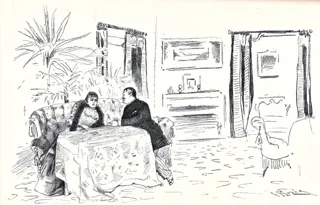
 Hedda Gablerby Henrik IbsenA general's daughter, bored in a new marriage, sets out to control a man's destiny.
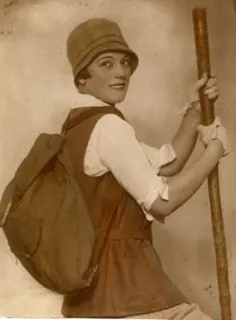 The Master Builderby Henrik IbsenAn ageing architect who fears the young is visited by a young woman who holds him to a promise.
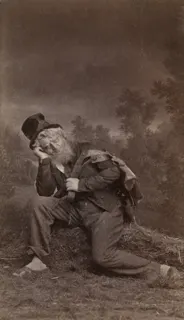 Peer Gyntby Henrik IbsenA boastful dreamer runs from himself across the world for a lifetime, while one woman waits for him.
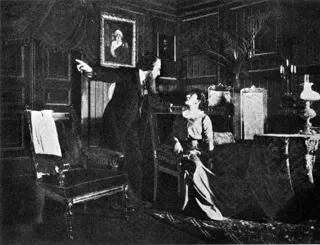 Rosmersholmby Henrik IbsenA former clergyman and the woman who lives with him are haunted by his wife's suicide.
Act 1
A spacious garden-room, with one door to the left, and two doors to the right. In the middle of the room a round table, with chairs about it. On the table lie books, periodicals, and newspapers. In the foreground to the left a window, and by it a small sofa, with a worktable in front of it. In the background, the room is continued into a somewhat narrower conservatory, the walls of which are formed by large panes of glass. In the right-hand wall of the conservatory is a door leading down into the garden. Through the glass wall a gloomy fjord landscape is faintly visible, veiled by steady rain.
ENGSTRAND, the carpenter, stands by the garden door. His left leg is somewhat bent; he has a clump of wood under the sole of his boot. REGINA, with an empty garden syringe in her hand, hinders him from advancing.
[In a low voice] What do you want? Stop where you are. You're positively dripping.
It's the Lord's own rain, my girl.
It's the devil's rain, I say.
Lord, how you talk, Regina. [Limps a step or two forward into the room.] It's just this as I wanted to say
Don't clatter so with that foot of yours, I tell you! The young master's asleep upstairs.
Asleep? In the middle of the day?
It's no business of yours.
I was out on the loose last night
I can quite believe that.
Yes, we're weak vessels, we poor mortals, my girl
So it seems.
and temptations are manifold in this world, you see. But all the same, I was hard at work, God knows, at half-past five this morning.
Very well; only be off now. I won't stop here and have rendezvous's [Note: This and other French words by Regina are in that language in the original] with you.
What do you say you won't have?
I won't have any one find you here; so just you go about your business.
[Advances a step or two] Blest if I go before I've had a talk with you. This afternoon I shall have finished my work at the school house, and then I shall take to-night's boat and be off home to the town.
[Mutters] Pleasant journey to you!
Thank you, my child. To-morrow the Orphanage is to be opened, and then there'll be fine doings, no doubt, and plenty of intoxicating drink going, you know. And nobody shall say of Jacob Engstrand that he can't keep out of temptation's way.
Oh!
You see, there's to be heaps of grand folks here to-morrow. Pastor Manders is expected from town, too.
He's coming to-day.
There, you see! And I should be cursedly sorry if he found out anything against me, don't you understand?
Oho! is that your game?
Is what my game?
[Looking hard at him] What are you going to fool Pastor Manders into doing, this time?
Sh! sh! Are you crazy? Do I want to fool Pastor Manders? Oh no! Pastor Manders has been far too good a friend to me for that. But I just wanted to say, you know--that I mean to be off home again to-night.
The sooner the better, say I.
Yes, but I want you with me, Regina.
[Open-mouthed] You want me--? What are you talking about?
I want you to come home with me, I say.
[Scornfully] Never in this world shall you get me home with you.
Oh, we'll see about that.
Yes, you may be sure we'll see about it! Me, that have been brought up by a lady like Mrs Alving! Me, that am treated almost as a daughter here! Is it me you want to go home with you?--to a house like yours? For shame!
What the devil do you mean? Do you set yourself up against your father, you hussy?
[Mutters without looking at him] You've said often enough I was no concern of yours.
Pooh! Why should you bother about that
Haven't you many a time sworn at me and called me a--? Fi donc!
Curse me, now, if ever I used such an ugly word.
Oh, I remember very well what word you used.
Well, but that was only when I was a bit on, don't you know? Temptations are manifold in this world, Regina.
Ugh!
And besides, it was when your mother was that aggravating--I had to find something to twit her with, my child. She was always setting up for a fine lady. [Mimics.] "Let me go, Engstrand; let me be. Remember I was three years in Chamberlain Alving's family at Rosenvold." [Laughs.] Mercy on us! She could never forget that the Captain was made a Chamberlain while she was in service here.
Poor mother! you very soon tormented her into her grave.
[With a twist of his shoulders] Oh, of course! I'm to have the blame for everything.
[Turns away; half aloud] Ugh--! And that leg too!
What do you say, my child?
Pied de mouton.
Is that English, eh?
Yes.
Ay, ay; you've picked up some learning out here; and that may come in useful now, Regina.
[After a short silence] What do you want with me in town?
Can you ask what a father wants with his only child? A'n't I a lonely, forlorn widower?
Oh, don't try on any nonsense like that with me! Why do you want me?
Well, let me tell you, I've been thinking of setting up in a new line of business.
[Contemptuously] You've tried that often enough, and much good you've done with it.
Yes, but this time you shall see, Regina! Devil take me
[Stamps] Stop your swearing!
Hush, hush; you're right enough there, my girl. What I wanted to say was just this--I've laid by a very tidy pile from this Orphanage job.
Have you? That's a good thing for you.
What can a man spend his ha'pence on here in this country hole?
Well, what then?
Why, you see, I thought of putting the money into some paying speculation. I thought of a sort of a sailor's tavern
Pah!
A regular high-class affair, of course; not any sort of pig-sty for common sailors. No! damn it! it would be for captains and mates, and--and--regular swells, you know.
And I was to--?
You were to help, to be sure. Only for the look of the thing, you understand. Devil a bit of hard work shall you have, my girl. You shall do exactly what you like.
Oh, indeed!
But there must be a petticoat in the house; that's as clear as daylight. For I want to have it a bit lively like in the evenings, with singing and dancing, and so on. You must remember they're weary wanderers on the ocean of life. [Nearer.] Now don't be a fool and stand in your own light, Regina. What's to become of you out here? Your mistress has given you a lot of learning; but what good is that to you? You're to look after the children at the new Orphanage, I hear. Is that the sort of thing for you, eh? Are you so dead set on wearing your life out for a pack of dirty brats?
No; if things go as I want them to--Well there's no saying--there's no saying.
What do you mean by "there's no saying"?
Never you mind.--How much money have you saved?
What with one thing and another, a matter of seven or eight hundred crowns. [A "krone" is equal to one shilling and three-halfpence.]
That's not so bad.
It's enough to make a start with, my girl.
Aren't you thinking of giving me any?
No, I'm blest if I am!
Not even of sending me a scrap of stuff for a new dress?
Come to town with me, my lass, and you'll soon get dresses enough.
Pooh! I can do that on my own account, if I want to.
No, a father's guiding hand is what you want, Regina. Now, I've got my eye on a capital house in Little Harbour Street. They don't want much ready-money; and it could be a sort of a Sailors' Home, you know.
But I will not live with you! I have nothing whatever to do with you. Be off!
You wouldn't stop long with me, my girl. No such luck! If you knew how to play your cards, such a fine figure of a girl as you've grown in the last year or two
Well?
You'd soon get hold of some mate--or maybe even a captain
I won't marry any one of that sort. Sailors have no savoir vivre.
What's that they haven't got?
I know what sailors are, I tell you. They're not the sort of people to marry.
Then never mind about marrying them. You can make it pay all the same. [More confidentially.] He--the Englishman--the man with the yacht--he came down with three hundred dollars, he did; and she wasn't a bit handsomer than you.
[Making for him] Out you go!
[Falling back] Come, come! You're not going to hit me, I hope.
Yes, if you begin talking about mother I shall hit you. Get away with you, I say! [Drives him back towards the garden door.] And don't slam the doors. Young Mr. Alving
He's asleep; I know. You're mightily taken up about young Mr. Alving--[More softly.] Oho! you don't mean to say it's him as--?
Be off this minute! You're crazy, I tell you! No, not that way. There comes Pastor Manders. Down the kitchen stairs with you.
[Towards the right] Yes, yes, I'm going. But just you talk to him as is coming there. He's the man to tell you what a child owes its father. For I am your father all the same, you know. I can prove it from the church register.
He goes out through the second door to the right, which REGINA has opened, and closes again after him. REGINA glances hastily at herself in the mirror, dusts herself with her pocket handkerchief; and settles her necktie; then she busies herself with the flowers.
PASTOR MANDERS, wearing an overcoat, carrying an umbrella, and with a small travelling-bag on a strap over his shoulder, comes through the garden door into the conservatory.
Good-morning, Miss Engstrand.
[Turning round, surprised and pleased] No, really! Good morning, Pastor Manders. Is the steamer in already?
It is just in. [Enters the sitting-room.] Terrible weather we have been having lately.
[Follows him] It's such blessed weather for the country, sir.
No doubt; you are quite right. We townspeople give too little thought to that. [He begins to take of his overcoat.]
Oh, mayn't I help you?--There! Why, how wet it is? I'll just hang it up in the hall. And your umbrella, too--I'll open it and let it dry.
She goes out with the things through the second door on the right. PASTOR MANDERS takes off his travelling bag and lays it and his hat on a chair. Meanwhile REGINA comes in again.
Ah, it's a comfort to get safe under cover. I hope everything is going on well here?
Yes, thank you, sir.
You have your hands full, I suppose, in preparation for to-morrow?
Yes, there's plenty to do, of course.
And Mrs. Alving is at home, I trust?
Oh dear, yes. She's just upstairs, looking after the young master's chocolate.
Yes, by-the-bye--I heard down at the pier that Oswald had arrived.
Yes, he came the day before yesterday. We didn't expect him before to-day.
Quite strong and well, I hope?
Yes, thank you, quite; but dreadfully tired with the journey. He has made one rush right through from Paris--the whole way in one train, I believe. He's sleeping a little now, I think; so perhaps we'd better talk a little quietly.
Sh!--as quietly as you please.
[Arranging an arm-chair beside the table] Now, do sit down, Pastor Manders, and make yourself comfortable. [He sits down; she places a footstool under his feet.] There! Are you comfortable now, sir?
Thanks, thanks, extremely so. [Looks at her.] Do you know, Miss Engstrand, I positively believe you have grown since I last saw you.
Do you think so, Sir? Mrs. Alving says I've filled out too.
Filled out? Well, perhaps a little; just enough.
Short pause.
Shall I tell Mrs. Alving you are here?
Thanks, thanks, there is no hurry, my dear child.--By-the-bye, Regina, my good girl, tell me: how is your father getting on out here?
Oh, thank you, sir, he's getting on well enough.
He called upon me last time he was in town.
Did he, indeed? He's always so glad of a chance of talking to you, sir.
And you often look in upon him at his work, I daresay?
I? Oh, of course, when I have time, I
Your father is not a man of strong character, Miss Engstrand. He stands terribly in need of a guiding hand.
Oh, yes; I daresay he does.
He requires some one near him whom he cares for, and whose judgment he respects. He frankly admitted as much when he last came to see me.
Yes, he mentioned something of the sort to me. But I don't know whether Mrs. Alving can spare me; especially now that we've got the new Orphanage to attend to. And then I should be so sorry to leave Mrs. Alving; she has always been so kind to me.
But a daughter's duty, my good girl--Of course, we should first have to get your mistress's consent.
But I don't know whether it would be quite proper for me, at my age, to keep house for a single man.
What! My dear Miss Engstrand! When the man is your own father!
Yes, that may be; but all the same--Now, if it were in a thoroughly nice house, and with a real gentleman
Why, my dear Regina
one I could love and respect, and be a daughter to
Yes, but my dear, good child
Then I should be glad to go to town. It's very lonely out here; you know yourself, sir, what it is to be alone in the world. And I can assure you I'm both quick and willing. Don't you know of any such place for me, sir?
I? No, certainly not.
But, dear, dear Sir, do remember me if
[Rising] Yes, yes, certainly, Miss Engstrand.
For if I
Will you be so good as to tell your mistress I am here?
I will, at once, sir. [She goes out to the left.]
[Paces the room two or three times, stands a moment in the background with his hands behind his back, and looks out over the garden. Then he returns to the table, takes up a book, and looks at the title-page; starts, and looks at several books] Ha--indeed!
MRS. ALVING enters by the door on the left; she is followed by REGINA, who immediately goes out by the first door on the right.
[Holds out her hand] Welcome, my dear Pastor.
How do you do, Mrs. Alving? Here I am as I promised.
Always punctual to the minute.
You may believe it was not so easy for me to get away. With all the Boards and Committees I belong to
That makes it all the kinder of you to come so early. Now we can get through our business before dinner. But where is your portmanteau?
[Quickly] I left it down at the inn. I shall sleep there to-night.
[Suppressing a smile] Are you really not to be persuaded, even now, to pass the night under my roof?
No, no, Mrs. Alving; many thanks. I shall stay at the inn, as usual. It is so conveniently near the landing-stage.
Well, you must have your own way. But I really should have thought we two old people
Now you are making fun of me. Ah, you're naturally in great spirits to-day--what with to-morrow's festival and Oswald's return.
Yes; you can think what a delight it is to me! It's more than two years since he was home last. And now he has promised to stay with me all the winter.
Has he really? That is very nice and dutiful of him. For I can well believe that life in Rome and Paris has very different attractions from any we can offer here.
Ah, but here he has his mother, you see. My own darling boy--he hasn't forgotten his old mother!
It would be grievous indeed, if absence and absorption in art and that sort of thing were to blunt his natural feelings.
Yes, you may well say so. But there's nothing of that sort to fear with him. I'm quite curious to see whether you know him again. He'll be down presently; he's upstairs just now, resting a little on the sofa. But do sit down, my dear Pastor.
Thank you. Are you quite at liberty--?
Certainly. [She sits by the table.]
Very well. Then let me show you--[He goes to the chair where his travelling-bag lies, takes out a packet of papers, sits down on the opposite side of the table, and tries to find a clear space for the papers.] Now, to begin with, here is--[Breaking off.] Tell me, Mrs. Alving, how do these books come to be here?
These books? They are books I am reading.
Do you read this sort of literature?
Certainly I do.
Do you feel better or happier for such reading?
I feel, so to speak, more secure.
That is strange. How do you mean?
Well, I seem to find explanation and confirmation of all sorts of things I myself have been thinking. For that is the wonderful part of it, Pastor Manders--there is really nothing new in these books, nothing but what most people think and believe. Only most people either don't formulate it to themselves, or else keep quiet about it.
Great heavens! Do you really believe that most people--?
I do, indeed.
But surely not in this country? Not here among us?
Yes, certainly; here as elsewhere.
Well, I really must say--!
For the rest, what do you object to in these books?
Object to in them? You surely do not suppose that I have nothing better to do than to study such publications as these?
That is to say, you know nothing of what you are condemning?
I have read enough about these writings to disapprove of them.
Yes; but your own judgment
My dear Mrs. Alving, there are many occasions in life when one must rely upon others. Things are so ordered in this world; and it is well that they are. Otherwise, what would become of society?
Well, well, I daresay you're right there.
Besides, I of course do not deny that there may be much that is attractive in such books. Nor can I blame you for wishing to keep up with the intellectual movements that are said to be going on in the great world-where you have let your son pass so much of his life. But
But?
[Lowering his voice] But one should not talk about it, Mrs. Alving. One is certainly not bound to account to everybody for what one reads and thinks within one's own four walls.
Of course not; I quite agree with you.
Only think, now, how you are bound to consider the interests of this Orphanage, which you decided on founding at a time when--if I understand you rightly--you thought very differently on spiritual matters.
Oh, yes; I quite admit that. But it was about the Orphanage
It was about the Orphanage we were to speak; yes. All I say is: prudence, my dear lady! And now let us get to business. [Opens the packet, and takes out a number of papers.] Do you see these?
The documents?
All--and in perfect order. I can tell you it was hard work to get them in time. I had to put on strong pressure. The authorities are almost morbidly scrupulous when there is any decisive step to be taken. But here they are at last. [Looks through the bundle.] See! here is the formal deed of gift of the parcel of ground known as Solvik in the Manor of Rosenvold, with all the newly constructed buildings, schoolrooms, master's house, and chapel. And here is the legal fiat for the endowment and for the Bye-laws of the Institution. Will you look at them? [Reads.] "Bye-laws for the Children's Home to be known as 'Captain Alving's Foundation.'"
[Looks long at the paper] So there it is.
I have chosen the designation "Captain" rather than "Chamberlain." "Captain" looks less pretentious.
Oh, yes; just as you think best.
And here you have the Bank Account of the capital lying at interest to cover the current expenses of the Orphanage.
Thank you; but please keep it--it will be more convenient.
With pleasure. I think we will leave the money in the Bank for the present. The interest is certainly not what we could wish--four per cent. and six months' notice of withdrawal. If a good mortgage could be found later on--of course it must be a first mortgage and an unimpeachable security--then we could consider the matter.
Certainly, my dear Pastor Manders. You are the best judge in these things.
I will keep my eyes open at any rate.--But now there is one thing more which I have several times been intending to ask you.
And what is that?
Shall the Orphanage buildings be insured or not?
Of course they must be insured.
Well, wait a moment, Mrs. Alving. Let us look into the matter a little more closely.
I have everything insured; buildings and movables and stock and crops.
Of course you have--on your own estate. And so have I--of course. But here, you see, it is quite another matter. The Orphanage is to be consecrated, as it were, to a higher purpose.
Yes, but that's no reason
For my own part, I should certainly not see the smallest impropriety in guarding against all contingencies
No, I should think not.
But what is the general feeling in the neighbourhood? You, of course, know better than I.
Well--the general feeling
Is there any considerable number of people--really responsible people--who might be scandalised?
What do you mean by "really responsible people"?
Well, I mean people in such independent and influential positions that one cannot help attaching some weight to their opinions.
There are several people of that sort here, who would very likely be shocked if
There, you see! In town we have many such people. Think of all my colleague's adherents! People would be only too ready to interpret our action as a sign that neither you nor I had the right faith in a Higher Providence.
But for your own part, my dear Pastor, you can at least tell yourself that
Yes, I know--I know; my conscience would be quite easy, that is true enough. But nevertheless we should not escape grave misinterpretation; and that might very likely react unfavourably upon the Orphanage.
Well, in that case
Nor can I entirely lose sight of the difficult--I may even say painful--position in which I might perhaps be placed. In the leading circles of the town, people take a lively interest in this Orphanage. It is, of course, founded partly for the benefit of the town, as well; and it is to be hoped it will, to a considerable extent, result in lightening our Poor Rates. Now, as I have been your adviser, and have had the business arrangements in my hands, I cannot but fear that I may have to bear the brunt of fanaticism
Oh, you mustn't run the risk of that.
To say nothing of the attacks that would assuredly be made upon me in certain papers and periodicals, which
Enough, my dear Pastor Manders. That consideration is quite decisive.
Then you do not wish the Orphanage to be insured?
No. We will let it alone.
[Leaning hack in his chair] But if, now, a disaster were to happen? One can never tell--Should you be able to make good the damage?
No; I tell you plainly I should do nothing of the kind.
Then I must tell you, Mrs. Alving--we are taking no small responsibility upon ourselves.
Do you think we can do otherwise?
No, that is just the point; we really cannot do otherwise. We ought not to expose ourselves to misinterpretation; and we have no right whatever to give offence to the weaker brethren.
You, as a clergyman, certainly should not.
I really think, too, we may trust that such an institution has fortune on its side; in fact, that it stands under a special providence.
Let us hope so, Pastor Manders.
Then we will let it take its chance?
Yes, certainly.
Very well. So be it. [Makes a note.] Then--no insurance.
It's odd that you should just happen to mention the matter to-day
I have often thought of asking you about it
for we very nearly had a fire down there yesterday.
You don't say so!
Oh, it was a trifling matter. A heap of shavings had caught fire in the carpenter's workshop.
Where Engstrand works?
Yes. They say he's often very careless with matches.
He has so much on his mind, that man--so many things to fight against. Thank God, he is now striving to lead a decent life, I hear.
Indeed! Who says so?
He himself assures me of it. And he is certainly a capital workman.
Oh, yes; so long as he's sober
Ah, that melancholy weakness! But, a is often driven to it by his injured leg, lie says,' Last time he was in town I was really touched by him. He came and thanked me so warmly for having got him work here, so that he might be near Regina.
He doesn't see much of her.
Oh, yes; he has a talk with her every day. He told me so himself.
Well, it may be so.
He feels so acutely that he needs some one to keep a firm hold on him when temptation comes. That is what I cannot help liking about Jacob Engstrand: he comes to you so helplessly, accusing himself and confessing his own weakness. The last time he was talking to me--Believe me, Mrs. Alving, supposing it were a real necessity for him to have Regina home again
[Rising hastily] Regina!
you must not set yourself against it.
Indeed I shall set myself against it. And besides--Regina is to have a position in the Orphanage.
But, after all, remember he is her father
Oh, I know very well what sort of a father he has been to her. No! She shall never go to him with my goodwill.
[Rising] My dear lady, don't take the matter so warmly. You sadly misjudge poor Engstrand. You seem to be quite terrified
[More quietly] It makes no difference. I have taken Regina into my house, and there she shall stay. [Listens.] Hush, my dear Mr. Manders; say no more about it. [Her face lights up with gladness.] Listen! there is Oswald coming downstairs. Now we'll think of no one but him.
OSWALD ALVING, in a light overcoat, hat in hand, and smoking a large meerschaum, enters by the door on the left; he stops in the doorway.
Oh, I beg your pardon; I thought you were in the study. [Comes forward.] Good-morning, Pastor Manders.
[Staring] Ah--! How strange--!
Well now, what do you think of him, Mr. Manders?
I--I--can it really be--?
Yes, it's really the Prodigal Son, sir.
[Protesting] My dear young friend
Well, then, the Lost Sheep Found.
Oswald is thinking of the time when you were so much opposed to his becoming a painter.
To our human eyes many a step seems dubious, which afterwards proves--[Wrings his hand.] But first of all, welcome, welcome home! Do not think, my dear Oswald--I suppose I may call you by your Christian name?
What else should you call me?
Very good. What I wanted to say was this, my dear Oswald you must not think that I utterly condemn the artist's calling. I have no doubt there are many who can keep their inner self unharmed in that profession, as in any other.
Let us hope so.
[Beaming with delight] I know one who has kept both his inner and his outer self unharmed. Just look at him, Mr. Manders.
[Moves restlessly about the room] Yes, yes, my dear mother; let's say no more about it.
Why, certainly--that is undeniable. And you have begun to make a name for yourself already. The newspapers have often spoken of you, most favourably. Just lately, by-the-bye, I fancy I haven't seen your name quite so often.
[Up in the conservatory] I haven't been able to paint so much lately.
Even a painter needs a little rest now and then.
No doubt, no doubt. And meanwhile he can be preparing himself and mustering his forces for some great work.
Yes.--Mother, will dinner soon be ready?
In less than half an hour. He has a capital appetite, thank God.
And a taste for tobacco, too.
I found my father's pipe in my room
Aha--then that accounts for it!
For what?
When Oswald appeared there, in the doorway, with the pipe in his mouth, I could have sworn I saw his father, large as life.
No, really?
Oh, how can you say so? Oswald takes after me.
Yes, but there is an expression about the corners of the mouth--something about the lips--that reminds one exactly of Alving: at any rate, now that he is smoking.
Not in the least. Oswald has rather a clerical curve about his mouth, I think.
Yes, yes; some of my colleagues have much the same expression.
But put your pipe away, my dear boy; I won't have smoking in here.
[Does so] By all means. I only wanted to try it; for I once smoked it when I was a child.
You?
Yes. I was quite small at the time. I recollect I came up to father's room one evening when he was in great spirits.
Oh, you can't recollect anything of those times.
Yes, I recollect it distinctly. He took me on his knee, and gave me the pipe. "Smoke, boy," he said; "smoke away, boy!" And I smoked as hard as I could, until I felt I was growing quite pale, and the perspiration stood in great drops on my forehead. Then he burst out laughing heartily
That was most extraordinary.
My dear friend, it's only something Oswald has dreamt.
No, mother, I assure you I didn't dream it. For--don't you remember this?--you came and carried me out into the nursery. Then I was sick, and I saw that you were crying.--Did father often play such practical jokes?
In his youth he overflowed with the joy of life
And yet he managed to do so much in the world; so much that was good and useful; although he died so early.
Yes, you have inherited the name of an energetic and admirable man, my dear Oswald Alving. No doubt it will be an incentive to you
It ought to, indeed.
It was good of you to come home for the ceremony in his honour.
I could do no less for my father.
And I am to keep him so long! That is the best of all.
You are going to pass the winter at home, I hear.
My stay is indefinite, sir.-But, ah! it is good to be at home!
[Beaming] Yes, isn't it, dear?
[Looking sympathetically at him] You went out into the world early, my dear Oswald.
I did. I sometimes wonder whether it wasn't too early.
Oh, not at all. A healthy lad is all the better for it; especially when he's an only child. He oughtn't to hang on at home with his mother and father, and get spoilt.
That is a very disputable point, Mrs. Alving. A child's proper place is, and must be, the home of his fathers.
There I quite agree with you, Pastor Manders.
Only look at your own son--there is no reason why we should not say it in his presence--what has the consequence been for him? He is six or seven and twenty, and has never had the opportunity of learning what a well-ordered home really is.
I beg your pardon, Pastor; there you're quite mistaken.
Indeed? I thought you had lived almost exclusively in artistic circles.
So I have.
And chiefly among the younger artists?
Yes, certainly.
But I thought few of those young fellows could afford to set up house and support a family.
There are many who cannot afford to marry, sir.
Yes, that is just what I say.
But they may have a home for all that. And several of them have, as a matter of fact; and very pleasant, well-ordered homes they are, too.
MRS. ALVING follows with breathless interest; nods, but says nothing.
But I'm not talking of bachelors' quarters. By a "home" I understand the home of a family, where a man lives with his wife and children.
Yes; or with his children and his children's mother.
[Starts; clasps his hands] But, good heavens
Well?
Lives with--his children's mother!
Yes. Would you have him turn his children's mother out of doors?
Then it is illicit relations you are talking of! Irregular marriages, as people call them!
I have never noticed anything particularly irregular about the life these people lead.
But how is it possible that a--a young man or young woman with any decency of feeling can endure to live in that way?--in the eyes of all the world!
What are they to do? A poor young artist--a poor girl--marriage costs a great deal. What are they to do?
What are they to do? Let me tell you, Mr. Alving, what they ought to do. They ought to exercise self-restraint from the first; that is what they ought to do.
That doctrine will scarcely go down with warm-blooded young people who love each other.
No, scarcely!
[Continuing] How can the authorities tolerate such things! Allow them to go on in the light of day! [Confronting MRS. ALVING.] Had I not cause to be deeply concerned about your son? In circles where open immorality prevails, and has even a sort of recognised position--!
Let me tell you, sir, that I have been in the habit of spending nearly all my Sundays in one or two such irregular homes
Sunday of all days!
Isn't that the day to enjoy one's self? Well, never have I heard an offensive word, and still less have I witnessed anything that could be called immoral. No; do you know when and where I have come across immorality in artistic circles?
No, thank heaven, I don't!
Well, then, allow me to inform you. I have met with it when one or other of our pattern husbands and fathers has come to Paris to have a look round on his own account, and has done the artists the honour of visiting their humble haunts. They knew what was what. These gentlemen could tell us all about places and things we had never dreamt of.
What! Do you mean to say that respectable men from home here would--?
Have you never heard these respectable men, when they got home again, talking about the way in which immorality runs rampant abroad?
Yes, no doubt
I have too.
Well, you may take their word for it. They know what they are talking about! [Presses has hands to his head.] Oh! that that great, free, glorious life out there should be defiled in such a way!
You mustn't get excited, Oswald. It's not good for you.
Yes; you're quite right, mother. It's bad for me, I know. You see, I'm wretchedly worn out. I shall go for a little turn before dinner. Excuse me, Pastor: I know you can't take my point of view; but I couldn't help speaking out. [He goes out by the second door to the right.]
My poor boy!
You may well say so. Then this is what he has come to!
MRS. ALVING looks at him silently.
[Walking up and down] He called himself the Prodigal Son. Alas! alas!
MRS. ALVING continues looking at him.
And what do you say to all this?
I say that Oswald was right in every word.
[Stands still] Right? Right! In such principles?
Here, in my loneliness, I have come to the same way of thinking, Pastor Manders. But I have never dared to say anything. Well! now my boy shall speak for me.
You are greatly to be pitied, Mrs. Alving. But now I must speak seriously to you. And now it is no longer your business manager and adviser, your own and your husband's early friend, who stands before you. It is the priest--the priest who stood before you in the moment of your life when you had gone farthest astray.
And what has the priest to say to me?
I will first stir up your memory a little. The moment is well chosen. To-morrow will be the tenth anniversary of your husband's death. To-morrow the memorial in his honour will be unveiled. To-morrow I shall have to speak to the whole assembled multitude. But to-day I will speak to you alone.
Very well, Pastor Manders. Speak.
Do you remember that after less than a year of married life you stood on the verge of an abyss? That you forsook your house and home? That you fled from your husband? Yes, Mrs. Alving--fled, fled, and refused to return to him, however much he begged and prayed you?
Have you forgotten how infinitely miserable I was in that first year?
It is the very mark of the spirit of rebellion to crave for happiness in this life. What right have we human beings to happiness? We have simply to do our duty, Mrs. Alving! And your duty was to hold firmly to the man you had once chosen, and to whom you were bound by the holiest ties.
You know very well what sort of life Alving was leading--what excesses he was guilty of.
I know very well what rumours there were about him; and I am the last to approve the life he led in his young days, if report did not wrong him. But a wife is not appointed to be her husband's judge. It was your duty to bear with humility the cross which a Higher Power had, in its wisdom, laid upon you. But instead of that you rebelliously throw away the cross, desert the backslider whom you should have supported, go and risk your good name and reputation, and--nearly succeed in ruining other people's reputation into the bargain.
Other people's? One other person's, you mean.
It was incredibly reckless of you to seek refuge with me.
With our clergyman? With our intimate friend?
Just on that account. Yes, you may thank God that I possessed the necessary firmness; that I succeeded in dissuading you from your wild designs; and that it was vouchsafed me to lead you back to the path of duty, and home to your lawful husband.
Yes, Pastor Manders, that was certainly your work.
I was but a poor instrument in a Higher Hand. And what a blessing has it not proved to you, all the days of your life, that I induced you to resume the yoke of duty and obedience! Did not everything happen as I foretold? Did not Alving turn his back on his errors, as a man should? Did he not live with you from that time, lovingly and blamelessly, all his days? Did he not become a benefactor to the whole district? And did he not help you to rise to his own level, so that you, little by little, became his assistant in all his undertakings? And a capital assistant, too--oh, I know, Mrs. Alving, that praise is due to you.--But now I come to the next great error in your life.
What do you mean?
Just as you once disowned a wife's duty, so you have since disowned a mother's.
Ah--!
You have been all your life under the dominion of a pestilent spirit of self-will. The whole bias of your mind has been towards insubordination and lawlessness. You have never known how to endure any bond. Everything that has weighed upon you in life you have cast away without care or conscience, like a burden you were free to throw off at will. It did not please you to be a wife any longer, and you left your husband. You found it troublesome to be a mother, and you sent your child forth among strangers.
Yes, that is true. I did so.
And thus you have become a stranger to him.
No! no! I am not.
Yes, you are; you must be. And in what state of mind has he returned to you? Bethink yourself well, Mrs. Alving. You sinned greatly against your husband;--that you recognise by raising yonder memorial to him. Recognise now, also, how you have sinned against your son--there may yet be time to lead him back from the paths of error. Turn back yourself, and save what may yet be saved in him. For [With uplifted forefinger] verily, Mrs. Alving, you are a guilt-laden mother! This I have thought it my duty to say to you.
Silence.
[Slowly and with self-control] You have now spoken out, Pastor Manders; and to-morrow you are to speak publicly in memory of my husband. I shall not speak to-morrow. But now I will speak frankly to you, as you have spoken to me.
To be sure; you will plead excuses for your conduct
No. I will only tell you a story.
Well--?
All that you have just said about my husband and me, and our life after you had brought me back to the path of duty--as you called it--about all that you know nothing from personal observation. From that moment you, who had been our intimate friend, never set foot in our house gain.
You and your husband left the town immediately after.
Yes; and in my husband's lifetime you never came to see us. It was business that forced you to visit me when you undertook the affairs of the Orphanage.
[Softly and hesitatingly] Helen--if that is meant as a reproach, I would beg you to bear in mind
the regard you owed to your position, yes; and that I was a runaway wife. One can never be too cautious with such unprincipled creatures.
My dear--Mrs. Alving, you know that is an absurd exaggeration
Well well, suppose it is. My point is that your judgment as to my married life is founded upon nothing but common knowledge and report.
I admit that. What then?
Well, then, Pastor Manders--I will tell you the truth. I have sworn to myself that one day you should know it--you alone!
What is the truth, then?
The truth is that my husband died just as dissolute as he had lived all his days.
[Feeling after a chair] What do you say?
After nineteen years of marriage, as dissolute--in his desires at any rate--as he was before you married us.
And those-those wild oats--those irregularities--those excesses, if you like--you call "a dissolute life"?
Our doctor used the expression.
I do not understand you.
You need not.
It almost makes me dizzy. Your whole married life, the seeming union of all these years, was nothing more than a hidden abyss!
Neither more nor less. Now you know it.
This is--this is inconceivable to me. I cannot grasp it! I cannot realise it! But how was it possible to--? How could such a state of things be kept secret?
That has been my ceaseless struggle, day after day. After Oswald's birth, I thought Alving seemed to be a little better. But it did not last long. And then I had to struggle twice as hard, fighting as though for life or death, so that nobody should know what sort of man my child's father was. And you know what power Alving had of winning people's hearts. Nobody seemed able to believe anything but good of him. He was one of those people whose life does not bite upon their reputation. But at last, Mr. Manders--for you must know the whole story--the most repulsive thing of all happened.
More repulsive than what you have told me?
I had gone on bearing with him, although I knew very well the secrets of his life out of doors. But when he brought the scandal within our own walls
Impossible! Here!
Yes; here in our own home. It was there [Pointing towards the first door on the right], in the dining-room, that I first came to know of it. I was busy with something in there, and the door was standing ajar. I heard our housemaid come up from the garden, with water for those flowers.
Well--?
Soon after, I heard Alving come in too. I heard him say something softly to her. And then I heard--[With a short laugh]--oh! it still sounds in my ears, so hateful and yet so ludicrous--I heard my own servant-maid whisper, "Let me go, Mr. Alving! Let me be!"
What unseemly levity on his part'! But it cannot have been more than levity, Mrs. Alving; believe me, it cannot.
I soon knew what to believe. Mr. Alving had his way with the girl; and that connection had consequences, Mr. Manders.
[As though petrified] Such things in this house--in this house!
I had borne a great deal in this house. To keep him at home in the evenings, and at night, I had to make myself his boon companion in his secret orgies up in his room. There I have had to sit alone with him, to clink glasses and drink with him, and to listen to his ribald, silly talk. I have had to fight with him to get him dragged to bed
[Moved] And you were able to bear all this!
I had to bear it for my little boy's sake. But when the last insult was added; when my own servant-maid--; then I swore to myself: This shall come to an end! And so I took the reins into my own hand--the whole control--over him and everything else. For now I had a weapon against him, you see; he dared not oppose me. It was then I sent Oswald away from home. He was nearly seven years old, and was beginning to observe and ask questions, as children do. That I could not bear. It seemed to me the child must be poisoned by merely breathing the air of this polluted home. That was why I sent him away. And now you can see, too, why he was never allowed to set foot inside his home so long as his father lived. No one knows what that cost me.
You have indeed had a life of trial.
I could never have borne it if I had not had my work. For I may truly say that I have worked! All the additions to the estate--all the improvements--all the labour-saving appliances, that Alving was so much praised for having introduced--do you suppose he had energy for anything of the sort?--he, who lay all day on the sofa, reading an old Court Guide! No; but I may tell you this too: when he had his better intervals, it was I who urged him on; it was I who had to drag the whole load when he relapsed into his evil ways, or sank into querulous wretchedness.
And it is to this man that you raise a memorial?
There you see the power of an evil conscience.
Evil--? What do you mean?
It always seemed to me impossible but that the truth must come out and be believed. So the Orphanage was to deaden all rumours and set every doubt at rest.
In that you have certainly not missed your aim, Mrs. Alving.
And besides, I had one other reason. I was determined that Oswald, my own boy, should inherit nothing whatever from his father.
Then it is Alving's fortune that--?
Yes. The sums I have spent upon the Orphanage, year by year, make up the amount--I have reckoned it up precisely--the amount which made Lieutenant Alving "a good match" in his day.
I don't understand
It was my purchase-money. I do not choose that that money should pass into Oswald's hands. My son shall have everything from me--everything.
OSWALD ALVING enters through the second door to the right; he has taken of his hat and overcoat in the hall.
[Going towards him] Are you back again already? My dear, dear boy!
Yes. What can a fellow do out of doors in this eternal rain? But I hear dinner is ready. That's capital!
[With a parcel, from the dining-room] A parcel has come for you, Mrs. Alving. [Hands it to her.]
[With a glance at MR. MANDERS] No doubt copies of the ode for to-morrow's ceremony.
H'm
And dinner is ready.
Very well. We will come directly. I will just--[Begins to open the parcel.]
[To OSWALD] Would Mr. Alving like red or white wine?
Both, if you please.
Bien. Very well, sir. [She goes into the dining-room.]
I may as well help to uncork it. [He also goes into the dining room, the door of which swings half open behind him.]
[Who has opened the parcel] Yes, I thought so. Here is the Ceremonial Ode, Pastor Manders.
[With folded hands] With what countenance I am to deliver my discourse to-morrow--!
Oh, you will get through it somehow.
[Softly, so as not to be heard in the dining-room] Yes; it would not do to provoke scandal.
[Under her breath, but firmly] No. But then this long, hateful comedy will be ended. From the day after to-morrow, I shall act in every way as though he who is dead had never lived in this house. There shall be no one here but my boy and his mother.
From the dining-room comes the noise of a chair overturned, and at the same moment is heard:
[Sharply, but in a whisper] Oswald! take care! are you mad? Let me go!
[Starts in terror] Ah--!
She stares wildly towards the half-open door. OSWALD is heard laughing and humming. A bottle is uncorked.
[Agitated] What can be the matter? What is it, Mrs. Alving?
[Hoarsely] Ghosts! The couple from the conservatory--risen again!
Is it possible! Regina--? Is she--?
Yes. Come. Not a word--!
She seizes PASTOR MANDERS by the arm, and walks unsteadily towards the dining-room.
Act 2
The same room. The mist still lies heavy over the landscape.
MANDERS and MRS. ALVING enter from the dining-room.
[Still in the doorway] Velbekomme [Note: A phrase equivalent to the German Prosit die Mahlzeit--May good digestion wait on appetite.], Mr. Manders. [Turns back towards the dining-room.] Aren't you coming too, Oswald?
[From within] No, thank you. I think I shall go out a little.
Yes, do. The weather seems a little brighter now. [She shuts the dining-room door, goes to the hall door, and calls:] Regina!
[Outside] Yes, Mrs. Alving?
Go down to the laundry, and help with the garlands.
Yes, Mrs. Alving.
MRS. ALVING assures herself that REGINA goes; then shuts the door.
I suppose he cannot overhear us in there?
Not when the door is shut. Besides, he's just going out.
I am still quite upset. I don't know how I could swallow a morsel of dinner.
[Controlling her nervousness, walks up and down] Nor I. But what is to be done now?
Yes; what is to be done? I am really quite at a loss. I am so utterly without experience in matters of this sort.
I feel sure that, so far, no mischief has been done.
No; heaven forbid! But it is an unseemly state of things, nevertheless.
It is only an idle fancy on Oswald's part; you may be sure of that.
Well, as I say, I am not accustomed to affairs of the kind. But I should certainly think
Out of the house she must go, and that immediately. That is as clear as daylight
Yes, of course she must.
But where to? It would not be right to
Where to? Home to her father, of course.
To whom did you say?
To her--But then, Engstrand is not--? Good God, Mrs. Alving, it's impossible! You must be mistaken after all.
Unfortunately there is no possibility of mistake. Johanna confessed everything to me; and Alving could not deny it. So there was nothing to be done but to get the matter hushed up.
No, you could do nothing else.
The girl left our service at once, and got a good sum of money to hold her tongue for the time. The rest she managed for herself when she got to town. She renewed her old acquaintance with Engstrand, no doubt let him see that she had money in her purse, and told him some tale about a foreigner who put in here with a yacht that summer. So she and Engstrand got married in hot haste. Why, you married them yourself.
But then how to account for--? I recollect distinctly Engstrand coming to give notice of the marriage. He was quite overwhelmed with contrition, and bitterly reproached himself for the misbehaviour he and his sweetheart had been guilty of.
Yes; of course he had to take the blame upon himself.
But such a piece of duplicity on his part! And towards me too! I never could have believed it of Jacob Engstrand. I shall not fail to take him seriously to task; he may be sure of that.--And then the immorality of such a connection! For money--! How much did the girl receive?
Three hundred dollars.
Just think of it--for a miserable three hundred dollars, to go and marry a fallen woman!
Then what have you to say of me? I went and married a fallen man.
Why--good heavens!--what are you talking about! A fallen man!
Do you think Alving was any purer when I went with him to the altar than Johanna was when Engstrand married her?
Well, but there is a world of difference between the two cases
Not so much difference after all--except in the price:--a miserable three hundred dollars and a whole fortune.
How can you compare such absolutely dissimilar cases? You had taken counsel with your own heart and with your natural advisers.
[Without looking at him] I thought you understood where what you call my heart had strayed to at the time.
[Distantly] Had I understood anything of the kind, I should not have been a daily guest in your husband's house.
At any rate, the fact remains that with myself I took no counsel whatever.
Well then, with your nearest relatives--as your duty bade you--with your mother and your two aunts.
Yes, that is true. Those three cast up the account for me. Oh, it's marvellous how clearly they made out that it would be downright madness to refuse such an offer. If mother could only see me now, and know what all that grandeur has come to!
Nobody can be held responsible for the result. This, at least, remains clear: your marriage was in full accordance with law and order.
[At the window] Oh, that perpetual law and order! I often think that is what does all the mischief in this world of ours.
Mrs. Alving, that is a sinful way of talking.
Well, I can't help it; I must have done with all this constraint and insincerity. I can endure it no longer. I must work my way out to freedom.
What do you mean by that?
[Drumming on the window frame] I ought never to have concealed the facts of Alving's life. But at that time I dared not do anything else-I was afraid, partly on my own account. I was such a coward.
A coward?
If people had come to know anything, they would have said--"Poor man! with a runaway wife, no wonder he kicks over the traces."
Such remarks might have been made with a certain show of right.
[Looking steadily at him] If I were what I ought to be, I should go to Oswald and say, "Listen, my boy: your father led a vicious life--"
Merciful heavens--!
and then I should tell him all I have told you--every word of it.
You shock me unspeakably, Mrs. Alving.
Yes; I know that. I know that very well. I myself am shocked at the idea. [Goes away from the window.] I am such a coward.
You call it "cowardice" to do your plain duty? Have you forgotten that a son ought to love and honour his father and mother?
Do not let us talk in such general terms. Let us ask: Ought Oswald to love and honour Chamberlain Alving?
Is there no voice in your mother's heart that forbids you to destroy your son's ideals?
But what about the truth?
But what about the ideals?
Oh--ideals, ideals! If only I were not such a coward!
Do not despise ideals, Mrs. Alving; they will avenge themselves cruelly. Take Oswald's case: he, unfortunately, seems to have few enough ideals as it is; but I can see that his father stands before him as an ideal.
Yes, that is true.
And this habit of mind you have yourself implanted and fostered by your letters.
Yes; in my superstitious awe for duty and the proprieties, I lied to my boy, year after year. Oh, what a coward--what a coward I have been!
You have established a happy illusion in your son's heart, Mrs. Alving; and assuredly you ought not to undervalue it.
H'm; who knows whether it is so happy after all--? But, at any rate, I will not have any tampering wide Regina. He shall not go and wreck the poor girl's life.
No; good God--that would be terrible!
If I knew he was in earnest, and that it would be for his happiness
What? What then?
But it couldn't be; for unfortunately Regina is not the right sort of woman.
Well, what then? What do you mean?
If I weren't such a pitiful coward, I should say to him, "Marry her, or make what arrangement you please, only let us have nothing underhand about it."
Merciful heavens, would you let them marry! Anything so dreadful--! so unheard of
Do you really mean "unheard of"? Frankly, Pastor Manders, do you suppose that throughout the country there are not plenty of married couples as closely akin as they?
I don't in the least understand you.
Oh yes, indeed you do.
Ah, you are thinking of the possibility that--Alas! yes, family life is certainly not always so pure as it ought to be. But in such a case as you point to, one can never know--at least with any certainty. Here, on the other hand--that you, a mother, can think of letting your son
But I cannot--I wouldn't for anything in the world; that is precisely what I am saying.
No, because you are a "coward," as you put it. But if you were not a "coward," then--? Good God! a connection so shocking!
So far as that goes, they say we are all sprung from connections of that sort. And who is it that arranged the world so, Pastor Manders?
Questions of that kind I must decline to discuss with you, Mrs. Alving; you are far from being in the right frame of mind for them. But that you dare to call your scruples "cowardly"--!
Let me tell you what I mean. I am timid and faint-hearted because of the ghosts that hang about me, and that I can never quite shake off.
What do you say hangs about you?
Ghosts! When I heard Regina and Oswald in there, it was as though ghosts rose up before me. But I almost think we are all of us ghosts, Pastor Manders. It is not only what we have inherited from our father and mother that "walks" in us. It is all sorts of dead ideas, and lifeless old beliefs, and so forth. They have no vitality, but they cling to us all the same, and we cannot shake them off. Whenever I take up a newspaper, I seem to see ghosts gliding between the lines. There must be ghosts all the country over, as thick as the sands of the sea. And then we are, one and all, so pitifully afraid of the light.
Aha--here we have the fruits of your reading. And pretty fruits they are, upon my word! Oh, those horrible, revolutionary, free-thinking books!
You are mistaken, my dear Pastor. It was you yourself who set me thinking; and I thank you for it with all my heart.
I!
Yes--when you forced me under the yoke of what you called duty and obligation; when you lauded as right and proper what my whole soul rebelled against as something loathsome. It was then that I began to look into the seams of your doctrines. I wanted only to pick at a single knot; but when I had got that undone, the whole thing ravelled out. And then I understood that it was all machine-sewn.
[Softly, with emotion] And was that the upshot of my life's hardest battle?
Call it rather your most pitiful defeat.
It was my greatest victory, Helen--the victory over myself.
It was a crime against us both.
When you went astray, and came to me crying, "Here I am; take me!" I commanded you, saying, "Woman, go home to your lawful husband." Was that a crime?
Yes, I think so.
We two do not understand each other.
Not now, at any rate.
Never--never in my most secret thoughts have I regarded you otherwise than as another's wife.
Oh--indeed?
Helen--!
People so easily forget their past selves.
I do not. I am what I always was.
[Changing the subject] Well well well; don't let us talk of old times any longer. You are now over head and ears in Boards and Committees, and I am fighting my battle with ghosts, both within me and without.
Those without I shall help you to lay. After all the terrible things I have heard from you today, I cannot in conscience permit an unprotected girl to remain in your house.
Don't you think the best plan would be to get her provided for?--I mean, by a good marriage.
No doubt. I think it would be desirable for her in every respect. Regina is now at the age when--Of course I don't know much about these things, but
Regina matured very early.
Yes, I thought so. I have an impression that she was remarkably well developed, physically, when I prepared her for confirmation. But in the meantime, she ought to be at home, under her father's eye--Ah! but Engstrand is not--That he--that he--could so hide the truth from me! [A knock at the door into the hall.]
Who can this be? Come in!
[In his Sunday clothes, in the doorway] I humbly beg your pardon, but
Aha! H'm
Is that you, Engstrand?
there was none of the servants about, so I took the great liberty of just knocking.
Oh, very well. Come in. Do you want to speak to me?
[Comes in] No, I'm obliged to you, ma'am; it was with his Reverence I wanted to have a word or two.
[Walking up and down the room] Ah--indeed! You want to speak to me, do you?
Yes, I'd like so terrible much to
[Stops in front of him] Well; may I ask what you want?
Well, it was just this, your Reverence: we've been paid off down yonder--my grateful thanks to you, ma'am,--and now everything's finished, I've been thinking it would be but right and proper if we, that have been working so honestly together all this time--well, I was thinking we ought to end up with a little prayer-meeting to-night.
A prayer-meeting? Down at the Orphanage?
Oh, if your Reverence doesn't think it proper
Oh yes, I do; but--h'm
I've been in the habit of offering up a little prayer in the evenings, myself
Have you?
Yes, every now and then just a little edification, in a manner of speaking. But I'm a poor, common man, and have little enough gift, God help me!--and so I thought, as the Reverend Mr. Manders happened to be here, I'd
Well, you see, Engstrand, I have a question to put to you first. Are you in the right frame of mind for such a meeting! Do you feel your conscience clear and at ease?
Oh, God help us, your Reverence! we'd better not talk about conscience.
Yes, that is just what we must talk about. What have you to answer?
Why--a man's conscience--it can be bad enough now and then.
Ah, you admit that. Then perhaps you will make a clean breast of it, and tell me--the real truth about Regina?
[Quickly] Mr. Manders!
[Reassuringly] Please allow me
About Regina! Lord, what a turn you gave me! [Looks at MRS. ALVING.] There's nothing wrong about Regina, is there?
We will hope not. But I mean, what is the truth about you and Regina? You pass for her father, eh!
[Uncertain] Well--h'm--your Reverence knows all about me and poor Johanna.
Come now, no more prevarication! Your wife told Mrs. Alving the whole story before quitting her service.
Well, then, may--! Now, did she really?
You see we know you now, Engstrand.
And she swore and took her Bible oath
Did she take her Bible oath?
No; she only swore; but she did it that solemn-like.
And you have hidden the truth from me all these years? Hidden it from me, who have trusted you without reserve, in everything.
Well, I can't deny it.
Have I deserved this of you, Engstrand? Have I not always been ready to help you in word and deed, so far as it lay in my power? Answer me. Have I not?
It would have been a poor look-out for me many a time but for the Reverend Mr. Manders.
And this is how you reward me! You cause me to enter falsehoods in the Church Register, and you withhold from me, year after year, the explanations you owed alike to me and to the truth. Your conduct has been wholly inexcusable, Engstrand; and from this time forward I have done with you!
[With a sigh] Yes! I suppose there's no help for it.
How can you possibly justify yourself?
Who could ever have thought she'd have gone and made bad worse by talking about it? Will your Reverence just fancy yourself in the same trouble as poor Johanna
I!
Lord bless you, I don't mean just exactly the same. But I mean, if your Reverence had anything to be ashamed of in the eyes of the world, as the saying goes. We menfolk oughtn't to judge a poor woman too hardly, your Reverence.
I am not doing so. It is you I am reproaching.
Might I make so bold as to ask your Reverence a bit of a question?
Yes, if you want to.
Isn't it right and proper for a man to raise up the fallen?
Most certainly it is.
And isn't a man bound to keep his sacred word?
Why, of course he is; but
When Johanna had got into trouble through that Englishman--or it might have been an American or a Russian, as they call them--well, you see, she came down into the town. Poor thing, she'd sent me about my business once or twice before: for she couldn't bear the sight of anything as wasn't handsome; and I'd got this damaged leg of mine. Your Reverence recollects how I ventured up into a dancing saloon, where seafaring men was carrying on with drink and devilry, as the saying goes. And then, when I was for giving them a bit of an admonition to lead a new life
[At the window] H'm
I know all about that, Engstrand; the ruffians threw you downstairs. You have told me of the affair already. Your infirmity is an honour to you.
I'm not puffed up about it, your Reverence. But what I wanted to say was, that when she cane and confessed all to me, with weeping and gnashing of teeth, I can tell your Reverence I was sore at heart to hear it.
Were you indeed, Engstrand? Well, go on.
So I says to her, "The American, he's sailing about on the boundless sea. And as for you, Johanna," says I, "you've committed a grievous sin, and you're a fallen creature. But Jacob Engstrand," says I, "he's got two good legs to stand upon, he has--" You see, your Reverence, I was speaking figurative-like.
I understand quite well. Go on.
Well, that was how I raised her up and made an honest woman of her, so as folks shouldn't get to know how as she'd gone astray with foreigners.
In all that you acted very well. Only I cannot approve of your stooping to take money
Money? I? Not a farthing!
[Inquiringly to MRS. ALVING] But
Oh, wait a minute!--now I recollect. Johanna did have a trifle of money. But I would have nothing to do with that. "No," says I, "that's mammon; that's the wages of sin. This dirty gold--or notes, or whatever it was--we'll just flint, that back in the American's face," says I. But he was off and away, over the stormy sea, your Reverence.
Was he really, my good fellow?
He was indeed, sir. So Johanna and I, we agreed that the money should go to the child's education; and so it did, and I can account for every blessed farthing of it.
Why, this alters the case considerably.
That's just how it stands, your Reverence. And I make so bold as to say as I've been an honest father to Regina, so far as my poor strength went; for I'm but a weak vessel, worse luck!
Well, well, my good fellow
All the same, I bear myself witness as I've brought up the child, and lived kindly with poor Johanna, and ruled over my own house, as the Scripture has it. But it couldn't never enter my head to go to your Reverence and puff myself up and boast because even the likes of me had done some good in the world. No, sir; when anything of that sort happens to Jacob Engstrand, he holds his tongue about it. It don't happen so terrible often, I daresay. And when I do come to see your Reverence, I find a mortal deal that's wicked and weak to talk about. For I said it before, and I says it again--a man's conscience isn't always as clean as it might be.
Give me your hand, Jacob Engstrand.
Oh, Lord! your Reverence
Come, no nonsense [wrings his hand]. There we are!
And if I might humbly beg your Reverence's pardon
You? On the contrary, it is I who ought to beg your pardon
Lord, no, Sir!
Yes, assuredly. And I do it with all my heart. Forgive me for misunderstanding you. I only wish I could give you some proof of my hearty regret, and of my good-will towards you
Would your Reverence do it?
With the greatest pleasure.
Well then, here's the very chance. With the bit of money I've saved here, I was thinking I might set up a Sailors' Home down in the town.
You?
Yes; it might be a sort of Orphanage, too, in a manner of speaking. There's such a many temptations for seafaring folk ashore. But in this Home of mine, a man might feel like as he was under a father's eye, I was thinking.
What do you say to this, Mrs. Alving?
It isn't much as I've got to start with, Lord help me! But if I could only find a helping hand, why
Yes, yes; we will look into the matter more closely. I entirely approve of your plan. But now, go before me and make everything ready, and get the candles lighted, so as to give the place an air of festivity. And then we will pass an edifying hour together, my good fellow; for now I quite believe you are in the right frame of mind.
Yes, I trust I am. And so I'll say good-bye, ma'am, and thank you kindly; and take good care of Regina for me--[Wipes a tear from his eye]--poor Johanna's child. Well, it's a queer thing, now; but it's just like as if she'd growd into the very apple of my eye. It is, indeed. [He bows and goes out through the hall.]
Well, what do you say of that man now, Mrs. Alving? That was a very different account of matters, was it not?
Yes, it certainly was.
It only shows how excessively careful one ought to be in judging one's fellow creatures. But what a heartfelt joy it is to ascertain that one has been mistaken! Don't you think so?
I think you are, and will always be, a great baby, Manders.
I?
[Laying her two hands upon his shoulders] And I say that I have half a mind to put my arms round your neck, and kiss you.
[Stepping hastily back] No, no! God bless me! What an idea!
[With a smile] Oh, you needn't be afraid of me.
[By the table] You have sometimes such an exaggerated way of expressing yourself. Now, let me just collect all the documents, and put them in my bag. [He does so.] There, that's all right. And now, good-bye for the present. Keep your eyes open when Oswald comes back. I shall look in again later. [He takes his hat and goes out through the hall door.]
[Sighs, looks for a moment out of the window, sets the room in order a little, and is about to go into the dining-room, but stops at the door with a half-suppressed cry] Oswald, are you still at table?
[In the dining room] I'm only finishing my cigar.
I thought you had gone for a little walk.
In such weather as this?
A glass clinks. MRS. ALVING leaves the door open, and sits down with her knitting on the sofa by the window.
Wasn't that Pastor Manders that went out just now?
Yes; he went down to the Orphanage.
H'm. [The glass and decanter clink again.]
[With a troubled glance] Dear Oswald, you should take care of that liqueur. It is strong.
It keeps out the damp.
Wouldn't you rather come in here, to me?
I mayn't smoke in there.
You know quite well you may smoke cigars.
Oh, all right then; I'll come in. Just a tiny drop more first. There! [He comes into the room with his cigar, and shuts the door after him. A short silence.] Where has the pastor gone to?
I have just told you; he went down to the Orphanage.
Oh, yes; so you did.
You shouldn't sit so long at table, Oswald.
[Holding his cigar behind him] But I find it so pleasant, mother. [Strokes and caresses her.] Just think what it is for me to come home and sit at mother's own table, in mother's room, and eat mother's delicious dishes.
My dear, dear boy!
[Somewhat impatiently, walks about and smokes] And what else can I do with myself here? I can't set to work at anything.
Why can't you?
In such weather as this? Without a single ray of sunshine the whole day? [Walks up the room.] Oh, not to be able to work--!
Perhaps it was not quite wise of you to come home?
Oh, yes, mother; I had to.
You know I would ten times rather forgo the joy of having you here, than let you
[Stops beside the table] Now just tell me, mother: does it really make you so very happy to have me home again?
Does it make me happy!
[Crumpling up a newspaper] I should have thought it must be pretty much the same to you whether I was in existence or not.
Have you the heart to say that to your mother, Oswald?
But you've got on very well without me all this time.
Yes; I have got on without you. That is true.
A silence. Twilight slowly begins to fall. OSWALD paces to and fro across the room. He has laid his cigar down.
[Stops beside MRS. ALVING] Mother, may I sit on the sofa beside you?
[Makes room for him] Yes, do, my dear boy.
[Sits down] There is something I must tell you, mother.
[Anxiously] Well?
[Looks fixedly before him] For I can't go on hiding it any longer.
Hiding what? What is it?
[As before] I could never bring myself to write to you about it; and since I've come home
[Seizes him by the arm] Oswald, what is the matter?
Both yesterday and to-day I have tried to put the thoughts away from me--to cast them off; but it's no use.
[Rising] Now you must tell me everything, Oswald!
[Draws her down to the sofa again] Sit still; and then I will try to tell you.--I complained of fatigue after my journey
Well? What then?
But it isn't that that is the matter with me; not any ordinary fatigue
[Tries to jump up] You are not ill, Oswald?
[Draws her down again] Sit still, mother. Do take it quietly. I'm not downright ill, either; not what is commonly called "ill." [Clasps his hands above his head.] Mother, my mind is broken down--ruined--I shall never be able to work again! [With his hands before his face, he buries his head in her lap, and breaks into bitter sobbing.]
[White and trembling] Oswald! Look at me! No, no; it's not true.
[Looks up with despair in his eyes] Never to be able to work again! Never!--never! A living death! Mother, can you imagine anything so horrible?
My poor boy! How has this horrible thing come upon you?
[Sitting upright again] That's just what I cannot possibly grasp or understand. I have never led a dissipated life never, in any respect. You mustn't believe that of me, mother! I've never done that.
I am sure you haven't, Oswald.
And yet this has come upon me just the same--this awful misfortune!
Oh, but it will pass over, my dear, blessed boy. It's nothing but over-work. Trust me, I am right.
[Sadly] I thought so too, at first; but it isn't so.
Tell me everything, from beginning to end.
Yes, I will.
When did you first notice it?
It was directly after I had been home last time, and had got back to Paris again. I began to feel the most violent pains in my head--chiefly in the back of my head, they seemed to come. It was as though a tight iron ring was being screwed round my neck and upwards.
Well, and then?
At first I thought it was nothing but the ordinary headache I had been so plagued with while I was growing up
Yes, yes
But it wasn't that. I soon found that out. I couldn't work any more. I wanted to begin upon a big new picture, but my powers seemed to fail me; all my strength was crippled; I could form no definite images; everything swam before me--whirling round and round. Oh, it was an awful state! At last I sent for a doctor--and from him I learned the truth.
How do you mean?
He was one of the first doctors in Paris. I told him my symptoms; and then he set to work asking me a string of questions which I thought had nothing to do with the matter. I couldn't imagine what the man was after
Well?
At last he said: "There has been something worm-eaten in you from your birth." He used that very word--vermoulu.
[Breathlessly] What did he mean by that?
I didn't understand either, and begged him to explain himself more clearly. And then the old cynic said--[Clenching his fist] Oh--!
What did he say?
He said, "The sins of the fathers are visited upon the children."
[Rising slowly] The sins of the fathers--!
I very nearly struck him in the face
[Walks away across the room] The sins of the fathers
[Smiles sadly] Yes; what do you think of that? Of course I assured him that such a thing was out of the question. But do you think he gave in? No, he stuck to it; and it was only when I produced your letters and translated the passages relating to father
But then--?
Then of course he had to admit that he was on the wrong track; and so I learned the truth--the incomprehensible truth! I ought not to have taken part with my comrades in that lighthearted, glorious life of theirs. It had been too much for my strength. So I had brought it upon myself!
Oswald! No, no; do not believe it!
No other explanation was possible, he said. That's the awful part of it. Incurably ruined for life--by my own heedlessness! All that I meant to have done in the world--I never dare think of it again--I'm not able to think of it. Oh! if I could only live over again, and undo all I have done! [He buries his face in the sofa.]
[After a while, looks up and remains resting upon his elbow] If it had only been something inherited--something one wasn't responsible for! But this! To have thrown away so shamefully, thoughtlessly, recklessly, one's own happiness, one's own health, everything in the world--one's future, one's very life--!
No, no, my dear, darling boy; this is impossible! [Bends over him.] Things are not so desperate as you think.
Oh, you don't know--[Springs up.] And then, mother, to cause you all this sorrow! Many a time I have almost wished and hoped that at bottom you didn't care so very much about me.
I, Oswald? My only boy! You are all I have in the world! The only thing I care about!
[Seizes both her hands and kisses them] Yes, yes, I see it. When I'm at home, I see it, of course; and that's almost the hardest part for me.--But now you know the whole story and now we won't talk any more about it to-day. I daren't think of it for long together. [Goes up the room.] Get me something to drink, mother.
To drink? What do you want to drink now?
Oh, anything you like. You have some cold punch in the house.
Yes, but my dear Oswald
Don't refuse me, mother. Do be kind, now! I must have something to wash down all these gnawing thoughts. [Goes into the conservatory.] And then--it's so dark here! [MRS. ALVING pulls a bell-rope on the right.] And this ceaseless rain! It may go on week after week, for months together. Never to get a glimpse of the sun! I can't recollect ever having seen the sun shine all the times I've been at home.
Oswald--you are thinking of going away from me.
H'm--[Drawing a heavy breath.]--I'm not thinking of anything. I cannot think of anything! [In a low voice.] I let thinking alone.
[From the dining-room] Did you ring, ma'am?
Yes; let us have the lamp in.
Yes, ma'am. It's ready lighted. [Goes out.]
[Goes across to OSWALD] Oswald, be frank with me.
Well, so I am, mother. [Goes to the table.] I think I have told you enough.
REGINA brings the lamp and sets it upon the table.
Regina, you may bring us a small bottle of champagne.
Very well, ma'am. [Goes out.]
[Puts his arm round MRS. ALVING's neck] That's just what I wanted. I knew mother wouldn't let her boy go thirsty.
My own, poor, darling Oswald; how could I deny you anything now?
[Eagerly] Is that true, mother? Do you mean it?
How? What?
That you couldn't deny me anything.
My dear Oswald
Hush!
[Brings a tray with a half-bottle of champagne and two glasses, which she sets on the table] Shall I open it?
No, thanks. I will do it myself.
REGINA goes out again.
[Sits down by the table] What was it you meant--that I musn't deny you?
[Busy opening the bottle] First let us have a glass--or two.
The cork pops; he pours wine into one glass, and is about to pour it into the other.
[Holding her hand over it] Thanks; not for me.
Oh! won't you? Then I will!
He empties the glass, fells, and empties it again; then he sits down by the table.
[In expectancy] Well?
[Without looking at her] Tell me--I thought you and Pastor Manders seemed so odd--so quiet--at dinner to-day.
Did you notice it?
Yes. H'm--[After a short silence.] Tell me: what do you think of Regina?
What do I think?
Yes; isn't she splendid?
My dear Oswald, you don't know her as I do
Well?
Regina, unfortunately, was allowed to stay at home too long. I ought to have taken her earlier into my house.
Yes, but isn't she splendid to look at, mother? [He fills his glass.]
Regina has many serious faults
Oh, what does that matter? [He drinks again.]
But I am fond of her, nevertheless, and I am responsible for her. I wouldn't for all the world have any harm happen to her.
[Springs up] Mother, Regina is my only salvation!
[Rising] What do you mean by that?
I cannot go on bearing all this anguish of soul alone.
Have you not your mother to share it with you?
Yes; that's what I thought; and so I came home to you. But that will not do. I see it won't do. I cannot endure my life here.
Oswald!
I must live differently, mother. That is why I must leave you. I will not have you looking on at it.
My unhappy boy! But, Oswald, while you are so ill as this
If it were only the illness, I should stay with you, mother, you may be sure; for you are the best friend I have in the world.
Yes, indeed I am, Oswald; am I not?
[Wanders restlessly about] But it's all the torment, the gnawing remorse--and then, the great, killing dread. Oh--that awful dread!
[Walking after him] Dread? What dread? What do you mean?
Oh, you mustn't ask me any more. I don't know. I can't describe it.
What is it you want?
I want my boy to be happy--that is what I want. He sha'n't go on brooding over things [To REGINA, who appears at the door:] More champagne--a large bottle. [REGINA goes.]
Mother!
Do you think we don't know how to live here at home?
Isn't she splendid to look at? How beautifully she's built! And so thoroughly healthy!
[Sits by the table] Sit down, Oswald; let us talk quietly together.
[Sits] I daresay you don't know, mother, that I owe Regina some reparation.
You!
For a bit of thoughtlessness, or whatever you like to call it--very innocent, at any rate. When I was home last time
Well?
She used often to ask me about Paris, and I used to tell her one thing and another. Then I recollect I happened to say to her one day, "Shouldn't you like to go there yourself?"
Well?
I saw her face flush, and then she said, "Yes, I should like it of all things." "Ah, well," I replied, "it might perhaps be managed"--or something like that.
And then?
Of course I had forgotten all about it; but the day before yesterday I happened to ask her whether she was glad I was to stay at home so long
Yes?
And then she gave me such a strange look, and asked, "But what's to become of my trip to Paris?"
Her trip!
And so it came out that she had taken the thing seriously; that she had been thinking of me the whole time, and had set to work to learn French
So that was why--!
Mother--when I saw that fresh, lovely, splendid girl standing there before me--till then I had hardly noticed her--but when she stood there as though with open arms ready to receive me
Oswald!
then it flashed upon me that in her lay my salvation; for I saw that she was full of the joy of life.
[Starts] The joy of life? Can there be salvation in that?
[From the dining room, with a bottle of champagne] I'm sorry to have been so long, but I had to go to the cellar. [Places the bottle on the table.]
And now bring another glass.
[Looks at him in surprise] There is Mrs. Alving's glass, Mr. Alving.
Yes, but bring one for yourself, Regina. [REGINA starts and gives a lightning-like side glance at MRS. ALVING.] Why do you wait?
[Softly and hesitatingly] Is it Mrs. Alving's wish?
Bring the glass, Regina.
REGINA goes out into the dining-room.
[Follows her with his eyes] Have you noticed how she walks?--so firmly and lightly!
This can never be, Oswald!
It's a settled thing. Can't you see that? It's no use saying anything against it.
REGINA enters with an empty glass, which she keeps in her hand.
Sit down, Regina.
REGINA looks inquiringly at MRS. ALVING.
Sit down. [REGINA sits on a chair by the dining room door, still holding the empty glass in her hand.] Oswald--what were you saying about the joy of life?
Ah, the joy of life, mother--that's a thing you don't know much about in these parts. I have never felt it here.
Not when you are with me?
Not when I'm at home. But you don't understand that.
Yes, yes; I think I almost understand it--now.
And then, too, the joy of work! At bottom, it's the same thing. But that, too, you know nothing about.
Perhaps you are right. Tell me more about it, Oswald.
I only mean that here people are brought up to believe that work is a curse and a punishment for sin, and that life is something miserable, something; it would be best to have done with, the sooner the better.
"A vale of tears," yes; and we certainly do our best to make it one.
But in the great world people won't hear of such things. There, nobody really believes such doctrines any longer. There, you feel it a positive bliss and ecstasy merely to draw the breath of life. Mother, have you noticed that everything I have painted has turned upon the joy of life?--always, always upon the joy of life?--light and sunshine and glorious air-and faces radiant with happiness. That is why I'm afraid of remaining at home with you.
Afraid? What are you afraid of here, with me?
I'm afraid lest all my instincts should be warped into ugliness.
[Looks steadily at him] Do you think that is what would happen?
I know it. You may live the same life here as there, and yet it won't be the same life.
[Who has been listening eagerly, rises, her eyes big with thought, and says:] Now I see the sequence of things.
What is it you see?
I see it now for the first time. And now I can speak.
[Rising] Mother, I don't understand you.
[Who has also risen] Perhaps I ought to go?
No. Stay here. Now I can speak. Now, my boy, you shall know the whole truth. And then you can choose. Oswald! Regina!
Hush! The Pastor
[Enters by the hall door] There! We have had a most edifying time down there.
So have we.
We must stand by Engstrand and his Sailors' Home. Regina must go to him and help him
No thank you, sir.
[Noticing her for the first tine] What--? You here? And with a glass in your hand!
[Hastily putting the glass down] Pardon!
Regina is going with me, Mr. Manders.
Going! With you!
Yes; as my wife--if she wishes it.
But, merciful God--!
I can't help it, sir.
Or she'll stay here, if I stay.
[Involuntarily] Here!
I am thunderstruck at your conduct, Mrs. Alving.
They will do neither one thing nor the other; for now I can speak out plainly.
You surely will not do that! No, no, no!
Yes, I can speak and I will. And no ideals shall suffer after all.
Mother--what is it you are hiding from me?
[Listening] Oh, ma'am, listen! Don't you hear shouts outside. [She goes into the conservatory and looks out.]
[At the window on the left] What's going on? Where does that light come from?
[Cries out] The Orphanage is on fire!
[Rushing to the window] On fire!
On fire! Impossible! I've just come from there.
Where's my hat? Oh, never mind it--Father's Orphanage--! [He rushes out through the garden door.]
My shawl, Regina! The whole place is in a blaze!
Terrible! Mrs. Alving, it is a judgment upon this abode of lawlessness.
Yes, of course. Come, Regina. [She and REGINA hasten out through the hall.]
[Clasps his hands together] And we left it uninsured! [He goes out the same way.]
Act 3
The room as before. All the doors stand open. The lamp is still burning on the table. It is dark out of doors; there is only a faint glow from the conflagration in the background to the left.
MRS. ALVING, with a shawl over her head, stands in the conservatory, looking out. REGINA, also with a shawl on, stands a little behind her.
The whole thing burnt!--burnt to the ground!
The basement is still burning.
How is it Oswald doesn't come home? There's nothing to be saved.
Should you like me to take down his hat to him?
Has he not even got his hat on?
[Pointing to the hall] No; there it hangs.
Let it be. He must come up now. I shall go and look for him myself. [She goes out through the garden door.]
[Comes in from the hall] Is not Mrs. Alving here?
She has just gone down the garden.
This is the most terrible night I ever went through.
Yes; isn't it a dreadful misfortune, sir?
Oh, don't talk about it! I can hardly bear to think of it.
How can it have happened--?
Don't ask me, Miss Engstrand! How should I know? Do you, too--? Is it not enough that your father--?
What about him?
Oh, he has driven me distracted
[Enters through the hall] Your Reverence
[Turns round in terror] Are you after me here, too?
Yes, strike me dead, but I must--! Oh, Lord! what am I saying? But this is a terrible ugly business, your Reverence.
[Walks to and fro] Alas! alas!
What's the matter?
Why, it all came of this here prayer-meeting, you see. [Softly.] The bird's limed, my girl. [Aloud.] And to think it should be my doing that such a thing should be his Reverence's doing!
But I assure you, Engstrand
There wasn't another soul except your Reverence as ever laid a finger on the candles down there.
[Stops] So you declare. But I certainly cannot recollect that I ever had a candle in my hand.
And I saw as clear as daylight how your Reverence took the candle and snuffed it with your fingers, and threw away the snuff among the shavings.
And you stood and looked on?
Yes; I saw it as plain as a pike-staff, I did.
It's quite beyond my comprehension. Besides, it has never been my habit to snuff candles with my fingers.
And terrible risky it looked, too, that it did! But is there such a deal of harm done after all, your Reverence?
[Walks restlessly to and fro] Oh, don't ask me!
[Walks with him] And your Reverence hadn't insured it, neither?
[Continuing to walk up and down] No, no, no; I have told you so.
[Following him] Not insured! And then to go straight away down and set light to the whole thing! Lord, Lord, what a misfortune!
[Wipes the sweat from his forehead] Ay, you may well say that, Engstrand.
And to think that such a thing should happen to a benevolent Institution, that was to have been a blessing both to town and country, as the saying goes! The newspapers won't be for handling your Reverence very gently, I expect.
No; that is just what I am thinking of. That is almost the worst of the whole matter. All the malignant attacks and imputations--! Oh, it makes me shudder to think of it!
[Comes in from the garden] He is not to be persuaded to leave the fire.
Ah, there you are, Mrs. Alving.
So you have escaped your Inaugural Address, Pastor Manders.
Oh, I should so gladly
[In an undertone] It is all for the best. That Orphanage would have done no one any good.
Do you think not?
Do you think it would?
It is a terrible misfortune, all the same.
Let us speak of it plainly, as a matter of business.--Are you waiting for Mr. Manders, Engstrand?
[At the hall door] That's just what I'm a-doing of, ma'am.
Then sit down meanwhile.
Thank you, ma'am; I'd as soon stand.
[To MANDERS] I suppose you are going by the steamer?
Yes; it starts in an hour.
Then be so good as to take all the papers with you. I won't hear another word about this affair. I have other things to think of
Mrs. Alving
Later on I shall send you a Power of Attorney to settle everything as you please.
That I will very readily undertake. The original destination of the endowment must now be completely changed, alas!
Of course it must.
I think, first of all, I shall arrange that the Solvik property shall pass to the parish. The land is by no means without value. It can always be turned to account for some purpose or other. And the interest of the money in the Bank I could, perhaps, best apply for the benefit of some undertaking of acknowledged value to the town.
Do just as you please. The whole matter is now completely indifferent to me.
Give a thought to my Sailors' Home, your Reverence.
Upon my word, that is not a bad suggestion. That must be considered.
Oh, devil take considering--Lord forgive me!
[With a sigh] And unfortunately I cannot tell how long I shall be able to retain control of these things--whether public opinion may not compel me to retire. It entirely depends upon the result of the official inquiry into the fire
What are you talking about?
And the result can by no means be foretold.
[Comes close to him] Ay, but it can though. For here stands old Jacob Engstrand.
Well well, but--?
[More softy] And Jacob Engstrand isn't the man to desert a noble benefactor in the hour of need, as the saying goes.
Yes, but my good fellow--how--?
Jacob Engstrand may be likened to a sort of a guardian angel, he may, your Reverence.
No, no; I really cannot accept that.
Oh, that'll be the way of it, all the same. I know a man as has taken others' sins upon himself before now, I do.
Jacob! [Wrings his hand.] Yours is a rare nature. Well, you shall be helped with your Sailors' Home. That you may rely upon. [ENGSTRAND tries to thank him, but cannot for emotion.]
[Hangs his travelling-bag over his shoulder] And now let us set out. We two will go together.
[At the dining-room door, softly to REGINA] You come along too, my lass. You shall live as snug as the yolk in an egg.
[Tosses her head] Merci! [She goes out into the hall and fetches MANDERS' overcoat.]
Good-bye, Mrs. Alving! and may the spirit of Law and Order descend upon this house, and that quickly.
Good-bye, Pastor Manders. [She goes up towards the conservatory, as she sees OSWALD coming in through the garden door.]
[While he and REGINA help MANGERS to get his coat on] Good-bye, my child. And if any trouble should come to you, you know where Jacob Engstrand is to be found. [Softly.] Little Harbour Street, h'm--! [To MRS. ALVING and OSWALD.] And the refuge for wandering mariners shall be called "Chamberlain Alving's Home," that it shall! And if so be as I'm spared to carry on that house in my own way, I make so bold as to promise that it shall be worthy of the Chamberlain's memory.
[In the doorway] H'm--h'm!--Come along, my dear Enstrand. Good-bye! Good-bye! [He and ENGSTRAND go out through the hall.]
[Goes towards the table] What house was he talking about?
Oh, a kind of Home that he and Pastor Manders want to set up.
It will burn down like the other.
What makes you think so?
Everything will burn. All that recalls father's memory is doomed. Here am I, too, burning down. [REGINA starts and looks at him.]
Oswald! You oughtn't to have remained so long down there, my poor boy.
[Sits down by the table] I almost think you are right.
Let me dry your face, Oswald; you are quite wet. [She dries his face with her pocket-handkerchief.]
[Stares indifferently in front of him] Thanks, mother.
Are you not tired, Oswald? Should you like to sleep?
[Nervously] No, no--not to sleep! I never sleep. I only pretend to. [Sadly.] That will come soon enough.
[Looking sorrowfully at him] Yes, you really are ill, my blessed boy.
[Eagerly] Is Mr. Alving ill?
[Impatiently] Oh, do shut all the doors! This killing dread
Close the doors, Regina.
REGINA shuts them and remains standing by the hall door. MRS. ALVING takes her shawl off: REGINA does the same. MRS. ALVING draws a chair across to OSWALD'S, and sits by him.
There now! I am going to sit beside you
Yes, do. And Regina shall stay here too. Regina shall be with me always. You will come to the rescue, Regina, won't you?
I don't understand
To the rescue?
Yes--when the need comes.
Oswald, have you not your mother to come to the rescue?
You? [Smiles.] No, mother; that rescue you will never bring me. [Laughs sadly.] You! ha ha! [Looks earnestly at her.] Though, after all, who ought to do it if not you? [Impetuously.] Why can't you say "thou" to me, Regina? [Note: "Sige du" = Fr. tutoyer] Why do'n't you call me "Oswald"?
[Softly] I don't think Mrs. Alving would like it.
You shall have leave to, presently. And meanwhile sit over here beside us.
REGINA seats herself demurely and hesitatingly at the other side of the table.
And now, my poor suffering boy, I am going to take the burden off your mind
You, mother?
all the gnawing remorse and self-reproach you speak of.
And you think you can do that?
Yes, now I can, Oswald. A little while ago you spoke of the joy of life; and at that word a new light burst for me over my life and everything connected with it.
[Shakes his head] I don't understand you.
You ought to have known your father when he was a young lieutenant. He was brimming over with the joy of life!
Yes, I know he was.
It was like a breezy day only to look at him. And what exuberant strength and vitality there was in him!
Well--?
Well then, child of joy as he was--for he was like a child in those days--he had to live at home here in a half-grown town, which had no joys to offer him--only dissipations. He had no object in life--only an official position. He had no work into which he could throw himself heart and soul; he had only business. He had not a single comrade that could realise what the joy of life meant--only loungers and boon-companions
Mother--!
So the inevitable happened.
The inevitable?
You told me yourself, this evening, what would become of you if you stayed at home.
Do you mean to say that father--?
Your poor father found no outlet for the overpowering joy of life that was in him. And I brought no brightness into his home.
Not even you?
They had taught me a great deal about duties and so forth, which I went on obstinately believing in. Everything was marked out into duties--into my duties, and his duties, and--I am afraid I made his home intolerable for your poor father, Oswald.
Why have you never spoken of this in writing to me?
I have never before seen it in such a light that I could speak of it to you, his son.
In what light did you see it, then?
[Slowly] I saw only this one thing: that your father was a broken-down man before you were born.
[Softly] Ah--! [He rises and walks away to the window.]
And then; day after day, I dwelt on the one thought that by rights Regina should be at home in this house--just like my own boy.
[Turning round quickly] Regina--!
[Springs up and asks, with bated breath] I--?
Yes, now you know it, both of you.
Regina!
[To herself] So mother was that kind of woman.
Your mother had many good qualities, Regina.
Yes, but she was one of that sort, all the same. Oh, I've often suspected it; but--And now, if you please, ma'am, may I be allowed to go away at once?
Do you really wish it, Regina?
Yes, indeed I do.
Of course you can do as you like; but
[Goes towards REGINA] Go away now? Your place is here.
Merci, Mr. Alving!--or now, I suppose, I may say Oswald. But I can tell you this wasn't at all what I expected.
Regina, I have not been frank with you
No, that you haven't indeed. If I'd known that Oswald was an invalid, why--And now, too, that it can never come to anything serious between us--I really can't stop out here in the country and wear myself out nursing sick people.
Not even one who is so near to you?
No, that I can't. A poor girl must make the best of her young days, or she'll be left out in the cold before she knows where she is. And I, too, have the joy of life in me, Mrs. Alving!
Unfortunately, you leave. But don't throw yourself away, Regina.
Oh, what must be, must be. If Oswald takes after his father, I take after my mother, I daresay.--May I ask, ma'am, if Pastor Manders knows all this about me?
Pastor Manders knows all about it.
[Busied in putting on her shawl] Well then, I'd better make haste and get away by this steamer. The Pastor is such a nice man to deal with; and I certainly think I've as much right to a little of that money as he has--that brute of a carpenter.
You are heartily welcome to it, Regina.
[Looks hard at her] I think you might have brought me up as a gentleman's daughter, ma'am; it would have suited me better. [Tosses her head.] But pooh--what does it matter! [With a bitter side glance at the corked bottle.] I may come to drink champagne with gentlefolks yet.
And if you ever need a home, Regina, come to me.
No, thank you, ma'am. Pastor Manders will look after me, I know. And if the worst comes to the worst, I know of one house where I've every right to a place.
Where is that?
"Chamberlain Alving's Home."
Regina--now I see it--you are going to your ruin.
Oh, stuff! Good-bye. [She nods and goes out through the hall.]
[Stands at the window and looks out] Is she gone?
Yes.
[Murmuring aside to himself] I think it was a mistake, this.
[Goes up behind him and lays her hands on his shoulders] Oswald, my dear boy--has it shaken you very much?
[Turns his face towards her] All that about father, do you mean?
Yes, about your unhappy father. I am so afraid it may have been too much for you.
Why should you fancy that? Of course it came upon me as a great surprise; but it can make no real difference to me.
[Draws her hands away] No difference! That your father was so infinitely unhappy!
Of course I can pity him, as I would anybody else; but
Nothing more! Your own father!
[Impatiently] Oh, "father,"--"father"! I never knew anything of father. I remember nothing about him, except that he once made me sick.
This is terrible to think of! Ought not a son to love his father, whatever happens?
When a son has nothing to thank his father for? has never known him? Do you really cling to that old superstition?--you who are so enlightened in other ways?
Can it be only a superstition--?
Yes; surely you can see that, mother. It's one of those notions that are current in the world, and so
[Deeply moved] Ghosts!
[Crossing the room] Yes; you may call them ghosts.
[Wildly] Oswald--then you don't love me, either!
You I know, at any rate
Yes, you know me; but is that all!
And, of course, I know how fond you are of me, and I can't but be grateful to you. And then you can be so useful to me, now that I am ill.
Yes, cannot I, Oswald? Oh, I could almost bless the illness that has driven you home to me. For I see very plainly that you are not mine: I have to win you.
[Impatiently] Yes yes yes; all these are just so many phrases. You must remember that I am a sick man, mother. I can't be much taken up with other people; I have enough to do thinking about myself.
[In a low voice] I shall be patient and easily satisfied.
And cheerful too, mother!
Yes, my dear boy, you are quite right. [Goes towards him.] Have I relieved you of all remorse and self-reproach now?
Yes, you have. But now who will relieve me of the dread?
The dread?
[Walks across the room] Regina could have been got to do it.
I don't understand you. What is this about dread--and Regina?
Is it very late, mother?
It is early morning. [She looks out through the conservatory.] The day is dawning over the mountains. And the weather is clearing, Oswald. In a little while you shall see the sun.
I'm glad of that. Oh, I may still have much to rejoice in and live for
I should think so, indeed!
Even if I can't work
Oh, you'll soon be able to work again, my dear boy--now that you haven't got all those gnawing and depressing thoughts to brood over any longer.
Yes, I'm glad you were able to rid me of all those fancies. And when I've got over this one thing more--[Sits on the sofa.] Now we will have a little talk, mother
Yes, let us. [She pushes an arm-chair towards the sofa, and sits down close to him.]
And meantime the sun will be rising. And then you will know all. And then I shall not feel this dread any longer.
What is it that I am to know?
[Not listening to her] Mother, did you not say a little while ago, that there was nothing in the world you would not do for me, if I asked you?
Yes, indeed I said so!
And you'll stick to it, mother?
You may rely on that, my dear and only boy! I have nothing in the world to live for but you alone.
Very well, then; now you shall hear--Mother, you have a strong, steadfast mind, I know. Now you're to sit quite still when you hear it.
What dreadful thing can it be--?
You're not to scream out. Do you hear? Do you promise me that? We will sit and talk about it quietly. Do you promise me, mother?
Yes, yes; I promise. Only speak!
Well, you must know that all this fatigue--and my inability to think of work--all that is not the illness itself
Then what is the illness itself?
The disease I have as my birthright--[He points to his forehead and adds very softly]--is seated here.
[Almost voiceless] Oswald! No--no!
Don't scream. I can't bear it. Yes, mother, it is seated here waiting. And it may break out any day--at any moment.
Oh, what horror--!
Now, quiet, quiet. That is how it stands with me
[Springs up] It's not true, Oswald! It's impossible! It cannot be so!
I have had one attack down there already. It was soon over. But when I came to know the state I had been in, then the dread descended upon me, raging and ravening; and so I set off home to you as fast as I could.
Then this is the dread--!
Yes--it's so indescribably loathsome, you know. Oh, if it had only been an ordinary mortal disease--! For I'm not so afraid of death--though I should like to live as long as I can.
Yes, yes, Oswald, you must!
But this is so unutterably loathsome. To become a little baby again! To hive to be fed! To have to--Oh, it's not to be spoken of!
The child has his mother to nurse him.
[Springs up] No, never that! That is just what I will not have. I can't endure to think that perhaps I should lie in that state for many years--and get old and grey. And in the meantime you might die and leave me. [Sits in MRS. ALVING'S chair.] For the doctor said it wouldn't necessarily prove fatal at once. He called it a sort of softening of the brain--or something like that. [Smiles sadly.] I think that expression sounds so nice. It always sets me thinking of cherry-coloured velvet--something soft and delicate to stroke.
[Shrieks] Oswald!
[Springs up and paces the room] And now you have taken Regina from me. If I could only have had her! She would have come to the rescue, I know.
[Goes to him] What do you mean by that, my darling boy? Is there any help in the world that I would not give you?
When I got over my attack in Paris, the doctor told me that when it comes again--and it will come--there will be no more hope.
He was heartless enough to
I demanded it of him. I told him I had preparations to make--[He smiles cunningly.] And so I had. [He takes a little box from his inner breast pocket and opens it.] Mother, do you see this?
What is it?
Morphia.
[Looks at him horror-struck] Oswald--my boy!
I've scraped together twelve pilules
[Snatches at it] Give me the box, Oswald.
Not yet, mother. [He hides the box again in his pocket.]
I shall never survive this!
It must be survived. Now if I'd had Regina here, I should have told her how things stood with me--and begged her to come to the rescue at the last. She would have done it. I know she would.
Never!
When the horror had come upon me, and she saw me lying there helpless, like a little new-born baby, impotent, lost, hopeless--past all saving
Never in all the world would Regina have done this!
Regina would have done it. Regina was so splendidly light-hearted. And she would soon have wearied of nursing an invalid like me.
Then heaven be praised that Regina is not here.
Well then, it is you that must come to the rescue, mother.
[Shrieks aloud] I!
Who should do it if not you?
I! your mother!
For that very reason.
I, who gave you life!
I never asked you for life. And what sort of a life have you given me? I will not have it! You shall take it back again!
Help! Help! [She runs out into the hall.]
[Going after her] Do not leave me! Where are you going?
[In the hall] To fetch the doctor, Oswald! Let me pass!
[Also outside] You shall not go out. And no one shall come in. [The locking of a door is heard.]
[Comes in again] Oswald! Oswald--my child!
[Follows her] Have you a mother's heart for me--and yet can see me suffer from this unutterable dread?
[After a moment's silence, commands herself, and says:] Here is my hand upon it.
Will you--?
If it should ever be necessary. But it will never be necessary. No, no; it is impossible.
Well, let us hope so. And let us live together as long as we can. Thank you, mother. [He seats himself in the arm-chair which MRS. ALVING has moved to the sofa. Day is breaking. The lamp is still burning on the table.]
[Drawing near cautiously] Do you feel calm now?
Yes.
[Bending over him] It has been a dreadful fancy of yours, Oswald--nothing but a fancy. All this excitement has been too much for you. But now you shall have along rest; at home with your mother, my own blessed boy. Everything you point to you shall have, just as when you were a little child.--There now. The crisis is over. You see how easily it passed! Oh, I was sure it would.--And do you see, Oswald, what a lovely day we are going to have? Brilliant sunshine! Now you can really see your home. [She goes to the table and puts out the lamp. Sunrise. The glacier and the snow-peaks in the background glow in the morning light.]
[Sits in the arm-chair with his back towards the landscape, without moving. Suddenly he says:] Mother, give me the sun.
[By the table, starts and looks at him] What do you say?
[Repeats, in a dull, toneless voice] The sun. The sun.
[Goes to him] Oswald, what is the matter with you?
[Quivering with terror] What is this? [Shrieks.] Oswald! what is the matter with you? [Falls on her knees beside him and shakes him.] Oswald! Oswald! look at me! Don't you know me?
[Tonelessly as before] The sun.--The sun.
[Springs up in despair, entwines her hands in her hair and shrieks] I cannot bear it! [Whispers, as though petrified]; I cannot bear it! Never! [Suddenly.] Where has he got them? [Fumbles hastily in his breast.] Here! [Shrinks back a few steps and screams:] No! No; no!--Yes!--No; no!
She stands a few steps away from him with her hands twisted in her hair, and stares at him in speechless horror.
[Sits motionless as before and says] The sun.--The sun.