
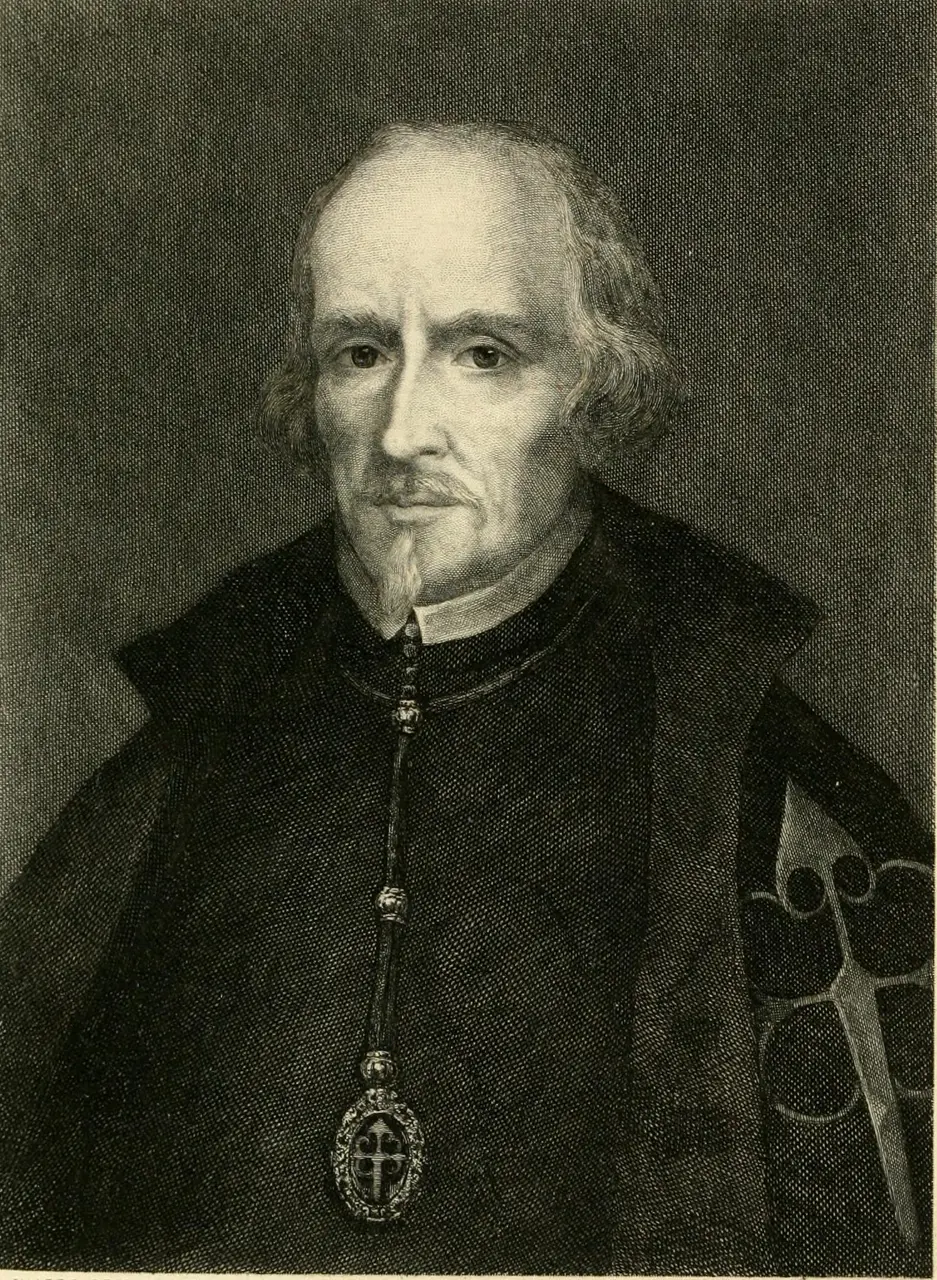
 Life Is a Dreamby Pedro Calderón de la BarcaA prince chained from birth in a tower is made king for a day, then drugged back to his cell and told he dreamed it.
 The Mayor of Zalameaby Pedro Calderón de la BarcaA rich farmer is elected mayor on the day a captain carries off his daughter, and garrottes the officer before the King can stop him.
 The Wonder-Working Magicianby Pedro Calderón de la BarcaA scholar of Antioch signs away his soul in blood to win a Christian girl, and finds a skeleton in his arms.
Act 1, Scene 1
The Gardens of the King of Fez, by the Sea
Enter some Christian captives singing, and ZARA.
Sing, from out this thicket here,
While the beauteous Phenix dresses;—
Those sweet songs, whose air expresses
Fond regrets; which pleased her ear
Often in the baths,—those strains
Full of grief and sentiment.—
Can Music, whose strange instrument
Was our clanking gyves and chains—
Can it be, our wail could bring
Joy unto her heart? our woe
Be to her delight?—
’Tis so:—
She from this will hear you; sing.
Ah! this anguish doth exceed,
Beauteous Zara, all the rest—
Since from out a captive’s breast
[Save a soulless bird’s indeed]
Never has a willing strain
Of music burst.
But have not you
Yourselves sung many a time?—
’Tis true;
But then it was no stranger’s pain
To which we hoped some ease to bring,
It was our own too bitter grief
For which in song we sought relief.
She is listening now—then sing.
The captives sing:—
Age doth not respect
The fair or the sublime;
Nothing stands erect
Before the face of time.
Enter ROSA.
Captives, you can now retire,
And your pleasing concert end,
For fair Phenix doth descend
To this garden, to inspire
Joy, where’er her footsteps stray:—
Coming like a second morn,
Young Aurora newly born.—
The captives go out.
Enter PHENIX, attended by her Moorish maidens, ESTRELLA and ZELIMA, &c. dressing her.
Beauteous have you risen to-day.
Let the dawn, so purely bright,
Boast no more, this garden owes
To her its beauty—that the rose
Draws from her its purple light,
Or the jessamine its whiteness.
The glass.
Thou should’st not strive to find
Specks the pencil ne’er designed
In its artificial brightness.
They present her with a mirror.
What does loveliness avail me,
[If, indeed, ’tis mine to vaunt it]—
If my joy of heart be wanted?—
If life’s happiest feelings fail me?—
How dost thou feel?
If I but knew,
Ah! my Zelima, how I feel,
That certain knowledge soon would steal
Half of the grief that pains me through:—
I do not know its nature wholly,
Although it robs my heart of gladness;
For now it seemeth tearful sadness,—
And now ’tis pensive melancholy:—
I only know, I know I feel—
But what I feel I do not know,—
The sweet illusions mock me so.
Since these gardens cannot steal
Away your oft-returning woes—
Though to beauteous spring, they build
Snow-white jasmine temples filled
With radiant statues of the rose,
Come unto the sea, and make
Thy bark the chariot of the sun.—
And when the golden splendours run
Athwart the waves, along thy wake—
The garden to the sea will say
[By melancholy fears deprest],
The sun already gilds the west,
How very short has been this day!—
Ah! no more can gladden me
Sunny shores, or dark projections,
Where in emulous reflections
Blend the rival land and sea;
When, alike in charms and powers,—
Where the woods and waves are meeting—
Flowers with foam are seen competing—
Sparkling foam with snow-white flowers;
For the garden, envious grown
Of the curling waves of ocean,
Loves to imitate their motion;
And the amorous zephyr, blown
Out to sea from fragrant bowers,
In the shining waters laving
Back returns, and makes the waving
Leaves an ocean of bright flowers:
When the sea too, sad to view
Its barren waste of waves forlorn,
Striveth swiftly to adorn
All its realm, and to subdue
The pride of its majestic mien,
To second laws it doth subject
Its nature, and with sweet effect
Blends fields of blue with waves of green.
Coloured now like heaven’s blue dome,
Now plumed as if from verdant bowers,
The garden seems a sea of flowers,
The sea a garden of bright foam:
How deep my pain must be, is plain,
Since naught delights my heart or eye,
Nor earth, nor air, nor sea, nor sky.
Ah! deep, indeed, must be your pain!—
Enter the KING with a portrait in his hand.
If perchance the fever fit,
Quartan of thy beauty, let
Thee thy sadness to forget,—
This fair original (for it
Is too full of life, to be
But a picture) is the Infante
Of Morocco, Tarudante,
Who doth come to offer thee
His hand and crown; do not reprove
The ambassador who pleads his suit—
Do not doubt that he, though mute,
Bringeth messages of love:—
With favour I his wish behold,
For he hath sent to me, as liege,
Ten thousand horsemen, to besiege
Ceuta, which I long to hold:—
Let nor fears, nor vain alarms,
Nor coldness in your heart be found;
But let him soon in Fez be crowned
King of all thy beauteous charms.
[aside] Protect me, Allah!
What abhorred
Terror thus suspends thy breath?—
[aside] It is the sentence of my death!
What is it you say?
[aloud] My lord,
My master, and my king, to thee,
My father, what have I to say?—
[aside] What a happy chance, Muléy,
Hast thou lost! Ah! woe is me.
[aloud] Let my silence be a token
Of my dutiful reply.
[aside] In thinking it, my soul would lie,
My tongue would lie, if it had spoken.
Take the picture.
[aside] Being desired,
My hand the hated gift hath got,
But my heart receives it not.
The report of a cannon is heard.
This salute, my lord, is fired
For Muléy, arrived to-day
In the Sea of Fez.
’Tis meet.
Enter MULÉY with the truncheon of a general.
Give me, mighty lord, thy feet.
You are welcome home, Muléy.
He who penetrates the light
Of so sovereign a sphere,
He who homeward drawing near
Finds a sun and dawn so sweet,
Well hath homeward come, indeed:—
Lady, let me kiss thy hand,
For his love and faith demand
Such reward, whose heart would bleed
To work his sovereign’s least intent.
[to the King] For newer triumphs still he burns
In thy service.—He returns
More thy lover than he went.
Aside to Phenix.
[aside] Heaven protect me! [To Muléy.] Thou, indeed,
Art most welcome. [Aside.] Life doth leave me!
[aside] If my eyes do not deceive me,
Rather the reverse I read.
Well, Muléy, what news from sea?—
Now thou’lt test thy suffering
Of misfortune: for I bring
Saddest news; [aside] as mine must be.
What thou knowest, let me hear,
For a firm and constant mind
Lets both good and evil find
Equal entrance: sit thou here,
Phenix.
Yes.
Let all be seated.
Now proceed thy news to tell,
Hiding nothing.
The King and ladies sit down.
I, nor well
Can conceal it, or repeat it;—[aside.]
With two galliasses only,
By command, my lord, of thee,
I departed to examine
All the coast of Barbary,
With the intention of approaching
That famed city of the South,
Known of old time as Eliza,
And which nearly at the mouth
Of the Herculean strait is founded;
Ceido is its latter name,—
For this Hebrew word and Ceuta
In the Arabic are the same,
Both expressive but of beauty,
Or the ever-beauteous town,—
That fair town, that, like a jewel,
Heaven has snatched from out thy crown.
Through, perhaps, Mahomet’s anger,
Through the mighty prophet’s wrath,
Which, opprobrium of our valour!
Now a foreign ruler hath.
Where we tamely gape and gaze at,
Where our slavish eye-sight sees,
Floating from its topmast turrets,
Banners of the Portuguese.
’Neath our very eyes prescribing
Limits that our arms deride—
’Tis a mockery of our praises,
’Tis a bridle to our pride,
’Tis a Caucasus, which, lying
Midway, doth the stream detain;
Back thy Nile of victory turning
From its onward course to Spain.
Hither, then, I went with orders
To examine, and to see
What the form and disposition
Of the place to-day might be;
How, with less expense and danger,
You might undertake its siege.
May heaven grant its restoration
Quickly unto you, my liege!
Though it be delayed a little
By a threatened new disgrace;
For this doubtful undertaking
To another must give place,
Far more pressing and important,
Since the thousand swords and spears
That for Ceuta you have marshall’d
Must be drawn around Tangiers
For that threatened city weepeth
Equal suffering, equal woe,
Equal ruin, equal trouble—
This, my gracious lord, I know.
For one morning on the ocean,
When the half-awaken’d sun,
Trampling down the lingering shadows
Of the western vapours dun,
Spread his ruby-tinted tresses
Over jessamine and rose,
Dried with cloths of gold, Aurora’s
Tears of mingled fire and snows,
Which to pearls his glance converted.
It was then that, in the light
Of the horizon, a vast navy
Rose upon my startled sight:
First (so many a fair illusion
Oft the wandering seaman mocks),
I could not determine truly
Whether they were ships or rocks;
For, as on the coloured canvass
Subtle pencils softly blend
Dark and bright, in such proportions
That the dim perspectives end—
Now, perhaps, like famous cities,
Now, like caves or misty capes,
For remoteness ever formeth
Monstrous and unreal shapes.
Thus, athwart the fields of azure,
Lights and shades alternate fly;
Clouds and waves in rich confusion,
Intermingling sea and sky,
Mock the sight with fair deceptions.
So it was, while I, alone,
Saw their bulk and vast proportions,
Though their form remained unknown.
First they seemed to us uplifting
High in heaven their pointed towers,
Clouds that to the sea descended,
To conceive in sapphire showers
What they would bring forth in crystal.
And this fancy seemed more true,
As from their untold abundance
They, methought, could drink the blue
Drop by drop. Again, sea-monsters,
Seemed to us the wandering droves,
Which, to form the train of Neptune,
Issued from their green alcoves.
For the sails, when lightly shaken,
Fanned by zephyrs as by slaves,
Seemed to us like outspread pinions,
Fluttering o’er the darkened waves;
Then the mass, approaching nearer,
Seemed a mighty Babylon,
With its hanging gardens pictured
By the streamers floating down.
But, although our certain vision
Undeceived, becoming true,
Showed it was a great armada,
For I saw the prows cut through
Foam, that, sparkling in the sunshine,
Like the fleece of snow-white flocks,
Rolled itself in silver mountains,
Curdled into crystal rocks.
I, so great a foe beholding,
Turned my prow with utmost speed,
For a timely flight doth often
But to quicker victory lead—
And from being more experienced
In those seas, the entrance made,
Of a little creek, where, hidden
In the shelter and the shade,
I could best resist the powerful
Fury of a power so vast,
Which sea, sky and earth o’ershadowed;
Without seeing us, they passed:—
I, desiring to discover
[Who would not desire to know?]
Whither did this great armada
O’er the darkened ocean go—
Once again my anchor weighing,
Sought the blue sea’s level plain,
And full knowledge, in this manner,
Heaven permitted me to gain:—
For I saw, of this armada
But one ship remained behind,
Which with difficulty struggled
With the warring wave and wind:
Since, as afterwards was told me,
From a tempest which had blown
Over all the fleet, it issued
Rent, disabled, and o’erthrown;
And so full of water was she,
That the men that worked thereat,
Scarcely baled her out, and reeling
Now on this side, now on that,
Seemed, with every fluctuation,
On the point of going down,
I approached, and though my Moorish
Garb and colours made them frown,
Still my company consoled them,
For companionship in woes
Ever gives alleviation,
Even though it be a foe’s.
The desire of life arising
So provoked the hearts of some,
That by ladders made of twisted
Cords and cables, did they come
To our ship, although a prison;
But the rest, resisting, cried,
“Life is but to live with honour!”—
Proof of Portuguese vain pride!—
One of those who left the vessel
Thus informed me in detail:
Lately, thus he said, from Lisbon
Did the great armada sail
For Tangiers: and its heroic
Resolution seems to be,
To besiege it with such valour,
That upon its towers you’ll see
The five shields, you see at Ceuta
Every time the sun doth rise.
Edward, Portugal’s great monarch,
Whose renown of conquest flies
As on wings of Roman eagles,
Has sent thither to preside
Over them his own two brothers,
Fernando and Enrique,—pride
Of this age, which early sees them
Crowned with conquest: and each chief
Is Grand Master both of Avis
And of Christ: in white relief
On their breasts they bear two crosses,
One of green, the other red;
Fourteen thousand is the number
Of the paid troops, thither led—
Without mentioning the many
Volunteers, that with them serve,
At their own expense; a thousand
Are the steeds—whose fire and nerve,
Mixed with Spanish mettle, clothe them
With the tiger’s glossy skin
And the swift foot of the panther:—
Now perhaps they enter in
Tangiers’ waters,—at this moment,
If its shore they have not made,
They at least cleave through its waters:
Let us hasten to its aid:
You yourself, your arms assuming,
Mahomet’s dread scourges bear—
And the brightest leaf it carries,
From death’s mystic volume, tear:—
That this day may be accomplished
That brave prophecy of yore—
Of the Moors, which says, ’tis destined
That upon the sandy shore
Of our Africa, the glory
Of the crown of Portugal
There its hapless grave must meet with.
And these proud invaders shall
See thee, as thy curved sword waveth
O’er each prostrate foeman’s head,
Turn the fields, both green and azure,
With their gushing hearts—blood red.
Silence! do not speak the rest,
For my heart such wrath is feeling,
That each word is like the stealing
Of strong poison through my breast:
Graves amid the deserts yonder
I will ope, by sure disasters,
For the Infantes, those Grand Masters
Who have hither dared to wander:—
You, Muléy, along the coast
With a troop of horse depart,
And by every means that art
Can devise, engage the host
In such skirmishes of skill
That they cannot make the land
Until I can be at hand:—
And in doing so, you will
Show the blood that fills your veins.
I shall follow with all speed,
And the gallant rear-guard lead
Of the troops that fill these plains:
Thus, to-day, my many cares
And quarrels shall in one combine,
For great Ceuta shall be mine
And Tangiers shall not be theirs. [Exit.]
Though I must depart, yet I,
Lady, first would let thee hear,
Since my death approacheth near,
The malady with which I die.
And although my jealous fear
Disrespectful seem to thee,
Since my disease is jealousy,
Courtesy must disappear.
What picture—[ah! fair enemy!]
Is this thy beauteous fingers bear?
What is his happy name?—declare,
This favoured being, who is he?
But no; let not thy tongue eclipse
The pain thy touch hath made me bear;
Since in thy hand I see him there,
Thou needst not name him with thy lips!
Although, Muléy, thou hast from me
Leave to love and to attend me,
Thou hast not any to offend me.
’Tis true, fair Phenix, yes, I see
That this is not the mode or style
Of speaking to thee; but the skies
Know, when jealous thoughts arise
Respect is overborne a while.
With utmost caution—secret pride—
I’ve hid the passion that I feel;
But, though my love I could conceal,
My jealousy I cannot hide—
In truth I cannot.
Though thy crime
Deserves not to be satisfied,
Still, will I, through wounded pride,
Satisfy thee this one time.
Friends their friendship ne’er should lose,
When a word might keep it still.
And wilt thou speak that word?
I will.
God grant thee ever happy news!
This picture has to me been sent.....
By whom?
His Highness the Infante
Of Morocco, Tarudante.
And why?
It seems with this intent,—
My father, being ignorant
Of my feelings....
Well?—
Pretends
That their realms....
Is this the amends,
The satisfaction, thou dost grant?—
God grant thee evil news instead!—
Why for a fault must I atone
That was my father’s act alone?
For taking, though he left thee dead,
This picture as a willing bride?
Could I prevent it?
Yes, ’tis plain.
How?
Some excuse thou well couldst feign.
What could I do?
Thou couldst have died,
As I would gladly do for thee.
’Twas force prevailed.
A mere pretence—
’Twas fickleness.
’Twas violence.
Nor violence.
What could it be?
Absence has been my hope’s dark tomb;
And since I cannot be secure,
Nor fix thy changing fancy sure,
I must return and meet my doom.
Thou wilt return, fair Phenix, too,
Once more to grieve me to the heart.
We now must separate: depart....
My soul first separates in two.
Thou to Tangiers, and I shall wait
In Fez—to hear thee make an end
Of thy complaints.
And I’ll attend,
If I am spared till then by fate.
Adieu! for it is heaven’s decree
We taste this bitter parting’s woe.
But listen—wilt thou let me go,
Nor give that portrait up to me?
’Twere thine but for the king’s request.
Release it—justice doth demand
That I should pluck from out thy hand
Him who has plucked me from thy breast. [Exeunt.]
Act 1, Scene 2
The Sea-coast near Tangiers
Amid the sound of trumpets and the noise of disembarking, enter DON FERNANDO, DON ENRIQUE, DON JUAN COUTIÑO, and Soldiers successively from their ships.
I must be first, fair Africa, to tread
Upon the sandy margin of thy shore;
That as thou feelest on thy prostrate head
The weight of my proud footsteps trampling o’er,
Thou may’st perceive to whom thy sway is given.
I am the second whom the swift waves bore
To tread this Africa! [He stumbles and falls.]
Preserve me, Heaven!
Even here my evil auguries pursue.
Let not, Enrique, thy stout heart be riven
By fancied omens, as weak women do;
This fall should waken hopes and not alarms.
The land a fitting welcome gives to you,
For, as its lord, it takes you to its arms.
The sight of us the Moorish herd appals,
And they have fled, deserting fields and farms.
Tangiers has closed the gates around its walls.
They all have fled for safer shelter there.
On you, Don Juan, Count Miralva, falls
The duty of examining with care
All the approaches of the land, before
The sultry sun, o’ercoming with its glare
The temperate dawn, oppress and wound us more.
Salute the city; call on it to yield;
Say ’tis in vain to squander human gore
In its defence; for though each conquered field
Ran red with blood, and burning blew the wind,
And ’neath our tread the tottering ramparts reeled,
We still would take it.
You will quickly find
I’ll reach its gates, although, volcano-like,
With thickest clouds it strikes the bright sun blind,
And lightnings flash and bolts around me strike! [Exit.]
Enter BRITO.
Thanks be to God! that April and sweet May
Once more I walk on, and that, as I like,
Without unpleasant reelings and dismay
I go about upon the solid ground.
Not as just now at sea, when, yea or nay,
Within a wooden monster’s caverns bound,
Though light of foot I could not get away
Even when in greatest fear of being drown’d.
So little weary of the world am I,
O dry land, mine! obtain for me, I pray,
That I may never in the water die,
Nor even on land till near to the last day.
[to Fernando] Why dost thou listen to this fool?
And why,
Against all reason, dost thou persevere
In vague forebodings and unreal grief!
My soul is full of some mysterious fear;—
That Fate frowns darkly is my fixed belief;
For since I saw fair Lisbon disappear,
Its well-known heights fast fading one by one—
Of all the thoughts that haunt me Death is chief!
Scarcely had we our enterprise begun,
Scarce had our ships commenced their onward chase,
When, in a paroxysm, the great sun,
Shrouded in clouds, concealed his golden face,
And angry waves in foaming madness wreck’d
Some of our fleet. Where’er I look I trace
The same disaster;—O’er the sea project
A thousand shadows;—If I view the sky,
Its azure veil with bloody drops seems fleck’d;—
If to the once glad air I turn mine eye,
Dark birds of night their mournful plumage wave;—
If on the earth, my fall doth prophesy
And represent my miserable grave.
Let me decipher with affectionate care,
And so your breast from dark forebodings save,
These fancied omens from earth, sea, and air:
’Tis true we lost one ship amid the main;
That is to say, that we had troops to spare
From the great conquest we have come to gain.
The purple light that stains the radiant sky
Foretels a day of jubilee, not pain.
The monstrous shapes that round us float or fly,
Flew here, and floated ere we came; and thus
If they reveal a fatal augury,
It is to those who live here, not to us.
These idle fancies and unfounded fears
Came from the Moors, so darkly credulous,
Not from the enlightened minds of Christian seers.
Those who believe in them may feel alarms,
Not those who shut them from their doubting ears.
We two are Christians; we have taken arms,
Not through vainglory, nor the common prize
With which young Fame the soldier’s bosom charms;
Nor that, perchance, in deathless books, men’s eyes
Hereafter read of this great victory.
The faith of God we come to aggrandise;
Whether it be our fate to live or die,
Be His alone the glory and the praise.
’Tis true, we should not God’s dread vengeance try
Too rashly; but his anger knoweth ways
To curb the proud, and make the haughty bend.
You are a Christian; act a Christian’s part:
We come to serve our God, and not offend.
But who is this?—
Enter DON JUAN.
My lord, obeying
Your commands, I sought the walls;
And when crossing o’er the mountain,
Where the sloping verdure falls,
I beheld a troop of horsemen
Riding by the road to Fez—
Riding with such wondrous fleetness
That the startled gazer says,
Are they birds, or are they horses?
Do they fly, or do they bound?
For the air doth not sustain them,
And they scarcely touch the ground.
Even the earth and air were doubtful
If they flew, or if they ran.
Let us hasten to receive them,
Placing foremost in the van
Those who bear the arquebusses;
Let the horsemen next advance,
With the customary splendour
Of the harness and the lance,
On, Enrique! fortune offers
Now a noble opening fight.
Courage!
Am I not thy brother?
Nothing can my soul affright,
Nor the accidents of fortune,
Nor the countenance of death! [Exeunt.]
[alone] I must somehow act the soldier,
And keep guard upon—my breath!
What a very noble skirmish!
How they spill their blood and brains!
It is best, from under cover
To survey this “Game of Canes!”— [Exit.]
Act 1, Scene 3
A charge is sounded: enter DON JUAN and DON ENRIQUE, fighting with the Moors.
After them! The Moors already,
Vanquished, from the fight have flown!—
Spoils of mingled men and horses
Over all the fields are strown.
Where has wandered Don Fernando,
That he cannot be descried?—
Doubtless his impatient valour
Leads him onward far and wide.
Let us seek him out, Coutiño,
I am ever at thy side. [Exeunt.]
Enter DON FERNANDO with the sword of MULÉY, and MULÉY with his shield alone.
In this desolate campagna,
Where, devoid of sense or breath,
Lie so many dead, or rather
In this theatre of death,
You alone, of all your people,
You alone, brave Moor, have stood:
All have fled, and even your war-horse,
After shedding seas of blood,
’Mid the dust and foam encircled,
Which it raised, and which it laid,
Leaves you here to be a trophy,
By my valorous right-hand made,
’Mid your late companions’ horses,
Loosely flying o’er the ground.
I am prouder of this conquest,
Which to me doth more redound,
Than to see this broad campagna,
As with bright carnations crowned;
For so great has been the flowing
Of red blood on all around,
That my eyes, through deepest pity,
At beholding naught but dead—
Naught but ever new misfortunes—
Naught but ruins round me spread,—
O’er the desert plain went seeking
One green spot amid the red.
In effect, my arm subduing
Your courageous strength to mine,
’Mid the horses loosely flying,
One I seized, who was, in fine,
Such a prodigy, a wonder,
That, although he had for sire
Even the wind, his proud ambition
Claimed adoption of the fire;
Falsely thus, by both denying
His own hue, which being white,
Said the water, “’Tis the offspring
Of my sphere so silver white.
I alone could thus have moulded
Such a form of curdled snow!”
Like the wind he went in fleetness,
Lightning-like flashed to and fro;
Like the swan his dazzling whiteness,
Speckled like the snake with blood,
Proud of his unrivall’d beauty,
Fearless in his haughtier mood;
Full of spirit in his neighing;
In his fetlocks firm and strong,
In the saddle, on his haunches,
You and I thus borne along—
On a sea of blood we entered,
Through whose cruel waves we steered,
Like an animated vessel,
For his head a prow appeared,
Breaking through the pearl-hued water.
And his mane and tail did float,
Blood and foam besprinkled over,
So that once again a boat,
Wounded by four spurs, he bounded,
As if heaven’s four winds impelled;
He at length fell down exhausted
By the Atlas he upheld;—
For so great are some misfortunes,
That even brutes themselves must feel,
Or it may be, that some instinct
Through his softened soul did steal,
Saying, “Sad Arabia journeys,
And with joy departeth Spain;
Can I then betray my country,
Swelling the proud conqueror’s train?
No, I do not wish to wander
One step farther from this spot.”
And since thou thyself art coming
In such sorrow, though ’tis not
By the mouth or eyes acknowledged,
Still the smothered fire appears,
Of the bosom’s hid volcanos,
By those flowing tender tears;
And the burning sighs thou heavest,
Wonderingly my valour views,
When I turn me round, how fortune
With one single blow subdues
Valour such as thine. Another
Cause, methinks, must sadden thee;
Since it is not just nor proper,
Even though for liberty,
That the man should weep so fondly,
Who so heavily can wound;
And, as in communicating
Evils, there is ever found
Something soothing to the feelings,
While we to my people go,
If I merit such a favour,
My desire is now to know,—
And with reason it entreats it,
Gently and with courtesy,—
What doth grieve thee? since ’tis certain
’Tis not thy captivity.
Sorrow, when communicated,
Is appeased, if not subdued,—
And since I have been the occasion
Partly of what hath ensued
From the accident of fortune,
I would wish to be likewise
Prompt in bringing consolation
To the cause of all thy sighs,
If the cause itself consenteth.
Thou art truly valiant, Spaniard,
Victor both in act and word,
With the tongue as skilled to conquer,
As to conquer with the sword;
For my life was thine, when lately
With the sword my race among,
You subdued me, but this moment,
Since you take me with the tongue,
Even my soul is thine; with reason
Must my life and soul confess
They are thine, and thou their master.
For your arms and your address,
Cruel now, and now too clement,
Twice my soul have captive made.
Moved with pity to behold me,
Spaniard, you the cause have prayed
Of the burning sighs I’m breathing.
And although I own that woe,
When repeated, is accustomed
To grow lighter, still I know
That the person who repeats it
Wisheth that it should be so;
But my woe is such a master
Of my pleasures, that to keep
Them from any diminution,
Though itself be wide and deep,
It would rather not repeat it;
But ’tis needful I obey;
Grateful for the care you’ve shown me.
I am called the Cheik Muléy,
And the King of Fez’s nephew.
Of an illustrious race and high,
Boasting many a Bey and Pasha.
But misfortune’s son am I;
Being on life’s early threshold
Folded in the arms of death,
On that plain, where many Spaniards
Found their graves, I first drew breath;
Hopeless boon to me that breathing!
For at Gelves, which you know,
I was born the year that witnessed
There, thy nation’s overthrow.
To attend the King my uncle,
Came I young,—but since increase
Day by day my pains and sorrows,
Cease enjoyments, wholly cease!
I to Fez came, and a beauty,
Whom since then my wondering eye
Worshipped, in the house adjoining
Lived, that I might, near her, die.
From the early years of childhood,
(For this love of mine became
Soon so constant, Time was powerless
To consume or quench its flame,)
We grew up beside each other.
Love within our childish hearts
Was not like the rapid lightning,
Which with greater fury darts
On the tender, weak, and humble,
Than upon the proud and strong;
So that he to show the varied
Powers that to love belong
Struck our hearts with different arrows;
But as water in its course
Dropping down on stone, doth mark it,
Not indeed through its own force,
No, but by continual falling,
So those tears of mine, for aye
On her heart’s-stone downward dropping,
Finally did work their way
To it, though than diamond harder.
And by dint of constant love,
And through no excelling merits,
Finally did make it move.
In this state I lived a season,
Oh! how swift has been its flight!
Tasting, in their sweet aurora,
Many an amorous delight—
In an evil hour I left her,
Left her! more I need not say,
Since in my absence came another
Lover, all my peace to slay;
He is happy, I am wretched.
He is present, I away.
I a captive, he a freeman.
Ah! our fates how different,
Since your arm hath made me captive,
See how justly I lament.
Valiant-hearted Moor and gallant,
If thou adorest in this way,
If, as thou speakest, thou dost worship
If thou dost love as thou dost say;
If thou art jealous as thou sighest,
If thou dost fear with true dismay,
If thou dost love as thou dost suffer,
Thou sufferest in the happiest way,
And the acceptance of thy freedom
Is all the ransom thou must pay,
Return at once unto thy people,
And this unto thy lady say,
“That thou dost take me as thy servant,
A knight of Portugal doth pray;”
If she pretends her obligation
For this, to me, some price must pay,
I give to thee whate’er is owing,
So let her love the debt repay.
And thine be all the arrears of interest.
And see thy horse, which lately lay
Exhausted on the ground, hath risen
Refreshed and rested by our stay;
And since I know love’s longing nature,—
How ill the absent brook delay,
I wish no longer to detain thee,
Mount on thy steed and go away.
My voice to thee, doth answer nothing;
The flattery of a liberal heart
Is the acceptance of its offer:
Only tell me who thou art?
A man of noble birth, no further.
Whoe’er thou art, thy conduct gave
This answer: I, through good and evil,
Am eternally thy slave.
Take the horse; it groweth late.
If it appeareth so to thee,
How more to him who came a captive,
And to his lady goeth free? [Exit.]
’Tis generous to bestow a favour,
How much more, life?
[within] Brave Portuguese.
’Tis from the horse’s back he speaketh;
What is it now that thou dost please?
[within] To pay thee for so many favours,
Some day the duty shall be mine.
May thou enjoy them!
[within] A good action
Is never wholly lost; in fine,
Allah be thy protection, Spaniard!
If God be Allah, be he thine!
Trumpets resound from within.
But what trumpet’s this, whose sound
Thus disturbs the air, and echoeth o’er the ground?
Drums from the opposite side.
And in this direction too
Drums are heard, the music of the two
Is that of Mars.
Enter DON ENRIQUE.
As swift as thought,
Have I, Fernando, for thy presence sought.
Brother, what hath happened?
These loud echoes
Rise from the troops of Fez, and from Morocco’s,
For Tarudante hither flies
With succour to the king of Fez, who comes likewise,
Swollen with pride with all his troops around,
So that two mighty armies ours surround,
And their circling lines extend so far,
That we invaders and invaded are;
If upon one we turn our backs,
Badly we’ll bear the other’s fierce attacks,
For here and there around our leagured line
The dazzling lightnings of red Mars outshine:
What shall we do in such disastrous plight?
What? Why in the fight,
With fearless minds, we’ll die as brave men should.
Are we not Masters?—Princes of the blood?
Although it were enough that we had been
Two Portuguese, that never could be seen
Upon our faces any mark of fear:
Let Avis, then, and Christ our Saviour dear,
Be our resounding battle-cry,
Let us for the faith now die,
Since our death was here foreseen.
Enter DON JUAN.
Our landing here has most unlucky been.
This is no time to think of means gone by,
Upon our swords alone for help let us rely,
Since we betwixt two armies’ loud alarms
Are placed—Avis and Christ!—
To arms! to arms!
They enter with drawn swords. Sounds of a battle are heard.
Enter BRITO.
Since betwixt two armies we
Are placed, there is no human remedy.
What a scurvy speech is this!
Would that the key that locks the realms of bliss
In yonder sky, would open but a chink,
Through which securely a poor wretch might slink
Who hath wandered to this spot,
Nor knoweth wherefore or for what;
But I will pretend to die,
Hoping, hereafter, death will pass me by. [He lies down on the ground.]
Enter a Moor fighting with DON ENRIQUE.
Who is it that thus his breast defendeth
Against my arm, which like a bolt descendeth
From the fourth sphere of the skies?
One who, though he stumbles, falls, and dies
Upon his fellow Christian’s corses,—
Dreads no living foeman’s forces,—
For who I am, let this be said. [They walk over BRITO and exeunt.]
Enter MULÉY and DON JUAN COUTIÑO in conflict.
Valiant Portuguese, to see
Thy strength so great doth grieve not me,
For I would wish that thou shouldst gain
The victory to-day.
Oh! bitter pain,
Without consideration do I tread
Upon these corses of the Christian dead!—
[aside] I would let him pardoned be,
If my lord would lightlier tread on me. [Muléy and Juan exeunt.]
Enter DON FERNANDO retiring before the KING and the Moors.
Yield thy sword, brave Portuguese,
If my hand alive can seize
And keep you captive, I do vow
To be thy friend: say, who art thou?
A cavalier: no more reply
Expect to hear: now let me die!—
Enter DON JUAN and places himself by his side.
First, great lord, my breast will be
A diamond wall to shelter thee,
Placed before thee in the strife
I still will guard thy princely life.
Now, my Fernando, by thy deeds declare
The race of which thou art the heir.
If this I hear, what more do I expect?
Suspend your arms!—no happier effect
From this day’s glory any more can be,
This prize is victory enough for me:—
If you must die, or else a captive be,
Accept the sentence given by fate’s decree:
Thy sword, Fernando,—give it up to me,
The King of Fez.
Enter MULÉY.
[aside] Ah! who is this I see?—
Only unto a king’s hand would I loose it:
Indeed, ’twere desperation to refuse it.
Enter DON ENRIQUE.
Is my brother taken?—
Do not thou,
Enrique, add to my misfortune now
By your lamenting. Fate high lessons grants,
Even in the common accidents of chance.
Enrique, in my power
Lies Don Fernando, and although this hour,
Showing the vantage I have won
I could command your deaths; yet, as I’ve done
Naught to day, but in my own defence,
I can the easier with your blood dispense,
Since to me survives
A wider fame, by sparing of your lives;
And that you [to Enrique] may bring
With greater speed his ransom from the king,
Do you return: but in my power
Fernando stays, until doth shine the hour
That you return to set him free:—
But say to Edward, that will never be,
That vain are all entreaties and demands,
Till Ceuta is surrendered to my hands;—
And now, your Highness, my illustrious foe,
To whom that greatness I shall owe,
Come to Fez with me.
I go
To that sphere, whose rays I follow here below.
[aside] Must I ever mourn,
By friendship’s ties, and love’s suspicions torn!
Enrique, though a prisoner here,
Nor fate, nor fortune’s malice do I fear:
Say to our brother, be thou of strong heart,
And firmly act a Christian prince’s part
In my misfortunes.
Who is so unjust,
That would his magnanimity distrust?
This again I charge you, and I say,
Let him act the Christian.
I obey,
And vow full early to return as such.
Let me embrace thee.
Is it not too much
That thou a captive still new bonds dost take? [Folds him in his arms.]
Adieu, Don Juan.
I will not forsake
My gracious prince, so drive me not away!
O loyal friend!
O most unhappy day!
Say to the king......but no, ’tis better say
Nothing; in silence, which my grief doth smother,
Bear thou these tears unto the king, my brother. [Exeunt.]
Enter two Moors, who see BRITO lying as dead.
Here is a Christian lying dead.
Let us, lest a plague should spread,
Throw these corses in the sea.
[starting up] First your sculls must opened be
By such cuts and thrusts as these;
For, even dead, we still are Portuguese.
Exit, pursuing them with his sword.
END OF THE FIRST ACT.
Act 2, Scene 1
A Mountain District near Fez
Enter PHENIX.
Estrella! Zara! Rosa! no,
No one answers to my calling!
[entering] One attends thee, like the falling
Shadow which the sun doth throw
Off its radiant disk. For thou
Dost a sun to me appear—
Who am the shadow that it hath.
As I roamed this mountain path,
Thy sweet voice re-echoed near.
What hath happened lady?
Hear,
If I can its nature state:
Flattering, free, ungrateful, glides
Sweet and smooth, with peaceful tides,
A crystal fountain, all elate
With waves of molten silver plate.
Flattering, for it proferreth
Speech enough, yet doth not feel;
Smooth, for it can well conceal;
Free, for loud it uttereth;
Sweet, because it murmureth;
And ungrateful, for it flies!
To that fountain’s shady place,
Wearied with a wild beast’s chase,
Came I with a glad surprise,
For its fresh green canopies
Promised rest and relaxation;
Being upon one side bound
By a gentle hillock, crowned
With [as if for jubilation]
Wreaths of jasmine and carnation,
Which a shade of crimson light
Flung upon my emerald bed.
Scarcely had I render’d
Up my soul to the delight
Of solitude, when, ’mid the bright
Leaves, did me a sound alarm;
I attentive looked, and saw
An ancient dame of Africa—
A spirit in a human form,
Marked with all that can deform—
Wrinkles, scowling, haggard, dark—
A living skeleton, a shade;
But as if with features made
Of a tree’s trunk, rude and stark,
Wrapt in rough, unpolished bark;
With mingled melancholy and
Sadness—doleful passions these,
That my heart’s blood she might freeze
She did take me by the hand,
I, to be like her, did stand
Tree-like, rooted to the ground;
Ice ran freezing through each vein
At her touch, and through my brain
Venomed horror flew its round.
She, with scarce articulate sound,
Thus appeared to speak to me—
“Hapless woman! fated woe!
Since, with all thy beauteous show,
All the graces crowning thee,
Thou a corse’s prize must be!”
Thus she said, and thus I live
Sadly since, or rather die,
Waiting till the prophecy
Which that tree-like fugitive
Did with doubtful meaning give—
Which that prophet, through the force
Of fate fulfilled without remorse—
Is fulfilled by destiny.
Woe is me! for I must be
The worthless guerdon of a corse! [Exit.]
It is easy to explain
This illusion, or this dream,
Since, indeed, it doth but seem
An image of my bosom’s pain:
Tarudante is to gain
Thee; but though my heart doth burst
At the thought, my wrath and hate
Shall compel his joy to wait.
Never shall occur the worst,
Until he shall slay me first!
I may lose thee, that may be,
But I cannot lose and live:
Since my life I then must give,
Ere I come that hour to see,
The life that must abandon me
Is the price that buyeth thee;
Thou wilt then too surely be
The guerdon of a corse—for I
Shall be seen to pine and die
Through envy, love, and jealousy.
Enter three Christian captives with the Infante DON FERNANDO.
From the royal gardens near,
Where we work, we saw your Grace
Lately going to the chase,
And together we come here,
At your feet, in tears, to throw us.
’Tis the only consolation
Heaven doth grant our situation.
It, in this, doth pity show us.
Friends, come, let my arms enfold you;
And, God knows, if I, with these,
Could your necks a moment ease
Of the knots and bonds that hold you,
They would give you liberty,
Even before myself. But heaven
May this punishment have given
As a favour, it may be,
As a blessing, if we knew it.
Fate may better grow ere long;
No misfortune is so strong
But that patience may subdue it.
Bear with that whatever sorrow
Time or fortune makes you see;
For that fickle deity,
Now a flower, a corse to-morrow,
Ever changing o’er and o’er—
Yours may alter in a trice;
But, O God! to give advice
To the needy, and no more,
Is not wisdom. I would give
Gladly aught that would relieve you,
But, alas, I’ve naught to give you;
You the want, my friends, forgive.
I, from Portugal, expect
Succour—it will quickly come;
Yours will be whatever sum
May be sent for that effect.
I desire it but for ye,
If they come to lead away
Me from slavery, I say
That you all must come with me:—
Go, in God’s name, to your tasks,
No offence, your masters giving.
Lord, to know that thou art living,
Is the only joy that asks
Our enslavement.
May the years
Of the Phenix be but few
To those granted unto you,
Gracious lord, to live.
The captives go out.
With tears
Must the soul refuse relief,
Which their wretched state demands,
Bearing nothing from my hands;
Who will succour them? What grief!
I have stood with admiration,
Seeing the humane affection
With which you the deep dejection
Of these captives’ situation
Have relieved.
My grief was shown
Truly for the hapless state
Of these captives. By their fate
I may learn to bear my own;
It may be, perhaps, that some
Day the lesson I may need.
Says your Highness this indeed?
Born an Infante, I have come
To be a slave; and thus, I fear,
That from this, I yet may know
Even a lower depth of woe;
For the distance is less near
From an Infante, a king’s brother,
And a captive, than can be
’Twixt degrees of slavery.
One day followeth another,
And thus sorrow follows sorrow,
Pains with pains thus intertwine.
Would no heavier pain were mine!
You, your Highness, may to-morrow
(Though to-day you here remain
In a brief captivity),
Your dear native country see;
But for me all hope is vain,
Fortune never will be seen
To grow kinder unto me,
Though the moon less fickle be.
At the court of Fez I’ve been
Now some time, yet you have not,
Of the love you once confest,
Told me aught.
Within my breast
Lie the favours I have got;
Those I’ve sworn to conceal:
But to friendship’s laws I bow,
Without breaking of my vow,
I a little may reveal:—
Without equal is her scorn,
So the grief my heart doth prove,
For the Phenix and my love
Were without their fellow born.
In seeing, hearing, and concealing
A Phenix, is my every thought;
A Phenix every love-distraught
Apprehension, fear, and feeling;
It is a Phenix that doth ope
The source of every pain and tear.
To feel I merit her yet fear,
A Phenix also is my hope.
The passion that I late revealed
Is now the Phenix I discover;
Thus, as a friend, and as a lover,
I both have spoken and concealed. [Exit.]
With heart as skilful as discreet,
He thus his lady’s name makes plain,
But if a Phenix be his pain,
I with it cannot compete:—
Mine is but a common pain,
And calmly should be borne as such,
Many have endured as much
Without boasts or wailings vain.
Enter the KING.
By this mountain’s brow, your Highness.
Have I to overtake you ridden,
That before the sun in coral
And in pearly clouds is hidden,
You the struggles of a tiger
In the meshes might admire,
For a circle now is closing
Round it by the huntsmen.
Sire,
Every moment art thou planning
Means of pleasing me. If this
Is the way thy slaves thou fêtest,
They will not their country miss.
Captives of such rare endowments,
That they to their owner pay
Highest honour, is the reason
They are treated in this way.
Enter DON JUAN.
Come, my lord, unto the sea-shore,
And behold the fairest creature
That the hand of art e’er fashioned,
Or the mystic power of nature.
For, but now, a Christian galley
To our port has come; so fair,
That although her darkened bulwarks
Black and mournful colours wear,
Still, the wonder is how sorrow,
Thus, the eye, like gladness, charms.
From her topmasts gaily flutter
Portugal’s emblazoned arms;
Since their Infante is a captive,
Thus they mourn his slavery—
Thus express the people’s sorrow,
Though they come to set him free.
No, my friend, Don Juan, no;
This is not their cause of mourning,
If they came to set me free,
On the faith of my returning,
Joyful would their signals be.
Enter DON ENRIQUE dressed in mourning, and holding an open paper in his hand.
[to the King] Let me, mighty lord, embrace thee!
May your Highness’ years endure;
[to Don Juan] Ah! my death is sure, Don Juan.
[to Muléy] Ah! Muléy, my joy is sure!
Now that of your royal welfare,
I, your presence may believe;
Thou wilt, to embrace my brother,
Mighty monarch, give me leave.
Ah! Fernando! [They embrace.]
My Enrique,
Ah! what garb is this?—but stay,
Fully have your eyes informed me,
Nothing need your tongue now say;
Do not weep: if ’tis to tell me
Ever must my slavery be—
This is what my soul desireth;
Thanks you should have asked from me,
And in place of grief and mourning
Worn a gala festal suit.
How is my lord, the King? If well,
Nothing can I dread:—thou’rt mute!
Since our sorrows, when repeated,
Doubly touch affliction’s chord,
I desire that you should feel them
Only once. Attend, great lord, [To the King.]
For, although a rustic palace
This wild rugged mountain be,
Still, I ask you give me audience,
To this captive liberty,
And attention to my tidings.
Torn, and tempest-tossed, the fleet,
Which, with empty pride, so lately
Trod the waves beneath its feet,
Leaving here in Africa—
Thine and his own thoughts the prey—
The Infante’s person taken,
Back to Lisbon took its way.
From the moment that King Edward
Heard the tragic news he pined,
For his heart was covered over
With a sadness, and his mind
Passing from the melancholy
Which oppressed it first, gave way
To a lethargy, and dying,
Gave the lie to those who say
Human sorrows are not mortal—
[Ah! how vainly this is said!]
For our brother, Don Fernando,
For the King himself is dead!
Woe is me! how dear hath proved
My detention!
This misfortune,
Allah knows, my heart hath moved.
Continue:—
In his will when dying,
Thus, my lord, the King did say:—
That for the Infante’s person
Ceuta should be given straightway;
Thus it is, that with full powers
From Alphonso I have run
(He the rising star of morning
That supplies the absent sun)
Hither, to yield up that city;
And since.....
Ah! do not proceed;
Cease, Enrique, for such language
Is unworthy, not indeed
Of a Portuguese Infante,
Of a knight that doth profess
Christ’s religion, but of even
The most vile, whose barbarousness
Never was illuminated
By Christ’s everlasting laws.
If my brother, now in heaven,
In his will did leave this clause,
It was not that you should read it
Strictly, but he meant thereby,
That he so desired my freedom:
All proper methods you should try,
Whether peaceable or warlike,
To obtain my liberty;
For, to say, “Surrender, Ceuta,”
Is to say, to set him free
Prodigies should be effected.
Can it be? Oh! can it be,
That a just and Catholic monarch
Could surrender to a Moor
A fair city which did cost him
Even his own blood to secure;
When, with sword and buckler only,
On its ramparts he was first
To unfurl our country’s standard?
And even this is not the worst:
But a city that confesses
The true Catholic faith in God,
Which has raised so many churches,
Consecrated to his laud,
With affection and devotion;—
Would it like a Catholic be?
Were it zeal for our religion?
Were it Christian piety,
Or a Portuguese achievement,
That these sovereign temples, which
Are the Atlases of Heaven,
All their golden glories rich,
Where the sun of grace is shining,
Should give place to Moorish shades,
And that their opposing crescents,
Through the churches’ long arcades,
Thus should make these sad eclipses?
Is it right the sacred walls
Of their chapels become stables,
And their holy altars stalls?
Or if this should not so happen,
Turn to mosques! My cheek grows pale;
Here my tongue grows mute with horror,
Here my frightened breath doth fail,
Here the anguish overwhelms me;
For the thought doth through me send
Such a thrill, my heart is cloven,
And my hair doth stand on end,
And my body trembles over,
For it was not the first time
Stalls and stables gave a lodging
Unto God. But oh! the crime
Of becoming mosques! It seemeth
Like an epitaph—a wide
Mark of infamy undying—
Saying, Here did God abide,
And the Christians now deny it,
Giving it a gift instead
To the demon! Scarcely ever
[As is ordinarily said]
Does a man offend another
In his own house. Can it be,
Crime should enter thus God’s mansion,
To offend him there; and we—
We ourselves become his escort—
We admit his impious rout—
And, to let the demon enter,
Driving the Almighty out?
And the Catholics, there dwelling
With their goods and families,
Must prevaricate henceforward
With the faith, or peril these.
Were it proper to occasion
This contingency of sin
By our conduct? And the tender
Little ones that dwell therein,—
Were it right, these helpless Christians,
From the Moors, through our neglect
Should adopt their rites and customs,
And grow up as of their sect
In a miserable thraldom?
Is it right, one life should cost
Many lives? and that one being
Of no import if ’twere lost?
Who am I? Am I then greater
Than a man? for if to be
An Infante makes distinction,
I’m a slave. Nobility
Cannot be a slave’s adornment.
I am one; then wrong is he
Who doth call me an Infante.
And, if so, who gives advice,
That the poor life of a captive
Should be bought at such a price?
Death is but the loss of being,—
I lost mine amid the fight;
That being gone, my life departed,—
Being dead, it is not right
That so many lives should perish
For the ransom of a corse!
So, these vain and idle powers,
Thus I tear without remorse. [Tears the paper.]
Let them be the sunbeam’s atoms,
Or the sparkles of the fire,—
No, ’tis best that I devour them,
For my soul doth not desire
That there should survive a letter
Which would tell the world, the brave
Lusitanian spirit ever
Thought of this. I am thy slave,
And, O King, dispose and order
Of my freedom as you please,
For I would, nor could accept it
On unworthy terms like these:
Thou, Enrique, home returning,
Say, in Africa I lie
Buried, for my life I’ll fashion
As if I did truly die:—
Christians, dead is Don Fernando;
Moors, a slave to you remains;
Captives, you have a companion,
Who to-day doth share your pains:
Heaven, a man restores your churches
Back to holy calm and peace;
Sea, a wretch remains, with weeping
All your billows to increase;
Mountains, on ye dwells a mourner
Like the wild beasts soon to grow;
Wind, a poor man with his sighing
Doubleth all that thou canst blow;
Earth, a corse within thy entrails
Comes to-day to lay his bones.
For King, Brother, Moors and Christians,
Sun, and moon, and starry zones,
Wind and sea, and earth and heaven,
Wild beasts, hills—let this convince
All of ye, in pains and sorrows,
How to-day a constant Prince
Loves the Catholic faith to honour,
And the law of God to hold.
If there were no other reason,
But that Ceuta doth enfold
A divine church consecrated
To the eternal reverence
Of the Conception of our Lady,
Queen of heaven and earth’s events,
I would lose, so she be honoured,
Myriad lives in her defence.
Thankless, thoughtless, both of us,
And of the great pride and glory
Of our kingdom; Is it thus
You deprive me, you deny me
What my heart desires so much?
But if in my realms you govern
More than in your own, can such
Servitude aught else conduct to?
But that I may now engrave
On your mind, you are my captive,
I will treat you as my slave,—
That your friends here, that your brother,
To their eyes may give belief,
That you kiss my feet as vassal.
Fernando kneels at the King’s feet.
What misfortune!—
[aside] Oh! what grief!
What calamity!
What anguish!
Now thou art my slave.
’Tis true,
Small in this, though, is your vengeance,
For as if all mankind do,
Man one day doth leave earth’s bosom,
’Tis but to return to her
At the end of various journeys;
But to thank you, I prefer
To reproachings. Since you teach me,
Even in this way, how best
By the shortest road to reach to
My eternal wished-for rest.
Being now a slave, you cannot
Titles hold, or rents possess;
Ceuta now is in thy power,
If, as slave, thou dost confess
That as master I am thine,
Why not, therefore, give me Ceuta?
Because ’tis God’s, and is not mine.
Is it not a well-known precept,
That a slave in all things must
Be obedient to his master?
Be so now.
In all things just,
Heaven, no doubt, commands obedience,
And no slave should fail therein;
But, if it should chance, the master
Should command the slave to sin,
Then there is no obligation
To obey him: he who sins
When commanded, no less sinneth.
Thou must die.
Then life begins.
That this blessing may not happen,
Rather dying live: thou’lt see
I can be cruel.
And I patient.
Thou’lt never gain thy liberty.
Thou’lt never be the lord of Ceuta.
Ho! there.
Enter SELIM.
My lord?
Immediately
Let this captive here be treated
Like the others: let him be
Laden neck and feet with fetters;
Let him tend my horses’ stall,
And the baths and gardens; so that
He be humbled as are all;
Let him wear no silken dresses,
But poor lowly serge instead;
Let him eat black bread, and swallow
Brackish water; let his bed
Be in dark and humid dungeons,
And to all who on him wait,
Let this sentence be extended:—
Hence remove them!
What a fate!
[aside] How unmerited!
What sorrow!
Now I’ll see, ’twixt thee and me,
Barbarian, if thy patience lasteth
Like my wrath.
Yes, thou shalt see,
For with me it is eternal. [He is led out.]
Enrique, as my hand is given,
I permit thee to withdraw,
And to Lisbon, back returning,
Leave the sea of Africa;
Say at home, that their Infante,
Their Grand Master, dwells with me,
Occupied about my horses,
Let them come to set him free.
They will do so. If I leave him
In this wretched misery,
And my heart bleeds, that I cannot
In it his companion be,
’Tis because I hope the sooner,
Coming in an army’s van,
To return to give him freedom.
Well, thou’lt do so, if you can.
[aside] Now has come a fit occasion
All my gratitude to show,
Life I owe unto Fernando,
And I’ll pay the debt I owe. [Exeunt.]
Act 2, Scene 2
The King’s Garden
Enter SELIM and DON FERNANDO dressed as a slave, and in chains.
The King commands that you assist
In this garden; do thou not resist,
Disobeying what he hath decreed. [Exit.]
My patience shall his cruelty exceed.
Enter some Christian captives; one sings while the others dig in the garden.
[sings] To the conquest of Tangiers,
’Gainst the tyrant king of Fez,
The Infante Don Fernando
Did the king, his brother, send.
There’s not a moment but my story will
The sorrowing memory of mankind fill!
I am sad and troubled sore.
Captive, why to sorrow thus give o’er?
Do not weep—be cheerful—the Grand Master
Said, he would bring from out of this disaster
Back to his country every captive here.
[aside] How soon this cheering hope must disappear!
Console yourself, and trust to fortune’s powers,
Assist me now to irrigate these flowers,
Take thou two pails, and water bring this way
From yonder pond.
[aside] I struggle to obey:—
A fitting burden have you bid me bear,
Since it is water that you ask me, which my care
Sowing sorrows, cultivating sighs,
Can fill from out the currents of mine eyes! [Exit.]
To the prison quarters they are leading
Other captives.
Enter DON JUAN and other captives.
Let us look with careful heeding,
If these shady gardens screen him,
Or, perchance, these captives may have seen him,
For when in his company,
Less our sorrow and our grief will be,
And more our consolation:
Tell me, friend, and may heaven compensation
Grant you for it! Have you seen his grace
Fernando, the Grand Master, working in this place?
No, friend, him I have not seen.
Scarcely can I, my tears and sorrow screen.
I repeat, they ope our prison bounds,
And lead new captives to these garden grounds.
Enter DON FERNANDO carrying two pails of water.
[aside] Mortals, do not wonder at surveying
A grand master of Avis, an Infante, playing
Such an ignoble part; for Time
Oft acts these tragic scenes upon his stage sublime.
It is my lord!—but oh! ’tis past belief
I see your Highness in this state: with grief,
Within my breast, my heart doth burst in twain!
May God forgive you, for the unconscious pain,
Don Juan, you have caused in thus revealing
Who I am. I hoped, my rank concealing,
Among my countrymen to live unknown,
And make their wretched poverty my own.
My lord, for pardon I most humbly sue,
Being but now so rude and blind to you.
Let me embrace your feet, my lord.
My friend,
Arise: these ceremonies now must end.
Your Highness.....
Highness! how can one be so,
Condemned to lead a life so meanly low?
See that an humbler name I crave,
For I will live among you as a slave,
Only as an equal and a friend
I must be treated.
Why does Heaven not send
Its dreadful bolt to crush me with the slain?
A man of noble soul should ne’er complain
Of fate, Don Juan: who distrusts in heaven?
Now an example should by us be given
Of prudence, valour, fortitude, my friend.
Enter ZARA with a basket.
The lady Phenix hither doth descend,
And commands, with flowers of various shade,
A garland for this basket should be made.
I hope to bring them to her, presently;
First in this pleasing service let me be.
Let us, at least, assist you as you cull.
Here I await you, while the flowers you pull.
Pay me no idle courtesy,
Henceforth your pains and mine must equal be.
And if our sight to-day a difference strike,
Death comes to-morrow and makes all things like.
It were not wisdom, then, but cause of sorrow
Not to do now what must be done to-morrow.
Exeunt the INFANTE and the Captives, they following him respectfully.
Enter PHENIX and ROSA.
Have you ordered they should choose me
Some fresh flowers?
I so have ordered.
In my troubled and disordered
State, their colours may amuse me.
Lady, I in wonder lose me,
Seeing fantasies continue
Thus to melancholy win you.
What controls thee thus, what law?
Ah, it was no dream I saw
When I lay with frozen sinew,
But my own impending woe.
When a wretch doth dream with pleasure
That he owns some wished-for treasure,
Zara, I avow and know
That his bliss is only seeming;
But if he continues dreaming
That his fortune hath forsaken,
And that ruin hath o’ertaken,
Though both good and evil wind
Through his dreams, the wretch doth find
But the last when he doth waken!
Thus will be my fate; ah! me,
Pitiless, without remorse.
What remaineth for a corse,
If now you mourn thus piteously?
Ah! ’tis the fate reserved for me.
The guerdon of a corse!—what eye
Ever saw such misery?
Naught remains to me but sighs;
Must I be a corse’s prize?
Who will be that corse then?—
Enter FERNANDO with the flowers.
I!
Who is this, O heavens! I view?
What disturbs thee?
Hearing, seeing
Such a wretched state of being?
I can well believe that true:
Wishing, lady, upon you
To attend in humble duty,
I have brought thee flowers, whose beauty
Typifies my fate, Señora;
They are born with Aurora,
And they perish ere the dew.
When this marvel came to light
It was given a fitting name.
Is not every flower the same
That I bear thee in this plight?
It is true, but say whose spite
Caused this novelty?
My fate.
Is it then so strong?
So great.
You afflict me.
Do not grieve.
Why?
Because a man doth live
Death and fortune’s abject mate.
Are you not Fernando?
Yes.
Changed by what?
The laws that wring
Captive souls.
By whom?
The King.
Why?
My life he doth possess.
To-day I saw him thee caress.
And yet he doth abhor me now.
How can it be that he and thou
So late conjoined, twin stars of light,
But one short day could disunite?
These flowers have come to tell thee how.—
These flowers awoke in beauty and delight,
At early dawn, when stars began to set—
At eve they leave us but a fond regret,—
Locked in the cold embraces of the night.
These shades that shame the rainbow’s arch of light,
Where gold and snow in purple pomp are met,
All give a warning, man should not forget,
When one brief day can darken things so bright.
’Tis but to wither that the roses bloom—
’Tis to grow old they bear their beauteous flowers,
One crimson bud their cradle and their tomb.
Such are man’s fortunes in this world of ours;
They live, they die, one day doth end their doom.
For ages past but seem to us like hours!
Horror, terror, make me fear thee;
I nor wish to see nor hear thee.
Be thou then the first of those
Whose woe hath scared another’s woes.
And the flowers?
If they can bear thee
Emblems of mortality,
Let them broken, scattered be;—
They must know my wrath alone.
For what fault must they atone?
Like to stars they seem to me.
Then you do not wish them?
No;
All their rosy light I scorn.
Why?
A woman is, when born,
Subject to life’s common foe,
And to fortune’s overthrow,
Which methought this star did figure.
Are the stars like flowers?
’Tis so.
This I do not see, although
I myself have wept their rigour.
Listen.
Speak, I wish to know.
These points of light, these sparkles of pure fire,
Their twinkling splendours boldly torn away
From the reluctant sun’s departing ray,
Live when the beams in mournful gloom retire.
These are the flowers of night that glad Heaven’s choir,
And o’er the vault their transient odours play.
For if the life of flowers is but one day,
In one short night the brightest stars expire.
But still we ask the fortunes of our lives,
Even from this flattering spring-tide of the skies,
’Tis good or ill, as sun or star survives.
Oh! what duration is there? who relies
Upon a star? or hope from it derives,
That every night is born again and dies? [Exit.]
Enter MULÉY.
Until Phenix had departed,
Here I hid me from her sight,
For the most adoring eagle
Flieth sometimes from the light;
Are we now alone?
Yes.
Hear me!
Brave Muléy, what is thy will?
That you know—that faith and honour
Warm a Moorish bosom still.
I know not how first to speak of,
How to think of, such a crime!—
How to tell the pain I’ve suffered
For this fickle frown of Time!
For this ruin, this injustice!
This dark boon that Fortune grants,
This, the world’s most sad example,—
This inconstancy of chance!
But I run some risk if people
See me speaking here to thee,
For, without respect to treat you
Is the king’s proclaimed decree;
And thus, leaving to my sorrow
What my voice would fain repeat,
Let it tell, I come to throw me,
As thy slave, before thy feet.
I am thine, and thus, Infante,
I come here, but not to show
Favour to a fallen foeman,
But to pay the debt I owe!
The existence you have given me
I return thee, for indeed
A good action is a treasure
Guarded for the doer’s need:
And since here I stand foot-fastened
By the unseen chains of fear—
And above my neck and bosom
Knife and cord hang threatening near—
I desire, in briefest language,
To inform you in one word,
That to-night I will have ready
By the shore, a vessel moored,
Full equipped; and in the loop-holes
Of the cells, I shall prepare
Instruments, which will unfasten
Those unworthy chains you wear.
On the outside of your dungeons
I myself the locks will break;
So that you and all the captives
Prisoned now in Fez, may take
Your departure for your country;
And be certain, that I stay
Here in Fez secure from danger;
Since I easily can say
That they overpowered their masters,
And escaped amid the strife.
Thus we two will put in safety
I my honour, you your life;
Though ’tis certain—if it reacheth
The King’s ear, I let thee fly—
He will treat me as a traitor;
But I shall not grieve to die:
And as money may be needful
To conciliate the will
Of those near you, see these jewels,
Golden treasures amply fill
Their minute, but rich proportions;
This, Fernando, is the way
That I give to thee my ransom,
Thus my obligation pay.
For a true and noble captive
Ne’er should rest, until he bring
Payment back for such a favour.
I would wish indeed to thank you
For my freedom; but the King
Cometh to the garden.
Has he
Seen you with me?
No.
If seen,
’Twere suspicious.
Of these branches
I will make a rustic screen,
Which will hide me while he passes. [Conceals himself.]
Enter the KING.
[aside] Ah! in secret stand Muléy
And Fernando! why in seeing
Me, does one thus go away,
And the other thus dissemble?
There is some concealment here,
Be it certain or not certain,
I must be secure from fear
Of all treason. [Aloud.] I am happy......
Lord, I greet thee on my knee.
Here to find thee!
Speak thy orders.
Much it grieves me, not to see
Ceuta mine.
Then to its conquest,
Crowned with wreaths of laurel, wend;
For their swords against thy valour
Badly can its walls defend.
By a more domestic warfare
I expect to gain my end.
In what manner?
In this manner,
I, Fernando’s pride must bend,
Giving him such rigid treatment
That he must, or swiftly die,
Or to me surrender Ceuta;
Know then, friend Muléy, that I
Have some cause to fear the person
Of the Grand Master not secure,
Now in Fez. The captives, seeing
Him dishonoured thus, and poor,
Will, I do not doubt, soon murmur,
And break out in mutiny:
Were this not so, it is certain
Powerful interest has he;
And the strongest cells will open
Ever to a golden key.
[aside] I desire now to confirm him
In the thought that this can be,
That he may have no suspicion
Of myself. [Aloud.] It seems to me
You are right—they mean to free him.
There remains one remedy,
That my power may not be outraged.
And it is, my lord?
To thee—
To thy charge, Muléy, to trust him—
To thy care and custody—
Let not fear nor interest move thee,
Keep him safe in field and cell:—
Thou art the Infante’s guardian,
Look to it, thou guard him well,
In what circumstance soever
You must be accountable. [Exit.]
Without any doubt, our concert
By the King was overheard:
Bless me, Allah!
Enter FERNANDO.
What afflicts thee?
Have you heard him?
Every word.
Then why is it that you ask me
What afflicts me? Suffering
In a blind and dark confusion,
And, between my friend and king,
Seeing friendship thus and honour
With each other combating;
If to thee I should be loyal,
I to him must traitor be;
If to him continue faithful,
Fail in gratitude to thee.
What then can I do? O heavens!
At the very time I came
To restore you to your freedom
He my confidence should claim,
Thus the better to secure thee.
What, I ask? And if the key
Of our secret is discovered
By the King himself! From thee
Do I ask advice and counsel,
Tell me what I ought to do?
Brave Muléy, both love and friendship
Are inferior to those two—
Loyalty and upright honour.
No one equals to a king,
He alone himself doth equal;
This then is my counselling:
Heed not me, but serve him truly,
And that you may disregard
Any fears about your honour,
I myself will be its guard,
Should another come to offer
Freedom, I do promise thee
Not to take it—that your honour
Rest inviolate with me.
Do not counsel me, Fernando,
As loyally, as courteously;
To you, I know, my life is owing,
And that to pay you is but right.
And so, the plan that I projected,
I will prepare against the night;
Be thou free, my life remaineth
Here to suffer in the stead
Of thy death: secure thy freedom,
After that I nothing dread.
Were it just that I should be
So tyrannic, and so cruel
With the man that pities me?
And destroy his stainless honour,
Who to me is giving life?
No: and thus I wish to make you
Umpire of my cause and life.
Do thou give me counsel also;
Ought I take my liberty
From a man who stays to suffer
In my place? and let him be
Cruel to his dearest honour?
What do you advise?
I know not
Which to say, or yea or nay;
If the latter, it will grieve me
That I e’er that word could say;
If the former—there is something
In my bosom that doth tell,
That in saying “yes” unto thee,
I do not advise thee well.
So advise; my God obeying,
And what his religion says,
I a constant Prince will show me
Here in servitude in Fez.
END OF THE SECOND ACT.
Act 3, Scene 1
A Hall in the Country Palace of the King of Fez
Enter MULÉY and the KING.
[aside] Since all aid is unavailing,
From the lines the king doth draw
Round Fernando: the detailing
Of his sufferings may:—the law
Of true friendships is unfailing. [Aloud.]
If, my lord, I thee have served,
On land or sea, in any way,—
If my heart hath never swerved
From the allegiance it should pay,
If a boon I have deserved,
Be it thy attention.
Say.
Don Fernando.....
Say no more.
Wilt thou not hear me then, before
You thus refuse me?
No, that word
Offends too much.
And why, my lord?—
Because, now every chance is o’er
Of doing what thou wouldst require,
If ’tis for him that thou shouldst ask.
My lord, and dost thou not desire
To know how I discharge the task
Thyself hath given?
Well, speak; mine ire
Shall ne’er be seen in pity’s mask.
Fernando, whose unhappy fate
Survives his glory, once so great,
Still lives, but in such abject thrall,
That him the wondering world doth call
A miracle of adverse fate,
Feeling the wrath—a better word
Perhaps would be the boundless power—
Of thy imperial crown, my lord,
And victim of his pride—this hour
Doth feel a misery so abhorred,
That he in such a place doth lie
So lonely and so vile, that I
Will not offend your ears to name;
And there, infirm, and poor, and lame,
He asketh alms from passers by;
For as your orders were that he
Should sleep but in a dungeon’s murk,
And on your steeds attendant be,
And in the prison quarters work;
And none should give him food, we see
Him so reduced from what he has been,
His pallid cheek so worn and wan;
His tottering limbs, that make him lean
Upon a staff; all changed or gone
His princely air, his royal mien;
Passing the chilly night away
In stony cells, as he begun,
Still firm in his resolve. When play,
At length, the pure beams of the sun,
Who is the father of the day,
His fellow-slaves [how grieved thereat!]
Upon a miserable mat,
Lifting him, place him, worn and weak,
Upon [since I the name must speak]
A dung-heap! for neglect begat
A state so loathsome, none will let
Him near their homes; and so he lies,
A sight no eye can e’er forget.
Shuddering, the gazer from him flies,
Nor feels compassion, nor regret.
Nor word nor aid to him doth send;
One servant, and one faithful friend,
A cavalier, alone remain
To solace him amid his pain,
And both divide, as they attend,
With him their scant supply of food,
Too small for one, to do one good,
For scarcely have the lips possess’d
The morsel, but it seeks the breast,
The mouth not tasting as it should;
And even your people punish these,
Because, by pity moved, they wait
To give their master some slight ease,
To them, no punishment so great,
As that your servants, should they please,
May rudely tear them each from each:
While one doth leave him, to beseech
Some food, the other doth remain
To give him solace in his pain
By kindly act, or soothing speech:
Conclude a suffering so severe,
And draw the Prince, so please your Grace,
From his sad state and dungeon drear,
Let horror move you in the place
Of pity’s pang, or sorrow’s tear.
’Tis well, Muléy.
Enter PHENIX.
My lord, if ever
I have, by dutiful endeavour,
Deserved in aught to gain from thee
A boon, I come, your Majesty,
This day to ask of you a favour.
What could I then deny to thee?
The Prince Fernando......
Oh! ’tis well,—
Of this, no further speak to me!
No human tongue has power to tell
The horror of his state. From thee
It was my only wish to pray......
Oh! Phenix, cease, be silent, stay,
Who is it that Fernando then
Thus makes an outcast among men?
Thus slowly killeth day by day?
If he, for being madly brave,
And obstinate in a wild resolve,
Thus pines away, a lonely slave,
And sees the tardy days revolve—
’Twas he himself the sentence gave,
Not I who doomed him to this woe;
Is it not in his power to go
From out this misery and live?
A word can do it. Let him give
Up Ceuta to my hands, and so
Thus end those rigours and those pains.
Enter SELIM.
My lord, before the palace doors,
Crave audience, two ambassadors,
One from Morocco’s neighbouring plains,
And one from Alphonso—he who reigns
O’er Portugal.
[aside] Still greater pains!
Doubtless he comes to lead the way
To Tarudante.
[aside] Heavens! from me
Now hope withdraws its cheering ray;
By friendship and by jealousy,
I have lost all things in one day!
Enter ALPHONSO and TARUDANTE from opposite sides.
Most illustrious King of Fez......
King of Fez so proud and mighty......
May thy glory......
Thy existence......
Never die......
Be ever gloriant......
[to Phenix] And thou, this sun’s serene Aurora......
Thou its setting’s hopeful Orient......
Spite of years, may you continue......
Spite of time, may you be reigning......
To be gladdened......
To be honoured......
Tasting pleasures......
Laurels gaining......
Great enjoyments......
Mighty triumphs......
Little evil......
Good unsparing......
While I speak, say, Christian, why
Thus to speak, art though so daring?
Because whenever I am by,
I speak first, my wish declaring.
To me, as of the Moorish nation,
The foremost place is surely own;
When kindred races meet, to strangers
A preference should ne’er be shown.
In lands where courtesy is shown,
Quite a different rule prevaileth;
In every clime, in every zone,
A guest the foremost place receiveth.
However strong may be this reason,
By it I am not overthrown;
Since as a guest I have come hither,
The foremost place is mine alone.
Enough of this—let both of ye
With equal favour here be seated;
The Portuguese speak first, for he
Should, from his different faith, be treated
With greater honour.
[aside] I am wroth.
Brief will be my simple story:—
Don Alphonso, Portugal’s
Famous King, whose deathless glory
Will be told with tongues of bronze,
Spite of death’s annihilation,
And of envy: unto thee
Greeting sends and salutation,
And doth ask you, since it seemeth
Don Fernando seeks not freedom,
Since the life that he redeemeth
Should the city of Ceuta cost;
That the fullest value of it
Should be rated at a price
More than avarice could covet
Or the most liberal despise:
Gold and silver he doth proffer
More than two such cities’ worth,
For his ransom: and this offer
He doth make in friendly guise,
Which if you refuse, with bolder
Front he’ll come to set him free;
For upon the smooth, white shoulder
Yonder of the labouring sea,
Towns arise amid the water
Of a thousand war-ships built,
And he swears with fire and slaughter
Him to free, and thee subdue—
Leaving all these bright plains covered
O’er with crimson blood, so that
What the rising sun discovered
Green-hued emeralds dewy wet,
He will leave behind him lying
Rubies red when he doth set.
Though, as an ambassador,
Mine should not be the replying,
Still in what concerns my King,
Christian, I will dare to venture,
For this insult is to him:
And my lord here will not censure
That his son at such a time
Could not patiently forget him:
So, on his part, you can say
To your King Alphonso, let him
Hither come, but in a space
Shorter than from night till morn,
He will see his veins’ warm purple
Soon these verdant hills adorn;
So that even the heavens will think
They must have forgot to form
Any flower except the pink.
If thou wert my equal, Moor,
This dispute were swiftly settled,
And the victory would lie
’Twixt two young men, manly-mettled.
Tell your King, that he come hither,
If renowned he wish to be,
Mine will not delay, believe me.
You almost said that thou wert he,
And if so, I, Tarudante,
Stand prepared to answer thee.
In the field I will await thee.
There, as thou wilt quickly find,
I shall not too long delay thee!
I am lightning!
I the wind!
I am fury!
I am death!
Do you not tremble but to hear me?
Do you not die, but to come near me?
My lords, will both your Highnesses—
Now that your wrath has torn asunder
The dark disguise of curtained shade,
Which hid each royal planet under—
Will you remember, ’neath this sky,
No battle-field can be selected
Without my leave: which I deny;
That time be mine, for my projected
Service......
I do not receive
Or hospitality or favour
From one who so has made me grieve;
I seek Fernando, the endeavour
To behold him is the cause
Why, disguised thus, I have ventured
Driven by duty here to Fez,
And before your court I entered
I was told that you did spend
At this pleasure-house a season,
And I hither came to end
My faint hope, or with more reason
To await a certain pain;
Be it known, my lord, I only
For your answer here remain.
And that answer, King Alphonso,
Shall be very brief and plain;
If you do not give me Ceuta,
Him, for this, thou shalt not bear.
Since for him I have come hither,
And without him go, prepare
For the war I now declare;
And [To Tarudante] ambassador, whoe’er
Thou may’st be, amid the fray
We shall soon see one another;
Tremble Africa to-day. [Exit.]
Since I cannot have the joy,
Beauteous Phenix, of thy seeing
Me as thy attendant slave,
Let me taste the bliss of being
At thy feet; thy hand present
To him, who his soul doth give thee.
Let your Highness not augment
Mighty lord, the suit and honour
You have shown me, which I prize,
Knowing what to me is owing.
[aside] What does he expect, whose eyes
See this sight and yet surviveth?
Since your Highness thus in Fez
Unexpectedly arriveth,
You will pardon us the way
We receive you.
Pressing duty
Will not let me here delay
Longer than a passing moment;
And supposing that I came
As ambassador, with powers
My betrothed wife to claim—
You your full consent had given:
Not being so, yet still for this,
May I hope I shall not forfeit
That quick certainty of bliss?
In everything, my lord, you conquer,
And so, to set that doubt at rest,
And that all needful preparation
For such a war be made, ’tis best
Your mind be altogether freed from
Cares like these; and so return,
That you may be here the sooner
Joined with me the foe to spurn,
Should they dare to try the passage,—
These threatened hosts of Portugal.
That is but of small importance;
As I came here so I shall
Quick return, conducting with me
Such a host of armed men,
That these desert plains shall look like
Crowded murmuring cities then;
Soon shall I be here, thy soldier.
Then with speed let all things be
Ordered for the journey. Phenix,
It is right to Fez with me
Thou shouldst come, to glad that city.
Muléy!
My gracious lord!
Prepare
A chosen escort from the army,
As unto thy special care
Phenix I intrust, till safely
Thou dost leave her with her spouse. [Exit.]
[aside] This new ill was all I wanted,
Since stern fate no more allows
My poor succour to Fernando,
Let despair entwine his brows,
Now this glimmering hope hath vanished. [Exeunt.]
Act 3, Scene 2
A Street in Fez
DON JUAN COUTIÑO, BRITO, and other Captives, enter, supporting DON FERNANDO: they place him on a mat upon the ground.
Place me here, where I can view,
With gladdened heart and will subdued,
The cloudless light of heaven’s pure blue.
O mighty Lord! so great and good,
To thee what boundless thanks are due!
When Job, as I, in anguish lay,
He curses on the day did pray,
But then it was because of sin
Which he had been engendered in;
But I, far different, bless the day
For all the graces God doth cheer
Our hearts through it—for it is clear
That every beauteous roseate hue,
And every beam that gilds the blue,
But living tongues of fire appear
To praise and bless him without end.
Does then your lordship feel so well?
Better than I deserve, my friend:
O Lord of Heaven! what tongue can tell
The mercies that to me you send?—
When from a dungeon’s darksome gleam
Thou lead’st me forth, thou dost impart
To my chill blood the sun’s warm beam.
O Lord! how liberal thou art!—
Heaven knows, how great a boon we’d deem
The favour of being left with thee;
But the hour warns us, we must be
At work.
My sons, adieu!—
What bitter grief!
What sight to see! [Exeunt.]
Will you remain with me, ye two?—
I too must also leave you now.
What can I do when thou art gone?—
My lord, I will return anon;
I only go to seek, somehow,
A little food; for since Muléy
From Fez was forced to go away,
On us has fallen a total dearth
Of human help upon the earth;
But I will go without delay
To try and gain it, even although
I make impossible demands;
For all who see me, fear to go
Against the edict, which commands
That even to a drop of water, no
Hand should give, or sell me aught,
Because they know it is for thee;—
To such a state has fortune brought
Our sad condition: but I see
People advancing hither. [Exit.]
Oh!
Would my voice could move to pity
Any heart in all this city!—
That the brief moments I may live
To greater suffering I may give!—
Enter the KING, TARUDANTE, PHENIX, and SELIM.
By a street, my lord, you’ve gone,
Where, perforce, you needs must be,
By the Infante, seen and known.
[to Tarudante] Thou hast come for this alone,
That my greatness thou mayst see.
Honours still thou showest me.
Give a wretch in charity
Some relief, however scant;
Look, a fellow-man am I,
In affliction and in want,
And with very hunger die.
Men, take pity on a man;
Wild beasts pity one another;
Will not man a suffering brother?
This I think is not the plan
Here of asking—try another.
How?
You should have thus began:—
Let your pity, Moors, be shown
Now unto this poor man’s profit,
Let some food to him be thrown;
I ask it by the holiest bone
Of Mahomet, the great Prophet.
[aside] That his constancy received
Naught of change, though thus bereaved,
Offends, insults me more than all;
Infante! Prince! [Aloud].
The king doth call.
On me?—no, Brito, thou’rt deceived,
No Prince, no proud Infante, I,—
But the poor corse of what were they.—
And since almost in earth I lie,
Their names are not my names to-day,
Whate’er they’ve been in days gone by.
Since you disown your rank and birth,
Then, as Fernando, answer me.
Now must I raise me from the earth,
And slowly creeping unto thee,
Embrace thy feet.
Thy constancy
Continues still to vex me so;
Is thy obedience humbleness
Or resolution?
’Tis to show
What great respect a slave doth owe
Unto his lord, nor more nor less;
And since I am thy slave at present,
And in thy presence now appear,
I will e’en venture to address thee,
My lord and King, and pray thee hear:
King I call thee, though thou beest,
Of another law, for so august
Is the divinity of monarchs—
So strong and absolute—it must
Ever pitying minds engender,
And make all noble blood display
Pity and wisdom, as its nature.
For even ’mong brutes and beasts of prey
This name, authority so ample
Does in its wondrous way enforce,
That, by a certain law, obedience
Follows in Nature’s usual course;
And thus, within his rude republics,
We read the lion-king doth reign,
Who, when his horrid front he wrinkleth,
And crowns him with his royal mane,
Feels pity, for he ne’er abuseth
Whatever prey his wrath hath slain.
So on the sea’s salt foam the dolphin,
Who is the king of fish, we’re told,
Worketh upon his azure shoulder,
In scales of silver and of gold,
The shape of crowns; and we behold him,
When the wild tempest shrieks with glee,
Bear on his back the sinking seaman,
Lest he should perish in the sea.
The eagle, too, so proud and noble,
He, with his tuft of plumes upcurled,
Diadem-like, by winds, is king
Of all the birds that from this world
Rise to salute the sun in heaven;
And he, through pity just and brave,
Downwards darts, lest man in drinking,
Should, amid the silver wave,
Drink his death; for o’er the crystal
Oft the snake his poison flings,
Which he scatters by the motion
Of his disturbing beak and wings.
So ’mong plants and precious stones
Is extended and deciphered
This imperial law of thrones.
The pomegranate which o’ershoots,
Crowned with flowers, the topmast branches,
Proof that it is queen of fruits,
Withers all its poisoned berries,
Which, like rubies, glisten through,
Turning them to yellow topaz,
Of a pale and sickly hue.
And the diamond, in whose presence
Even the loadstone turns away
From its beloved north, thus showing
How its true king it doth obey,
Is so noble, that the treason
Of its lord it cannot hide,
And its hardness, which the burin
Finds too flinty to divide,
Of its own accord dissolveth
Into small and shining dust.
If then, among beasts and fishes,
Plants, and stones, and birds, the august
Majesty of King, is pity—
It, my lord, were not unjust
That men’s bosoms should possess it—
A different faith does not withdraw
You from this rule; since, to be cruel
Is condemned by every law.
Think not I desire to move thee
By my anguish and my pain,
To the end that life you give me:
This, my voice seeks not to gain;
For I know that I must perish
Of this malady which dims
All my senses, and which, frost-like,
Creepeth o’er my weary limbs;
I know well that I am wounded
By death’s hand, for every word
That my feeble breath can utter
Cuts me like a keen-edged sword:
For I know that I am mortal,
Not secure of life one hour,
And ’tis doubtless to exhibit
Life and death’s divided power,
That the cradle and the coffin
Are so like each other wrought;
For it is a natural action
When a man receiveth aught,
That his hands he raiseth upward,
Joined together in this way.
But should he express refusal,
By a similar action, may
His intent be known, by simply
Turning them averted down;
So, the world, to prove it seeks us
When we’re born, without a frown
In a cradle doth receive us,
Leaving us securely lain
In its open arms: but should it,
Or through fury or disdain,
Wish to drive us forth, it turneth
Back her hands, with the intent,
That the coffin’s mute material
Be of that same instrument,
For an upturned open cradle
When reversed, becomes a tomb.
Since we live in such assurance
Of our death—the common doom—
That when we are born, together
We our first and last bed see;
What expects he who this heareth?
Who that knows this, what waits he?
It is certain, that it cannot
Be to live; undoubtedly,
Then, ’tis death, and this I ask thee,
That the heavens may thus comply
With my earnest wish of dying
For the faith. But think not, I
Seek this boon through desperation,
Or from a dislike to live;
No, but from the strongest impulse
That I feel, my life to give
In the defence of my religion,
And to lay before God’s feet
Life and soul breathed out together:
Thus, although I death entreat,
Will this impulse exculpate me.
If, through pity, thou dost slight
This request, let anger move thee.
Art thou a lion? then ’tis right,
That thou roar and tear in pieces
Him who in thy wrathful mood
Injures, wrongeth, and offends thee.
Art thou an eagle? then you should
Wound with vengeful beak and talons
Him who would dare despoil thy nest.
Art thou a dolphin? then be herald
Of storms to move the seaman’s breast,
How that the sea this huge world furrows.
Art thou a kingly tree? then show
Through all your bare and naked branches,
How wildly Time’s dark tempests blow—
The ministers who work God’s vengeance.
Art thou a diamond? then by
Thy own dust make deadliest poison,
Weary thyself out in wrath: but I,
Though I suffer greater torments,
Though I greater rigours see,
Though I weep still greater anguish,
Though I go through more misery,
Though I experience more misfortunes,
Though I more hunger must endure,
Though my poor body have no covering
But these few rags; and this impure
Dungeon be still my only dwelling,
All for the faith my soul derides;
For it is the sun that lights me,
For it is the star that guides!
It is the laurel that doth crown me;
No triumph o’er the Church thou’lt have;
O’er me, if you desire it, triumph:
God will my cause defend and save,
Since it is his for which I struggle.
Can it be, in such a state,
Thou canst boast thus and console thee?
Being thine own, why idly rate
Me, for condoling not a fate,
When thou thyself wilt not condole thee?
Since then you your life resign
By your own deed, and not by mine,
No pity need’st thou hope from me,
Merciful thou to thyself must be
Ere I can feel those pains of thine. [Exit.]
[to Tarudante] My lord, your gracious Majesty
Be my protector.
What a sight!
[to Phenix] Since beauty owns no lovelier light,
Than when upon her face we see
Enthroned mild mercy’s deity,—
Protect me with the king!
What grief!
What! not a look!
’Tis past belief!
’Tis well; those beauteous eyes I know
Were never made to look at woe.
My very fear forbids relief!
Since thou wilt not turn thine eye
Towards me, and desire to fly;
Lady, it is well to know,
Though thy beauty prides thee so,
That thou canst do less than I,
And perhaps I more than thou.
Horror comes, I know not how,
Wounding me, when thou dost speak.
Leave me man; what dost thou seek?
More I cannot suffer now! [Exit.]
Enter DON JUAN with some bread.
This bread, I bring thee to assuage
Thy patient craving after food,
Have the cruel Moors pursued,—
Striking me with blows through rage.
It is Adam’s heritage.
Take it.
Ah! my faithful friend,
’Tis too late; for now doth end
All my woes in death.
O heaven!
Now be thy consolation given.
But since deathwards all men doth wend,
What is there that ends not so?
In the world’s confused abyss,
Sickness ever leads to this,
When death strikes the fatal blow.
Man, be mindful, here below,
Of thy soul’s sublimer part;
Think upon eternity,
Wait not till infirmity
Suddenly that truth impart—
For infirmity itself thou art.
On the hard earth, year by year,
Man is treading, hopeful, brave,
But each step is o’er his grave,
Daily drawing near and near.
Mournful sentence—law severe—
But which cannot be mistaken,
Every step [what fears awaken!]
Is to that dark goal commissioned,
So that God is not sufficient
To prevent that step being taken:
Friends, my end approaches nigher;
Bear me from this public place
In your arms.
Life’s last embrace
For me, is this.
What I desire,
Noble friend, is, when I expire,
That these garments you unbind:
In my dungeon, you will find
My religious cloak, which I
Bore so oft in days gone by.
Uncovered thus and unconfined
Bury me—his wrath passed by—
If from the fierce King you procure
Leave to give me sepulture.
Mark the spot, for although I
Here to-day a captive die,
Ransomed yet, I hope to share
The blessed altar’s sacred prayer,
For, my God! since I have given
So many churches unto Heaven,
One to me ’twill surely spare.
They bear him out in their arms.
Act 3, Scene 3
The Sea-coast
Enter DON ALPHONSO and soldiers with arquebuses.
Leave to the fickle field of green—
The azure wave—this arrogant machine
Of ships, whose vastness scaring heaven’s beholders,
The sea sustains upon its snow-white shoulders,
And upon this sandy plain
Let the pregnant mountains of the main
Bring forth the troops, their fire-arms brightly gleaming,
Each man-filled boat the Grecian structure seeming.
Enter DON ENRIQUE.
My Lord, you did not wish upon the strand
Of Fez, that we our armament should land,
And this place, for debarkation,
You did choose—unhappy situation!—
For on one side, by the coast
Marching, comes a numerous martial host
Whose speed the wind outvies;
Whose vastness makes the hills increase in size;
And with a similar number, Tarudante
Leadeth his wife away [the fortunate Infante]
From Fez unto Morocco,—
But learn the tidings better from the echo.
Enrique, ’tis for this that I advance
To meet them at this pass; ’tis not through chance
That I, this spot have chosen, but reflection,
And this the reason is, of my selection:—
If I, at Fez had landed on the coast,
I must have fought with their united host,
But being divided thus in two,
With smaller power I can each force subdue;
And so, before they can prepare,
Sound to arms.
My Lord, reflect—take care;
Unseasonable seems this movement.
Oh! mine ire
No tardy-footed counsel doth desire,
Nor doth my vengeance know the way
Even to brook a moment’s brief delay;
Let Africa beware,
In my strong hands the scourge of death I bear.
Already hath the night begun,
And see, the shining chariot of the sun
Has ceased the clouds of evening to illume.
Well, let us combat in the gloom;
The faith that animates my soul to-day,
Nor any power, nor time, can take away.
Fernando, if the martyrdom you suffer,
Since it is his own cause, to God you offer,
Certain is the sacred victory,
Mine will be the honour, thine the glory.
Thy daring pride doth lead thee much too far.
The Ghost of DON FERNANDO within.
Great Alphonso! to the attack! war! war! [A trumpet sounds.]
Hear you not these mingled voices breaking
The silence, and the swift, sad night-winds waking?
Yes: and with them too do I hear the rattle
Of arms, and trumpets charging to the battle.
Forward, Enrique! doubts had not delayed you
If you relied on Heaven.
Enter FERNANDO, dressed in his capitulary cloak, and with a torch in his hand.
Yes! it will aid you;
For the Heavens regarding
Your faith and zeal, your piety rewarding,
Will this day defend you,
And to free me from my slavery doth send you;
For in return [a rare example]
Of many temples, God doth offer me one temple,
And with this flame-bespangled
Torch, from the streaming orient disentangled,
Before the army gliding,
Thus shall I go, the light your footsteps guiding,
That thy triumphs may be thus propitious,
And equal, great Alphonso, to thy wishes.
To Fez advance, not there new laurels getting,
But that thy morning rise upon my setting. [Exit.]
Alphonso, I still doubt my eyes deceive.
And I do not. I bow and I believe,
And if it be for God’s divinest glory,
No more cry “war!” the cry be “victory!” [Exeunt.]
Act 3, Scene 4
Before the Walls of Fez
Enter the KING and SELIM; on the walls appear DON JUAN and a Captive; before them is a coffin; in it appears to be the body of the INFANTE.
Now rejoice! rejoice! barbarian,
That thy tyranny hath ta’en
The noblest life of the world!
Who are you?
A man, who though he should be slain
For it, shall not leave Fernando,
And though madness choke my breath,
Like the faithful dog, I shall not
Leave my master even in death.
Christians, this is an example
Which, to future times may figure
What was due unto my justice,
For it cannot be called rigour—
That revenge which overtaketh
Wrongs to royal persons done.
Now let Alphonso come and free him,
With arrogant presumption,
From his chains; for though hath faded
The high hopes that once I had
Of Ceuta, he will lose the haughty
Hope of freeing him; I’m glad,
In this narrow cell to see him,
For though dead, he shall not be
Free of my renowned resentment:
Thus exposed, in mockery
Let him lie for all beholders.
King, thy punishment is near,
For upon the fields and waters
I can plainly see, from here,
Coming swift my Christian standards.
Let us mount upon the wall
To investigate these tidings. [They go in.]
Down the drooping banners fall,
And the sullen drums are muffled,
Fires and lights are out, and all,
All things wear the signs of mourning.
The drums beat a mournful march; enter the Ghost of DON FERNANDO bearing a lighted torch, and followed by DON ALPHONSO and DON ENRIQUE at the head of their troops, with whom as prisoners come TARUDANTE, PHENIX, and MULÉY.
Through the darkness of the night,
By wild paths that no man knoweth,
Have I led you; now the sun
Faintly through the grey clouds gloweth.
Thus, victorious, great Alphonso,
I, to Fez have led thy feet.
This is Fez: behold the ramparts.
For my speedy ransom treat. [Disappears.]
Ho, there! on the walls, to speak
To the King I crave an audience.
Enter the KING and SELIM on the walls.
Valiant youth, what dost thou seek?
That you yield me the Infante—
The Grand Master Don Fernando;
Phenix here and Tarudante,
Prisoners now, will be his ransom:
Thus we shall depart in peace.
Choose now which of these thou pleasest,
Thy daughter’s death or his release.
[to Selim] What can I now do, friend Selim,
In a perplexity so strange?
Fernando’s dead, and see, my daughter
Is in their power—how great a change
In the condition of our fortunes,
Since I have fallen to such a state!
How is this, my lord, that seeing
My person hemmed by ills so great,
My life in this extremest peril,
My honour in this dangerous strait;
Can you hesitate to answer?
Can your anxiety delay
Even for a minute or an instant
The words of liberty to say?
In thy hand my life is lying,
And you consent [oh! bitter pain!]
That mine [oh! grief beyond expression!]
Should thus unjustly wear this chain!
On thy voice my life is hanging,
And [cruelty beyond compare!]
Thou permittest mine to trouble
Vainly thus the realms of air!
With thine eyes, you see my bosom
Thus the aim of pointed spears,
And you consent, that mine should sadly
Weep those useless tender tears!
Once my King, but now a wild beast,
Once my sire—an adder now—
Once my judge, but now my headsman,
Nor king, nor judge, nor father thou!
Phenix, if I have not given thee
Answer sooner—as ’tis known
Unto Heaven—’tis not to deny thee
Life, when thine would cost mine own,
And since now, both one and the other
Can no longer here delay,
Know, Alphonso, that when Phenix
Yester evening took her way
Out of Fez, two glorious planets
Down in two seas—one dark and dun—
The sea of death; one bright with sea-foam,—
Sank the Infante and the Sun.
Within this poor and narrow coffin
His lifeless body lieth lone;
Give death unto the beauteous Phenix,
And let my blood for his atone!
Ah! woe is me! from this sad moment
For me, now every hope is o’er!
No remedy for me remaineth
By which to live one instant more!
God of mercy! what sad tidings!
Ah! ye Heavens, we have delayed
Far too long to give him freedom!
Do not say so, if the shade
Of Fernando said, thus darkly—
Free me from this slavery,—
It was for his corse he said it,
That, for many temples, he
Might obtain one for his body,
And for this be ransoméd;
King of Fez, do not imagine
That Fernando, even dead,
Is not worth this living beauty;
For him, though thus dead he lieth,
I exchange her: then, I pray,
Send us snow for these bright crystals—
January for this May,—
Roses dead for living diamonds,
And a hapless corse in fine
For a goddess-seeming image.
How! what mean these words of thine,
Brave, invincible Alphonso?
Him, permit these slaves to lower.
Thus I am a corse’s ransom!
Now Heaven’s prophecy is o’er.
Carefully let down the coffin
By the wall, with all things meet.
I myself, to make delivery,
Go to throw me at thy feet. [Exit.]
The coffin is let down by cords from the walls.
Let me in my arms receive thee,
Martyred prince—divinely grand.
Accept my reverence—sainted brother.
Enter the KING, DON JUAN, and captives.
Let me kiss thy victor hand,
Brave Alphonso.
Ah! Don Juan.
Ah! my friend, a piteous tale,
Have I learned of the Infante.
Till his death, I did not fail
In my attendance; till I saw him
Free beneath his native skies,
Dead or living, to be with him
I had vowed—see, there he lies.
I must clasp thy hand, my uncle,
For although, through luckless fate,
I, to draw thee from this danger,
Came, illustrious lord, too late,
Yet in death, which is the greatest,
Can true friendship be displayed;
In a sacred sovereign temple,
The grave deposit shall be made
Of thy consecrated body.
I deliver, king, to thee,
Tarudante and fair Phenix,
And I ask of you, that she
With Muléy be let to marry,—
For the friendship that I know
He did bear to the Infante.
Come, now, captives, let us go;
Look upon your prince, and bear him
On your shoulders to the fleet.
It is right they all go with him.
To the solemn sound and sweet
Of trumpets, and the drum’s low music,
Let the army all attend,
Marching in the usual order
Of interment; and so end,
Humbly asking you to pardon
The great errors that it hath—
The Lusitanian Prince Fernando
Firm and Constant in the Faith.
END OF THE CONSTANT PRINCE.