
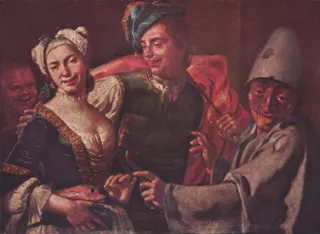
 The Roverby Aphra BehnIn Carnival-time Naples, two sisters escape a convent and an arranged marriage, and chase the men they choose.
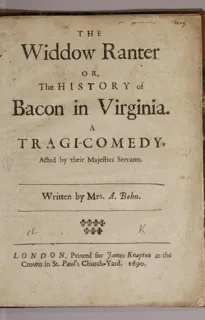 The Widow Ranterby Aphra BehnIn colonial Virginia, a rebel general loves an Indian queen, and a hard-drinking widow goes to war for her man.
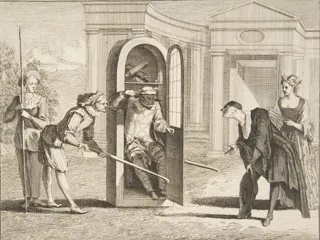 The Emperor of the Moonby Aphra BehnTwo young men court a doctor's daughter and niece by staging a visit from the Emperor of the Moon.
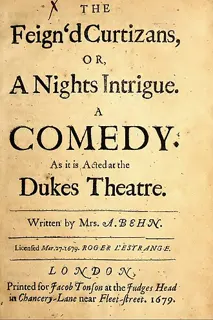 The Feigned Courtesansby Aphra BehnTwo sisters pass themselves off as courtesans in Rome to escape the husbands chosen for them.
Act 1, Scene 1
The Street, at break of Day
Enter Bellmour disguis’d in a travelling Habit.
Sure ‘tis the day that gleams in yonder East, The day that all but Lovers blest by Shade Pay chearful Homage to: Lovers! and those pursu’d like guilty me By rigid Laws, which put no difference ’.wixt fairly killing in my own Defence, And Murders bred by drunken Arguments, Whores, or the mean Revenges of a Coward. --This is Leticia’s Father’s House-- [Looking about. And that the dear Balcony That has so oft been conscious of our Loves; From whence she has sent me down a thousand Sighs, A thousand looks of Love, a thousand Vows. O thou dear witness of those charming Hours, How do I bless thee, how am I pleas’d to view thee After a tedious Age of Six Months Banishment.
Enter Mr. Gingle and several with Musick.
But hark ye, Mr. Gingle, is it proper to play before the Wedding?
Ever while you live, for many a time in playing after the first night, the Bride’s sleepy, the Bridegroom tir’d, and both so out of humour, that perhaps they hate any thing that puts ‘em in mind they are married.
They play and sing.
Enter Phillis in the Balcony, throws ‘em Money.
Rise, Cloris, charming Maid, arise!
And baffle breaking Day,
Shew the adoring World thy Eyes
Are more surprizing gay;
The Gods of Love are smiling round,
And lead the Bridegroom on,
And Hymen has the Altar crown’d.
While all thy sighing Lovers are undone.
To see thee pass they throng the Plain;
The Groves with Flowers are strown,
And every young and envying Swain
Wishes the hour his own.
Rise then, and let the God of Day,
When thou dost to the Lover yield,
Behold more Treasure given away
Than he in his vast Circle e’er beheld.
Hah, Phillis, Leticia’s Woman!
Fie, Mrs. Phillis, do you take us for Fiddlers that play for Hire? I came to compliment Mrs. Leticia on her Wedding-Morning because she is my Scholar.
She sends it only to drink her Health.
Come, Lads, let’s to the Tavern then-- [Ex. Musick.
Hah! said he Leticia? Sure, I shall turn to Marble at this News: I harden, and cold Damps pass through my senseless Pores.--Hah, who’s here?
Enter Gayman wrapt in his Cloke.
‘Tis yet too early, but my Soul’s impatient, And I must see Leticia. [Goes to the door.
Death and the Devil--the Bridegroom! Stay, Sir, by Heaven, you pass not this way. [Goes to the door as he is knocking, pushes him away, and draws.
Hah! what art thou that durst forbid me Entrance?--Stand off.
They fight a little, and closing view each other.
Gayman!
My dearest Bellmour!
Oh thou false Friend, thou treacherous base Deceiver!
Hah, this to me, dear Harry?
Whither is Honour, Truth and Friendship fled?
Why, there ne’er was such a Virtue, ’.is all a Poet’s Dream.
I thank you, Sir.
I’m sorry for’t, or that ever I did any thing that could deserve it: put up your Sword--an honest man wou’d say how he’s offended, before he rashly draws.
Are not you going to be married, Sir?
No, Sir, as long as any Man in London is so, that has but a handsom Wife, Sir.
Are you not in love, Sir?
Most damnably,--and wou’d fain lie with the dear jilting Gipsy.
Hah, who would you lie with, Sir?
You catechise me roundly--’tis not fair to name, but I am no Starter, Harry; just as you left me, you find me. I am for the faithless Julia still, the old Alderman’s Wife.--’Twas high time the City should lose their Charter, when their Wives turn honest: But pray, Sir, answer me a Question or two.
Answer me first, what makes you here this Morning?
Faith, to do you service. Your damn’d little Jade of a Mistress has learned of her Neighbours the Art of Swearing and Lying in abundance, and is--
To be married! [Sighing.
Even so, God save the Mark; and she’ll be a fair one for many an Arrow besides her Husband’s, though he an old Finsbury Hero this threescore Years.
Who mean you?
Why, thy Cuckold that shall be, if thou be’st wise.
Away; Who is this Man? thou dalliest with me.
Why, an old Knight, and Alderman here o’th’ City, Sir Feeble Fainwou’d, a jolly old Fellow, whose Activity is all got into his Tongue, a very excellent Teazer; but neither Youth nor Beauty can grind his Dudgeon to an Edge.
Fie, what Stuff’s here!
Very excellent Stuff, if you have but the Grace to improve it.
You banter me--but in plain English, tell me, What made you here thus early, Entring yon House with such Authority?
Why, your Mistress Leticia, your contracted Wife, is this Morning to be married to old Sir Feeble Fainwou’d, induc’d to’t I suppose by the great Jointure he makes her, and the improbability of your ever gaining your Pardon for your high Duel--Do I speak English now, Sir?
Too well, would I had never heard thee.
Now I being the Confident in your Amours, the Jack-go-between-- the civil Pimp or so--you left her in charge with me at your Departure.
I did so.
I saw her every day; and every day she paid the Tribute of a shower of Tears, to the dear Lord of all her Vows, young Bellmour: Till faith at last, for Reasons manifold, I slackt my daily Visits.
And left her to Temptation--was that well done?
Now must I afflict you and my self with a long tale of Causes why; Or be charg’d with want of Friendship.
You will do well to clear that Point to me.
I see you’re peevish, and you shall be humour’d.--You know my Julia play’d me e’en such another Prank as your false one is going to play you, and married old Sir Cautious Fulbank here i’th’ City; at which you know I storm’d, and rav’d, and swore, as thou wo’t now, and to as little purpose. There was but one way left, and that was cuckolding him.
Well, that Design I left thee hot upon.
And hotly have pursu’d it: Swore, wept, vow’d, wrote, upbraided, prayed and railed; then treated lavishly, and presented high--till, between you and I, Harry, I have presented the best part of Eight hundred a year into her Husband’s hands, in Mortgage.
This is the Course you’d have me steer, I thank you.
No, no, Pox on’t, all Women are not Jilts. Some are honest, and will give as well as take; or else there would not be so many broke i’th’ City. In fine, Sir, I have been in Tribulation, that is to say, Moneyless, for six tedious Weeks, without either Clothes, or Equipage to appear withal; and so not only my own Love-affair lay neglected--but thine too--and I am forced to pretend to my Lady, that I am i’th’ Country with a dying Uncle--from whom, if he were indeed dead, I expect two thousand a Year.
But what’s all this to being here this Morning?
Thus have I lain conceal’d like a Winter-Fly, hoping for some blest Sunshine to warm me into life again, and make me hover my flagging Wings; till the News of this Marriage [which fills the Town] made me crawl out this silent Hour, to upbraid the fickle Maid.
Didst thou?--pursue thy kind Design. Get me to see her; and sure no Woman, even possest with a new Passion, Grown confident even to Prostitution, But when she sees the Man to whom she’s sworn so very--very much, will find Remorse and Shame.
For your sake, though the day be broke upon us, And I’m undone, if seen--I’ll venture in-- [Throws his Cloke over.
Enter Sir Feeble Fainwou’d, Sir Cautious Fulbank, Bearjest and Noisey. [Pass over the Stage, and go in.
Hah--see the Bridegroom! And with him my destin’d Cuckold, old Sir Cautious Fulbank.--Hah, what ail’st thou, Man?
The Bridegroom! Like Gorgon’s Head he’as turned me into Stone.
Gorgon’s Head--a Cuckold’s Head--’twas made to graft upon.
By Heaven, I’ll seize her even at the Altar, And bear her thence in Triumph.
Ay, and be borne to Newgate in Triumph, and be hanged in Triumph--’twill be cold Comfort, celebrating your Nuptials in the Press-Yard, and be wak’d next Morning, like Mr. Barnardine in the Play--Will you please to rise and be hanged a little, Sir?
What wouldst thou have me do?
As many an honest Man has done before thee--Cuckold him-- cuckold him.
What--and let him marry her! She that’s mine by sacred Vows already! By Heaven, it would be flat Adultery in her!
She’ll learn the trick, and practise it the better with thee.
Oh Heavens! Leticia marry him! and lie with him!-- Here will I stand and see this shameful Woman, See if she dares pass by me to this Wickedness.
Hark ye, Harry--in earnest have a care of betraying your self; and do not venture sweet Life for a fickle Woman, who perhaps hates you.
You counsel well--but yet to see her married! How every thought of that shocks all my Resolution!-- But hang it, I’ll be resolute and saucy, Despise a Woman who can use me ill, And think my self above her.
Why, now thou art thy self--a Man again. But see, they’re coming forth, now stand your ground.
Enter Sir Feeble, Sir Cautious, Bearjest, Noisey, Leticia sad, Diana, Phillis. [Pass over the Stage.
‘Tis she; support me, Charles, or I shall sink to Earth, --Methought in passing by she cast a scornful glance at me; Such charming Pride I’ve seen upon her Eyes, When our Love-Quarrels arm’d ‘em with Disdain-- I’ll after ‘em, if I live she shall not ‘scape me. [Offers to go, Gay. holds him.
Hold, remember you’re proscribed, And die if you are taken.
I’ve done, and I will live, but he shall ne’er enjoy her. --Who’s yonder, Ralph, my trusty Confident?
Enter Ralph.
Now though I perish I must speak to him. --Friend, what Wedding’s this?
One that was never made in Heaven, Sir; ’.is Alderman Fainwou’d, and Mrs. Leticia Bredwel.
Bredwel--I have heard of her,--she was Mistress--
To fine Mr. Bellmour, Sir,--ay, there was a Gentleman --But rest his Soul--he’s hang’d, Sir. [Weeps.
How! hang’d?
Hang’d, Sir, hang’d--at the Hague in Holland.
I heard some such News, but did not credit it.
For what, said they, was he hang’d?
Why, e’en for High Treason, Sir, he killed one of their Kings.
Holland’s a Commonwealth, and is not rul’d by Kings.
Not by one, Sir, but by a great many; this was a Cheesemonger --they fell out over a Bottle of Brandy, went to Snicker Snee; Mr. Bellmour cut his Throat, and was hang’d for’t, that’s all, Sir.
And did the young Lady believe this?
Yes, and took on most heavily--the Doctors gave her over--and there was the Devil to do to get her to consent to this Marriage--but her Fortune was small, and the hope of a Ladyship, and a Gold Chain at the Spittal Sermon, did the Business--and so your Servant, Sir. [Ex. Ralph.
So, here’s a hopeful Account of my sweet self now.
Enter Post-man with Letters.
Pray, Sir, which is Sir Feeble Fainwou’d’.?
What wou’d you with him, Friend?
I have a Letter here from the Hague for him.
From the Hague! Now have I a curiosity to see it--I am his Servant--give it me--[Gives it him, and Exit.--Perhaps here may be the second part of my Tragedy, I’m full of Mischief, Charles--and have a mind to see this Fellow’s Secrets. For from this hour I’ll be his evil Genius, haunt him at Bed and Board; he shall not sleep nor eat; disturb him at his Prayers, in his Embraces; and teaze him into Madness. Help me, Invention, Malice, Love, and Wit: [Opening the Letter. Ye Gods, and little Fiends, instruct my Mischief. [Reads.
Dear Brother,
According to your desire I have sent for my Son from
St. Omer’s, whom I have sent to wait on you in England;
he is a very good Accountant, and fit for Business, and much
pleased he shall see that Uncle to whom he’s so obliged, and
which is so gratefully acknowledged by--Dear Brother, your
affectionate Brother,
Francis Fainwou’d.
--Hum--hark ye, Charles, do you know who I am now?
Why, I hope a very honest Friend of mine, Harry Bellmour.
No, Sir, you are mistaken in your Man.
It may be so.
I am, d’ye see, Charles, this very individual, numerical young Mr.--what ye call ‘um Fainwou’d, just come from St. Omers into England--to my Uncle the Alderman. I am, Charles, this very Man.
I know you are, and will swear’t upon occasion.
This lucky Thought has almost calm’d my mind. And if I don’t fit you, my dear Uncle, May I never lie with my Aunt.
Ah, Rogue--but prithee what care have you taken about your Pardon? ‘twere good you should secure that.
There’s the Devil, Charles,--had I but that--but I have had a very good Friend at work, a thousand Guyneys, that seldom fails; but yet in vain, I being the first Transgressor since the Act against Duelling. But I impatient to see this dear delight of my Soul, and hearing from none of you this six weeks, came from Brussels in this disguise--for the Hague I have not seen, though hang’d there--but come--let’s away, and compleat me a right St. Omer’s Spark, that I may present my self as soon as they come from Church.
Exeunt.
Act 1, Scene 2
Sir Cautious Fulbank’s House
Enter Lady Fulbank, Pert and Bredwel. Bredwel gives her a Letter.
Lady Fulbank reads.
Did my Julia know how I languish in this cruel Separation, she would afford me her pity, and write oftner. If only the Expectation of two thousand a year kept me from you, ah! Julia, how easily would I abandon that Trifle for your more valued sight; but that I know a fortune will render me more agreeable to the charming Julia, I should quit all my Interest here, to throw my self at her Feet, to make her sensible how I am intirely her Adorer. Charles Gayman.
--Faith, Charles, you lie--you are as welcome to me now, Now when I doubt thy Fortune is declining, As if the Universe were thine.
That, Madam, is a noble Gratitude. For if his Fortune be declining, ‘tis sacrificed to his Passion for your Ladyship. --’Tis all laid out on Love.
I prize my Honour more than Life, Yet I had rather have given him all he wish’d of me, Than be guilty of his Undoing.
And I think the Sin were less.
I must confess, such Jewels, Rings and Presents as he made me, must needs decay his Fortune.
Ay, Madam, his very Coach at last was turned into a Jewel for your Ladyship. Then, Madam, what Expences his Despair have run him on --As Drinking and Gaming, to divert the Thought of your marrying my old Master.
And put in Wenching too.--
No, assure your self, Madam--
Of that I would be better satisfied--and you too must assist me, as e’er you hope I should be kind to you in gaining you Diana. [To Bredwel.
Madam, I’ll die to serve you.
Nor will I be behind in my Duty.
Oh, how fatal are forc’d Marriages! How many Ruins one such Match pulls on! Had I but kept my Sacred Vows to Gayman, How happy had I been--how prosperous he! Whilst now I languish in a loath’d embrace, Pine out my Life with Age--Consumptions, Coughs. --But dost thou fear that Gayman is declining?
You are my Lady, and the best of Mistresses-- Therefore I would not grieve you, for I know You love this best--but most unhappy Man.
You shall not grieve me--prithee on.
My Master sent me yesterday to Mr. Crap, his Scrivener, to send to one Mr. Wasteall, to tell him his first Mortgage was out, which is two hundred pounds a Year--and who has since ingaged five or six hundred more to my Master; but if this first be not redeem’d, he’ll take the Forfeit on’t, as he says a wise Man ought.
That is to say, a Knave, according to his Notion of a wise Man.
Mr. Crap, being busy with a borrowing Lord, sent me to Mr. Wasteall, whose Lodging is in a nasty Place called Alsatia, at a Black-Smith’s.
But what’s all this to Gayman?
Madam, this Wasteall was Mr. Gayman.
Gayman! Saw’st thou Gayman?
Madam, Mr. Gayman, yesterday.
When came he to Town?
Madam, he has not been out of it.
Not at his Uncle’s in Northamptonshire?
Your Ladyship was wont to credit me.
Forgive me--you went to a Black-Smith’s--
Yes, Madam; and at the door encountred the beastly thing he calls a Landlady; who lookt as if she had been of her own Husband’s making, compos’d of moulded Smith’s Dust. I ask’d for Mr. Wasteall, and she began to open--and did so rail at him, that what with her Billinsgate, and her Husband’s hammers, I was both deaf and dumb--at last the hammers ceas’d, and she grew weary, and call’d down Mr. Wasteall; but he not answering--I was sent up a Ladder rather than a pair of Stairs; at last I scal’d the top, and enter’d the inchanted Castle; there did I find him, spite of the noise below, drowning his Cares in Sleep.
Whom foundst thou? Gayman?
He, Madam, whom I waked--and seeing me, Heavens, what Confusion seiz’d him! which nothing but my own Surprize could equal. Asham’d--he wou’d have turn’d away; But when he saw, by my dejected Eyes, I knew him, He sigh’d, and blusht, and heard me tell my Business: Then beg’d I wou’d be secret; for he vow’d his whole Repose and Life depended on my silence. Nor had I told it now, But that your Ladyship may find some speedy means to draw him from this desperate Condition.
Heavens, is’t possible?
He’s driven to the last degree of Poverty-- Had you but seen his Lodgings, Madam!
What were they?
‘Tis a pretty convenient Tub, Madam. He may lie a long in’t, there’s just room for an old join’d Stool besides the Bed, which one cannot call a Cabin, about the largeness of a Pantry Bin, or a Usurer’s Trunk; there had been Dornex Curtains to’t in the days of Yore; but they were now annihilated, and nothing left to save his Eyes from the Light, but my Landlady’s Blue Apron, ty’d by the strings before the Window, in which stood a broken six-penny Looking-Glass, that shew’d as many Faces as the Scene in Henry the Eighth, which could but just stand upright, and then the Comb-Case fill’d it.
What a leud Description hast thou made of his Chamber?
Then for his Equipage, ‘tis banisht to one small Monsieur, who [saucy with his Master’s Poverty] is rather a Companion than a Footman.
But what said he to the Forfeiture of his Land?
He sigh’d and cry’d, Why, farewel dirty Acres; It shall not trouble me, since ‘twas all but for Love!
How much redeems it?
Madam, five hundred Pounds.
Enough--you shall in some disguise convey this Money to him, as from an unknown hand: I wou’d not have him think it comes from me, for all the World: That Nicety and Virtue I’ve profest, I am resolved to keep.
If I were your Ladyship, I wou’d make use of Sir Cautious’s Cash: pay him in his own Coin.
Your Ladyship wou’d make no Scruple of it, if you knew how this poor Gentleman has been us’d by my unmerciful Master.
I have a Key already to his Counting-House; it being lost, he had another made, and this I found and kept.
Madam, this is an excellent time for’t, my Master being gone to give my Sister Leticia at Church.
‘Tis so, I’ll go and commit the Theft, whilst you prepare to carry it, and then we’ll to dinner with your Sister the Bride.
Exeunt.
Act 1, Scene 3
The House of Sir Feeble
Enter Sir Feeble, Leticia, Sir Cautious, Bearjest, Diana, Noisey. Sir Feeble sings and salutes ‘em.
Welcome, Joan Sanderson, welcome, welcome. [Kisses the Bride. Ods bobs, and so thou art, Sweet-heart. [So to the rest.
Methinks my Lady Bride is very melancholy.
Ay, ay, Women that are discreet, are always thus upon their Wedding-day.
Always by day-light, Sir Cautious.
But when bright Phoebus does retire,
To Thetis’ Bed to quench his fire.
And do the thing we need not name,
We Mortals by his influence do the same.
Then then the blushing Maid lays by
Her simpering, and her Modesty;
And round the Lover clasps and twines
Like Ivy, or the circling Vines.
Here, Ralph, the Bottle, Rogue, of Sack, ye Rascal; hadst thou been a Butler worth hanging, thou wou’dst have met us at the door with it.--Ods bods, Sweet-heart, thy health.
Away with it, to the Bride’s Haunce in Kelder.
Gots so, go to, Rogue, go to, that shall be, Knave, that shall be the morrow morning; he--ods bobs, we’ll do’t, Sweet heart; here’s to’t. [Drinks again.
I die but to imagine it, wou’d I were dead indeed.
Hah--hum--how’s this? Tears upon the Wedding day? Why, why--you Baggage, you, ye little Thing, Fools-face--away, you Rogue, you’re naughty, you’re naughty. [Patting and playing, and following her. Look--look--look now,--buss it--buss it--buss it--and Friends; did’ums, did’ums beat its none silly Baby--away, you little Hussey, away, and pledge me-- [She drinks a little.
A wise discreet Lady, I’ll warrant her; my Lady would prodigally have took it off all.
Dear’s its nown dear Fubs; buss again, buss again, away, away--ods bobs, I long for Night--look, look, Sir Cautious, what an Eye’s there!
Ay, so there is, Brother, and a modest Eye too.
Adad, I love her more and more, Ralph--call old Susan hither--come, Mr. Bearjest, put the Glass about. Ods bobs, when I was a young Fellow, I wou’d not let the young Wenches look pale and wan--but would rouse ‘em, and touse ‘em, and blowze ‘em, till I put a colour in their Cheeks, like an Apple John, affacks--Nay, I can make a shift still, and Pupsey shall not be jealous.
Enter Susan, Sir Feeble whispers her, she goes out.
Indeed, not I; Sir. I shall be all Obedience.
A most judicious Lady; would my Julia had a little of her Modesty; but my Lady’s a Wit.
Enter Susan with a Box.
Look here, my little Puskin, here’s fine Playthings for its nown little Coxcomb--go--get you gone--get you gone, and off with this St. Martin’s Trumpery, these Play-house Glass Baubles, this Necklace, and these Pendants, and all this false Ware; ods bobs, I’ll have no Counterfeit Geer about thee, not I. See--these are right as the Blushes on thy Cheeks, and these as true as my Heart, my Girl. Go, put’em on, and be fine. [Gives ‘em her.
Believe me, Sir, I shall not merit this kindness.
Go to--More of your Love, and less of your Ceremony--give the old Fool a hearty buss, and pay him that way--he, ye little wanton Tit, I’ll steal up--and catch ye and love ye--adod, I will--get ye gone--get ye gone.
Heavens, what a nauseous thing is an old Man turn’d Lover! [Ex. Leticia and Diana.
How, steal up, Sir Feeble--I hope not so; I hold it most indecent before the lawful hour.
Lawful hour! Why, I hope all hours are lawful with a Man’s own Wife.
But wise Men have respect to Times and Seasons.
Wise young Men, Sir Cautious; but wise old Men must nick their Inclinations; for it is not as ‘twas wont to be, for it is not as ’.was wont to be-- [Singing and Dancing.
Enter Ralph.
Sir, here’s a young Gentleman without wou’d speak with you.
Hum--I hope it is not that same Bellmour come to forbid the Banes--if it be, he comes too late--therefore bring me first my long Sword, and then the Gentleman. [Exit Ralph.
Pray, Sir, use mine, it is a travell’d Blade I can assure you, Sir.
I thank you, Sir.
Enter Ralph and Bellmour disguised, gives him a Letter, he reads.
How--my Nephew! Francis Fainwou’d! [Embraces him.
I am glad he has told me my Christian name.
Sir Cautious, know my Nephew--’tis a young St. Omers Scholar--but none of the Witnesses.
Marry, Sir, and the wiser he; for they got nothing by’t.
Sir, I love and honour you, because you are a Traveller.
A very proper young Fellow, and as like old Frank Fainwou’d as the Devil to the Collier; but, Francis, you are come into a very leud Town, Francis, for Whoring, and Plotting, and Roaring, and Drinking; but you must go to Church, Francis, and avoid ill Company, or you may make damnable Havock in my Cash, Francis, --what, you can keep Merchants Books?
That’s been my study, Sir.
And you will not be proud, but will be commanded by me, Francis?
I desire not to be favour’d as a Kinsman, Sir, but as your humblest Servant.
Why, thou’rt an honest Fellow, Francis,--and thou’rt heartily welcome--and I’ll make thee fortunate. But come, Sir Cautious, let you and I take a turn i’th’ Garden, and get a right understanding between your Nephew Mr. Bearjest, and my Daughter Dye.
Prudently thought on, Sir, I’ll wait on you.--
Ex. Sir Feeble, and Sir Cautious.
You are a Traveller, I understand.
I have seen a little part of the World, Sir.
So have I, Sir, I thank my Stars, and have performed most of my Travels on Foot, Sir.
You did not travel far then, I presume, Sir?
No, Sir, it was for my diversion indeed; but I assure you, I travell’d into Ireland a-foot, Sir.
Sure, Sir, you go by shipping into Ireland?
That’s all one, Sir, I was still a-foot, ever walking on the Deck.
Was that your farthest Travel, Sir?
Farthest--why, that’s the End of the World--and sure a Man can go no farther.
Sure, there can be nothing worth a Man’s Curiosity?
No, Sir, I’ll assure you, there are the Wonders of the World, Sir: I’ll hint you this one. There is a Harbour which since the Creation was never capable of receiving a Lighter, yet by another Miracle the King of France was to ride there with a vast Fleet of Ships, and to land a hundred thousand Men.
This is a swinging Wonder--but are there store of Mad-men there, Sir?
That’s another Rarity to see a Man run out of his Wits.
Marry, Sir, the wiser they I say.
Pray, Sir, what store of Miracles have you at St. Omers?
None, Sir, since that of the wonderful Salamanca Doctor, who was both here and there at the same Instant of time.
How, Sir? why, that’s impossible.
That was the Wonder, Sir, because ‘twas impossible.
But ‘twas a greater, Sir, that ‘twas believed.
Enter L. Fulb. and Pert, Sir Cau. and Sir Feeb.
Enough, enough, Sir Cautious, we apprehend one another. Mr. Bearjest, your Uncle here and I have struck the Bargain, the Wench is yours with three thousand Pound present, and something more after Death, which your Uncle likes well.
Does he so, Sir? I’m beholding to him; then ‘tis not a Pin matter whether I like or not, Sir.
How, Sir, not like my Daughter Dye?
Oh, Lord, Sir,--die or live, ‘tis all one for that, Sir--I’ll stand to the Bargain my Uncle makes.
Will you so, Sir? you’ll have very good luck if you do. [Aside.
Prithee hold thy Peace, my Lady’s Woman.
Sir, I beg your pardon for not waiting on you to Church-- I knew you wou’d be private.
Enter Let. fine in Jewels.
You honour us too highly now, Madam. [Presents his Wife, who salutes her.
Give you Joy, my dear Leticia! I find, Sir, you were resolved for Youth, Wit and Beauty.
Ay, ay, Madam, to the Comfort of many a hoping Coxcomb: but Lette,--Rogue Lette--thou wo’t not make me free o’th’ City a second time, wo’t thou entice the Rogues with the Twire and the wanton Leer --the amorous Simper that cries, come, kiss me--then the pretty round Lips are pouted out--he, Rogue, how I long to be at ‘em!--well, she shall never go to Church more, that she shall not.
How, Sir, not to Church, the chiefest Recreation of a City Lady?
That’s all one, Madam, that tricking and dressing, and prinking and patching, is not your Devotion to Heaven, but to the young Knaves that are lick’d and comb’d and are minding you more than the Parson--ods bobs, there are more Cuckolds destin’d in the Church, than are made out of it.
Hah, ha, ha, he tickles ye, i’faith, Ladies. [To his Lady.
Not one chance look this way--and yet I can forgive her lovely Eyes, Because they look not pleas’d with all this Ceremony; And yet methinks some sympathy in Love Might this way glance their Beams--I cannot hold-- Sir, is this fair Lady my Aunt?
Oh, Francis! Come hither, Francis. Lette, here’s a young Rogue has a mind to kiss thee. [Puts them together, she starts back. --Nay, start not, he’s my own Flesh and Blood, My Nephew--Baby--look, look how the young Rogues stare at one another; like will to like, I see that.
There’s something in his Face so like my Bellmour, it calls my Blushes up, and leaves my Heart defenceless.
Enter Ralph.
Sir, Dinner’s on the Table.
Come, come--let’s in then--Gentlemen and Ladies, And share to day my Pleasures and Delight, But-- Adds bobs, they must be all mine own at Night.
Exeunt.
Act 2, Scene 1
Gayman’s Lodging
Enter Gayman in a Night-Cap, and an old Campaign Coat tied about him, very melancholy.
Curse on my Birth! Curse on my faithless Fortune! Curse on my Stars, and curst be all--but Love! That dear, that charming Sin, though t’have pull’d Innumerable Mischiefs on my head, I have not, nor I cannot find Repentance for. Nor let me die despis’d, upbraided, poor: Let Fortune, Friends and all abandon me-- But let me hold thee, thou soft smiling God, Close to my heart while Life continues there. Till the last pantings of my vital Blood, Nay, the last spark of Life and Fire be Love’s!
Enter Rag.
--How now, Rag, what’s a Clock?
My Belly can inform you better than my Tongue.
Why, you gormandizing Vermin you, what have you done with the Three pence I gave you a fortnight ago.
Alas, Sir, that’s all gone long since.
You gutling Rascal, you are enough to breed a Famine in a Land. I have known some industrious Footmen, that have not only gotten their own Livings, but a pretty Livelihood for their Masters too.
Ay, till they came to the Gallows, Sir.
Very well, Sirrah, they died in an honourable Calling--but hark ye, Rag,--I have business, very earnest business abroad this Evening; now were you a Rascal of Docity, you wou’d invent a way to get home my last Suit that was laid in Lavender--with the Appurtenances thereunto belonging, as Perriwig, Cravat, and so forth.
Faith, Master, I must deal in the black Art then, for no human means will do’t--and now I talk of the black Art, Master, try your Power once more with my Landlady.
Oh! name her not, the thought on’t turns my Stomach--a sight of her is a Vomit; but he’s a bold Hero that dares venture on her for a kiss, and all beyond that sure is Hell it self--yet there’s my last, last Refuge--and I must to this Wedding--I know not what,--but something whispers me,--this Night I shall be happy--and without Julia ’.is impossible!
Julia, who’s that? my Lady Fulbank, Sir?
Peace, Sirrah--and call--a--no--Pox on’t, come back--and yet--yes--call my fulsome Landlady.
Exit Rag.
Sir Cautious knows me not by Name or Person. And I will to this Wedding, I’m sure of seeing Julia there. And what may come of that--but here’s old Nasty coming. I smell her up--hah, my dear Landlady.
Enter Rag and Landlady.
Quite out of breath--a Chair there for my Landlady.
Here’s ne’er a one, Sir.
More of your Money and less of your Civility, good Mr. Wasteall.
Dear Landlady--
Dear me no Dears, Sir, but let me have my Money--Eight Weeks Rent last Friday; besides Taverns, Ale-houses, Chandlers, Landresses’ Scores, and ready Money out of my Purse; you know it, Sir.
Ay, but your Husband don’t; speak softly.
My Husband! what, do you think to fright me with my Husband?-- I’d have you to know I’m an honest Woman, and care not this--for my Husband. Is this all the thanks I have for my kindness, for patching, borrowing and shifting for you; ‘twas but last Week I pawn’d my best Petticoat, as I hope to wear it again, it cost me six and twenty shillings besides Making; then this Morning my new Norwich Mantua followed, and two postle Spoons, I had the whole dozen when you came first; but they dropt, and dropt, till I had only Judas left for my Husband.
Hear me, good Landlady.
Then I’ve past my word at the George Tavern, for forty Shillings for you, ten Shillings at my Neighbour Squabs for Ale, besides seven Shillings to Mother Suds for Washing; and do you fob me off with my Husband?
Here, Rag, run and fetch her a Pint of Sack--there’s no other way of quenching the Fire in her flabber Chops.
Exit Rag.
--But, my dear Landlady, have a little Patience.
Patience! I scorn your Words, Sir--is this a place to trust in? tell me of Patience, that us’d to have my money before hand; come, come, pay me quickly--or old Gregory Grimes house shall be too hot to hold you.
Is’t come to this, can I not be heard?
No, Sir, you had good Clothes when you came first, but they dwindled daily, till they dwindled to this old Campaign--with tan’d coloured Lining--once red--but now all Colours of the Rain-bow, a Cloke to sculk in a Nights, and a pair of piss-burn’d shammy Breeches. Nay, your very Badge of Manhood’s gone too.
How, Landlady! nay then, i’faith, no wonder if you rail so.
Your Silver Sword I mean--transmogrified to this two-handed Basket Hilt--this old Sir Guy of Warwick--which will sell for nothing but old Iron. In fine, I’ll have my money, Sir, or i’faith, Alsatia shall not shelter you.
Enter Rag.
Well, Landlady--if we must part--let’s drink at parting; here, Landlady, here’s to the Fool--that shall love you better than I have done. [Sighing, drinks.
Rot your Wine--dy’e think to pacify me with Wine, Sir?
She refusing to drink, he holds open her Jaws, Rag throws a Glass of Wine into her Mouth.
--What, will you force me?--no--give me another Glass, I scorn to be so uncivil to be forced, my service to you, Sir--this shan’t do, Sir.
She drinks, he, embracing her, sings.
Ah, Cloris, ’.is in vain you scold,
Whilst your Eyes kindle such a Fire.
Tour Railing cannot make me cold,
So fast as they a Warmth inspire.
Well, Sir, you have no reason to complain of my Eyes nor my Tongue neither, if rightly understood. [Weeps.
I know you are the best of Landladies, As such I drink your Health-- [Drinks. But to upbraid a Man in Tribulation--fie--’tis not done like a Woman of Honour, a Man that loves you too.
She drinks.
I am a little hasty sometimes, but you know my good Nature.
I do, and therefore trust my little wants with you. I shall be rich again--and then, my dearest Landlady--
Wou’d this Wine might ne’er go through me, if I wou’d not go, as they say, through Fire and Water--by Night or by Day for you. [She drinks.
And as this is Wine I do believe thee. [He drinks.
Well--you have no money in your Pocket now, I’ll warrant you-- here--here’s ten Shillings for you old Greg’ry knows not of. [Opens a great greasy purse.
I cannot in Conscience take it, good Faith, I cannot--besides, the next Quarrel you’ll hit me in the Teeth with it.
Nay, pray no more of that; forget it, forget it. I own I was to blame--here, Sir, you shall take it.
Ay,--but what shou’d I do with Money in these damn’d Breeches? --No, put it up--I can’t appear abroad thus--no, I’ll stay at home, and lose my business.
Why, is there no way to redeem one of your Suits?
None--none--I’ll e’en lay me down and die.
Die--marry, Heavens forbid--I would not for the World--let me see--hum--what does it lie for?
Alas! dear Landlady, a Sum--a Sum.
Well, say no more, I’ll lay about me.
By this kiss but you shall not--Assafetida, by this Light.
Shall not? that’s a good one, i’faith: shall you rule, or I?
But shou’d your Husband know it?--
Husband--marry come up, Husbands know Wives secrets? No, sure, the World’s not so bad yet--where do your things lie? and for what?
Five Pounds equips me--Rag can conduct you--but I say you shall not go, I’ve sworn.
Meddle with your matters--let me see, the Caudle Cup that Molly’s Grandmother left her, will pawn for about that sum--I’ll sneak it out--well, Sir, you shall have your things presently--trouble not your head, but expect me.
Ex. Landlady and Rag.
Was ever man put to such beastly shifts? ‘Sdeath, how she stunk-- my senses are most luxuriously regal’d--there’s my perpetual Musick too--
Knocking of Hammers on a Anvil.
The ringing of Bells is an Ass to’t.
Enter Rag.
Sir, there’s one in a Coach below wou’d speak to you.
With me, and in a Coach! who can it be?
The Devil, I think, for he has a strange Countenance.
The Devil! shew your self a Rascal of Parts, Sirrah, and wait on him up with Ceremony.
Who, the Devil, Sir?
Ay, the Devil, Sir, if you mean to thrive. [Exit Rag. Who can this be--but see he comes to inform me--withdraw.
Enter Bredwel drest like a Devil.
I come to bring you this-- [Gives him a Letter.
Gayman reads.
Receive what Love and Fortune present you with, be grateful
and be silent, or ‘twill vanish like a dream, and leave you
more wretched that it found You.
Adieu.
--Hah-- [Gives him a bag of Money.
Nay, view it, Sir, ‘tis all substantial Gold.
Now dare not I ask one civil question for fear it vanish all-- [Aside. But I may ask, how ‘tis I ought to pay for this great Bounty.
Sir, all the Pay is Secrecy--
And is this all that is required, Sir?
No, you’re invited to the Shades below.
Hum, Shades below!--I am not prepared for such a Journey, Sir.
If you have Courage, Youth or Love, you’ll follow me: When Night’s black Curtain’s drawn around the World, And mortal Eyes are safely lockt in sleep, [In feign’d Heroick Tone. And no bold Spy dares view when Gods caress, Then I’ll conduct thee to the Banks of Bliss. --Durst thou not trust me?
Yes, sure, on such substantial security. [Hugs the Bag.
Just when the Day is vanish’d into Night, And only twinkling Stars inform the World, Near to the Corner of the silent Wall, In Fields of Lincoln’s-Inn, thy Spirit shall meet thee. --Farewell. [Goes out.
Hum--I am awake sure, and this is Gold I grasp. I could not see this Devil’s cloven Foot; Nor am I such a Coxcomb to believe, But he was as substantial as his Gold. Spirits, Ghosts, Hobgoblins, Furies, Fiends and Devils, I’ve often heard old Wives fright Fools and Children with, Which, once arriv’d to common Sense, they laugh at. --No, I am for things possible and Natural: Some Female Devil, old and damn’d to Ugliness, And past all Hopes of Courtship and Address, Full of another Devil called Desire, Has seen this Face--this Shape--this Youth, And thinks it’s worth her Hire. It must be so: I must moil on in the damn’d dirty Road, And sure such Pay will make the Journey easy:
And for the Price of the dull drudging Night,
All Day I’ll purchase new and fresh Delight.
Exit.
Act 2, Scene 2
Sir Feeble’s House
Enter Leticia, pursu’d by Phillis.
Why, Madam, do you leave the Garden, For this retreat to Melancholy?
Because it suits my Fortune and my Humour; And even thy Presence wou’d afflict me now.
Madam, I was sent after you; my Lady Fulbank has challeng’d Sir Feeble at Bowls, and stakes a Ring of fifty Pound against his new Chariot.
Tell him I wish him Luck in every thing, But in his Love to me-- Go tell him I am viewing of the Garden.
Ex. Phillis.
Enter Bellmour at a distance behind her.
--Blest be this kind Retreat, this ‘lone Occasion, That lends a short Cessation to my Torments, And gives me leave to vent my Sighs and Tears. [Weeps.
And doubly blest be all the Powers of Love, That give me this dear Opportunity.
Where were you, all ye pitying Gods of Love? That once seem’d pleas’d at Bellmour’s Flame and mine, And smiling join’d our Hearts, our sacred Vows, And spread your Wings, and held your Torches high.
Oh-- [She starts, and pauses.
Where were you now? When this unequal Marriage Gave me from all my Joys, gave me from Bellmour; Your Wings were flag’d, your Torches bent to Earth, And all your little Bonnets veil’d your Eyes; You saw not, or were deaf and pitiless.
Oh my Leticia!
Hah, ‘tis there again; that very voice was Bellmour’s: Where art thou, Oh thou lovely charming Shade? For sure thou canst not take a Shape to fright me. --What art thou?--speak! [Not looking behind her yet for fear.
Thy constant true Adorer, Who all this fatal Day has haunted thee To ease his tortur’d Soul. [Approaching nearer.
My Heart is well acquainted with that Voice, But Oh, my Eyes dare not encounter thee. [Speaking with signs of fear.
Is it because thou’st broken all thy Vows? --Take to thee Courage, and behold thy Slaughters.
Yes, though the Sight wou’d blast me, I wou’d view it. [Turns. --’Tis he--’tis very Bellmour! or so like-- I cannot doubt but thou deserv’st this Welcome. [Embraces him.
Oh my Leticia!
I’m sure I grasp not Air; thou art no Fantom: Thy Arms return not empty to my Bosom, But meet a solid Treasure.
A Treasure thou so easily threw’st away; A Riddle simple Love ne’er understood.
Alas, I heard, my Bellmour, thou wert dead.
And was it thus you mourn’d my Funeral?
I will not justify my hated Crime: But Oh! remember I was poor and helpless, And much reduc’d, and much impos’d upon.
Bellmour weeps.
And Want compell’d thee to this wretched Marriage--did it?
‘Tis not a Marriage, since my Bellmour lives; The Consummation were Adultery. I was thy Wife before, wo’t thou deny me?
No, by those Powers that heard our mutual Vows, Those Vows that tie us faster than dull Priests.
But oh my Bellmour, thy sad Circumstances Permit thee not to make a publick Claim: Thou art proscribed, and diest if thou art seen.
Alas!
Yet I wou’d wander with thee o’er the World, And share thy humblest Fortune with thy Love.
Is’t possible, Leticia, thou wou’dst fly To foreign Shores with me?
Can Bellmour doubt the Soul he knows so well?
Perhaps in time the King may find my Innocence, and may extend his Mercy: Mean time I’ll make provision for our Flight.
But how ‘twixt this and that can I defend My self from the loath’d Arms of an impatient Dotard, That I may come a spotless Maid to thee?
Thy native Modesty and my Industry Shall well enough secure us. Feign your nice Virgin-Cautions all the day; Then trust at night to my Conduct to preserve thee. --And wilt thou yet be mine? Oh, swear a-new, Give me again thy Faith, thy Vows, thy Soul; For mine’s so sick with this Day’s fatal Business, It needs a Cordial of that mighty strength; Swear--swear, so as if thou break’st-- Thou mayst be--any thing--but damn’d, Leticia.
Thus then, and hear me, Heaven! [Kneels.
And thus--I’ll listen to thee. [Kneels.
Enter Sir Feeble, L. Fulbank, Sir Cautious.
Lette, Lette, Lette, where are you, little Rogue, Lette? --Hah--hum--what’s here--
Bellmour snatches her to his Bosom, as if she fainted.
Oh Heavens, she’s gone, she’s gone!
Gone--whither is she gone?--it seems she had the Wit to take good Company with her--
The Women go to her, take her up.
She’s gone to Heaven, Sir, for ought I know.
She was resolv’d to go in a young Fellow’s Arms, I see.
Go to, Francis--go to.
Stand back, Sir, she recovers.
Alas, I found her dead upon the Floor, --Shou’d I have left her so--if I had known your mind--
Was it so--was it so?--Got so, by no means, Francis.--
Pardon him, Sir, for surely I had died, Bur for his timely coming.
Alas, poor Pupsey--was it sick--look here--here’s a fine thing to make it well again. Come, buss, and it shall have it--oh, how I long for Night. Ralph, are the Fidlers ready?
They are tuning in the Hall, Sir.
That’s well, they know my mind. I hate that same twang, twang, twang, fum, fum, fum, tweedle, tweedle, tweedle, then scrue go the Pins, till a man’s Teeth are on an edge; then snap, says a small Gut, and there we are at a loss again. I long to be in bed with a--hey tredodle, tredodle, tredodle,--with a hay tredool, tredodle, tredo-- [Dancing and playing on his Stick like a Flute.
A prudent Man would reserve himself--Good-facks, I danc’d so on my Wedding-day, that when I came to Bed, to my Shame be it spoken, I fell fast asleep, and slept till morning.
Where was your Wisdom then, Sir Cautious? But I know what a wise Woman ought to have done.
Odsbobs, that’s Wormwood, that’s Wormwood--I shall have my young Hussey set a-gog too; she’ll hear there are better things in the World than she has at home, and then odsbobs, and then they’ll ha’t, adod, they will, Sir Cautious. Ever while you live, keep a Wife ignorant, unless a Man be as brisk as his Neighbours.
A wise Man will keep ‘em from baudy Christnings then, and Gossipings.
Christnings and Gossipings! why, they are the very Schools that debauch our Wives, as Dancing-Schools do our Daughters.
Ay, when the overjoy’d good Man invites ‘em all against that time Twelve-month: Oh, he’s a dear Man, cries one--I must marry, cries another, here’s a Man indeed--my Husband--God help him--
Then he falls to telling of her Grievance, till [half maudlin] she weeps again: Just my Condition, cries a third: so the Frolick goes round, and we poor Cuckolds are anatomiz’d, and turn’d the right side outwards; adsbobs, we are, Sir Cautious.
Ay, ay, this Grievance ought to be redrest, Sir Feeble; the grave and sober part o’th’ Nation are hereby ridicul’d,--Ay, and cuckolded too for ought I know.
Wise Men knowing this, should not expose their Infirmities, by marrying us young Wenches; who, without Instruction, find how we are impos’d upon.
Enter Fiddles playing, Mr. Bearjest and Diana dancing; Bredwel, Noisey, &c.
So, Cousin, I see you have found the way to Mrs. Dy’s Heart.
Who, I, my dear Lady Aunt? I never knew but one way to a Woman’s Heart, and that road I have not yet travelled; for my Uncle, who is a wise Man, says Matrimony is a sort of a--kind of a--as it were, d’ye see, of a Voyage, which every Man of Fortune is bound to make one time or other: and Madam--I am, as it were--a bold Adventurer.
And are you sure, Sir, you will venture on me?
Sure!--I thank you for that--as if I could not believe my Uncle; For in this case a young Heir has no more to do, but to come and see, settle, marry, and use you scurvily.
How, Sir, scurvily?
Very scurvily, that is to say, be always fashionably drunk, despise the Tyranny of your Bed, and reign absolutely--keep a Seraglio of Women, and let my Bastard Issue inherit; be seen once a Quarter, or so, with you in the Park for Countenance, where we loll two several ways in the gilt Coach like Janus, or a Spread-Eagle.
And do you expect I shou’d be honest the while?
Heaven forbid, not I, I have not met with that Wonder in all my Travels.
How, Sir, not an honest Woman?
Except my Lady Aunt--Nay, as I am a Gentleman and the first of my Family--you shall pardon me, here--cuff me, cuff me soundly. [Kneels to her.
Enter Gayman richly drest.
This Love’s a damn’d bewitching thing--Now though I should lose my Assignation with my Devil, I cannot hold from seeing Julia to night: hah--there, and with a Fop at her Feet.--Oh Vanity of Woman! [Softly pulls her.
Oh, Sir, you’re welcome from Northamptonshire.
Hum--surely she knows the Cheat. [Aside.
You are so gay, you save me, Sir, the labour of asking if your Uncle be alive.
Pray Heaven she have not found my Circumstances! But if she have, Confidence must assist me-- [Aside. --And, Madam, you’re too gay for me to inquire Whether you are that Julia which I left you?
Oh, doubtless, Sir--
But why the Devil do I ask--Yes, you are still the same; one of those hoiting Ladies, that love nothing like Fool and Fiddle; Crouds of Fops; had rather be publickly, though dully, flatter’d, than privately ador’d: you love to pass for the Wit of the Company, by talking all and loud.
Rail on, till you have made me think my Virtue at so low Ebb, it should submit to you.
What--I’m not discreet enough; I’ll babble all in my next high Debauch, Boast of your Favours, and describe your Charms To every wishing Fool.
Or make most filthy Verses of me-- Under the name of Cloris--you Philander, Who in leud Rhimes confess the dear Appointment; What Hour, and where, how silent was the Night, How full of Love your Eyes, and wishing mine. Faith, no; if you can afford me a Lease of your Love, Till the old Gentleman my Husband depart this wicked World, I’m for the Bargain.
Hum--what’s here, a young Spark at my Wife? [Goes about ‘em.
Unreasonable Julia, is that all, My Love, my Sufferings, and my Vows must hope? Set me an Age--say when you will be kind, And I will languish out in starving Wish: But thus to gape for Legacies of Love, Till Youth be past Enjoyment, The Devil I will as soon--farewel. [Offers to go.
Stay, I conjure you stay.
And lose my Assignation with my Devil. [Aside.
‘Tis so, ay, ay, ‘tis so--and wise Men will perceive it; ‘tis here--here in my forehead, it more than buds; it sprouts, it flourishes.
So, that young Gentleman has nettled him, stung him to the quick: I hope he’ll chain her up--the Gad-Bee’s in his Quonundrum--in Charity I’ll relieve him--Come, my Lady Fulbank, the Night grows old upon our hands; to dancing, to jiggiting--Come, shall I lead your Ladyship?
No, Sir, you see I am better provided-- [Takes Gayman’s hand.
Ay, no doubt on’t, a Pox on him for a young handsome Dog.
They dance all.
Very well, very well, now the Posset; and then--ods bobs, and then--
And then we’ll have t’other Dance.
Away, Girls, away, and steal the Bride to Bed; they have a deal to do upon their Wedding-nights; and what with the tedious Ceremonies of dressing and undressing, the smutty Lectures of the Women, by way of Instruction, and the little Stratagems of the young Wenches --odds bobs, a Man’s cozen’d of half his Night: Come, Gentlemen, one Bottle, and then--we’ll toss the Stocking.
Exeunt all but L. Ful. Bred, who are talking, and Gayman.
But dost thou think he’ll come?
I do believe so, Madam--
Be sure you contrive it so, he may not know whither, or to whom he comes.
I warrant you, Madam, for our Parts. [Exit Bredwel, stealing out Gayman.
How now, what, departing?
You are going to the Bride-Chamber.
No matter, you shall stay--
I hate to have you in a Croud.
Can you deny me--will you not give me one lone hour i’th’ Garden?
Where we shall only tantalize each other with dull kissing, and part with the same Appetite we met--No, Madam; besides, I have business--
Some Assignation--is it so indeed?
Away, you cannot think me such a Traitor; ‘tis more important business--
Oh, ‘tis too late for business--let to morrow serve.
By no means--the Gentleman is to go out of Town.
Rise the earlier then--
--But, Madam, the Gentleman lies dangerously--sick--and should he die--
‘Tis not a dying Uncle, I hope, Sir?
Hum--
The Gentleman a dying, and to go out of Town to morrow?
Ay--a--he goes--in a Litter--’tis his Fancy, Madam--Change of Air may recover him.
So may your change of Mistress do me, Sir--farewel. [Goes out.
Stay, Julia--Devil, be damn’d--for you shall tempt no more, I’ll love and be undone--but she is gone-- And if I stay, the most that I shall gain Is but a reconciling Look, or Kiss. No, my kind Goblin--
I’ll keep my Word with thee, as the least Evil;
A tantalizing Woman’s worse than Devil.
Exit.
Act 3, Scene 1
Sir Feeble’s House
The Second Song before the Entry.
A SONG made by Mr. Cheek.
No more, Lucinda, ah! expose no more To the admiring World those conquering Charms: In vain all day unhappy Men adore, What the kind Night gives to my longing Arms. Their vain Attempts can ne’er successful prove, Whilst I so well maintain the Fort of Love.
Yet to the World with so bewitching Arts, Your dazling Beauty you around display, And triumph in the Spoils of broken Hearts, That sink beneath your feet, and croud your Way. Ah! suffer now your Cruelty to cease, And to a fruitless War prefer a Peace.
Enter Ralph with Light, Sir Feeble, and Bellmour
So, so, they’re gone--Come, Francis, you shall have the Honour of undressing me for the Encounter; but ‘twill be a sweet one, Francis.
Hell take him, how he teazes me! [Undressing all the while.
But is the young Rogue laid, Francis--is she stoln to Bed? What Tricks the young Baggages have to whet a man’s Appetite?
Ay, Sir--Pox on him--he will raise my Anger up to Madness, and I shall kill him to prevent his going to Bed to her. [Aside.
A pise of those Bandstrings--the more haste the less speed.
Be it so in all things, I beseech thee, Venus.
Thy aid a little, Francis--oh, oh--thou choakest me, ’.bobs, what dost mean? [Pinches him by the Throat.
You had so hamper’d ‘em, Sir--the Devil’s very mischievous in me. [Aside.
Come, come, quick, good Francis, adod, I’m as yare as a Hawk at the young Wanton--nimbly, good Francis, untruss, untruss.
Cramps seize ye--what shall I do? the near Approach distracts me. [Aside.
So, so, my Breeches, good Francis. But well, Francis, how dost think I got the young Jade my Wife?
With five hundred pounds a year Jointure, Sir.
No, that wou’d not do, the Baggage was damnably in love with a young Fellow they call Bellmour, a handsome young Rascal he was, they say, that’s truth on’t; and a pretty Estate: but happening to kill a Man he was forced to fly.
That was great pity, Sir.
Pity! hang him, Rogue, ‘sbobs, and all the young Fellows in the Town deserve it; we can never keep our Wives and Daughters honest for rampant young Dogs; and an old Fellow cannot put in amongst ‘em, under being undone, with Presenting, and the Devil and all. But what dost think I did? being damnably in love--I feign’d a Letter as from the Hague, wherein was a Relation of this same Bellmour’s being hang’d.
Is’t possible, Sir, you cou’d devise such News?
Possible, Man! I did it, I did it; she swooned at the News, shut her self up a whole Month in her Chamber; but I presented high: she sigh’d and wept, and swore she’d never marry: still I presented; she hated, loathed, spit upon me; still, adod, I presented, till I presented my self effectually in Church to her; for she at last wisely considered her Vows were cancell’d, since Bellmour was hang’d.
Faith, Sir, this was very cruel, to take away his Fame, and then his Mistress.
Cruel! thou’rt an Ass, we are but even with the brisk Rogues, for they take away our Fame, cuckold us, and take away our Wives: so, so, my Cap, Francis.
And do you think this Marriage lawful, Sir?
Lawful! it shall be when I’ve had Livery and Seisin of her Body--and that shall be presently Rogue,--quick--besides, this Bellmour dares as well be hang’d as come into England.
If he gets his Pardon, Sir--
Pardon! no, no, I have took care for that, for I have, you must know, got his Pardon already.
How, Sir! got his Pardon, that’s some amends for robbing him of his Wife.
Hold, honest Francis: What, dost think ‘twas in kindness to him! No, you Fool, I got his Pardon my self, that no body else should have it, so that if he gets any body to speak to his Majesty for it, his Majesty cries he has granted it; but for want of my appearance, he’s defunct, trust up, hang’d, Francis.
This is the most excellent revenge I ever heard of.
Ay, I learnt it of a great Politician of our Times.
But have you got his Pardon?--
I’ve done’t, I’ve done’t; Pox on him, it cost me five hundred pounds though: Here ‘tis, my Solicitor brought it me this Evening. [Gives it him.
This was a lucky hit--and if it scape me, let me be hang’d by a Trick indeed. [Aside.
So, put it into my Cabinet,--safe, Francis, safe.
Safe, I’ll warrant you, Sir.
My Gown, quick, quick,--t’other Sleeve, Man--so now my Night-cap; well, I’ll in, throw open my Gown to fright away the Women, and jump into her Arms. [Exit Sir Feeble.
He’s gone, quickly, oh Love inspire me!
Enter a Footman.
Sir, my Master, Sir Cautious Fulbank, left his Watch on the little Parlor-Table to night, and bid me call for’t.
Hah--the Bridegroom has it, Sir, who is just gone to Bed, it shall be sent him in the Morning.
‘Tis very well, Sir--your Servant-- [Exit Footman.
Let me see--here is the Watch, I took it up to keep for him--but his sending has inspir’d me with a sudden Stratagem, that will do better than Force, to secure the poor trembling Leticia--who, I am sure, is dying with her Fears.
Exit Bellmour.
Act 3, Scene 2
Changes to the Bed-chamber; Leticia in an undressing by the Women at the Table
Enter to them Sir Feeble Fainwou’d.
What’s here? what’s here? the prating Women still. Ods bobs, what, not in Bed yet? for shame of Love, Leticia.
For shame of Modesty, Sir; you wou’d not have me go to Bed before all this Company.
What, the Women! why, they must see you laid, ‘tis the fashion.
What, with a Man? I wou’d not for the World. Oh, Bellmour, where art thou with all thy promised aid? [Aside.
Nay, Madam, we shou’d see you laid indeed.
First in my Grave, Diana.
Ods bobs, here’s a Compact amongst the Women--High Treason against the Bridegroom--therefore, Ladies, withdraw, or, adod, I’ll lock you all in. [Throws open his Gown, they run all away, he locks the Door.
So, so, now we’re alone, Leticia--off with this foolish Modesty, and Night Gown, and slide into my Arms. [She runs from him. H’e’, my little Puskin--what, fly me, my coy Daphne, [He pursues her. Knocking. Hah--who’s that knocks--who’s there?--
[Within] ‘Tis I, Sir, ‘tis I, open the door presently.
Why, what’s the matter, is the House o-fire?
[Within] Worse, Sir, worse--
He opens the door, Bellmour enters with the Watch in his hand.
‘Tis Bellmour’s Voice!
Oh, Sir, do you know this Watch?
This Watch!
Ay, Sir, this Watch?
This Watch!--why, prithee, why dost tell me of a Watch? ‘tis Sir Cautious Fulbank’s Watch; what then, what a Pox dost trouble me with Watches? [Offers to put him out, he returns.
‘Tis indeed his Watch, Sir, and by this Token he has sent for you, to come immediately to his House, Sir.
What a Devil, art mad, Francis? or is his Worship mad, or does he think me mad?--go, prithee tell him I’ll come to him to morrow. [Goes to put him out.
To morrow, Sir! why all our Throats may be cut before to morrow.
What sayst thou, Throat cut?
Why, the City’s up in Arms, Sir, and all the Aldermen are met at Guild-Hall; some damnable Plot, Sir.
Hah--Plot--the Aldermen met at Guild-Hall!--hum--why, let ’.m meet, I’ll not lose this Night to save the Nation.
Wou’d you to bed, Sir, when the weighty Affairs of State require your Presence?
--Hum--met at Guild-Hall;--my Clothes, my Gown again, Francis, I’ll out--out! what, upon my Wedding-night? No--I’ll in. [Putting on his Gown pausing, pulls it off again.
For shame, Sir, shall the Reverend Council of the City debate without you?
Ay, that’s true, that’s true; come truss again, Francis, truss again--yet now I think on’t, Francis, prithee run thee to the Hall, and tell ‘em ‘tis my Wedding-night, d’ye see, Francis; and let some body give my Voice for--
What, Sir?
Adod, I cannot tell; up in Arms, say you! why, let ‘em fight Dog, fight Bear; mun, I’ll to Bed--go--
And shall his Majesty’s Service and his Safety lie unregarded for a slight Woman, Sir?
Hum, his Majesty!--come, haste, Francis, I’ll away, and call Ralph, and the Footmen, and bid ‘em arm; each Man shoulder his Musket, and advance his Pike--and bring my Artillery Implements quick--and let’s away: Pupsey--b’u’., Pupsey, I’ll bring it a fine thing yet before Morning, it may be--let’s away: I shall grow fond, and forget the business of the Nation--Come, follow me, Francis.--
Exit Sir Feeble, Bellmour runs to Leticia.
Now, my Leticia, if thou e’er didst Love, If ever thou design’st to make me blest--Without delay fly this adulterous Bed.
Why, Francis, where are you, Knave? [Sir Feeb. within.
I must be gone, lest he suspect us--I’ll lose him, and return to thee immediately--get thy self ready.--
I will not fail, my Love.
Exit Bellmour.
Old Man forgive me--thou the Aggressor art, Who rudely forc’d the Hand without the Heart. She cannot from the Paths of Honour rove, Whose Guide’s Religion, and whose End is Love.
Exit.
Act 3, Scene 3
Changes to a Wash-house, or Out-House
Enter with a Dark-lanthorn Bredwel disguis’d like a Devil, leading Gayman.
Stay here till I give notice of your coming. [Exit Bredwel, leaves his Dark-Lanthorn.
Kind Light, a little of your aid--now must I be peeping, though my Curiosity should lose me all--hah--Zouns, what here--a Hovel or a Hog-sty? hum, see the Wickedness of Man, that I should find no time to swear in, but just when I’m in the Devil’s Clutches.
Enter Pert, as an old Woman, with a Staff.
Good Even to you, fair Sir.
Ha--defend me; if this be she, I must rival the Devil, that’s certain.
Come, young Gentleman, dare not you venture?
He must be as hot as Vesuvius that does--I shall never earn my Morning’s Present.
What, do you fear a longing Woman, Sir?
The Devil I do--this is a damn’d Preparation to Love.
Why stand you gazing, Sir? A Woman’s Passion is like the Tide, it stays for no man when the hour is come--
I’m sorry I have took it at its Turning; I’m sure mine’s ebbing out as fast.
Will you not speak, Sir--will you not on?
I wou’d fain ask--a civil Question or two first.
You know too much Curiosity lost Paradise.
Why, there’s it now.
Fortune and Love invite you, if you dare follow me.
This is the first thing in Petticoats that ever dar’d me in vain. Were I but sure she were but human now--for sundry Considerations she might down--but I will on--
She goes, he follows; both go out.
Act 3, Scene 4
A Chamber in the Apartments of L. Fulbank
Enter Old Woman followed by Gayman in the dark.
Soft Musick plays, she leaves him.
--Hah, Musick--and Excellent!
SONG.
Oh! Love, that stronger art than Wine,
Pleasing Delusion, Witchery divine,
Want to be prized above all Wealth,
Disease that has more Joys than Health;
Though we blaspheme thee in our Pain,
And of thy Tyranny complain,
We all are bettered by thy Reign.
What Reason never can bestow,
We to this useful Passion owe.
Love wakes the dull from sluggish Ease,
And learns a Clown the Art to please:
Humbles the Vain, kindles the Cold,
Makes Misers free, and Cowards bold.
‘Tis he reforms the Sot from Drink,
And teaches airy Fops to think.
When full brute Appetite is fed,
And choak’d the Glutton lies, and dead;
Thou new Spirits dost dispense,
And fine’st the gross Delights of Sense.
Virtue’s unconquerable Aid,
That against Nature can persuade;
And makes a roving Mind retire
Within the Bounds of just Desire.
Chearer of Age, Youth’s kind Unrest,
And half the Heaven of the blest.
Ah, Julia, Julia! if this soft Preparation Were but to bring me to thy dear Embraces; What different Motions wou’d surround my Soul, From what perplex it now.
Enter Nymphs and Shepherds, and dance.
Then two dance alone. All go out but Pert and a Shepherd.
--If these be Devils, they are obliging ones: I did not care if I ventur’d on that last Female Fiend.
Man sings.
Cease your Wonder, cease your Guess, Whence arrives your happiness. Cease your Wonder, cease your Pain, Human Fancy is in vain.
Chorus.
’.is enough, you once shall find,
Fortune may to Worth be kind; [gives him Gold. And Love can leave off being blind.
Pert sings.
You, before you enter here
On this sacred Ring must swear,
[Puts it on his Finger, holds his Hand. By the Figure which is round, Your Passion constant and profound; By the Adamantine Stone, To be fixt to one alone:
By the Lustre, which is true,
Ne’er to break your sacred Vow.
Lastly, by the Gold that’s try’d,
For Love all Dangers to abide.
They all dance about him, while those same two sing.
Once about him let us move, To confirm him true to Love. [bis.
Twice with mystick turning Feet, Make him silent and discreet. [bis.
Thrice about him let us tread, To keep him ever young in Bed. [bis.
Gives him another part.
Forget Aminta’s proud Disdain; Haste here, and sigh no more in vain, The Joy of Love without the Pain.
That God repents his former Slights, And Fortune thus your Faith requites.
Both. Forget Aminta’s proud Disdain; Then taste, and sigh no more in vain, The Joy of Love without the Pain, The Joy of Love without the Pain.
Exeunt all Dancers. Looks on himself, and feels about him.
What the Devil can all this mean? If there be a Woman in the Case--sure I have not liv’d so bad a Life, to gain the dull Reputation of so modest a Coxcomb, but that a Female might down with me, without all this Ceremony. Is it care of her Honour?--that cannot be--this Age affords none so nice: Nor Fiend nor Goddess can she be, for these I saw were Mortal. No--’tis a Woman--I am positive. Not young nor handsom, for then Vanity had made her glory to have been seen. No--since ‘tis resolved, a Woman--she must be old and ugly, and will not balk my Fancy with her sight, but baits me more with this essential Beauty.
Well--be she young or old, Woman or Devil,
She pays, and I’ll endeavour to be civil.
Exit.
Act 3, Scene 5
In the same House. The flat Scene of the Hall
After a Knocking, enter Bredwel in his masking Habit, with his Vizard in the one Hand, and a Light in t’other, in haste.
Hah, knocking so late at our Gate-- [Opens the door.
Enter Sir Feeble drest, and arm’d Cap-a-pee, with a broad Waste-Belt stuck round with Pistols, a Helmet, Scarf, Buff-coat and half Pike.
How now, how now, what’s the matter here?
Matter, what, is my Lady’s innocent Intrigue found out?-- Heavens, Sir, what makes you here in this warlike Equipage?
What makes you in this showing Equipage, Sir?
I have been dancing among some of my Friends.
And I thought to have been fighting with some of my Friends. Where’s Sir Cautious, where’s Sir Cautious?
Sir Cautious--Sir, in Bed.
Call him, call him--quickly, good Edward.
Sure my Lady’s Frolick is betray’d, and he comes to make Mischief. However, I’ll go and secure Mr. Gayman. [Exit Bredwel.
Enter Sir Cautious and Dick his Boy with Light.
Pray, Sir, go to Bed, here’s no Thieves; all’s still and well.
This last Night’s misfortune of mine, Dick, has kept me waking, and methought all night, I heard a kind of a silent Noise. I am still afraid of Thieves; mercy upon me, to lose five hundred Guineas at one clap, Dick.--Hah--bless me! what’s yonder? Blow the great Horn, Dick--Thieves--Murder, Murder!
Why, what a Pox, are you mad? ‘Tis I, ‘tis I, man.
I, who am I? Speak--declare--pronounce.
Your Friend, old Feeble Fainwou’d.
How, Sir Feeble! At this late hour, and on his Wedding-Night --why, what’s the matter, Sir--is it Peace or War with you?
A Mistake, a Mistake, proceed to the business, good Brother, for time you know is precious.
Some strange Catastrophe has happened between him and his Wife to Night, and makes him disturb me thus-- [Aside. --Come, sit, good Brother, and to the business as you say--
They sit one at one end of the Table, the other at the other; Dick sets down the Light and goes out--both sit gaping and staring, and expecting when either should speak.
As soon as you please, Sir. Lord, how wildly he stares! He’s much disturb’d in’s mind --Well, Sir, let us be brief--
As brief as you please, Sir--Well, Brother-- [Pausing still.
So, Sir.
How strangely he stares and gapes--some deep concern.
Hum--hum--
I listen to you, advance--
Sir?
A very distracted Countenance--pray Heaven he be not mad, and a young Wife is able to make an old Fellow mad, that’s the Truth on’t. [Aside.
Sure ‘tis something of his Lady--he’s so loth to bring it out --I am sorry you are thus disturb’d, Sir.
No disturbance to serve a Friend--
I think I am your Friend indeed, Sir Cautious, or I wou’d not have been here upon my Wedding-Night.
His Wedding-Night--there lies his Grief, poor Heart! Perhaps she has cuckolded him already-- [Aside. --Well, come, Brother--many such things are done--
Done--hum--come, out with it; Brother--what troubles you to Night?
Troubles me--why, knows he I am robb’d? [Aside.
I may perhaps restore you to the Rest you’ve lost.
The Rest; why, have I lost more since? Why, know you then who did it?--Oh, how I’d be reveng’d upon the Rascal!
‘Tis--Jealousy, the old Worm that bites-- [Aside. Who is it you suspect?
Alas, I know not whom to suspect, I wou’d I did; but if you cou’d discover him--I wou’d so swinge him--
I know him--what, do you take me for a Pimp, Sir? I know him--there’s your Watch again, Sir; I’m your Friend, but no Pimp, Sir-- [Rises in Rage.
My Watch; I thank you, Sir--but why Pimp, Sir?
Oh, a very thriving Calling, Sir,--and I have a young Wife to practise with. I know your Rogues.
A young Wife!--’tis so, his Gentlewoman has been at Hot-Cockles without her Husband, and he’s Horn-mad upon’t. I suspected her being so close in with his Nephew--in a Fit with a Pox--[Aside] Come, come, Sir Feeble, ‘tis many an honest Man’s Fortune.
I grant it, Sir--but to the business, Sir, I came for.
With all my Soul--
They sit gaping, and expecting when either should speak. Enter Bredwel and Gayman at the door. Bredwel sees them, and puts Gayman back again.
Hah--Sir Feeble, and Sir Cautious there--what shall I do? For this way we must pass, and to carry him back wou’d discover my Lady to him, betray all, and spoil the Jest--retire, Sir, your Life depends upon your being unseen. [Go out.
Well, Sir, do you not know that I am married, Sir? and this my Wedding Night?
Very good, Sir.
And that I long to be in bed?
Very well, Sir.
Very good, Sir, and very well, Sir--why then what the Devil do I make here, Sir? [Rises in a rage.
Patience, Brother--and forward.
Forward! lend me your hand, good Brother; let’s feel your Pulse; how has this Night gone with you?
Ha, ha, ha--this is the oddest Quonudrum--sure he’s mad--and yet now I think on’t, I have not slept to night, nor shall I ever sleep again, till I have found the Villain that robb’d me. [Weeps.
So, now he weeps--far gone--this Laughing and Weeping is a very bad sign! [Aside] Come, let me lead you to your Bed.
Mad, stark mad--no, now I’m up ‘tis no matter--pray ease your troubled Mind--I am your Friend--out with it--what, was it acted? or but designed?
How, Sir?
Be not asham’d, I’m under the same Premunire I doubt, little better than a--but let that pass.
Have you any Proof?
Proof of what, good Sir?
Of what! why, that you’re a Cuckold; Sir, a Cuckold, if you’ll ha’t.
Cuckold! Sir, do ye know what ye say?
What I say?
Ay, what you say, can you make this out?
I make it out!
Ay, Sir--if you say it, and cannot make it out, you’re a--
What am I, Sir? What am I?
A Cuckold as well as my self, Sir; and I’ll sue you for Scandalum Magnatum; I shall recover swinging Damages with a City-Jury.
I know of no such thing, Sir.
No, Sir?
No, Sir.
Then what wou’d you be at, Sir?
I be at, Sir! what wou’d you be at, Sir?
Ha, ha, ha--why this is the strangest thing--to see an old Fellow, a Magistrate of the City, the first Night he’s married, forsake his Bride and Bed, and come arm’d Cap-a-pee, like Gargantua, to disturb another old Fellow, and banter him with a Tale of a Tub; and all to be-cuckold him here--in plain English, what’s your Business?
Why, what the Devil’s your Business, and you go to that?
My Business, with whom?
With me, Sir, with me; what a Pox do you think I do here?
‘Tis that I wou’d be glad to know, Sir.
Enter Dick.
Here, Dick, remember I’ve brought back your Master’s Watch; next time he sends for me o’er Night, I’ll come to him in the Morning.
Ha, ha, ha, I send for you! Go home and sleep, Sir--Ad, and ye keep your Wife waking to so little purpose, you’ll go near to be haunted with a Vision of Horns.
Exit Dick.
Roguery, Knavery, to keep me from my Wife--Look ye, this was the Message I receiv’d. [Tells him seemingly.
Enter Bredwel to the Door in a white Sheet like a Ghost, speaking to Gayman who stands within.
Now, Sir, we are two to two, for this way you must pass or be taken in the Lady’s Lodgings--I’ll first adventure out to make you pass the safer, and that he may not, if possible, see Sir Cautious, whom I shall fright into a Trance, I am sure. And Sir Feeble, the Devil’s in’t if he know him. [Aside.
A brave kind Fellow this.
Enter Bredwel stalking on as a Ghost by them.
Oh--undone,--undone; help, help;--I’m dead, I’m dead. [Falls down on his Face; Sir Feeble stares,--and stands still.
As I could wish. [Aside, turns. Come on, thou ghastly thing, and follow me.
Enter Gayman like a Ghost, with a Torch.
Oh Lord, oh Lord!
Hah!--old Sir Feeble Fainwou’d--why, where the Devil am I? --’Tis he:--and be it where it will, I’ll fright the old Dotard for cozening my Friend of his Mistress. [Stalks on.
Oh, guard me,--guard me--all ye Pow’rs! [Trembling.
Thou call’st in vain, fond Wretch--for I am Bellmour,
Whom first thou robb’st of Fame and Life,
And then what dearer was,--his Wife.
Goes out, shaking his Torch at him.
Oh Lord--oh Lord!
Enter L. Fulbank in an undress, and Pert undrest.
Heavens, what noise is this?--So he’s got safe out I see--hah, what thing art thou? [Sees Sir Feeble arm’d.
Stay, Madam, stay--’tis I, a poor trembling Mortal.
Sir Feeble Fainwou’d!--rise,--are you both mad?
No, no,--Madam, we have seen the Devil.
Ay, and he was as tall as the Monument.
With Eyes like a Beacon--and a Mouth,--Heaven bless us, like London Bridge at a full Tide.
Ay, and roar’d as loud.
Idle Fancies, what makes you from your Bed? and you, Sir, from your Bride?
Enter Dick with Sack.
Oh! that’s the business of another day, a mistake only, Madam.
Away, I’m asham’d to see wise Men so weak; the Fantoms of the Night, or your own Shadows, the Whimseys of the Brain for want of Rest, or perhaps Bredwel, your Man--who being wiser than his Master, play’d you this Trick to fright you both to Bed.
Hum--adod, and that may be, for the young Knave when he let me in to Night, was drest up for some Waggery--
Ha, ha, ha, ‘twas even so, sure enough, Brother--
Ads bobs, but they frighted me at first basely--but I’ll home to Pupsey, there may be Roguery, as well as here--Madam, I ask your Pardon, I see we’re all mistaken.
Ay, Sir Feeble, go home to your Wife.
Ex. severally.
Act 3, Scene 6
The Street
Enter Bellmour at the door, knocks, and enter to him from the House, Phillis.
Oh, are you come, Sir? I’ll call my Lady down.
Oh, haste, the Minutes fly--leave all behind. And bring Leticia only to my Arms. [A noise of People. --Hah, what noise is that? ‘Tis coming this way, I tremble with my fears--hah, Death and the Devil, ’.is he--
Enter Sir Feeble and his Men arm’d, goes to the door, knocks.
Ay, ‘tis he, and I’m undone--what shall I do to kill him now? besides, the Sin wou’d put me past all Hopes of pardoning.
A damn’d Rogue to deceive me thus.--
Hah--see, by Heaven Leticia, Oh, we are ruin’d!
Hum--what’s here, two Women?-- [Stands a little off.
Enter Leticia and Phillis softly, undrest, with a Box.
Where are you, my best Wishes? Lord of my Vows--and Charmer of my Soul? Where are you?
Oh, Heavens!-- [Draws his Sword half-way.
Hum, who’s here? My Gentlewoman--she’s monstrous kind of the sudden. But whom is’t meant to? [Aside.
Give me your hand, my Love, my Life, my All--Alas! where are you?
Hum--no, no, this is not to me--I am jilted, cozen’d, cuckolded, and so forth.-- [Groping, she takes hold of Sir Feeb.
Oh, are you here? indeed you frighted me with your Silence--here, take these Jewels, and let us haste away.
Hum--are you thereabouts, Mistress? was I sent away with a Sham-Plot for this!--She cannot mean it to me. [Aside.
Will you not speak?--will you not answer me?--do you repent already?--before Enjoyment are you cold and false?
Hum, before Enjoyment--that must be me. Before Injoyment-- Ay, ay, ‘tis I--I see a little Prolonging a Woman’s Joy, sets an Edge upon her Appetite. [Merrily.
What means my Dear? shall we not haste away?
Haste away! there ‘tis again--No--’tis not me she means: what, at your Tricks and Intrigues already?--Yes, yes, I am destin’d a Cuckold--
Say, am I not your Wife? can you deny me?
Wife! adod, ‘tis I she means--’tis I she means--[Merrily.
Oh Bellmour, Bellmour.
Sir Feeb. starts back from her hands.
Hum--what’s that--Bellmour!
Hah! Sir Feeble!--he would not, Sir, have us’d me thus unkindly.
Oh--I’m glad ‘tis no worse--Bellmour, quoth a! I thought the Ghost was come again.
Why did you not speak, Sir, all this while?--my Lady weeps with your Unkindness.
I did but hold my peace, to hear how prettily she prattled Love: But, fags, you are naught to think of a young Fellow--ads bobs, you are now.
I only say--he wou’d not have been so unkind to me.
But what makes ye out at this Hour, and with these Jewels?
Alas, Sir, we thought the City was in Arms, and packt up our things to secure ‘em, if there had been a necessity for Flight. For had they come to plundering once, they wou’d have begun with the rich Aldermen’s Wives, you know, Sir.
Ads bobs, and so they would--but there was no Arms, nor Mutiny--where’s Francis?
Here, Sir.
Here, Sir--why, what a story you made of a Meeting in the Hall, and--Arms, and--a--the Devil of any thing was stirring, but a couple of old Fools, that sat gaping and waiting for one another’s business--
Such a Message was brought me, Sir.
Brought! thou’rt an Ass, Francis--but no more--come, come, let’s to bed--
To Bed, Sir! what, by Day-light?--for that’s hasting on--I wou’d not for the World--the Night wou’d hide my Blushes--but the Day--wou’d let me see my self in your Embraces.
Embraces, in a Fiddlestick; why, are we not married?
‘Tis true, Sir, and Time will make me more familiar with you, but yet my Virgin Modesty forbids it. I’ll to Diana’s Chamber, the Night will come again.
For once you shall prevail; and this damn’d Jant has pretty well mortified me:--a Pox of your Mutiny, Francis.--Come, I’ll conduct thee to Diana, and lock thee in, that I may have thee safe, Rogue.--
We’ll give young Wenches leave to whine and blush,
And fly those Blessings which--ads bobs, they wish.
Exeunt.
Act 4, Scene 1
Sir Feeble’s House
Enter Lady Fulbank, Gayman fine, gently pulling her back by the hand; and Ralph meets ‘em.
How now, Ralph--Let your Lady know I am come to wait on her.
Exit Ralph.
Oh, why this needless Visit-- Your Husband’s safe, at least till Evening safe. Why will you not go back, And give me one soft hour, though to torment me?
You are at leisure now, I thank you, Sir. Last Night when I with all Love’s Rhetorick pleaded, And Heaven knows what last Night might have produced, You were engag’d! False Man, I do believe it, And I am satisfied you love me not. [Walks away in scorn.
Not love you! Why do I waste my Youth in vain pursuit, Neglecting Interest, and despising Power? Unheeding and despising other Beauties. Why at your feet are all my Fortunes laid, And why does all my Fate depend on you?
I’ll not consider why you play the Fool, Present me Rings and Bracelets; why pursue me; Why watch whole Nights before my senseless Door, And take such Pains to shew your self a Coxcomb.
Oh! why all this? By all the Powers above, by this dear Hand, And by this Ring, which on this Hand I place, On which I’ve sworn Fidelity to Love; I never had a Wish or soft Desire To any other Woman, Since Julia sway’d the Empire of my Soul.
Hah, my own Ring I gave him last night. [Aside. --Your Jewel, Sir, is rich: Why do you part with things of so much value, So easily, and so frequently?
To strengthen the weak Arguments of Love.
And leave your self undone?
Impossible, if I am blest with Julia.
Love’s a thin Diet, nor will keep out Cold. You cannot satisfy your Dunning Taylor, To cry--I am in Love! Though possible you may your Seamstress.
Does ought about me speak such Poverty?
I am sorry that it does not, since to maintain This Gallantry, ‘tis said you use base means, Below a Gentleman.
Who dares but to imagine it’s a Rascal, A Slave, below a beating--what means my Julia?
No more dissembling, I know your Land is gone --I know each Circumstance of all your Wants; Therefore--as e’er you hope that I should love you ever-- Tell me--where ‘twas you got this Jewel, Sir.
Hah--I hope ‘tis no stol’n Goods; [Aside. Why on the sudden all this nice examining?
You trifle with me, and I’ll plead no more.
Stay--why--I bought it, Madam--
Where had you Money, Sir? You see I am No Stranger to your Poverty.
This is strange--perhaps it is a secret.
So is my Love, which shall be kept from you. [Offers to go.
Stay, Julia--your Will shall be obey’d, [Sighing. Though I had rather die than be obedient, Because I know you’ll hate me when ‘tis told.
By all my Vows, let it be what it will, It ne’er shall alter me from loving you.
I have--of late--been tempted-- With Presents, Jewels, and large Sums of Gold.
Tempted! by whom?
The Devil, for ought I know.
Defend me, Heaven! the Devil? I hope you have not made a Contract with him.
No, though in the Shape of Woman it appear’d.
Where met you with it?
By Magick Art I was conducted--I know not how, To an inchanted Palace in the Clouds, Where I was so attended-- Young dancing, singing Fiends innumerable.
Imagination all!
But for the amorous Devil, the old Proserpine.--
Ay, she--what said she?--
Not a word: Heaven be prais’d, she was a silent Devil--but she was laid in a Pavilion, all form’d of gilded Clouds, which hung by Geometry, whither I was conveyed, after much Ceremony, and laid in Bed with her; where with much ado, and trembling with my Fears--I forc’d my Arms about her.
And sure that undeceiv’d him. [Aside.
But such a Carcase ‘twas--deliver me--so rivell’d, lean and rough--a Canvas Bag of wooden Ladles were a better Bed-fellow.
Now though I know that nothing is more distant than I from such a Monster--yet this angers me. Death! cou’d you love me and submit to this?
‘Twas that first drew me in-- The tempting Hope of Means to conquer you, Wou’d put me upon any dangerous Enterprize: Were I the Lord of all the Universe, I am so lost in Love, For one dear Night to clasp you in my Arms, I’d lavish all that World--then die with Joy.
‘Slife, after all to seem deform’d, old, ugly-- [Walking in a fret.
I knew you would be angry when you heard it. [He pursues her in a submissive posture.
Enter Sir Cautious, Bearjest, Noisey and Bredwel.
How, what’s here?--my Lady with the Spark that courted her last Night?--hum--with her again so soon?--Well, this Impudence and Importunity undoes more City-Wives than all their unmerciful Finery.
But, Madam--
Oh, here’s my Husband--you’d best tell him your Story--what makes him here so soon?-- [Angry.
Me his Story! I hope he will not tell me he’as a mind to cuckold me.
A Devil on him, what shall I say to him?
What, so excellent at Intrigues, and so dull at an Excuse? [Aside.
Yes, Madam, I shall tell him--
Enter Bellmour.
--Is my Lady at leisure for a Visit, Sir?
Always to receive your Ladyship.
She goes out.
With me, Sir, wou’d you speak?
With you, Sir, if your name be Fulbank.
Plain Fulbank! methinks you might have had a Sirreverence, under your Girdle, Sir; I am honoured with another Title, Sir-- [Goes talking to the rest.
With many, Sir, that very well become you-- [Pulls him a little aside. I’ve something to deliver to your Ear.
So, I’ll be hang’d if he do not tell me, I’m a Cuckold now: I see it in his Eyes. My Ear, Sir! I’d have you to know I scorn any man’s secrets, Sir;--for ought I know you may whisper Treason to me, Sir. Pox on him, how handsom he is, I hate the sight of the young Stallion. [Aside.
I wou’d not be so uncivil, Sir, before all this Company.
Uncivil! Ay, ay, ‘tis so, he cannot be content to cuckold, but he must tell me so too.
But since you will have it, Sir--you are--a Rascal--a most notorious Villain, Sir, d’ye hear--
Yes, yes, I do hear--and am glad ‘tis no worse. [Laughing.
Griping as Hell--and as insatiable--worse than a Brokering Jew, not all the Twelve Tribes harbour such a damn’d Extortioner.
Pray, under favour, Sir, who are you? [Pulling off his Hat.
One whom thou hast undone--
Hum--I’m glad of that however. [Aside smiling.
Racking me up to a starving Want and Misery, Then took advantages to ruin me.
So, and he’d revenge it on my Wife-- [Aside smiling.
Do not you know one Wasteall, Sir?
Enter Ralph with Wine, sets it on a Table.
Wasteall--ha, ha, ha,--if you are any Friend to that poor Fellow--you may return and tell him, Sir--d’ye hear--that the Mortgage of two hundred pound a Year is this day out, and I’ll not bait him an hour, Sir--ha, ha, ha,--what, do you think to hector civil Magistrates?
Very well, Sir, and is this your Conscience?
Conscience! what do you tell me of Conscience? Why, what a noise is here--as if the undoing a young Heir were such a Wonder; ods so I’ve undone a hundred without, half this ado.
I do believe thee--and am come to tell you--I’ll be none of that Number--for this Minute I’ll go and redeem it--and free myself from the Hell of your Indentures.
How, redeem it! sure the Devil must help him then.--Stay, Sir--stay--Lord, Sir, what need you put your self to that trouble? your Land is in safe hands, Sir; come, come, sit down--and let us take a Glass of Wine together, Sir--
Sir, my service to you. [Drinks to him.
Your Servant, Sir. Wou’d I cou’d come to speak to Bellmour, which I dare not do in publick, lest I betray him. I long to be resolv’d where ‘twas Sir Feeble was last night--if it were he--by which I might find out my invisible Mistress.
Noble Mr. Wasteall-- [Salutes him, so does Bearjest.
Will you please to sit, Sir?
I have a little business, Sir--but anon I’ll wait on you--your Servant, Gentlemen--I’ll to Crap the Scrivener’s. [Goes out.
Do you know this Wasteall, Sir?-- [To Noisey.
Know him, Sir! ay, too well--
The World’s well amended with him, Captain, since I lost my Money to him and you at the George in White-Fryers.
Ay, poor Fellow--he’s sometimes up, and sometimes down, as the Dice favour him--
Faith, and that’s pity; but how came he so fine o’th’ sudden? ’.was but last week he borrowed eighteen pence of me on his Waste-Belt to pay his Dinner in an Ordinary.
Were you so cruel, Sir, to take it?
We are not all one Man’s Children; faith, Sir, we are here to Day, and gone to Morrow--
I say ‘twas done like a wise Man, Sir; but under favour, Gentlemen, this Wasteall is a Rascal--
A very Rascal, Sir, and a most dangerous Fellow--he cullies in your Prentices and Cashiers to play--which ruins so many o’th’ young Fry i’th’ City--
Hum--does he so--d’ye hear that, Edward?
Then he keeps a private Press, and prints your Amsterdam and Leyden Libels.
Ay, and makes ‘em too, I’ll warrant him; a dangerous Fellow--
Sometimes he begs for a lame Soldier with a wooden Leg.
Sometimes as a blind Man, sells Switches in New-Market Road.
At other times he runs the Country like a Gipsey--tells Fortunes and robs Hedges, when he’s out of Linen.
Tells Fortunes too!--nay, I thought he dealt with the Devil --Well, Gentlemen, you are all wide o’ this Matter--for to tell you the Truth--he deals with the Devil, Gentlemen --otherwise he could never have redeem’d his Land. [Aside.
How, Sir, the Devil!
I say the Devil; Heaven bless every wise Man from the Devil.
The Devil, sha! there’s no such Animal in Nature; I rather think he pads.
Oh, Sir, he has not Courage for that--but he’s an admirable Fellow at your Lock.
Lock! My Study-Lock was pickt--I begin to suspect him--
I saw him once open a Lock with the Bone of a Breast of Mutton, and break an Iron Bar asunder with the Eye of a Needle.
Prodigious!--well, I say the Devil still.
Enter Sir Feeble.
Who’s this talks of the Devil?--a Pox of the Devil, I say, this last night’s Devil has so haunted me--
Why, have you seen it since, Brother?
In Imagination, Sir.
How, Sir, a Devil?
Ay, or a Ghost.
Where, good Sir?
Ay, where? I’d travel a hundred Mile to see a Ghost--
Sure, Sir, ‘twas Fancy.
If ‘twere a Fancy, ‘twas a strong one; and Ghosts and Fancy are all one if they can deceive. I tell you--if ever I thought in my Life--I thought I saw a Ghost--Ay, and a damnable impudent Ghost too; he said he was a--a Fellow here--they call Bellmour.
How, Sir!
Well, I wou’d give the world to see the Devil, provided he were a civil affable Devil, such an one as Wasteall’s Acquaintance is--
He can show him too soon, it may be. I’m sure as civil as he is, he helps him to steal my Gold, I doubt--and to be sure--Gentlemen, you say he’s a Gamester--I desire when he comes anon, that you wou’d propose to sport a Dye, or so--and we’ll fall to play for a Teaster, or the like--and if he sets any money, I shall go near to know my own Gold, by some remarkable Pieces amongst it; and if he have it, I’ll hang him, and then all his six hundred a Year will be my own, which I have in Mortgage.
Let the Captain and I alone to top upon him--mean time, Sir, I have brought my Musick, to entertain my Mistress with a Song.
Take your own methods, Sir--they are at leisure--while we go drink their Healths within. Adod, I long for night, we are not half in kelter, this damn’d Ghost will not out of my Head yet.
Exeunt all but Bellmour.
Hah--a Ghost! what can he mean? A Ghost, and Bellmour’s! --Sure my good Angel, or my Genius, In pity of my Love, and of Leticia-- But see Leticia comes, but still attended--
Enter Leticia, Lady Fulbank, Diana.
--Remember--oh, remember to be true? [Aside to her, passing by goes out.
I was sick to know with what Christian Patience you bore the Martyrdom of this Night.
As those condemn’d bear the last Hour of Life. A short Reprieve I had--and by a kind Mistake, Diana only was my Bedfellow-- [Weeps.
And I wish for your Repose you ne’er had seen my Father. [Weeps.
And so do I, I fear he has undone me--
And me, in breaking of his word with Bredwel--
--So--as Trincolo says, wou’d you were both hang’d for me, for putting me in mind of my Husband. For I have e’en no better luck than either of you--Let our two Fates warn your approaching one: I love young Bredwel and must plead for him.
I know his Virtue justifies my Choice: But Pride and Modesty forbids I shou’d unlov’d pursue him.
Wrong not my Brother so, who dies for you--
Cou’d he so easily see me given away, Without a Sigh at parting? For all the day a Calm was in his Eyes, And unconcern’d he look’d and talk’d to me; In dancing never prest my willing Hand, Nor with a scornful Glance reproach’d my Falshood.
Believe me, that Dissembling was his Master-piece.
Why should he fear, did not my Father promise him?
Ay, that was in his wooing time to me: But now ‘tis all forgotten-- [Musick at the door.
After which enter Bearjest and Bredwel.
How now, Cousin! Is this high piece of Gallantry from you?
Ay, Madam, I have not travel’d for nothing--
I find my Cousin is resolv’d to conquer, he assails with all his Artillery of Charms; we’ll leave him to his success, Madam.--
Ex. Leticia and L. Fulbank.
Oh Lord, Madam, you oblige me--look, Ned, you had a mind to have a full view of my Mistress, Sir, and--here she is. [He stands gazing. Go, salute her--look how he stands now; what a sneaking thing is a Fellow who has never travel’d and seen the World!--Madam--this is a very honest Friend of mine, for all he looks so simply.
Come, he speaks for you, Sir.
He, Madam! though he be but a Banker’s Prentice, Madam, he’s as pretty a Fellow of his Inches as any i’th’ City--he has made love in Dancing-Schools, and to Ladies of Quality in the middle Gallery, and shall joke ye--and repartee with any Fore-man within the Walls--prithee to her--and commend me, I’ll give thee a new Point Crevat.
He looks as if he cou’d not speak to me.
Not speak to you! yes, Gad, Madam, and do any thing to you too.
Are you his Advocate, Sir? [In scorn.
For want of a better-- [Stands behind him, pushing him on.
An Advocate for Love I am, And bring you such a Message from a Heart--
Meaning mine, dear Madam.
That when you hear it, you will pity it.
Or the Devil’s in her--
Sir, I have many Reasons to believe, It is my Fortune you pursue, not Person.
There is something in that, I must confess. [Behind him. But say what you will, Ned.
May all the Mischiefs of despairing Love Fall on me if it be.
That’s well enough--
No, were you born an humble Village-Maid, That fed a Flock upon the neighbouring Plain; With all that shining Vertue in your Soul, By Heaven, I wou’d adore you--love you--wed you-- Though the gay World were lost by such a Nuptial. [Bear. looks on him. --This--I wou’d do, were I my Friend the Squire [Recollecting.
Ay, if you were me--you might do what you pleas’d; but I’m of another mind.
Shou’d I consent, my Father is a Man whom Interest sways, not Honour; and whatsoever Promises he ‘as made you, he means to break ‘em all, and I am destin’d to another.
How, another--his Name, his Name, Madam--here’s Ned and I fear ne’er a single Man i’th’ Nation, What is he--what is he?--
A Fop, a Fool, a beaten Ass--a Blockhead.
What a damn’d Shame’s this, that Women shou’d be sacrificed to Fools, and Fops must run away with Heiresses--whilst we Men of Wit and Parts dress and dance, and cock and travel for nothing but to be tame Keepers.
But I, by Heaven, will never be that Victim: But where my Soul is vow’d, ‘tis fix’d for ever.
Are you resolv’d, are you confirm’d in this? Oh my Diana, speak it o’er again. [Runs to her, and embraces her. Bless me, and make me happier than a Monarch.
Hold, hold, dear Ned--that’s my part, I take it.
Your Pardon, Sir, I had forgot my self. --But time is short--what’s to be done in this?
Done! I’ll enter the House with Fire and Sword, d’ye see, not that I care this--but I’ll not be fob’d off--what, do they take me for a Fool--an Ass?
Madam, dare you run the risk of your Father’s Displeasure, and run away with the Man you love?
With all my Soul--
That’s hearty--and we’ll do it--Ned and I here--and I love an Amour with an Adventure in’t like Amadis de Gaul--Harkye, Ned, get a Coach and six ready to night when ‘tis dark, at the back Gate--
And I’ll get a Parson ready in my Lodging, to which I have a Key through the Garden, by which we may pass unseen.
Good--Mun, here’s Company--
Enter Gayman with his Hat and Money in’t, Sir Cautious in a rage, Sir Feeble, Lady Fulbank, Leticia, Captain Noisey, Bellmour.
A hundred Pound lost already! Oh Coxcomb, old Coxcomb, and a wise Coxcomb--to turn Prodigal at my Years, why, I was bewitcht!
Shaw, ‘twas a Frolick, Sir, I have lost a hundred Pound as well as you. My Lady has lost, and your Lady has lost, and the rest-- what, old Cows will kick sometimes, what’s a hundred Pound?
A hundred Pound! why, ‘tis a sum, Sir--a sum--why, what the Devil did I do with a Box and Dice!
Why, you made a shift to lose, Sir? And where’s the harm of that? We have lost, and he has won; anon it may be your Fortune.
Ay, but he could never do it fairly, that’s certain. Three hundred Pound! why, how came you to win so unmercifully, Sir?
Oh, the Devil will not lose a Gamester of me, you see, Sir.
The Devil!--mark that, Gentlemen--
The Rogue has damn’d luck sure, he has got a Fly--
And can you have the Conscience to carry away all our Money, Sir?
Most assuredly, unless you have the courage to retrieve it. I’ll set it at a Throw, or any way: what say you, Gentlemen?
Ods bobs, you young Fellows are too hard for us every way, and I’m engag’d at an old Game with a new Gamester here, who will require all an old Man’s stock.
Come, Cousin, will you venture a Guinea? Come, Mr. Bredwel.
Well, if no body dare venture on me, I’ll send away my Cash--
They all go to play at the Table, but Sir Cau. Sir Feeb. and Gay.
Hum--must it all go?--a rare sum, if a Man were but sure the Devil wou’d but stand Neuter now-- [Aside. --Sir, I wish I had any thing but ready Money to stake: three hundred Pound--a fine Sum!
You have Moveables, Sir, Goods--Commodities--
That’s all one, Sir; that’s Money’s worth, Sir: but if I had any thing that were worth nothing--
You wou’d venture it,--I thank you, Sir,--I wou’d your Lady were worth nothing--
Why, so, Sir?
Then I wou’d set all this against that Nothing.
What, set it against my Wife?
Wife, Sir! ay, your Wife--
Hum, my Wife against three hundred Pounds! What, all my Wife, Sir?
All your Wife! Why, Sir, some part of her wou’d serve my turn.
Hum--my Wife--why, if I shou’d lose, he cou’d not have the Impudence to take her. [Aside.
Well, I find you are not for the Bargain, and so I put up--
Hold, Sir--why so hasty--my Wife? no--put up your Money, Sir--what, lose my Wife for three hundred Pounds!--
Lose her, Sir!--why, she shall be never the worse for my wearing, Sir--the old covetous Rogue is considering on’t, I think--What say you to a Night? I’ll set it to a Night--there’s none need know it, Sir.
Hum--a Night!--three hundred Pounds for a Night! why, what a lavish Whore-master’s this! We take Money to marry our Wives, but very seldom part with ‘em, and by the Bargain get Money--For a Night, say you?--Gad, if I shou’d take the Rogue at his word, ‘twou’d be a pure Jest. [Aside.
You are not mad, Brother.
No, but I’m wise--and that’s as good; let me consider.--
What, whether you shall be a Cuckold or not?
Or lose three hundred Pounds--consider that. A Cuckold!--why, ’.is a word--an empty sound--’tis Breath--’tis Air--’tis nothing:--but three hundred Pounds--Lord, what will not three hundred Pounds do? You may chance to be a Cuckold for nothing, Sir--
It may be so--but she shall do’t discretly then.
Under favour, you’re an Ass, Brother; this is the discreetest way of doing it, I take it.
But wou’d a wise man expose his Wife?
Why, Cato was a wiser Man than I, and he lent his Wife to a young Fellow they call’d Hortensius, as Story says; and can a wise Man have a better Precedent than Cato?
I say, Cato was an Ass, Sir, for obliging any young Rogue of ’.m all.
But I am of Cato’s mind. Well, a single Night you say.
A single Night--to have--to hold--possess--and so forth, at discretion.
A Night--I shall have her safe and sound i’th’ Morning.
Safe, no doubt on’t--but how sound.--
And for Non-performance, you shall pay me three hundred Pounds, I’ll forfeit as much if I tell--
Tell?--why, make your three hundred pounds six hundred, and let it be put into the Gazet, if you will, Man.--But it’s a Bargain?
Done--Sir Feeble shall be witness--and there stands my Hat.
Puts down his Hat of Money, and each of em take a Box and Dice, and kneel on the Stage, the rest come about ‘em.
He that comes first to One and thirty wins--
They throw and count.
What are you playing for?
Nothing, nothing--but a Trial of Skill between an old Man and a Young--and your Ladyship is to be Judge.
I shall be partial, Sir.
Six and five’s Eleven-- [Throws, and pulls the Hat towards him.
Cater Tray--Pox of the Dice--
Two fives--one and twenty-- [Sets up, pulls the Hat nearer.
Now, Luck--Doublets of sixes--nineteen.
Five and four--thirty-- [Draws the Hat to him.
Now if he wins it, I’ll swear he has a Fly indeed--’tis impossible without Doublets of sixes--
Now Fortune smile--and for the future frown. [Throws.
--Hum--two sixes-- [Rises and looks dolefully round.
How now? what’s the matter you look so like an Ass, what have you lost?
A Bauble--a Bauble--’tis not for what I’ve lost--but because I have not won--
You look very simple, Sir--what think you of Cato now?
A wise Man may have his failings--
What has my Husband lost?--
Only a small parcel of Ware that lay dead upon my hands, Sweet-heart.
But I shall improve ‘em, Madam, I’ll warrant you.
Well, since ‘tis no worse, bring in your fine Dancer, Cousin, you say you brought to entertain your Mistress with.
Bearjest goes out.
Sir, you’ll take care to see me paid to Night?
Well, Sir--but my Lady, you must know, Sir, has the common frailties of her Sex, and will refuse what she even longs for, if persuaded to’t by me.
‘Tis not in my Bargain to sollicit her, Sir, you are to procure her--or three hundred pounds, Sir; chuse you whether.
Procure her! with all my soul, Sir; alas, you mistake my honest meaning, I scorn to be so unjust as not to see you a-bed together; and then agree as well as you can, I have done my part--In order to this, Sir--get but your self conveyed in a Chest to my house, with a Direction upon’t for me; and for the rest--
I understand you.
Ralph, get supper ready.
Enter Bea. with Dancers; all go out but Sir Cautious.
Well, I must break my Mind, if possible, to my Lady--but if she shou’d be refractory now--and make me pay Three hundred Pounds--why, sure she won’t have so little Grace--Three hundred Pounds sav’d, is three hundred pounds got--by our account--Cou’d All--
Who of this City-Privilege are free,
Hope to be paid for Cuckoldom like me;
Th’unthriving Merchant, whom gray Hair adorns,
Before all Ventures wou’d ensure his Horns;
For thus, while he but lets spare Rooms to hire,
His Wife’s cracked Credit keeps his own entire.
Exit.
Act 5, Scene 1
Sir Cautious his House
Enter Bellmour alone, sad.
The Night is come, oh my Leticia! The longing Bridegroom hastens to his Bed; Whilst she with all the languishment of Love, And sad Despair, casts her fair Eyes on me, Which silently implore, I would deliver her. But how! ay, there’s the Question--hah-- [Pausing. I’ll get my self hid in her Bed-chamber-- And something I will do--may serve us yet-- If all my Arts should fail--I’ll have recourse [Draws a dagger. To this--and bear Leticia off by force. --But see she comes--
Enter Lady Fulbank, Sir Cautious, Sir Feeble, Leticia, Bearjest, Noisey, Gayman. Exit Bellmour.
Lights there, Ralph. And my Lady’s Coach there--
Bearjest goes to Gayman.
Well, Sir, remember you have promised to grant me my diabolical Request, in shewing me the Devil--
I will not fail you, Sir.
Madam, your Servant; I hope you’ll see no more Ghosts, Sir Feeble.
No more of that, I beseech you, Madam: Prithee, Sir Cautious, take away your Wife--Madam, your Servant-- [All go out after the Light. --Come, Lette, Lette; hasten, Rogue, hasten to thy Chamber; away, here be the young Wenches coming-- [Puts her out, he goes out.
Enter Diana, puts on her Hood and Scarf.
So--they are gone to Bed; and now for Bredwel --the Coach waits, and I’ll take this opportunity.
Father, farewell--if you dislike my course,
Blame the old rigid Customs of your Force.
Goes out.
Act 5, Scene 2
A Bed-chamber
Enter Sir Feeble, Leticia, and Phillis.
Ah, Phillis! I am fainting with my Fears, Hast thou no comfort for me?
He undresses to his Gown.
Why, what art doing there--fiddle fadling--adod, you young Wenches are so loth to come to--but when your hand’s in, you have no mercy upon us poor Husbands.
Why do you talk so, Sir?
Was it anger’d at the Fool’s Prattle? tum a-me, tum a-me, I’ll undress it, effags, I will--Roguy.
You are so wanton, Sir, you make me blush--I will not go to bed, unless you’ll promise me--
No bargaining, my little Hussey--what, you’ll tie my hands behind me, will you? [She goes to the Table.
--What shall I do?--assist me, gentle Maid, Thy Eyes methinks put on a little hope.
Take Courage, Madam--you guess right--be confident.
No whispering, Gentlewoman--and putting Tricks into her head; that shall not cheat me of another Night--Look on that silly little round Chitty-face--look on those smiling roguish loving Eyes there--look--look how they laugh, twire, and tempt--he, Rogue--I’ll buss ‘em there, and here, and every where--ods bods--away, this is fooling and spoiling of a Man’s Stomach, with a bit here, and a bit there--to Bed--to Bed--
As she is at the Toilet, he looks over her shoulder, and sees her Face in the Glass.
Go you first, Sir, I will but stay to say my Prayers, which are that Heaven wou’d deliver me. [Aside.
Say thy Prayers!--What, art thou mad! Prayers upon thy Wedding-night! a short Thanksgiving or so--but Prayers quoth a--’Sbobs, you’ll have time enough for that, I doubt--
I am asham’d to undress before you, Sir; go to Bed--
What, was it asham’d to shew its little white Foots, and its little round Bubbies--well, I’ll go, I’ll go--I cannot think on’t, no I cannot--
Going towards the Bed, Bellmour comes forth from between the Curtains, his Coat off, his Shirt bloody, a Dagger in his hand, and his Disguise off.
Stand--
Ah--
and Phil. [squeak]--Oh, Heavens! --why, is it Bellmour? [Aside to Phil.
Go not to Bed, I guard this sacred Place, And the Adulterer dies that enters here.
Oh--why do I shake?--sure I’m a Man, what art thou?
I am the wrong’d, the lost and murder’d Bellmour.
O Lord! it is the same I saw last night--Oh!--hold thy dread Vengeance--pity me, and hear me--Oh! a Parson--a Parson--what shall I do--Oh! where shall I hide my self?
I’th’ utmost Borders of the Earth I’ll find thee-- Seas shall not hide thee, nor vast Mountains guard thee: Even in the depth of Hell I’ll find thee out, And lash thy filthy and adulterous Soul.
Oh! I am dead, I’m dead; will no Repentence save me? ‘twas that young Eye that tempted me to sin; Oh!--
See, fair Seducer, what thou’st made me do; Look on this bleeding Wound, it reach’d my Heart, To pluck my dear tormenting Image thence, When News arriv’d that thou hadst broke thy Vow.
Oh Lord! oh! I’m glad he’s dead though.
Oh, hide that fatal Wound, my tender Heart faints with a Sight so horrid! [Seems to Weep.
So, she’ll clear her self, and leave me in the Devil’s Clutches.
You’ve both offended Heaven, and must repent or die.
Ah,--I do confess I was an old Fool,--bewitcht with Beauty, besotted with Love, and do repent most heartily.
No, you had rather yet go on in Sin: Thou wou’dst live on, and be a baffled Cuckold.
Oh, not for the World, Sir! I am convinc’d and mortifi’d.
Maintain her fine, undo thy Peace to please her, and still be Cuckol’d on,--believe her,--trust her, and be Cuckol’d still.
I see my Folly--and my Age’s Dotage--and find the Devil was in me--yet spare my Age--ah! spare me to repent.
If thou repent’st, renounce her, fly her sight;-- Shun her bewitching Charms, as thou wou’dst Hell, Those dark eternal Mansions of the dead-- Whither I must descend.
Oh--wou’d he were gone!--
Fly--be gone--depart, vanish for ever from her to some more safe and innocent Apartment.
Oh, that’s very hard!--
He goes back trembling, Bellmour follows in with his Dagger up; both go out.
Blest be this kind Release, and yet methinks it grieves me to consider how the poor old Man is frighted.
Bellmour re-enters, puts on his Coat.
--He’s gone, and lock’d himself into his Chamber-- And now, my dear Leticia, let us fly--
Despair till now did my wild Heart invade,
But pitying Love has the rough Storm allay’d.
Exeunt.
Act 5, Scene 3
Sir Cautious his Garden
Enter two Porters and Rag, bearing Gayman in a Chest; set it down, he comes forth with a Dark-lanthorn.
Set down the Chest behind yon hedge of Roses--and then put on those Shapes I have appointed you--and be sure you well-favour’dly bang both Bearjest and Noisey, since they have a mind to see the Devil.
Oh, Sir, leave ‘em to us for that; and if we do not play the Devil with ‘em, we deserve they shou’d beat us. But, Sir, we are in Sir Cautious his Garden, will he not sue us for a Trespass?
I’ll bear you out; be ready at my Call.
Exeunt.
--Let me see--I have got no ready stuff to banter with--but no matter, any Gibberish will serve the Fools--’tis now about the hour of Ten--but Twelve is my appointed lucky Minute, when all the Blessings that my Soul could wish, shall be resign’d to me.
Enter Bredwel.
--Hah! who’s there? Bredwel?
Oh, are you come, Sir--and can you be so kind to a poor Youth, to favour his Designs, and bless his Days?
Yes, I am ready here with all my Devils, both to secure you your Mistress, and to cudgel your Captain and Squire, for abusing me behind my Back so basely.
‘Twas most unmanly, Sir, and they deserve it--I wonder that they come not.
How durst you trust her with him?
Because ‘tis dangerous to steal a City-Heiress, and let the Theft be his--so the dear Maid be mine--Hark--sure they come--
Enter Bearjest, runs against Bredwel.
--Who’s there? Mr. Bearjest?
Who’s that? Ned? Well, I have brought my Mistress, hast thou got a Parson ready, and a License?
Ay, ay, but where’s the Lady?
In the Coach, with the Captain at the Gate. I came before, to see if the Coast be clear.
Ay, Sir; but what shall we do? here’s Mr. Gayman come on purpose to shew you the Devil, as you desir’d.
Sho! a Pox of the Devil, Man--I can’t attend to speak with him now.
How, Sir! D’ye think my Devil of so little Quality, to suffer an Affront unrevenged?
Sir, I cry his Devilship’s Pardon: I did not know his Quality. I protest, Sir, I love and honour him, but I am now just going to be married, Sir; and when that Ceremony’s past, I’m ready to go to the Devil as soon as you please.
I have told him your Desire of seeing him, and shou’d you baffle him?
Who, I, Sir! Pray, let his Worship know, I shall be proud of the Honour of his Acquaintance; but, Sir, my Mistress and the Parson wait in Ned’s Chamber.
If all the World wait, Sir, the Prince of Hell will stay for no Man.
Oh, Sir, rather than the Prince of the Infernals shall be affronted, I’ll conduct the Lady up, and entertain her till you come, Sir.
Nay, I have a great mind to kiss his--Paw, Sir; but I cou’d wish you’d shew him me by day-light, Sir.
The Prince of Darkness does abhor the Light. But, Sir, I will for once allow your Friend the Captain to keep you company.
Enter Noisey and Diana.
I’m much oblig’d to you, Sir; oh, Captain-- [Talks to him.
Haste, Dear; the Parson waits, To finish what the Powers design’d above.
Sure nothing is so bold as Maids in Love! [They go out.
Psho! he conjure--he can flie as soon.
Gentlemen, you must be sure to confine your selves to this Circle, and have a care you neither swear, nor pray.
Pray, Sir! I dare say neither of us were ever that way gifted.
A horrid Noise.
Cease your Horror, cease your Haste.
And calmly as I saw you last,
Appear! Appear!
By thy Pearls and Diamond Rocks,
By thy heavy Money-Box,
By thy shining Petticoat,
That hid thy cloven Feet from Note;
By the Veil that hid thy Face,
Which else had frighten’d humane Race:
[Soft Musick ceases. Appear, that I thy Love may see, Appear, kind Fiends, appear to me.
A Pox of these Rascals, why come they not?
Four enter from the four corners of the Stage, to Musick that plays; they dance, and in the Dance, dance round ‘em, and kick, pinch, and beat ‘em.
Oh, enough, enough! Good Sir, lay ‘em, and I’ll pay the Musick--
I wonder at it--these Spirits are in their Nature kind, and peaceable--but you have basely injur’d some body--confess, and they will be satisfied--
Oh, good Sir, take your Cerberuses off--I do confess, the Captain here, and I have violated your Fame.
Abus’d you,--and traduc’d you,--and thus we beg your pardon--
Abus’d me! ‘Tis more than I know, Gentlemen.
But it seems your Friend the Devil does.
By this time Bredwel’s married. --Great Pantamogan, hold, for I am satisfied, [Ex. Devils. And thus undo my Charm-- [Takes away the Circle, they run out. So, the Fools are going, and now to Julia’s Arms.
Going.
Act 5, Scene 4
Lady Fulbank’s Anti-chamber
She discover’d undrest at her Glass; Sir Cautious undrest.
But why to Night? indeed you’re wondrous kind methinks.
Why, I don’t know--a Wedding is a sort of an Alarm to Love; it calls up every Man’s courage.
Ay, but will it come when ‘tis call’d?
I doubt you’ll find it to my Grief-- [Aside. --But I think ‘tis all one to thee, thou car’st not for my Complement; no, thou’dst rather have a young Fellow.
I am not us’d to flatter much; if forty Years were taken from your Age, ‘twou’d render you something more agreeable to my Bed, I must confess.
Ay, ay, no doubt on’t.
Yet you may take my word without an Oath, Were you as old as Time, and I were young and gay As April Flowers, which all are fond to gather; My Beauties all should wither in the Shade, E’er I’d be worn in a dishonest Bosom.
Ay, but you’re wondrous free methinks, sometimes, which gives shreud suspicions.
What, because I cannot simper, look demure, and justify my Honour, when none questions it? --Cry fie, and out upon the naughty Women, Because they please themselves--and so wou’d I.
How, wou’d, what cuckold me?
Yes, if it pleas’d me better than Vertue, Sir. But I’ll not change my Freedom and my Humour, To purchase the dull Fame of being honest.
Ay, but the World, the World--
I value not the Censures of the Croud.
But I am old.
That’s your fault, Sir, not mine.
But being so, if I shou’d be good-natur’d, and give thee leave to love discreetly--
I’d do’t without your leave, Sir.
Do’t--what, cuckold me?
No, love discreetly, Sir, love as I ought, love honestly.
What, in love with any body, but your own Husband?
Yes.
Yes, quoth a--is that your loving as you ought?
We cannot help our Inclinations, Sir, No more than Time, or Light from coming on-- But I can keep my Virtue, Sir, intire.
What, I’ll warrant, this is your first Love, Gayman?
I’ll not deny that Truth, though even to you.
Why, in consideration of my Age, and your Youth, I’d bear a Conscience--provided you do things wisely.
Do what thing, Sir?
You know what I mean--
Hah--I hope you wou’d not be a Cuckold, Sir.
Why--truly in a civil way--or so.
There is but one way, Sir, to make me hate you; And that wou’d be tame suffering.
Nay, and she be thereabouts, there’s no discovering.
But leave this fond discourse, and, if you must, Let us to Bed.
Ay, ay, I did but try your Virtue, mun--dost think I was in earnest?
Enter Servant.
Sir, here’s a Chest directed to your Worship.
Hum, ‘tis Wasteall--now does my heart fail me--A Chest say you--to me--so late;--I’ll warrant it comes from Sir Nicholas Smuggle--some prohibited Goods that he has stoln the Custom of, and cheated his Majesty--Well, he’s an honest Man, bring it in--
Exit Servant.
What, into my Apartment, Sir, a nasty Chest!
By all means--for if the Searchers come, they’ll never be so uncivil to ransack thy Lodgings; and we are bound in Christian Charity to do for one another--Some rich Commodities, I am sure--and some fine Knick-knack will fall to thy share, I’ll warrant thee --Pox on him for a young Rogue, how punctual he is! [Aside.
Enter with the Chest.
--Go, my Dear, go to Bed--I’ll send Sir Nicholas a Receit for the Chest, and be with thee presently--
Ex. severally.
Gayman peeps out of the Chest, and looks round him wondring.
Hah, where am I? By Heaven, my last Night’s Vision--’Tis that inchanted Room, and yonder’s the Alcove! Sure ‘twas indeed some Witch, who knowing of my Infidelity--has by Inchantment brought me hither-- ’.is so--I am betray’d--[Pauses. Hah! or was it Julia, that last night gave me that lone Opportunity?--but hark, I hear some coming-- [Shuts himself in.
Enter Sir Cautious.
[Lifting up the Chest-lid] So, you are come, I see-- [Goes, and locks the door.
Hah--he here! nay then, I was deceiv’d, and it was Julia that last night gave me the dear Assignation. [Aside.
Sir Cautious peeps into the Bed-chamber.
[Within] Come, Sir Cautious, I shall fall asleep, and then you’ll waken me.
Ay, my Dear, I’m coming--she’s in Bed--I’ll go put out the Candle, and then--
Ay, I’ll warrant you for my part--
Ay, but you may over-act your part, and spoil all--But, Sir, I hope you’ll use a Christian Conscience in this business.
Oh, doubt not, Sir, but I shall do you Reason.
Ay, Sir, but--
Good Sir, no more Cautions; you, unlike a fair Gamester, will rook me out of half my Night--I am impatient--
Good Lord, are you so hasty? if I please, you shan’t go at all.
With all my soul, Sir; pay me three hundred Pound, Sir--
Lord, Sir, you mistake my candid meaning still. I am content to be a Cuckold, Sir--but I wou’d have things done decently, d’ye mind me?
As decently as a Cuckold can be made, Sir.--But no more disputes, I pray, Sir.
I’m gone--I’m gone--but harkye, Sir, you’ll rise before day? [Going out, returns.
Yet again--
I vanish, Sir--but harkye--you’ll not speak a word, but let her think ‘tis I?
Be gone, I say, Sir-- [He runs out. I am convinc’d last night I was with Julia. Oh Sot, insensible and dull!
Enter softly Sir Cautious.
So, the Candle’s out--give me your hand.
Leads him softly in.
Act 5, Scene 5
Changes to a Bed-chamber
Lady Fulbank suppos’d in Bed. Enter Sir Cautious and Gayman by dark.
Where are you, my Dear? [Leads him to the bed.
Where shou’d I be--in Bed; what, are you by dark?
Ay, the Candle went out by Chance.
Gayman signs to him to be gone; he makes grimaces as loath to go, and Exit.
Act 5, Scene 6
Draws over, and represents another Room in the same House
Enter Parson, Diana, and Pert drest in Diana’s Clothes.
I’ll swear, Mrs. Pert, you look very prettily in my Clothes; and since you, Sir, have convinc’d me that this innocent Deceit is not unlawful, I am glad to be the Instrument of advancing Mrs. Pert to a Husband, she already has so just a Claim to.
Since she has so firm a Contract, I pronounce it a lawful Marriage--but hark, they are coming sure--
Pull your Hoods down, and keep your Face from the Light. [Diana runs out.
Enter Bearjest and Noisey disordered.
Madam, I beg your Pardon--I met with a most devilish Adventure; --your Pardon too, Mr. Doctor, for making you wait.--But the business is this, Sir--I have a great mind to lie with this young Gentlewoman to Night, but she swears if I do, the Parson of the Parish shall know it.
If I do, Sir, I shall keep Counsel.
And that’s civil, Sir--Come, lead the way, With such a Guide, the Devil’s in’t if we can go astray.
Exeunt.
Act 5, Scene 7
Changes to the Anti-chamber
Enter Sir Cautious.
Now cannot I sleep, but am as restless as a Merchant in stormy Weather, that has ventur’d all his Wealth in one Bottom.--Woman is a leaky Vessel.--if she should like the young Rogue now, and they should come to a right understanding--why, then I am a--Wittal--that’s all, and shall be put in Print at Snow-hill, with my Effigies o’th’ top, like the sign of Cuckolds Haven.--Hum--they’re damnable silent--pray Heaven he have not murdered her, and robbed her--hum--hark, what’s that?--a noise!--he has broke his Covenant with me, and shall forfeit the Money--How loud they are? Ay, ay, the Plot’s discovered, what shall I do?--Why, the Devil is not in her sure, to be refractory now, and peevish; if she be, I must pay my Money yet--and that would be a damn’d thing.--sure they’re coming out--I’ll retire and hearken how ’.is with them. [Retires.
Enter Lady Fulbank undrest, Gayman, half undrest upon his Knees, following her, holding her Gown.
Oh! You unkind--what have you made me do? Unhand me, false Deceiver--let me loose--
Made her do?--so, so--’tis done--I’m glad of that-- [Aside peeping.
Can you be angry, Julia? Because I only seiz’d my Right of Love.
And must my Honour be the Price of it? Could nothing but my Fame reward your Passion? --What, make me a base Prostitute, a foul Adulteress? Oh--be gone, be gone--dear Robber of my Quiet. [Weeping.
Oh, fearful!--
Oh! Calm your rage, and hear me; if you are so, You are an innocent Adulteress. It was the feeble Husband you enjoy’d In cold imagination, and no more; Shily you turn’d away--faintly resign’d.
Hum, did she so?--
Till my Excess of Love betray’d the Cheat.
Ay, ay, that was my Fear.
Away, be gone--I’ll never see you more--
You may as well forbid the Sun to shine. Not see you more!--Heavens! I before ador’d you, But now I rave! And with my impatient Love, A thousand mad and wild Desires are burning! I have discover’d now new Worlds of Charms, And can no longer tamely love and suffer.
So--I have brought an old House upon my Head, Intail’d Cuckoldom upon my self.
I’ll hear no more--Sir Cautious,--where’s my Husband? Why have you left my Honour thus unguarded?
Ay, ay, she’s well enough pleas’d, I fear, for all.
Base as he is, ‘twas he expos’d this Treasure; Like silly Indians barter’d thee for Trifles.
O treacherous Villain!--
Hah--my Husband do this?
He, by Love, he was the kind Procurer, Contriv’d the means, and brought me to thy Bed.
My Husband! My wise Husband! What fondness in my Conduct had he seen, To take so shameful and so base Revenge?
None--’twas filthy Avarice seduc’d him to’t.
If he cou’d be so barbarous to expose me, Cou’d you who lov’d me--be so cruel too?
What--to possess thee when the Bliss was offer’d? Possess thee too without a Crime to thee? Charge not my Soul with so remiss a flame, So dull a sense of Virtue to refuse it.
I am convinc’d the fault was all my Husband’s-- And here I vow--by all things just and sacred, To separate for ever from his Bed. [Kneels.
Oh, I am not able to indure it-- Hold--oh, hold, my Dear-- [He kneels as she rises.
Stand off--I do abhor thee--
With all my Soul--but do not make rash Vows. They break my very Heart--regard my Reputation.
Which you have had such care of, Sir, already-- Rise, ‘tis in vain you kneel.
No--I’ll never rise again--Alas! Madam, I was merely drawn in; I only thought to sport a Dye or so: I had only an innocent design to have discover’d whether this Gentleman had stoln my Gold, that so I might have hang’d him--
A very innocent Design indeed!
Ay, Sir, that’s all, as I’m an honest man.--
I’ve sworn, nor are the Stars more fix’d than I.
Enter Servant.
How! my Lady and his Worship up?--Madam, a Gentleman and a Lady below in a Coach knockt me up, and say they must speak with your Ladyship.
This is strange!--bring them up-- [Exit Servant. Who can it be, at this odd time of neither Night nor Day?
Enter Leticia, Bellmour, and Phillis.
Madam, your Virtue, Charity and Friendship to me, has made me trespass on you for my Life’s security, and beg you will protect me, and my Husband-- [Points at Bellmour.
So, here’s another sad Catastrophe!
Hah--does Bellmour live? is’t possible? Believe me, Sir, you ever had my Wishes; And shall not fail of my Protection now.
I humbly thank your Ladyship.
I’m glad thou hast her, Harry; but doubt thou durst not own her; nay dar’st not own thy self.
Yes, Friend, I have my Pardon-- But hark, I think we are pursu’d already-- But now I fear no force.
A noise of some body coming in.
However, step into my Bed-chamber.
Exeunt Leticia, Gayman and Phillis.
Enter Sir Feeble in an Antick manner.
Hell shall not hold thee--nor vast Mountains cover thee, but I will find thee out--and lash thy filthy and Adulterous Carcase. [Coming up in a menacing manner to Sir Cau.
How--lash my filthy Carcase?--I defy thee, Satan--
‘Twas thus he said.
Let who’s will say it, he lies in’s Throat.
How, the Ghostly--hush--have a care--for ‘twas the Ghost of Bellmour--Oh! hide that bleeding Wound, it chills my Soul!-- [Runs to the Lady Fulbank.
What bleeding Wound?--Heavens, are you frantick, Sir?
No--but for want of rest, I shall e’er Morning. [Weeps. --She’s gone--she’s gone--she’s gone-- [He weeps.
Ay, ay, she’s gone, she’s gone indeed. [Sir Cau. weeps.
But let her go, so I may never see that dreadful Vision --harkye, Sir--a word in your Ear--have a care of marrying a young Wife.
Ay, but I have married one already. [Weeping.
Hast thou? Divorce her--flie her, quick--depart--be gone, she’ll cuckold thee--and still she’ll cuckold thee.
Ay, Brother, but whose fault was that?--Why, are not you married?
Mum--no words on’t, unless you’ll have the Ghost about your Ears; part with your Wife, I say, or else the Devil will part ye.
Pray go to Bed, Sir.
Yes, for I shall sleep now, I shall lie alone; [Weeps. Ah, Fool, old dull besotted Fool--to think she’d love me--’twas by base means I gain’d her--cozen’d an honest Gentleman of Fame and Life--
You did so, Sir, but ‘tis not past Redress--you may make that honest Gentleman amends.
Oh, wou’d I could, so I gave half my Estate--
That Penitence atones with him and Heaven.--Come forth, Leticia, and your injur’d Ghost.
Enter Leticia, Bellmour, and Phillis.
Hah, Ghost--another Sight would make me mad indeed.
Behold me, Sir, I have no Terror now.
Hah--who’s that, Francis!--my Nephew Francis?
Bellmour, or Francis, chuse you which you like, and I am either.
Hah, Bellmour! and no Ghost?
Bellmour--and not your Nephew, Sir.
But art alive? Ods bobs, I’m glad on’t, Sirrah;--But are you real, Bellmour?
As sure as I’m no Ghost.
We all can witness for him, Sir.
Where be the Minstrels, we’ll have a Dance--adod, we will --Ah--art thou there, thou cozening little Chits-face?--a Vengeance on thee--thou madest mean old doting loving Coxcomb--but I forgive thee--and give thee all thy Jewels, and you your Pardon, Sir, so you’ll give me mine; for I find you young Knaves will be too hard for us.
You are so generous, Sir, that ‘tis almost with grief I receive the Blessing of Leticia.
No, no, thou deservest her; she would have made an old fond Blockhead of me, and one way or other you wou’d have had her--ods bobs, you wou’d--
Enter Bearjest, Diana, Pert, Bredwel, and Noisey.
Justice, Sir, Justice--I have been cheated--abused--assassinated and ravisht!
How, my Nephew ravisht!--
No, Sir, I am his Wife.
Hum--my Heir marry a Chamber-maid!
Sir, you must know I stole away Mrs. Dy, and brought her to Ned’s Chamber here--to marry her.
My Daughter Dy stoln--
But I being to go to the Devil a little, Sir, whip--what does he, but marries her himself, Sir; and fob’d me off here with my Lady’s cast Petticoat--
Sir, she’s a Gentlewoman, and my Sister, Sir.
Madam, ‘twas a pious Fraud, if it were one; for I was contracted to him before--see, here it is-- [Gives it ‘em.
A plain Case, a plain Case.
Harkye, Sir, have you had the Impudence to marry my Daughter, Sir? [To Bredwel, who with Diana kneels.
Yes, Sir, and humbly ask your Pardon, and your Blessing--
You will ha’t, whether I will or not--rise, you are still too hard for us: Come, Sir, forgive your Nephew--
Well, Sir, I will--but all this while you little think the Tribulation I am in, my Lady has forsworn my Bed.
Indeed, Sir, the wiser she.
For only performing my Promise to this Gentleman.
Ay, you showed her the Difference, Sir; you’re a wise man. Come, dry your Eyes--and rest your self contented, we are a couple of old Coxcombs; d’ye Hear, Sir, Coxcombs.
I grant it, Sir; and if I die, Sir, I bequeath my Lady to you--with my whole Estate--my Nephew has too much already for a Fool. [To Gayman.
I thank you, Sir--do you consent, my Julia?
No, Sir--you do not like me--a canvas Bag of wooden Ladles were a better Bed-fellow.
Cruel Tormenter! Oh, I could kill myself with shame and anger!
Come hither, Bredwel--witness for my Honour--that I had no design upon his Person, but that of trying his Constancy.
Believe me, Sir, ‘tis true--I feigned a danger near--just as you got to bed--and I was the kind Devil, Sir, that brought the Gold to you.
And you were one of the Devils that beat me, and the Captain here, Sir?
No truly, Sir, those were some I hired--to beat you for abusing me to day.
To make you ‘mends, Sir, I bring you the certain News of the death of Sir Thomas Gayman, your Uncle, who has left you Two thousand pounds a year--
I thank you, Sir--I heard the news before.
How’s this; Mr. Gayman, my Lady’s first Lover? I find, Sir Feeble, we were a couple of old Fools indeed, to think at our Age to cozen two lusty young Fellows of their Mistresses; ‘tis no wonder that both the Men and the Women have been too hard for us; we are not fit Matches for either, that’s the truth on’t.
The Warrior needs must to his Rival yield,
Who comes with blunted Weapons to the Field.