
 The Trojan Womenby SenecaIn the ruins of Troy, its captive women wait to learn their fate, and the Greeks demand two more deaths.
 Medeaby SenecaAbandoned by Jason for the king's daughter, Medea takes her revenge on his bride and on their children.
 Phaedraby SenecaA queen falls in love with her stepson and, refused, accuses him to his father.
Act 1
Who from th' accurséd regions of the dead,
Hath haled me forth, where greedily I strive
To snatch the food that ever doth escape
My hungry lips? Who now to Tantalus
Doth show those heavenly seats which once before
I saw to my undoing? Can it be
That some more fearful suffering than thirst
In sight of water, worse than gaping want,
Hath been devised? Must I the slippery stone
Of Sisyphus upon my shoulders bear?
Must I be stretched upon the whirling wheel,
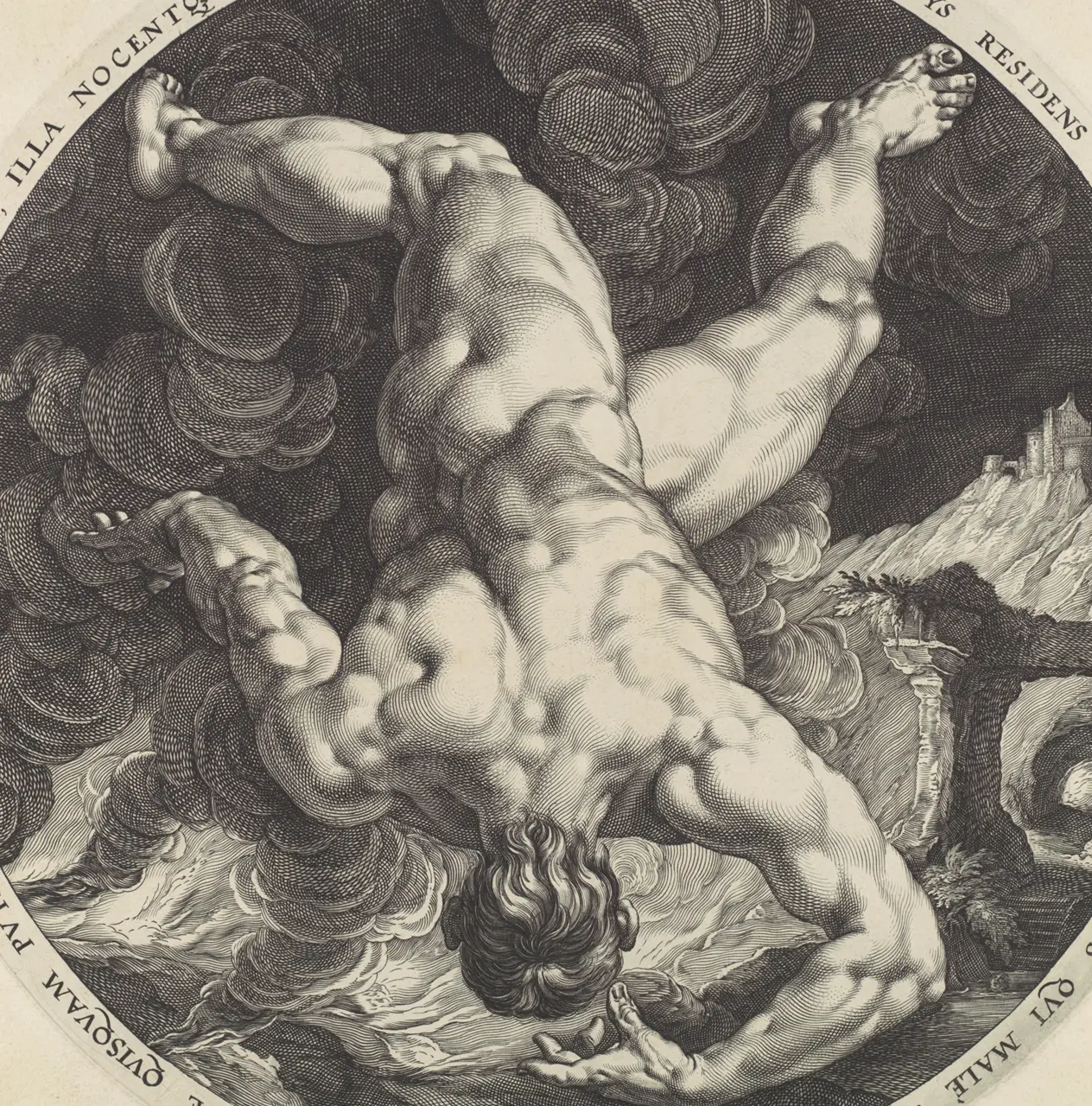
Or suffer Tityus' pangs, who, lying prone
Within a huge recess, the grewsome birds
Doth with his quivering, torn-out vitals feed?
By night renewing what the day hath lost,
He lies, an undiminished feast for all.
For what new evil am I now reserved?
O thou grim judge of shades, who'er thou art
Who to the dead doth mete new punishments!
If thou canst still some suffering devise
Whereat grim Cerberus himself would quake,
And gloomy Acheron be seized with fear,
At whose dread sight e'en I would tremble sore:
Seek such a punishment; for from my seed
Is sprung a race which shall their house outvie
In sin, shall make me innocent appear,
And dare to do what I have never dared.
Whatever space within the impious realms
Remains unoccupied, my house shall fill.
While lives the race of Pelops on the earth,
No rest shall Minos know.
Thou curséd shade,
Be gone, and to the verge of madness drive
Thine impious house. Be drawn the deadly sword
To every crime upraised, by every hand;
Of angry passions let there be no end,
No shame of strife; let blinded fury's sting
Prick on their souls; seared by the breath of rage
May parents' hearts grow hard, and endless crime
To childrens' children drag its impious trail.
No time be given to hate their former crimes;
But let the new in quick succession rise,
Not one alone in each; and may their crimes,
E'en while they suffer punishment, increase.
Let the throne fall from the haughty brothers' grasp,
And call them back from exiled wanderings.
Let the tottering fortune of this bloody house,
Amid its changing kings in ruins fall.
Bring him of high estate to wretchedness,
The wretched raise; and let the kingdom toss
Upon the seething tide of circumstance.
By crime driven out, when God shall bring them home,
May they return but to still other crimes,
And by all men as by themselves be loathed.
Let nothing be which wrath deems unallowed:
Let brother brother fear, and parent child;
Let son fear father; let the children die
An evil death--by doubly evil birth
Be born. Let wives against their husbands lift
Their murderous hands. Let wars pass over seas,
And every land be drenched with streams of blood.
Triumphant o'er the mighty kings of earth,
Let Lust exult; and in thy sinful house,
Let vile, incestuous deeds seem trivial.
Let justice, faith, fraternal amity
Be trampled underfoot; and of our sins
Let not the heavens themselves escape the taint.
Why gleam the constellations in the sky,
And flash their wonted glories to the world?
Be pitchy black the night, and let the day
Fall fainting from the heavens and be no more.
Embroil thy household gods, rouse murderous hate,
And all the palace fill with Tantalus.
Adorn the lofty columns; let the doors,
With verdant laural decked, proclaim their joy;
Let torches gleam in celebration meet
Of thy return--then let the Thracian crime
Be done again, but triply hideous.
Why stays the uncle's hand in idleness?
Not yet Thyestes weeps his murdered sons.
When will he act? The kettles o'er the fires
Should even now be boiling, severed limbs
Be broken up, the father's hearth be stained
With children's blood, the festal tables spread.
But at no untried carnival of crime
Wilt thou sit down as guest. This day be free,
And sate thy hunger at that festal board;
Go eat thy fill, and drink the blood and wine
Commingled in thy sight. A banquet this,
Which thou thyself wouldst look in horror on.
But stay thee. Whither dost thou rush away?
Back to my pools and streams and ebbing waves,
Back to that tree whose ever-mocking fruit
Eludes my lips. Oh, let me seek again
The gloomy couch of my old prison-house;
And if too little wretched I appear,
Bid me my river change. Within thy stream,
O Phlegethon, hemmed round with waves of fire,
Let me be left to suffer.
Ye, whoe'er
By fate's decrees are doomed to punishment,
Whoe'er thou art who 'neath the hollowed cave
Dost lie, in constant fear lest even now
The cavern's mass shall fall upon thy head;
Whoever fears the gaping, greedy jaws
Of lions, and in helpless horror looks
Upon the advancing furies' cruel lines;
Whoe'er, half burned, their threat'ning torches shuns:
Oh, listen to the voice of Tantalus
Fast speeding to your realm; believe the words
Of one who knows, and love your punishment.
But now--Oh, when shall it be mine to flee
This upper world?
First must thou plunge thy house
In dire disorders, stir up deadly feuds,
Awake the kings to evil lust for blood,
And rouse to wild amaze their maddened hearts.
'Tis fit that I should suffer, not bestow,
The punishment. But thou wouldst have me go,
Like deadly vapor from the riven earth,
Or like the plague amongst the people spread,
And lead my grandsons into crime most foul.
O mighty sire of gods, my sire as well,
Although 'tis shame to thee to own me son,
Though cruel tortures seize my tattling tongue,
I will not hold my peace:
[He cries aloud as to his family.]
I warn ye all,
Stain not your kindred hands with sacred blood,
And with no madman's gifts pollute the shrines.
Lo, here I stand, and shall avert the deed.
[To the Fury.]
Why dost thou fright me with thy brandished scourge,
And shake thy writhing serpents in my face?
Why in mine inmost marrow dost thou rouse
These gnawing hunger pangs? My very heart
Is parched with burning thirst, and leaping flames
Dart scorching through my vitals--Oh, desist;
I yield me to thy will.
Then fix this thirst,
This maddening thirst in all thy kindred here;
So, e'en as thou, may they be driven on
To quench their thirst each in the others' blood.
But lo, thy house perceives thy near approach,
And shrinks in horror from thy loathsome touch.
But now enough. Do thou go back again
To thine infernal caves and 'customed stream;
For here the sad earth groans beneath thy feet.
Dost thou not see how, driven far within,
The waters flee their springs? how river banks
Are empty, and the fiery wind drives on
The scattered clouds? The trees grow sickly pale,
Their branches hang denuded of their fruits;
And where but late the Isthmus echoed back
The loud resounding waters near at hand,
Their neighboring waves by but a narrow span
Dividing, now have all the waves withdrawn
Far seaward, and their voice is faintly heard
Upon the shore. Now Lerna backward shrinks,
The streams of Inachus have hidden away,
The sacred Alpheus sends his waters forth
No longer, and Cithaeron lifts no more
Its hoary head, for all its snows are gone;
While they who dwell in noble Argos fear
Their ancient thirst again. E'en Titan's self
Stands doubtful whether he shall bid his steeds
Run their accustomed course and bring the day,
Foredoomed by thee to perish on the way.
They vanish.
If any god for Argos cares,
And Pisa's realm for chariots famed;
If any loves the Isthmian state
Of Corinth, with its double ports,
And two opposing seas;
If any joys in the far-seen snows
Of Mount Taygetus, which lie
Heaped on his loftiest peaks what time
The wintry blasts of Boreas blow,
But which the summer melts again
When breathe the soft Etesian winds,
Sail filling; if the Alpheus bright
With its cool, clear stream moves any god,
Far famed for its Olympic course
Let him his peaceful godhead turn
To our affairs; let him avert
This dread inheritance of crime;
Forbid that in his grandsire's steps
The grandson follow, worse than he;
And let not worse monstrosities
Please generations yet to be.
Oh, may at last the impious race
Of thirsty Tantalus give o'er
In utter weariness its lust
For savage deeds. Enough of sin!
No longer does the right prevail,
And wrong is general. Behold,
As Myrtilus his lord betrayed,
He, too, was treacherously slain;
For by that selfsame broken faith
Which he had shown, himself o'ercome,
He fell into the sea and changed
Its name for his. Amidst the ships
That sail the Ionian sea, no tale
Is better known.
See now, while runs the little son
To meet his father's kiss, he falls
By that accurséd sword transfixed,
Untimely victim at thy hearth,
And carved, O Tantalus, by thee,
That so thou mightest grace the board
Of friendly gods. That impious feast
Eternal hunger, endless thirst
Rewarded; penalty more fit
For such a crime could not be found.
See where, with gaping throat, forespent,
Stands Tantalus; above his head
Hang many luscious fruits; but, swift
As Phineus' birds, they flee his grasp;
On every side the tree droops low,
With heavy-laden boughs, o'erweighed
By its own fruit, and mockingly
Sways to his straining lips. Yet he,
Though with impatient longing filled,
As often mocked, so often fails
To grasp the prize; he turns away
His longing gaze, strains close his lips,
And grimly bars his hunger fast
Behind his teeth. But still again
The whole grove lets its riches down,
And flaunts them in his face, soft fruits
On drooping boughs, and whets once more
His hunger, bidding stretch again
His hands--but all in vain. For now,
When it has lured him on to hope,
And mocked its fill, the boughs recede,
And the whole ripe harvest of the wood
Is snatched far out of reach.
Then comes a raging thirst more fierce
Than hunger, which inflames his blood,
And with its parching fires burns up
Its moisture. There the poor wretch stands,
Striving to quaff the nearby waves;
But the fleeing waters whirl away,
And leave but the empty bed to him
Who seeks to follow. Quick he quaffs
At that swift stream, but to drink--the dust.
Act 2
[in soliloquy] O soul, so sluggish, spiritless, and weak,
And (what in kings I deem the last reproach)
Still unavenged, after so many crimes,
Thy brother's treacheries, and every law
Of nature set at naught, canst vent thy wrath
In vain and meaningless complaints? By now
The whole wide world should be astir with arms,
Thy arms, and on both seas thy ships of war
Should swarm; the fields and town's should be ablaze,
And gleaming swords should everywhere be seen.
Beneath our charging squadrons' thundering tread
Let Greece resound; let this my enemy
Within no forest's depths a hiding find.
No citadel upon the mountain heights
Shall shelter him. Let all the citizens,
Mycenae leaving, sound the trump of war.
Whoe'er grants refuge to that curséd head,
Shall die a dreadful death. This noble pile,
The home of our illustrious Pelops' line,
I would might fall on me, if only thus
It might destroy my hated brother too.
But come, my soul, do what no coming age
Shall e'er approve--or e'er forget; some deed
Must be attempted, impious, bloody, dire,
Such as my brother's self might claim as his.
No crime's avenged save by a greater crime.
But where the crime that can surpass his deeds?
Is he yet crushed in spirit? Does he show
In prosperous circumstances self-control,
Contentment in defeat? Full well I know
His tameless spirit; it can ne'er be bent
But can be broken. Then, before his force
He strengthens and opposing powers prepares,
We must the attack begin, lest, while we wait,
He strike us unprepared. For well I know
That he must either slay me or be slain
By me. There lies the crime between us two:
Who leaps to grasp it first, the crime shall do.
But does the evil fame of such a deed
Deter you not?
The greatest blessing this
Of royal power, that men are forced to praise
Their monarchs' deeds as well as bear them.
Yea,
But they whose praise is forced by fear become
By that same fear in turn the bitterest foes.
But he who seeks the people's heartfelt praise,
Will wish their hearts and not their tongues to speak.
True praise may often fall to humble men,
But false alone to kings. Let subjects learn
To want what they would not.
Let monarchs learn
To choose the right; then all will choose the same.
When kings are forced to choose the right alone,
Their rule is insecure.
Where is no shame,
No thought of righteousness, no piety,
No faith, no purity, Oh, then indeed
That rule is insecure.
But purity,
Faith, piety, are private virtues all;
With kings, their will is law.
Oh, count it wrong
To harm thy brother, though he basest be.
Whatever may not lawfully be done
To brothers, may with perfect right be done
To him. What is there left me now unstained
By crime of his? Where has he failed to sin?
My wife has he debauched, my kingdom stolen,
The ancient emblem of our dynasty
By fraud obtained, and all our royal house
By that same fraud in dire confusion plunged.
There is a flock within our royal stalls,
Rich fleeced and nobly bred, and with the flock
A ram, their leader, wondrous, magical;
For from his body thickly hangs a fleece
Of fine-spun gold, with which the new-crowned kings
Of Pelops' line are wont t' adorn their scepters.
Who owns the ram is king, for with his fate
The fortunes of our noble house are linked.
This sacred ram in safety feeds apart
Within a mead whose fateful bounds are fenced
By stony walls, and kept with gate of stone.
Him, greatly daring, did my brother steal,
Perfidious, with my wife in secret league
Of crime. And this has been the fountain spring
Of all my woes; throughout my kingdom's length
Have I a trembling exile wandered long,
And found no place of safety from his snares;
My wife has he defiled, my subjects' faith
And loyalty destroyed, my house o'erthrown,
All ties of kinship broken, and nothing left
Of which I may be sure save only this
My brother's enmity. Why do I stand
In stupid inactivity? At length
Bestir thyself, and gird thy courage up.
Think thou on Pelops and on Tantalus;
Such deeds as theirs must by my hands be done.
To Attendant.
Tell thou me then how vengeance may be won.
Drive out his hostile spirit with the sword.
Thou speakest of the end of punishment,
But I the punishment itself desire.
Let easy-going rulers slay their foes;
In my domain death is a longed-for boon.
Do pious motives stir thee not at all?
Away, O Piety, if ever thou
Didst dwell within my house, and in thy stead
Let come dire furies' cohorts, fiends at war,
Megaera holding high in either hand
Her flaming torch; for with a mighty rage
'Tis not enough my heart should be inflamed:
I fain would be by greater horrors filled.
What new design does thy mad soul conceive?
No deed within the accustomed bounds of grief.
I'll leave no crime undone; and yet no crime
Is bad enough for me.
Wilt use the sword?
'Tis not enough.
The flames?
Still not enough.
What weapon then will thy mad passion use?
Thyestes' self.
Far worse than madness this.
I do confess it. Deep within my heart,
A fearful tumult rages unrestrained,
And I am hurried on, I know not where;
I only know that I am hurried on.
From lowest depths a moaning sound is heard,
And thunders rumble in the cloudless skies;
A crashing noise resounds throughout the house
As though 'twere rent in twain; upon my hearth
The frightened Lares turn their gaze from me.
Yet this shall be, this awful thing shall be,
Ye gods, which ye do fear to think upon.
What then is this which thou dost meditate?
Some greater evil lurks within my soul,
And, monstrous, swells beyond all human bounds,
My sluggish hands impelling to the deed.
I know not what it is; but this I know,
That 'tis some monstrous deed. So let it be.
Haste thee and do this deed, O soul of mine!
'Tis worthy of Thyestes--and of me.
Let both perform it then. The Odrysian house
Was wont to look on feasts unspeakable
monstrous thing, 'tis true, but long ago
Performed. This grief of mine some greater sin
Must find to feed upon. Do thou inspire
My heart, O Daulian Procne, who didst know
A mother's and a sister's feelings too.
Our cause is similar. Assist thou then,
And nerve my hand to act. Let once again
A sire with joyous greed his children rend,
And hungrily devour their flesh. 'Tis good,
'Tis quite enough. This mode of punishment
So far doth please me well. But where is he?
Why do the hands of Atreus rest so long
Inactive? Even now before mine eyes
The perfect image of the slaughter comes;
I seem to see the murdered children heaped
Before their father's face. O timid soul,
Why dost thou fear? Why droops thy courage now
Before the deed is done? Then up, and dare.
Of this mad crime the most revolting part
Thyestes' self shall do.
But by what wiles
Shall we unto our snares entice his feet?
For he doth count us all his enemies.
He never could be taken, were his will
Not bent on taking too. E'en now he hopes
To take my kingdom from me. In this hope,
He'll rush against the bolts of threat'ning Jove;
This hope will make him brave the whirlpools' wrath,
And sail within the treacherous Libyan shoals;
On this hope stayed, the greatest ill of all
Will he have strength to bear--the sight of me.
But who will give him confidence in peace?
To whom will he such weighty credence give?
His wicked hope is ready to believe.
Yet shall my sons this message bear from me:
Now let the wretched exile roam no more,
But leave his homeless state for royal halls,
And rule at Argos, sharer of my throne.
But if Thyestes harshly spurn my prayer,
His guileless children, overspent with woes
And easily beguiled, will bend his will
Unto their prayers. His ancient thirst for power,
Together with his present poverty,
And harsh demands of toil will move the man,
However stubborn, by their weight of woes.
But time by now has made his troubles light.
Nay; sense of wrong increases day by day.
'Tis easy to bear hardship for a time;
But to endure it long, an irksome task.
Choose other servants of thy grim design.
Young men lend ready ear to base commands.
Beware, lest what against their uncle now
Thou teachest them, they turn against their sire
In time to come. Full oft do crimes recoil
Upon the man who instigated them.
Though none should teach them fraud and ways of crime,
The throne itself would teach them. Dost thou fear
Lest they grow evil? Evil were they born.
What thou dost savage, cruel call in me,
Dost deem impossible and impious,
Perchance my brother even now doth plot
Against myself.
Shall then thy children know
What crime they do?
Not so, for youthful years
Cannot keep silent faith. They might perchance
Betray the trick. The art of secrecy
Is mastered only by the ills of life.
And wilt thou then deceive the very ones
Through whom thou plann'st another to deceive?
That so they may themselves be free from guilt.
For what the need of implicating them
In crimes of mine? Nay, through my acts alone
My hate shall work its ends. But hold, my soul,
Thou doest ill, thou shrinkest from the task.
If thou dost spare thine own, thou sparest his
As well. So then let Agamemnon be
The conscious minister of my designs,
And wittingly let Menelaüs help
His father's plans. And by this test of crime,
Let their uncertain birth be put to proof:
If they refuse to wage this deadly war,
And will not serve my hatred; if they plead
He is their uncle--then is he their sire.
So let them go. But no! a look of fear
Has oft revealed the heart. And weighty plans,
E'en 'gainst the stoutest will, betray themselves.
They shall not know of how great consequence
Their mission is.
[To Attendant.]
And do thou hide it too.
No warning do I need, for in my breast
It shall be hid by fear and loyalty.
But more shall loyalty prevail with me.
At last our royal family,
The race of ancient Inachus,
Hath quelled the brothers' deadly strife
What fatal madness drives you on
To shed by turns each other's blood,
And gain the throne through paths of crime?
O ye who lust for regal state,
Ye know not where true power is found;
For riches cannot make a king,
Nor Tyrian garments richly dyed,
Nor royal crowns upon the brow,
Nor portals glittering with gold.
But he is king who knows no fear,
Whose heart is free from mad desires;
Whom vain ambition moveth not,
Nor fickle favor of the mob.
The hidden treasures of the west
Move not his heart, nor sands of gold
Which Tagus' waters sweep along
Within their shining bed;
Nor yet the garnered wealth of grain
Trod out on Libyan threshing-floors.
He fears no hurtling thunderbolt
In zig-zag course athwart the sky;
No Eurus ruffling up the sea,
Nor the heaving Adriatic's waves,
Windswept and mad before the blast;
No hostile spear, nor keen, bare sword
Can master him; but, set on high,
In calm serenity he sees
All things of earth beneath his feet.
And so with joy he goes to meet
His fate, and welcomes death.
In vain 'gainst him would kings contend,
Though from all lands they congregate
They who the scattered Dacians lead;
Who dwell upon the red sea's marge
Whose depths are set with gleaming pearls;
Or who, secure on Caspian heights,
Leave all unclosed their mountain ways
Against the bold Sarmatians;
They who through Danube's swelling waves
Dare make their way with fearless feet,
And, wheresoe'er they dwell, despoil
The famed and far-off Serians:
In vain all these, for 'tis the soul
That makes the king. He needs no arms,
No steeds, no ineffectual darts
Such as the Parthian hurls from far
In simulated flight; for him
No engines huge with far-hurled rocks
Lay waste the hostile city's walls.
But he is king who knows no fear,
And he is king who has no lust;
And on his throne secure he sits
Who is self-crowned by conscious worth.
Let him who will, in pride of power,
Upon the brink of empire stand:
For me, be sweet repose enough;
In humble station fixed, would I
My life in gentle leisure spend,
In silence, all unknown to fame.
So when my days have passed away
From noisy, restless tumult free,
May I, in meek obscurity
And full of years, decline in death.
But death lies heavily on him
Who, though to all the world well known,
Is stranger to himself alone.
Act 3
Enter Thyestes returning from banishment, accompanied by his three sons.
At last do I behold the welcome roofs
Of this my fatherland, the teeming wealth
Of Argos, and, the greatest and the best
Of sights to weary exiles, here I see
My native soil and my ancestral gods
(If gods indeed there be). And there, behold,
The sacred towers by hands of Cyclops reared,
In beauty far excelling human art;
The race-course thronged with youth, where oftentimes
Have I within my father's chariot
Sped on to victory and fair renown.
Now will all Argos come to welcome me;
The thronging folk will come--and Atreus too!
Oh, better far reseek thy wooded haunts,
Thy glades remote, and, mingled with the brutes,
Live e'en as they. Why should this splendid realm
With its fair-seeming glitter blind my eyes?
When thou dost look upon the goodly gift,
Scan well the giver too. Of late I lived
With bold and joyous spirit, though my lot
All men considered hard to bear. But now
My heart is filled with fears, my courage fails;
And, bent on flight, my feet unwilling move.
[one of Thyestes' sons] Why, O my father,
dost thou falter so
With steps uncertain, turn away thy face,
And hold thyself as on a doubtful course?
[in soliloquy] Why hesitate, my soul, or why so long
Deliberate upon a point so clear?
To such uncertain things dost thou intrust
Thyself as throne and brother? And fearest thou
Those ills already conquered and found mild?
Dost flee those cares which thou hast well bestowed?
Oh, now my former wretchedness is joy.
Turn back, while still thou mayst, and save thyself.
What cause, O father, forces thee to leave
Thy native land at last regained? Why now,
When richest gifts are falling in thy lap,
Dost turn away? Thy brother's wrath is o'er;
And he has turned himself once more to thee,
Has given thee back thy share of sovereignty,
Restored our shattered house to harmony,
And made thee master of thyself again.
Thou askest why I fear--I cannot tell.
No cause for fear I see, but still I fear. 435
I long to go, and yet my trembling limbs
Go on with faltering steps, and I am borne
Where I most stoutly struggle not to go.
So, when a ship by oar and sail is driven,
The tide, resisting both, bears it away.
But thou must overcome whate'er it be
That doth oppose and hold thy soul in check;
And see how great rewards await thee here:
Thou canst be king.
Since I have power to die.
But royal power is
Naught, if only thou
No power dost covet.
Leave it to thy sons.
No realm on earth can stand divided power.
Should he, who can be happy, still be sad?
Believe me, son, 'tis by their lying names
That things seem great, while others harsh appear
Which are not truly so. When high in power
I stood, I never ceased to be in fear;
Yea, even did I fear the very sword
Upon my thigh. Oh, what a boon it is
To be at feud with none, to eat one's bread
Without a trace of care, upon the ground!
Crime enters not the poor man's humble cot;
And all in safety may one take his food
From slender boards; for 'tis in cups of gold
That poison lurks--I speak what I do know.
Ill fortune is to be preferred to good.
For since my palace does not threatening stand
In pride upon some lofty mountain top,
The people fear me not; my towering roofs
Gleam not with ivory, nor do I need
A watchful guard to keep me while I sleep.
I do not fish with fleets, nor drive the sea
With massive dykes back from its natural shore;
I do not gorge me at the world's expense;
For me no fields remote are harvested
Beyond the Getae and the Parthians;
No incense burns for me, nor are my shrines
Adorned in impious neglect of Jove;
No forests wave upon my battlements,
No vast pools steam for my delight; my days
Are not to slumber given, nor do I spend
The livelong night in drunken revelry.
No one feels fear of me, and so my home,
Though all unguarded, is from danger free;
For poverty alone may be at peace.
And this I hold: the mightiest king is he,
Who from the lust of sovereignty is free.
But if some god a kingdom should bestow,
It is not meet for mortal to refuse:
Behold, thy brother bids thee to the throne.
He bids? 'Tis but a cloak for treachery.
But brotherly regard ofttimes returns
Unto the heart from which it has been driven;
And righteous love regains its former strength.
And dost thou speak of brother's love to me?
Sooner shall ocean bathe the heavenly Bears,
The raging waves of Sicily be still;
And sooner shall the Ionian waters yield
Ripe fields of grain; black night illume the earth;
And fire shall mate with water, life with death, 480
And winds shall make a treaty with the sea:
Than shall Thyestes know a brother's love.
What treachery dost thou fear?
All treachery.
What proper limit shall I give my fear?
My brother's power is boundless as his hate.
How can he harm thee?
For myself alone
I have no fears; but 'tis for you, my sons,
That Atreus must be held in fear by me.
But canst thou be o'ercome, if on thy guard?
Too late one guards when in the midst of ills.
But let us on. In this one thing I show
My fatherhood: I do not lead to ill,
But follow you.
If well we heed our ways,
God will protect us. Come with courage on.
[coming upon the scene, sees Thyestes and his three sons, and gloats over the fact that his brother is at last in his power. He speaks aside] Now is the prey fast caught within my toils.
I see the father and his hated brood,
And here my vengeful hate is safe bestowed;
For now at last he's come into my hands;
He's come, Thyestes and his children--all!
When I see him I scarce can curb my grief,
And keep my soul from breaking madly forth.
So when the Umbrian hound pursues the prey,
Keen scented, on the long leash held, he goes
With lowered muzzle questing on the trail.
While distant still the game and faint the scent,
Obedient to the leash, with silent tongue
He goes along; but when the prey is near,
With straining neck he struggles to be free,
Bays loud against the cautious hunter's check,
And bursts from all restraint.
When, near at hand,
Hot wrath perceives the blood for which it thirsts,
It cannot be restrained. Yet must it be.
See how his unkempt, matted hair conceals
His woeful countenance; how foul his beard.
[He now addresses Thyestes.]
My promised faith, my brother, will I keep;
'Tis a delight to see thee once again.
Come to my arms in mutual embrace;
For all the anger which I felt for thee
Has melted clean away. From this time forth
Let ties of blood be cherished, love and faith;
And let that hatred which has cursed us both
Forever vanish from our kindred souls.
I should attempt to palliate my sins,
Hadst thou not shown me such fraternal love;
But now I own, my brother, now I own
That I have sinned against thee past belief.
Thy faithful piety has made my case
Seem blacker still. A double sinner he
Who sins against a brother such as thou.
Now let my tears my penitence approve.
Thou, first of all mankind, beholdest me
A suppliant; these hands, which never yet
Have touched the feet of man, are laid on thine.
Let all thy wrathful feelings be forgot,
Be utterly erased from off thy soul;
And take, O brother, as my pledge of faith
These guiltless sons of mine.
Lay not thy hands
Upon my knees. Come, rather, to my arms.
And you, dear youths, the comforters of age,
Come cling about my neck. Those rags of woe,
My brother, lay aside, and spare mine eyes;
And clothe thyself more fittingly in these,
The equal of my own. And, last of all,
Accept thine equal share of this our realm.
'Twill bring a greater meed of praise to me,
To restore thee safely to thy father's throne.
For chance may put the scepter in our hands;
But only virtue seeks to give it up.
May heaven, my brother, worthily repay
These deeds of thine. But this my wretched head
Will not consent to wear a diadem,
Nor my ill-omened hand to hold the staff
Of power. Nay, rather, let me hide myself
Among the throng.
There's room upon the throne.
But I shall know that all of thine is mine.
But who would throw away good fortune's gifts?
Whoe'er has found how easily they fail.
And wouldst thou thwart thy brother's great renown?
Thy glory is attained; mine bides its time.
My mind is resolute to shun the crown.
Then I refuse my share of power as well.
Nay then, I yield. The name of king I'll wear,
But laws and arms--and I, are thine to sway.
[placing the crown on his brother's head] I'll place this
crown upon thy reverend head,
And pay the destined victims to the gods.
The sight is past belief. Behold,
This Atreus, fierce and bold of soul,
By every cruel passion swayed,
When first he saw his brother's face
Was held in dumb amaze.
No force is greater than the power
Of Nature's ties of love. 'Tis true
That wars with foreign foes endure;
But they whom true love once has bound
Will ever feel its ties.
When wrath, by some great cause aroused,
Hath burst the bonds of amity,
And raised the dreadful cry of war;
When gleaming squadrons thunder down
With champing steeds; when flashing swords,
By carnage-maddened Mars upreared,
Gleam with a deadly rain of blows:
E'en then for sacred piety
Those warring hands will sheathe the sword
And join in the clasp of peace.
What god has given this sudden lull
In the midst of loud alarms? But now
Throughout Mycenae's borders rang
The noisy prelude of a strife
'Twixt brothers' arms. Here mothers pale
Embraced their sons, and the trembling wife
Looked on her arméd lord in fear,
While the sword to his hand reluctant came,
Foul with the rust of peace.
One strove to renew the tottering walls,
And one to strengthen the shattered towers,
And close the gates with iron bars;
While on the battlements the guard
His anxious nightly vigils kept.
The daily fear of war is worse
Than war itself.
But fallen now are the sword's dire threats,
The deep-voiced trumpet-blare is still,
And the shrill, harsh notes of the clarion
Are heard no more. While peace profound
Broods once again o'er the happy state.
So when, beneath the storm blast's lash,
The heaving waves break on the shore
Of Bruttium, and Scylla roars
Responsive from her cavern's depths;
Then, even within their sheltered port,
The sailors fear the foaming sea
Which greedy Charybdis vomits up;
And Cyclops dreads his father's rage
Where he sits on burning Aetna's crag,
Lest the deathless flames on his roaring forge
Be quenched by the overwhelming floods;
When poor Laërtes feels the shock
Of reeling Ithaca, and thinks
That his island realm will be swallowed up:
Then, if the fierce winds die away,
The waves sink back in their quiet depths;
And the sea, which of late the vessels feared,
Now far and wide with swelling sails
Is overspread, while tiny skiffs
Skim safely o'er its harmless breast;
And one may count the very fish
Deep down within the peaceful caves,
Where but now, beneath the raging blast,
The battered islands feared the sea.
No lot endureth long. For grief
And pleasure, each in turn, depart;
But pleasure has a briefer reign.
From lowest to the highest state
A fleeting hour may bring us. He,
Who wears a crown upon his brow,
To whom the trembling nations kneel,
Before whose nod the barbarous Medes
Lay down their arms, the Indians too,
Who dwell beneath the nearer sun,
And Dacians, who the Parthian horse
Are ever threat'ning: he, the king,
With anxious mind the scepter bears,
Foresees and fears the fickle chance
And shifting time which soon or late
Shall all his power overthrow.
Ye, whom the ruler of the land
And sea has given o'er subject men
The fearful power of life and death,
Abate your overweening pride.
For whatsoever fear of you
Your weaker subjects feel today,
Tomorrow shall a stronger lord
Inspire in you. For every power
Is subject to a greater power.
Him, whom the dawning day beholds
In proud estate, the setting sun
Sees lying in the dust.
Let no one then trust overmuch
To favoring fate; and when she frowns,
Let no one utterly despair
Of better fortune yet to come.
For Clotho mingles good and ill;
She whirls the wheel of fate around,
Nor suffers it to stand.
To no one are the gods so good
That he may safely call his own
Tomorrow's dawn; for on the whirling wheel
Has God our fortunes placed for good or ill.
Act 4
Enter Messenger breathlessly announcing the horror which has just been enacted behind the scenes.
Oh, for some raging blast to carry me
With headlong speed through distant realms of air,
And wrap me in the darkness of the clouds;
That so I might this monstrous horror tear
From my remembrance. Oh, thou house of shame
To Pelops even and to Tantalus!
What is the news thou bring'st?
What realm is this?
Argos and Sparta, once the noble home
Of pious brothers? Corinth, on whose shores
Two rival oceans beat? Or do I see
The barbarous Danube on whose frozen stream
The savage Alani make swift retreat?
Hyrcania beneath eternal snows?
Or those wide plains of wandering Scythians?
What place is this that knows such hideous crime?
But tell thy tidings, whatsoe'er they be.
When I my scattered senses gather up,
And horrid fear lets go its numbing hold
Upon my limbs. Oh, but I see it still,
The ghastly picture of that dreadful deed!
Oh, come, ye whirlwinds wild, and bear me far,
Far distant, where the vanished day is borne.
Thou hold'st our minds in dire uncertainty.
Speak out and tell us what this horror is,
And who its author. Yet would I inquire
Not who, but which he is. Speak quickly, then.
There is upon the lofty citadel
A part of Pelops' house that fronts the south,
Whose farther side lifts up its massive walls
To mountain heights; for so the reigning king
May better sway the town, and hold in check
The common rabble when it scorns the throne.
Within this palace is a gleaming hall,
So huge, it may a multitude contain;
Whose golden architraves are high upborne
By stately columns of a varied hue.
Behind this public hall where people throng,
The palace stretches off in spacious rooms;
And, deep withdrawn, the royal sanctum lies,
Far from the vulgar gaze. This sacred spot
An ancient grove within a dale confines,
Wherein no tree its cheerful shade affords,
Or by the knife is pruned; but cypress trees
And yews, and woods of gloomy ilex wave
Their melancholy boughs. Above them all
A towering oak looks down and spreads abroad,
O'ershadowing all the grove. Within this place
The royal sons of Tantalus are wont
To ask consent of heaven to their rule,
And here to seek its aid when fortune frowns.
Here hang their consecrated offerings:
Sonorous trumpets, broken chariots,
Those famous spoils of the Myrtoan sea;
Still hang upon the treacherous axle-trees
The conquered chariot-wheels--mementoes grim
Of every crime this sinful race has done.
Here also is the Phrygian turban hung
Of Pelops' self; and here the spoil of foes,
A rich embroidered robe, the prize of war.
An oozy stream springs there beneath the shade,
And sluggish creeps along within the swamp,
Just like the ugly waters of the Styx
Which bind the oaths of heaven. 'Tis said that here
At dead of night the hellish gods make moan,
And all the grove resounds with clanking chains,
And mournful howl of ghosts. Here may be seen
Whatever, but to hear of, causes fear.
The spirits of the ancient dead come forth
From old, decaying tombs, and walk abroad;
While monsters, greater than the world has known,
Go leaping round, grotesque and terrible.
The whole wood gleams with an uncanny light,
And without sign of fire the palace glows.
Ofttimes the grove re-echoes with the sound
Of threefold bayings of the dogs of hell,
And oft do mighty shapes affright the house.
Nor are these fears allayed by light of day;
For night reigns ever here, and e'en at noon
The horror of the underworld abides.
From this dread spot are sure responses given
To those who seek the oracle; the fates
With mighty sound from out the grot are told,
And all the cavern thunders with the god.
'Twas to this spot that maddened Atreus came,
His brother's children dragging in his train.
The sacrificial altars are adorned
Oh, who can worthily describe the deed?
Behind their backs the noble captives' hands
Are bound, and purple fillets wreathe their brows.
All things are ready, incense, sacred wine,
The sacrificial meal, and fatal knife.
The last detail is properly observed,
That this outrageous murder may be done
In strict observance of the ritual!
Who lays his hand unto the fatal steel?
He is himself the priest; the baleful prayer
He makes, and chants the sacrificial song
With wild and boisterous words; before the shrine
He takes his place; the victims doomed to death
He sets in order, and prepares the sword.
He gives the closest heed to all details
And misses no least portion of the rite.
The grove begins to tremble, earth to quake,
And all the palace totters with the shock,
And seems to hesitate in conscious doubt
Where it shall throw its ponderous masses down.
High on the left a star with darkling train
Shoots swift athwart the sky; the sacred wine
Poured at the altar fires, with horrid change,
Turns bloody as it flows. The royal crown
Fell twice and yet again from Atreus' head,
And the ivory statues in the temple wept.
These monstrous portents moved all others sore;
But Atreus, only, held himself unmoved,
And even set the threat'ning gods at naught.
And now delay is at an end. He stands
Before the shrine with lowering, sidelong gaze.
As in the jungle by the Ganges stream
A hungry tigress stands between two bulls,
Eager for both, but yet in doubtful mood
Which first shall feel her fangs (to this she turns
With gaping jaws, then back to that again,
And holds her raging hunger in suspense):
So cruel Atreus eyes the victims doomed
To sate his curséd wrath; and hesitates
Who first shall feel the knife, and who shall die
The next in order. 'Tis of no concern,
But still he hesitates, and gloats awhile
In planning how to do the horrid deed.
Who then is first to die?
First place he gives
(Lest you should think him lacking in respect)
Unto his grandsire's namesake, Tantalus.
What spirit, what demeanor showed the youth?
He stood quite unconcerned, nor strove to plead,
Knowing such prayer were vain. But in his neck
That savage butcher plunged his gleaming sword
Clear to the hilt and drew it forth again.
Still stood the corpse upright, and, wavering long,
As 'twere in doubt or here or there to fall,
At last prone on the uncle hurled itself.
Then he, his rancor unabated still,
Dragged youthful Plisthenes before the shrine,
And quickly meted him his brother's fate.
With one keen blow he smote him on the neck,
Whereat his bleeding body fell to earth;
While with a murmur inarticulate,
His head with look complaining rolled away.
What did he then, this twofold murder done?
The last one spare, or heap up crime on crime?
As when some manéd lion in the woods
Victorious attacks the Armenian herds
(His jaws are smeared with blood, his hunger gone;
And yet he does not lay aside his wrath;
Now here, now there he charges on the bulls,
And now the calves he worries, though his teeth
Are weary with their work)--so Atreus raves;
He swells with wrath; and, grasping in his hand
The sword with double slaughter dripping yet,
By fury blinded but with deadly stroke,
He drives clean through the body of the boy.
And so, from breast to back transfixed, he falls
By double wound, and with his streaming blood
Extinguishes the baleful altar fires.
Oh, horrid deed!
What! horrid call ye that?
If only there the course of crime had stopped,
'Twould pious seem.
What more atrocious crime,
What greater sin could human heart conceive?
And do ye think his crime was ended here?
'Twas just begun.
What further could there be?
Perchance he threw the corpses to be torn
By raving beasts, and kept them from the fire?
Would that he had! I do not pray for this,
That friendly earth may give them burial,
Or funeral fires consume; but only this,
That as a ghastly meal they may be thrown
To birds and savage beasts. Such is my prayer,
Which otherwise were direful punishment.
Oh, that the father might their corpses see
Denied to sepulture! Oh, crime of crimes,
Incredible in any age; a crime
Which coming generations will refuse
To hear! Behold, from breasts yet warm with life,
The exta, plucked away, lie quivering,
The lungs still breathe, the timid heart still beats.
But he the organs with a practiced hand
Turns deftly over, and inquires the fates,
Observing carefully the viscera.
With this inspection satisfied at length,
With mind at ease, he now is free to plan
His brother's awful feast. With his own hand
The bodies he dismembers, carving off
The arms and shoulders, laying bare the bones,
And all with savage joy. He only saves
The heads and hands, those hands which he himself
Had clasped in friendly faith. Some of the flesh
Is placed on spits and by the roasting fires
Hangs dripping; other parts into a pot
Are thrown, where on the water's seething stream
They leap about. The fire in horror shrinks
From the polluting touch of such a feast,
Recoils upon the shuddering altar-hearth
Twice and again, until at last constrained,
Though with repugnance strong, it fiercely burns.
The liver sputters strangely on the spits;
Nor could I say whether the flesh or flames
Groan more. The fitful flames die out in smoke
Of pitchy blackness; and the smoke itself,
A heavy mournful cloud, mounts not aloft
In upward-shooting columns, straight and high,
But settles down like a disfiguring shroud
Upon the very statues of the gods.
O all-enduring sun, though thou didst flee
In horror from the sight, and the radiant noon
Didst into darkness plunge; 'twas all too late.
The father tears his sons, and impiously feasts
On his own flesh. See, there in state he sits,
His hair anointed with the dripping nard,
His senses dulled with wine. And oft the food,
As if in horror held, sticks in his throat.
In this thine evil hour one good remains,
One only, O Thyestes: that to know
Thy depth of suffering is spared to thee.
But even this will perish. Though the sun
Should turn his chariot backward on its course,
And night, at noon arising from the earth,
Should quite obscure this foul and ghastly crime
With shades unknown, it could not be concealed;
For every evil deed shall be revealed.
Unnatural darkness has come over the world at midday.
O father of the earth and sky,
Before whose rising beams the night
With all her glories flees away;
Oh, whither dost thou turn thy course,
And why, midway of heaven, does day
To darkness turn? O Phoebus, why
Dost turn away thy shining face?
Not yet has evening's messenger
Called forth the nightly stars; not yet
The rounding of thy western goal
Bids loose thy horses from their toil;
Not yet, as day fades into night,
Sounds forth the trumpets' evening call.
The plowman stands in dumb amaze,
With oxen still unspent with toil,
To see the welcome supper hour
So quickly come. But what, O sun,
Has driven thee from thy heavenly course?
What cause from their accustomed way
Has turned thy steeds? Is war essayed
Once more by giants, bursting forth
From out the riven gates of Dis?
Does Tityos, though wounded sore,
Renew his ancient, deadly wrath?
Perchance Typhoeus has thrown off
His mountain, and is free once more;
Perchance once more a way to heaven
Those giants, felled in Phlegra's vale,
Are building, and on Pelion's top
Are piling Thracian Ossa high.
The accustomed changes of the heavens
Are gone to come no more. No more
The rising and the setting sun
Shall we behold. Aurora bright,
The herald of the dewy morn,
Whose wont it is to speed the sun
Upon his way, now stands amazed
To see her kingdom overturned.
She is not skilled to bathe his steeds,
A-weary with their rapid course,
Nor in the cooling sea to plunge
Their reeking manes. The sun himself,
In setting, sees the place of dawn,
And bids the darkness fill the sky
Without the aid of night. No stars
Come out, nor do the heavens gleam
With any fires; no moon dispels
The darkness' black and heavy pall.
Oh, that the night itself were here,
Whatever this portends! Our hearts
Are trembling, yea, are trembling sore,
And smitten with a boding fear
Lest all the world in ruins fall,
And formless chaos as of yore
O'erwhelm us, gods and men; lest land,
And all-encircling sea, and stars
That wander in the spangled heavens,
Be buried in the general doom.
No more with gleaming, deathless torch,
Shall Phoebus, lord of all the stars,
Lead the procession of the years
And mark the seasons; nevermore
Shall Luna, flashing back his rays,
Dispel the fears of night; and pass
In shorter course her brother's car.
The throng of heavenly beings soon
Shall in one vast abyss be heaped.
That shining path of sacred stars,
Which cuts obliquely 'thwart the zones,
The standard-bearer of the years,
Shall see the stars in ruin fall,
Itself in ruin falling. He,
The Ram, who, in the early spring,
Restores the sails to the warming breeze,
Shall headlong plunge into those waves
Through which the trembling maid of Greece
He bore of old. And Taurus, who
Upon his horns like a garland wears
The Hyades, shall drag with him
The sacred Twins, and the stretched-out claws
Of the curving Crab. With heat inflamed,
Alcides' Lion once again
Shall fall from heaven; the Virgin, too,
Back to the earth she left shall fall;
And the righteous Scales with their mighty weights,
Shall drag in their fall the Scorpion.
And he, old Chiron, skilled to hold
Upon his bow of Thessaly
The feathered dart, shall lose his shafts
And break his bow. Cold Capricorn,
Who ushers sluggish winter in,
Shall fall from heaven, and break thy urn,
Whoe'er thou art, O Waterman.
And with thee shall the Fish depart
Remotest of the stars of heaven;
And those monsters huge which never yet
Were in the ocean plunged, shall soon
Within the all-engulfing sea
Be swallowed up. And that huge Snake,
Which like a winding river glides
Between the Bears, shall fall from heaven;
United with that serpent huge,
The Lesser Bear, congealed with cold,
And that slow driver of the Wain
No longer stable in its course,
Shall all in common ruin fall.
Have we, of all the race of men,
Been worthy deemed to be o'erwhelmed
And buried 'neath a riven earth?
Is this our age the end of all?
Alas, in evil hour of fate
Were we begotten, wretched still,
Whether the sun is lost to us
Or banished by our impious sins!
But away with vain complaints and fear:
Eager for life is he who would not die,
Though all the world in death around him lie.
Act 5
[entering exultingly] The peer of stars I move, high over
all,
And with exalted head attain the heavens!
Now are the reins of power within my hands,
And I am master of my father's throne.
I here renounce the gods, for I have gained
The height of my desires. It is enough,
And even I am satisfied. But why?
Nay, rather, will I finish my revenge,
And glut the father with his feast of death.
The day has fled, lest shame should hold me back;
Act then, while yet the darkness veils the sky.
Oh, that I might restrain the fleeing gods,
And force them to behold the avenging feast!
But 'tis enough, if but the father sees.
Though daylight aid me not, yet will I snatch
The shrouding darkness from thy miseries.
Too long with care-free, cheerful countenance
Thou liest at the feast. Now food enough,
And wine enough. For so great ills as these,
Thyestes must his sober senses keep.
[To the slaves.]
Ye menial throng, spread wide the temple doors,
The festal hall reveal. 'Tis sweet to note
The father's frantic grief when first he sees
His children's gory heads; to catch his words,
To watch his color change; to see him sit,
All breathless with the shock, in dumb amaze,
In frozen horror at the gruesome sight.
This is the sweet reward of all my toil
To see his misery, e'en as it grows
Upon his soul.
[The doors are thrown open, showing Thyestes at the banquet table.]
Now gleams with many a torch
The spacious banquet hall. See, there he lies
Upon his golden couch all richly decked
With tapestry, his wine-befuddled head
Upstayed upon his hand. Oh, happy me!
The mightiest of the heavenly gods am I,
And king of kings! The fondest of my hopes
Is more than realized. His meal is done;
Now raises he his silver cup to drink.
Spare not the wine; there still remains the blood
Of thy three sons, and 'twill be well disguised
With old red wine. Now be the revel done.
Now let the father drink the mingled blood
Of his own offspring; mine he would have drunk.
But see, he starts to sing a festal song,
With mind uncertain and with senses dim.
[sits alone at the banquet table, half overcome with wine; he tries to sing and be gay, but in spite of this, some vague premonition of evil weighs upon his spirit] O heart, long dulled with wretchedness,
Put by at last thine anxious cares.
Oh, now let grief and fear depart;
Let haunting hunger flee away,
The grim companion of the lot
Of trembling exiles; and disgrace,
A heavy load for mourning souls.
More boots it from what height thou fall'st,
Than to what depth. How noble is't,
When fallen from the pinnacle,
With dauntless step and firm, to tread
The lowly plain; and noble too,
Though by a mass of cares o'erwhelmed,
To bolster up the shattered throne
With neck unbending; and with soul
Heroic, undismayed by ills,
To stand erect beneath the weight
Of ruined fortunes.
But away,
Ye gloomy clouds of fate; ye marks
Of former misery, depart.
Thy happy fortune greet with face
Of joy, and utterly forget
The old Thyestes. But alas!
This fault is linked with wretchedness,
That never can the woeful soul
Accept returned prosperity.
Though kindly fortune smile again,
He who has suffered finds it hard
To give himself to joy. But why
Dost thou restrain me? Why forbid
To celebrate this festal day?
Why wouldst thou have me weep, O grief,
For no cause rising? Why with flowers,
Dost thou forbid to wreathe my hair?
It does, it does forbid! For see,
Upon my head the flowers of spring
Have withered; and my festal locks,
Though dripping with the precious nard,
Stand up in sudden dread; my cheeks,
That have no cause to weep, are wet
With tears; and in the midst of speech
I groan aloud. No doubt 'tis true,
That grief, well trained in weeping, loves
To melt away in tears; and oft
The wretched feel a strong desire
To weep their fill. E'en so I long
To cry aloud my wretchedness,
To rend these gorgeous Tyrian robes,
And shriek my misery to heaven.
My mind gives intimation dark
Of coming grief, its own distress
Foreboding. So the sailor fears
The raging tempest's near approach,
When tranquil waters heave and swell,
Without a breath of wind. Thou fool,
What grief, what rising storm of fate
Dost thou imagine nigh? Nay, nay,
Believe thy brother; for thy fear
'Tis groundless, whatsoe'er it be,
Or thou dost fear too late. Ah me,
I would not be unhappy now;
But in my soul dim terror stalks,
Nor can my eyes withhold their tears;
And all for naught. What can it be?
Am I possessed by grief or fear?
Or can this some great rapture be,
That weeps for joy?
[greeting his brother with effusive affection] With one consent, my brother, let us keep
This festal day. For this the happy day
Which shall the scepter 'stablish in thy hand,
And link our family in the bonds of peace.
[pushing the remains of the feast from him] Enough of food and wine! One thing alone
Can swell my generous sum of happiness
If with my children I may share my joy.
Believe that in the father's bosom rest
The sons; both now and ever shall they be
With thee. No single part of these thy sons
Shall e'er be taken from thee. Make request:
What thou desirest will I freely give,
And fill thee with thy loving family.
Thou shalt be satisfied; be not afraid.
E'en now thy children, mingled with my own,
Enjoy alone their youthful festival.
They shall be summoned hither. Now behold
This ancient cup, an heirloom of our house.
Take thou and drink the wine which it contains.
He hands Thyestes the cup filled with mingled blood and wine.
I take my brother's proffered gift. But first
Unto our father's gods we'll pour a share,
And then will drink the cup.
But what is this?
My hands will not obey my will; the cup
How heavy it has grown, how it resists
My grasp! And see how now the wine itself,
Though lifted to my mouth, avoids the touch,
And flees my disappointed lips. Behold,
The table totters on the trembling floor;
The lights burn dim; the very air is thick,
And, by the natural fires deserted, stands
All dull and lifeless 'twixt the day and night.
What can it all portend? Now more and more
The shattered heavens seem tottering to their fall;
The darkness deepens, and the gloomy night
In blacker night is plunged. And all the stars
Have disappeared. Whatever this may mean,
Oh, spare my children, brother, spare, I pray;
And let this gathering storm of evil burst
Upon my head. Oh, give me back my sons!
Yes, I will give them back, and never more
Shall they be taken from thy fond embrace.
Exit.
What is this tumult rising in my breast?
Why do my vitals quake? I feel a load
Unbearable, and from my inmost heart
Come groans of agony that are not mine.
My children, come! your wretched father calls.
Oh come! For when mine eyes behold you here,
Perchance this care will pass away.--But whence
Those answering calls?
[returning, with a covered platter in his hands] Now spread thy loving arms.
See, here they are.
[He uncovers the platter revealing the severed heads of Thyestes' sons.]
Dost recognize thy sons?
I recognize my brother! How, O Earth,
Canst thou endure such monstrous crime as this?
Why dost thou not to everlasting shade
And Styx infernal cleave a yawning gulf,
And sweep away to empty nothingness
This guilty king with all his realm? And why
Dost thou not raze, and utterly destroy
The city of Mycenae? Both of us
Should stand with Tantalus in punishment.
If, far below the depths of Tartarus,
There is a deeper hell, O Mother Earth,
Thy strong foundations rend asunder wide,
And send us thither to that lowest pit.
There let us hide beneath all Acheron;
Let damnéd shades above our guilty heads
Go wandering; let fiery Phlegethon
In raging torrent pour his burning sands
Above our place of exile.
But the earth
Insensate lies, and utterly unmoved.
The gods have fled.
Nay, come with thankful heart
Receive thy sons whom thou hast long desired.
Enjoy them, kiss them, share among the three
Thy fond embraces.
And is this thy bond?
Is this thy grace, thy fond fraternal faith?
So dost thou cease to hate? I do not ask
That I may have my sons again unharmed;
But what in crime and hatred may be given,
This I, a brother, from a brother ask:
That I may bury them. Restore my sons,
And thou shalt see their corpses burned at once.
The father begs for naught that he may keep,
But utterly destroy.
Thou hast thy sons,
Whate'er of them remains; thou also hast
Whate'er does not remain.
What hast thou done?
Hast fed them to the savage, greedy birds?
Have beasts of prey devoured their tender flesh?
Thou hast thyself that impious banquet made.
Oh, then, 'twas this that shamed the gods of heaven,
And drove the day in horror back to dawn!
Ah me, what cries shall voice, what plaints express
My wretchedness? Where can I find the words
That can describe my woe? The severed heads
And hands and mangled feet are there; for these
Their sire, for all his greed, could not devour.
But Oh, I feel within my vitals now
That horrid thing which struggles to be free,
But can no exit find. Give me the sword,
Which even now is reeking with my blood,
That it may set my children free from me.
Thou wilt not give it me? Then let my breast
Resound with crushing blows--but hold thy hand,
Unhappy one, and spare the imprisoned shades.
Oh, who has ever seen such crime as this?
What dweller on the rough and hostile crags
Of Caucasus, or what Procrustes dire,
The terror of the land of Attica?
Lo I, the father, overwhelm my sons,
And by those very sons am overwhelmed.
Is there no limit to this crime of thine?
When one for its own sake commits a crime,
There is a proper limit; but no end
Is possible when vengeance through the crime
Is sought. E'en as it is, this deed of mine
Is all too mild. I should have poured their blood
Straight from their gaping wounds into thy mouth,
That thou mightst drink their very streams of life.
But there my wrath was cheated of its due
By overhaste.
I smote them with the sword,
I slaughtered them before the sacred shrine,
And with their blood appeased our household gods;
I hewed their lifeless bodies limb from limb;
I carved them into bits, and part I seethed
In brazen kettles, part before the fire
On spits I roasted. From their living limbs
I carved the tender flesh, and saw it hiss
And sputter on the slender spit, the while
With my own hands I kept the fire a-blaze.
But all these things the father should have done.
In this my vengeful grief has fallen short.
With impious teeth he tore his slaughtered sons;
But still in merciful unconsciousness
The deed was done and suffered.
O ye seas,
Hemmed round by curving shores, give ear to this!
Hear too, ye gods, wherever ye have fled.
Ye lords of hades, hear; hear, O ye lands;
And Night, all black and heavy with the pall
Of Tartarus, attend unto my cry;
For I am left to thee, and thou alone
Doth look in pity on my wretchedness,
Thou, too, forsaken of the friendly stars;
For I will raise no wicked prayers to thee,
Naught for myself implore--what could I ask?
For you, ye heavenly gods, be all my prayers.
O thou, almighty ruler of the sky,
Who sitt'st as lord upon the throne of heaven,
Enwrap the universe in dismal clouds,
Incite the winds to war on every side,
And let thy thunders crash from pole to pole;
Not with such lesser bolts as thou dost use
Against the guiltless homes of common men,
But those which overthrew the triple mass
Of heaped-up mountains, and those giant forms,
Themselves like mountains huge: such arms employ;
Hurl down such fires. Avenge the banished day;
With thy consuming flames supply the light
Which has been snatched from out the darkened heaven.
Select us both as objects of thy wrath;
Or if not both, then me; aim thou at me.
With that three-forkéd bolt of thine transfix
My guilty breast. If I would give my sons
To burning and to fitting burial,
I must myself be burned. But if my prayers
Do not with heaven prevail, and if no god
Aims at the impious his fatal shaft;
Then may eternal night brood o'er the earth,
And hide these boundless crimes in endless shade.
If thou, O sun, dost to thy purpose hold,
And cease to shine, I supplicate no more.
Now do I praise my handiwork indeed;
Now have I gained the palm of victory.
My deed had failed entirely of its aim,
Didst thou not suffer thus. Now may I trust
That those I call my sons are truly so,
And faith that once my marriage bed was pure
Has come again.
What was my children's sin?
Because they were thy children.
But to think
That children to the father
That indeed,
I do confess it, gives me greatest joy:
That thou art well assured they were thy sons.
I call upon the gods of innocence
Why not upon the gods of marriage call?
Why dost thou seek to punish crime with crime?
Well do I know the cause of thy complaint:
Because I have forestalled thee in the deed.
Thou grievest, not because thou hast consumed
This horrid feast, but that thou wast not first
To set it forth. This was thy fell intent,
To arrange a feast like this unknown to me,
And with their mother's aid attack my sons,
And with a like destruction lay them low.
But this one thing opposed--thou thought'st them thine.
The gods will grant me vengeance. Unto them
Do I intrust thy fitting penalty.
And to thy sons do I deliver thee.