
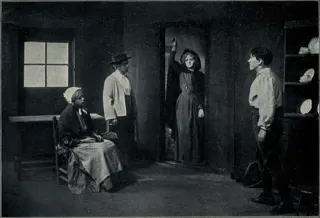
 Cathleen ni Houlihanby W. B. YeatsOn the eve of his wedding in 1798, a young man leaves home to follow a poor old woman.
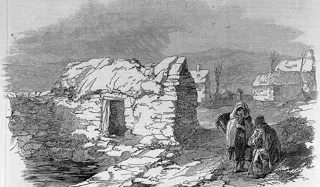 The Countess Cathleenby W. B. YeatsIn a famine, demons buy the souls of the Irish poor, and a countess sells her own to save them.
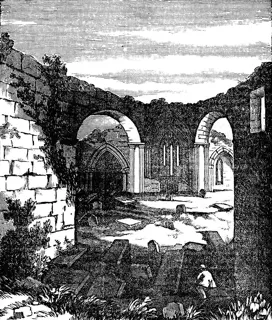 The Dreaming of the Bonesby W. B. YeatsA young rebel fleeing after the Easter Rising is guided over the hills by two strangers who are the ghosts of the lovers who betrayed Ireland.
 The Hour-Glassby W. B. YeatsA wise man who has taught that there is no God and no soul is told he will die when the sand runs out.

Act 1
Scene: A lawn with croquet hoops, garden chairs and tables. Door into house at left. Gate through hedge at back. The hedge is clipped into shapes of farmyard fowl. PAUL RUTTLEDGE is clipping at the hedge in front. A table with toys on it.
[Coming out on steps.] Paul, are you coming in to lunch?
No; you can entertain these people very well. They are your friends: you understand them.
You might as well come in. You have been clipping at that old hedge long enough.
You needn't worry about me. I should be bored if I went in, and I don't want to be bored more than is necessary.
What is that creature you are clipping at now? I can't make it out.
Oh, it is a Cochin China fowl, an image of some of our neighbours, like the others.
I don't see any likeness to anyone.
Oh, yes there is, if you could see their minds instead of their bodies. That comb now
[Coming out on steps.] Thomas, are you coming in?
Yes, I'm coming; but Paul won't come.
THOMAS RUTTLEDGE goes out.
Oh! this is nonsense, Paul; you must come. All these men will think it so strange if you don't. It is nonsense to think you will be bored. Mr. Green is talking in the most interesting way.
Oh! I know Green's conversation very well.
And Mr. Joyce, your old guardian. Thomas says he was always so welcome in your father's time, he will think it so queer.
Oh! I know all their virtues. There's Dowler, who puts away thousands a year in Consols, and Algie, who tells everybody all about it. Have I forgotten anybody? Oh, yes! Colonel Lawley, who used to lift me up by the ears, when I was a child, to see Africa. No, Georgina, I know all their virtues, but I'm not coming in.
I can't imagine why you won't come in and be sociable.
You see I can't. I have something to do here. I have to finish this comb. You see it is a beautiful comb; but the wings are very short. The poor creature can't fly.
But can't you finish that after lunch?
No, I have sworn.
Well, I am sorry. You are always doing uncomfortable things. I must go in to the others. I wish you would have come. [She goes in.]
[Who has come to gate as she disappears.] Paul, you there! that is lucky. I was just going to ask for you.
[Flinging clipper away, and jumping up.] Oh, Father Jerome, I am delighted to see you. I haven't seen you for ever so long. Come and have a talk; or will you have some lunch?
No, thank you; I will stay a minute, but I won't go in.
That is just as well, for you would be bored to death. There has been a meeting of magistrates in the village, and my brother has brought them all in to lunch.
I am collecting for the Monastery, and my donkey has gone lame; I have had to put it up in the village. I thought you might be able to lend me one to go on with.
Of course, I'm delighted to lend you that or anything else. I'll go round to the yard with you and order it. But sit down here first. What have you been doing all this time?
Oh, we have been very busy. You know we are going to put up new buildings.
[Absent-mindedly.] No, I didn't know that.
Yes, our school is increasing so much we are getting a grant for technical instruction. Some of the Fathers are learning handicrafts. Father Aloysius is going to study industries in France; but we are all busy. We are changing with the times, we are beginning to do useful things.
Useful things. I wonder what you have begun to call useful things. Do you see those marks over there on the grass?
What marks?
Those marks over there, those little marks of scratching.
[Going over to the place PAUL RUTTLEDGE has pointed out.] I don't see anything.
You are getting blind, Jerome. Can't you see that the poultry have been scratching there?
No, the grass is perfectly smooth.
Well, the marks are there, whether you see them or not; for Mr. Green and Mr. Dowler and Mr. Algie and the rest of them run out of their houses when nobody is looking, in their real shapes, shapes like those on my hedge. And then they begin to scratch, they scratch all together, they don't dig but they scratch, and all the time their mouths keep going like that.
He holds out his hand and opens and shuts his fingers like a bird's bill.
Oh, Paul, you are making fun of me.
Of course I am only talking in parables. I think all the people I meet are like farmyard creatures, they have forgotten their freedom, their human bodies are a disguise, a pretence they keep up to deceive one another.
[Sitting down.] What is wrong with you?
Oh, nothing of course. You see how happy I am. I have a good house and a good property, and my brother and his charming wife have come to look after me. You see the toys of their children here and everywhere. What should be wrong with me?
I know you too well not to see that there is something wrong with you.
There is nothing except that I have been thinking a good deal lately.
Perhaps your old dreams or visions or whatever they were have come back. They always made you restless. You ought to see more of your neighbours.
There's nothing interesting but human nature, and that's in the single soul, but these neighbours of mine they think in flocks and roosts.
You are too hard on them. They are busy men, they hav'n't much time for thought, I daresay.
That's what I complain of. When I hear these people talking I always hear some organized or vested interest chirp or quack, as it does in the newspapers. Algie chirps. Even you, Jerome, though I have not found your armorial beast, are getting a little monastic; when I have found it I will put it among the others. There is a place for it there, but the worst of it is that it will take so long getting nice and green.
I don't know what creature you could make for me.
I am not sure yet; I think it might be a pigeon, something cooing and gentle, and always coming home to the dovecot; not to the wild woods but to the dovecot.
I wonder what creature you yourself are like.
I daresay I am like some creature or other, for very few of us are altogether men; but if I am, I would like to be one of the wild sort. You are right about my dreams. They have been coming back lately. Do you remember those strange ones I had at college?
Those visions of pulling something down?
Yes, they have come back to me lately. Sometimes I dream I am pulling down my own house, and sometimes it is the whole world that I am pulling down. [Standing up.] I would like to have great iron claws, and to put them about the pillars, and to pull and pull till everything fell into pieces.
I don't see what good that would do you.
Oh, yes it would. When everything was pulled down we would have more room to get drunk in, to drink contentedly out of the cup of life, out of the drunken cup of life.
That is a terribly wild thought. I hope you don't believe all you say.
Perhaps not. I only know that I want to upset everything about me. Have you not noticed that it is a complaint many of us have in this country? and whether it comes from love or hate I don't know, they are so mixed together here.
I wish you would come and talk to our Superior. He has a perfect gift for giving advice.
Well, we'll go to the yard now. [He gets up.]
I have often thought you would come to the Monastery yourself in the end. You were so much the most pious of us all at school. You would be happy in a Monastery. Something is always happening there.
[As they go up the garden.] I daresay, I daresay; but I am not even sure that I am a Christian.
Well, anyway, I wish that you would come and talk to our Superior. [They go out.]
CHARLIE WARD and BOY enter by the path beyond the hedge and stand at gate.
No use going up there, Johneen, it's too grand a place, it's a dog they might let loose on us. But I'll tell you what, just slip round to the back door and ask do they want any cans mended.
Let you take the rabbit then we're after taking out of the snare. I can't bring it round with me.
Faith, you can't. They think as bad of us taking a rabbit that was fed and minded by God as if it was of their own rearing; give it here to me. It's hardly it will go in my pocket, it's as big as a hare. It's next my skin I'll have to put it, or it might be noticed on me. [Boy goes out.]
CHARLIE WARD is struggling to put rabbit inside his coat when PAUL RUTTLEDGE comes back.
Is there anything I can do for you? Do you want to come in?
I'm a tinker by trade, your honour. I wonder is there e'er a tin can the maids in the house might want mended or any chairs to be bottomed?
A tinker; where do you live?
Faith, I don't stop long in any place. I go about like the crows; picking up my way of living like themselves.
[Opening gate.] Come inside here. [CHARLIE WARD hesitates.] Come in, you are welcome.
Puts his hand on his shoulder. CHARLIE WARD tries to close his shirt over rabbit.
Ah, you have a rabbit there. The keeper told me he had come across some snares in my woods.
If he did, sir, it was no snare of mine he found. This is a rabbit I bought in the town of Garreen early this morning. Sixpence I was made give for it, and to mend a tin can along with that.
[Touching rabbit.] It's warm still, however. But the day is hot. Never mind; you are quite welcome to it. I daresay you will have a cheery meal of it by the roadside; my dinners are often tiresome enough. I often wish I could change--look here, will you change clothes with me?
Faith, I'd swap soon enough if you weren't humbugging me. It's I that would look well with that suit on me! The peelers would all be touching their caps to me. You'd see them running out for me to sign summonses for them.
But I am not humbugging. I am in earnest.
In earnest! Then when I go back I'll commit Paddy Cockfight to prison for hitting me yesterday.
You don't believe me, but I will explain. I'm dead sick of this life; I want to get away; I want to escape--as you say, to pick up my living like the crows for a while.
To make your escape. Oh! that's different. [Coming closer.] But what is it you did? You don't look like one that would be in trouble. But sometimes a gentleman gets a bit wild when he has a drop taken.
Well, never mind. I will explain better while we are changing. Come over here to the potting shed. Make haste, those magistrates will be coming out.
The magistrates! Are they after you? Hurry on, then! Faith, they won't know you with this coat. [Looking at his rags.] It's a pity I didn't put on my old one coming out this morning.
They go out through the garden. THOMAS RUTTLEDGE comes down steps from house with COLONEL LAWLEY and MR. GREEN.
Yes, they have made me President of the County Horticultural Society. My speech was quite a success; it was punctuated with applause. I said I looked upon the appointment not as a tribute to my own merits, but to their public spirit and to the Society, which I assured them had come to stay.
What has become of Paul and Father Jerome? I thought I heard their voices out here, and now they are conspicuous by their absence.
He seems to have no friend he cares for but that Father Jerome.
I wish he would come more into touch with his fellows.
What a pity he didn't go into the army. I wish he would join the militia. Every man should try to find some useful sphere of employment.
Thomas, your brother will never come to see me, though I often ask him. He would find the best people--people worth meeting--at my house. I wonder if he would join the Horticultural Society? I know I voice the sentiments of all the members in saying this. I spoke to a number of them at the function the other day.
I wish he would join something. Joyce wants him to join the Masonic Lodge. It is not a right life for him to keep hanging about the place and doing nothing.
He won't even come and sit on the Bench. It's not fair to leave so much of the work to me. I ought to get all the support possible from local men.
MRS. RUTTLEDGE comes down steps with MR. DOWLER, MR. ALGIE, and MR. JOYCE. She is walking in front.
[To THOMAS RUTTLEDGE] Oh! Thomas, isn't it too bad, Paul has lent the donkey to that friar. I wanted Mr. Joyce to see the children in their panniers. Do speak to him about it.
Well, the donkey belongs to him, and for the matter of that so does the house and the place. It would be rather hard on him not to be able to use things as he likes.
What a pleasure it must be to Paul to have you and the little ones living here. He certainly owes you a debt of gratitude. Man was not born to live alone.
Well, I think we have done him good. He hasn't done anything for years, except mope about the house and cut the bushes into those absurd shapes, and now we are trying to make him live more like other people.
He was always inclined to be a bit of a faddist.
[To MR. ALGIE] Do let me give you a lesson in croquet. I have learned all the new rules. [To MR. JOYCE.] Please bring me that basket of balls. [To COLONEL LAWLEY.] Will you bring me the mallets? Yes, I am afraid he is a faddist. We have done our best for him, but he ought to be more with men.
Yes, Mr. Dowler was just saying he ought to try and be made a director of the new railway.
The militia--the militia.
It's a great help to a man to belong to a Masonic Lodge.
The Horticultural Society is in want of new members.
Well, I wish he would join something.
Enter PAUL RUTTLEDGE in tinker's clothes, carrying a rabbit in his hand. CHARLIE WARD follows in PAUL'S clothes. All stand aghast.
Good God!
Drops basket. COLONEL LAWLEY, who has mallets in his hand, at sight of PAUL RUTTLEDGE drops them, and stands still.
Paul! are you out of your mind?
For goodness' sake, Paul, don't make such a fool of yourself.
What on earth has happened, and who on earth is that man?
[Opens gate for tinker. To CHARLIE WARD] Wait for me, my friend, down there by the cross-road. [CHARLIE WARD goes out.]
Has he stolen your clothes?
Oh! it's all right; I have changed clothes with him. I am going to join the tinkers.
To join the tinkers!
Life is getting too monotonous; I would give it a little variety. [To MR. GREEN.] As you would say, it has been running in grooves.
[To MRS. RUTTLEDGE] This is only his humbugging talk; he never believes what he says.
PAUL RUTTLEDGE goes towards the steps.
Surely you are not going into the house with those clothes?
You are quite right. Thomas will go in for me. [To THOMAS RUTTLEDGE.] Just go to my study, will you, and bring me my despatch-box; I want something from it before I go.
Where are you going to? I wish you would tell me what you are at.
The despatch-box is on the top of the bureau.
THOMAS RUTTLEDGE goes out.
What does all this mean?
I will explain. [Sits down on the edge of iron table.] Did you never wish to be a witch, and to ride through the air on a white horse?
I can't say I ever did.
Never? Only think of it--to ride in the darkness under the stars, to make one's horse leap from cloud to cloud, to watch the sea glittering under one's feet and the mountain tops going by.
But what has this to do with the tinkers?
As I cannot find a broomstick that will turn itself into a white horse, I am going to turn tinker.
I suppose you have some picturesque idea about these people, but I assure you, you are quite wrong. They are nothing but poachers.
They are nothing but thieves.
They are the worst class in the country.
Oh, I know that; they are quite lawless. That is what attracts me to them. I am going to be irresponsible.
One cannot escape from responsibility by joining a set of vagabonds.
Vagabonds--that is it. I want to be a vagabond, a wanderer. As I can't leap from cloud to cloud I want to wander from road to road. That little path there by the clipped edge goes up to the highroad. I want to go up that path and to walk along the highroad, and so on and on and on, and to know all kinds of people. Did you ever think that the roads are the only things that are endless; that one can walk on and on and on, and never be stopped by a gate or a wall? They are the serpent of eternity. I wonder they have never been worshipped. What are the stars beside them? They never meet one another. The roads are the only things that are infinite. They are all endless.
But they must stop when they come to the sea?
Ah! you are always so wise.
Stop talking nonsense, Paul, and throw away those filthy things.
That would be setting cleanliness before godliness. I have begun the regeneration of my soul.
I don't see what godliness has got to do with it.
Nor I either.
There was a saint who said, "I must rejoice without ceasing, although the world shudder at my joy." He did not think he could save his soul without it. I agree with him, and as I was discontented here, I thought it time to make a change. Like that worthy man, I must be content to shock my friends.
But you had everything here you could want.
That's just it. You who are so wealthy, you of all people should understand that I want to get rid of all that responsibility, answering letters and so on. It is not worth the trouble of being rich if one has to answer letters. Could you ever understand, Georgina, that one gets tired of many charming things? There are family responsibilities [to MR. JOYCE], but I can see that you, who were my guardian, sympathize with me in that.
Indeed I do not.
I should think you could be cheerful without ceasing to be a gentleman.
You are thinking of my clothes. We must feel at ease with the people we live amongst. I shall feel at ease with the great multitude in these clothes. I am beginning to be a man of the world. I am the beggarman of all the ages--I have a notion Homer wrote something about me.
He is either making fun of us or talking great rot. I can't listen to any more of this nonsense. I can't see why a man with property can't let well alone. Algie are you coming my way?
They both go into the house, and come out presently with umbrella and coat.
Depend upon it, he's going to write a book. There was a man who made quite a name for himself by sleeping in a casual ward.
Oh! no, I'm not going to write about it; if one writes one can do nothing else. I am going to express myself in life. [To THOMAS RUTTLEDGE who has returned with box.] I hope soon to live by the work of my hands, but every trade has to be learned, and I must take something to start with. [To MRS. RUTTLEDGE.] Do you think you will have any kettles to mend when I come this way again?
He has taken box from THOMAS RUTTLEDGE and unlocked it.
I can't make head or tail of what you are at.
What he is at is fads.
I don't think his motive is far to seek. He has some idea of going back to the dark ages. Rousseau had some idea of the same kind, but it didn't work.
Yes; I want to go back to the dark ages.
Do you want to lose all the world has gained since then?
What has it gained? I am among those who think that sin and death came into the world the day Newton eat the apple. [To MRS. RUTTLEDGE, who is going to speak.] I know you are going to tell me he only saw it fall. Never mind, it is all the same thing.
[Beginning to cry.] Oh! he is going mad!
I'm afraid he is really leaving us.
[Who has been looking at papers, tearing one or two, etc., takes out a packet of notes, which he puts in his breast.] I daresay this will last me long enough, Thomas. I am not robbing you of very much. Well, good-bye. [Pats him gently on the shoulder.] I mustn't forget the rabbit, it may be my dinner to-night; I wonder who will skin it. Good-bye, Colonel, I think I've astonished you to-day. [Slaps his shoulder.] That was too hard, was it? Forgive it, you know I'm a common man now. [Lifts his hat and goes out of gate. Closes it after him and stands with his hands on it, and speaks with the voice of a common man.] Go on, live in your poultry-yard. Scratch straw and cluck and cackle at everything that you take for a fox. [Exit.]
[Goes to MRS. RUTTLEDGE, who has sat down and is wiping her eyes.] I am very sorry for this, for his father's sake, but it may be as well in the end. If it comes to the worst, you and Thomas will keep up the family name better than he would have done.
He'll find the poor very different from what he thinks when they pick his pocket.
To think that a magistrate should have such fads!
I venture to say you will see him here in a very different state of mind in a week.
[Who has been in a brown study.] He has done for himself in this world and the next. Why, he won't be asked to a single shoot if this is heard of.
[Turning from the gate.] Here are the children, Georgina. Don't say anything before the nurse.
Well, I must be off. [Goes in for stick.]
Just bring me out my coat, Green.
They all prepare to go. MRS. RUTTLEDGE has gone to open gate and children come in, one in a perambulator. All gather round them admiringly.
Have you a kiss for godfather to-day?
The poor darlings! I hope they will never know what has happened.
Thank goodness, they have no nonsense in their heads. We know where we are with them.
Act 2
Scene: By the roadside. A wall of unmortared stone in the background. Tinkers' encampment. Men, women, and children standing round. PAUL RUTTLEDGE standing by a fire.
What do you mean by "tinning" the soldering iron?
If the face of it is not well tinned it won't lift the solder. Show me here.
Takes soldering iron from PAUL RUTTLEDGE'S hand.
[Sitting down and drawing a tin can to him.] Now, let me see how you mend this hole. It seems easy. I'm sure I will be able to learn it as well as any of you.
Two tinkers come and stand over him.
[Pointing to one of them.] This, sir, is Tommy the Song. He's the best singer we have, but the divil a much good he is only that. He's a great warrant to snare hares.
Is the gentleman going to join us?
Indeed I am, if you'll let me. There's nothing I'd like better.
But are you going to learn the trade?
Yes, if you'll teach me. I'm sure I'll make a good tinker. Look at that now, see how I've stopped that hole already.
[Taking the can from him and looking at it.] If every can had a little hole in the middle like that, I think you would be able to mend them; but there's the straight hole, and the crooked hole, the round hole, the square hole, the angle hole, the bottom hole, the top hole, the side leak, the open leak, the leak-all-round, but I won't frighten you with the names of them all, only this I will say, that, when you've learned to mend all the leakages in a can--and that should take you a year--you're only in the first day of the tinker's week.
Don't believe him. He's only humbugging you. It's not the hardness of the work will daunt you.
Thank you. I was not believing him at all. I'm quite sure I'll be able to mend any can at the end of a week, but the bottoming of them will take longer. I can see that's not so easy. When will you start to teach me that, Charlie?
[As another tinker comes up.] Paddy, here's the gentleman I was telling you about. He's going to join us for good and all. [To PAUL RUTTLEDGE.] Wait till we have time and some quiet place, and he'll show you as good a cockfight as ever you saw. [A woman comes up.] This is his wife; Molly the Scold we call her; faith, she is a better fighter than any cock he ever had in a basket; he'd find it hard to shut the lid on her.
The gentleman seems foolish. Is he all there?
Stop your chat, Molly, or I'll hit you a welt.
Keep your tongue quiet, Molly. If the gentleman has reasons for keeping out of the way it isn't for us to be questioning him. [To PAUL RUTTLEDGE.] Don't mind her, she's cross enough, but maybe your own ladies would be cross as well if they saw their young sons dying by the roadside in a little kennel of straw under the ass-cart the way she did; from first to last.
I suppose you have your troubles like others. But you seem cheerful enough.
It isn't anything to fret about. Some of us go soon, and some travel the roads for their lifetime. What does it matter when we are under the nettles if it was with a short rope or a long one we were hanged?
Yes, that is the way to take life. What does the length of our rope matter?
We haven't time to be thinking of troubles like people that would be shut up in a house. We have the wide world before us to make our living out of. The people of the whole world are begrudging us our living, and we make it out of them for all that. When they will spread currant cakes and feather beds before us, it will be time for us to sit down and fret.
It's likely you'll think the life too hard. Would you like to be passing by houses in the night-time, and the fire shining out of them, and you hardly given the loan of a sod to light your pipe, and the rain falling on you?
Why are the people so much against you?
We are not like themselves. It's little we care about them or they about us. If their saint did curse us itself
Stop. I won't have you talking about that story here. Why would they think so much of the curse of one saint, and saints so plenty?
Where's the good of a gentleman being here? He'll be breaking down on the road. It's on the ass-cart he'll be wanting to sit.
Indeed, I don't think he'll stand the hardship.
Oh, I'll stand it well enough.
You're not like us that were reared to it. You were not born like us with wandering in the heart.
Oh yes, I have wandering in the heart. I got sick of these lighted rooms you were talking of just now.
That might be so. It's the dark is welcome to a man sometimes.
The dark. Yes, I think that is what I want. [Stands up.] The dark, where there is nothing that is anything, and nobody that is anybody; one can be free there, where there is nothing. Well, if you let me stay with you, I don't think you will hear any complaints from me. Charlie Ward, Paddy, and the rest of you, I want you to understand that from this out I am one of yourselves. I'll live as you live and do as you do.
JOHNEEN and other children come running in.
I was on the top of the bank and I seen a priest coming down the cross-road with his ass. It's collecting he is. We're going to set ourselves here to beg something from him.
[Breathlessly.] And he has a whole lot of things on the ass. A whole lot of things up behind him.
O boys, O boys, we'll have our dealing trick out of them yet. The best way'll be---- [He suddenly catches sight of PAUL RUTTLEDGE.] Whist, ye divils ye, don't you see the new gentleman?
Speak out, boys; don't be afraid of me; I'm one of yourselves now.
Oh! but we were going to---- But I won't tell you. [To the other children.] Come away here, and we'll not tell him what we'll do.
[To CHARLIE WARD] What are they going to do? They're putting their heads together.
They're going to put a bush across the road, and when the friar gets down to pull it out of the way they'll snap what they can off the ass, and away with them.
And why wouldn't they tell me that? Am I not one of yourselves?
Ah! It's likely they'll never trust you.
But they will soon see that I am one of themselves.
No; but that's the very thing, you're not one of ourselves. You were not born on the road, reared on the road, married on the road like us.
Well, it's too late for me to be reared on the road, but I don't see why I shouldn't marry on the road like you. I certainly would do it if it would make me one of you.
It might make you one of us, there's no doubt about that. It's the only thing that would do it.
Well, find a wife for me.
Faith, you haven't far to go to find one. Paddy there will give you over his wife quick enough; he won't make a hard bargain over her.
But I am in earnest. I want to cut myself off from my old life.
Oh! I was forgetting that.
[To MOLLY] I wonder what was it he did? I wonder had he the misfortune to kill anybody?
[Calling SABINA over.] Here's a girl should make a good wife, Sabina Silver her name is. Her father is just dead; he didn't treat her over well.
[Coming over.] What is it?
This gentleman wants to speak to you. I think he's looking out for a wife.
[Hanging her head.] Don't be humbugging me.
Indeed he's not, Sabina.
You're only joking a poor girl. Sure, what would make you think of me at all?
Sabina, have you been always on the road with Charlie Ward and the others?
I have, indeed.
And you'd make a good tinker's wife?
You're joking me, but I would be a better wife for a tinker than for anyone else.
Sabina, will you marry me?
Oh! but I'd be afraid.
Why, Sabina?
I'd be afraid you'd beat me.
You see her father used to beat her. She's afraid of the look of a man now.
I would not beat you, Sabina. How can you have got such an idea?
Will you promise me that you won't beat me? Will you swear it to me?
Of course I will.
[To CHARLIE WARD] Will you make him swear it? Haven't you a little book in your pack? Bring it out and make him swear to me on it, and you'll be my witness.
I think, Sibby, you need not be afraid.
What's your name, gentleman?
My name is Paul. Do you like it?
Then I won't marry you, Mr. Paul, till you swear to me upon the book that you will never beat me with any stick that you could call a stick, and that you will never strike a kick on me from behind.
Charlie, go and bring out that book to satisfy her. Of course I swear that; it is absurd.
CHARLIE WARD brings the book out of his pack.
I swear, Sabina, that I will never strike you with any stick of any kind, and that I will never kick you. There, will that do? [He takes book and kisses it.]
I misdoubt you. Kiss the book again. [PAUL RUTTLEDGE kisses it.]
That's all right.
[Crying from a distance.] He's coming now, the priest's coming!
Then the priest will marry us. That comes in very handy.
[Scornfully.] A priest marry you, indeed he'll do nothing of the kind. I hate priests and friars. It's unlucky to get talking to them at all. You never know what trouble you're in for.
[Coming up.] That's true, indeed. The last time I spoke to a priest it's what he leathered me with a stick; may the divil fly away with him.
But somebody must marry us.
Of course. You'll lep over the tinker's budget the usual way. You'll just marry her by lepping over the budget the same as the rest of us marry.
That's all I want to know. Please marry me in whatever is your usual way.
JEROME enters, leading the ass. He carries a pig's cheek, some groceries, a string of onions, etc., on the ass, which still has its nursery trappings. He goes up to CHARLIE WARD thinking he is PAUL RUTTLEDGE.
Paul, what are you doing here?
[Turning.] What do you want?
Oh! I'm mistaken. I thought
I am here, Father Jerome, but you're talking to the wrong man.
Good God, Paul, what has happened?
Nothing has happened that need surprise you. Don't you remember what we talked of to-day? You told me I was too much by myself. After you went away I thought I would make a change.
But a change like this!
Why should you find fault with it? I am richer now than I was then. I only lent you that donkey then, now I give him to you.
What has brought you among such people as these?
I find them on the whole better company than the people I left a little while ago. Let me introduce you to
What can you possibly gain by coming here? Are you going to try and teach them?
Oh! no, I am going to learn from them.
What can you learn from them?
To pick up my living like the crows, and to solder tin cans. Just give me that one I mended a while ago.
Holds it out to FATHER JEROME.
That is all nonsense.
I am happy. Do not your saints put all opponents to the rout by saying they alone of all mankind are happy?
I suppose you will not compare the happiness of these people with the happiness of saints?
There are all sorts of happiness. Some find their happiness like Thomas a Kempis, with a little book and a little cell.
I would wonder at anybody that could be happy in a cell.
These men fight in their way as your saints fought, for their hand is against the world. I want the happiness of men who fight, who are hit and hit back, not the fighting of men in red coats, that formal, soon-finished fighting, but the endless battle, the endless battle. Tell me, Father Jerome, did you ever listen in the middle of the night?
Listen for what?
Did you ever, when the monastery was silent, and the dogs had stopped barking, listen till you heard music?
What sort of music do you mean?
Not the music we hear with these ears [touching his ears], but the music of Paradise.
Brother Colman once said he heard harps in the night.
Harps! It was because he was shut in a cell he heard harps, maybe it sounds like harps in a cell. But the music I have heard sometimes is made of the continual clashing of swords. It comes rejoicing from Paradise.
These are very wild thoughts.
I often heard music in the forths. There is many of us hear it when we lie with our heads on the ground at night.
That was not the music of Paradise.
Why should they not hear that music, although it may not set them praying, but dancing.
How can you think you will ever find happiness amongst their devils' mirth?
I have taken to the roads because there is a wild beast I would overtake, and these people are good snarers of beasts. They can help me.
What kind of a wild beast is it you want?
Oh! it's a very terrible wild beast, with iron teeth and brazen claws that can root up spires and towers.
It's best not to try and overtake a beast like that, but to cross running water and leave it after you.
I heard one coming after me one night; very big and shadowy it was, and I could hear it breathing. But when it came up with me I lifted a hazel rod was in my hand, and it was gone on the moment.
My wild beast is Laughter, the mightiest of the enemies of God. I will outrun it and make it friendly.
That is your old wild talk. Do have some sense and go back to your family.
I am never going back to them. I am going to live among these people. I will marry among them.
That is nonsense; you will soon change your mind.
Oh! no, I won't; I am taking my vows as you made yours when you entered religion. I have chosen my wife; I am going to marry before evening.
Thank God, you will have to stop short of that, the Church will never marry you.
Oh! I am not going to ask the help of the Church. But I am to be married by what may be as old a ceremony as yours. What is it I am to do, Charlie?
To lep a budget, sir.
Yes, that is it, the budget is there by the wall.
I command you, in the name of the Holy Church and of the teaching you have received from the Church, to leave this folly, this degradation, this sin!
You forget, Jerome, that I am on the track of the wild beast, and hunters in all ages have been a bad people to preach to. When I have tamed the beast, perhaps I will bring him to your religious house to be baptized.
I will not listen to this profanity. [To CHARLIE WARD.] It is you who have put this madness on him as you have stolen his clothes!
Stop your chat, ye petticoated preacher.
I think, Father Jerome, you had better be getting home. This people never gave in to the preaching of S. Patrick.
I'll send you riding home with your face to the tail of the ass!
No, stop till we show you that we can make as good curses as yourself. That you may never be warm in winter or cold in summer time
That's the chat! Bravo! Let him have it.
Be off! be off out of this!
Now curse him, Tommy.
A wide hoarseness on you--a high hanging to you on a windy day; that shivering fever may stretch you nine times, and that the curses of the poor may be your best music, and you hiding behind the door. [JEROME goes out.]
And you hiding behind the door, and squeezed between the hinges and the wall.
Squeezed between the hinges and the wall. [They follow JEROME.]
[Crying after them.] Don't harm that gentleman; he is a friend of mine.
He goes to the wall, and stands there silently, looking upward.
It was grand talk, indeed: I didn't understand a word of it.
The crows are beginning to fly home. There is a flock of them high up under that cloud. I wonder where their nests are.
A long way off, among those big trees about Tillyra Castle.
Yes, I remember. I have seen them coming home there on a windy evening, tossing and whirling like the sea. They may have seen what I am looking for, they fly so far. A sailor told me once that he saw a crow three hundred miles from land, but maybe he was a liar.
Well, they fly far, anyway.
They tell one another what they have seen, too. That is why they make so much noise. Maybe their news goes round the world. [He comes towards the others.] I think they have seen my wild beast, Laughter. They could tell me if he has a face smoky from the eternal fires, and wings of brass and claws of brass--claws of brass. [Holds out his hands and moves them like claws.] Sabina, would you like to see a beast with eyes hard and cold and blue, like sapphires? Would you, Sabina? Well, it's time now for the wedding. So what shall we get for the wedding party? What would you like, Sabina?
I don't know.
What do you say, Charlie? A wedding cake and champagne. How would you like champagne? [Tinkers begin to return.]
It might be middling.
What would you say to a
One of the Boys runs in carrying a pig's cheek. The rest of the Tinkers return with him.
I knew I could do it. I told you I'd have my dealing trick out of the priest. I took a hold of this, and Johneen made a snap at the onions.
And he didn't catch you?
He'd want to be a lot smarter than he is to do that.
You are a smart lad, anyway. What do you say we should have for our wedding party?
Are you rich?
More or less.
I seen a whole truck full of cakes and bullseyes in the village below. Could you buy the whole of them?
Stop talking nonsense. What we want is porter.
All right. How many public-houses are there in the village?
Twenty-four.
Is there any place we can have barrels brought to?
There's a shed near seems to be empty. We might go there.
Then go and order as many barrels as we can make use of to be brought there.
We will; and we'll stop till we've drunk them out.
[Taking out money.] I have more money than will pay for that. Sabina, we'll treat the whole neighbourhood in honour of our wedding. I'll have all the public-houses thrown open, and free drinks going for a week!
Hurrah! hurrah! hurrah!
Three cheers more, boys.
Hurrah! hurrah! hurrah!
Now here's the budget.
[Taking SABINA SILVER'S hand] Now, Sabina, one, two, three!
Act 3
Scene: A large shed. Some sheepskins hanging up. Irons and pots for branding sheep, some pitchforks, etc. Tinkers playing cards, PAUL RUTTLEDGE sitting on an upturned basket.
Stop that melodeon, now will ye, and we'll have a taste of the cocks. Paul didn't see them yet what they can do. Where's Tommy? Where in the earthly world is Tommy the Song?
He's over there in the corner.
What are you doing there, Tommy?
Taking a mouthful of prayers, I am.
Praying! did anyone ever hear the like of that? Pull him out of the corner.
PADDY COCKFIGHT pulls TOMMY THE SONG out of the corner.
What is it you were praying for, I would like to know?
I was praying that we might all soon die.
Die, is it?
Is it die and all that porter about? Well! you have done enough praying, go over there and look for the basket. Who was it set him praying, I wonder? I am thinking it is the first prayer he ever said in his life.
It's likely it was Paul. He's after talking to him through the length of an hour.
Maybe it was. Don't mind him. I said just now that when we were all dead and in heaven it would be a sort of drunkenness, a sort of ecstasy. There is a hymn about it, but it is in Latin. "Et calix meus inebrians quam praeclarus est." How splendid is the cup of my drunkenness!
Well, that is a great sort of a hymn. I never thought there was a hymn like that, I never did.
To think, now, there is a hymn like that. I mustn't let it slip out of my mind. How splendid is the cup of my drunkenness, that's it.
Have you found that old bird of mine?
[Who has been searching among the baskets.] Here he is, in the basket and a lot of things over it.
Get out that new speckled bird of yours, Paddy, I've been wanting to see how could he play for a week past.
Where do you get the cocks?
It was a man below Mullingar owned this one. The day I first seen him I fastened my two eyes on him, he preyed on my mind, and next night, if I didn't go back every foot of nine miles to put him in my bag.
Do you pay much for a good fighting cock?
[Laughs.] Do you pay much, Paddy?
Perhaps you don't pay anything.
I think Paddy gets them cheap.
He gets them cheaper than another man would, anyhow.
He's the best cock I ever saw before or since. Believe me, I made no mistake when I pitched on him.
I don't care what you think of him. I'll back the red; it's he has the lively eye.
Andy Farrell had an old cock, and it bent double like himself, and all the feathers flittered out of it, but I hold you he'd leather both your red and your speckled cock together. I tell ye, boys, that was the cock!
Uproarious shouts and yells heard outside.
Those free drinks of yours, Paul, is playing the devil with them. Do you hear them now and every roar out of them? They're putting the cocks astray. [He takes out a cock.] Sure they think it's thunder.
There's not a man of them outside there now but would be ready to knock down his own brother.
He wouldn't know him to knock him down. They're all blind. I never saw the like of it.
You in here stood it better than that.
When those common men drink it's what they fall down. They haven't the heads. They're not like us that have to keep heads and heels on us.
It's well we kept them out of this, or they'd be lying on the floor now, and there'd be no place for my poor bird to show himself off. Look at him now! Isn't he the beauty! [Takes out the cock.]
Now boys, settle the place, put over those barrels out of that. [They push barrels into a row at back.] Paul, you sit on the bin the way you'll get a good view.
A loud knock at the door. An authoritative voice outside.
Open this door.
That's Green, the Removable; I know his voice well!
Clear away, boys. Back with those cocks. There, throw that sack over the baskets. Quick, will ye!
[Outside.] Open this door at once.
[Outside.] I insist on this door being opened.
What do they want at all? I wish we didn't come into a place with no back door to it.
There's nothing to be afraid of. Open the door, Charlie. [CHARLIE WARD opens the door.]
Enter MR. GREEN, COLONEL LAWLEY, MR. DOWLER, MR. JOYCE, MR. ALGIE and THOMAS RUTTLEDGE.
All J.P.'s; I have looked at every one of them from the dock!
Mr. Ruttledge, this is very sad.
This is a disgraceful business, Paul; the whole countryside is demoralized. There is not a man who has come to sensible years who is not drunk.
This is a flagrant violation of all propriety. Society is shaken to its roots. My own servants have been led astray by the free drinks that are being given in the village. My butler, who has been with me for seven years, has not been seen for the last two days.
I am sure you will echo Mr. Dowler, Algie.
Indeed I do. I endorse his sentiments completely. There has not been a stroke of work done for the last week. The hay is lying in ridges where it has been cut, there is not a man to be found to water the cattle. It is impossible to get as much as a horse shod in the village.
I think you have something to say, Colonel Lawley?
I have undoubtedly. I want to know when law and order are to be re-established. The police have been quite unable to cope with the disorder. Some of them have themselves got drunk. If my advice had been taken the military would have been called in.
The military are not indispensable on occasions like the present. There are plenty of police coming now. We have wired to Dublin for them, they will be here by the four o'clock train.
[Gets down from his bin.] But you have not told me what you have come here for? Is there anything I can do for you?
Won't you come home, Paul? The children have been asking for you, and we don't know what to say.
We have come to request you to go to the public-houses, to stop the free drinks, to send the people back to their work. As for those tinkers, the law will deal with them when the police arrive.
Oh, Paul, why have you upset the place like this?
Well, I wanted to give a little pleasure to my fellow-creatures.
This seems rather a low form of pleasure.
I daresay it seems to you a little violent. But the poor have very few hours in which to enjoy themselves; they must take their pleasure raw; they haven't the time to cook it.
But drunkenness!
[Putting his hand on the shoulders of two of the magistrates.] Have we not tried sobriety? Do you like it? I found it very dull? [A yell from outside.] There is not one of those people outside but thinks that he is a king, that he is riding the wind. There is not one of them that would not hit the world a slap in the face. Some poet has written that exuberance is beauty, and that the roadway of excess leads to the palace of wisdom. But I forgot--you do not read the poets.
What we want to know is, are you going to send the people back to their work?
Oh, work is such a little thing in comparison with experience. Think what it is to them to have their imagination like a blazing tar-barrel for a whole week. Work could never bring them such blessedness as that.
Everyone knows there is no more valuable blessing than work.
Idleness is the curse of this country.
I am prejudiced, for I have always been an idler. Doubtless, the poor must work. It was, no doubt, of them you were speaking. Yet, doesn't the Church say, doesn't it describe heaven as a place where saints and angels only sing and hold branches and wander about hand in hand. That must be changed. We must teach the poor to think work a thing fit for heaven, a blessed thing. I'll tell you what we'll do, Dowler. Will you subscribe, and you, and you, and we'll send lecturers about with magic lanterns showing heaven as it should be, the saints with spades and hammers in their hands and everybody working. The poor might learn to think more of work then. Will you join in that scheme, Dowler?
I think you'd better leave these subjects alone. It is obvious you have cut yourself off from both religion and society.
The world could not go on without work.
The world could not go on without work! The world could not go on without work! I must think about it. [Gets up on bin.] Why should the world go on? Perhaps the Christian teacher came to bring it to an end. Let us send messengers everywhere to tell the people to stop working, and then the world may come to an end. He spoke of the world, the flesh, and the devil. Perhaps it would be a good thing to end these one by one.
Come away out of this. He has gone mad.
Ah! I thought that would scare them.
I wish, Paul, you would come back and live like a Christian.
Like a Christian?
Come away, there's no use stopping here any longer.
[Sternly.] Wait, I have something to say to that. [To CHARLIE WARD.] Do not let anyone leave this place.
Tinkers close together at the door.
[To Tinkers] This is nonsense. Let me through.
Tinker spreads out his arms before him.
You have come into a different kingdom now; the old kingdom of the people of the roads, the houseless people. We call ourselves tinkers, and you are going to put us on our trial if you can. You call yourselves Christians and we will put you on your trial first. I will put the world on its trial, and myself of yesterday. [To a Boy.] Run out, Johneen, keep a watch, and tell us when the train is coming. Sabina, that rope; we will set these gentlemen on those barrels. [Tinkers take hold of them.]
Keep your hands off me, you drunken scoundrel!
Strikes at CHARLIE WARD, but Tinkers seize his arms behind.
Tie all their hands behind them.
We'd better give in, there's no saying how many more of them there are.
I'll be quiet, the odds are too great against us.
The police will soon be here; we may as well stay quietly.
Here, give it to me, I'll put a good twist in it. Don't be afraid, sir, it's not about your neck I'm putting it----. There now, sit quiet and easy, and you won't feel it at all.
Are all their hands tied? Now then, heave them up on to the barrels.
Slight scuffle, during which all are put on the barrels in a semicircle.
Ah! yes, you are on my barrels now; last time I saw you, you were on your own dunghill. Let me see, is there anyone here who can write?
Nobody.
Never mind, you can keep count on your fingers. The rest must sit down and behave themselves as befits a court. They say they are living like Christians. Let us see.
Oh, Paul, don't make such a fool of yourself.
The point is not wisdom or folly, but the Christian life.
Don't answer him, Thomas. Let us preserve our dignity.
Yes, let us keep a dignified attitude--we won't answer these ruffians at all.
Respect the court! [Turns to Colonel Lawley.] You have served your Queen and country in the field, and now you are a colonel of militia.
Well, what is there to be ashamed of in that? Answer me that, now.
Yet there is an old saying about turning the other cheek, an old saying, a saying so impossible that the world has never been able to get it out of its mind. You have helped to enlist men for the army, I think? Some of them have fought in the late war, and you have even sent some of your own militia there.
If I did I'm proud of it.
Did they think it was a just war?
That was not their business. They had taken the Queen's pay. They would have disgraced themselves if they had not gone.
Is it not the doctrine of your Christian Church, of your Catholic Church, that he who fights in an unjust war, knowing it to be unjust, loses his own soul?
I should like to know what would happen to the country if there weren't soldiers to protect it.
We are not discussing the country, we are discussing the Christian life. Has this gentleman lived the Christian life?
He has not!
His sergeant tried to enlist me, giving me a shilling, and I drunk.
[Singing.] She bid me take love easy, as the leaves grow on the tree, But I, being young and foolish, with her would not agree.
Stop your mouth, Tommy. This is not your show. [To PAUL RUTTLEDGE.] Are you going to put a fine on the Colonel? If so I'd like his cloak.
Now we'll try Mr. Dowler, the rich man. [Holds up his fingers in a ring.] Mr. Dowler, could you go through this?
Don't answer him, Dowler; he's going beyond all bounds.
I was a rich man and I could not, and yet I am something smaller than a camel, and this is something larger than a needle's eye.
Don't answer this profanity.
But what about the cloak?
Oh! go and take it.
CHARLIE WARD goes and takes cloak off the COLONEL.
You drunken rascal, I'll see you in the dock for this.
You're encouraging robbery now.
Remember the commandment, "Give to him that asketh thee"; and the hard commandment goes even farther, "Him that taketh thy cloak forbid not to take thy coat also." [Holding out his rags.] Have I not shown you what Mr. Green would call a shining example. Charlie, ask them all for their coats.
I will, and their boots, too.
[Uproariously.] Give me your coat; I'll have your boots, etc.
Wait till the police come. I'll turn the tables on you; you may all expect hard labour for this.
[To the Tinkers] Stand back, the trial is not over. Mr. Green, these friends of yours have been convicted of breaking the doctrine they boast of. They do not love their enemies; they do not give to every man that asks of them. Some of them, Mr. Dowler, for instance, lay up treasures upon earth; they ask their goods again of those who have taken them away. But you, Mr. Green, are the worst of all. They break the Law of Christ for their own pleasure, but you take pay for breaking it. When their goods are taken away you condemn the taker; when they are smitten on one cheek you punish the smiter. You encourage them in their breaking of the Law of Christ.
He does, indeed. He gave me two months for snaring rabbits.
He tried to put a fine on me for a cock I had, and he took five shillings off Molly for hitting a man.
Your evidence is not wanted. His own words are enough. [Stretching out his arms.] Have any of these gentlemen been living the Christian life?
They have not.
[Coming in.] Ye'd best clear off now. I see the train coming in to the station.
The police will find plenty to do in the village before they come to us; that's one good job.
One moment. I have done trying the world I have left. You have accused me of upsetting order by my free drinks, and I have showed you that there is a more dreadful fermentation in the Sermon on the Mount than in my beer-barrels. Christ thought it in the irresponsibility of His omnipotence. [Getting from his bin.] Charlie, give me that cloak. [He flings it back.]
Aren't you going to punish them anyway?
No, no, from this out I would punish nobody but myself.
Some of the Tinkers have gone out.
We'd best be off while we can. Come along, Paul, Sibby's gone.
As they go out TOMMY THE SONG is singing,
Down by the sally garden my love and I did stand, And on my leaning shoulder she laid her milk-white hand; She bade me take love easy, as the leaves grow on the tree, But I, being young and foolish, with her would not agree.
All go out except PAUL RUTTLEDGE.
Well, good-bye, Thomas; I don't suppose I'll see you again. Use all I have; spend it on your children; I'll never want it. [To the others.] Will you come and join us? We will find rags for you all. Perhaps you will give up that dream that is fading from you, and come among the blind, homeless people; put off the threadbare clothes of the Apostles and run naked for awhile. [Is going out.]
You have nothing against me, have you, Paul?
Oh, yes, I have; a little that I have said against all these, and a worse thing than all, though it is not in the book.
What is it?
[Looking back from the threshold.] You have begotten fools.
Act 4, Scene 1
Great door in the middle of the stage under a stone cross, with flights of steps leading to door. Enter CHARLIE WARD, PADDY COCKFIGHT, TOMMY THE SONG, and SABINA SILVER. They are supporting PAUL RUTTLEDGE, who is bent and limping.
We must leave you here. The monks will take you in. We're very sorry, Paul. It's a heartscald to us to leave you and you know that, but what can we do? [They lead PAUL RUTTLEDGE to steps.]
Ah! that was a bad stitch! [Gasps.] Take care now; put me down gently.
Oh! can't we keep him with us anyway; he'll find no one to care him as well as myself.
What way can you care him, Sibby? It's no way to have him lying out on the roadside under guano bags, like ourselves, and the rain coming down on him like it did last night. It's in hospital he'll be for the next month.
We'd never leave you if you could even walk. If we have to give you to the monks itself, we'd keep round the place to encourage you, only for the last business. We'll have to put two counties at least between us and Gortmore after what we're after doing.
Never mind, boys, they'll never insult a tinker again in Gortmore as long as the town's a town.
Dear knows! it breaks my heart to think of the fine times we had of it since you joined us. Why the months seemed like days. And all the fine sprees we had together! Now you're gone from us we might as well be jailed at once.
And how you took to the cocks! I believe you were a better judge than myself. No one but you would ever have fancied that black-winged cock--and he never met his match.
Ah! well, I'm doubled up now like that old cock of Andy Farrell's.
No, but you were the best warrant to set a snare that ever I came across.
[Sitting down with difficulty on the steps.] Yes; it was a grand time we had, and I wouldn't take back a day of it; but it's over now, I've hit my ribs against the earth and they're aching.
Oh! Paul, Paul, is it to leave you we must? And you never once struck a kick or a blow on me all this time, not even and you in pain with the rheumatism. [A clock strikes inside.]
There's the clock striking. The monks will be getting up. We'd best be off after the others. I hear some noise inside; they'd best not catch us here. I'll stop and pull the bell. Be off with you, boys!
Good-bye, Sabina. Don't cry! you'll get another husband.
I'll never lep the budget with another man; I swear it.
Good-bye, Paddy. Good-bye, Tommy. My mother Earth will have none of me and I will go look for my father that is in heaven.
Come along, Sibby.
Takes her hand and hurries off.
[Rings bell.] Are they sure to let you in, Paul? Have you got your story ready?
No fear, they won't refuse a sick man. No one knows me but Father Jerome, and he won't tell on me.
There's a step inside. I'll cut for it.
He goes out. Paul is left sitting on steps.
Act 4, Scene 2
The crypt under the Monastery church. A small barred window high up in the wall, through which the cold dawn is breaking. Altar in a niche at the back of stage; there are seven unlighted candles on the altar. A little hanging lamp near the altar. PAUL RUTTLEDGE is lying on the altar steps. Friars are dancing slowly before him in the dim light. FATHER ALOYSIUS is leaning against a pillar.
Some Friars come in carrying lanterns.
What are they doing? Dancing?
I told you they were dancing, and you would not believe me.
What on earth are they doing it for?
I heard them saying Father Paul told them to do it if they ever found him in a trance again. He told them it was a kind of prayer and would bring joy down out of heaven, and make it easier for him to preach.
How still he is lying; you would nearly think him to be dead.
It is just a twelvemonth to-day since he was in a trance like this.
That was the time he gave his great preaching. I can't blame those that went with him, for he all but persuaded me.
They think he is going to preach again when he awakes, that's why they are dancing. When he wakes one of them will go and call the others.
We were all in danger when one so pious was led away. It's five years he has been with us now, and no one ever went so quickly from lay brother to novice, and novice to friar.
The way he fasted too! The Superior bade me watch him at meal times for fear he should starve himself.
He thought a great deal of Brother Paul then, but he isn't so well pleased with him now.
What is Father Aloysius doing there? standing so quiet and his eyes shut.
He is meditating. Didn't you hear Brother Paul gives meditations of his own.
Colman was telling me about that. He gives them a joyful thought to fix their minds on. They must not let their minds stray to anything else. They must follow that single thought and put everything else behind them.
Colman fainted the other day when he was at his meditation. He says it is a great labour to follow one thought always.
What do they do it for?
To escape what they call the wandering of nature. They say it was in the trance Brother Paul got the knowledge of it. He says that if a man can only keep his mind on the one high thought he gets out of time into eternity, and learns the truth for itself.
He calls that getting above law and number, and becoming king and priest in one's own house.
A nice state of things it would be if every man was his own priest and his own king.
I wonder will he wake soon. I thought I saw him stir just now. Father Aloysius, will he wake soon?
What did you say?
Will he wake soon?
Yes, yes, he will wake very soon now.
What are they going to do now; are they going to dance?
He was too patient with him. He would have made short work of any of us if we had gone so far.
Nam, et si ambulavero in medio umbrae mortis, Non timebo mala, quoniam tu mecum es.
They are singing the twenty-second Psalm. What madness to sing!
Virga tua, et baculus tuus, Ipsa me consolata sunt.
Parasti in conspectu meo mensam Adversus eos qui tribulant me.
Impinguasti in oleo caput meum; Et calix meus inebrians quam praeclarus est.
Here is the Superior. There'll be bad work now.
SUPERIOR comes in.
[Holding up his hand.] Silence!
They stop singing and dancing.
It's the Superior.
Stop this blasphemy! Leave the chapel at once! I will deal with you by-and-by. [Dancing Friars go out.]
[Stooping over PAUL] He has not wakened from the trance yet.
[Who still remains perfectly motionless.] Not yet, but he will soon awake--Paul!
It is hardly worth while being angry with those poor fools whose heads he has turned with his talk. [Stoops and touches his hand.] It is quite rigid. I will wait till he is alive again, there is no use wasting words on a dead body.
[Stooping over him.] His eyes are beginning to quiver. Let me be the first to speak to him. He may say some wild things when he awakes, not knowing who is before him.
He must not preach. I must have his submission at once.
I will do all I can with him. He is most likely to listen to me. I was once his close friend.
Speak to him if you like, but entire submission is the only thing I will accept. [To the other Monks.] Come with me, we will leave Father Jerome here to speak to him. [SUPERIOR and Friars go to the door.] Such desecration, such blasphemy. Remember, Father Jerome, entire submission, and at once. [SUPERIOR and Friars go out.]
Where are the rest of his friends, Father Aloysius? Bartley and Colman ought to be with him when he is like this.
They are resting, because, when he has given his message, they may never be able to rest again.
[Bending over him.] My poor Paul, this will wear him out; see how thin he has grown!
He is hard upon his body. He does not care what happens to his body.
He was like this when he was a boy; some wild thought would come on him, and he would not know day from night, he would forget even to eat. It is a great pity he was so hard to himself; it is a pity he had not always someone to look after him.
God is taking care of him; what could men like us do for him? We cannot help him, it is he who helps us.
[Going on his knee and taking his hand.] He is awaking. Help me to lift him up. [They lift him into a chair.]
I will go and call the others now.
Do not let them come for a little time, I must speak to him first.
I cannot keep them away long. One cannot know when the words may be put in his mouth.
ALOYSIUS goes out. JEROME stands by PAUL RUTTLEDGE, holding his hand.
[Raising his head.] Ah, you are there, Jerome. I am glad you are there. I could not get up to drive away the mouse that was eating the wax that dropped from the candles. Have you driven it away?
It is not evening now. It is almost morning. You were on your knees praying for a great many hours, and then I think you fainted.
I don't think I was praying. I was among people, a great many people, and it was very bright--I will remember presently.
Do not try to remember. You are tired, you must be weak, you must come and have food and rest.
I do not think I can rest. I think there is something else I have to do, I forget what it is.
I am afraid you are thinking of preaching again. You must not preach. The Superior says you must not. He is very angry; I have never seen him so angry. He will not allow you to preach again.
Did I ever preach?
Yes. It was in the garden you got the trance last time. We found you like this, and we lifted you to the bench under the yew tree, and then you began to speak. You spoke about getting out of the body while still alive, about getting away from law and number. All the friars came to listen to you. We had never heard such preaching before, but it was very like heresy.
[Getting up.] Jerome, Jerome, I remember now where I was. I was in a great round place, and a great crowd of things came round me. I couldn't see them very clearly for a time, but some of them struck me with their feet, hard feet like hoofs, and soft cat-like feet; and some pecked me, and some bit me, and some clawed me. There were all sorts of beasts and birds as far as I could see.
Were they devils, Paul, were they the deadly sins?
I don't know, but I thought, and I don't know how the thought came to me, that they were the part of mankind that is not human; the part that builds up the things that keep the soul from God.
That was a terrible vision.
I struggled and I struggled with them, and they heaped themselves over me till I was unable to move hand or foot; and that went on for a long, long time.
[Crossing himself.] God have mercy on us.
Then suddenly there came a bright light, and all in a minute the beasts were gone, and I saw a great many angels riding upon unicorns, white angels on white unicorns. They stood all round me, and they cried out, "Brother Paul, go and preach; get up and preach, Brother Paul." And then they laughed aloud, and the unicorns trampled the ground as though the world were already falling in pieces.
It was only a dream. Come with me. You will forget it when you have had food and rest.
[Looking at his arm.] It was there one of them clawed me; one that looked at me with great heavy eyes.
The Superior has been here; try and listen to me. He says you must not preach.
Great heavy eyes and hard sharp claws.
[Putting his hands on his shoulders.] You must awake from this. You must remember where you are. You are under rules. You must not break the rules you are under. The brothers will be coming in to hear you, you must not speak to them. The Superior has forbidden it.
[Touching JEROME'S hand] I have always been a great trouble to you.
You must go and submit to the Superior. Go and make your submission now, for my sake. Think of what I have done for your sake. Remember how I brought you in, and answered for you when you came here. I did not tell about that wild business. I have done penance for that deceit.
Yes, you have always been good to me, but do not ask me this. I have had other orders.
Last time you preached the whole monastery was upset. The Friars began to laugh suddenly in the middle of the night.
If I have been given certain truths to tell, I must tell them at once before they slip away from me.
I cannot understand your ideas; you tell them impossible things. Things that are against the order of nature.
I have learned that one needs a religion so wholly supernatural, that is so opposed to the order of nature that the world can never capture it.
Some Friars come in. They carry green branches in their hands.
They are coming. Will you stay and listen?
I must not stay. I must not listen.
Help me over to the candles. I am weak, my knees are weak. I shall be strong when the words come. I shall be able to teach. [He lights a taper at the hanging lamp and tries to light the candles with a shaking hand. JEROME takes the taper from him and lights the candles.] Why are you crying, Jerome?
Because we that were friends are separated now. We shall never be together again.
Never again? The love of God is a very terrible thing.
I have done with meddling. I must leave you to authority now. I must tell the Superior you will not obey. [He goes out.]
Father Jerome had a very dark look going out.
He was shut up with the Superior this morning. I wonder what they were talking about.
I wonder if the Superior will mind our taking the branches. They are only cut on Palm Sunday other years. What will he tell us, I wonder? It seems as if he was going to tell us how to do some great thing. Do you think he will teach us to do cures like the friars used at Esker?
Those were great cures they did there, and they were not strange men, but just the same as ourselves. I heard of a man went to them dying on a cart, and he walked twenty miles home to Burren holding the horses head.
Maybe we'll be able to see visions the same as were seen at Knock. It's a great wonder all that was seen and all that was done there.
I was there one time, and the whole place was full of crutches that had been thrown away by people that were cured. There was a silver crutch there some rich man from America had sent as an offering after getting his cure. Speak to him, Brother Colman. He seems to be in some sort of a dream. Ask if he is going to speak to us now.
We are all here, Brother Paul.
Have you all been through your meditations? [They all gather round him.]
We have all tried; we have done our best; but it is hard to keep our mind on the one thing for long.
"He ascended into heaven." Have you meditated upon that? Did you reject all earthly images that came into your mind till the light began to gather?
I could not fix my mind well. When I put out one thought others came rushing in.
When I was meditating, the inside of my head suddenly became all on fire.
While I was meditating I felt a spout of fire going up between my shoulders.
That is the way it begins. You are ready now to hear the truth. Now I can give you the message that has come to me. Stand here at either side of the altar. Brother Colman, come beside me here. Lay down your palm branches before this altar; you have brought them as a sign that the walls are beginning to be broken up, that we are going back to the joy of the green earth. [Goes up to the candles and speaks.] Et calix meus inebrians quam praeclarus est. For a long time after their making men and women wandered here and there, half blind from the drunkenness of Eternity; they had not yet forgotten that the green Earth was the Love of God, and that all Life was the Will of God, and so they wept and laughed and hated according to the impulse of their hearts. [He takes up the green boughs and presses them to his breast.] They gathered the green Earth to their breasts and their lips, as I gather these boughs to mine, in what they believed would be an eternal kiss. [He remains a little while silent.]
I see a light about his head.
I wonder if he has seen God.
It was then that the temptation began. Not only the Serpent who goes upon his belly, but all the animal spirits that have loved things better than life, came out of their holes and began to whisper. The men and women listened to them, and because when they had lived according to the joyful Will of God in mother wit and natural kindness, they sometimes did one another an injury, they thought that it would be better to be safe than to be blessed, they made the Laws. The Laws were the first sin. They were the first mouthful of the apple, the moment man had made them he began to die; we must put out the Laws as I put out this candle.
He puts out the candle with an extinguisher, still holding the boughs with his left hand. Two orthodox Friars have come in.
You had better go for the Superior.
I must stop and listen.
The First Orthodox Friar listens for a minute or two and then goes out.
And when they had lived amidst the green Earth that is the Love of God, they were sometimes wetted by the rain, and sometimes cold and hungry, and sometimes alone from one another; they thought it would be better to be comfortable than to be blessed. They began to build big houses and big towns. They grew wealthy and they sat chattering at their doors; and the embrace that was to have been eternal ended, lips and hands were parted. [He lets the boughs slip out of his arms.] We must put out the towns as I put out this candle. [Puts out another candle.]
Yes, yes, we must uproot the towns.
But that is not all, for man created a worse thing, yes, a worse defiance against God. [The Friars groan.] God put holiness into everything that lives, for everything that desires is full of His Will, and everything that is beautiful is full of His Love; but man grew timid because it had been hard to find his way amongst so much holiness, and though God had made all time holy, man said that only the day on which God rested from life was holy, and though God had made all places holy, man said, "no place but this place that I put pillars and walls about is holy, this place where I rest from life"; and in this and like ways he built up the Church. We must destroy the Church, we must put it out as I put out this candle. [Puts out another candle.]
[Clasping one another's hands.] He is right, he is right. The Church must be destroyed. [The SUPERIOR comes in.]
Here is the Superior.
He has been saying
Hush! I will hear him to the end.
That is not all. These things may be accomplished and yet nothing be accomplished. The Christian's business is not reformation but revelation, and the only labours he can put his hand to can never be accomplished in Time. He must so live that all things shall pass away. [He stands silent for a moment and then cries, lifting his hand above his head.] Give me wine out of thy pitchers; oh, God, how splendid is my cup of drunkenness. We must become blind, and deaf, and dizzy. We must get rid of everything that is not measureless eternal life. We must put out hope as I put out this candle. [Puts out a candle.] And memory as I put out this candle. [As before.] And thought, the waster of Life, as I put out this candle. [As before.] And at last we must put out the light of the Sun and of the Moon, and all the light of the World and the World itself. [He now puts out the last candle, the chapel is very dark. The only light is the faint light of morning coming through the window.] We must destroy the World; we must destroy everything that has Law and Number, for where there is nothing, there is God.
The SUPERIOR comes forward. One of PAUL'S Friars makes as if to speak to him. The SUPERIOR strikes at him with the back of his hand.
[To PAUL RUTTLEDGE] Get out of this, rebel, blasphemous rebel!
Do as you like to me, but you cannot silence my thoughts. I learned them from Jesus Christ, who made a terrible joy, and sent it to overturn governments, and all settled order.
PAUL'S Friars rush to save him from the SUPERIOR.
There is no need for violence. I am ready to go.
[Taking his hand.] I will go with you.
I will go with you too.
And I, and I, and I.
Whoever goes with this heretic goes straight into the pit.
Do not leave us behind you. Let us go with you.
Teach us! teach us! we will help you to teach others.
Let me go alone, the one more, the one nearer falsehood.
We will go with you! We will go with you! We must go where we can hear your voice.
[Who stands behind the SUPERIOR] God is making him speak against himself.
No, the time has not come for you. You would be thinking of your food at midday and listening for the bells at prayer time. You have not yet heard the voices and seen the faces.
A miracle! God is making the heretic speak against himself. Listen to him!
We will not stay behind, we will go with you.
We cannot live without hearing you!
I am led by hands that are colder than ice and harder than diamonds. They will lead me where there will be hard thoughts of me in the hearts of all that love me, and there will be a fire in my heart that will make it as bare as the wilderness.
We will go with you. We too will take those hands that are colder than ice and harder than diamonds.
We too! we too!
Bring us to the hands that are colder than ice and harder than diamonds.
Pull them away! pull them away from him!
They are about to seize the Monks who are with PAUL RUTTLEDGE.
[Going between them.] Back! back! I will have no scuffling here. Let the devil take his children if he has a mind to. God will call His own.
The Monks fall back. SUPERIOR goes up to altar, takes the cross from it and turns, standing on the steps.
Father Aloysius, come to me here. [ALOYSIUS takes PAUL RUTTLEDGE'S hand.] Father Bartley, Father Colman. [They go nearer to PAUL RUTTLEDGE.] Father Patrick! [A Friar comes towards him.] Kneel down! [FATHER PATRICK kneels.] Father Clement, Father Nestor, Father James ... leave the heretic--you are on the very edge of the pit. Your shoes are growing red hot.
I am afraid, I am afraid. [He kneels.]
Kneel down; return to your God. [Several Monks kneel.]
They have deserted us.
Many will forsake the truth before the world is pulled down. [Stretching out his arms over his head.] I pulled down my own house, now I go out to pull down the world.
Strip off those holy habits.
[Taking off his habit.] One by one I am plucking off the rags and tatters of the world.
Act 5
Scene: Smooth level grass near the Shannon. Ecclesiastical ruins, a part of which have been roofed in. Rocky plain in the distance, with a river. FATHER COLMAN sorting some bundles of osiers.
ALOYSIUS enters with an empty bag.
You are the first to come back Aloysius. Where is Brother Bartley?
He parted from me at the cross roads and went on to preach at Shanaglish. He should soon be back now.
Have you anything in the bag?
Nothing. [Throws the bag down.] It doesn't seem as if our luck was growing. We have but food enough to last till to-morrow. We have hardly that. The rats from the river got at the few potatoes I gathered from the farmers at Lisheen last week, in the corner where they were.
This is the first day you got nothing at all. Maybe you didn't ask the right way.
I asked for alms for the sake of the love of God. But the first place where I asked it, the man of the house was giving me a handful of meal, and the woman came and called out that we were serving the devil in the name of God, and she drove me from the door.
It is since the priests preached against us they say that. Did you go on to Lisheen. They used always to treat us well there.
I did, but I got on no better there.
That is a wonder, after the woman that had the jaundice being cured with prayers by Brother Paul.
That's just it. If he did cure her, they say the two best of her husband's bullocks died of the blackwater the next day, and he was no way thankful to us after that.
Did you try the houses along the bog road?
I did, and the children coming back from school called out after me and asked who was it did away with the widow Cloran's cow.
The widow Cloran's cow?
That was the cow that died after grazing in the ruins here.
If it did, it was because of an old boot it picked up and ate, and that never belonged to us.
I wish we had something ourselves to eat. They should be sitting down to their dinner in the monastery now. They will be having a good dinner to-day to carry them over the fast to-morrow.
I am thinking sometimes, Brother Paul should give more thought to us than he does. It is all very well for him, he is so taken up with his thoughts and his visions he doesn't know if he is full or fasting.
He has such holy thoughts and visions no one would like to trouble him. He ought not to be in the world at all, or to do the world's work.
So long as he is in the world, he must give some thought to it. There must be something wrong in the way he is doing things now. I thought he would have had half Ireland with him by this time with his great preaching, but someway when he preaches to the people, they don't seem to mind him much.
He is too far above them; they have not education to understand him.
They understand me well enough when I give my mind to it. But it is harder to preach now than it was in the monastery. We had something to offer then; absolution here, and heaven after.
Isn't it enough for them to hear that the kingdom of heaven is within them, and that if they do the right meditations
What can poor people that have their own troubles on them get from a few words like that they hear at a cross road or a market, and the wind maybe blowing them away? If we could gather them together now.... Look, Aloysius, at these sally rods; I have a plan in my mind about them.
He has stuck some of the rods in the ground, and begins weaving others through them.
Are you going to make baskets like you did in the monastery schools?
We must make something if we are to live. But it is more than that I was thinking of; we might coax some of the youngsters to come and learn the basket making; it would make them take to us better if we could put them in the way of earning a few pence.
[Taking up some of the osiers and beginning to twist them.] That might be a good way to come at them; they could work through the day, and at evening we could tell them how to repeat the words till the light comes inside their heads. But would Paul think well of it? He is more for pulling down than building up.
When I explain it to him I am sure he will think well of it; he can't go on for ever without anyone to listen to him.
I suppose not, and with no way of living. But I don't know, I'm afraid he won't like it.
Hush! Here he is coming.
If one had a plan now for doing some destruction
Hush! don't you see there is somebody with him.
PAUL RUTTLEDGE comes in with CHARLIE WARD.
This is Charlie Ward, my old friend.
The Charlie Ward you lived on the roads with?
Yes, when I went looking for the favour of my hard mother, Earth, he helped me. He is her good child and she loves him.
He is welcome. How did he find you out?
I don't know. How did you find me out, Charlie?
Oh, I didn't lose sight of you so much as you thought. I had to stop away from Gortmore a good while after we left you at the gate, but I sent Paddy Cockfight one time to get news, and he mended cans for the laundry of the monastery, and they told him you were well again, and a monk as good as the rest. But a while ago I got word there was a monk had gone near to break up the whole monastery with his talk and his piety, and I said to myself, "That's Paul!" And then I heard there was a monk had been driven out for not keeping the rules, and I said to myself, "That's Paul!" And the other day when what's left of us came to Athlone, I heard talk of some disfrocked monks that were upsetting the whole neighbourhood, and I said, "That's Paul." To Sabina Silver I said that. "That merry chap Paul," I said.
I'm afraid you have a very bad opinion of me, Charlie. Well, maybe I earned it.
You cannot know much of him if you have a bad opinion of him. He will be made a saint some day.
He will, if there's such a thing as a saint of mischief.
A saint of mischief? Well, why not that as well as another? He would upset all the beehives, he would throw them into the market-place. Sit down now, Charlie, and eat a bit with us.
You are welcome, indeed, to all we can give you, but we have not a bit of food that is worth offering you. Aloysius got nothing at all in the villages to-day, Brother Paul. The people are getting cross.
Well, sit down, anyway. The country people liked me well enough once, there was no man they liked so much as myself when I gave them drink for nothing. Didn't they, Charlie?
Oh, that was a great time. They were lying thick about the roads. I'll be thinking of it to my dying day.
I have given them another kind of drink now.
What sort of a drink is that?
We have rolled a great barrel out of a cellar that is under the earth. We have rolled it right into the midst of them. [He moves his hand about as if he were moving a barrel.] It's heavy, and when they have drunk what is in it, I would like to see the man that would be their master.
That would be a great drink, but I wouldn't be sure that you're in earnest.
Colman and Aloysius will tell you all about it. It was made in a good still, the barley was grown in a field that's down under the earth.
That's likely enough. I often heard of places like that.
And when they have drunk from my barrel, they will break open the door, they will put law and number under their two feet; and they will have a hot palm and a cold palm, for they will put down the moon and the sun with their two hands.
There's no mistake but you're the same Paul still; nice and plain and simple, only for your hard talk. And what about the rheumatism? It's hardly you got through that fit you had, and you don't look as if much hardship would agree with you now.
He does not, indeed, and if he doesn't kill himself one way he will another. Wait now till I tell you the way he is living. I don't think he tasted bit or sup to-day, and all he had last night was a couple of dry potatoes.
Is that so? [Takes PAUL RUTTLEDGE'S arm.] You haven't much more flesh on you than a crane in moonlight. They don't seem to have much notion of minding you here, you that were reared soft. It would be better for you to come back to us; bad as our lodging is, there'd be a bit in the pot for you and Sabina to care you. It's she would give you a good welcome.
[Starting up.] We can mind him well enough here. I have a plan. We haven't been getting on the way we ought with the people. It's no way to be getting on with people to be asking things of them always, they have no opinion at all of us seeing us the way we are. They have no notion of the respect they should show to Brother Paul, and the way all the Brothers used to be listening to his preaching, and the townspeople as well. And I, myself, the time I preached in Dublin
Yes, indeed, Paul, think of the great crowds used to come when you preached in the Abbey church, and all the money that was gathered that time of the Mission.
Yes, I used to like once to see all the faces looking up at me. But now all that is gone from me. Now I think it is enough to be a witness for the truth, and to think the thoughts I like. God will bring the people to me. He will make of my silence a great wind that will shatter the ships of the world.
That is all very well, but the people are not coming.
And more than that, they are driving us away from their doors now, Paul.
The way they do to us. But Paul was not born on the roads. [Lights his pipe.]
It's no use stopping waiting for a wind; if we have anything to say that's worth the people listening to, we must bring them to hear it one way or another. Now, it is what I was saying to Aloysius, we must begin teaching them to make things, they never had the chance of any instruction of the sort here.
To make things? This sort of things? [Takes the half-made basket from COLMAN.]
Those and other things, we got a good training in the old days. And we'll get a grant from the Technical Board. The Board pays up to four hundred pounds to some of its instructors.
And then?
Oh, then we'll sell all the things we make. I'm sure we'll get a market for them.
Oh, I understand; you will sell them. And what about the dividing of the money? You will need to make laws about that.
Of course; we will have to make rules, and to pay according to work.
Oh, we will grow quite rich in time. What are we to do then? we can't go on living in this ruin?
Of course not. We'll build workshops and houses for those who come to work from a distance, good houses, slated, not thatched.
[Turning to ALOYSIUS and CHARLIE WARD] Yes, you see his plan. To gather the people together, to build houses for them; to make them rich too, and to keep their money safe. And the Kingdom of God too? What about that?
Oh, I'm just coming to that. They will think so much more of our teaching when we have got them under our influence by other things. Of course we will teach them their meditations, and give them a regular religious life. We must settle out some little place for them to pray in--there's a high gable over there where we could hang a bell
Oh yes, I understand. You would weave them together like this [weaves the osiers in and out], you would add one thing to another, laws and money and church and bells, till you had got everything back again that you have escaped from. But it is my business to tear things asunder like this [tears pieces from the basket], and this, and this
I told him you'd never agree to it. He ought to have known that himself.
We must have something to offer the people.
You say that because you got nothing to-day. Aloysius has got nothing in his sack. [Taking sack and turning it upside down.] It is quite empty. Every religious teacher before me has offered something to his followers, but I offer them nothing. [Plunging his arm down into the sack.] My sack is quite empty. I will never dip my hand into nature's full sack of illusions; I am tired of that old conjuring bag. [He walks up and down muttering.]
[To COLMAN] You may as well give up trying to settle him down to anything. He was a tinker once, and he'll be a tinker always; he has got the wandering into his blood. Will you come back to the roads, Paul, to your old friends and to Sabina?
[Sitting down beside him.] Ah, my old friends, they were very kind to me; but these friends too are very kind to me.
Well, come and see them anyway; they'll be glad to see you, those that are left of us.
Those that are left of you? Where are the others?
Some are dead, and some are jailed, and some are on the roads here and there. Sabina is with us always, and Johneen is a great hand with the tools now, but Tommy the Song
Oh, Tommy the Song, does he pray still? He was beginning to pray. Did he ever get an answer?
Well, I don't know about an answer, but I believe he heard something one night beside an old thorn tree, some sort of a voice it was.
A voice? What did it say to him? Did he see anything? We have learned too much, our minds are like troubled water--we get nothing but broken images. He who knew nothing may have seen all. Is he praying still?
If he is, it's in Galway gaol he's praying, with or without a thorn tree.
Did he tell no one what the voice said to him?
He did not, unless he might have told Johneen or some other one.
I will go with you and see them. [Gets up.]
[To ALOYSIUS, with whom he has been whispering] Take care, but if he goes back to his old friends, he'll stop with them and leave us.
[Putting his hand on PAUL RUTTLEDGE'S arm] Don't go, Brother Paul, till I talk to you awhile.
Do you want me? Well, Charlie, I will stay here, I won't go; but bring all the rest to see me, I want to ask them about that vision.
I'll bring one of them, anyway. [Exit.]
Brother Paul, it is what I am thinking; now the tinkers have come back to you, you could begin to gather a sort of an army; you can't fight your battle without an army. They could call to the other tinkers, and the tramps and the beggars, and the sieve-makers and all the wandering people. It would be a great army.
Yes, that would be a great army, a great wandering army.
The people would be afraid to refuse us then; we would march on
Yes, we could march on. We could march on the towns, and we could break up all settled order; we could bring back the old joyful, dangerous, individual life. We would have banners, we would each have a banner, banners with angels upon them--we will march upon the world with banners
We would not be in want of food then, we could take all we wanted.
We could take all we wanted, we would be too many to put in gaol; all the people would join us in the end; you would be able to persuade them all, Brother Paul, you would be their leader; we would make great stores of food
We will have one great banner that will go in front, it will take two men to carry it, and on it we will have Laughter, with his iron claws and his wings of brass and his eyes like sapphires
That will be the banner for the front, we will have different troops, we will have captains to organize them, to give them orders
[Standing up.] To organize? That is to bring in law and number? Organize--organize--that is how all the mischief has been done. I was forgetting, we cannot destroy the world with armies, it is inside our minds that it must be destroyed, it must be consumed in a moment inside our minds. God will accomplish his last judgment, first in one man's mind and then in another. He is always planning last judgments. And yet it takes a long time, and that is why he laments in the wind and in the reeds and in the cries of the curlews.
I think we had better go down to the river and see are there any eels on the lines we set. We must find something for supper. It is near sunset; see how the crows are flying home.
[Looking up.] The crows are my darlings! I like their harsh merriment better than those sad cries of the wind and the rushes. Look at them, they are tossing about like witches, tossing about on the wind, drunk with the wind.
Well, I'll go look at the lines, anyhow. Put turf on the fire, Aloysius; Bartley should soon be home from Shanaglish.
I wonder why he isn't home by this. I'm uneasy till I see him, after the way the people treated me to-day. [Shades his eyes to look out.] Here he is! He's running!
[Coming over to him.] He is running hard! He must be in some danger
Enter BARTLEY out of breath.
Run, run, come away, there's not a minute to lose.
What is the matter? what has happened?
The people are coming up the road! They attacked me in the market! They followed me, they are on the road. I slipped away across the fields. Run, run!
What is it? What are they going to do to us?
You would know that if you saw them! They have stones and sticks. Raging they are, and calling for our lives. They say we brought witchcraft and ill-luck on the place! Come to the boat, it's in the rushes; they won't see us, we'll get to the island. Hurry, hurry! [He runs out.]
Come, Brother Paul, hurry, hurry!
I am going to stay.
They will kill us if we stay! Brother Colman said they have stones and sticks; I think I hear them!
You are afraid because you have been shut up so long. I am not afraid because I have lived upon the roads, where one is ready for anything that may happen. One has to learn that, like any other thing. I will stay.
He wants the crown!
Where is Bartley?
He is gone. Come, you must go too, we can't leave you here. You have too much to do to throw your life away, we have all too much to do.
No, no. There is nothing to do; I am going to stay.
I will stay with you. [Takes his hand.]
Death is the last adventure, the first perfect joy, for at death the soul comes into possession of itself, and returns to the joy that made it. [A great shout outside.]
[Seizing ALOYSIUS.] Come, come, Aloysius! come, Paul! We haven't a moment, here they are. [Drags ALOYSIUS away.]
Good-bye, Aloysius, good-bye, Colman. Keep a pick going at the foundations of the world.
COLMAN and ALOYSIUS run on.
They are here in the ruins!
This way! This way!
I will not go. I have a little reason for staying, but no reason is too little to be the foundation of martyrdom. People have been martyred for all kinds of reasons, and my reason that is not worth a rush will do as well as any other. [Looks round.] Ah! they are gone. A little reason, a little reason. I have entered into the second freedom--the irresponsibility of the saints.
[sings] Parasti in conspectu meo mensam Adversus eos qui tribulant me. Impinguasti in oleo caput meum, Et calix meus inebrians quam praeclarus est.
People rush in with sticks uplifted.
Where are the heretics?
We'll make an end of their witchcraft!
Here is the worst of them!
Give me back my cattle you put the sickness on!
We'll have no witchcraft here! Drive away the unfrocked priest!
Make an end of him when we have the chance!
Yes, make an end of me. I have tried hard to live a good life; give me a good death now.
Quick, don't give him time to put the evil eye on us!
They rush at him. His hands are seen swaying about above the crowd.
I go to the invisible heart of flame!
Throw him there now! Where are the others?
They must be among the rocks.
They are not; they are gone down the road!
I tell you it's in the rocks they are! It's in the rocks they're hiding!
They are not; they couldn't run in the rocks; they're running down the road.
They're on the road; they're on the road.
They all rush out, leaving PAUL RUTTLEDGE lying on the ground. It grows darker. FATHERS COLMAN and ALOYSIUS creep up.
Paul, Paul, come; we have still time to get to the boat.
Oh! they have killed him; there is a wound in his neck! Oh! he has been the first of us to get the crown!
There are voices! They must be coming back! Come to the boat, maybe we can bury him to-morrow!
They go out. PAUL RUTTLEDGE half rises and sinks back.
Enter CHARLIE WARD and SABINA SILVER.
They have done for him. I thought they would.
Oh, Paul, I never thought to find you like this! He's not dead; he'll come round yet.
[Opens his shirt and puts in his hand on his heart.] Paul!
Ah! Charlie, give me the soldering iron--no, bring me the lap anvil--I'm as good a tinker as any of you.
He thinks he's back on the roads with us! He is done for.
I knew he'd have to come back to me to die after all; it's a lonesome thing to die among strangers.
That is right, that is right, take me up in your brazen claws. But no--no--I will not go out beyond Saturn into the dark. Take me down--down to that field under the earth, under the roots of the grave.
I don't know what he is saying. I never could understand his talk.
O plunge me into the wine barrel, into the wine barrel of God.
Won't you speak to me, Paul? Don't you know me? I am Sibby; don't you remember me, Sibby, your wife?
He sees you now; I think he knows you.
PAUL RUTTLEDGE has raised himself on his elbow and is looking at SABINA SILVER.
He knows me. I was sure he would know me.
Colman, Colman, remember always where there is nothing there is God. [He sinks down again.]
[Coming back with two or three others.] I knew they must be in the rocks.
Well, he's gone! There'll soon be none of us left at all. And I never knew what it was he did that brought him to us.
Oh, Paul, Paul!
Begins to keen very low, swaying herself to and fro.
[To CHARLIE WARD] Was he a friend of yours?
He was, indeed. I must do what I can for him now.
That's natural, that's natural. It's a pity they did it. They'd best have left him alone. We'd best be going back to the town.
SABINA SILVER raises the keen louder. The Strangers and CHARLIE WARD take off their hats.