
Duologue from The Misanthrope by Molière
Alceste and Philinte: “I would have people be sincere”
Alceste has just watched his friend Philinte embrace a man whose name he barely knew, and is disgusted with him, and with all the world's polite lies.
- 4 min 15 sec
- Comic
- Philinte: Man, 25 to 40
- Alceste: Man, 25 to 40
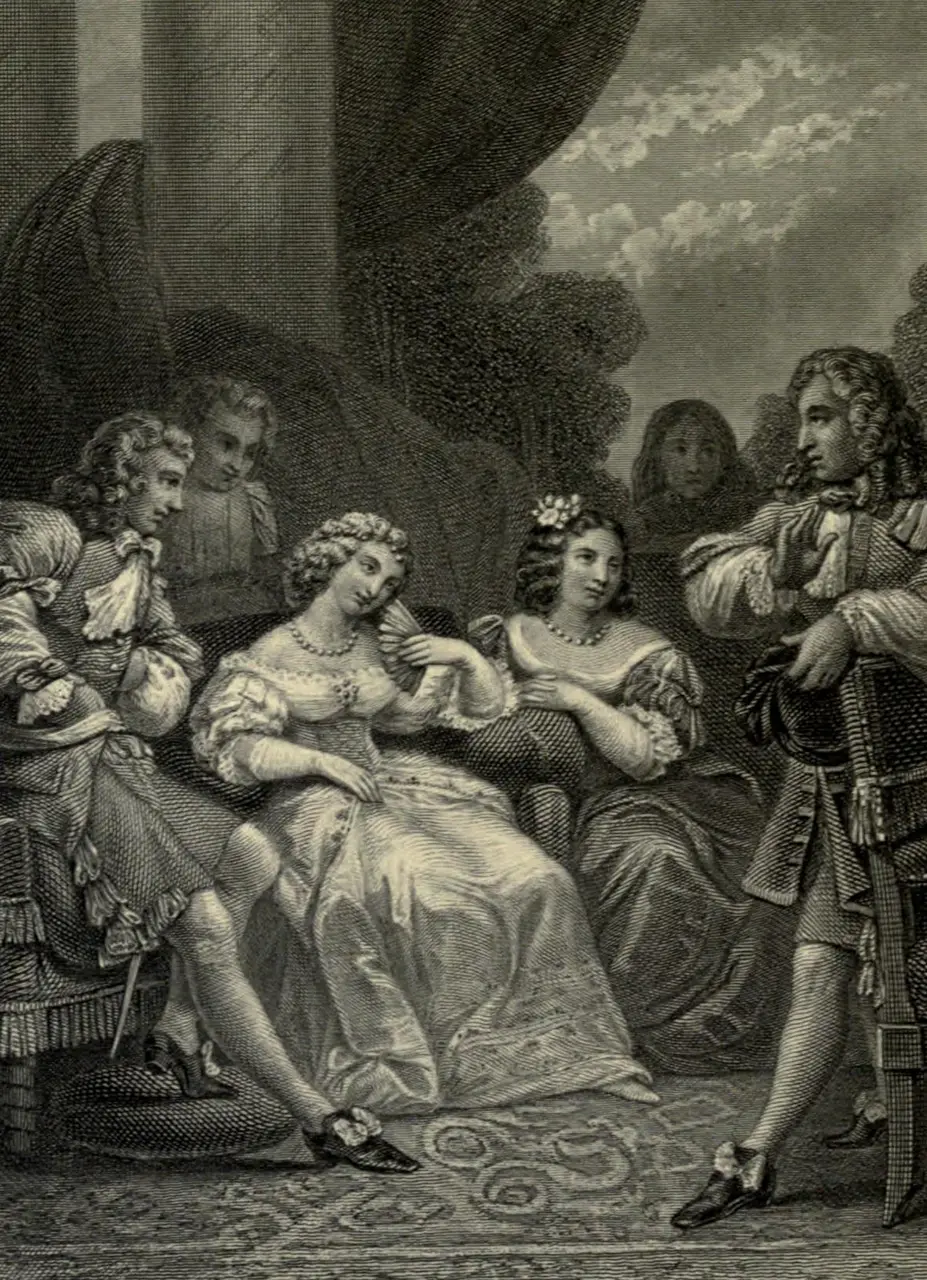
Act 1, Scene 1
What is the matter? What ails you?
[Seated] Leave me, I pray.
But, once more, tell me what strange whim . . .
Leave me, I tell you, and get out of my sight.
But you might at least listen to people, without getting angry.
I choose to get angry, and I do not choose to listen.
I do not understand you in these abrupt moods, and although we are friends, I am the first . . .
[Rising quickly] I, your friend? Lay not that flattering unction to your soul. I have until now professed to be so; but after what I have just seen of you, I tell you candidly that I am such no longer; I have no wish to occupy a place in a corrupt heart.
I am then very much to be blamed from your point of view, Alceste?
To be blamed? You ought to die from very shame; there is no excuse for such behaviour, and every man of honour must be disgusted at it. I see you almost stifle a man with caresses, show him the most ardent affection, and overwhelm him with protestations, offers, and vows of friendship. Your ebullitions of tenderness know no bounds; and when I ask you who that man is, you can scarcely tell me his name; your feelings for him, the moment you have turned your back, suddenly cool; you speak of him most indifferently to me. Zounds! I call it unworthy, base, and infamous, so far to demean one's self as to act contrary to one's own feelings, and if, unfortunately, I had done such a thing, I should go that very instant, and hang myself out of sheer vexation.
I do not see that it is a hanging matter at all; and I beg of you not to think it amiss if I ask you to show me some mercy, for I shall not hang myself, if it be all the same to you.
That is a sorry joke.
But, seriously, what would you have people do?
I would have people be sincere, and that, like men of honour, no word be spoken that comes not from the heart.
When a man comes and embraces you warmly, you must pay him back in his own coin, respond as best you can to his show of feeling, and return offer for offer, and vow for vow.
Not so. I cannot bear so base a method, which your fashionable people generally affect; there is nothing I detest so much as the contortions of these great time-and-lip servers, these affable dispensers of meaningless embraces, these obliging utterers of empty words, who vie with every one in civilities, and treat the man of worth and the fop alike. What good does it do if a man heaps endearments on you, vows that he is your friend, that he believes in you, is full of zeal for you, esteems and loves you, and lauds you to the skies, when he rushes to do the same to the first rapscallion he meets? No, no, no heart with the least self-respect cares for esteem so prostituted; he will hardly relish it, even when openly expressed, when he finds that he shares it with the whole universe. Preference must be based on esteem, and to esteem every one is to esteem no one. As you abandon yourself to the vices of the times, zounds! you are not the man for me. I decline this over-complaisant kindness, which uses no discrimination. I like to be distinguished; and, to cut the matter short, the friend of all mankind is no friend of mine.
More duologues for two men
 Brutus and Cassius: “That you have wrong'd me doth appear in this”Julius Caesar · 2 min 45 sec · Dramatic
 Falstaff and Hal: “Now, Hal, what time of day is it, lad?”Henry IV, Part 1 · 4 min 15 sec · Comic
 Antipholus and Dromio: “She is spherical, like a globe”The Comedy of Errors · 4 min 45 sec · Comic
 Algernon and Jack: “How are you, my dear Ernest?”The Importance of Being Earnest · 4 min · Comic