
Duologue from The Impostures of Scapin by Molière
Argante and Scapin: “Can you put an old head on young shoulders”
Argante is home to find his son married without his consent.
- 3 min 30 sec
- Comic
- Argante: Man, 55 to 70
- Scapin: Man, 25 to 40
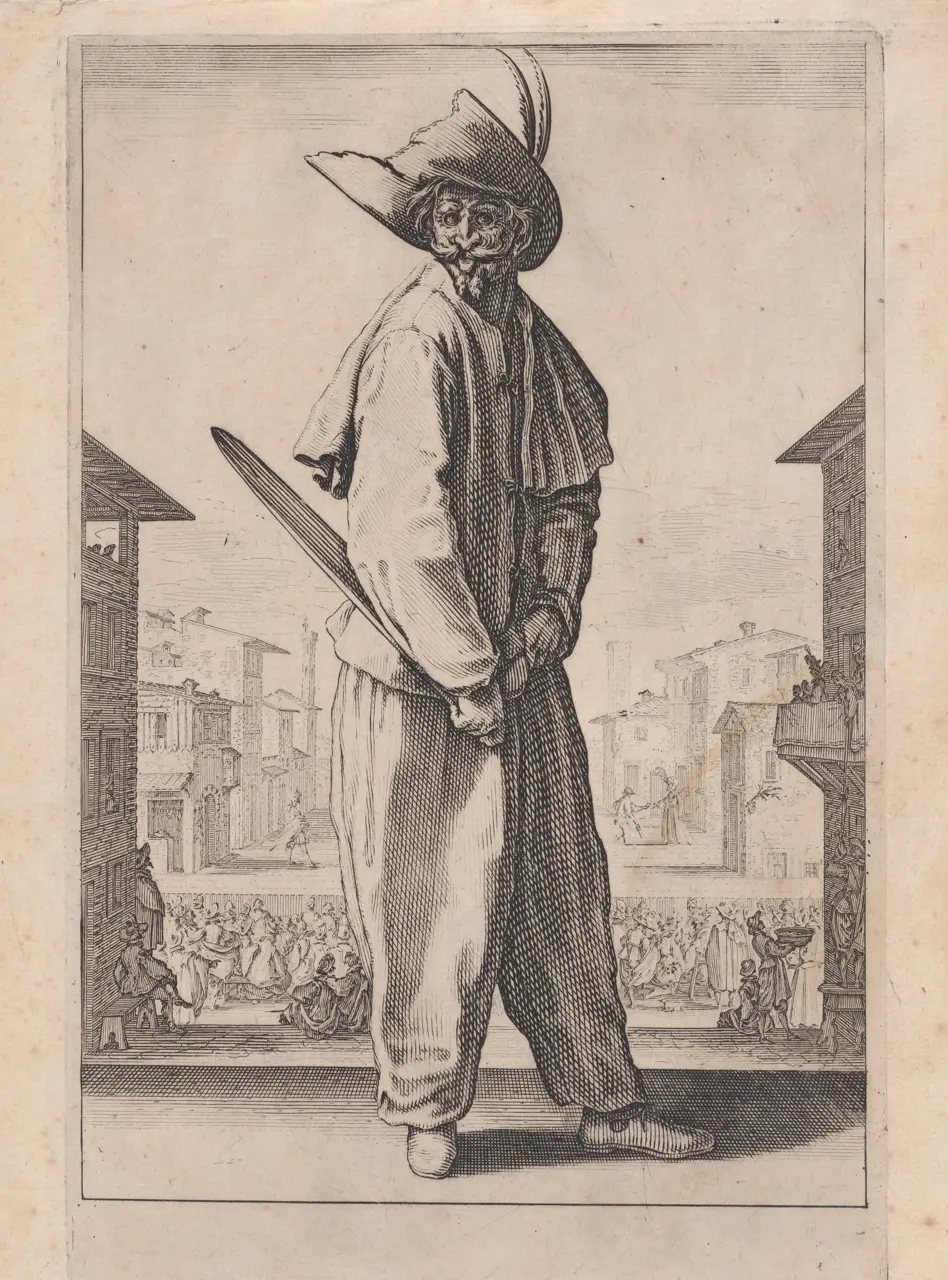
Act 1, Scene 6
Have you not heard what has taken place during my absence?
Yes, I have heard some trifling thing.
How! Some trifling thing! Such an action as this?
You are about right.
Such a daring thing to do!
That's quite true.
To marry without his father's consent!
Yes, there is something to be said against it, but my opinion is that you should make no fuss about it.
This is your opinion, but not mine; and I will make as much fuss as I please. What! do you not think that I have every reason to be angry?
Quite so. I was angry myself when I first heard it; and I so far felt interested in your behalf that I rated your son well. Just ask him the fine sermons I gave him, and how I lectured him about the little respect he showed his father, whose very footsteps he ought to kiss. You could not yourself talk better to him. But what of that? I submitted to reason, and considered that, after all, he had done nothing so dreadful.
What are you telling me? He has done nothing so dreadful? When he goes and marries straight off a perfect stranger?
What can one do? he was urged to it by his destiny.
Oh, oh! You give me there a fine reason. One has nothing better to do now than to commit the greatest crime imaginable--to cheat, steal, and murder--and give for an excuse that we were urged to it by destiny.
Ah me! You take my words too much like a philosopher. I mean to say that he was fatally engaged in this affair.
And why did he engage in it?
Do you expect him to be as wise as you are? Can you put an old head on young shoulders, and expect young people to have all the prudence necessary to do nothing but what is reasonable? Just look at our Léandre, who, in spite of all my lessons, has done even worse than that. I should like to know whether you yourself were not young once, and have not played as many pranks as others? I have heard say that you were a sad fellow in your time, that you played the gallant among the most gallant of those days, and that you never gave in until you had gained your point.
It is true, I grant it; but I always confined myself to gallantry, and never went so far as to do what he has done.
But what was he to do? He sees a young person who wishes him well; for he inherits it from you that all women love him. He thinks her charming, goes to see her, makes love to her, sighs as lovers sigh, and does the passionate swain. She yields to his pressing visits; he pushes his fortune. But her relations catch him with her, and oblige him to marry her by main force.
More duologues for two men
 Brutus and Cassius: “That you have wrong'd me doth appear in this”Julius Caesar · 2 min 45 sec · Dramatic
 Falstaff and Hal: “Now, Hal, what time of day is it, lad?”Henry IV, Part 1 · 4 min 15 sec · Comic
 Antipholus and Dromio: “She is spherical, like a globe”The Comedy of Errors · 4 min 45 sec · Comic
 Algernon and Jack: “How are you, my dear Ernest?”The Importance of Being Earnest · 4 min · Comic