
Duologue from Hamlet by William Shakespeare
Hamlet and Ophelia: “Get thee to a nunnery”
Ophelia, sent by her father to return Hamlet's gifts while the King and Polonius listen in hiding, meets Hamlet. He turns on her.
- 4 min 15 sec
- Dramatic
- Ophelia: Woman, 16 to 24
- Hamlet: Man, 20 to 35
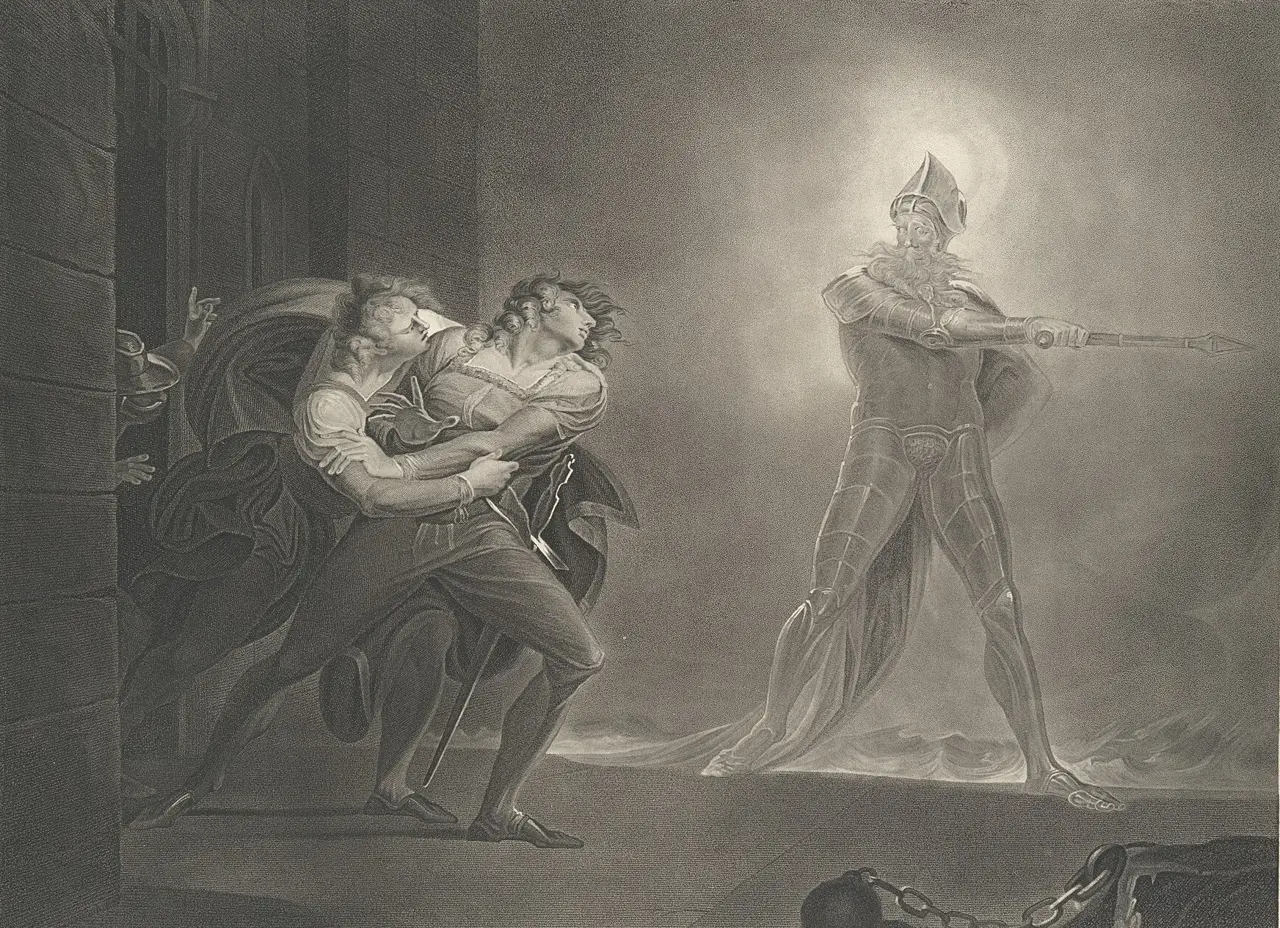

Act 3, Scene 1A room in the castle
Good my lord,
How does your honour for this many a day?
I humbly thank you; well, well, well.
My lord, I have remembrances of yours,
That I have longed long to re-deliver;
I pray you, now receive them.
No, not I;
I never gave you aught.
My honour'd lord, you know right well you did;
And, with them, words of so sweet breath composed
As made the things more rich: their perfume lost,
Take these again; for to the noble mind
Rich gifts wax poor when givers prove unkind.
There, my lord.
Ha, ha! are you honest?
My lord?
Are you fair?
What means your lordship?
That if you be honest and fair, your honesty should
admit no discourse to your beauty.
Could beauty, my lord, have better commerce than
with honesty?
Ay, truly; for the power of beauty will sooner
transform honesty from what it is to a bawd than the
force of honesty can translate beauty into his
likeness: this was sometime a paradox, but now the
time gives it proof. I did love you once.
Indeed, my lord, you made me believe so.
You should not have believed me; for virtue cannot
so inoculate our old stock but we shall relish of
it: I loved you not.
I was the more deceived.
Get thee to a nunnery: why wouldst thou be a
breeder of sinners? I am myself indifferent honest;
but yet I could accuse me of such things that it
were better my mother had not borne me: I am very
proud, revengeful, ambitious, with more offences at
my beck than I have thoughts to put them in,
imagination to give them shape, or time to act them
in. What should such fellows as I do crawling
between earth and heaven? We are arrant knaves,
all; believe none of us. Go thy ways to a nunnery.
Where's your father?
At home, my lord.
Let the doors be shut upon him, that he may play the
fool no where but in's own house. Farewell.
O, help him, you sweet heavens!
If thou dost marry, I'll give thee this plague for
thy dowry: be thou as chaste as ice, as pure as
snow, thou shalt not escape calumny. Get thee to a
nunnery, go: farewell. Or, if thou wilt needs
marry, marry a fool; for wise men know well enough
what monsters you make of them. To a nunnery, go,
and quickly too. Farewell.
O heavenly powers, restore him!
I have heard of your paintings too, well enough; God
has given you one face, and you make yourselves
another: you jig, you amble, and you lisp, and
nick-name God's creatures, and make your wantonness
your ignorance. Go to, I'll no more on't; it hath
made me mad. I say, we will have no more marriages:
those that are married already, all but one, shall
live; the rest shall keep as they are. To a
nunnery, go.
Exit
O, what a noble mind is here o'erthrown!
The courtier's, soldier's, scholar's, eye, tongue, sword;
The expectancy and rose of the fair state,
The glass of fashion and the mould of form,
The observed of all observers, quite, quite down!
And I, of ladies most deject and wretched,
That suck'd the honey of his music vows,
Now see that noble and most sovereign reason,
Like sweet bells jangled, out of tune and harsh;
That unmatch'd form and feature of blown youth
Blasted with ecstasy: O, woe is me,
To have seen what I have seen, see what I see!
More duologues for a woman and a man
 Romeo and Juliet: “Thou know'st the mask of night is on my face”Romeo and Juliet · 3 min 15 sec · Dramatic
 Beatrice and Benedick: “Kill Claudio”Much Ado About Nothing · 4 min 15 sec · Comic
 Orsino and Viola: “She never told her love”Twelfth Night · 2 min 45 sec · Dramatic
 Macbeth and Lady Macbeth: “We will proceed no further in this business”Macbeth · 3 min 15 sec · Dramatic