
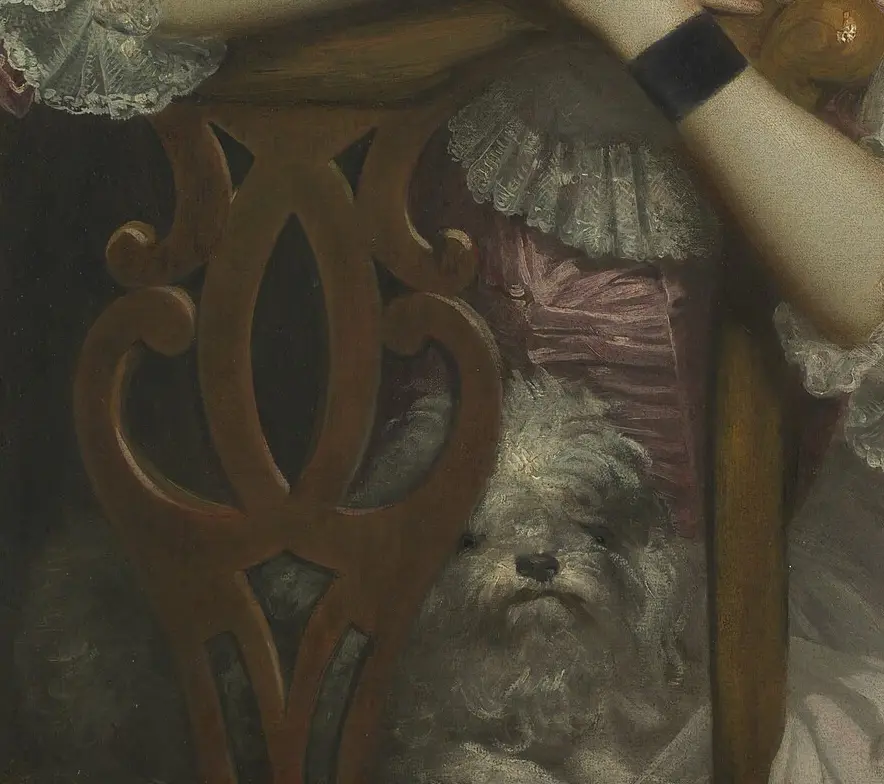
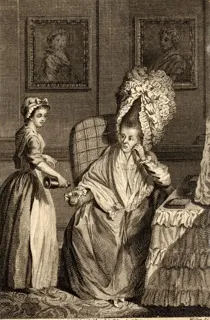
 The Way of the Worldby William CongreveTwo witty lovers set the terms of their marriage while her aunt and a pair of blackmailers stand in the way.
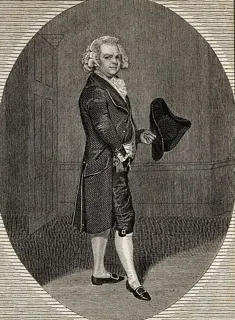 The Double-Dealerby William CongreveA villain who deceives by telling the truth plays everyone against a young man on the eve of his wedding.

Act 1, Scene 1
VALENTINE in his chamber reading. JEREMY waiting
Several books upon the table.
Jeremy.
Sir?
Here, take away. I’ll walk a turn and digest what I have read.
You’ll grow devilish fat upon this paper diet. [Aside, and taking away the books]
And d’ye hear, go you to breakfast. There’s a page doubled down in Epictetus, that is a feast for an emperor.
Was Epictetus a real cook, or did he only write receipts?
Read, read, sirrah, and refine your appetite; learn to live upon instruction; feast your mind and mortify your flesh; read, and take your nourishment in at your eyes; shut up your mouth, and chew the cud of understanding. So Epictetus advises.
O Lord! I have heard much of him, when I waited upon a gentleman at Cambridge. Pray what was that Epictetus?
A very rich man.—Not worth a groat.
Humph, and so he has made a very fine feast, where there is nothing to be eaten?
Yes.
Sir, you’re a gentleman, and probably understand this fine feeding: but if you please, I had rather be at board wages. Does your Epictetus, or your Seneca here, or any of these poor rich rogues, teach you how to pay your debts without money? Will they shut up the mouths of your creditors? Will Plato be bail for you? Or Diogenes, because he understands confinement, and lived in a tub, go to prison for you? ’Slife, sir, what do you mean, to mew yourself up here with three or four musty books, in commendation of starving and poverty?
Why, sirrah, I have no money, you know it; and therefore resolve to rail at all that have. And in that I but follow the examples of the wisest and wittiest men in all ages, these poets and philosophers whom you naturally hate, for just such another reason; because they abound in sense, and you are a fool.
Ay, sir, I am a fool, I know it: and yet, heaven help me, I’m poor enough to be a wit. But I was always a fool when I told you what your expenses would bring you to; your coaches and your liveries; your treats and your balls; your being in love with a lady that did not care a farthing for you in your prosperity; and keeping company with wits that cared for nothing but your prosperity; and now, when you are poor, hate you as much as they do one another.
Well, and now I am poor I have an opportunity to be revenged on them all. I’ll pursue Angelica with more love than ever, and appear more notoriously her admirer in this restraint, than when I openly rivalled the rich fops that made court to her. So shall my poverty be a mortification to her pride, and, perhaps, make her compassionate the love which has principally reduced me to this lowness of fortune. And for the wits, I’m sure I am in a condition to be even with them.
Nay, your condition is pretty even with theirs, that’s the truth on’t.
I’ll take some of their trade out of their hands.
Now heaven of mercy continue the tax upon paper. You don’t mean to write?
Yes, I do. I’ll write a play.
Hem! Sir, if you please to give me a small certificate of three lines—only to certify those whom it may concern, that the bearer hereof, Jeremy Fetch by name, has for the space of seven years truly and faithfully served Valentine Legend, Esq., and that he is not now turned away for any misdemeanour, but does voluntarily dismiss his master from any future authority over him—
No, sirrah; you shall live with me still.
Sir, it’s impossible. I may die with you, starve with you, or be damned with your works. But to live, even three days, the life of a play, I no more expect it than to be canonised for a muse after my decease.
You are witty, you rogue. I shall want your help. I’ll have you learn to make couplets to tag the ends of acts. D’ye hear? Get the maids to Crambo in an evening, and learn the knack of rhyming: you may arrive at the height of a song sent by an unknown hand, or a chocolate-house lampoon.
But, sir, is this the way to recover your father’s favour? Why, Sir Sampson will be irreconcilable. If your younger brother should come from sea, he’d never look upon you again. You’re undone, sir; you’re ruined; you won’t have a friend left in the world if you turn poet. Ah, pox confound that Will’s coffee-house: it has ruined more young men than the Royal Oak lottery. Nothing thrives that belongs to’t. The man of the house would have been an alderman by this time, with half the trade, if he had set up in the city. For my part, I never sit at the door that I don’t get double the stomach that I do at a horse race. The air upon Banstead-Downs is nothing to it for a whetter; yet I never see it, but the spirit of famine appears to me, sometimes like a decayed porter, worn out with pimping, and carrying billet doux and songs: not like other porters, for hire, but for the jests’ sake. Now like a thin chairman, melted down to half his proportion, with carrying a poet upon tick, to visit some great fortune; and his fare to be paid him like the wages of sin, either at the day of marriage, or the day of death.
Very well, sir; can you proceed?
Sometimes like a bilked bookseller, with a meagre terrified countenance, that looks as if he had written for himself, or were resolved to turn author, and bring the rest of his brethren into the same condition. And lastly, in the form of a worn-out punk, with verses in her hand, which her vanity had preferred to settlements, without a whole tatter to her tail, but as ragged as one of the muses; or as if she were carrying her linen to the paper-mill, to be converted into folio books of warning to all young maids, not to prefer poetry to good sense, or lying in the arms of a needy wit, before the embraces of a wealthy fool.
What, Jeremy holding forth?
The rogue has [with all the wit he could muster up] been declaiming against wit.
Ay? Why, then, I’m afraid Jeremy has wit: for wherever it is, it’s always contriving its own ruin.
Why, so I have been telling my master, sir: Mr. Scandal, for heaven’s sake, sir, try if you can dissuade him from turning poet.
Poet! He shall turn soldier first, and rather depend upon the outside of his head than the lining. Why, what the devil, has not your poverty made you enemies enough? Must you needs shew your wit to get more?
Ay, more indeed: for who cares for anybody that has more wit than himself?
Jeremy speaks like an oracle. Don’t you see how worthless great men and dull rich rogues avoid a witty man of small fortune? Why, he looks like a writ of enquiry into their titles and estates, and seems commissioned by heaven to seize hte better half.
Therefore I would rail in my writings, and be revenged.
Rail? At whom? The whole world? Impotent and vain! Who would die a martyr to sense in a country where the religion is folly? You may stand at bay for a while; but when the full cry is against you, you shan’t have fair play for your life. If you can’t be fairly run down by the hounds, you will be treacherously shot by the huntsmen. No, turn pimp, flatterer, quack, lawyer, parson, be chaplain to an atheist, or stallion to an old woman, anything but poet. A modern poet is worse, more servile, timorous, and fawning, than any I have named: without you could retrieve the ancient honours of the name, recall the stage of Athens, and be allowed the force of open honest satire.
You are as inveterate against our poets as if your character had been lately exposed upon the stage. Nay, I am not violently bent upon the trade. [One knocks] Jeremy, see who’s there. [JER. goes to the door] But tell me what you would have me do? What do the world say of me, and my forced confinement?
The world behaves itself as it uses to do on such occasions; some pity you, and condemn your father; others excuse him, and blame you; only the ladies are merciful, and wish you well, since love and pleasurable expense have been your greatest faults.
How now?
Nothing new, sir; I have despatched some half a dozen duns with as much dexterity as a hungry judge does causes at dinner-time.
What answer have you given ’em?
Patience, I suppose, the old receipt.
No, faith, sir; I have put ’em off so long with patience and forbearance, and other fair words, that I was forced now to tell ’em in plain downright English—
What?
That they should be paid.
When?
To-morrow.
And how the devil do you mean to keep your word?
Keep it? Not at all; it has been so very much stretched that I reckon it will break of course by to-morrow, and nobody be surprised at the matter. [Knocking] Again! Sir, if you don’t like my negotiation, will you be pleased to answer these yourself?
See who they are.
By this, Scandal, you may see what it is to be great; secretaries of state, presidents of the council, and generals of an army lead just such a life as I do; have just such crowds of visitants in a morning, all soliciting of past promises; which are but a civiller sort of duns, that lay claim to voluntary debts.
And you, like a true great man, having engaged their attendance, and promised more than ever you intended to perform, are more perplexed to find evasions than you would be to invent the honest means of keeping your word, and gratifying your creditors.
Scandal, learn to spare your friends, and do not provoke your enemies; this liberty of your tongue will one day bring a confinement on your body, my friend.
O sir, there’s Trapland the scrivener, with two suspicious fellows like lawful pads, that would knock a man down with pocket-tipstaves. And there’s your father’s steward, and the nurse with one of your children from Twitnam.
Pox on her, could she find no other time to fling my sins in my face? Here, give her this, [gives money] and bid her trouble me no more; a thoughtless two-handed whore, she knows my condition well enough, and might have overlaid the child a fortnight ago, if she had had any forecast in her.
What, is it bouncing Margery, with my godson?
Yes, sir.
My blessing to the boy, with this token [gives money] of my love. And d’ye hear, bid Margery put more flocks in her bed, shift twice a week, and not work so hard, that she may not smell so vigorously. I shall take the air shortly.
Scandal, don’t spoil my boy’s milk. Bid Trapland come in. If I can give that Cerberus a sop, I shall be at rest for one day.
Oh, Mr. Trapland! My old friend! Welcome. Jeremy, a chair quickly: a bottle of sack and a toast—fly—a chair first.
A good morning to you, Mr. Valentine, and to you, Mr. Scandal.
The morning’s a very good morning, if you don’t spoil it.
Come, sit you down, you know his way.
[sits] There is a debt, Mr. Valentine, of £1500 of pretty long standing—
I cannot talk about business with a thirsty palate. Sirrah, the sack.
And I desire to know what course you have taken for the payment?
Faith and troth, I am heartily glad to see you. My service to you. Fill, fill to honest Mr. Trapland—fuller.
Hold, sweetheart: this is not to our business. My service to you, Mr. Scandal. [Drinks] I have forborne as long—
T’other glass, and then we’ll talk. Fill, Jeremy.
No more, in truth. I have forborne, I say—
Sirrah, fill when I bid you. And how does your handsome daughter? Come, a good husband to her. [Drinks]
Thank you. I have been out of this money—
Drink first. Scandal, why do you not drink? [They drink]
And, in short, I can be put off no longer.
I was much obliged to you for your supply. It did me signal service in my necessity. But you delight in doing good. Scandal, drink to me, my friend Trapland’s health. An honester man lives not, nor one more ready to serve his friend in distress: though I say it to his face. Come, fill each man his glass.
What, I know Trapland has been a whoremaster, and loves a wench still. You never knew a whoremaster that was not an honest fellow.
Fie, Mr. Scandal, you never knew—
What don’t I know? I know the buxom black widow in the Poultry. £800 a year jointure, and £20,000 in money. Aha! old Trap.
Say you so, i’faith? Come, we’ll remember the widow. I know whereabouts you are; come, to the widow—
No more, indeed.
What, the widow’s health; give it him—off with it. [They drink] A lovely girl, i’faith, black sparkling eyes, soft pouting ruby lips! Better sealing there than a bond for a million, ha?
No, no, there’s no such thing; we’d better mind our business. You’re a wag.
No, faith, we’ll mind the widow’s business: fill again. Pretty round heaving breasts, a Barbary shape, and a jut with her bum would stir an anchoret: and the prettiest foot! Oh, if a man could but fasten his eyes to her feet as they steal in and out, and play at bo-peep under her petticoats, ah! Mr. Trapland?
Verily, give me a glass. You’re a wag,—and here’s to the widow. [Drinks]
He begins to chuckle; ply him close, or he’ll relapse into a dun.
By your leave, gentlemen: Mr. Trapland, if we must do our office, tell us. We have half a dozen gentlemen to arrest in Pall Mall and Covent Garden; and if we don’t make haste the chairmen will be abroad, and block up the chocolate-houses, and then our labour’s lost.
Udso that’s true: Mr. Valentine, I love mirth, but business must be done. Are you ready to—
Sir, your father’s steward says he comes to make proposals concerning your debts.
Bid him come in: Mr. Trapland, send away your officer; you shall have an answer presently.
Mr. Snap, stay within call.
STEWARD who whispers VALENTINE.
Here’s a dog now, a traitor in his wine: sirrah, refund the sack.—Jeremy, fetch him some warm water, or I’ll rip up his stomach, and go the shortest way to his conscience.
Mr. Scandal, you are uncivil; I did not value your sack; but you cannot expect it again when I have drunk it.
And how do you expect to have your money again when a gentleman has spent it?
You need say no more, I understand the conditions; they are very hard, but my necessity is very pressing: I agree to ’em. Take Mr. Trapland with you, and let him draw the writing. Mr. Trapland, you know this man: he shall satisfy you.
Sincerely, I am loth to be thus pressing, but my necessity—
No apology, good Mr. Scrivener, you shall be paid.
I hope you forgive me; my business requires—
He begs pardon like a hangman at an execution.
But I have got a reprieve.
I am surprised; what, does your father relent?
No; he has sent me the hardest conditions in the world. You have heard of a booby brother of mine that was sent to sea three years ago? This brother, my father hears, is landed; whereupon he very affectionately sends me word; if I will make a deed of conveyance of my right to his estate, after his death, to my younger brother, he will immediately furnish me with four thousand pounds to pay my debts and make my fortune. This was once proposed before, and I refused it; but the present impatience of my creditors for their money, and my own impatience of confinement, and absence from Angelica, force me to consent.
A very desperate demonstration of your love to Angelica; and I think she has never given you any assurance of hers.
You know her temper; she never gave me any great reason either for hope or despair.
Women of her airy temper, as they seldom think before they act, so they rarely give us any light to guess at what they mean. But you have little reason to believe that a woman of this age, who has had an indifference for you in your prosperity, will fall in love with your ill-fortune; besides, Angelica has a great fortune of her own; and great fortunes either expect another great fortune, or a fool.
More misfortunes, sir.
What, another dun?
No, sir, but Mr. Tattle is come to wait upon you.
Well, I can’t help it, you must bring him up; he knows I don’t go abroad.
Pox on him, I’ll be gone.
No, prithee stay: Tattle and you should never be asunder; you are light and shadow, and show one another; he is perfectly thy reverse both in humour and understanding; and as you set up for defamation, he is a mender of reputations.
A mender of reputations! Ay, just as he is a keeper of secrets, another virtue that he sets up for in the same manner. For the rogue will speak aloud in the posture of a whisper, and deny a woman’s name while he gives you the marks of her person. He will forswear receiving a letter from her, and at the same time show you her hand in the superscription: and yet perhaps he has counterfeited the hand too, and sworn to a truth; but he hopes not to be believed, and refuses the reputation of a lady’s favour, as a Doctor says no to a Bishopric only that it may be granted him. In short, he is public professor of secrecy, and makes proclamation that he holds private intelligence.—He’s here.
Valentine, good morrow; Scandal, I am yours:—that is, when you speak well of me.
That is, when I am yours; for while I am my own, or anybody’s else, that will never happen.
How inhuman!
Why Tattle, you need not be much concerned at anything that he says: for to converse with Scandal, is to play at losing loadum; you must lose a good name to him before you can win it for yourself.
But how barbarous that is, and how unfortunate for him, that the world shall think the better of any person for his calumniation! I thank heaven, it has always been a part of my character to handle the reputations of others very tenderly indeed.
Ay, such rotten reputations as you have to deal with are to be handled tenderly indeed.
Nay, but why rotten? Why should you say rotten, when you know not the persons of whom you speak? How cruel that is!
Not know ’em? Why, thou never had’st to do with anybody that did not stink to all the town.
Ha, ha, ha; nay, now you make a jest of it indeed. For there is nothing more known than that nobody knows anything of that nature of me. As I hope to be saved, Valentine, I never exposed a woman, since I knew what woman was.
And yet you have conversed with several.
To be free with you, I have. I don’t care if I own that. Nay more [I’m going to say a bold word now] I never could meddle with a woman that had to do with anybody else.
How?
Nay faith, I’m apt to believe him. Except her husband, Tattle.
Oh, that—
What think you of that noble commoner, Mrs. Drab?
Pooh, I know Madam Drab has made her brags in three or four places, that I said this and that, and writ to her, and did I know not what—but, upon my reputation, she did me wrong—well, well, that was malice—but I know the bottom of it. She was bribed to that by one we all know—a man too. Only to bring me into disgrace with a certain woman of quality—
Whom we all know.
No matter for that. Yes, yes, everybody knows. No doubt on’t, everybody knows my secrets. But I soon satisfied the lady of my innocence; for I told her: Madam, says I, there are some persons who make it their business to tell stories, and say this and that of one and t’other, and everything in the world; and, says I, if your grace—
Grace!
O Lord, what have I said? My unlucky tongue!
Ha, ha, ha.
Why, Tattle, thou hast more impudence than one can in reason expect: I shall have an esteem for thee, well, and, ha, ha, ha, well, go on, and what did you say to her grace?
I confess this is something extraordinary.
Not a word, as I hope to be saved; an errant lapsus linguæ. Come, let’s talk of something else.
Well, but how did you acquit yourself?
Pooh, pooh, nothing at all; I only rallied with you—a woman of ordinary rank was a little jealous of me, and I told her something or other, faith I know not what.—Come, let’s talk of something else. [Hums a song]
Hang him, let him alone, he has a mind we should enquire.
Valentine, I supped last night with your mistress, and her uncle, old Foresight: I think your father lies at Foresight’s.
Yes.
Upon my soul, Angelica’s a fine woman. And so is Mrs. Foresight, and her sister, Mrs. Frail.
Yes, Mrs. Frail is a very fine woman, we all know her.
Oh, that is not fair.
What?
To tell.
To tell what? Why, what do you know of Mrs. Frail?
Who, I? Upon honour I don’t know whether she be man or woman, but by the smoothness of her chin and roundness of her hips.
No?
No.
She says otherwise.
Impossible!
Yes, faith. Ask Valentine else.
Why then, as I hope to be saved, I believe a woman only obliges a man to secrecy that she may have the pleasure of telling herself.
No doubt on’t. Well, but has she done you wrong, or no? You have had her? Ha?
Though I have more honour than to tell first, I have more manners than to contradict what a lady has declared.
Well, you own it?
I am strangely surprised! Yes, yes, I can’t deny’t if she taxes me with it.
She’ll be here by and by, she sees Valentine every morning.
How?
She does me the favour, I mean, of a visit sometimes. I did not think she had granted more to anybody.
Nor I, faith. But Tattle does not use to bely a lady; it is contrary to his character. How one may be deceived in a woman, Valentine?
Nay, what do you mean, gentlemen?
I’m resolved I’ll ask her.
O barbarous! Why did you not tell me?
No; you told us.
And bid me ask Valentine?
What did I say? I hope you won’t bring me to confess an answer when you never asked me the question?
But, gentlemen, this is the most inhuman proceeding—
Nay, if you have known Scandal thus long, and cannot avoid such a palpable decoy as this was, the ladies have a fine time whose reputations are in your keeping.
Sir, Mrs. Frail has sent to know if you are stirring.
Show her up when she comes.
I’ll be gone.
You’ll meet her.
Is there not a back way?
If there were, you have more discretion than to give Scandal such an advantage. Why, your running away will prove all that he can tell her.
Scandal, you will not be so ungenerous. Oh, I shall lose my reputation of secrecy for ever. I shall never be received but upon public days, and my visits will never be admitted beyond a drawing-room. I shall never see a bed-chamber again, never be locked in a closet, nor run behind a screen, or under a table: never be distinguished among the waiting-women by the name of trusty Mr. Tattle more. You will not be so cruel?
Scandal, have pity on him; he’ll yield to any conditions.
Any, any terms.
Come, then, sacrifice half a dozen women of good reputation to me presently. Come, where are you familiar? And see that they are women of quality, too—the first quality.
’Tis very hard. Won’t a baronet’s lady pass?
No, nothing under a right honourable.
Oh, inhuman! You don’t expect their names?
No, their titles shall serve.
Alas, that’s the same thing. Pray spare me their titles. I’ll describe their persons.
Well, begin then; but take notice, if you are so ill a painter that I cannot know the person by your picture of her, you must be condemned, like other bad painters, to write the name at the bottom.
Well, first then—
Oh, unfortunate! She’s come already; will you have patience till another time? I’ll double the number.
Well, on that condition. Take heed you don’t fail me.
I shall get a fine reputation by coming to see fellows in a morning. Scandal, you devil, are you here too? Oh, Mr. Tattle, everything is safe with you, we know.
Tattle—
Mum. O madam, you do me too much honour.
Well, Lady Galloper, how does Angelica?
Angelica? Manners!
What, you will allow an absent lover—
No, I’ll allow a lover present with his mistress to be particular; but otherwise, I think his passion ought to give place to his manners.
But what if he has more passion than manners?
Then let him marry and reform.
Marriage indeed may qualify the fury of his passion, but it very rarely mends a man’s manners.
You are the most mistaken in the world; there is no creature perfectly civil but a husband. For in a little time he grows only rude to his wife, and that is the highest good breeding, for it begets his civility to other people. Well, I’ll tell you news; but I suppose you hear your brother Benjamin is landed? And my brother Foresight’s daughter is come out of the country: I assure you, there’s a match talked of by the old people. Well, if he be but as great a sea-beast as she is a land-monster, we shall have a most amphibious breed. The progeny will be all otters. He has been bred at sea, and she has never been out of the country.
Pox take ’em, their conjunction bodes me no good, I’m sure.
Now you talk of conjunction, my brother Foresight has cast both their nativities, and prognosticates an admiral and an eminent justice of the peace to be the issue male of their two bodies; ’tis the most superstitious old fool! He would have persuaded me that this was an unlucky day, and would not let me come abroad. But I invented a dream, and sent him to Artimedorus for interpretation, and so stole out to see you. Well, and what will you give me now? Come, I must have something.
Step into the next room, and I’ll give you something.
Ay, we’ll all give you something.
Well, what will you all give me?
Mine’s a secret.
I thought you would give me something that would be a trouble to you to keep.
And Scandal shall give you a good name.
That’s more than he has for himself. And what will you give me, Mr. Tattle?
I? My soul, madam.
Pooh! No, I thank you, I have enough to do to take care of my own. Well, but I’ll come and see you one of these mornings. I hear you have a great many pictures.
I have a pretty good collection, at your service, some originals.
Hang him, he has nothing but the Seasons and the Twelve Cæsars—paltry copies—and the Five Senses, as ill-represented as they are in himself, and he himself is the only original you will see there.
Ay, but I hear he has a closet of beauties.
Yes; all that have done him favours, if you will believe him.
Ay, let me see those, Mr. Tattle.
Oh, madam, those are sacred to love and contemplation. No man but the painter and myself was ever blest with the sight.
Well, but a woman—
Nor woman, till she consented to have her picture there too—for then she’s obliged to keep the secret.
No, no; come to me if you’d see pictures.
You?
Yes, faith; I can shew you your own picture, and most of your acquaintance to the life, and as like as at Kneller’s.
O lying creature! Valentine, does not he lie? I can’t believe a word he says.
No indeed, he speaks truth now. For as Tattle has pictures of all that have granted him favours, he has the pictures of all that have refused him: if satires, descriptions, characters, and lampoons are pictures.
Yes; mine are most in black and white. And yet there are some set out in their true colours, both men and women. I can shew you pride, folly, affectation, wantonness, inconstancy, covetousness, dissimulation, malice and ignorance, all in one piece. Then I can shew you lying, foppery, vanity, cowardice, bragging, lechery, impotence, and ugliness in another piece; and yet one of these is a celebrated beauty, and t’other a professed beau. I have paintings too, some pleasant enough.
Come, let’s hear ’em.
Why, I have a beau in a bagnio, cupping for a complexion, and sweating for a shape.
So.
Then I have a lady burning brandy in a cellar with a hackney coachman.
O devil! Well, but that story is not true.
I have some hieroglyphics too; I have a lawyer with a hundred hands, two heads, and but one face; a divine with two faces, and one head; and I have a soldier with his brains in his belly, and his heart where his head should be.
And no head?
No head.
Pooh, this is all invention. Have you never a poet?
Yes, I have a poet weighing words, and selling praise for praise, and a critic picking his pocket. I have another large piece too, representing a school, where there are huge proportioned critics, with long wigs, laced coats, Steinkirk cravats, and terrible faces; with cat-calls in their hands, and horn-books about their necks. I have many more of this kind, very well painted, as you shall see.
Well, I’ll come, if it be but to disprove you.
Sir, here’s the steward again from your father.
I’ll come to him—will you give me leave? I’ll wait on you again presently.
No; I’ll be gone. Come, who squires me to the Exchange? I must call my sister Foresight there.
I will: I have a mind to your sister.
Civil!
I will: because I have a tendre for your ladyship.
That’s somewhat the better reason, to my opinion.
Well, if Tattle entertains you, I have the better opportunity to engage your sister.
Tell Angelica I am about making hard conditions to come abroad, and be at liberty to see her.
I’ll give an account of you and your proceedings. If indiscretion be a sign of love, you are the most a lover of anybody that I know: you fancy that parting with your estate will help you to your mistress. In my mind he is a thoughtless adventurer
Who hopes to purchase wealth by selling land;
Or win a mistress with a losing hand.
Act 2, Scene 1
A room in FORESIGHT’S house
FORESIGHT and SERVANT.
Hey day! What, are all the women of my family abroad? Is not my wife come home? Nor my sister, nor my daughter?
No, sir.
Mercy on us, what can be the meaning of it? Sure the moon is in all her fortitudes. Is my niece Angelica at home?
Yes, sir.
I believe you lie, sir.
Sir?
I say you lie, sir. It is impossible that anything should be as I would have it; for I was born, sir, when the crab was ascending, and all my affairs go backward.
I can’t tell indeed, sir.
No, I know you can’t, sir: but I can tell, and foretell, sir.
Nurse, where’s your young mistress?
Wee’st heart, I know not, they’re none of ’em come home yet. Poor child, I warrant she’s fond o’ seeing the town. Marry, pray heaven they ha’ given her any dinner. Good lack-a-day, ha, ha, ha, Oh, strange! I’ll vow and swear now, ha, ha, ha, marry, and did you ever see the like!
Why, how now, what’s the matter?
Pray heaven send your worship good luck, marry, and amen with all my heart, for you have put on one stocking with the wrong side outward.
Ha, how? Faith and troth I’m glad of it; and so I have: that may be good luck in troth, in troth it may, very good luck. Nay, I have had some omens: I got out of bed backwards too this morning, without premeditation; pretty good that too; but then I stumbled coming down stairs, and met a weasel; bad omens those: some bad, some good, our lives are chequered. Mirth and sorrow, want and plenty, night and day, make up our time. But in troth I am pleased at my stocking; very well pleased at my stocking. Oh, here’s my niece! Sirrah, go tell Sir Sampson Legend I’ll wait on him if he’s at leisure:—’tis now three o’clock, a very good hour for business: Mercury governs this hour.
Is it not a good hour for pleasure too, uncle? Pray lend me your coach; mine’s out of order.
What, would you be gadding too? Sure, all females are mad to-day. It is of evil portent, and bodes mischief to the master of a family. I remember an old prophecy written by Messahalah the Arabian, and thus translated by a reverend Buckinghamshire bard:—
‘When housewives all the house forsake,
And leave goodman to brew and bake,
Withouten guile, then be it said,
That house doth stand upon its head;
And when the head is set in grond,
Ne marl, if it be fruitful fond.’
Fruitful, the head fruitful, that bodes horns; the fruit of the head is horns. Dear niece, stay at home—for by the head of the house is meant the husband; the prophecy needs no explanation.
Well, but I can neither make you a cuckold, uncle, by going abroad, nor secure you from being one by staying at home.
Yes, yes; while there’s one woman left, the prophecy is not in full force.
But my inclinations are in force; I have a mind to go abroad, and if you won’t lend me your coach, I’ll take a hackney or a chair, and leave you to erect a scheme, and find who’s in conjunction with your wife. Why don’t you keep her at home, if you’re jealous of her when she’s abroad? You know my aunt is a little retrograde [as you call it] in her nature. Uncle, I’m afraid you are not lord of the ascendant, ha, ha, ha!
Well, Jill-flirt, you are very pert, and always ridiculing that celestial science.
Nay, uncle, don’t be angry—if you are, I’ll reap up all your false prophecies, ridiculous dreams, and idle divinations. I’ll swear you are a nuisance to the neighbourhood. What a bustle did you keep against the last invisible eclipse, laying in provision as ’twere for a siege. What a world of fire and candle, matches and tinder-boxes did you purchase! One would have thought we were ever after to live under ground, or at least making a voyage to Greenland, to inhabit there all the dark season.
Why, you malapert slut—
Will you lend me your coach, or I’ll go on—nay, I’ll declare how you prophesied popery was coming only because the butler had mislaid some of the apostle spoons, and thought they were lost. Away went religion and spoon-meat together. Indeed, uncle, I’ll indite you for a wizard.
How, hussy! Was there ever such a provoking minx?
O merciful father, how she talks!
Yes, I can make oath of your unlawful midnight practices, you and the old nurse there—
Marry, heaven defend! I at midnight practices? O Lord, what’s here to do? I in unlawful doings with my master’s worship—why, did you ever hear the like now? Sir, did ever I do anything of your midnight concerns but warm your bed, and tuck you up, and set the candle and your tobacco-box and your urinal by you, and now and then rub the soles of your feet? O Lord, I!
Yes, I saw you together through the key-hole of the closet one night, like Saul and the witch of Endor, turning the sieve and shears, and pricking your thumbs, to write poor innocent servants’ names in blood, about a little nutmeg grater which she had forgot in the caudle-cup. Nay, I know something worse, if I would speak of it.
I defy you, hussy; but I’ll remember this, I’ll be revenged on you, cockatrice. I’ll hamper you. You have your fortune in your own hands, but I’ll find a way to make your lover, your prodigal spendthrift gallant, Valentine, pay for all, I will.
Will you? I care not, but all shall out then. Look to it, nurse: I can bring witness that you have a great unnatural teat under your left arm, and he another; and that you suckle a young devil in the shape of a tabby-cat, by turns, I can.
A teat, a teat—I an unnatural teat! Oh, the false, slanderous thing; feel, feel here, if I have anything but like another Christian. [Crying]
I will have patience, since it is the will of the stars I should be thus tormented. This is the effect of the malicious conjunctions and oppositions in the third house of my nativity; there the curse of kindred was foretold. But I will have my doors locked up;—I’ll punish you: not a man shall enter my house.
Do, uncle, lock ’em up quickly before my aunt come home. You’ll have a letter for alimony to-morrow morning. But let me be gone first, and then let no mankind come near the house, but converse with spirits and the celestial signs, the bull and the ram and the goat. Bless me! There are a great many horned beasts among the twelve signs, uncle. But cuckolds go to heaven.
But there’s but one virgin among the twelve signs, spitfire, but one virgin.
Nor there had not been that one, if she had had to do with anything but astrologers, uncle. That makes my aunt go abroad.
How, how? Is that the reason? Come, you know something; tell me and I’ll forgive you. Do, good niece. Come, you shall have my coach and horses—faith and troth you shall. Does my wife complain? Come, I know women tell one another. She is young and sanguine, has a wanton hazel eye, and was born under Gemini, which may incline her to society. She has a mole upon her lip, with a moist palm, and an open liberality on the mount of Venus.
Ha, ha, ha!
Do you laugh? Well, gentlewoman, I’ll—but come, be a good girl, don’t perplex your poor uncle, tell me—won’t you speak? Odd, I’ll—
Sir Sampson is coming down to wait upon you.
Good-bye, uncle—call me a chair. I’ll find out my aunt, and tell her she must not come home.
I’m so perplexed and vexed, I’m not fit to receive him; I shall scarce recover myself before the hour be past. Go nurse, tell Sir Sampson I’m ready to wait on him.
Yes, sir,
Well—why, if I was born to be a cuckold, there’s no more to be said—he’s here already.
Nor no more to be done, old boy; that’s plain—here ’tis, I have it in my hand, old Ptolomey, I’ll make the ungracious prodigal know who begat him; I will, old Nostrodamus. What, I warrant my son thought nothing belonged to a father but forgiveness and affection; no authority, no correction, no arbitrary power; nothing to be done, but for him to offend and me to pardon. I warrant you, if he danced till doomsday he thought I was to pay the piper. Well, but here it is under black and white, signatum, sigillatum, and deliberatum; that as soon as my son Benjamin is arrived, he’s to make over to him his right of inheritance. Where’s my daughter that is to be?—Hah! old Merlin! body o’ me, I’m so glad I’m revenged on this undutiful rogue.
Odso, let me see; let me see the paper. Ay, faith and troth, here ’tis, if it will but hold. I wish things were done, and the conveyance made. When was this signed, what hour? Odso, you should have consulted me for the time. Well, but we’ll make haste—
Haste, ay, ay; haste enough. My son Ben will be in town to-night. I have ordered my lawyer to draw up writings of settlement and jointure—all shall be done to-night. No matter for the time; prithee, brother Foresight, leave superstition. Pox o’ the time; there’s no time but the time present, there’s no more to be said of what’s past, and all that is to come will happen. If the sun shine by day, and the stars by night, why, we shall know one another’s faces without the help of a candle, and that’s all the stars are good for.
How, how? Sir Sampson, that all? Give me leave to contradict you, and tell you you are ignorant.
I tell you I am wise; and sapiens dominabitur astris; there’s Latin for you to prove it, and an argument to confound your Ephemeris.—Ignorant! I tell you, I have travelled old Fircu, and know the globe. I have seen the antipodes, where the sun rises at midnight, and sets at noon-day.
But I tell you, I have travelled, and travelled in the celestial spheres, know the signs and the planets, and their houses. Can judge of motions direct and retrograde, of sextiles, quadrates, trines and oppositions, fiery-trigons and aquatical-trigons. Know whether life shall be long or short, happy or unhappy, whether diseases are curable or incurable. If journeys shall be prosperous, undertakings successful, or goods stolen recovered; I know—
I know the length of the Emperor of China’s foot; have kissed the Great Mogul’s slippers, and rid a-hunting upon an elephant with a Cham of Tartary. Body o’ me, I have made a cuckold of a king, and the present majesty of Bantam is the issue of these loins.
I know when travellers lie or speak truth, when they don’t know it themselves.
I have known an astrologer made a cuckold in the twinkling of a star; and seen a conjurer that could not keep the devil out of his wife’s circle.
What, does he twit me with my wife too? I must be better informed of this. [Aside] Do you mean my wife, Sir Sampson? Though you made a cuckold of the king of Bantam, yet by the body of the sun—
By the horns of the moon, you would say, brother Capricorn.
Capricorn in your teeth, thou modern Mandeville; Ferdinand Mendez Pinto was but a type of thee, thou liar of the first magnitude. Take back your paper of inheritance; send your son to sea again. I’ll wed my daughter to an Egyptian mummy, e’er she shall incorporate with a contemner of sciences, and a defamer of virtue.
Body o’ me, I have gone too far; I must not provoke honest Albumazar:—an Egyptian mummy is an illustrious creature, my trusty hieroglyphic; and may have significations of futurity about him; odsbud, I would my son were an Egyptian mummy for thy sake. What, thou art not angry for a jest, my good Haly? I reverence the sun, moon and stars with all my heart. What, I’ll make thee a present of a mummy: now I think on’t, body o’ me, I have a shoulder of an Egyptian king that I purloined from one of the pyramids, powdered with hieroglyphics, thou shalt have it brought home to thy house, and make an entertainment for all the philomaths, and students in physic and astrology in and about London.
But what do you know of my wife, Sir Sampson?
Thy wife is a constellation of virtues; she’s the moon, and thou art the man in the moon. Nay, she is more illustrious than the moon; for she has her chastity without her inconstancy: ’sbud I was but in jest.
How now, who sent for you? Ha! What would you have?
Nay, if you were but in jest—who’s that fellow? I don’t like his physiognomy.
My son, sir; what son, sir? My son Benjamin, hoh?
No, sir, Mr. Valentine, my master; ’tis the first time he has been abroad since his confinement, and he comes to pay his duty to you.
Well, sir.
He is here, sir.
Your blessing, sir.
You’ve had it already, sir; I think I sent it you to-day in a bill of four thousand pound: a great deal of money, brother Foresight.
Ay, indeed, Sir Sampson, a great deal of money for a young man; I wonder what he can do with it!
Body o’ me, so do I. Hark ye, Valentine, if there be too much, refund the superfluity; dost hear, boy?
Superfluity, sir? It will scarce pay my debts. I hope you will have more indulgence than to oblige me to those hard conditions which my necessity signed to.
Sir, how, I beseech you, what were you pleased to intimate, concerning indulgence?
Why, sir, that you would not go to the extremity of the conditions, but release me at least from some part.
Oh, sir, I understand you—that’s all, ha?
Yes, sir, all that I presume to ask. But what you, out of fatherly fondness, will be pleased to add, shall be doubly welcome.
No doubt of it, sweet sir; but your filial piety, and my fatherly fondness would fit like two tallies. Here’s a rogue, brother Foresight, makes a bargain under hand and seal in the morning, and would be released from it in the afternoon; here’s a rogue, dog, here’s conscience and honesty; this is your wit now, this is the morality of your wits! You are a wit, and have been a beau, and may be a—why sirrah, is it not here under hand and seal—can you deny it?
Sir, I don’t deny it.
Sirrah, you’ll be hanged; I shall live to see you go up Holborn Hill. Has he not a rogue’s face? Speak brother, you understand physiognomy, a hanging look to me—of all my boys the most unlike me; he has a damned Tyburn face, without the benefit o’ the clergy.
Hum—truly I don’t care to discourage a young man,—he has a violent death in his face; but I hope no danger of hanging.
Sir, is this usage for your son?—For that old weather-headed fool, I know how to laugh at him; but you, sir—
You, sir; and you, sir: why, who are you, sir?
Your son, sir.
That’s more than I know, sir, and I believe not.
Faith, I hope not.
What, would you have your mother a whore? Did you ever hear the like? Did you ever hear the like? Body o’ me—
I would have an excuse for your barbarity and unnatural usage.
Excuse! Impudence! Why, sirrah, mayn’t I do what I please? Are not you my slave? Did not I beget you? And might not I have chosen whether I would have begot you or no? ’Oons, who are you? Whence came you? What brought you into the world? How came you here, sir? Here, to stand here, upon those two legs, and look erect with that audacious face, ha? Answer me that! Did you come a volunteer into the world? Or did I, with the lawful authority of a parent, press you to the service?
I know no more why I came than you do why you called me. But here I am, and if you don’t mean to provide for me, I desire you would leave me as you found me.
With all my heart: come, uncase, strip, and go naked out of the world as you came into ’t.
My clothes are soon put off. But you must also divest me of reason, thought, passions, inclinations, affections, appetites, senses, and the huge train of attendants that you begot along with me.
Body o’ me, what a manyheaded monster have I propagated!
I am of myself, a plain, easy, simple creature, and to be kept at small expense; but the retinue that you gave me are craving and invincible; they are so many devils that you have raised, and will have employment.
’Oons, what had I to do to get children,—can’t a private man be born without all these followers? Why, nothing under an emperor should be born with appetites. Why, at this rate, a fellow that has but a groat in his pocket may have a stomach capable of a ten shilling ordinary.
Nay, that’s as clear as the sun; I’ll make oath of it before any justice in Middlesex.
Here’s a cormorant too. ’S’heart this fellow was not born with you? I did not beget him, did I?
By the provision that’s made for me, you might have begot me too. Nay, and to tell your worship another truth, I believe you did, for I find I was born with those same whoreson appetites too, that my master speaks of.
Why, look you there, now. I’ll maintain it, that by the rule of right reason, this fellow ought to have been born without a palate. ’S’heart, what should he do with a distinguishing taste? I warrant now he’d rather eat a pheasant, than a piece of poor John; and smell, now, why I warrant he can smell, and loves perfumes above a stink. Why there’s it; and music, don’t you love music, scoundrel?
Yes; I have a reasonable good ear, sir, as to jigs and country dances, and the like; I don’t much matter your solos or sonatas, they give me the spleen.
The spleen, ha, ha, ha; a pox confound you—solos or sonatas? ’Oons, whose son are you? How were you engendered, muckworm?
I am by my father, the son of a chair-man; my mother sold oysters in winter, and cucumbers in summer; and I came upstairs into the world; for I was born in a cellar.
By your looks, you should go upstairs out of the world too, friend.
And if this rogue were anatomized now, and dissected, he has his vessels of digestion and concoction, and so forth, large enough for the inside of a cardinal, this son of a cucumber.—These things are unaccountable and unreasonable. Body o’ me, why was not I a bear, that my cubs might have lived upon sucking their paws? Nature has been provident only to bears and spiders; the one has its nutriment in his own hands; and t’other spins his habitation out of his own entrails.
Fortune was provident enough to supply all the necessities of my nature, if I had my right of inheritance.
Again! ’Oons, han’t you four thousand pounds? If I had it again, I would not give thee a groat.—What, would’st thou have me turn pelican, and feed thee out of my own vitals? S’heart, live by your wits: you were always fond of the wits, now let’s see, if you have wit enough to keep yourself. Your brother will be in town to-night or to-morrow morning, and then look you perform covenants, and so your friend and servant:—come, brother Foresight.
I told you what your visit would come to.
’Tis as much as I expected. I did not come to see him, I came to see Angelica: but since she was gone abroad, it was easily turned another way, and at least looked well on my side. What’s here? Mrs. Foresight and Mrs. Frail, they are earnest. I’ll avoid ’em. Come this way, and go and enquire when Angelica will return.
What have you to do to watch me? ’S’life I’ll do what I please.
You will?
Yes, marry will I. A great piece of business to go to Covent Garden Square in a hackney coach, and take a turn with one’s friend.
Nay, two or three turns, I’ll take my oath.
Well, what if I took twenty—I warrant if you had been there, it had been only innocent recreation. Lord, where’s the comfort of this life if we can’t have the happiness of conversing where we like?
But can’t you converse at home? I own it, I think there’s no happiness like conversing with an agreeable man; I don’t quarrel at that, nor I don’t think but your conversation was very innocent; but the place is public, and to be seen with a man in a hackney coach is scandalous. What if anybody else should have seen you alight, as I did? How can anybody be happy while they’re in perpetual fear of being seen and censured? Besides, it would not only reflect upon you, sister, but me.
Pooh, here’s a clutter: why should it reflect upon you? I don’t doubt but you have thought yourself happy in a hackney coach before now. If I had gone to Knight’s Bridge, or to Chelsea, or to Spring Garden, or Barn Elms with a man alone, something might have been said.
Why, was I ever in any of those places? What do you mean, sister?
Was I? What do you mean?
You have been at a worse place.
I at a worse place, and with a man!
I suppose you would not go alone to the World’s End.
The World’s End! What, do you mean to banter me?
Poor innocent! You don’t know that there’s a place called the World’s End? I’ll swear you can keep your countenance purely: you’d make an admirable player.
I’ll swear you have a great deal of confidence, and in my mind too much for the stage.
Very well, that will appear who has most; you never were at the World’s End?
No.
You deny it positively to my face?
Your face, what’s your face?
No matter for that, it’s as good a face as yours.
Not by a dozen years’ wearing. But I do deny it positively to your face, then.
I’ll allow you now to find fault with my face; for I’ll swear your impudence has put me out of countenance. But look you here now, where did you lose this gold bodkin? Oh, sister, sister!
My bodkin!
Nay, ’tis yours, look at it.
Well, if you go to that, where did you find this bodkin? Oh, sister, sister! Sister every way.
Oh, devil on’t, that I could not discover her without betraying myself. [Aside]
I have heard gentlemen say, sister, that one should take great care, when one makes a thrust in fencing, not to lie open oneself.
It’s very true, sister. Well, since all’s out, and as you say, since we are both wounded, let us do what is often done in duels, take care of one another, and grow better friends than before.
With all my heart: ours are but slight flesh wounds, and if we keep ’em from air, not at all dangerous. Well, give me your hand in token of sisterly secrecy and affection.
Here ’tis, with all my heart.
Well, as an earnest of friendship and confidence, I’ll acquaint you with a design that I have. To tell truth, and speak openly one to another, I’m afraid the world have observed us more than we have observed one another. You have a rich husband, and are provided for. I am at a loss, and have no great stock either of fortune or reputation, and therefore must look sharply about me. Sir Sampson has a son that is expected to-night, and by the account I have heard of his education, can be no conjurer. The estate you know is to be made over to him. Now if I could wheedle him, sister, ha? You understand me?
I do, and will help you to the utmost of my power. And I can tell you one thing that falls out luckily enough; my awkward daughter-in-law, who you know is designed to be his wife, is grown fond of Mr. Tattle; now if we can improve that, and make her have an aversion for the booby, it may go a great way towards his liking you. Here they come together; and let us contrive some way or other to leave ’em together.
Mother, mother, mother, look you here!
Fie, fie, Miss, how you bawl! Besides, I have told you, you must not call me mother.
What must I call you then, are you not my father’s wife?
Madam; you must say madam. By my soul, I shall fancy myself old indeed to have this great girl call me mother. Well, but Miss, what are you so overjoyed at?
Look you here, madam, then, what Mr. Tattle has given me. Look you here, cousin, here’s a snuff-box; nay, there’s snuff in’t. Here, will you have any? Oh, good! How sweet it is. Mr. Tattle is all over sweet, his peruke is sweet, and his gloves are sweet, and his handkerchief is sweet, pure sweet, sweeter than roses. Smell him, mother—madam, I mean. He gave me this ring for a kiss.
O fie, Miss, you must not kiss and tell.
Yes; I may tell my mother. And he says he’ll give me something to make me smell so. Oh, pray lend me your handkerchief. Smell, cousin; he says he’ll give me something that will make my smocks smell this way. Is not it pure? It’s better than lavender, mun. I’m resolved I won’t let nurse put any more lavender among my smocks—ha, cousin?
Fie, Miss; amongst your linen, you must say. You must never say smock.
Why, it is not bawdy, is it, cousin?
Oh, madam; you are too severe upon Miss; you must not find fault with her pretty simplicity: it becomes her strangely. Pretty Miss, don’t let ’em persuade you out of your innocency.
Oh, demm you toad. I wish you don’t persuade her out of her innocency.
Who, I, madam? O Lord, how can your ladyship have such a thought? Sure, you don’t know me.
Ah devil, sly devil. He’s as close, sister, as a confessor. He thinks we don’t observe him.
A cunning cur, how soon he could find out a fresh, harmless creature; and left us, sister, presently.
Upon reputation
They’re all so, sister, these men. They love to have the spoiling of a young thing, they are as fond of it, as of being first in the fashion, or of seeing a new play the first day. I warrant it would break Mr. Tattle’s heart to think that anybody else should be beforehand with him.
O Lord, I swear I would not for the world—
O hang you; who’ll believe you? You’d be hanged before you’d confess. We know you—she’s very pretty! Lord, what pure red and white!—she looks so wholesome; ne’er stir: I don’t know, but I fancy, if I were a man—
How you love to jeer one, cousin.
Hark’ee, sister, by my soul the girl is spoiled already. D’ee think she’ll ever endure a great lubberly tarpaulin? Gad, I warrant you she won’t let him come near her after Mr. Tattle.
O my soul, I’m afraid not—eh!—filthy creature, that smells all of pitch and tar. Devil take you, you confounded toad—why did you see her before she was married?
Nay, why did we let him—my husband will hang us. He’ll think we brought ’em acquainted.
Come, faith, let us be gone. If my brother Foresight should find us with them, he’d think so, sure enough.
So he would—but then leaving them together is as bad: and he’s such a sly devil, he’ll never miss an opportunity.
I don’t care; I won’t be seen in’t.
Well, if you should, Mr. Tattle, you’ll have a world to answer for; remember I wash my hands of it. I’m thoroughly innocent.
What makes ’em go away, Mr. Tattle? What do they mean, do you know?
Yes my dear; I think I can guess, but hang me if I know the reason of it.
Come, must not we go too?
No, no, they don’t mean that.
No! What then? What shall you and I do together?
I must make love to you, pretty Miss; will you let me make love to you?
Yes, if you please.
Frank, i’Gad, at least. What a pox does Mrs. Foresight mean by this civility? Is it to make a fool of me? Or does she leave us together out of good morality, and do as she would be done by?—Gad, I’ll understand it so. [Aside]
Well; and how will you make love to me—come, I long to have you begin,—must I make love too? You must tell me how.
You must let me speak, Miss, you must not speak first; I must ask you questions, and you must answer.
What, is it like the catechism? Come then, ask me.
D’ye think you can love me?
Yes.
Pooh, pox, you must not say yes already; I shan’t care a farthing for you then in a twinkling.
What must I say then?
Why you must say no, or you believe not, or you can’t tell—
Why, must I tell a lie then?
Yes, if you’d be well bred. All well bred persons lie.—Besides, you are a woman, you must never speak what you think: your words must contradict your thoughts; but your actions may contradict your words. So when I ask you if you can love me, you must say no, but you must love me too. If I tell you you are handsome, you must deny it, and say I flatter you. But you must think yourself more charming than I speak you: and like me, for the beauty which I say you have, as much as if I had it myself. If I ask you to kiss me, you must be angry, but you must not refuse me. If I ask you for more, you must be more angry,—but more complying; and as soon as ever I make you say you’ll cry out, you must be sure to hold your tongue.
O Lord, I swear this is pure. I like it better than our old-fashioned country way of speaking one’s mind;—and must not you lie too?
Hum—yes—but you must believe I speak truth.
O Gemini! Well, I always had a great mind to tell lies; but they frighted me, and said it was a sin.
Well, my pretty creature; will you make me happy by giving me a kiss?
No, indeed; I’m angry at you. [Runs and kisses him]
Hold, hold, that’s pretty well, but you should not have given it me, but have suffered me to have taken it.
Well, we’ll do it again.
With all my heart.—Now then, my little angel. [Kisses her]
Pish.
That’s right,—again, my charmer. [Kisses again]
O fie, nay, now I can’t abide you.
Admirable! That was as well as if you had been born and bred in Covent Garden. And won’t you shew me, pretty miss, where your bed-chamber is?
No, indeed won’t I; but I’ll run there, and hide myself from you behind the curtains.
I’ll follow you.
Ah, but I’ll hold the door with both hands, and be angry;—and you shall push me down before you come in.
No, I’ll come in first, and push you down afterwards.
Will you? Then I’ll be more angry and more complying.
Then I’ll make you cry out.
Oh, but you shan’t, for I’ll hold my tongue.
O my dear apt scholar!
Well, now I’ll run and make more haste than you.
You shall not fly so fast, as I’ll pursue.
Act 3, Scene 1
NURSE alone
Miss, Miss, Miss Prue! Mercy on me, marry and amen. Why, what’s become of the child? Why Miss, Miss Foresight! Sure she has locked herself up in her chamber, and gone to sleep, or to prayers: Miss, Miss,—I hear her.—Come to your father, child; open the door. Open the door, Miss. I hear you cry husht. O Lord, who’s there? [peeps] What’s here to do? O the Father! A man with her! Why, miss, I say; God’s my life, here’s fine doings towards—O Lord, we’re all undone. O you young harlotry [knocks]. Od’s my life, won’t you open the door? I’ll come in the back way.
O Lord, she’s coming, and she’ll tell my father; what shall I do now?
Pox take her; if she had stayed two minutes longer, I should have wished for her coming.
O dear, what shall I say? Tell me, Mr. Tattle, tell me a lie.
There’s no occasion for a lie; I could never tell a lie to no purpose. But since we have done nothing, we must say nothing, I think. I hear her,—I’ll leave you together, and come off as you can. [Thrusts her in, and shuts the door]
You can’t accuse me of inconstancy; I never told you that I loved you.
But I can accuse you of uncertainty, for not telling me whether you did or not.
You mistake indifference for uncertainty; I never had concern enough to ask myself the question.
Nor good-nature enough to answer him that did ask you; I’ll say that for you, madam.
What, are you setting up for good-nature?
Only for the affectation of it, as the women do for ill-nature.
Persuade your friend that it is all affectation.
I shall receive no benefit from the opinion; for I know no effectual difference between continued affectation and reality.
[coming up]. Scandal, are you in private discourse? Anything of secrecy? [Aside to SCANDAL]
Yes, but I dare trust you; we were talking of Angelica’s love to Valentine. You won’t speak of it.
No, no, not a syllable. I know that’s a secret, for it’s whispered everywhere.
Ha, ha, ha!
What is, Mr. Tattle? I heard you say something was whispered everywhere.
Your love of Valentine.
How!
No, madam, his love for your ladyship. Gad take me, I beg your pardon,—for I never heard a word of your ladyship’s passion till this instant.
My passion! And who told you of my passion, pray sir?
Why, is the devil in you? Did not I tell it you for a secret?
Gadso; but I thought she might have been trusted with her own affairs.
Is that your discretion? Trust a woman with herself?
You say true, I beg your pardon. I’ll bring all off. It was impossible, madam, for me to imagine that a person of your ladyship’s wit and gallantry could have so long received the passionate addresses of the accomplished Valentine, and yet remain insensible; therefore you will pardon me, if, from a just weight of his merit, with your ladyship’s good judgment, I formed the balance of a reciprocal affection.
O the devil, what damned costive poet has given thee this lesson of fustian to get by rote?
I dare swear you wrong him, it is his own. And Mr. Tattle only judges of the success of others, from the effects of his own merit. For certainly Mr. Tattle was never denied anything in his life.
O Lord! Yes, indeed, madam, several times.
I swear I don’t think ’tis possible.
Yes, I vow and swear I have; Lord, madam, I’m the most unfortunate man in the world, and the most cruelly used by the ladies.
Nay, now you’re ungrateful.
No, I hope not, ’tis as much ingratitude to own some favours as to conceal others.
There, now it’s out.
I don’t understand you now. I thought you had never asked anything but what a lady might modestly grant, and you confess.
So faith, your business is done here; now you may go brag somewhere else.
Brag! O heavens! Why, did I name anybody?
No; I suppose that is not in your power; but you would if you could, no doubt on’t.
Not in my power, madam! What, does your ladyship mean that I have no woman’s reputation in my power?
’Oons, why, you won’t own it, will you? [Aside]
Faith, madam, you’re in the right; no more I have, as I hope to be saved; I never had it in my power to say anything to a lady’s prejudice in my life. For as I was telling you, madam, I have been the most unsuccessful creature living, in things of that nature; and never had the good fortune to be trusted once with a lady’s secret, not once.
No?
Not once, I dare answer for him.
And I’ll answer for him; for I’m sure if he had, he would have told me; I find, madam, you don’t know Mr. Tattle.
No indeed, madam, you don’t know me at all, I find. For sure my intimate friends would have known—
Then it seems you would have told, if you had been trusted.
O pox, Scandal, that was too far put. Never have told particulars, madam. Perhaps I might have talked as of a third person; or have introduced an amour of my own, in conversation, by way of novel; but never have explained particulars.
But whence comes the reputation of Mr. Tattle’s secrecy, if he was never trusted?
Why, thence it arises—the thing is proverbially spoken; but may be applied to him—as if we should say in general terms, he only is secret who never was trusted; a satirical proverb upon our sex. There’s another upon yours—as she is chaste, who was never asked the question. That’s all.
A couple of very civil proverbs, truly. ’Tis hard to tell whether the lady or Mr. Tattle be the more obliged to you. For you found her virtue upon the backwardness of the men; and his secrecy upon the mistrust of the women.
Gad, it’s very true, madam, I think we are obliged to acquit ourselves. And for my part—but your ladyship is to speak first.
Am I? Well, I freely confess I have resisted a great deal of temptation.
And i’Gad, I have given some temptation that has not been resisted.
Good.
I cite Valentine here, to declare to the court, how fruitless he has found his endeavours, and to confess all his solicitations and my denials.
I am ready to plead not guilty for you; and guilty for myself.
So, why this is fair, here’s demonstration with a witness.
Well, my witnesses are not present. But I confess I have had favours from persons. But as the favours are numberless, so the persons are nameless.
Pooh, this proves nothing.
No? I can show letters, lockets, pictures, and rings; and if there be occasion for witnesses, I can summon the maids at the chocolate-houses, all the porters at Pall Mall and Covent Garden, the door-keepers at the Playhouse, the drawers at Locket’s, Pontack’s, the Rummer, Spring Garden, my own landlady and valet de chambre; all who shall make oath that I receive more letters than the Secretary’s office, and that I have more vizor-masks to enquire for me, than ever went to see the Hermaphrodite, or the Naked Prince. And it is notorious that in a country church once, an enquiry being made who I was, it was answered, I was the famous Tattle, who had ruined so many women.
It was there, I suppose, you got the nickname of the Great Turk.
True; I was called Turk-Tattle all over the parish. The next Sunday all the old women kept their daughters at home, and the parson had not half his congregation. He would have brought me into the spiritual court, but I was revenged upon him, for he had a handsome daughter whom I initiated into the science. But I repented it afterwards, for it was talked of in town. And a lady of quality that shall be nameless, in a raging fit of jealousy, came down in her coach and six horses, and exposed herself upon my account; Gad, I was sorry for it with all my heart. You know whom I mean—you know where we raffled—
Mum, Tattle.
’Sdeath, are not you ashamed?
O barbarous! I never heard so insolent a piece of vanity. Fie, Mr. Tattle; I’ll swear I could not have believed it. Is this your secrecy?
Gadso, the heat of my story carried me beyond my discretion, as the heat of the lady’s passion hurried her beyond her reputation. But I hope you don’t know whom I mean; for there was a great many ladies raffled. Pox on’t, now could I bite off my tongue.
No, don’t; for then you’ll tell us no more. Come, I’ll recommend a song to you upon the hint of my two proverbs, and I see one in the next room that will sing it. [Goes to the door]
For heaven’s sake, if you do guess, say nothing; Gad, I’m very unfortunate.
Pray sing the first song in the last new play.
SONG. Set by Mr. John Eccles.
A nymph and a swain to Apollo once prayed, The swain had been jilted, the nymph been betrayed: Their intent was to try if his oracle knew E’er a nymph that was chaste, or a swain that was true.
Apollo was mute, and had like t’have been posed, But sagely at length he this secret disclosed: He alone won’t betray in whom none will confide, And the nymph may be chaste that has never been tried.
Is Ben come? Odso, my son Ben come? Odd, I’m glad on’t. Where is he? I long to see him. Now, Mrs. Frail, you shall see my son Ben. Body o’ me, he’s the hopes of my family. I han’t seen him these three years—I warrant he’s grown. Call him in, bid him make haste. I’m ready to cry for joy.
Now Miss, you shall see your husband.
Pish, he shall be none of my husband. [Aside to Frail]
Hush. Well he shan’t; leave that to me. I’ll beckon Mr. Tattle to us.
Won’t you stay and see your brother?
We are the twin stars, and cannot shine in one sphere; when he rises I must set. Besides, if I should stay, I don’t know but my father in good nature may press me to the immediate signing the deed of conveyance of my estate; and I’ll defer it as long as I can. Well, you’ll come to a resolution.
I can’t. Resolution must come to me, or I shall never have one.
Come, Valentine, I’ll go with you; I’ve something in my head to communicate to you.
What, is my son Valentine gone? What, is he sneaked off, and would not see his brother? There’s an unnatural whelp! There’s an ill-natured dog! What, were you here too, madam, and could not keep him? Could neither love, nor duty, nor natural affection oblige him? Odsbud, madam, have no more to say to him, he is not worth your consideration. The rogue has not a drachm of generous love about him—all interest, all interest; he’s an undone scoundrel, and courts your estate: body o’ me, he does not care a doit for your person.
I’m pretty even with him, Sir Sampson; for if ever I could have liked anything in him, it should have been his estate too; but since that’s gone, the bait’s off, and the naked hook appears.
Odsbud, well spoken, and you are a wiser woman than I thought you were, for most young women now-a-days are to be tempted with a naked hook.
If I marry, Sir Sampson, I’m for a good estate with any man, and for any man with a good estate; therefore, if I were obliged to make a choice, I declare I’d rather have you than your son.
Faith and troth, you’re a wise woman, and I’m glad to hear you say so; I was afraid you were in love with the reprobate. Odd, I was sorry for you with all my heart. Hang him, mongrel, cast him off; you shall see the rogue show himself, and make love to some desponding Cadua of fourscore for sustenance. Odd, I love to see a young spendthrift forced to cling to an old woman for support, like ivy round a dead oak; faith I do, I love to see ’em hug and cotton together, like down upon a thistle.
Where’s father?
There, sir, his back’s toward you.
My son Ben! Bless thee, my dear body. Body o’ me, thou art heartily welcome.
Thank you, father, and I’m glad to see you.
Odsbud, and I’m glad to see thee; kiss me, boy, kiss me again and again, dear Ben. [Kisses him]
So, so, enough, father, Mess, I’d rather kiss these gentlewomen.
And so thou shalt. Mrs. Angelica, my son Ben.
Forsooth, if you please. [Salutes her] Nay, mistress, I’m not for dropping anchor here; about ship, i’faith. [Kisses Frail] Nay, and you too, my little cock-boat—so [Kisses Miss].
Sir, you’re welcome ashore.
Thank you, thank you, friend.
Thou hast been many a weary league, Ben, since I saw thee.
Ay, ay, been! Been far enough, an’ that be all. Well, father, and how do all at home? How does brother Dick, and brother Val?
Dick—body o’ me—Dick has been dead these two years. I writ you word when you were at Leghorn.
Mess, that’s true; marry! I had forgot. Dick’s dead, as you say. Well, and how? I have a many questions to ask you. Well, you ben’t married again, father, be you?
No; I intend you shall marry, Ben; I would not marry for thy sake.
Nay, what does that signify? An’ you marry again—why then, I’ll go to sea again, so there’s one for t’other, an’ that be all. Pray don’t let me be your hindrance—e’en marry a God’s name, an the wind sit that way. As for my part, mayhap I have no mind to marry.
That would be pity—such a handsome young gentleman.
Handsome! he, he, he! nay, forsooth, an you be for joking, I’ll joke with you, for I love my jest, an’ the ship were sinking, as we sayn at sea. But I’ll tell you why I don’t much stand towards matrimony. I love to roam about from port to port, and from land to land; I could never abide to be port-bound, as we call it. Now, a man that is married has, as it were, d’ye see, his feet in the bilboes, and mayhap mayn’t get them out again when he would.
Ben’s a wag.
A man that is married, d’ye see, is no more like another man than a galley-slave is like one of us free sailors; he is chained to an oar all his life, and mayhap forced to tug a leaky vessel into the bargain.
A very wag—Ben’s a very wag; only a little rough, he wants a little polishing.
Not at all; I like his humour mightily: it’s plain and honest—I should like such a humour in a husband extremely.
Say’n you so, forsooth? Marry, and I should like such a handsome gentlewoman for a bed-fellow hugely. How say you, mistress, would you like going to sea? Mess, you’re a tight vessel, an well rigged, an you were but as well manned.
I should not doubt that if you were master of me.
But I’ll tell you one thing, an you come to sea in a high wind, or that lady—you may’nt carry so much sail o’ your head—top and top gallant, by the mess.
No, why so?
Why, an you do, you may run the risk to be overset, and then you’ll carry your keels above water, he, he, he!
I swear, Mr. Benjamin is the veriest wag in nature—an absolute sea-wit.
Nay, Ben has parts, but as I told you before, they want a little polishing. You must not take anything ill, madam.
No, I hope the gentlewoman is not angry; I mean all in good part, for if I give a jest, I’ll take a jest, and so forsooth you may be as free with me.
I thank you, sir, I am not at all offended. But methinks, Sir Sampson, you should leave him alone with his mistress. Mr. Tattle, we must not hinder lovers.
Well, Miss, I have your promise. [Aside to Miss]
Body o’ me, madam, you say true. Look you, Ben, this is your mistress. Come, Miss, you must not be shame-faced; we’ll leave you together.
I can’t abide to be left alone; mayn’t my cousin stay with me?
No, no. Come, let’s away.
Look you, father, mayhap the young woman mayn’t take a liking to me.
I warrant thee, boy: come, come, we’ll be gone; I’ll venture that.
Come mistress, will you please to sit down? for an you stand a stern a that’n, we shall never grapple together. Come, I’ll haul a chair; there, an you please to sit, I’ll sit by you.
You need not sit so near one, if you have anything to say, I can hear you farther off, I an’t deaf.
Why that’s true, as you say, nor I an’t dumb, I can be heard as far as another,—I’ll heave off, to please you. [Sits farther off] An we were a league asunder, I’d undertake to hold discourse with you, an ’twere not a main high wind indeed, and full in my teeth. Look you, forsooth, I am, as it were, bound for the land of matrimony; ’tis a voyage, d’ye see, that was none of my seeking. I was commanded by father, and if you like of it, mayhap I may steer into your harbour. How say you, mistress? The short of the thing is, that if you like me, and I like you, we may chance to swing in a hammock together.
I don’t know what to say to you, nor I don’t care to speak with you at all.
No? I’m sorry for that. But pray why are you so scornful?
As long as one must not speak one’s mind, one had better not speak at all, I think, and truly I won’t tell a lie for the matter.
Nay, you say true in that, it’s but a folly to lie: for to speak one thing, and to think just the contrary way is, as it were, to look one way, and to row another. Now, for my part, d’ye see, I’m for carrying things above board, I’m not for keeping anything under hatches,—so that if you ben’t as willing as I, say so a God’s name: there’s no harm done; mayhap you may be shame-faced; some maidens thof they love a man well enough, yet they don’t care to tell’n so to’s face. If that’s the case, why, silence gives consent.
But I’m sure it is not so, for I’ll speak sooner than you should believe that; and I’ll speak truth, though one should always tell a lie to a man; and I don’t care, let my father do what he will; I’m too big to be whipt, so I’ll tell you plainly, I don’t like you, nor love you at all, nor never will, that’s more: so there’s your answer for you; and don’t trouble me no more, you ugly thing.
Look you, young woman, you may learn to give good words, however. I spoke you fair, d’ye see, and civil. As for your love or your liking, I don’t value it of a rope’s end; and mayhap I like you as little as you do me: what I said was in obedience to father. Gad, I fear a whipping no more than you do. But I tell you one thing, if you should give such language at sea, you’d have a cat o’ nine tails laid cross your shoulders. Flesh! who are you? You heard t’other handsome young woman speak civilly to me of her own accord. Whatever you think of yourself, gad, I don’t think you are any more to compare to her than a can of small-beer to a bowl of punch.
Well, and there’s a handsome gentleman, and a fine gentleman, and a sweet gentleman, that was here that loves me, and I love him; and if he sees you speak to me any more, he’ll thrash your jacket for you, he will, you great sea-calf.
What, do you mean that fair-weather spark that was here just now? Will he thrash my jacket? Let’n,—let’n. But an he comes near me, mayhap I may giv’n a salt eel for’s supper, for all that. What does father mean to leave me alone as soon as I come home with such a dirty dowdy? Sea-calf? I an’t calf enough to lick your chalked face, you cheese-curd you:—marry thee? Oons, I’ll marry a Lapland witch as soon, and live upon selling contrary winds and wrecked vessels.
I won’t be called names, nor I won’t be abused thus, so I won’t. If I were a man [cries]—you durst not talk at his rate. No, you durst not, you stinking tar-barrel.
They have quarrelled, just as we could wish.
Tar-barrel? Let your sweetheart there call me so, if he’ll take your part, your Tom Essence, and I’ll say something to him; gad, I’ll lace his musk-doublet for him, I’ll make him stink: he shall smell more like a weasel than a civet-cat, afore I ha’ done with ’en.
Bless me, what’s the matter, Miss? What, does she cry? Mr. Benjamin, what have you done to her?
Let her cry: the more she cries the less she’ll—she has been gathering foul weather in her mouth, and now it rains out at her eyes.
Come, Miss, come along with me, and tell me, poor child.
Lord, what shall we do? There’s my brother Foresight and Sir Sampson coming. Sister, do you take Miss down into the parlour, and I’ll carry Mr. Benjamin into my chamber, for they must not know that they are fallen out. Come, sir, will you venture yourself with me? [Looking kindly on him]
Venture, mess, and that I will, though ’twere to sea in a storm.
I left ’em together here; what, are they gone? Ben’s a brisk boy: he has got her into a corner; father’s own son, faith, he’ll touzle her, and mouzle her. The rogue’s sharp set, coming from sea; if he should not stay for saving grace, old Foresight, but fall to without the help of a parson, ha? Odd, if he should I could not be angry with him; ’twould be but like me, a chip of the old block. Ha! thou’rt melancholic, old Prognostication; as melancholic as if thou hadst spilt the salt, or pared thy nails on a Sunday. Come, cheer up, look about thee: look up, old stargazer. Now is he poring upon the ground for a crooked pin, or an old horse-nail, with the head towards him.
Sir Sampson, we’ll have the wedding to-morrow morning.
With all my heart.
At ten a’clock, punctually at ten.
To a minute, to a second; thou shalt set thy watch, and the bridegroom shall observe its motions; they shall be married to a minute, go to bed to a minute; and when the alarm strikes, they shall keep time like the figures of St. Dunstan’s clock, and consummatum est shall ring all over the parish.
Sir Sampson, sad news.
Bless us!
Why, what’s the matter?
Can’t you guess at what ought to afflict you and him, and all of us, more than anything else?
Body o’ me, I don’t know any universal grievance, but a new tax, or the loss of the Canary fleet. Unless popery should be landed in the West, or the French fleet were at anchor at Blackwall.
No. Undoubtedly, Mr. Foresight knew all this, and might have prevented it.
’Tis no earthquake!
No, not yet; nor whirlwind. But we don’t know what it may come to. But it has had a consequence already that touches us all.
Why, body o’ me, out with’t.
Something has appeared to your son Valentine. He’s gone to bed upon’t, and very ill. He speaks little, yet he says he has a world to say. Asks for his father and the wise Foresight; talks of Raymond Lully, and the ghost of Lilly. He has secrets to impart, I suppose, to you two. I can get nothing out of him but sighs. He desires he may see you in the morning, but would not be disturbed to-night, because he has some business to do in a dream.
Hoity toity, what have I to do with his dreams or his divination? Body o’ me, this is a trick to defer signing the conveyance. I warrant the devil will tell him in a dream that he must not part with his estate. But I’ll bring him a parson to tell him that the devil’s a liar:—or if that won’t do, I’ll bring a lawyer that shall out-lie the devil. And so I’ll try whether my blackguard or his shall get the better of the day.
Alas, Mr. Foresight, I’m afraid all is not right. You are a wise man, and a conscientious man, a searcher into obscurity and futurity, and if you commit an error, it is with a great deal of consideration, and discretion, and caution—
Ah, good Mr. Scandal—
Nay, nay, ’tis manifest; I do not flatter you. But Sir Sampson is hasty, very hasty. I’m afraid he is not scrupulous enough, Mr. Foresight. He has been wicked, and heav’n grant he may mean well in his affair with you. But my mind gives me, these things cannot be wholly insignificant. You are wise, and should not be over-reached, methinks you should not—
Alas, Mr. Scandal,—humanum est errare.
You say true, man will err; mere man will err—but you are something more. There have been wise men; but they were such as you, men who consulted the stars, and were observers of omens. Solomon was wise, but how?—by his judgment in astrology. So says Pineda in his third book and eighth chapter—
You are learned, Mr. Scandal.
A trifler—but a lover of art. And the Wise Men of the East owed their instruction to a star, which is rightly observed by Gregory the Great in favour of astrology. And Albertus Magnus makes it the most valuable science, because, says he, it teaches us to consider the causation of causes, in the causes of things.
I protest I honour you, Mr. Scandal. I did not think you had been read in these matters. Few young men are inclined—
I thank my stars that have inclined me. But I fear this marriage and making over this estate, this transferring of a rightful inheritance, will bring judgments upon us. I prophesy it, and I would not have the fate of Cassandra not to be believed. Valentine is disturbed; what can be the cause of that? And Sir Sampson is hurried on by an unusual violence. I fear he does not act wholly from himself; methinks he does not look as he used to do.
He was always of an impetuous nature. But as to this marriage, I have consulted the stars, and all appearances are prosperous—
Come, come, Mr. Foresight, let not the prospect of worldly lucre carry you beyond your judgment, nor against your conscience. You are not satisfied that you act justly.
How?
You are not satisfied, I say. I am loth to discourage you, but it is palpable that you are not satisfied.
How does it appear, Mr. Scandal? I think I am very well satisfied.
Either you suffer yourself to deceive yourself, or you do not know yourself.
Pray explain yourself.
Do you sleep well o’ nights?
Very well.
Are you certain? You do not look so.
I am in health, I think.
So was Valentine this morning; and looked just so.
How? Am I altered any way? I don’t perceive it.
That may be, but your beard is longer than it was two hours ago.
Indeed! Bless me!
Husband, will you go to bed? It’s ten a’clock. Mr. Scandal, your servant.
Pox on her, she has interrupted my design—but I must work her into the project. You keep early hours, madam.
Mr. Foresight is punctual; we sit up after him.
My dear, pray lend me your glass, your little looking-glass.
Pray lend it him, madam. I’ll tell you the reason.
She gives him the glass: SCANDAL and she whisper] My passion for you is grown so violent, that I am no longer master of myself. I was interrupted in the morning, when you had charity enough to give me your attention, and I had hopes of finding another opportunity of explaining myself to you, but was disappointed all this day; and the uneasiness that has attended me ever since brings me now hither at this unseasonable hour.
Was there ever such impudence, to make love to me before my husband’s face? I’ll swear I’ll tell him.
Do. I’ll die a martyr rather than disclaim my passion. But come a little farther this way, and I’ll tell you what project I had to get him out of the way; that I might have an opportunity of waiting upon you. [Whisper. FORESIGHT looking in the glass]
I do not see any revolution here; methinks I look with a serene and benign aspect—pale, a little pale—but the roses of these cheeks have been gathered many years;—ha! I do not like that sudden flushing. Gone already! hem, hem, hem! faintish. My heart is pretty good; yet it beats; and my pulses, ha!—I have none—mercy on me—hum. Yes, here they are—gallop, gallop, gallop, gallop, gallop, gallop, hey! Whither will they hurry me? Now they’re gone again. And now I’m faint again, and pale again, and hem! and my hem! breath, hem! grows short; hem! hem! he, he, hem!
It takes: pursue it in the name of love and pleasure.
How do you do, Mr. Foresight!
Hum, not so well as I thought I was. Lend me your hand.
Look you there now. Your lady says your sleep has been unquiet of late.
Very likely.
Oh, mighty restless, but I was afraid to tell him so. He has been subject to talking and starting.
And did not use to be so?
Never, never, till within these three nights; I cannot say that he has once broken my rest since we have been married.
I will go to bed.
Do so, Mr. Foresight, and say your prayers. He looks better than he did.
Nurse, nurse!
Do you think so, Mr. Scandal?
Yes, yes. I hope this will be gone by morning, taking it in time.
I hope so.
Nurse; your master is not well; put him to bed.
I hope you will be able to see Valentine in the morning. You had best take a little diacodion and cowslip-water, and lie upon your back: maybe you may dream.
I thank you, Mr. Scandal, I will. Nurse, let me have a watch-light, and lay the Crumbs of Comfort by me.
Yes, sir.
And—hem, hem! I am very faint.
No, no, you look much better.
Do I? And, d’ye hear, bring me, let me see—within a quarter of twelve, hem—he, hem!—just upon the turning of the tide, bring me the urinal; and I hope, neither the lord of my ascendant, nor the moon will be combust; and then I may do well.
I hope so. Leave that to me; I will erect a scheme; and I hope I shall find both Sol and Venus in the sixth house.
I thank you, Mr. Scandal, indeed that would be a great comfort to me. Hem, hem! good night.
Good night, good Mr. Foresight; and I hope Mars and Venus will be in conjunction;—while your wife and I are together.
Well; and what use do you hope to make of this project? You don’t think that you are ever like to succeed in your design upon me?
Yes, faith I do; I have a better opinion both of you and myself than to despair.
Did you ever hear such a toad? Hark’ee, devil: do you think any woman honest?
Yes, several, very honest; they’ll cheat a little at cards, sometimes, but that’s nothing.
Pshaw! but virtuous, I mean?
Yes, faith, I believe some women are virtuous too; but ’tis as I believe some men are valiant, through fear. For why should a man court danger or a woman shun pleasure?
Oh, monstrous! What are conscience and honour?
Why, honour is a public enemy, and conscience a domestic thief; and he that would secure his pleasure must pay a tribute to one and go halves with t’other. As for honour, that you have secured, for you have purchased a perpetual opportunity for pleasure.
An opportunity for pleasure?
Ay, your husband, a husband is an opportunity for pleasure: so you have taken care of honour, and ’tis the least I can do to take care of conscience.
And so you think we are free for one another?
Yes, faith I think so; I love to speak my mind.
Why, then, I’ll speak my mind. Now as to this affair between you and me. Here you make love to me; why, I’ll confess it does not displease me. Your person is well enough, and your understanding is not amiss.
I have no great opinion of myself, but I think I’m neither deformed nor a fool.
But you have a villainous character: you are a libertine in speech, as well as practice.
Come, I know what you would say: you think it more dangerous to be seen in conversation with me than to allow some other men the last favour; you mistake: the liberty I take in talking is purely affected for the service of your sex. He that first cries out stop thief is often he that has stol’n the treasure. I am a juggler, that act by confederacy; and if you please, we’ll put a trick upon the world.
Ay; but you are such an universal juggler, that I’m afraid you have a great many confederates.
Faith, I’m sound.
Oh, fie—I’ll swear you’re impudent.
I’ll swear you’re handsome.
Pish, you’d tell me so, though you did not think so.
And you’d think so, though I should not tell you so. And now I think we know one another pretty well.
O Lord, who’s here?
Mess, I love to speak my mind. Father has nothing to do with me. Nay, I can’t say that neither; he has something to do with me. But what does that signify? If so be that I ben’t minded to be steered by him; ’tis as thof he should strive against wind and tide.
Ay, but, my dear, we must keep it secret till the estate be settled; for you know, marrying without an estate is like sailing in a ship without ballast.
He, he, he; why, that’s true; just so for all the world it is indeed, as like as two cable ropes.
And though I have a good portion, you know one would not venture all in one bottom.
Why, that’s true again; for mayhap one bottom may spring a leak. You have hit it indeed: mess, you’ve nicked the channel.
Well, but if you should forsake me after all, you’d break my heart.
Break your heart? I’d rather the Mary-gold should break her cable in a storm, as well as I love her. Flesh, you don’t think I’m false-hearted, like a landman. A sailor will be honest, thof mayhap he has never a penny of money in his pocket. Mayhap I may not have so fair a face as a citizen or a courtier; but, for all that, I’ve as good blood in my veins, and a heart as sound as a biscuit.
And will you love me always?
Nay, an I love once, I’ll stick like pitch; I’ll tell you that. Come, I’ll sing you a song of a sailor.
Hold, there’s my sister, I’ll call her to hear it.
Well; I won’t go to bed to my husband to-night, because I’ll retire to my own chamber, and think of what you have said.
Well; you’ll give me leave to wait upon you to your chamber door, and leave you my last instructions?
Hold, here’s my sister coming towards us.
If it won’t interrupt you I’ll entertain you with a song.
The song was made upon one of our ship’s-crew’s wife. Our boatswain made the song. Mayhap you may know her, sir. Before she was married she was called buxom Joan of Deptford.
I have heard of her.
[Sings]:—
BALLAD. Set by MR. JOHN ECCLES.
A soldier and a sailor,
A tinker and a tailor,
Had once a doubtful strife, sir,
To make a maid a wife, sir,
Whose name was buxom Joan.
For now the time was ended,
When she no more intended
To lick her lips at men, sir,
And gnaw the sheets in vain, sir,
And lie o’ nights alone.
The soldier swore like thunder,
He loved her more than plunder,
And shewed her many a scar, sir,
That he had brought from far, sir,
With fighting for her sake.
The tailor thought to please her
With offering her his measure.
The tinker, too, with mettle
Said he could mend her kettle,
And stop up ev’ry leak.
But while these three were prating,
The sailor slyly waiting,
Thought if it came about, sir,
That they should all fall out, sir,
He then might play his part.
And just e’en as he meant, sir,
To loggerheads they went, sir,
And then he let fly at her
A shot ’twixt wind and water,
That won this fair maid’s heart.
If some of our crew that came to see me are not gone, you shall see that we sailors can dance sometimes as well as other folks. [Whistles] I warrant that brings ’em, an they be within hearing. [Enter seamen]. Oh, here they be—and fiddles along with ’em. Come, my lads, let’s have a round, and I’ll make one. [Dance]
We’re merry folks, we sailors: we han’t much to care for. Thus we live at sea; eat biscuit, and drink flip, put on a clean shirt once a quarter; come home and lie with our landladies once a year, get rid of a little money, and then put off with the next fair wind. How d’ye like us?
Oh, you are the happiest, merriest men alive.
We’re beholden to Mr. Benjamin for this entertainment. I believe it’s late.
Why, forsooth, an you think so, you had best go to bed. For my part, I mean to toss a can, and remember my sweet-heart, afore I turn in; mayhap I may dream of her.
Mr. Scandal, you had best go to bed and dream too.
Why, faith, I have a good lively imagination, and can dream as much to the purpose as another, if I set about it. But dreaming is the poor retreat of a lazy, hopeless, and imperfect lover; ’tis the last glimpse of love to worn-out sinners, and the faint dawning of a bliss to wishing girls and growing boys.
There’s nought but willing, waking love, that can
Make blest the ripened maid and finished man.
Act 4, Scene 1
Valentine’s lodging
SCANDAL and JEREMY.
Well, is your master ready? does he look madly and talk madly?
Yes, sir; you need make no great doubt of that. He that was so near turning poet yesterday morning can’t be much to seek in playing the madman to-day.
Would he have Angelica acquainted with the reason of his design?
No, sir, not yet. He has a mind to try whether his playing the madman won’t make her play the fool, and fall in love with him; or at least own that she has loved him all this while and concealed it.
I saw her take coach just now with her maid, and think I heard her bid the coachman drive hither.
Like enough, sir, for I told her maid this morning, my master was run stark mad only for love of her mistress.—I hear a coach stop; if it should be she, sir, I believe he would not see her, till he hears how she takes it.
Well, I’ll try her:—’tis she—here she comes.
Mr. Scandal, I suppose you don’t think it a novelty to see a woman visit a man at his own lodgings in a morning?
Not upon a kind occasion, madam. But when a lady comes tyrannically to insult a ruined lover, and make manifest the cruel triumphs of her beauty, the barbarity of it something surprises me.
I don’t like raillery from a serious face. Pray tell me what is the matter?
No strange matter, madam; my master’s mad, that’s all. I suppose your ladyship has thought him so a great while.
How d’ye mean, mad?
Why, faith, madam, he’s mad for want of his wits, just as he was poor for want of money; his head is e’en as light as his pockets, and anybody that has a mind to a bad bargain can’t do better than to beg him for his estate.
If you speak truth, your endeavouring at wit is very unseasonable.
She’s concerned, and loves him. [Aside]
Mr. Scandal, you can’t think me guilty of so much inhumanity as not to be concerned for a man I must own myself obliged to? Pray tell me truth.
Faith, madam, I wish telling a lie would mend the matter. But this is no new effect of an unsuccessful passion.
[Aside] I know not what to think. Yet I should be vexed to have a trick put upon me. May I not see him?
I’m afraid the physician is not willing you should see him yet. Jeremy, go in and enquire.
Ha! I saw him wink and smile. I fancy ’tis a trick—I’ll try.—I would disguise to all the world a failing which I must own to you: I fear my happiness depends upon the recovery of Valentine. Therefore I conjure you, as you are his friend, and as you have compassion upon one fearful of affliction, to tell me what I am to hope for—I cannot speak—but you may tell me, tell me, for you know what I would ask?
So, this is pretty plain. Be not too much concerned, madam; I hope his condition is not desperate. An acknowledgment of love from you, perhaps, may work a cure, as the fear of your aversion occasioned his distemper.
[Aside] Say you so; nay, then, I’m convinced. And if I don’t play trick for trick, may I never taste the pleasure of revenge.—Acknowledgment of love! I find you have mistaken my compassion, and think me guilty of a weakness I am a stranger to. But I have too much sincerity to deceive you, and too much charity to suffer him to be deluded with vain hopes. Good nature and humanity oblige me to be concerned for him; but to love is neither in my power nor inclination, and if he can’t be cured without I suck the poison from his wounds, I’m afraid he won’t recover his senses till I lose mine.
Hey, brave woman, i’faith—won’t you see him, then, if he desire it?
What signify a madman’s desires? Besides, ’twould make me uneasy:—if I don’t see him, perhaps my concern for him may lessen. If I forget him, ’tis no more than he has done by himself; and now the surprise is over, methinks I am not half so sorry as I was.
So, faith, good nature works apace; you were confessing just now an obligation to his love.
But I have considered that passions are unreasonable and involuntary; if he loves, he can’t help it; and if I don’t love, I can’t help it; no more than he can help his being a man, or I my being a woman: or no more than I can help my want of inclination to stay longer here. Come, Jenny.
Humh! An admirable composition, faith, this same womankind.
What, is she gone, sir?
Gone? Why, she was never here, nor anywhere else; nor I don’t know her if I see her, nor you neither.
Good lack! What’s the matter now? Are any more of us to be mad? Why, sir, my master longs to see her, and is almost mad in good earnest with the joyful news of her being here.
We are all under a mistake. Ask no questions, for I can’t resolve you; but I’ll inform your master. In the meantime, if our project succeed no better with his father than it does with his mistress, he may descend from his exaltation of madness into the road of common sense, and be content only to be made a fool with other reasonable people. I hear Sir Sampson. You know your cue; I’ll to your master.
D’ye see, Mr. Buckram, here’s the paper signed with his own hand.
Good, sir. And the conveyance is ready drawn in this box, if he be ready to sign and seal.
Ready, body o’ me? He must be ready. His sham-sickness shan’t excuse him. Oh, here’s his scoundrel. Sirrah, where’s your master?
Ah sir, he’s quite gone.
Gone! What, he is not dead?
No, sir, not dead.
What, is he gone out of town, run away, ha? has he tricked me? Speak, varlet.
No, no, sir, he’s safe enough, sir, an he were but as sound, poor gentleman. He is indeed here, sir, and not here, sir.
Hey day, rascal, do you banter me? Sirrah, d’ye banter me? Speak, sirrah, where is he? for I will find him.
Would you could, sir, for he has lost himself. Indeed, sir, I have a’most broke my heart about him—I can’t refrain tears when I think of him, sir: I’m as melancholy for him as a passing-bell, sir, or a horse in a pound.
A pox confound your similitudes, sir. Speak to be understood, and tell me in plain terms what the matter is with him, or I’ll crack your fool’s skull.
Ah, you’ve hit it, sir; that’s the matter with him, sir: his skull’s cracked, poor gentleman; he’s stark mad, sir.
Mad!
What, is he non compos?
Quite non compos, sir.
Why, then, all’s obliterated, Sir Sampson, if he be non compos mentis; his act and deed will be of no effect, it is not good in law.
Oons, I won’t believe it; let me see him, sir. Mad—I’ll make him find his senses.
Mr. Scandal is with him, sir; I’ll knock at the door.
Goes to the scene, which opens
couch disorderly dressed.
How now, what’s here to do?
Ha! Who’s that? [Starting]
For heav’n’s sake softly, sir, and gently; don’t provoke him.
Answer me: who is that, and that?
Gads bobs, does he not know me? Is he mischievous? I’ll speak gently. Val, Val, dost thou not know me, boy? Not know thy own father, Val? I am thy own father, and this is honest Brief Buckram, the lawyer.
It may be so—I did not know you—the world is full. There are people that we do know, and people that we do not know, and yet the sun shines upon all alike. There are fathers that have many children, and there are children that have many fathers. ’Tis strange! But I am Truth, and come to give the world the lie.
Body o’ me, I know not what to say to him.
Why does that lawyer wear black? Does he carry his conscience withoutside? Lawyer what art thou? Dost thou know me?
O Lord, what must I say? Yes, sir,
Thou liest, for I am Truth. ’Tis hard I cannot get a livelihood amongst you. I have been sworn out of Westminster Hall the first day of every term—let me see—no matter how long. But I’ll tell you one thing: it’s a question that would puzzle an arithmetician, if you should ask him, whether the Bible saves more souls in Westminster Abbey, or damns more in Westminster Hall. For my part, I am Truth, and can’t tell; I have very few acquaintance.
Body o’ me, he talks sensibly in his madness. Has he no intervals?
Very short, sir.
Sir, I can do you no service while he’s in this condition. Here’s your paper, sir—he may do me a mischief if I stay. The conveyance is ready, sir, if he recover his senses.
Hold, hold, don’t you go yet.
You’d better let him go, sir, and send for him if there be occasion; for I fancy his presence provokes him more.
Is the lawyer gone? ’Tis well, then we may drink about without going together by the ears—heigh ho! What a’clock is’t? My father here! Your blessing, sir.
He recovers—bless thee, Val; how dost thou do, boy?
Thank you, sir, pretty well. I have been a little out of order, Won’t you please to sit, sir?
Ay, boy. Come, thou shalt sit down by me.
Sir, ’tis my duty to wait.
No, no; come, come, sit thee down, honest Val. How dost thou do? Let me feel thy pulse. Oh, pretty well now, Val. Body o’ me, I was sorry to see thee indisposed; but I’m glad thou art better, honest Val.
I thank you, sir.
Miracle! The monster grows loving. [Aside]
Let me feel thy hand again, Val. It does not shake; I believe thou canst write, Val. Ha, boy? thou canst write thy name, Val. Jeremy, step and overtake Mr. Buckram, bid him make haste back with the conveyance; quick, quick. [In whisper to JEREMY]
That ever I should suspect such a heathen of any remorse! [Aside]
Dost thou know this paper, Val? I know thou’rt honest, and wilt perform articles. [Shows him the paper, but holds it out of his reach]
Pray let me see it, sir. You hold it so far off that I can’t tell whether I know it or no.
See it, boy? Ay, ay; why, thou dost see it—’tis thy own hand, Vally. Why, let me see, I can read it as plain as can be. Look you here. [Reads] The condition of this obligation—Look you, as plain as can be, so it begins—and then at the bottom—As witness my hand, VALENTINE LEGEND, in great letters. Why, ’tis as plain as the nose in one’s face. What, are my eyes better than thine? I believe I can read it farther off yet; let me see. [Stretches his arm as far as he can]
Will you please to let me hold it, sir?
Let thee hold it, sayest thou? Ay, with all my heart. What matter is it who holds it? What need anybody hold it? I’ll put it up in my pocket, Val, and then nobody need hold it. [Puts the paper in his pocket] There, Val; it’s safe enough, boy. But thou shalt have it as soon as thou hast set thy hand to another paper, little Val.
What, is my bad genius here again! Oh no, ’tis the lawyer with an itching palm; and he’s come to be scratched. My nails are not long enough. Let me have a pair of red-hot tongs quickly, quickly, and you shall see me act St. Dunstan, and lead the devil by the nose.
O Lord, let me begone: I’ll not venture myself with a madman.
Ha, ha, ha; you need not run so fast, honesty will not overtake you. Ha, ha, ha, the rogue found me out to be in forma pauperis presently.
Oons! What a vexation is here! I know not what to do, or say, nor which way to go.
Who’s that that’s out of his way? I am Truth, and can set him right. Harkee, friend, the straight road is the worst way you can go. He that follows his nose always, will very often be led into a stink. Probatum est. But what are you for? religion or politics? There’s a couple of topics for you, no more like one another than oil and vinegar; and yet those two, beaten together by a state-cook, make sauce for the whole nation.
What the devil had I to do, ever to beget sons? Why did I ever marry?
Because thou wert a monster, old boy! The two greatest monsters in the world are a man and a woman! What’s thy opinion?
Why, my opinion is, that those two monsters joined together, make yet a greater, that’s a man and his wife.
Aha! Old True-penny, say’st thou so? Thou hast nicked it. But it’s wonderful strange, Jeremy.
What is, sir?
That gray hairs should cover a green head—and I make a fool of my father. What’s here! Erra Pater: or a bearded sibyl? If Prophecy comes, Truth must give place.
What says he? What, did he prophesy? Ha, Sir Sampson, bless us! How are we?
Are we? A pox o’ your prognostication. Why, we are fools as we use to be. Oons, that you could not foresee that the moon would predominate, and my son be mad. Where’s your oppositions, your trines, and your quadrates? What did your Cardan and your Ptolemy tell you? Your Messahalah and your Longomontanus, your harmony of chiromancy with astrology. Ah! pox on’t, that I that know the world and men and manners, that don’t believe a syllable in the sky and stars, and sun and almanacs and trash, should be directed by a dreamer, an omen-hunter, and defer business in expectation of a lucky hour, when, body o’ me, there never was a lucky hour after the first opportunity.
Ah, Sir Sampson, heav’n help your head. This is none of your lucky hour; Nemo omnibus horis sapit. What, is he gone, and in contempt of science? Ill stars and unconvertible ignorance attend him.
You must excuse his passion, Mr. Foresight, for he has been heartily vexed. His son is non compos mentis, and thereby incapable of making any conveyance in law; so that all his measures are disappointed.
Ha! say you so?
What, has my sea-lover lost his anchor of hope, then? [Aside to MRS. FORESIGHT]
O sister, what will you do with him?
Do with him? Send him to sea again in the next foul weather. He’s used to an inconstant element, and won’t be surprised to see the tide turned.
Wherein was I mistaken, not to foresee this? [Considers]
Madam, you and I can tell him something else that he did not foresee, and more particularly relating to his own fortune. [Aside to MRS. FORESIGHT]
What do you mean? I don’t understand you.
Hush, softly,—the pleasures of last night, my dear, too considerable to be forgot so soon.
Last night! And what would your impudence infer from last night? Last night was like the night before, I think.
’Sdeath, do you make no difference between me and your husband?
Not much,—he’s superstitious, and you are mad, in my opinion.
You make me mad. You are not serious. Pray recollect yourself.
Oh yes, now I remember, you were very impertinent and impudent,—and would have come to bed to me.
And did not?
Did not! With that face can you ask the question?
This I have heard of before, but never believed. I have been told, she had that admirable quality of forgetting to a man’s face in the morning that she had lain with him all night, and denying that she had done favours with more impudence than she could grant ’em. Madam, I’m your humble servant, and honour you.—You look pretty well, Mr. Foresight: how did you rest last night?
Truly, Mr. Scandal, I was so taken up with broken dreams and distracted visions that I remember little.
’Twas a very forgetting night. But would you not talk with Valentine? Perhaps you may understand him; I’m apt to believe there is something mysterious in his discourses, and sometimes rather think him inspired than mad.
You speak with singular good judgment, Mr. Scandal, truly. I am inclining to your Turkish opinion in this matter, and do reverence a man whom the vulgar think mad. Let us go to him.
Sister, do you stay with them; I’ll find out my lover, and give him his discharge, and come to you. O’ my conscience, here he comes.
All mad, I think. Flesh, I believe all the calentures of the sea are come ashore, for my part.
Mr. Benjamin in choler!
No, I’m pleased well enough, now I have found you. Mess, I have had such a hurricane upon your account yonder.
My account; pray what’s the matter?
Why, father came and found me squabbling with yon chitty-faced thing as he would have me marry, so he asked what was the matter. He asked in a surly sort of a way—it seems brother Val is gone mad, and so that put’n into a passion; but what did I know that? what’s that to me?—so he asked in a surly sort of manner, and gad I answered ’n as surlily. What thof he be my father, I an’t bound prentice to ’n; so faith I told ’n in plain terms, if I were minded to marry, I’d marry to please myself, not him. And for the young woman that he provided for me, I thought it more fitting for her to learn her sampler and make dirt-pies than to look after a husband; for my part I was none of her man. I had another voyage to make, let him take it as he will.
So, then, you intend to go to sea again?
Nay, nay, my mind run upon you, but I would not tell him so much. So he said he’d make my heart ache; and if so be that he could get a woman to his mind, he’d marry himself. Gad, says I, an you play the fool and marry at these years, there’s more danger of your head’s aching than my heart. He was woundy angry when I gave’n that wipe. He hadn’t a word to say, and so I left’n, and the green girl together; mayhap the bee may bite, and he’ll marry her himself, with all my heart.
And were you this undutiful and graceless wretch to your father?
Then why was he graceless first? If I am undutiful and graceless, why did he beget me so? I did not get myself.
O impiety! How have I been mistaken! What an inhuman, merciless creature have I set my heart upon? Oh, I am happy to have discovered the shelves and quicksands that lurk beneath that faithless, smiling face.
Hey toss! What’s the matter now? Why, you ben’t angry, be you?
Oh, see me no more,—for thou wert born amongst rocks, suckled by whales, cradled in a tempest, and whistled to by winds; and thou art come forth with fins and scales, and three rows of teeth, a most outrageous fish of prey.
O Lord, O Lord, she’s mad, poor young woman: love has turned her senses, her brain is quite overset. Well-a-day, how shall I do to set her to rights?
No, no, I am not mad, monster; I am wise enough to find you out. Hadst thou the impudence to aspire at being a husband with that stubborn and disobedient temper? You that know not how to submit to a father, presume to have a sufficient stock of duty to undergo a wife? I should have been finely fobbed indeed, very finely fobbed.
Harkee, forsooth; if so be that you are in your right senses, d’ye see, for ought as I perceive I’m like to be finely fobbed,—if I have got anger here upon your account, and you are tacked about already. What d’ye mean, after all your fair speeches, and stroking my cheeks, and kissing and hugging, what would you sheer off so? Would you, and leave me aground?
No, I’ll leave you adrift, and go which way you will.
What, are you false-hearted, then?
Only the wind’s changed.
More shame for you,—the wind’s changed? It’s an ill wind blows nobody good,—mayhap I have a good riddance on you, if these be your tricks. What, did you mean all this while to make a fool of me?
Any fool but a husband.
Husband! Gad, I would not be your husband if you would have me, now I know your mind: thof you had your weight in gold and jewels, and thof I loved you never so well.
Why, can’st thou love, Porpuss?
No matter what I can do; don’t call names. I don’t love you so well as to bear that, whatever I did. I’m glad you show yourself, mistress. Let them marry you as don’t know you. Gad, I know you too well, by sad experience; I believe he that marries you will go to sea in a hen-pecked frigate—I believe that, young woman—and mayhap may come to an anchor at Cuckolds-Point; so there’s a dash for you, take it as you will: mayhap you may holla after me when I won’t come to.
Ha, ha, ha, no doubt on’t.—My true love is gone to sea. [Sings]
O sister, had you come a minute sooner, you would have seen the resolution of a lover:—honest Tar and I are parted;—and with the same indifference that we met. O’ my life I am half vexed at the insensibility of a brute that I despised.
What then, he bore it most heroically?
Most tyrannically; for you see he has got the start of me, and I, the poor forsaken maid, am left complaining on the shore. But I’ll tell you a hint that he has given me: Sir Sampson is enraged, and talks desperately of committing matrimony himself. If he has a mind to throw himself away, he can’t do it more effectually than upon me, if we could bring it about.
Oh, hang him, old fox, he’s too cunning; besides, he hates both you and me. But I have a project in my head for you, and I have gone a good way towards it. I have almost made a bargain with Jeremy, Valentine’s man, to sell his master to us.
Sell him? How?
Valentine raves upon Angelica, and took me for her, and Jeremy says will take anybody for her that he imposes on him. Now, I have promised him mountains, if in one of his mad fits he will bring you to him in her stead, and get you married together and put to bed together; and after consummation, girl, there’s no revoking. And if he should recover his senses, he’ll be glad at least to make you a good settlement. Here they come: stand aside a little, and tell me how you like the design.
And have you given your master a hint of their plot upon him? [To JEREMY]
Yes, sir; he says he’ll favour it, and mistake her for Angelica.
It may make us sport.
Mercy on us!
Husht—interrupt me not—I’ll whisper prediction to thee, and thou shalt prophesy. I am Truth, and can teach thy tongue a new trick. I have told thee what’s past,—now I’ll tell what’s to come. Dost thou know what will happen to-morrow?—Answer me not—for I will tell thee. To-morrow, knaves will thrive through craft, and fools through fortune, and honesty will go as it did, frost-nipt in a summer suit. Ask me questions concerning to-morrow.
Ask him, Mr. Foresight.
Pray what will be done at court?
Scandal will tell you. I am Truth; I never come there.
In the city?
Oh, prayers will be said in empty churches at the usual hours. Yet you will see such zealous faces behind counters, as if religion were to be sold in every shop. Oh, things will go methodically in the city: the clocks will strike twelve at noon, and the horned herd buzz in the exchange at two. Wives and husbands will drive distinct trades, and care and pleasure separately occupy the family. Coffee-houses will be full of smoke and stratagem. And the cropt prentice, that sweeps his master’s shop in the morning, may ten to one dirty his sheets before night. But there are two things that you will see very strange: which are wanton wives with their legs at liberty, and tame cuckolds with chains about their necks. But hold, I must examine you before I go further. You look suspiciously. Are you a husband?
I am married.
Poor creature! Is your wife of Covent Garden parish?
No; St. Martin’s-in-the-Fields.
Alas, poor man; his eyes are sunk, and his hands shrivelled; his legs dwindled, and his back bowed: pray, pray, for a metamorphosis. Change thy shape and shake off age; get thee Medea’s kettle and be boiled anew; come forth with lab’ring callous hands, a chine of steel, and Atlas shoulders. Let Taliacotius trim the calves of twenty chairmen, and make thee pedestals to stand erect upon, and look matrimony in the face. Ha, ha, ha! That a man should have a stomach to a wedding supper, when the pigeons ought rather to be laid to his feet, ha, ha, ha!
His frenzy is very high now, Mr. Scandal.
I believe it is a spring tide.
Very likely, truly. You understand these matters. Mr. Scandal, I shall be very glad to confer with you about these things which he has uttered. His sayings are very mysterious and hieroglyphical.
Oh, why would Angelica be absent from my eyes so long?
She’s here, sir.
Now, sister.
O Lord, what must I say?
Humour him, madam, by all means.
Where is she? Oh, I see her—she comes, like riches, health, and liberty at once, to a despairing, starving, and abandoned wretch. Oh, welcome, welcome.
How d’ye, sir? Can I serve you?
Harkee; I have a secret to tell you: Endymion and the moon shall meet us upon Mount Latmos, and we’ll be married in the dead of night. But say not a word. Hymen shall put his torch into a dark lanthorn, that it may be secret; and Juno shall give her peacock poppy-water, that he may fold his ogling tail, and Argus’s hundred eyes be shut, ha! Nobody shall know but Jeremy.
No, no, we’ll keep it secret, it shall be done presently.
The sooner the better. Jeremy, come hither—closer—that none may overhear us. Jeremy, I can tell you news: Angelica is turned nun, and I am turning friar, and yet we’ll marry one another in spite of the pope. Get me a cowl and beads, that I may play my part,—for she’ll meet me two hours hence in black and white, and a long veil to cover the project, and we won’t see one another’s faces, till we have done something to be ashamed of; and then we’ll blush once for all.
I’ll take care, and—
Whisper.
Nay, Mr. Tattle, if you make love to me, you spoil my design, for I intend to make you my confidant.
But, madam, to throw away your person—such a person!—and such a fortune on a madman!
I never loved him till he was mad; but don’t tell anybody so.
How’s this! Tattle making love to Angelica!
Tell, madam? Alas, you don’t know me. I have much ado to tell your ladyship how long I have been in love with you—but encouraged by the impossibility of Valentine’s making any more addresses to you, I have ventured to declare the very inmost passion of my heart. O madam, look upon us both. There you see the ruins of a poor decayed creature—here, a complete and lively figure, with youth and health, and all his five senses in perfection, madam, and to all this, the most passionate lover—
O fie, for shame, hold your tongue. A passionate lover, and five senses in perfection! When you are as mad as Valentine, I’ll believe you love me, and the maddest shall take me.
It is enough. Ha! Who’s here?
O Lord, her coming will spoil all. [To JEREMY]
No, no, madam, he won’t know her; if he should, I can persuade him.
Scandal, who are these? Foreigners? If they are, I’ll tell you what I think,—get away all the company but Angelica, that I may discover my design to her. [Whisper]
I will—I have discovered something of Tattle that is of a piece with Mrs. Frail. He courts Angelica; if we could contrive to couple ’em together.—Hark’ee—[Whisper]
He won’t know you, cousin; he knows nobody.
But he knows more than anybody. O niece, he knows things past and to come, and all the profound secrets of time.
Look you, Mr. Foresight, it is not my way to make many words of matters, and so I shan’t say much,—but in short, d’ye see, I will hold you a hundred pounds now, that I know more secrets than he.
How! I cannot read that knowledge in your face, Mr. Tattle. Pray, what do you know?
Why, d’ye think I’ll tell you, sir? Read it in my face? No, sir, ’tis written in my heart; and safer there, sir, than letters writ in juice of lemon, for no fire can fetch it out. I am no blab, sir.
Acquaint Jeremy with it, he may easily bring it about. They are welcome, and I’ll tell ’em so myself. [To SCANDAL] What, do you look strange upon me? Then I must be plain. [Coming up to them] I am Truth, and hate an old acquaintance with a new face. [SCANDAL goes aside with JEREMY]
Do you know me, Valentine?
You? Who are you? No, I hope not.
I am Jack Tattle, your friend.
My friend, what to do? I am no married man, and thou canst not lie with my wife. I am very poor, and thou canst not borrow money of me. Then what employment have I for a friend?
Ha! a good open speaker, and not to be trusted with a secret.
Do you know me, Valentine?
Oh, very well.
Who am I?
You’re a woman. One to whom heav’n gave beauty, when it grafted roses on a briar. You are the reflection of heav’n in a pond, and he that leaps at you is sunk. You are all white, a sheet of lovely, spotless paper, when you first are born; but you are to be scrawled and blotted by every goose’s quill. I know you; for I loved a woman, and loved her so long, that I found out a strange thing: I found out what a woman was good for.
Ay, prithee, what’s that?
Why, to keep a secret.
O Lord!
Oh, exceeding good to keep a secret; for though she should tell, yet she is not to be believed.
Hah! good again, faith.
I would have music. Sing me the song that I like.
SONG Set by MR. FINGER.
I tell thee, Charmion, could I time retrieve, And could again begin to love and live, To you I should my earliest off’ring give; I know my eyes would lead my heart to you, And I should all my vows and oaths renew, But to be plain, I never would be true.
For by our weak and weary truth, I find, Love hates to centre in a point assign’d? But runs with joy the circle of the mind. Then never let us chain what should be free, But for relief of either sex agree, Since women love to change, and so do we.
No more, for I am melancholy. [Walks musing
I’ll do’t, sir. [To SCANDAL]
Mr. Foresight, we had best leave him. He may grow outrageous, and do mischief.
I will be directed by you.
[To MRS. FRAIL] You’ll meet, madam? I’ll take care everything shall be ready.
Thou shalt do what thou wilt; in short, I will deny thee nothing.
Madam, shall I wait upon you? [To ANGELICA]
No, I’ll stay with him; Mr. Scandal will protect me. Aunt, Mr. Tattle desires you would give him leave to wait on you.
Pox on’t, there’s no coming off, now she has said that. Madam, will you do me the honour?
Mr. Tattle might have used less ceremony.
Jeremy, follow Tattle.
Mr. Scandal, I only stay till my maid comes, and because I had a mind to be rid of Mr. Tattle.
Madam, I am very glad that I overheard a better reason which you gave to Mr. Tattle; for his impertinence forced you to acknowledge a kindness for Valentine, which you denied to all his sufferings and my solicitations. So I’ll leave him to make use of the discovery, and your ladyship to the free confession of your inclinations.
O heav’ns! You won’t leave me alone with a madman?
No, madam; I only leave a madman to his remedy.
Madam, you need not be very much afraid, for I fancy I begin to come to myself.
Ay, but if I don’t fit you, I’ll be hanged. [Aside]
You see what disguises love makes us put on. Gods have been in counterfeited shapes for the same reason; and the divine part of me, my mind, has worn this mask of madness and this motley livery, only as the slave of love and menial creature of your beauty.
Mercy on me, how he talks! Poor Valentine!
Nay, faith, now let us understand one another, hypocrisy apart. The comedy draws toward an end, and let us think of leaving acting and be ourselves; and since you have loved me, you must own I have at length deserved you should confess it.
[Sighs] I would I had loved you—for heav’n knows I pity you, and could I have foreseen the bad effects, I would have striven; but that’s too late. [Sighs]
What sad effects?—what’s too late? My seeming madness has deceived my father, and procured me time to think of means to reconcile me to him, and preserve the right of my inheritance to his estate; which otherwise, by articles, I must this morning have resigned. And this I had informed you of to-day, but you were gone before I knew you had been here.
How! I thought your love of me had caused this transport in your soul; which, it seems, you only counterfeited, for mercenary ends and sordid interest.
Nay, now you do me wrong; for if any interest was considered it was yours, since I thought I wanted more than love to make me worthy of you.
Then you thought me mercenary. But how am I deluded by this interval of sense to reason with a madman?
Oh, ’tis barbarous to misunderstand me longer.
Oh, here’s a reasonable creature—sure he will not have the impudence to persevere. Come, Jeremy, acknowledge your trick, and confess your master’s madness counterfeit.
Counterfeit, madam! I’ll maintain him to be as absolutely and substantially mad as any freeholder in Bethlehem; nay, he’s as mad as any projector, fanatic, chymist, lover, or poet in Europe.
Sirrah, you be; I am not mad.
Ha, ha, ha! you see he denies it.
O Lord, madam, did you ever know any madman mad enough to own it?
Sot, can’t you apprehend?
Why, he talked very sensibly just now.
Yes, madam; he has intervals. But you see he begins to look wild again now.
Why, you thick-skulled rascal, I tell you the farce is done, and I will be mad no longer. [Beats him]
Ha, ha, ha! is he mad or no, Jeremy?
Partly, I think,—for he does not know his own mind two hours. I’m sure I left him just now in the humour to be mad, and I think I have not found him very quiet at this present. Who’s there? [One knocks]
Go see, you sot.—I’m very glad that I can move your mirth though not your compassion.
I did not think you had apprehension enough to be exceptions. But madmen show themselves most by over-pretending to a sound understanding, as drunken men do by over-acting sobriety. I was half inclining to believe you, till I accidently touched upon your tender part: but now you have restored me to my former opinion and compassion.
Sir, your father has sent to know if you are any better yet. Will you please to be mad, sir, or how?
Stupidity! You know the penalty of all I’m worth must pay for the confession of my senses; I’m mad, and will be mad to everybody but this lady.
So—just the very backside of truth,—but lying is a figure in speech that interlards the greatest part of my conversation. Madam, your ladyship’s woman.
Well, have you been there?—Come hither.
Yes, madam; Sir Sampson will wait upon you presently. [Aside to ANGELICA]
You are not leaving me in this uncertainty?
Would anything but a madman complain of uncertainty? Uncertainty and expectation are the joys of life. Security is an insipid thing, and the overtaking and possessing of a wish discovers the folly of the chase. Never let us know one another better, for the pleasure of a masquerade is done when we come to show our faces; but I’ll tell you two things before I leave you: I am not the fool you take me for; and you are mad and don’t know it.
From a riddle you can expect nothing but a riddle. There’s my instruction and the moral of my lesson.
What, is the lady gone again, sir? I hope you understood one another before she went?
Understood! She is harder to be understood than a piece of Egyptian antiquity or an Irish manuscript: you may pore till you spoil your eyes and not improve your knowledge.
I have heard ’em say, sir, they read hard Hebrew books backwards; maybe you begin to read at the wrong end.
They say so of a witch’s prayer, and dreams and Dutch almanacs are to be understood by contraries. But there’s regularity and method in that; she is a medal without a reverse or inscription, for indifference has both sides alike. Yet, while she does not seem to hate me, I will pursue her, and know her if it be possible, in spite of the opinion of my satirical friend, Scandal, who says—
That women are like tricks by sleight of hand,
Which, to admire, we should not understand.
Act 5, Scene 1
A room in Foresight’s house
ANGELICA and JENNY.
Where is Sir Sampson? Did you not tell me he would be here before me?
He’s at the great glass in the dining-room, madam, setting his cravat and wig.
How! I’m glad on’t. If he has a mind I should like him, it’s a sign he likes me; and that’s more than half my design.
I hear him, madam.
Leave me; and, d’ye hear, if Valentine should come, or send, I am not to be spoken with.
I have not been honoured with the commands of a fair lady a great while,—odd, madam, you have revived me,—not since I was five-and-thirty.
Why, you have no great reason to complain, Sir Sampson, that is not long ago.
Zooks, but it is, madam, a very great while: to a man that admires a fine woman as much as I do.
You’re an absolute courtier, Sir Sampson.
Not at all, madam,—odsbud, you wrong me,—I am not so old neither, to be a bare courtier, only a man of words. Odd, I have warm blood about me yet, and can serve a lady any way. Come, come, let me tell you, you women think a man old too soon, faith and troth you do. Come, don’t despise fifty; odd, fifty, in a hale constitution, is no such contemptible age.
Fifty a contemptible age! Not at all; a very fashionable age, I think. I assure you, I know very considerable beaus that set a good face upon fifty. Fifty! I have seen fifty in a side box by candle-light out-blossom five-and-twenty.
Outsides, outsides; a pize take ’em, mere outsides. Hang your side-box beaus; no, I’m none of those, none of your forced trees, that pretend to blossom in the fall, and bud when they should bring forth fruit: I am of a long-lived race, and inherit vigour; none of my ancestors married till fifty, yet they begot sons and daughters till fourscore: I am of your patriarchs, I, a branch of one of your antedeluvian families, fellows that the flood could not wash away. Well, madam, what are your commands? Has any young rogue affronted you, and shall I cut his throat? Or—
No, Sir Sampson, I have no quarrel upon my hands. I have more occasion for your conduct than your courage at this time. To tell you the truth, I’m weary of living single and want a husband.
Odsbud, and ’tis pity you should. Odd, would she would like me, then I should hamper my young rogues. Odd, would she would; faith and troth she’s devilish handsome. [Aside] Madam, you deserve a good husband, and ’twere pity you should be thrown away upon any of these young idle rogues about the town. Odd, there’s ne’er a young fellow worth hanging—that is a very young fellow. Pize on ’em, they never think beforehand of anything; and if they commit matrimony, ’tis as they commit murder, out of a frolic, and are ready to hang themselves, or to be hanged by the law, the next morning. Odso, have a care, madam.
Therefore I ask your advice, Sir Sampson. I have fortune enough to make any man easy that I can like: if there were such a thing as a young agreeable man, with a reasonable stock of good nature and sense—for I would neither have an absolute wit nor a fool.
Odd, you are hard to please, madam: to find a young fellow that is neither a wit in his own eye, nor a fool in the eye of the world, is a very hard task. But, faith and troth, you speak very discreetly; for I hate both a wit and a fool.
She that marries a fool, Sir Sampson, forfeits the reputation of her honesty or understanding; and she that marries a very witty man is a slave to the severity and insolent conduct of her husband. I should like a man of wit for a lover, because I would have such an one in my power; but I would no more be his wife than his enemy. For his malice is not a more terrible consequence of his aversion than his jealousy is of his love.
None of old Foresight’s sibyls ever uttered such a truth. Odsbud, you have won my heart; I hate a wit: I had a son that was spoiled among ’em, a good hopeful lad, till he learned to be a wit; and might have risen in the state. But, a pox on’t, his wit run him out of his money, and now his poverty has run him out of his wits.
Sir Sampson, as your friend, I must tell you you are very much abused in that matter: he’s no more mad than you are.
How, madam! Would I could prove it.
I can tell you how that may be done. But it is a thing that would make me appear to be too much concerned in your affairs.
Odsbud, I believe she likes me. [Aside] Ah, madam, all my affairs are scarce worthy to be laid at your feet; and I wish, madam, they were in a better posture, that I might make a more becoming offer to a lady of your incomparable beauty and merit. If I had Peru in one hand, and Mexico in t’other, and the Eastern Empire under my feet, it would make me only a more glorious victim to be offered at the shrine of your beauty.
Bless me, Sir Sampson, what’s the matter?
Odd, madam, I love you. And if you would take my advice in a husband—
Hold, hold, Sir Sampson. I asked your advice for a husband, and you are giving me your consent. I was indeed thinking to propose something like it in jest, to satisfy you about Valentine: for if a match were seemingly carried on between you and me, it would oblige him to throw off his disguise of madness, in apprehension of losing me: for you know he has long pretended a passion for me.
Gadzooks, a most ingenious contrivance—if we were to go through with it. But why must the match only be seemingly carried on? Odd, let it be a real contract.
Oh, fie, Sir Sampson, what would the world say?
Say? They would say you were a wise woman and I a happy man. Odd, madam, I’ll love you as long as I live, and leave you a good jointure when I die.
Ay; but that is not in your power, Sir Sampson: for when Valentine confesses himself in his senses, he must make over his inheritance to his younger brother.
Odd, you’re cunning, a wary baggage! Faith and troth, I like you the better. But, I warrant you, I have a proviso in the obligation in favour of myself. Body o’ me, I have a trick to turn the settlement upon the issue male of our two bodies begotten. Odsbud, let us find children and I’ll find an estate!
Will you? Well, do you find the estate and leave t’other to me.
O rogue! But I’ll trust you. And will you consent? Is it a match then?
Let me consult my lawyer concerning this obligation, and if I find what you propose practicable, I’ll give you my answer.
With all my heart: come in with me, and I’ll lend you the bond. You shall consult your lawyer, and I’ll consult a parson. Odzooks, I’m a young man—odzooks, I’m a young man, and I’ll make it appear,—odd, you’re devilish handsome. Faith and troth, you’re very handsome, and I’m very young and very lusty. Odsbud, hussy, you know how to choose, and so do I. Odd, I think we are very well met. Give me your hand, odd, let me kiss it; ’tis as warm and as soft—as what? Odd, as t’other hand—give me t’other hand, and I’ll mumble ’em and kiss ’em till they melt in my mouth.
Hold, Sir Sampson. You’re profuse of your vigour before your time. You’ll spend your estate before you come to it.
No, no, only give you a rent-roll of my possessions. Ah, baggage, I warrant you for little Sampson. Odd, Sampson’s a very good name for an able fellow: your Sampsons were strong dogs from the beginning.
Have a care and don’t over-act your part. If you remember, Sampson, the strongest of the name, pulled an old house over his head at last.
Say you so, hussy? Come, let’s go then; odd, I long to be pulling too; come away. Odso, here’s somebody coming.
Is not that she gone out just now?
Ay, sir; she’s just going to the place of appointment. Ah, sir, if you are not very faithful and close in this business, you’ll certainly be the death of a person that has a most extraordinary passion for your honour’s service.
Ay, who’s that?
Even my unworthy self, sir. Sir, I have had an appetite to be fed with your commands a great while; and now, sir, my former master having much troubled the fountain of his understanding, it is a very plausible occasion for me to quench my thirst at the spring of your bounty. I thought I could not recommend myself better to you, sir, than by the delivery of a great beauty and fortune into your arms, whom I have heard you sigh for.
I’ll make thy fortune; say no more. Thou art a pretty fellow, and canst carry a message to a lady, in a pretty soft kind of phrase, and with a good persuading accent.
Sir, I have the seeds of rhetoric and oratory in my head: I have been at Cambridge.
Ay; ’tis well enough for a servant to be bred at an university: but the education is a little too pedantic for a gentleman. I hope you are secret in your nature: private, close, ha?
Oh, sir, for that, sir, ’tis my chief talent: I’m as secret as the head of Nilus.
Ay? Who’s he, though? A privy counsellor?
O ignorance! [Aside] A cunning Egyptian, sir, that with his arms would overrun the country, yet nobody could ever find out his head-quarters.
Close dog! A good whoremaster, I warrant him:—the time draws nigh, Jeremy. Angelica will be veiled like a nun, and I must be hooded like a friar, ha, Jeremy?
Ay, sir; hooded like a hawk, to seize at first sight upon the quarry. It is the whim of my master’s madness to be so dressed, and she is so in love with him she’ll comply with anything to please him. Poor lady, I’m sure she’ll have reason to pray for me, when she finds what a happy exchange she has made, between a madman and so accomplished a gentleman.
Ay, faith, so she will, Jeremy: you’re a good friend to her, poor creature. I swear I do it hardly so much in consideration of myself as compassion to her.
’Tis an act of charity, sir, to save a fine woman with thirty thousand pound from throwing herself away.
So ’tis, faith; I might have saved several others in my time, but, i’gad, I could never find in my heart to marry anybody before.
Well, sir, I’ll go and tell her my master’s coming, and meet you in half a quarter of an hour with your disguise at your own lodgings. You must talk a little madly: she won’t distinguish the tone of your voice.
No, no; let me alone for a counterfeit. I’ll be ready for you.
O Mr. Tattle, are you here? I’m glad I have found you; I have been looking up and down for you like anything, till I’m as tired as anything in the world.
Oh, pox, how shall I get rid of this foolish girl? [Aside]
Oh, I have pure news, I can tell you, pure news. I must not marry the seaman now—my father says so. Why won’t you be my husband? You say you love me, and you won’t be my husband. And I know you may be my husband now, if you please.
Oh, fie, miss; who told you so, child?
Why, my father. I told him that you loved me.
Oh, fie, miss; why did you do so? And who told you so, child?
Who? Why, you did; did not you?
Oh, pox, that was yesterday, miss, that was a great while ago, child. I have been asleep since; slept a whole night, and did not so much as dream of the matter.
Pshaw—oh, but I dreamt that it was so, though.
Ay, but your father will tell you that dreams come by contraries, child. Oh, fie; what, we must not love one another now. Pshaw, that would be a foolish thing indeed. Fie, fie, you’re a woman now, and must think of a new man every morning and forget him every night. No, no, to marry is to be a child again, and play with the same rattle always. Oh, fie, marrying is a paw thing.
Well, but don’t you love me as well as you did last night then?
No, no, child, you would not have me.
No? Yes, but I would, though.
Pshaw, but I tell you you would not. You forget you’re a woman and don’t know your own mind.
But here’s my father, and he knows my mind.
O Mr. Tattle, your servant, you are a close man; but methinks your love to my daughter was a secret I might have been trusted with. Or had you a mind to try if I could discover it by my art? Hum, ha! I think there is something in your physiognomy that has a resemblance of her; and the girl is like me.
And so you would infer that you and I are alike? What does the old prig mean? I’ll banter him, and laugh at him, and leave him. [Aside] I fancy you have a wrong notion of faces.
How? What? A wrong notion? How so?
In the way of art: I have some taking features, not obvious to vulgar eyes, that are indications of a sudden turn of good fortune in the lottery of wives, and promise a great beauty and great fortune reserved alone for me, by a private intrigue of destiny, kept secret from the piercing eye of perspicuity, from all astrologers, and the stars themselves.
How! I will make it appear that what you say is impossible.
Sir, I beg your pardon, I’m in haste—
For what?
To be married, sir, married.
Ay, but pray take me along with you, sir—
No, sir; ’tis to be done privately. I never make confidants.
Well, but my consent, I mean. You won’t marry my daughter without my consent?
Who? I, sir? I’m an absolute stranger to you and your daughter, sir.
Hey day! What time of the moon is this?
Very true, sir, and desire to continue so. I have no more love for your daughter than I have likeness of you, and I have a secret in my heart which you would be glad to know and shan’t know, and yet you shall know it, too, and be sorry for’t afterwards. I’d have you to know, sir, that I am as knowing as the stars, and as secret as the night. And I’m going to be married just now, yet did not know of it half an hour ago; and the lady stays for me, and does not know of it yet. There’s a mystery for you: I know you love to untie difficulties. Or, if you can’t solve this, stay here a quarter of an hour, and I’ll come and explain it to you.
O father, why will you let him go? Won’t you make him to be my husband?
Mercy on us, what do these lunacies portend? Alas! he’s mad, child, stark wild.
What, and must not I have e’er a husband, then? What, must I go to bed to nurse again, and be a child as long as she’s an old woman? Indeed but I won’t. For now my mind is set upon a man, I will have a man some way or other. Oh, methinks I’m sick when I think of a man; and if I can’t have one, I would go to sleep all my life: for when I’m awake it makes me wish and long, and I don’t know for what. And I’d rather be always asleep than sick with thinking.
Oh, fearful! I think the girl’s influenced too. Hussy, you shall have a rod.
A fiddle of a rod, I’ll have a husband; and if you won’t get me one, I’ll get one for myself. I’ll marry our Robin the butler; he says he loves me, and he’s a handsome man, and shall be my husband: I warrant he’ll be my husband, and thank me too, for he told me so.
Did he so? I’ll dispatch him for’t presently. Rogue! O nurse, come hither.
What is your worship’s pleasure?
Here, take your young mistress and lock her up presently, till farther orders from me. Not a word, Hussy; do what I bid you, no reply, away. And bid Robin make ready to give an account of his plate and linen, d’ye hear: begone when I bid you.
What’s the matter, husband?
’Tis not convenient to tell you now. Mr. Scandal, heav’n keep us all in our senses—I fear there is a contagious frenzy abroad. How does Valentine?
Oh, I hope he will do well again. I have a message from him to your niece Angelica.
I think she has not returned since she went abroad with Sir Sampson. Nurse, why are you not gone?
Here’s Mr. Benjamin, he can tell us if his father be come home.
Who? Father? Ay, he’s come home with a vengeance.
Why, what’s the matter?
Matter! Why, he’s mad.
Mercy on us, I was afraid of this. And there’s the handsome young woman, she, as they say, brother Val went mad for, she’s mad too, I think.
Oh, my poor niece, my poor niece, is she gone too? Well, I shall run mad next.
Well, but how mad? How d’ye mean?
Nay, I’ll give you leave to guess. I’ll undertake to make a voyage to Antegoa—no, hold; I mayn’t say so, neither. But I’ll sail as far as Leghorn and back again before you shall guess at the matter, and do nothing else. Mess, you may take in all the points of the compass, and not hit right.
Your experiment will take up a little too much time.
Why, then, I’ll tell you; there’s a new wedding upon the stocks, and they two are a-going to be married to rights.
Who?
Why, father and—the young woman. I can’t hit of her name.
Angelica?
Ay, the same.
Sir Sampson and Angelica? Impossible!
That may be—but I’m sure it is as I tell you.
’Sdeath, it’s a jest. I can’t believe it.
Look you, friend, it’s nothing to me whether you believe it or no. What I say is true, d’ye see, they are married, or just going to be married, I know not which.
Well, but they are not mad, that is, not lunatic?
I don’t know what you may call madness. But she’s mad for a husband, and he’s horn mad, I think, or they’d ne’er make a match together. Here they come.
Where is this old soothsayer, this uncle of mine elect? Aha, old Foresight, Uncle Foresight, wish me joy, Uncle Foresight, double joy, both as uncle and astrologer; here’s a conjunction that was not foretold in all your Ephemeris. The brightest star in the blue firmament—is shot from above, in a jelly of love, and so forth; and I’m lord of the ascendant. Odd, you’re an old fellow, Foresight; uncle, I mean, a very old fellow, Uncle Foresight: and yet you shall live to dance at my wedding; faith and troth, you shall. Odd, we’ll have the music of the sphere’s for thee, old Lilly, that we will, and thou shalt lead up a dance in Via Lactea.
I’m thunderstruck! You are not married to my niece?
Not absolutely married, uncle; but very near it, within a kiss of the matter, as you see. [Kisses ANGELICA]
’Tis very true, indeed, uncle. I hope you’ll be my father, and give me.
That he shall, or I’ll burn his globes. Body o’ me, he shall be thy father, I’ll make him thy father, and thou shalt make me a father, and I’ll make thee a mother, and we’ll beget sons and daughters enough to put the weekly bills out of countenance.
Death and hell! Where’s Valentine?
This is so surprising.
How! What does my aunt say? Surprising, aunt? Not at all for a young couple to make a match in winter: not at all. It’s a plot to undermine cold weather, and destroy that usurper of a bed called a warming-pan.
I’m glad to hear you have so much fire in you, Sir Sampson.
Mess, I fear his fire’s little better than tinder; mayhap it will only serve to light up a match for somebody else. The young woman’s a handsome young woman, I can’t deny it: but, father, if I might be your pilot in this case, you should not marry her. It’s just the same thing as if so be you should sail so far as the Straits without provision.
Who gave you authority to speak, sirrah? To your element, fish, be mute, fish, and to sea, rule your helm, sirrah, don’t direct me.
Well, well, take you care of your own helm, or you mayn’t keep your new vessel steady.
Why, you impudent tarpaulin! Sirrah, do you bring your forecastle jests upon your father? But I shall be even with you, I won’t give you a groat. Mr. Buckram, is the conveyance so worded that nothing can possibly descend to this scoundrel? I would not so much as have him have the prospect of an estate, though there were no way to come to it, but by the North-East Passage.
Sir, it is drawn according to your directions; there is not the least cranny of the law unstopt.
Lawyer, I believe there’s many a cranny and leak unstopt in your conscience. If so be that one had a pump to your bosom, I believe we should discover a foul hold. They say a witch will sail in a sieve: but I believe the devil would not venture aboard o’ your conscience. And that’s for you.
Hold your tongue, sirrah. How now, who’s here?
O sister, the most unlucky accident.
What’s the matter?
Oh, the two most unfortunate poor creatures in the world we are.
Bless us! How so?
Ah, Mr. Tattle and I, poor Mr. Tattle and I are—I can’t speak it out.
Nor I. But poor Mrs. Frail and I are—
Married.
Married! How?
Suddenly—before we knew where we were—that villain Jeremy, by the help of disguises, tricked us into one another.
Why, you told me just now you went hence in haste to be married.
But I believe Mr. Tattle meant the favour to me: I thank him.
I did, as I hope to be saved, madam; my intentions were good. But this is the most cruel thing, to marry one does not know how, nor why, nor wherefore. The devil take me if ever I was so much concerned at anything in my life.
’Tis very unhappy, if you don’t care for one another.
The least in the world—that is for my part: I speak for myself. Gad, I never had the least thought of serious kindness.—I never liked anybody less in my life. Poor woman! Gad, I’m sorry for her too, for I have no reason to hate her neither; but I believe I shall lead her a damned sort of a life.
He’s better than no husband at all—though he’s a coxcomb. [To FRAIL]
[to her] Ay, ay, it’s well it’s no worse.—Nay, for my part I always despised Mr. Tattle of all things; nothing but his being my husband could have made me like him less.
Look you there, I thought as much. Pox on’t, I wish we could keep it secret; why, I don’t believe any of this company would speak of it.
But, my dear, that’s impossible: the parson and that rogue Jeremy will publish it.
Ay, my dear, so they will, as you say.
Oh, you’ll agree very well in a little time; custom will make it easy to you.
Easy! Pox on’t, I don’t believe I shall sleep to-night.
Sleep, quotha! No; why, you would not sleep o’ your wedding-night? I’m an older fellow than you, and don’t mean to sleep.
Why, there’s another match now, as thof a couple of privateers were looking for a prize and should fall foul of one another. I’m sorry for the young man with all my heart. Look you, friend, if I may advise you, when she’s going—for that you must expect, I have experience of her—when she’s going, let her go. For no matrimony is tough enough to hold her; and if she can’t drag her anchor along with her, she’ll break her cable, I can tell you that. Who’s here? The madman?
Act 5, Scene 2
Valentine, Scandal, Sir Sampson, Angelica, Foresight, mrs. Foresight, Tattle, mrs. Frail, Ben, Jeremy, Buckram
No; here’s the fool, and if occasion be, I’ll give it under my hand.
How now?
Sir, I’m come to acknowledge my errors, and ask your pardon.
What, have you found your senses at last then? In good time, sir.
You were abused, sir: I never was distracted.
How! Not mad! Mr. Scandal—
No, really, sir. I’m his witness; it was all counterfeit.
I thought I had reasons—but it was a poor contrivance, the effect has shown it such.
Contrivance! What, to cheat me? to cheat your father? Sirrah, could you hope to prosper?
Indeed, I thought, sir, when the father endeavoured to undo the son, it was a reasonable return of nature.
Very good, sir. Mr. Buckram, are you ready? Come, sir, will you sign and seal?
If you please, sir; but first I would ask this lady one question.
Sir, you must ask me leave first. That lady? No, sir, you shall ask that lady no questions till you have asked her blessing, sir: that lady is to be my wife.
I have heard as much, sir; but I would have it from her own mouth.
That’s as much as to say I lie, sir, and you don’t believe what I say.
Pardon me, sir. But I reflect that I very lately counterfeited madness; I don’t know but the frolic may go round.
Come, chuck, satisfy him, answer him. Come, come, Mr. Buckram, the pen and ink.
Here it is, sir, with the deed; all is ready. [VALENTINE goes to ANGELICA]
’Tis true, you have a great while pretended love to me; nay, what if you were sincere? Still you must pardon me if I think my own inclinations have a better right to dispose of my person than yours.
Are you answered now, sir?
Yes, sir.
Where’s your plot, sir? and your contrivance now, sir? Will you sign, sir? Come, will you sign and seal?
With all my heart, sir.
’Sdeath, you are not mad indeed, to ruin yourself?
I have been disappointed of my only hope, and he that loses hope may part with anything. I never valued fortune but as it was subservient to my pleasure, and my only pleasure was to please this lady. I have made many vain attempts, and find at last that nothing but my ruin can effect it; which, for that reason, I will sign to—give me the paper.
Generous Valentine! [Aside]
Here is the deed, sir.
But where is the bond by which I am obliged to sign this?
Sir Sampson, you have it.
No, I have it, and I’ll use it as I would everything that is an enemy to Valentine. [Tears the paper]
How now?
Ha!
Had I the world to give you, it could not make me worthy of so generous and faithful a passion. Here’s my hand:—my heart was always yours, and struggled very hard to make this utmost trial of your virtue. [To VALENTINE]
Between pleasure and amazement I am lost. But on my knees I take the blessing.
Oons, what is the meaning of this?
Mess, here’s the wind changed again. Father, you and I may make a voyage together now.
Well, Sir Sampson, since I have played you a trick, I’ll advise you how you may avoid such another. Learn to be a good father, or you’ll never get a second wife. I always loved your son, and hated your unforgiving nature. I was resolved to try him to the utmost; I have tried you too, and know you both. You have not more faults than he has virtues, and ’tis hardly more pleasure to me that I can make him and myself happy than that I can punish you.
If my happiness could receive addition, this kind surprise would make it double.
Oons, you’re a crocodile.
Really, Sir Sampson, this is a sudden eclipse.
You’re an illiterate old fool, and I’m another.
If the gentleman is in disorder for want of a wife, I can spare him mine.—Oh, are you there, sir? I’m indebted to you for my happiness. [To JEREMY]
Sir, I ask you ten thousand pardons: ’twas an errant mistake. You see, sir, my master was never mad, nor anything like it. Then how could it be otherwise?
Tattle, I thank you; you would have interposed between me and heaven, but Providence laid purgatory in your way. You have but justice.
I hear the fiddles that Sir Sampson provided for his own wedding; methinks ’tis pity they should not be employed when the match is so much mended. Valentine, though it be morning, we may have a dance.
Anything, my friend, everything that looks like joy and transport.
Call ’em, Jeremy.
I have done dissembling now, Valentine; and if that coldness which I have always worn before you should turn to an extreme fondness, you must not suspect it.
I’ll prevent that suspicion: for I intend to dote to that immoderate degree that your fondness shall never distinguish itself enough to be taken notice of. If ever you seem to love too much, it must be only when I can’t love enough.
Have a care of promises; you know you are apt to run more in debt than you are able to pay.
Therefore I yield my body as your prisoner, and make your best on’t.
The music stays for you. [Dance]
Well, madam, you have done exemplary justice in punishing an inhuman father and rewarding a faithful lover. But there is a third good work which I, in particular, must thank you for: I was an infidel to your sex, and you have converted me. For now I am convinced that all women are not like fortune, blind in bestowing favours, either on those who do not merit or who do not want ’em.
’Tis an unreasonable accusation that you lay upon our sex: you tax us with injustice, only to cover your own want of merit. You would all have the reward of love, but few have the constancy to stay till it becomes your due. Men are generally hypocrites and infidels: they pretend to worship, but have neither zeal nor faith. How few, like Valentine, would persevere even to martyrdom, and sacrifice their interest to their constancy! In admiring me, you misplace the novelty.
The miracle to-day is, that we find
A lover true; not that a woman’s kind.