
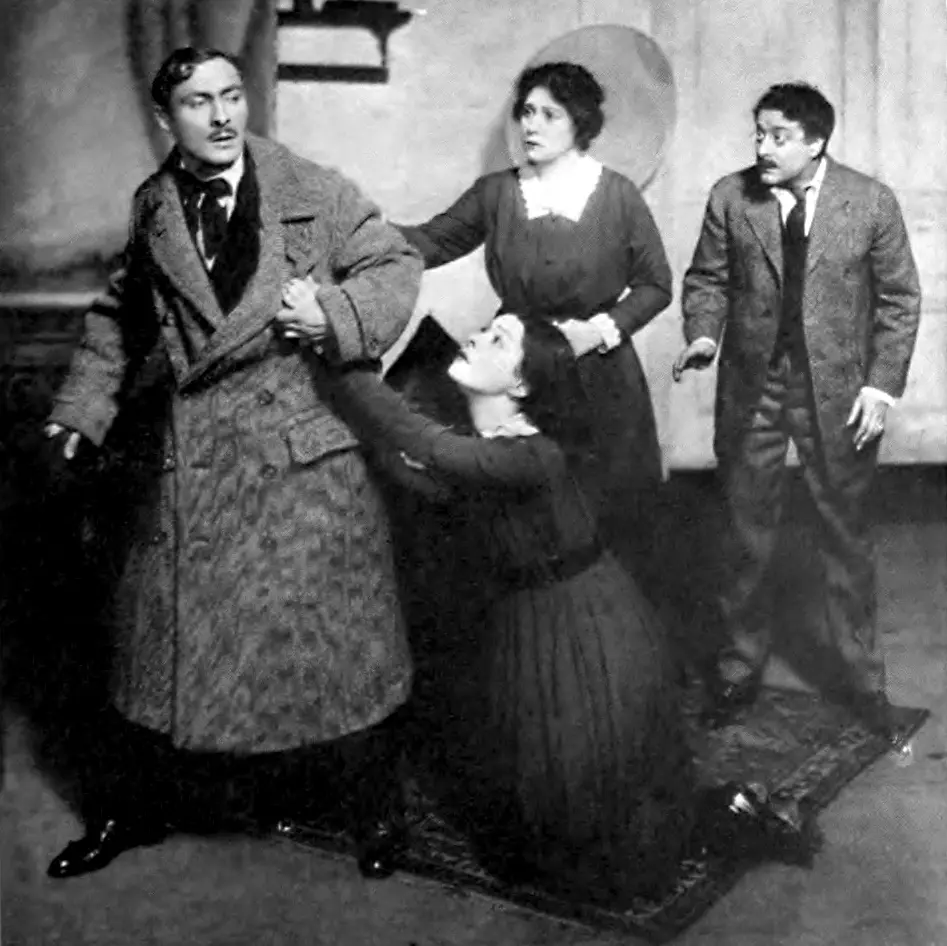
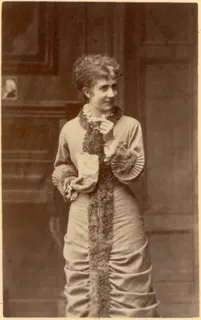
 A Doll's Houseby Henrik IbsenA wife's secret loan, taken out to save her husband, threatens to undo her marriage.
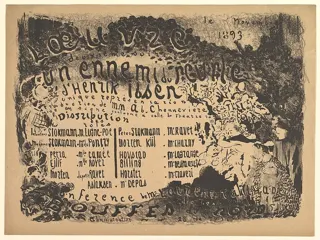 An Enemy of the Peopleby Henrik IbsenA doctor finds the town's new baths are poisoned, and the town turns on him for saying so.
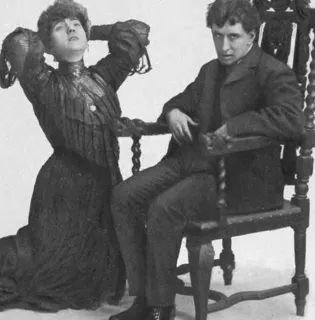 Ghostsby Henrik IbsenA widow's lie about her late husband comes back to haunt her son.
 Hedda Gablerby Henrik IbsenA general's daughter, bored in a new marriage, sets out to control a man's destiny.

Act 1
WERLE’S House. Richly and comfortably furnished study. Book cases and upholstered furniture, a writing-table, with papers and ledgers in the center of the stage; lamps alight with green shades, so that the room is dimly lighted. Open folding-doors, with the curtain drawn at back. Beyond a large elegant room, brilliantly lighted with lamps and branched candlesticks. At the right lower entrance of the study a small baize door leads to the office. Left lower entrance a fireplace, with glowing coals, and beyond this a folding-door leading to the dining-room.
PETTERSEN, WERLE’S servant, in livery, and the hired waiter, JENSEN, in black, are setting the study in order. In the large room two or three other hired waiters are moving about, trimming and lighting several more lights. From within the dining-room, is heard a confused buzz of conversation and laughter; a knife is rapped against a glass, there is silence, a toast is given, cries of “bravo,” and then again the buzz of conversation.
[lighting a lamp on the mantel-piece, and placing a shade upon it] Just listen, Jensen; there’s the old chap standing up by the table and proposing to Mrs. Sorby’s health in a long speech.
[bringing down an arm-chair] Is there any truth in what people say, that there’s something between them?
Goodness knows!
For he’s been a great rake in his time.
Maybe.
It’s in honor of his son that he’s giving this dinner, they say.
Yes, his son came home yesterday.
I never knew before that Mr. Werle had a son.
Oh yes, he has a son. But he’s always stopped up there at the Hojdal Works. He’s not been in town all the years I’ve been in service here.
[at the door of the other room] I say, Pettersen, here’s an old fellow who
[muttering] Who the devil’s here now?
OLD EKDAL enters the room from the right. He wears a threadbare cloak with a stand-up collar, woollen mittens; in his hands a stick and a fur cap, under his arm a parcel done up in cardboard. He has a reddish-brown, dirty wig, and a small mustache.
[going towards him] Good gracious! What do you want here?
[in the doorway] Must absolutely go to the office, Pettersen.
The office was closed an hour ago and
Heard so at the door, my lad. But Graberg’s in there still. Be a good fellow, Pettersen, and let me slip in this way. [Pointing to the baize door.] I’ve been that way before.
All right, you can go. [Opens door.] But mind you leave the proper way, for we’ve company.
Know that--h’m! Thanks, Pettersen, my lad. Good old friend. Thanks. [Mutters in a low tone.] Idiot!
He goes into the office. PETTERSEN closes the door after him.
Is he one of the clerks too?
No, he only does writing at home when it’s wanted. But he’s been a great swell in his time, has old Ekdal.
Yes, he looks as if he had been a little of everything.
Yes, for you know he’s been a lieutenant.
The devil he has! He been a lieutenant?
That he has. But then he went into the timber trade or something of the sort. They say he played Mr. Werle a very dirty trick once. For the two were partners then up at the Hojdal Works, you know. Ah, I know good old Ekdal, I do. We drink many a good bottle of beer and bitters together at Mrs. Ericksen’s.
Surely he hasn’t got much to stand treat with?
Lord, Jensen, of course you understand that I pay. For I think one should be polite to better people who’ve come down in the world.
Did he go bankrupt?
No, it was worse than that. He was sent to gaol.
Gaol?
Or the house of correction, or something. [Listening.] Hush! they’re coming from the table.
The doors of the dining-room are thrown open by a couple of servants from within. MRS. SORBY, talking to two gentlemen, comes out. Gradually all the guests follow, among these MR. WERLE. HJALMAR EKDAL and GREGERS WERLE enter last.
[to the servants, as she passes along] Pettersen, have the coffee served in the music-room.
Yes, Mrs. Sorby.
She and the two gentlemen pass into the room at the back, and thence right. PETTERSEN and JENSEN go out the same way.
[to the thin-haired one] Phew! That dinner--it was a stiff bit of work!
Oh! with a little good-will one can get through an immense deal in three hours.
Ah, but afterwards, afterwards, my dear Chamberlain!
I hear the Mocha and Maraschino are to be served in the music-room.
Brave! Then Mrs. Sorby can play us something.
[in a low voice] If only Mrs. Sorby doesn’t play us any tricks.
Oh, no; Bertha will never turn against her old friends!
They laugh and go into the room.
[in a low voice and depressed] I don’t think any of them noticed it, Gregers.
[looking at him] What?
Didn’t you notice it either?
What should I notice?
We were thirteen at table.
Really? We were thirteen?
[glancing at HJALMAR EKDAL] We generally have twelve. [To the others.] This way, gentlemen!
He and those who had remained behind with the exception of HJALMAR and GREGERS go out through the door at the back and off right.
[who has heard everything] You shouldn’t have asked me, Gregers.
What? Why, they say this dinner is given in my honor, and I shouldn’t have my best, my only friend?
But I don’t think your father likes it. I never come to this house.
So I hear. But I must see you and talk to you, for I shall certainly go away again soon. Yes, we two old school-fellows, we have surely been separated long enough, we’ve not seen one another now for sixteen--seventeen years.
Is it so long?
Yes, it is. Well, how are things going with you? You look well. You’ve grown almost stout and portly.
H’m, one can hardly call it portly, but I daresay I look rather more manly than I did then.
Indeed you do; your outer man hasn’t suffered.
[gloomily] But the inner man! Believe me, that is very different. You know what terrible trouble has come to me and mine since we two met.
[in a lower tone] How is your father getting on now?
Dear friend, don’t let us speak of that. My poor, unhappy father of course lives at home with me. Why, he has no one else on earth to cling to. But it is such bitter pain for me to speak of this, you see. Tell me, rather, how you have got on up there at the Works.
I’ve been delightfully lonely--with plenty of time to ponder over many things. Come here, let’s make ourselves comfortable.
He sits down in an arm-chair by the fire, and makes HJALMAR take another one by his side.
[moved] I have to thank you all the same, Gregers, for asking me to your father’s table. For now I know you’ve no feeling against me any longer.
[astonished] Whatever makes you think I had any feeling against you?
Yet you had during the first years.
What first years?
After the great misfortune. And it was so natural you should have. Why, it was only by a hair’s breadth your father escaped being dragged into this--this horrible affair.
And you thought I had a feeling against you because of this? What can have put such a thing into your head?
I know you had, Gregers, for I had it from your father himself.
[starting] Father! So! H’m! Was that why you never wrote to me--not a single word?
Yes.
Not even when you decided to go in for photography?
Your father said it was no use writing to you about anything.
[looking straight in front of him] No, no. Perhaps he was right. But tell me, Hjalmar, do you feel satisfied with your position?
[with a sigh] Oh, yes; certainly. I really can’t say I’m not. At first, as you will understand, it all seemed so strange to me to be placed amid such absolutely new surroundings. But, then, everything else was so changed too. The great, overwhelming misfortune with my father--the shame and the scandal, Gregers.
[moved] Yes, yes, I know.
I couldn’t dream of going on with my studies, there wasn’t a shilling to spare; on the contrary we were rather in debt; mostly to your father, I fancy.
H’m.
So I thought it best, just with one wrench, you know, to cut myself off from the old conditions and relations. It was your father, principally, who advised me to do this, and as he helped me so much
Did he?
Yes, of course; you know he did. Where should I have got the means to learn photography, to set up a studio, and make a start? That costs money, you know.
And father paid for all this?
Yes, dear friend, didn’t you know? I understood him to say he had written to you about it.
Not a word of what he had done. He must have forgotten it. We’ve only exchanged business letters with one another. So it was father?
Yes, sure enough. He never wished people to know about it, but it was he. And it was he, too, who made it possible for me to get married. But perhaps you don’t know about that either?
No, I certainly did not [shakes his arm]. My dear, Hjalmar, I can’t tell you how happy all this makes me--and how it pains me. Perhaps, after all, I have wronged father--in certain things. For this shews he has a heart, you see. It shews a kind of conscience.
Conscience!
Yes, yes, or whatever you like to call it. No, I have no words to tell you how glad I am to hear this of father. And so you are married, Hjalmar. That’s more than I shall ever manage. Well, I hope you are happy in your marriage?
Yes, I am indeed. She is as bright and brave a woman as man could desire. And she is not quite without education, either.
[slightly astonished] No, of course not.
No. Life is an education, you see. Then the daily intercourse with me--and then there are some gifted men who often come to see us, I assure you. You wouldn’t know Gina again.
Gina?
Yes, dear friend. Didn’t you remember her name was Gina?
Her name was Gina? Why, I know nothing
But don’t you remember she was in service here for a time?
[looking at him] Is it Gina Hansen?
Yes, of course it’s Gina Hansen.
Who looked after the house during the last year that mother lay ill?
Certainly that is so. But, dear friend, I’m quite certain your father wrote you I had got married.
[who has risen] Yes, he certainly did, but not that--[walks up and down]. Yet--wait a moment--perhaps he did--now I come to think of it. But father always writes me such short letters. [Half seating himself on the arm of the chair.] Now tell me, Hjalmar--for this is too delightful--how did you get to know Gina--to know your wife?
Very simply. Gina didn’t stop here long, for there was so much confusion here at that time--your mother’s illness--Gina could not see to everything, so she gave notice and left. That was a year before your mother’s death--or maybe the same year.
It was the same year, and I was up at the Works at the time. And then afterwards
Well, Gina lived at home with her mother, a Mrs. Hansen--a very worthy and hard-working woman, who kept a small eating-house. And she had a room to let, too, a very pretty, comfortable room.
And you were probably delighted to take it?
Yes, indeed; it was your father who suggested it to me. And there, you see--there I really got to know Gina.
And so you got engaged?
Yes. Young folk soon get to care for one another--h’m
[rises and walks up and down] Tell me--when you got engaged--was it then that father--I mean--was it then that you began to take up photography?
Exactly, for I was anxious to settle down as soon as possible. And so both your father and I thought photography would be the likeliest thing, and Gina thought so, too. And there was a reason for that, you see, it fitted in so well, as Gina had learnt to retouch.
That fitted in most remarkably.
[delighted, rising] Yes, didn’t it? Don’t you think it fitted in remarkably?
Yes, I must confess it did. Father seems to have been almost a sort of Providence to you.
[moved] He did not forsake the son of his old friend in his hour of need, for he has a heart, you see.
Enter MRS. SORBY leaning on the arm of MR. WERLE.
No nonsense, dear Mr. Werle; you mustn’t stop in there any longer staring up at the lights. It is not good for you.
[dropping her arm and passing his hands over his eyes] I almost think you are right!
PETTERSEN and the Hired Waiter JENSEN enter with trays.
[to the guests in the other room] This way, please, gentlemen. Anyone who wants a glass of punch must come here for it.
Enter the FAT GENTLEMAN.
[coming up to MRS. SORBY] But, good Heavens! is it true that you have abolished our blessed liberty to smoke?
Yes, in Mr. Werle’s domain, it is prohibited, Chamberlain.
Since when have you promulgated these stringent articles of cigar-law, Mrs. Sorby?
Since our last dinner, Chamberlain, for then we had certain persons here who went too far.
And you would not permit a slight overstepping of the bounds, Mrs. Bertha? Really not?
In no respect, Chamberlain Balle.
Most of the guests have come into MR. WERLE’S room. The waiters take round glasses of punch.
[to HJALMAR, going up to the table] What are you poring over there, Ekdal?
Only an album, Mr. Werle.
[who is walking about] Aha! Photographs! Yes, that’s something in your line.
[in an arm-chair] Haven’t you brought along any of your own?
No, I’ve not.
You should have. It is so good for the digestion to sit and look at pictures.
And, besides, it contributes towards entertaining people, don’t you know.
And all contributions are thankfully received.
The Chamberlains mean, that when you’re asked to dinner, you must do something for your meal, Mr. Ekdal.
Where one dines so well, that is simply a pleasure.
Good heavens! when it’s a question of a struggle for life
There you are right.
They continue the conversation amid laughter and joking.
[in a low voice] You must join us, Hjalmar.
[shrinking] How should I join in?
Don’t you think, Mr. Werle, that Tokay may be considered a comparatively wholesome drink for the stomach?
[by the fireplace] I can answer for the Tokay you’ve had to-day, anyhow, for it is one of the very best vintages. You noticed it, no doubt.
Yes, it tastes remarkably delicate.
[hesitatingly] Is there any difference then in the vintages?
[laughing] Oh, that is good!
[smiling] It is hardly worth while giving you a fine wine.
It’s the same with Tokay as with photographs, Mr. Ekdal. There must be sunshine. Is it not so?
Yes, light has a great deal to do with it.
Why, that’s exactly as it is with chamberlains, for they, too, greatly need sunshine, people say.
Oh, oh! that’s a very stale sarcasm.
Mrs. Sorby’s coming out.
And at our expense. [Threatening.] Madam Bertha, Madam Bertha!
Yes, but it is indisputably true that vintages may be vastly different. The old ones are the finest.
Do you reckon me among the old ones?
Oh, far from it!
There now! But me, sweet Mrs. Sorby.
Yes, and me! In what vintage do you reckon us?
I reckon you among the sweet vintages, gentlemen.
She sips a glass of punch. The chamberlains laugh and joke with her.
Mrs. Sorby can always find a loophole when she wants. Help yourselves to glasses, gentlemen! Pettersen, see to it! Gregers, I think we’ll take a glass together. [GREGERS does not move.] Won’t you make one of us, Ekdal? I found no opportunity of drinking with you at table.
The book-keeper, GRABERG, looks in through the baize door.
Beg pardon, sir, but I can’t get out.
Why, have you got locked in again?
Yes, and Flagsted has gone off with the keys.
Well, you can pass through here, then.
But there’s someone else.
Come on, come on, both of you. Don’t mind us.
GRABERG and old EKDAL come out from the office.
[involuntarily] Ah! Phew!
The laughter and chatter of the guests cease. HJALMAR starts at the sight of his father; he puts down his glass and turns to the fireplace.
[he does not look up, but makes little bows to both sides as he goes out and mutters] Beg pardon. Have come the wrong way. Door locked. Door locked. Beg pardon.
He and GRABERG go out at the back, right.
[between his teeth] Confound Graberg!
[with open mouth and staring eyes to HJALMAR] Surely that can not have been.
What was that? Who was it?
Oh, nobody, only the book-keeper and someone else.
[to HJALMAR] Did you know the man?
I don’t know; I don’t notice
[getting up] What the deuce is in the wind? [He goes to the others who are talking in a low voice.]
[whispering to the servant] Give him something outside--something really good.
[nodding] All right.
He goes out.
[In a low and shaken voice to HJALMAR] So it was really he?
Yes.
And yet you stood there and denied you knew him?
[whispering passionately] But how could I
Acknowledge your father?
[pained] Ah, if you were in my place
The conversation of the guests, which had been carried on in a low tone, now becomes strainedly noisy.
[coming up to HJALMAR and GREGERS in a friendly manner] Aha! Are you standing here renewing old memories of student years? Eh? Won’t you smoke, Mr. Ekdal? Do you want a light? Ah, it’s true, we mustn’t
Thank you. I should not have
Haven’t you some nice little poems to recite to us, Mr. Ekdal? You used to do that so charmingly.
Unfortunately, I can’t remember anything.
Ah, that’s a pity. What shall we do, Balle?
Both gentlemen cross the room, and go into the other room.
[gloomily] Gregers, I’m going. You see, when a man has felt the crushing blows of fate upon his head---- Bid your father good-bye for me.
Yes, yes. Are you going straight home?
Yes, why?
Because, perhaps, I’ll look in on you later.
No, you mustn’t do that. Not at my home. My house is dreary, Gregers, especially after such a brilliant festivity as this. We can always meet somewhere outside in the town.
[who has come up, in a low voice] Are you going, Ekdal?
Yes.
Remember me to Gina.
Thanks.
And tell her that I shall look her up one of these days.
Oh, thanks. [To GREGERS.] Stop here. I want to slip out unobserved.
He crosses the room, passes into the other room, and goes out, right.
[aside to the servant, who has returned] Well, did you give the old man something?
Yes, I did. I gave him a bottle of brandy.
Oh, you might have found him something better than that.
No, I couldn’t, Mrs. Sorby. Brandy’s the best thing for him.
[by the door, with a volume of music in his hand] Shall we play something together, Mrs. Sorby?
Certainly--let us.
Bravo, bravo!
She and all the GUESTS pass out of the room, right. GREGERS remains standing by the fire-place. MR. WERLE looks for something on the writing-table and seems to wish GREGERS to go. As the latter does not move, MR. WERLE goes towards entrance door.
Father, won’t you wait a moment?
[stopping] What is it?
I must have a word with you.
Can’t it wait till we’re alone?
No, it can not, for it may be we never shall be alone.
[coming nearer] What does that mean?
During the following conversation the playing of a piano is heard from the music-room.
How could that family be allowed to come to such a wretched pass?
Probably, you mean the Ekdals? I understand.
Yes, I mean the Ekdals. Yet Lieutenant Ekdal was very near to you once.
Unfortunately, he was; he was only too near to me. I felt it and suffered from it many a year. It is him I have to thank that a sort of stain blurred my own good name and fame--yes, mine!
[in a low voice] Was he really the only guilty one?
Who else do you suppose
He and you were partners in that big forest business.
But wasn’t it Ekdal who drew up the map of the forest--that falsified map? It was he who carried out the illegal felling of trees on the government lands. Why, it was he who managed the whole business up there. I had no idea of what Lieutenant Ekdal was undertaking.
Lieutenant Ekdal himself did not know what he had undertaken.
Maybe, but the fact remains that he was sentenced and I was acquitted.
Yes, I know. Proofs were wanting.
Acquittal is acquittal. But why rake up all this unfortunate business that turned my hair grey before its time? Have you been brooding over this all these years up at the Works? I can assure you, Gregers, here in town, the story has long been forgotten, as far as I am concerned.
But the unfortunate Ekdals?
Now, really, what would you have had me do for these people? When Ekdal came out he was a broken man, absolutely helpless. There are men on earth who sink to the bottom if they get a few shots in them and who never come to the surface again. You may take my word, Gregers, I went as far as I could without exposing myself, and giving color to all sorts of suspicions and gossip.
Suspicions--I see!
I’ve given Ekdal copying to do for the office, and I pay ever so much more for it than the work is worth.
[without looking at him] H’m! I do not doubt that.
You laugh. Don’t you believe what I say? It is true there’s nothing of all this in my books, for there are certain expenses I never enter.
[smiling coldly] No, there are certain expenses which it is best not to enter.
[starting] What do you mean?
[with forced calm] Have you entered what it cost you to let Hjalmar Ekdal learn photography?
I? Entered what?
I know now that it was you who paid for that. And I know, too, that it was you who so generously helped him to make a start.
Well, and yet you say I’ve done nothing for the Ekdals! I can assure you, in all conscience, these people have cost me quite enough.
Have you entered any of these expenses?
Why do you ask?
Oh, I have my reasons. Listen. At the time when you interested yourself so warmly in the son of your old friend, was that not the very time when he was to get married?
How the devil, after so many years, can I remember?
At that time you wrote me a letter--a business letter, of course--and in a postscript you briefly said that Hjalmar Ekdal had married a Miss Hansen.
Well, that was right enough--that was her name.
But you did not write that the Miss Hansen was Gina Hansen, our former housekeeper.
[laughs sarcastically but somewhat constrainedly] No, it really never occurred to me that you were so deeply interested in our former housekeeper.
Nor was I. But [in a lower voice] there was another here in the house who was deeply interested in her.
What do you mean [angrily to him]? I suppose you are alluding to me?
[in a low but firm tone] Yes, I allude to you.
And you dare? You permit yourself to? How can he, that ungrateful wretch, the photographer? How dare he presume to make such insinuations?
Hjalmar has not referred to all this by a single word. I don’t believe he so much as suspects anything of it.
Whom have you had it from then? Who can have said such a thing?
My poor, unhappy mother said so. And that was the last time I saw her.
Your mother? I might have known it. She and you--you always held together. It was she who from the first turned you against me.
No--it was all she had to bear and to suffer, until her heart was broken, and the miserable end came.
Oh, she hadn’t so much to bear and suffer--not more at any rate, than so many others! But there is no getting on with morbid, overstrained people. As I know to my cost. And so you have gone about nourishing such suspicions, gone poking into all sorts of old rumors and calumnies against your own father. Look here, Gregers. I really think that at your age you might find something better to do.
Yes, it is time I did.
Then perhaps you would take things more easily than you seem to now. What can be the good of your stopping up there at the Works year out, year in, worrying yourself as a mere clerk, and refusing to take a shilling more than the usual monthly salary? It’s simple folly of you.
Yes, if I could be quite certain that
I understand you well enough. You want to be independent, to owe nothing to me. But now there is an opening for you to become independent, and absolutely your own master.
Indeed, how?
When I wrote you it was necessary you should come to town immediately--h’m
Yes, what did you really want me for? I’ve been waiting all day to find out.
I wished to propose your having a share in the firm.
I? Enter the firm? As partner?
Yes. It will not necessitate our being constantly together. You might take over the business here, and then I’d move up to the Works.
You would?
Yes, for you see I’m not so fit for work as I used to be. I must be careful of my eyes, Gregers, for they are becoming rather weak.
They always were.
Not so weak as now. And then besides--circumstances might perhaps make it desirable I should live up there--at any rate, for a time.
I should never have believed that.
See here, Gregers, there are many things that stand between us. But when all’s said and done--we are father and son. It seems to me we ought to be able to come to some sort of an understanding.
You mean outwardly, of course.
Well, even that would be something. Think it over, Gregers. Don’t you believe that it could be managed? Eh?
[looking at him coldly] There is something behind all this!
How so?
There must be something you want to use me for.
In so close a relation as ours, the one can always be of use to the other.
So they say.
I would gladly have you at home with me now for a time. I am a lonely man, Gregers--always have felt lonely all my life through--but most now that I am beginning to grow old. I long to have some one about me
Well, you have Mrs. Sorby
Yes, I have, and she has, so to say, become almost indispensable to me. She is bright and even-tempered, she cheers up the house--and I need that so sorely.
Very well. Then you’ve already got all you want.
Yes, but I’m afraid things can’t go on so. A woman in such circumstances soon finds herself in an equivocal position in the eyes of the world. And I had almost said that it doesn’t do a man any good either.
Oh, when a man gives such dinners as you do he can risk a good deal.
Yes, but she, Gregers? I’m afraid she will not put up with it much longer. And even if she would--even if she were willing, out of devotion to me, to expose herself to the gossip and scandal, and all that--don’t you think, Gregers, you, with your intensely strong sense of justice
[interrupting] Just tell me one thing straight out. Are you thinking of marrying her?
And if I were thinking of such a thing, what then?
I say so, too. What then?
Would you set yourself absolutely against it?
No, certainly not; not in any way.
For I did not know whether, from love for your dead mother’s memory
I am not overstrained.
Well, whatever you may or may not be, you have lifted a heavy weight from my heart. I am so exceedingly glad that I may count upon your approval in this matter.
[looking fixedly at him] Now I know you mean to use me.
Use you? What an expression!
Ah, don’t let us be nice in our choice of words--not when we are alone, at any rate. [Laughs shortly.] So that’s it! So that was why--curse it!---- I must come to town in person. For the benefit of Mrs. Sorby, a scene of family life is to be arranged here. Tableau of father and son! That would be something new!
How dare you speak in that tone?
When was there any family life here? Not as long as I can remember. But now a little of that sort of thing may come in useful. For it would look uncommonly well to have people talking of the son hurrying hither--on the wings of filial piety--to his old father’s wedding feast. What then becomes of all the rumors of the poor dead mother’s sorrows and suffering? Nothing! Her son hurls them to the earth.
Gregers, I don’t believe there is a man on earth you dislike as you do me.
[in a low voice] I have seen you too closely!
You have seen me through your mother’s eyes. [Slightly lowering his voice.] But you should bear in mind that her eyes were--dimmed at times.
[shuddering] I understand what you mean. But who was to blame for mother’s unhappy weakness? It was you and all these---- The last of them was that woman who was foisted upon Hjalmar Ekdal, when you no longer--oh!
[shrugging his shoulders] Word for word as if I heard your mother!
[without noticing him] And there he is now with his great, unsuspecting child-mind, in the midst of deception--lives under the same roof with such a woman, and does not know that what he calls home is built upon a lie. [He comes up closer.] When I look back upon all you have done, I seem to be looking over a battlefield, with ruined human lives everywhere.
I almost believe the gulf between us is too great
[bowing with forced self-command] I have observed it, and so I’ll take my hat and go.
Go! Leave the house?
Yes. For now at last I have found a mission to live for.
What mission may that be?
You would only laugh if I told you.
A lonely man does not laugh so easily, Gregers.
[pointing to the room in the background] See, father--the Chamberlains are playing Blind Man’s Buff with Mrs. Sorby. Good night--and good-bye.
He goes out at the back, right. The laughter and merriment of the GUESTS are heard in the outer room.
[murmurs scornfully as GREGERS goes out] Ha! Poor wretch! And yet he says he is not overstrained!
Act 2
HJALMAR EKDAL’S studio. The room is fairly large: it is evidently at the top of the house. To the right a slanting roof with large panes of glass, half covered by a blue curtain. In a corner, to the right of the stage, is the entrance-door; lower down, on the same side, a door leading to the sitting-room. At the back to the left, there are also two doors, an iron stove between them. In the wall at the back there is a wide sliding door, which can be pushed aside. The studio is plainly, but comfortably arranged and furnished. Between the doors on the right, a little away from the wall, there is a sofa, with a table and a few chairs; on the table a lamp with a shade, by the stove an old arm-chair. All sorts of photographic apparatus and instruments are distributed about the room. In the back wall to the left of the sliding door is a book case, with a few books, boxes, and bottles of chemicals, instruments, tools, etc. Photographs and odds and ends, such as camel-hair brushes, paper, and the like, lie on the table.
GINA EKDAL is sitting on a chair by the table, sewing. HEDVIG is sitting on the sofa, her hands shading her eyes, and her thumbs in her ears, reading a book.
[looks at her several times, as if with suppressed anxiety; then she says] : Hedvig! [HEDVIG does not hear her and GINA says in a louder tone]: Hedvig!
[moving her hands and looking up] Yes, mother.
Dear Hedvig, you mustn’t sit reading there any longer.
Oh, but my mother, mayn’t I read a little longer? Just a little bit?
No, no; you must put the book away now. Your father doesn’t like it. He never reads himself of an evening.
[shutting the door] No, father doesn’t bother much about reading.
[putting down her work and taking up a pencil and small note book from the table] Can you remember how much the butter came to to-day?
One krone and sixty-five ore.
That’s right. [Entering it.] It’s awful the amount of butter we get through here. And then there was the smoked sausage and cheese. Let me see--[writing] and then there was the ham--h’m! [Reckoning it up.] Yes, it makes just
And then there’s the beer.
Yes, of course. [Writing.] It does run up--but it can’t be helped.
But then we didn’t want a hot dinner, as father was out.
No, luckily. And then besides I took eight crowns, fifty ore for the photographs.
Fancy! So much as that?
Exactly eight crowns, fifty ore.
A pause. GINA takes up her work. HEDVIG takes up paper and pencil and begins drawing something, shading her eyes with her left hand.
Isn’t it funny to think of father having a grand dinner at Mr. Werle’s?
You can’t say he’s dining with Mr. Werle. You know it was his son who invited him. [Quickly.] We’ve nothing to do with Mr. Werle.
I’m looking forward so to father coming home. For he promised he’d ask Mrs. Sorby for something nice for me.
Yes, you may be sure there are plenty of good things in that house.
[going on drawing] And I’m just a little bit hungry, too.
OLD EKDAL, with a parcel of papers under his arm, and another in his coat-pocket, comes in through the entrance-door.
How late grandfather is to-day.
They’d locked the office. Had to wait with Graberg. And then they let me pass out. H’m!
Did they give you anything more to copy, grandfather?
All this lot. Look!
That is good.
And you’ve a parcel in your pocket too.
Oh, nonsense, that’s nothing! [Puts his stick in the corner.] This’ll find me in work for a long time, this will, Gina. [Pushing the one-half of the door in the back a little aside.] Hush! [He looks into the room for a moment, and carefully pushes the other side of the door back.] He! he! They’re all asleep together in a bunch. And even she’s got into the basket. He! he!
Are you quite sure she’s not cold in the basket, grandfather?
What an idea? Cold? With all that straw? [Goes to the further door left.] I suppose I shall find matches?
The matches are on the chest of drawers.
EKDAL goes into the room.
It is a good thing grandfather’s got all that copying to do!
Yes, poor old father: so he’ll make a little pocket-money for himself.
And so he can’t spend all the morning down there at that horrid Mrs. Ericksen’s restaurant.
That is true, too.
A short pause.
Do you think they are still at table?
Goodness knows, but it’s likely enough.
Just fancy all the delicious things father’ll have for dinner! I’m sure he’ll be in good spirits and cheerful when he comes back. Don’t you think he will, mother?
Yes; but if we could only tell him we’d let the room.
But there’s no need to do that to-night.
Oh, it’ll come in well enough, my dear. And it’s no good to us.
No, I mean we don’t need it to-night, because father’ll be in good spirits anyhow. We’d better save up the room for another time.
[looking across at her] Are you glad to have something pleasant to tell father, when he comes home of an evening?
Yes, for then he’s much more cheerful.
[absently to herself] Oh, yes, there’s something in that.
OLD EKDAL comes in again, and is going out by the lower door, left.
[half turning round on her chair] Do you want anything in the kitchen, grandfather?
I do; yes. Sit still.
Goes out.
Surely he’s not raking about in the glowing embers? [Waiting a moment.] Hedvig, just see what he’s after.
EKDAL comes in again with a small jug of steaming water.
Have you been getting warm water, grandfather?
Yes, I have. Want it for something I’ve got to write, and the ink’s as thick as porridge--h’m!
But, grandfather, you should have supper first. It’s quite ready.
Never mind about supper, Gina. Have lots of work, I tell you. I won’t have anyone come to my room. No one--h’m!
He goes into his room. GINA and HEDVIG look at one another.
[in a low voice] Can you imagine where he gets the money from?
No doubt he’s got it from Graberg.
Oh, no! Graberg always sends the money to me.
Then he must have got a bottle on trust somewhere.
Poor old grandfather! It’s a long while since anyone’d trust him with anything. [HJALMAR EKDAL enters, right, in a top coat and grey felt hat. Throwing down her work and getting up.] Well, I never, Ekdal, you here already?
[jumping up at the same time] Fancy! You here so soon, father?
[putting down his hat] Yes; most of them were leaving.
So early?
Yes, it was a dinner-party. [About to take off his top coat.]
Let me help you.
And me, too.
They help him off with his coat. GINA hangs it up on the wall at back.
Were there many people there, father?
Oh, no, not many. There were twelve or fourteen of us at table.
And I suppose you chatted with all of them?
Oh, yes, a little. But it was Gregers who especially monopolized me.
And is Gregers as ugly as ever?
Well, he’s not exactly good-looking yet. Hasn’t the old man come home yet?
Yes, grandfather’s in there writing.
Did he say anything?
No. What should he say?
Didn’t he say anything about--I thought I heard he’d been to Graberg’s. I’ll just go in to him a moment.
No, no, you’d better not.
Why not? Did he say he wouldn’t have me in there?
He won’t have anyone in this evening.
[making signs] H’m! h’m!
[not seeing her] He’s been in here, and got warm water.
Aha! He’s sitting in there?
Yes, that’s so.
Good Heavens! My poor, white-haired old father?--Yes, just let him alone for once and enjoy himself.
Old EKDAL in an old coat, and with a lighted pipe, enters from his room.
Got home? I thought I heard you chattering.
I’ve just come in.
So you didn’t see me? You didn’t?
No, but they said you’d passed through the room--and so I came after you.
H’m! Very good of you, Hjalmar. What sort of people were they?
Oh, all sorts of people. There was Chamberlain Flor, and Chamberlain Balle, and Chamberlain Kasperson--and Chamberlain--so and so--I don’t know.
[nodding] Listen to that, Gina. He’s been with nothing but Chamberlains.
Yes, they are awfully grand up at the house now.
Did the Chamberlains sing, father, or did they recite something?
No, they only chatted. They wanted me to recite--but I wouldn’t.
You wouldn’t?
But surely you might have done that.
No, one can’t provide entertainment for everybody. [Walking up and down.] At any rate, I can’t.
No, no, Hjalmar’s not to be got so easily.
I really don’t see why I should provide entertainment, when I once in a way happen to go out. Let others do it. Here are these fine folk dining in grand houses day out, day in. Let them be thankful and amiable for all the good meals they get.
But surely you didn’t say that!
[humming] Ha! ha! ha! They had put up all sorts of things.
Even the Chamberlains?
They didn’t get off scot-free. [Lightly.] Then we had a little discussion as to Tokay.
Tokay? You? That’s a fine wine, that is.
[standing still suddenly] It may be fine, but I may tell you all vintages are not equally good. It depends upon the amount of sunshine the vine has had.
Why, you really know everything, Ekdal.
And there was a discussion about that?
They wanted to prove that; but then it was proved to them that it was exactly the same with Chamberlains. With them too, all vintages were not equally good--so some one said.
No! What things you do think of?
He, he! And they had to put that in their pipes and smoke it?
They had it straight to their faces.
Fancy, Gina, he said that straight to the Chamberlain’s faces.
Only think, straight to their faces.
Yes, but I don’t wish it talked about. One doesn’t repeat such things. Besides, of course it all passed off quite good-naturedly. Why, they were nice, pleasant people why should I wound them? No!
But straight to their faces
[coaxingly] How nice it is to see you in a dress-coat. You look so well in a dress-coat, father.
Yes, don’t you think so? And this one really sits faultlessly. It fits almost as if it had been made for me--a little tight in the arm-pits, perhaps. Help me, Hedvig. [Takes off the coat.] I’d rather put on my jacket. Where is my jacket, Gina?
Here it is. [She fetches the jacket and helps him on with it.]
That’s it. Be sure and remember to let Molvik have the dress-coat the first thing in the morning.
[putting it down] I’ll see to it.
[stretching himself] Ah! After all, this is more comfortable. And, besides, this sort of loose, free, home-dress suits my whole style better. Don’t you think so, Hedvig?
Yes, father.
When I tie my necktie like this, with loose ends, see, eh?
Yes, that looks very well with the moustache and the thick curly hair.
One can’t call it exactly curly hair. I should rather say wavy.
Yes, for it’s in such great curls.
Waves!
[a little after, pulling his jacket] Father!
Well, what is it?
Oh, you know well enough what it is.
No, I really don’t.
[laughing and pouting] Oh, you do, father. Now you mustn’t tease me any more.
But what is it?
[shaking him] Oh, nonsense. Now out with it, father. You know all the good things you promised me.
Ah! and to think I should have forgotten it!
No, you only want to tease me, father! Oh, it’s too bad of you. Where’ve you put them?
Well, I’ve not quite forgotten. But wait a moment! I’ve got something else for you, Hedvig. [Goes and searches in the pockets of his coat.]
[jumping and clapping her hands] Oh, mother, mother!
You see, if you’ll only wait
[with a paper] See, here we have it.
That? Why, that’s only a piece of paper.
That’s the bill of fare; the whole bill of fare. Here is written “Menu;” that means bill of fare.
Haven’t you got anything else?
I’ve forgotten the rest, I tell you. But you may take my word for it, these dainties are not very satisfying. Sit down there by the table and read out the list, and I’ll describe the dishes to you. See here, Hedvig.
[choking back her tears] Thanks. [She sits down, but does not read. GINA makes signs to her; HJALMAR notices it.]
[walking up and down] It is really most extraordinary what things the bread-winner of a family is expected to remember, and if he forgets the least of them--he’s sure to be treated to black looks. Well, one gets used to that, too. [Stops near the stove, by the old man.] Have you peeped in there this evening, father?
Yes, you may be sure I did. She’s got into the basket.
No! She’s gone into the basket? She’s beginning to get used to it.
Yes, that’s what I always said she would. But now, you see, there are a few little things
Some improvements--yes.
But they must be made, you know.
Yes, let’s have a little chat about the improvements, father. Come here, let’s sit on the sofa.
All right. H’m--think I’ll fill my pipe first--and must clean it. H’m! [He goes into his room.]
[smiling at HJALMAR] Clean his pipe, too!
Ah, well! Gina, let him alone. My poor shipwrecked father! Yes--the improvements--we’d best set about them to-morrow.
You’ll not have any time to-morrow, Ekdal
[interrupting] Oh, yes, he will, mother.
Remember those copies that have to be touched up; they’ve sent here now so many times for them.
Really? So now it’s the copies again! They’ll be ready soon enough. Have there been any fresh orders?
No, worse luck, to-morrow I’ve nothing but the two portraits you know of.
Nothing else? Oh, no, when one makes no effort
But what am I to do? I put in all the advertisements I can afford, I’m sure.
Yes, advertisements, advertisements. You see how much good they are. And so, I suppose, no one’s been after this room, either?
No, not yet.
That was to be expected. When one makes no effort to---- One really must pull oneself together, Gina.
[going up to him] Shall I fetch your flute, father?
No, no flute. I ask no pleasures here on earth. [Walking up and down.] Yes, yes, I’ll work hard to-morrow, there shall be no lack of that. I’ll work as long as my strength holds out
But, dear good Ekdal, I didn’t mean it in that way.
Father, shall I bring in a bottle of beer?
No, nothing at all. I want nothing for myself. [Standing still.] Beer?--was it beer you said?
[brightly] Yes, father; lovely, fresh beer.
Well, if you will insist, you may as well bring in a bottle.
Yes, do, and then we’ll make ourselves comfortable.
HEDVIG runs towards the kitchen door.
[by the stove; stops her, looks at her, takes her head, and presses her to him] Hedvig! Hedvig!
[gladly, with tears in her eyes] Ah! Dear father!
No, do not call me that! There have I been sitting at the rich man’s table and taking thought for myself--there have I sat and reveled at the groaning board. And yet I could not
[sitting by the table] Oh, nonsense, nonsense, Ekdal.
Yes! But you must not be too hard upon me. You know that I am very fond of you, all the same.
[embracing him] And we are so immensely fond of you!
And if now and again I should be unreasonable, bear in mind I am a man overwhelmed by a host of worries. No! [Drying his eyes.] No beer at such a moment! Give me the flute.
HEDVIG runs to the book case and fetches it.
Thanks. Now then. With the flute in my hand, and you two about me--ah!
[sits down at the table near GINA; HJALMAR walks up and down. Then he begins playing energetically a Bohemian folk-dance, but in slow, elegiac time, and with sentimental expression. He stops playing suddenly, holds out his left hand to GINA, and says in a moved tone] It may be poor and lowly under this roof, Gina, but it is home. But I tell you this--it is good to be here.
He begins playing again; presently a knock is heard at the entrance-door.
[rising] Hush, Ekdal!--I think someone’s there.
[putting the flute into the book case] There again!
GINA goes and opens the door.
[outside in the passage] Excuse me
[stepping back a little] Oh!
Does Mr. Ekdal, the photographer, live here?
Yes, he does.
[going to the door] Gregers! Is it you after all? Well, come in.
[coming in] Yes, I told you I’d look you up.
But to-night?--Have you left the party?
Both the party and my father’s house. Good evening, Mrs. Ekdal. I don’t know if you recognize me?
Oh, yes! Young Mr. Werle is not very difficult to recognize.
No--I am like my mother, and, no doubt, you remember her.
And you have left the house, you say
Yes, I’ve moved into a hotel.
Really! Well, as you’ve come, take off your things and sit down.
Thanks. [He takes off his overcoat. He has changed into a simple gray suit of country make.]
Here, on the sofa. Make yourself at home.
GREGERS sits on the sofa, HJALMAR on a chair by the table.
[looking round] So this is your place, Hjalmar. This is where you live.
This is the studio, as you can see
But it’s roomy; and so we prefer sitting here.
We used to have better rooms, but this flat has one great advantage; there are such capital outer rooms.
And then we’ve a room on the other side of the passage that we can let.
[to HJALMAR] Really--then you’ve lodgers, too.
No, not yet. That’s not so easy, you see; one has to keep on the look out. [To HEDVIG.] But how about that beer, Hedvig.
HEDVIG nods and goes into the kitchen.
So that is your daughter?
Yes, that’s Hedvig.
And she is your only child?
She is the only one, yes. She is our greatest joy on earth, and [in a lower tone], she is also our greatest sorrow, Gregers.
What’s that you say?
Yes; for there is imminent danger of her losing her sight.
Become blind!
Yes. At present there are only the merest symptoms, and it may be a long while yet. But the doctor has warned us. It must inevitably come.
That is a terrible misfortune! How did she get it?
[sighing] It is probably hereditary.
[starting] Hereditary?
Ekdal’s mother had weak eyes, too.
Yes, so father says; I can’t remember her.
Poor child! And how does she take it?
Ah! you may imagine, we’ve not had the heart to tell her anything. She has no idea of any danger. Joyous and free from care, and chirping like a little bird flying away into life’s everlasting night. [Overcome.] Ah! that is such a crushing blow for me, Gregers.
HEDVIG brings in a tray with beer and glasses, which she places on the table.
[stroking her head] Thanks, thanks, Hedvig. [HEDVIG throws her arms round his neck and whispers into his ear.] No. No bread and butter just now. [Looks straight in front of him.] Yes, perhaps Gregers will have a piece.
[with a gesture of refusal] No, no, thank you.
[still mournful] Well, you can bring in a little, all the same. If you’ve a crust that’d be nice. And mind you, butter it well.
HEDVIG nods brightly, and goes into the kitchen again.
[who has followed her with his eyes] She looks bright and well enough though, it seems to me.
Yes, thank God, there’s nothing else the matter with her.
No doubt she will grow like you in time, Mrs. Ekdal. How old may she be now?
Hedvig is exactly fourteen; it’s her birthday the day after to-morrow.
She’s pretty tall for her age.
Yes, she has shot up so in the last year.
It is by these young folks that we best see how old we are ourselves. How long ago is it that you were married?
Why, we were married in--yes--nearly fifteen years ago.
No, really! Is it so long!
[becoming attentive, looking at him] Yes, it is exactly.
Yes, of course it is. Fifteen years in a few months. [In a changed tone.] Those must have been long years for you up at the Works, Gregers.
They seemed so while I lived them--now, I hardly know how the time went.
OLD EKDAL enters from his room, without his pipe, but wearing his old lieutenant’s cap; he walks somewhat unsteadily.
I say, Hjalmar, now we can sit down and chat about that--h’m. Whatever was it?
[going up to him] Father, here’s somebody. Gregers Werle--I don’t know if you can remember him.
[looking at GREGERS, who has risen] Werle? Is that the son, eh?--What does he want with me?
Nothing; he has come to see me.
Then nothing’s up?
No, certainly not.
[swinging his arms] Not that I care, you know, I’m not afraid, but
[going up to him] I only wanted to bring you a greeting from the old hunting-grounds, Lieutenant Ekdal.
Hunting-grounds?
Yes, up there round about the Hojdal Works.
Oh? up there? I knew them well once on a time.
At that time you were a great sportsman.
Was so, yes. That may be. You’re looking at my uniform-cap. I don’t need to get leave to wear it at home. So long as I don’t go out into the streets in it
HEDVIG brings in a plate of bread and butter, which she puts on the table.
Come and sit down, father, and have a glass of beer. Come along, Gregers.
EKDAL mutters something, and stumbles to the sofa. GREGERS sits down on the chair nearest him. HJALMAR on the other side of GREGERS. GINA sits a little way from the table sewing. HEDVIG stands by her father.
Can you remember, Lieutenant Ekdal, when Hjalmar and I used to go up to visit you in the summer and at Christmas?
Did you? No, no, no--I don’t remember that. But I may say I’ve been a great sportsman, that I have. I’ve shot bears too. Shot nine of them.
[looking sympathizingly at him] And now you never get any hunting.
Oh! Can’t say that, my lad. Get some hunting now and again: not that sort, of course. For the forest, you see--the forest, the forest!---- [Drinking.] Is the forest up there fine now?
Not so fine as in your time. It’s been thinned out considerably.
Thinned out. [In a lower tone and anxiously.] That’s a dangerous game. It has consequences. The forest avenges itself.
[filling his glass] Come, father, have a little more.
How can a man like you--such a man for an open-air life, live in the midst of a choking town, shut up between these four walls?
[smiles slightly and glances at HJALMAR] Oh! it’s not so bad here. Not so bad.
But all that had become part of you? The fresh, blowing breezes, the free life in the woods and the plains, among the beasts and birds?
[smiling] Hjalmar, shall we show it him?
[quickly and somewhat embarrassed] Oh, no, no, father; not this evening.
What does he want to show me?
Oh! it’s only something--you can see it another time.
[continuing to the old man] So I was thinking, Lieutenant Ekdal, that you should come along with me up to the Works, for I shall certainly be leaving again shortly. You could easily get some copying to do there too. And here there’s absolutely nothing to make you comfortable and cheer you.
[staring at him in astonishment] I’ve absolutely nothing.
Yes, you have Hjalmar; but he has his own family. And a man like you who has always felt drawn to all that is free and wild
[striking the table] Hjalmar, now he shall see it!
No, father, is it worth while now? Why, it’s dark
Nonsense; the moon shining. [Rising.] He shall see it, I say. Let me pass. Come and help me, Hjalmar.
Oh, yes; do, father.
[rising] All right then.
[to GINA] What is it?
Oh! You really mustn’t fancy it’s anything very wonderful.
EKDAL and HJALMAR have gone up the stage. Each is pushing aside one-half of the sliding door; HEDVIG helps the old man; GREGERS remains standing by the sofa; GINA goes on sewing, unmoved. Through the opening of the door is seen a large, irregular loft, with odd nooks and corners, and a few stove-pipes here and there. There are skylights, through which bright moonlight falls upon certain parts of the great room; others are in darkness.
[to GREGERS] You must come quite close, please.
[going over to him] What, is it really?
You can see--h’m!
[rather embarrassed] This belongs to father, you understand.
[by the door, looking into the loft] Why, you keep fowls, Lieutenant Ekdal!
Should think we did keep fowls. They’re gone to roost now. But you should see the fowls by daylight, you should!
And then there’s a
Sh!--Sh!--don’t say anything yet.
And you’ve pigeons, too, I see.
Oh, yes! May be we’ve got pigeons, too! The pigeon-houses are up there under the eaves; for you know pigeons always like to roost high.
But these are not all common pigeons.
Common! No, should think not! We’ve got tumblers, and we’ve a few pouters, too. But come here! Can you see those hutches out there by the wall?
Yes. But what do you use them for?
The rabbits go in there in the night, my lad.
Why, you’ve rabbits, too, then?
Yes. Deuce take it, you might know we should have rabbits! He wants to know if we’ve got rabbits, Hjalmar!--H’m! But now the real thing’s coming, you know. Now then! Out of the way, Hedvig. Come and stand here; that’s it--and look down there. Don’t you see anything there in the basket filled with straw?
Yes. I see there’s a bird lying in the basket.
H’m! “A bird”
Isn’t it a duck?
[hurt] Yes, of course, it’s a duck.
But what sort of a duck, do you think----?
It’s not just a simple duck
Hush!
And it’s not a Turkish duck, either.
No, Mr.--Werle; it’s not a Turkish duck; for it’s a wild duck.
No, is it really? A wild duck?
Yes, that it is. The “bird,” as you called it--is a wild duck. That’s our wild duck, my lad.
My wild duck. For she belongs to me.
And it can live up here in this loft? And thrive here?
Of course, you understand, she’s got a trough full of water to splash about in.
Fresh water every day.
[turning to HJALMAR] But, dear Ekdal, it’s getting awfully cold here.
H’m! Let’s shut it up then. Besides it’s not good to disturb their night’s rest. Give a hand, Hedvig.
HJALMAR and HEDVIG push the doors of the loft together.
Another time you can see her properly. [Sitting down in the arm-chair by the stove.] Ah! wild ducks are very wonderful creatures, take my word for it.
But how did you catch it, Lieutenant Ekdal?
Didn’t catch her, I didn’t. There’s a certain man in the town here, whom we’ve to thank for her.
[starting slightly] Surely the man’s not my father?
Yes, he is though. Just your father. H’m!
It is funny you should have guessed that, Gregers.
Why you were telling me that you were indebted to my father for all sorts of things, and so I thought that
But we’ve not had the duck from Mr. Werle himself.
It’s Haaken Werle we’ve to thank for her, all the same, Gina. [To GREGERS.] He was out in his boat, you know, and he shot her. But your father’s sight is so bad now. H’m; she was only wounded.
I see. She got a few shots in her body.
Yes, she did--two or three shots.
She was hit under the wing, and so she could not fly away.
And then, I suppose, she dived to the bottom?
[sleepily, with thick utterance] Know all about that. Always so with wild ducks. Made for the bottom--as far as they can get, my lad--get caught in the tangle and the sea-weed--and all the damned stuff that’s down below there. And so they never come to the surface again.
But, Lieutenant Ekdal, your wild duck came to the surface.
He’d got a most remarkably clever dog, had your father. And the dog--dived after the duck and brought her up again.
[turning to HJALMAR] And so you found it here?
Not directly; first it was taken to your father’s; but the wild thing didn’t thrive there; so Pettersen was ordered to kill it
[half asleep] H’m--yes, Pettersen--idiot
[speaking in a lower tone] So that was how we got her, you see, for father knows Pettersen a little, and when he heard about the wild duck, he managed to get it handed over to him.
And now it thrives so well up here in the loft.
Yes, wonderfully well. She’s getting fat. Well, she’s been in there so long now she’s forgotten the old wild life; and that’s the main thing.
You are right there, Hjalmar. Only never let her see the sky or the sea---- But I mustn’t stay any longer; for I think your father’s asleep.
Oh! don’t mind him
But--by the way--you said you had a room to let--a spare room?
Certainly--what then? Do you know anyone
Could I have the room?
You?
No, but you, Mr. Werle
Can I have the room? Then I’ll move in early to-morrow.
Yes, with the greatest pleasure
But, Mr. Werle, it’s not at all the sort of room for you.
But, Gina, how can you say that?
Yes, for the room’s neither large nor light, and
That doesn’t matter, Mrs. Ekdal.
I think it’s a very nice room, and not so badly furnished, either.
But think of those two who live underneath us.
What two are they?
Oh! one of them’s been a tutor.
That’s Licentiate Molvik.
And then there’s a doctor calling Relling.
Relling? I used to know him a little. He practiced for a time up at the Works.
They’re a pair of dissipated good-for-nothings. They’re often out on the loose of an evening, and they come home very late at night, and then they’re not always as
One soon gets used to that. I hope I shall be like the wild duck.
H’m, I think you’d better sleep on it first, all the same.
You seem extremely unwilling to have me in the house, Mrs. Ekdal.
Lord, no! How can you think that?
Yes, it’s really very extraordinary of you.
[to GREGERS] But tell me, are you thinking of stopping in town then for the present?
[putting on his overcoat] Yes, now I think of stopping here.
But not at home with your father? What do you mean to do?
Ah! If only I knew that I should not be so badly off. But when one has the misfortune to be called Gregers--“Gregers”--and then “Werle” after it; have you ever heard anything so hideous?
Oh! I don’t think that so bad.
Huh! Pish! I should feel inclined to spit at a fellow with such a name. But when one has the misfortune to be Gregers--Werle here on earth, as I have
[laughing] Ha--ha! If you weren’t Gregers Werle, what else would you be?
If I had my choice, I should prefer being a clever dog.
A dog!
[involuntarily] Oh! not that!
Yes, a real uncommonly clever dog; such a one as can dive under after wild ducks, when they go to the bottom, and get fast in all the tangle and sea-weeds down in the mud below.
I’ll tell you what, Gregers--I don’t understand a word of all this.
Oh, no! It doesn’t mean anything in particular. Early to-morrow, then, I’ll move in. [To GINA.] Don’t you trouble about me; I do everything for myself. [To HJALMAR.] We’ll talk over the rest to-morrow. Good night, Mrs. Ekdal. [Nodding to HEDVIG.] Good night!
Good night, Mr. Werle.
Good night.
[who has lighted a candle] Wait a moment, I must light you down, for it’s very dark on the stairs.
GREGERS and HJALMAR go out together through the entrance-door.
[looking straight in front of her, with her work on her lap] Wasn’t that strange talk about his wanting to be a dog?
I’ll tell you what, mother--I think he meant something else by that.
What could that be?
Why, I don’t know, but it was just as if he meant something different from what he was saying--all the time.
Do you think so? It was certainly strange.
[returning] The lamp was still alight. [Puts out the light and puts it down.] Ah, at last one can get a mouthful to eat. [Begins eating the bread and butter.] Now, you see, Gina, if one only makes a little effort
How, effort?
Yes, for it’s a blessing after all we’ve at last let that room for a time. And only think--to a fellow like Gregers--a dear, old friend.
I hardly know what to say about it, I don’t.
Oh, mother, you’ll see it’ll be such fun.
You are strange. First you were so anxious to let it, and now you don’t like it.
Yes, Ekdal; if it had only been to some one else, but what do you think Mr. Werle will say?
Old Werle? It’s no business of his.
But you may be sure there’s something up between them again, as the young one’s moving out of the house. You know well enough how things are between those two.
Yes, that may be, but
And now, perhaps, Mr. Werle’ll think you’re at the bottom of it
Let him think so as long as he likes! Mr. Werle has done an immense deal for me. Good heavens! I don’t deny it--but I can’t on that account remain his dependent all my life.
But, dear Ekdal, perhaps grandfather may have to suffer for it; he may lose his poor little earnings that he gets through Graberg.
I’m almost inclined to say: so much the better! Is it not sufficiently humiliating for a man like me to see his grey-haired father going about as an outcast? But the fullness of time is coming now, I think. [He takes another piece of bread and butter.] As surely as I have a mission in life, so surely I will not shrink from it!
Oh! no, father, don’t!
Hush! Don’t wake him!
[in a lower tone] I will not shrink from it, I tell you. The day will yet come, when---- And that’s why it’s a good thing we’ve let the room; for that makes me more independent. And a man must be that when he has a mission in life. [Turning towards the arm-chair, with emotion.] My poor white-haired old father! Lean on your Hjalmar. He has broad shoulders--strong shoulders, at any rate. You will awaken one day and---- [To GINA.] Perhaps, you don’t believe it?
[rising] Of course, I do--but in the meantime let’s get him to bed.
Yes, let us do so.
They take up the old man carefully.
Act 3
HJALMAR EKDAL’S studio. It is morning; daylight streams in through the great panes of glass in the slanting roof; the curtain is drawn back.
HJALMAR is sitting at the table busy retouching a photograph; several other portraits are lying in front of him. After a little while GINA comes in from the entrance-door in her hat and cloak; she has a covered basket on her arm.
Are you back again, Gina?
Ah, yes! One must look sharp.
Puts the basket on a chair, and takes off her things.
Did you look in at Gregers’?
Yes, I did. It’s in a lovely state; he’s managed to make a mess of it as soon as ever he got in.
How so?
Why he wanted to do everything himself, he said. And so he wanted to light the stove too; and then he screwed down the register, so that the whole room was full of smoke. Uh! It stank like
Well, I never!
But the best’s to come; for then he wanted to put out the fire, and so he must needs empty the whole of his water-jug into the stove, so that the room’s like a pig-stye.
That’s a nuisance.
I’ve sent the porter’s wife there now, to clean up after him, the pig. But the place’ll not be fit to be in till this afternoon.
Where’s he gone then in the meantime?
He was going out, he said.
I looked in a moment, too--after you’d gone out.
So I heard. Why, you’ve asked him to lunch.
Only to a little simple bit of early lunch, you know. It’s his first day--and we couldn’t very well avoid it. You’ve got something in the house, I suppose.
I’ll try and get something or other.
But don’t get too little. For I fancy Relling and Molvik are coming up too. I happened to meet Relling on the stairs, you see, and so I couldn’t but
Oh! Are we to have those two as well?
Good Lord--two more or less’ll make no difference.
[opening his door and looking in] I say, Hjalmar---- [noticing GINA.] Oh! I see!
Do you want anything, grandfather?
Oh, no! It’s all right. H’m! [He goes in again.]
[taking up the basket] Take care he doesn’t get out.
Yes, yes, I’ll see to it--I say, Gina, a little bit of herring-salad’d be very nice--for Relling and Molvik were out on the spree again last night.
If only they don’t come up too soon for me I
Oh! they won’t; take your own time.
Very good, and you can go on doing a little work meantime.
Why, I’m sitting here working! Why, I’m working as hard as ever I can!
Then you’ll have it off your hands, don’t you see.
She goes into the kitchen with the basket. HJALMAR sits a few minutes retouching the photograph; he does it lazily and with disrelish.
[peeps in looking around the studio, and says in a whisper] Are you busy?
Yes, I’m sitting here slaving over these portraits.
All right--God forbid--if you’re so busy, I’ll--h’m
He goes in again; he leaves the door open.
[goes on for a while in silence; then he puts down the brush and goes to the door] Are you busy, father?
[mutters from within] If you’re busy, I’m busy too. H’m!
All right.
He returns to his work again.
[after a little while, coming to the door again] H’m! You see, Hjalmar, I’m not so very busy after all.
I thought you were sitting there writing.
Deuce take it. Can’t Graberg wait a day or two? It’s not a matter of life and death, I should say.
No, and you’re not a slave either.
And then what has to be done in there?
Yes, exactly. Perhaps you’d like to go in? Shall I open the door for you?
That wouldn’t be amiss.
[rising] For then we’d have that off our hands.
Exactly, it must be ready by to-morrow early. For it is to-morrow---- H’m?
Of course, it’s to-morrow.
HJALMAR and EKDAL push one-half of the door aside. The morning sun is shining in through the sky-lights; many pigeons are flying hither and thither, others are perched cooing on rafters; the hens cackle now and again, at the further end of the loft.
Now then, get in, father.
[going in] Aren’t you coming?
Yes, d’you know--I almost think--[seeing GINA by the kitchen door]. I?--no, no, I’ve no time, I must work---- This is how the mechanism works
He pulls a string; a curtain falls from within, the lower part of which consists of an old sail, and the rest, the upper part of an out-spread fishing net. The floor of the loft is thus no longer visible.
[going to the table] That’s it; now, I suppose, I shall have a minute’s peace.
Is he in there on the rampage again?
Wasn’t it better than if he’d gone down to Mrs. Ericksen’s? [Sitting down.] Do you want anything? You said
I only wanted to ask if you thought we could lay the cloth here?
Yes, I suppose no one is coming so early
No, I don’t expect anyone, except the two sweethearts, who want to be taken together.
Why the devil couldn’t they be taken together some other day?
But, dear Ekdal, I arranged for them to come this afternoon, when you’re having your sleep.
Oh, that’s all right. Yes, then we’ll lunch here.
Very well! But there’s no need to hurry to lay the cloth yet; you can use the table awhile yet.
I should think you could see I am sitting here using the table all I can!
Then you’ll be free later, don’t you see.
She goes into the kitchen again. A short pause.
[at the door of loft, the net behind] Hjalmar!
Well?
Afraid we shall have to move the water-trough, after all.
Why, that’s what I’ve said all along.
H’m--h’m--h’m!
Goes away from the door again.
[goes on working for a little while, then looks at the loft and half rises. HEDVIG comes in from the kitchen. Hurriedly sitting down again] What do you want?
I only wanted to come in to you, father.
[after a short pause] It seems to me you’ve come to poke your nose into things. Are you to keep watch, perhaps?
Oh, no! not at all!
What’s mother doing in there now?
Oh! Mother’s in the thick of the herring-salad. [She goes up to the table.] Isn’t there any little thing I could help you with, father?
Oh, no. It’s best I should do it all alone--as long as my strength holds out. There’s no need, Hedvig; if only your father keeps his health--then
Oh no, father; you mustn’t say such horrid things
She walks about a little while, stands still by the open door, and looks into the loft.
I say, what’s he doing now?
It’s surely a new path up to the water-trough.
He’ll never be able to manage that alone! And yet I’m condemned to sit here
[going up to him] Give me the brush, father; I can do it.
Oh, nonsense. You’d only spoil your eyes with it.
Not a bit! Come, give me the brush!
[rising] Well, yes, it won’t take more than a minute or two.
Tut! What does it matter? [Taking the brush.] That’s it. [Sitting down.] And I’ve got one here to copy from.
But don’t spoil your eyes! Do you hear--I will not be answerable; you must take the responsibility upon yourself--I tell you that.
[retouching] All right, I don’t mind.
You’re very quick at it, Hedvig. Only a few minutes, you understand.
He squeezes past the curtain in the loft. HEDVIG sits working. HJALMAR and EKDAL are heard discussing within.
[coming from behind the net] Hedvig, just hand me the pincers that are lying on the shelf. And the chisel [turning back]. Now you’ll see father. But first let me show you what I mean.
HEDVIG takes out the tools asked for from the book-case and hands them in to him.
That’s it. Thanks! I say, it was a good thing I came.
He goes away from the opening of the door; they are heard carpentering and talking within. HEDVIG remains standing and looks at them. After a pause there is a knock at the entrance-door; she takes no notice of it.
[bareheaded and without a top coat; he enters and stands a little while by the door] H’m!
[turning and going up to him] Good morning. Won’t you come in?
Thank you [looks towards the loft]. You seem to have workingmen in the house?
No, it’s only father and grandfather. I’ll go and tell them.
No, no, don’t do that, I’d rather wait a little while.
He sits down on the sofa.
It’s so untidy here.
She is about to clear away the photographs.
Oh! don’t trouble. Are they portraits that have to be finished?
Yes, they are; I was going to help father with them.
Don’t let me prevent you.
Oh, no.
She moves the things towards her and sits down to work; GREGERS watches her for a while in silence.
Did the wild duck sleep well last night?
Yes, thank you, I believe so.
[turning to the loft] It looks quite different in there by daylight from what it did in the moonshine.
Yes, it does change so. In the morning it looks different from the afternoon and when it rains it looks different than when it’s fine.
Have you noticed it?
Yes, of course I have.
Do you, too, like being in there with the wild duck?
Yes, whenever I can manage it I
But no doubt you’ve not much free time. I suppose you go to school.
No, not now; father’s afraid of me spoiling my eyes.
Oh! then he reads with you himself.
Father’s promised to read with me, but he’s not had time for it yet.
But is there no one else to help you a little?
Yes, there’s Mr. Molvik; but he not always quite--exactly--as
He drinks then?
Yes, indeed.
Well, then you’ve plenty of time to do anything. And in there--I suppose that’s a world of itself.
Quite of itself. And then there are so many wonderful things there.
Really?
Yes, there are great cupboards full of books, and in some of the books there are pictures.
Aha!
And then there’s an old bureau, with drawers and flaps, and a big clock with figures that can come out. But the clock doesn’t go now.
So time has stood still--in there with the wild duck.
Yes. And then there’s an old paint-box and so forth; and then all the books.
And I suppose you like reading the books?
Oh, yes, when I can get time. But most of them are English, and I don’t understand it. But then I look at the pictures. There’s one great book, called “Harryson’s History of London;” it must be a hundred years old; and there are such an enormous lot of pictures in it. On the front page there’s a picture of Death with an hour-glass, and a young girl. I think that’s horrid. But then there are all the other pictures of churches and palaces, and streets, and great ships sailing on the sea.
But tell me, where did you get all these rare things from?
Oh! An old sea-captain once lived here, and he brought them home. They used to call him “The Flying Dutchman.” And that’s odd, for he wasn’t a Dutchman at all.
No?
No. But at last he stopped away altogether, and all his things were left here.
Listen--just tell me--when you sit in there looking at the pictures, don’t you want to get out, and see the real great world itself?
Oh, no! I want to stop at home always, and help father and mother.
Finishing photographs?
No, not only that. What I should like best would be to learn to engrave pictures like those in the English books.
H’m! What does your father say to that?
I don’t think father likes it, for father’s so odd in some things. Fancy, he talks about my learning basket-making and straw-plaiting! But I don’t think that’s anything much.
Oh, no; neither do I.
But father’s right about one thing, that if I’d learnt to make baskets, I might have made the new basket for the wild duck myself.
So you might; and you were the right person to have made it.
Yes, for it’s my wild duck.
Yes, so it is.
Oh, yes, she belongs to me. But I lend her to father and grandfather as often as ever they like.
Indeed! What do they do with her?
Oh! they arrange things for her, and build for her, and all that.
I understand; for I suppose the wild duck’s the most distinguished personage in there.
Of course she is; for she’s a real wild bird. And it’s a pity about her, too, for she has no one to care for, poor thing.
She hasn’t a family like the rabbits.
No. The fowls, too, have so many they were chicks with together, but she has been taken right away from all her own. And then it’s all so strange about those wild ducks. No one knows them, and nobody knows where they come from either.
And so she has been to the ocean depths.
[looks up at him for a moment and smiles] Why do you say “the ocean depths?”
What else should I say?
You might have said the “bottom of the sea,” or the “sea bottom.”
Oh! mayn’t I just as well say in the ocean depths?
Of course, only it sounds so odd to hear people talk of the depths of the ocean.
Why? Tell me why.
No, I won’t, for it’s so silly
I’m sure it’s not. Now, tell me why you smiled?
Well, it’s because when I happen to remember what’s in there--all of a sudden--it always seems to me that the whole room and everything in it should be called the “depths of the ocean”--but that’s so silly.
You must not say that.
Yes, for it’s only a loft.
[looking steadily at her] Are you so sure of that?
[astonished] That it’s a loft!
Yes. Are you quite certain it is?
HEDVIG looks at him in silence, open-mouthed. GINA comes in with the table-cloth, etc., from the kitchen.
[rising] I’ve come in too early, I fear?
Well, you had to stop somewhere--and it’s almost ready now. Clear the table, Hedvig.
HEDVIG clears away the things; she and GINA go on laying the table during the following conversation. GREGERS sits down in the arm-chair and turns over the leaves of an album.
I hear you can retouch, Mrs. Ekdal.
[with a side glance] Yes, I can.
That was a lucky coincidence.
How, lucky?
As Ekdal went in for photography, I mean.
Mother can take photographs, too.
Oh, yes! I’ve had plenty of opportunity to teach myself that art.
Then, perhaps, it’s you really that attend to the business?
Yes, when Ekdal hasn’t time himself, I
No doubt, his time’s a great deal taken up with his old father. I understand that.
Yes, and then it’s not the thing for a man like Ekdal to take portraits of anybody and everybody.
So I think, but still, since he has taken it up--I
Mr. Werle, I’m sure, can understand that Ekdal is not an ordinary photographer.
Of course not---- But---- [A shot is fired within the loft, he starts.] What’s that?
Up there they are shooting again!
Do they shoot too?
They go a-hunting.
What hunt? [Going towards the door of the loft.] Are you hunting, Hjalmar?
[behind the net] Are you here? I didn’t know--I was so taken up---- [To HEDVIG.] And you didn’t tell us
Comes into the studio.
Do you go a hunting in the loft?
[showing a double-barreled pistol] Oh! only with this.
Yes, you and grandfather’ll have an accident one of these days with that pigstol.
[vexed] I think I’ve told you, that this kind of fire-arm is called a pistol.
Well, I don’t think that’s any better.
So you too have turned hunter; you too, Hjalmar?
Only a little rabbit shooting now and again. Chiefly for father’s sake, you understand.
Men folk are such queer creatures; they must always have something to divide themselves with.
[angrily] Yes, yes, of course, we must always have something to divide ourselves with.
Why that’s exactly what I’m saying.
Well, h’m! [To GREGERS.] And then luckily you see the loft is so situated that no one can hear us shooting. [Putting the pistol on the top shelf of the case.] Don’t touch the pistol, Hedvig! The one barrel’s loaded, remember.
[looking in through the net] Oh, you’ve a fowling-piece too, I see.
That’s father’s old gun. You can’t shoot with it now, for there’s something wrong with the lock. But it’s very amusing to have it, all the same, because we can take it all to pieces, and oil it, and then screw it together again. Of course its mostly father who muddles about with such things.
[going up to GREGERS] Now you can see the wild duck properly.
I was just looking at it. One of her wings drops a little it seems to me.
Well, that’s not so remarkable; you know she was wounded.
And she seems a little lame in one foot, isn’t she?
Perhaps just a very little bit.
Yes, for the dog bit her in that foot.
But she hasn’t another fault or blemish; and that is really remarkable for a creature that has had a discharge of shot into its body, and has been between a dog’s teeth.
[with a glance at HEDVIG] And who has been to the depths of the ocean?
[smiling] Yes.
[setting the table] Oh! that blessed wild duck! You’ll be falling down and worshipping her next.
H’m--is the lunch nearly ready?
Yes, in a moment. Hedvig, you must come and help me now.
GINA and HEDVIG go out into the kitchen.
[in a lower voice] I don’t think you’d better stand there looking at father; he doesn’t like it. [GREGERS moves away from the door of the loft.] And I’d better shut up before the others come in. [Shooing with his hands.] S’h! s’h! Get away with you! [He pulls up the curtain and shuts the doors.] These contrivances are my own inventions. It’s really very amusing to have something like that to arrange, and to mend when it gets broken. And besides, it is quite necessary, too, you see, for Gina doesn’t like having the rabbits and fowls in the studio.
No, of course not; and, perhaps, it’s your wife who manages the business?
I usually leave every-day business to her, for then I can seek refuge in the sitting-room, and think over more important matters.
What sort of matters, Hjalmar?
I wonder you’ve not asked about that before? Or, perhaps, you’ve not heard about the invention?
Invention? No.
Really? You’ve not? Ah! well, up there in the woods and wilds
So you’ve made an invention!
Well, I’ve not exactly made it yet, but I’m working at it. Surely you can understand that when I decided to sacrifice myself to photography, it wasn’t in order to take likenesses of all sorts of commonplace people.
No, no, that was what your wife was just saying.
I vowed that if I did devote my powers to this manual labor I would at least raise it so high that it should be both an art and a science. And so I made up my mind to make this remarkable invention.
And in what does the invention consist? What is it to do?
Why, my dear fellow, you mustn’t ask for such details yet. It takes time, you see. And you mustn’t believe that I am inspired by vanity. Truly, I’m not working for my own sake. Oh, no! It is my life--a mission that I see before me night and day.
What life-mission is that?
Have you forgotten the old man with the silver hair?
Your poor father; but what can you really do for him?
I can invoke his self-respect from the dead, by raising up the name of Ekdal to honor and respect again.
So that is your life-mission.
Yes. I will save the shipwrecked man. For he did suffer shipwreck when the storm burst forth over him. Even while those terrible investigations were going on he was no longer himself. That pistol there--that we used to shoot rabbits with--it has played a part in the tragedy of the house of Ekdal.
The pistol! Indeed?
When the sentence was pronounced and he was to be put in gaol--he had that pistol in his hand
He had!
Yes, but he did not dare. He was afraid. So demoralized, so lost even then was his spirit. Ah! Can you understand that? He a soldier; he who had shot nine bears, the descendant of two lieutenant-colonels--one after the other, of course. Can you understand it, Gregers?
Yes, I understand it very well.
I do not. And then the pistol played a part too in another incident in the history of our house. When he had donned the gray dress, and was set under lock and key--ah! believe me that was a terrible time for me. I had pulled down the blinds of both my windows. When I looked out, I saw that the sun was shining as was its wont. I could not understand. I saw men walking about the streets, laughing and gossipping of indifferent matters. I could not understand. I thought all the universe must be standing still as at an eclipse of the sun.
I felt so when my mother died.
In that same hour Hjalmar Ekdal turned the pistol towards his own breast.
So you, too, thought of that!
Yes.
But you did not fire?
No. In that decisive moment I gained the victory over myself. I went on living. But, believe me, it needed courage to choose life under such conditions.
It depends on the point of view.
Yes, entirely. But it was better so; for now I shall soon make the invention; and then Doctor Relling believes, as I do, myself, that father will get leave to wear his uniform again. I shall ask this as my sole reward.
So it’s the uniform that he----?
Yes; it is that that he most hankers and pines after. You can not imagine how this cuts me to the heart for his sake. Whenever we have a little family feast here--such as Gina’s and my wedding-day, or anything of that sort--the old man comes in here dressed in his lieutenant uniform of happier days. But as soon as there’s a knock at the door--for he mustn’t show himself before strangers you know--he hurries off to his room again as fast as his old legs will carry him. It lacerates a filial heart to see that!
And when do you think your invention’ll be ready?
Now, really you mustn’t ask me about such details as to time. An invention is a thing which doesn’t allow a man to be wholly and solely master of himself. It depends a good deal on inspiration--on an idea--and it’s well-nigh impossible to calculate beforehand when that will come.
But it’s making progress?
Of course it’s making progress. I work every blessed day at the invention, which fills my whole being. Every afternoon when I’ve dined, I lock myself up in my sitting-room, there I can ponder in peace. Only I mustn’t be driven, for that is no earthly use whatever; Relling says so, too.
And don’t you find that all those contrivances in there in the loft, take you away and distract you too much?
No, no, no; quite the contrary. You mustn’t say that. Surely, I can’t always go about brooding over the same exhausting ideas. I must have something to fill up the time spent in expectancy. Inspiration, ideas, you see--if they’re coming they’ll come anyhow.
My dear Hjalmar, I almost think there’s something of the wild duck in you.
Of the wild duck? What do you mean?
You have dived under and got caught fast in the weeds at the bottom.
Are you alluding to the well-nigh deadly shot that winged father and me too?
Not so much to that. I don’t mean to say that you are wounded, but you have fallen into a poisonous swamp; you have within you an insidious disease, and you have sunk to the bottom to die in the dark.
I? Die in the dark? Now, I tell you what, Gregers, you really should drop such talk.
Do not fear; for I will bring you up to the surface again. For I, too, have a mission in life now, you see; I found it, yesterday.
Well, that may be; but you should leave me alone. I assure you that--of course, with the exception of a very natural melancholy--I am as happy as a man could desire to be.
That you are so, is also a result of the poison.
Now, my dear, good Gregers, don’t say anything more about disease and poison; I’m not used to that sort of thing; in my house no one ever mentions such disagreeable things to me.
Ah! I can well believe that!
For it’s not good for me. And here there is no air of the swamp as you call it. The poor home of the photographer is lowly--I know that well--and my means are narrow. But, I am an inventor, remember, and I am the bread-winner of a family too. That raises me above my lowly circumstances---- Ah! here they are with the luncheon!
GINA and HEDVIG bring bottles of beer, a decanter of brandy, glasses and so forth. At the same time RELLING and MOLVIK enter from the passage; they are both without hats and top coats; MOLVIK is dressed in black.
[putting the things on the table] Well, those two timed it well.
Molvik fancied he smelt herring-salad, and so there was no holding him back. Good morning for the second time, Ekdal.
Gregers, let me introduce Mr. Molvik; doctor---- Why you know Relling.
Yes, slightly.
Ah! This is Mr. Werle, junior. Yes, we two have often come to loggerheads with one another up at the Hojdal Works. I suppose you’ve just moved in?
I moved in this morning.
And Molvik and I live underneath you, so you’re not far from the doctor and priest, if you should want anything of the sort.
That might be; for yesterday we were thirteen at table.
Oh! now don’t bring up such disagreeable things again!
You needn’t trouble, Ekdal, for it won’t hurt you.
I hope so for the sake of my family. But let’s sit down and eat, and drink, and be merry.
Shall we not wait for your father?
No, he’ll have his taken into him presently. Come along!
The men sit down at the table, and eat and drink. GINA and HEDVIG go in and out waiting on them.
Molvik was horribly drunk yesterday, Mrs. Ekdal.
What! Yesterday again?
Didn’t you hear him when I came home with him in the night?
No, I can’t say I did.
That’s well; for Molvik was abominable last night.
Is that true, Molvik?
Let us bury in oblivion the proceedings of last night. That sort of thing has nothing to do with my better self.
[to GREGERS] It comes over him as if he were possessed, and then I have to go out on the spree with him. For you see Mr. Molvik is dæmonic.
Dæmonic?
Yes, Molvik is dæmonic.
H’m.
And dæmonic natures are not created for going through the world on steady legs. They are bound to deviate sometimes. Well, and so you still hold out at those hideous black Works up there?
I have held out until now.
And have you obtained what you went about claiming?
Claiming? [Understanding him.] Oh! I see.
Have you been enforcing claims, Gregers?
Oh! nonsense.
Oh! but he did, though; he used to go about to all the farmers’ cottages presenting something that he called “the claim of the ideal.”
I was young then.
You’re right there; you were very young. And the claim of the ideal--you never managed to get them honored as long as I was up there.
Nor since either.
And so, I dare say you’ve become sensible enough to reduce your demands a little.
Never when I am face to face with a true, genuine man.
No; and that seems sensible enough to me. A little butter, Gina.
And a little bit of pork for Molvik.
Uh! No pork!
There is a knock at the door of the loft.
Open the door, Hedvig; father wants to come out.
HEDVIG opens the door a little way, OLD EKDAL comes in with a fresh rabbit-skin; he closes the door after him.
Good-morning, gentlemen! Have had capital sport to-day. Have shot a big one.
And you’ve skinned it before I came!
Have salted it, too. It’s good tender meat, is rabbit meat; and it’s sweet, too; tastes like sugar. Hope you’re enjoying yourselves, gentlemen!
He goes into his room.
[rising] Excuse me--I can’t--I must go down at once.
Have some soda-water, man!
[hurrying off] Uh! uh!
He goes out at the entrance door.
[to HJALMAR] Let us drink to the old hunter.
[touching his glass] Yes, to the bold sportsman on the brink of the grave!
To the gray-headed---- [Drinking.] I say, is his hair gray or is it white!
It’s between the two; besides he hasn’t so many hairs left on his head.
Well; you can get through life with false hair. Yes, at the bottom you’re a happy man, Ekdal; you have that great life-mission to toil for
And I do toil, believe me.
And then you have your active wife, trotting in and out so nicely, in her felt shoes, and pottering about, looking after you and serving you.
Yes, Gina [nodding to her], you are an excellent helpmate to have on life’s path.
Oh! don’t sit there a-criticising me.
And then your Hedvig, Ekdal.
[with emotion] Yes, the child! The child beyond all else. Hedvig, come here to me. [He strokes her hair.] What day is it to-morrow, eh?
[shaking him] Oh, no, you mustn’t tell, father.
It goes to my heart like a knife when I think how small a thing it will be; only a little festive arrangement in the loft
Ah! but that’s so lovely!
Only wait till that wonderful invention is completed, Hedvig!
Yes, then--then you will see!--Hedvig, I have determined to make your future secure. All shall be well with you as long as you live. I will ask something for you--and nothing else. That shall be the poor inventor’s sole reward.
[whispering, with her arms about his neck] Oh! you dear, dear father!
[to GREGERS] Well, now, don’t you think it very pleasant, just for a change, to sit at a well-spread table in the midst of a happy family circle?
Yes, I deeply prize these hours spent at table.
I, for my part, do not thrive in the air of a swamp.
Air of a swamp?
Oh! now don’t begin with that stuff again!
Goodness knows there’s no foul air here, Mr. Werle, for I air the place every day.
[rising from the table] The stench I mean, no amount of your airing would get rid of.
Stench!
Yes, what do you think of that, Ekdal?
Excuse me--I suppose it isn’t you yourself who brings this stench with you from the mines up there?
It would be like you to call what I bring into this house a stench.
[going up to him] Listen, Mr. Werle, junior, I strongly suspect you are still going about with “the claim of the ideal” unabridged in your coat-tail pocket.
I carry it in my breast.
Well, wherever you may have it, I’d not advise you to play the dun here as long as I’m about.
And suppose I do all the same?
Then you fly head-foremost down stairs. Now you know.
[rising] But really, Relling!
Yes, just you turn me out
[coming between them] You mustn’t do that, Relling. But this I will say, Mr. Werle, that after making all that horrid mess in there with the stove, you shouldn’t come here chattering about stenches.
There is a knock at the door.
Mother, someone’s knocking.
That’s it! Now we’re to be bothered with a lot of people!
Only leave it to me---- [She goes and opens the door; starts, shudders, and draws back.] Oh! oh, dear!
MR. WERLE in a fur coat comes a step forward.
I beg your pardon; but I am told my son is living here.
[in a choking voice] Yes
[coming nearer] Won’t you come in, sir?
Thanks; I only wish to speak to my son.
Well! Here I am!
I should like to speak to you in your room.
In my room--well
About to go out.
No, goodness knows, that’s not in a fit state to
Well, outside in the passage, then; I wish to speak to you alone.
You can do that here, sir. Come into the sitting-room, Relling.
HJALMAR and RELLING go in, right; GINA takes HEDVIG with her into the kitchen.
[after a short pause] Well, we’re alone now.
You let fall a word or two yesterday, and as you’ve come to live at the Ekdals I am compelled to think that you’ve something in your mind against me.
I have in mind to open Hjalmar Ekdal’s eyes. He shall see his position as it is; that is all.
Is that the mission in life you spoke of yesterday?
Yes. You have left none other open to me.
Is it I who have poisoned your mind, Gregers?
You have poisoned my whole life--I’m not thinking about all that with mother. But it is you I have to thank for it that I go about hunted and devoured by a guilty conscience.
Aha! So it’s your conscience that’s amiss.
I ought to have stood out against you then, at the time when you laid the snares for Lieutenant Ekdal. I ought to have warned him; for I foresaw whither it would lead him.
Yes; then, indeed, you ought to have spoken.
I didn’t dare to; I was so cowed and scared. I was so afraid of you--both then and for a long time afterwards.
You’ve got over that fear now it seems.
Fortunately. The wrong done old Ekdal, both by me and others can never be made good; but I can free Hjalmar from all this lying and deceit which surround him and are ruining him.
Do you believe that that would be doing a good deed?
I believe so--firmly.
Perhaps you fancy that the photographer Ekdal, is the man to thank you for such a friendly service?
Yes--he is the man to do so.
H’m--we shall see.
And besides if I am to go on living I must find some healing for my sick conscience.
That will never be sound. Your conscience has been sick since you were a child. That is a heritage from your mother, Gregers, the only heritage she left you.
[with a scornful half smile] Haven’t you yet got over your anger at the mistake you made in thinking she would bring you a dowry?
Don’t let us touch upon irrelevant things--So you hold to your purpose of putting Ekdal on what you assume to be the right scent.
Yes; I do hold to my purpose.
Well, then I might have saved myself the walk up here. For doubtless it’s no use asking if you’ll come home again.
No.
And I suppose you will not enter the firm either?
No.
Good. But as I intend getting married soon, there will have to be a division of the property.
[hurriedly] No; I do not wish that.
You do not wish it?
No, I dare not for my conscience sake.
[after a short pause] Are you going up to the Works again?
No, I consider myself as having left your service.
But what shall you do then?
Only fulfill the mission of my life; nothing else.
Yes, but afterwards? What will you live on?
I have put by a little out of my salary.
And how long will that last!
I think it will last my time.
What do you mean by that?
I will answer nothing more now.
Good-bye then, Gregers.
Good-bye.
MR. WERLE goes out.
[looking in] He’s gone, hasn’t he?
HJALMAR and RELLING come in. GINA and HEDVIG also enter from the kitchen.
So the lunch has come to nothing.
Put on your things, Hjalmar; you must go for a long walk with me.
Gladly. What did your father want? Anything to do with me?
Only come along. We must have a little talk together. I’ll go in and put on my overcoat.
He goes out at the entrance door.
You shouldn’t go out with him, Ekdal.
No, don’t you. Stop where you are.
[taking his hat and top-coat] What nonsense! When the friend of my youth feels the desire to open his heart to me in private!
But deuce take it--don’t you see the fellow’s cracked, mad, demented!
Yes, you can surely hear that. His mother used to have such fits at times.
He has all the greater need for the vigilant eye of a friend. [To GINA.] Mind dinner’s ready in good time. Good-bye for the present. [He goes out at the entrance-door.]
It’s a pity that fellow didn’t go to hell by way of one of the Hojdal mines.
Lord!--why do you say that?
[mutters] Oh, yes! For I’ve my suspicions.
Do you think young Werle’s really mad?
No, worse luck, he’s not more mad than most people. But he’s diseased all the same.
What is it that’s the matter with him then?
Well, I’ll tell you Mrs. Ekdal. He’s suffering from an acute attack of virtue-fever
Virtue-fever?
Is that a disease then?
Certainly; it’s a national disease; but it only appears sporadically. [Nodding to GINA.] Thanks for your hospitality. [He goes out at the entrance-door.]
[walking up and down uneasily] Uf, that Gregers Werle--he always was a horrid beast.
[standing by the table and looking at her searchingly] It all seems very strange to me.
Act 4
HJALMAR EKDAL’S studio. A photograph has just been taken; a camera, with a cloth over it, a pedestal, a few chairs, a console, and so forth are placed down the stage. It is afternoon; the sun is setting; a little later it begins to grow dark. GINA is standing in the open entrance-door with a small box and wet plate in her hands, and speaks to some one outside.
Yes, quite certain. When I promise anything I do it. The first dozen shall be ready by Monday. Good day, good day.
Steps are heard going down the stairs. GINA closes the door, puts the plate in the box, and puts it into the covered camera.
[coming in from the kitchen] Are they gone?
[clearing away] Yes, thank goodness, I’ve got rid of them at last.
Can you think why father’s not come home yet?
Are you sure he’s not down at Relling’s?
No, he’s not; I ran down the kitchen stairs just now and asked.
And there’s his dinner getting cold for him, too.
Yes, fancy--and father’s who’s always so careful to be home to dinner.
Oh! he’ll be here directly you’ll see.
I do wish he’d come; for I think everybody’s been so strange.
[exclaims] There he is!
HJALMAR EKDAL comes in at the entrance door.
Father! Oh, what a time we’ve been waiting for you!
[glancing at him] You’ve been gone a long time, Ekdal.
[without looking at her] I’ve been rather a long time, yes. [He takes off his overcoat. GINA and HEDVIG go to help him. He waives them off.]
Perhaps you’ve dined with Werle?
[hanging up his coat] No.
[going to the kitchen-door] Then I’ll bring you in something.
No, let the dinner be. I’ll not eat anything now.
[going close to him] Aren’t you well, father?
Well? Oh! yes, so, so. We had a fatiguing walk, Gregers and I.
You shouldn’t have done that, Ekdal; for you’re not used to it.
H’m; there’s many a thing a man must accustom himself to in this world. [Walks up and down a little while.] Has anyone been here while I was out?
No one but the two sweethearts.
No new orders?
No, not to-day.
You’ll see, there are sure to be some to-morrow, father.
I hope there may; for to-morrow I mean to set about work in real earnest.
To-morrow! Oh! but don’t you remember what day it is to-morrow?
Ah! that’s true. Well, then, the day after to-morrow. Henceforth I mean to do everything myself; I alone will do all the work.
But what’s the good of that, Ekdal? It’ll only make your life a burden to you. I can see to the photographs, and then you can go on with the invention.
And then the wild duck, father, and all the fowls and rabbits and
Don’t speak to me of that rubbish! From to-morrow, I’ll never set foot in the loft again.
Yes, but father, you promised me that to-morrow we’d have a little feast.
H’m, that’s true. Well, then from the day after to-morrow. That damned wild duck, I should like to wring her neck.
[shrieks] The wild duck!
Well I never heard such a thing.
[shaking him] Oh! but father--why it’s my wild duck.
And therefore I will not do it. I have not the heart to do it--not the heart to do it for your sake, Hedvig. But I feel so strongly that I ought not to suffer any creature under my roof that has passed through those hands.
But, good Lord, because grandfather got her from that good-for-nothing Pettersen, you
[walking about] There are certain demands. What shall I call them? Let me say ideal demands--certain claims that a man can not set aside without wronging his own soul.
[following him] But think, the wild duck--the poor wild duck!
[stopping] Why, you hear I shall spare her--for your sake. Not a hair of her head shall be hurt; that is as I was saying, I will spare her. For there are greater problems than that to solve. Now you should go out a little as usual, Hedvig, it’s dark enough now for you.
No, I don’t care about going out now.
Yes, go along, you seem to me to be blinking so with your eyes to-day; all the vapors in here are not good for you. The air beneath this roof is heavy.
All right, then I’ll run down the kitchen stairs and go out for a little while. My cloak and hat?--Oh! they’re in my own room. Father, now you mustn’t do the wild duck any harm while I’m out.
Not a feather of its head shall be plucked. [Presses her to him.] You and I, Hedvig,--we two!--Well go now.
HEDVIG nods to her parents and goes out through the kitchen.
[walking about without looking up] Gina.
Yes?
From to-morrow--or let us say, from the day after to-morrow--I should like to keep the household accounts myself.
Do you want to keep the household accounts too, now?
Yes, or to keep the accounts of our takings, anyhow.
Lord help us, that’s soon done.
I hardly believe that, for you seem to make the money go a remarkably long way. [Standing still and looking at her.] How do you manage it?
It is because Hedvig and I require so little.
It is true that father’s so liberally paid for the copying he does for Mr. Werle?
I don’t know that it is so liberally. I don’t know the prices for those sort of things.
Well, about how much does father get? Tell me!
Well, it varies so. I should say it’s about as much as he costs us, and just a little pocket money besides.
As much as he costs us! And you never told me this before.
No, I could not for you were so happy to think that he had everything from you.
And so father gets this from Mr. Werle!
Oh yes! Mr. Werle’s got enough and to spare, he has.
Light the lamp!
[lighting it] And then we don’t know that it is Mr. Werle himself; it may be Graberg who
Why these subterfuges about Graberg?
I don’t know, I only thought
H’m!
Well, it wasn’t me that got grandfather the writing. Why it was Bertha when she went to the house.
Your voice seems to me to be trembling.
[putting the shade over the lamp] Does it?
And your hands are shaking. Aren’t they?
[firmly] Speak straight out, Ekdal. What is it he’s gone and said about me?
Is it true--can it be true that--that there was a kind of relation between you and Mr. Werle, while you were in service at his house?
That is not true. Not at that time, no. Mr. Werle was after me, certainly. And the wife fancied there was something in it, and then she made such a hocus-pocus and hurly-burly, and she knocked me about and drove me about so--that she did--and so I left her service.
Afterward then!
Yes. Then I went home. And mother--she wasn’t as good as you thought, Ekdal; and she kept on at me about one thing and another--for Mr. Werle was a widower then.
Well, and then!
Well, I suppose it’s best you should know it. He didn’t let me alone until he’d had his will of me.
[clasping his hands] And this is the mother of my child! How could you conceal such a thing from me!
Yes, that was wrong of me; I ought certainly to have told you long ago.
You ought to have told it me at once. Then I should have known what sort of a creature you were.
But would you have married me all the same?
How can you imagine such a thing!
No; that is why I did not dare tell you anything then. For I grew to care so very much for you, as you know. And I couldn’t go and make myself absolutely wretched
[walking about] And this is my Hedvig’s mother. And to know all that I see before my eyes---- [Kicking a chair.]--All my home--I owe it all to a favored predecessor. Ah! that seducer, Werle!
Do you repent the fourteen or fifteen years that we have lived together?
[standing in front of her] Tell me, have you not repented every day, every hour, for the web of deceit that, like a spider, you have spun around me? Answer me that! Have you not really gone about here remorseful and penitent?
Ah! dear Ekdal, I’ve had quite enough to think of with the house and all the daily work
So you never cast a searching glance at your past?
No; God knows, I had almost forgotten those old intrigues.
Ah! This callous, insensible calm! There is something so revolting to me in this! Think--not even remorse.
But tell me, Ekdal, what would have become of you if you had not found a wife like me?
Like you
Yes, for I’ve always been a little more businesslike and practical than you. Well, of course, that’s natural, for I’m a few years older.
What would have become of me!
For you had got into all sorts of bad habits when you first met me; you surely can’t deny that.
So you call those bad habits! Ah! you don’t understand a man’s feelings, when he is in sorrow and despair--especially a man with my fiery temperament.
Well, well, that may be. And I’m not regaling about all that either; for you became such a model husband as soon as ever you’d a house and home of your own. And now we’ve made it all so comfortable and cosy here; and Hedvig and I were soon going to spend a little more both for food and clothes.
In the swamp of deceit, yes.
Oh! that that abominable fellow should ever have set foot in this house!
I too thought home good to be in. That was a delusion. Whence now shall I get the needful elasticity of mind to bring the invention into the world of realities. Perhaps it will die with me, and then it will be your past, Gina, that has slain it.
[almost crying] No, you mustn’t say any such thing, Ekdal. I, who all my days have only tried to do the best for you!
I ask--what becomes now of the bread-winner’s dream? When I lay in there on the sofa pondering over the invention, I already had the presentiment that it would devour my whole powers. I felt, too, that the day when I should hold the patent in my hands--that day would be my last. And so it was my dream that you should be left here the well-to-do widow of the departed inventor.
[drying her tears] No, you must not speak like that, Ekdal. God forbid I should live to see the day when I was a widow!
Ah! ’tis all one. Now all this is past anyhow. All!
GREGERS WERLE opens the entrance-door cautiously and looks in.
May I come in?
Yes, do.
[enters with a face beaming with delight and holds out his hands to them] Now, my dear friends [looking at them alternately and whispering to HJALMAR] so it is not yet over?
[aloud] It is over.
It is?
I have passed through the bitterest moments of my life.
But the most ennobling, too, I should think.
Well, at any rate it’s off our hands.
God forgive you, Mr. Werle.
[with the utmost astonishment] But I don’t understand this.
What don’t you understand?
So great a reckoning--a reckoning that is to lay the foundation of a new life--the living together in truth and without all deceit
Yes, I know that well enough, I know that so well.
I felt so sure that as I entered the door, a light of transfiguration and joy from the faces of both man and wife would shine upon me. And now I see nothing but this dull, dreary, sad
Oh, that’s it!
Takes the shade off the lamp.
You will not understand me, Mrs. Ekdal, well, well, for you I dare say it will take time. But, you yourself, Hjalmar? You must feel a higher consecration after this great reckoning?
Yes, of course, I do. That is to say, after a fashion.
For surely there is nothing on earth to compare with this, to forgive one who has erred, and lovingly to raise her up to yourself.
Do you think a man can so easily forget a draught so bitter as that which I have drained.
An ordinary man, no; that may be. But a man like you!
Yes. Good gracious, I knew that well enough. But you mustn’t drive me, Gregers. It takes time, you see.
You have a great deal of the wild duck in you, Hjalmar.
RELLING has come in at the entrance door.
Hallo! Is the wild duck to the fore again?
Mr. Werle senior’s broken-winged victim of the chase, yes.
Mr. Werle senior’s? Is it he you are speaking of?
Of him and of--us others.
[in a low tone to GREGERS] The devil take you!
What is that you’re saying?
I was wishing heartily that the quack would take himself off home. If he stops here he’s just the man to muddle things up for you both.
Things will not be muddled for these two, Mr. Relling. I will not speak of Hjalmar now. Him we know. But she, too, at the bottom of her heart must surely have some truth, some sincerity.
[tearfully] You might have let me pass for what I was then?
[to GREGERS] Would it be impertinent to inquire, what it is you really want in this house?
I wish to lay the foundation of a true marriage.
So you don’t think that the Ekdal’s marriage is good enough as it is?
It is certainly quite as good a marriage as most others, unfortunately. But it has not yet become a true marriage.
You have never had any sense for the claims of the ideal, Relling.
Stuff and nonsense, my good fellow! With your permission, Mr. Werle--how many--approximately--how many true marriages have you seen in your life?
I hardly think I’ve seen a single one.
Nor have I.
But I have seen such numberless marriages of the opposite kind. And I have had occasions to see, from personal observation, how such marriages can demoralize two human beings.
The whole moral foundation of a man may give way beneath his feet; that is the terrible part of it.
Well, I’ve never exactly been married, so I’m no judge of such things. But this I do know, the child is part of the marriage too. And you must leave the child at peace.
Ah! Hedvig! My poor Hedvig!
Yes, you must be so good as to keep Hedvig out of all this. You two are grown-up people; you can, in God’s name muddle and meddle with your lives, if you feel inclined. But you must be careful with Hedvig, I tell you, else you may do her a mischief.
A mischief!
Yes--or she may do herself a mischief!--and perhaps others, too.
But how can you know that, Relling?
There is no immediate danger to her eyes.
This has nothing to do with her eyes. But Hedvig is at an awkward age. She might get into all sorts of mischief.
Yes, just fancy--she does that already! She’s begun carrying on with the fire out in the kitchen. She calls it playing at house on fire. I’m often frightened she’ll set fire to the house.
There you see, I knew it well enough.
[to RELLING] But how do you account for this?
[sulkily] She is passing through a constitutional change, man.
As long as the child has me!--So long as my head is above ground
There is a knock at the door.
Hush, Ekdal! There is some one in the passage. [Calls out.] Come in!
MRS. SORBY, in walking costume, comes in.
Good evening!
[going up to her] What, is it you, Bertha!
Yes, indeed it is. I hope I’m not in the way.
Not in the least; an emissary from that house
Frankly, I didn’t expect to find your men-folk at home about this time; and so I ran up for a little chat with you, and to bid you good-by.
Really? Are you going away?
Yes, early to-morrow; up to Hojdal. Mr. Werle left this afternoon. [Lightly to GREGERS.] He sent his greetings to you.
Well, I never!
So Mr. Werle has gone away? And now you are going after him!
Yes, what do you think of that, Ekdal?
I say, be on your guard.
I can explain it to you. My father is going to marry Mrs. Sorby.
Marry her!
Really, Bertha, at last then!
[his voice trembles slightly] Surely this isn’t true?
Yes, dear Relling, it is true enough.
Are you going to marry again now?
Yes, it looks like it. Werle has got a special license and so we’re going to keep our wedding quite quietly up at the Works.
I suppose as a good step-son I must wish you happiness.
Thank you--if you really mean it. And I hope it will be for both Werle’s and my own happiness.
You may certainly hope that. Mr. Werle never gets drunk----so far as I know; and he’s certainly not in the habit of beating his wives either, like the late lamented horse-doctor used to do.
Ah! let Sorby be in peace where he lies. He also had his good sides; he, too
But Mr. Werle has better sides, I dare swear.
At any rate he hasn’t wasted what was best in him. The man who does that must take the consequences.
I shall go out this evening with Molvik.
You shouldn’t do that, Relling. Don’t do it--for my sake.
There’s nothing else for it. [To HJALMAR.] If you want to make one of us, come along.
No, thanks. Ekdal doesn’t go in for that sort of divulsions.
[vexed, in a low voice] Ah! be quiet.
Good-by, Mrs.---- Werle.
He goes out through the entrance-door.
[to MRS. SORBY] It seems you and Dr. Relling knew one another pretty intimately.
Yes, we’ve known one another for many a year. Once, indeed, it might have come to something between us, too.
It was a good thing for you it didn’t.
You may well say that. But I have always taken care not to act upon impulse. And a woman can’t throw herself quite away, either.
Are you not in the least afraid that I might give my father a hint as to this old acquaintance?
Surely you understand that I have told him myself.
Indeed?
Your father knows down to the very least detail all that people might fairly say against me. I have told him all this; it was the first thing I did when he let me see his intentions.
You are more than commonly frank, I think.
I have always been frank. That’s the best way for us women.
What do you say to that, Gina?
Ah! we women are so different, we are. Some take one way and some another.
Yes, Gina, but I believe it is wisest to arrange matters as I have done. And Werle, too, has concealed nothing of what concerns himself from me. Indeed, it was that which chiefly brought us together. Now he can sit and talk to me as frankly as a child. He has never been able to do that all his life. He, the strong man, full of life, heard nothing all through his youth and all through the best years of his life but sermons. And many a time the sermons were about merely imaginary offenses--as I’ve heard say.
Yes, what they say’s true enough.
If you ladies are going to discuss that subject I had better go.
You needn’t go on that account. I shall not say another word. I only wanted you to know that I had done nothing deceitful or in any way underhand. It may be, perhaps, a great piece of good fortune for me--and so indeed it is in some respects. But still I think I receive no more than I give. Assuredly I shall never fail him. And I shall serve him and tend him as no one else could, now that he is becoming helpless.
Helpless?
[to MRS. SORBY] Don’t speak of that here.
It’s no use hiding it any longer, much as he would like to. He’s going blind.
[starting] Going blind? That’s strange. He is going blind, too?
So many people do.
And you can imagine what that means to a business man. Well, I shall try to use my eyes for him as well as I can. But I mustn’t stay any longer, I’m so busy just now--oh! I was to tell you Ekdal, that if there was anything Werle could do for you, you have only to apply to Graberg.
I’m sure Hjalmar Ekdal will decline that offer.
Indeed? I don’t think he used to be so
Yes, Bertha, Ekdal wants nothing more from Mr. Werle.
[slowly and emphatically] Will you present my compliments to your future husband, and tell him that I intend very shortly to call upon the book-keeper, Graberg
What! You’ll do that.
--to call upon the book-keeper, Graberg, I say, and ask for an account of the money I owe his principal. I shall pay back this debt of honor--ha, ha, ha! let us call it a debt of honor! But enough of this. I shall repay the whole with five per cent interest.
But, dear Ekdal, goodness knows we’ve not the money to do it.
Will you tell your betrothed that I am working indefatigably at my invention. Will you tell him that what sustained my strength for this exhausting labor, is the desire to be rid of the torture of this load of debt. That’s why I go on with the invention. I shall devote the whole of the profits to the repayment of the pecuniary advances made me by your future consort.
Something has happened in this house.
Yes, there has.
Well, good-bye then. There are lots of things I want to talk to you about, Gina, but they must wait till another time. Good-bye.
HJALMAR and GREGERS bow silently; GINA follows MRS. SORBY to the door.
Not beyond the threshold, Gina! [MRS. SORBY goes out, GINA closes the door after her.] Gregers! Now I am free of this dead weight of indebtedness.
At any rate you soon will be.
I think my attitude may be called correct.
You are the man I have always taken you for.
In certain cases it is impossible to set aside the claims of the ideal. As the bread-winner of a family, I must writhe and agonize beneath this. For believe me, it’s no joke for a man of small means to pay off a debt that has been accumulating for years, over which, so to say, the dust of oblivion lies. But be this as it may, the Man in me too demands his rights.
[putting his hands on his shoulders] Dear Hjalmar--was it not well that I came?
Yes.
That you were shown clearly your true position--was it not well?
[somewhat impatiently] Yes, of course it was well. But there is one thing against which my sense of justice revolts.
And what is that?
It is this, that--but I really don’t know if I may express myself so freely about your father.
Pray do not mind me in the least!
Very well. You see, it seems to me so revolting to think that now it is not I, but he who will realize the true marriage.
How can you say such a thing!
But it is so. For your father and Mrs. Sorby are entering upon a marriage-contract founded upon complete confidence, founded upon perfect and absolute frankness on both sides; there are no concealments between them; there’s nothing kept in the background in their relation; the two sinners, if I may so express myself, proclaim mutual forgiveness.
Well, and what then?
But that’s the whole point of the thing. Why it was all these difficulties, as you yourself said, that were needed to found a true marriage.
But this is quite another matter, Hjalmar. Surely you would not conjure either yourself or her with those two. Oh! you understand me.
But I can’t get away from the fact, that in all this there is something that wounds and offends my sense of rectitude. Why, it looks exactly as if there were no righteous providence in the direction of the world.
Oh! Ekdal, God knows you mustn’t say such things.
H’m, don’t let us enter upon that question.
But, on the other hand, I seem to behold the guiding finger of Fate. He is going blind.
Oh! perhaps that’s not so very certain.
It is indubitable. We, at any rate, ought not to question that, for it is just in this fact that there lies the righteous retribution. He has in his time blinded a trusting fellow-creature.
Unfortunately he has blinded many.
And now Fate, the inexorable, the mysterious, demands his own eyes.
How can you dare to say such awful things! I’m quite frightened.
It is good at times to ponder upon the seamy side of existence.
HEDVIG, with hat and cloak, delighted and out of breath, comes in at the entrance door.
Are you back again already?
Yes, I didn’t want to stop any longer. And it’s a good thing I didn’t, for I met somebody at the door.
I suppose it was that Mrs. Sorby.
Yes.
[walking up and down] I hope you’ve seen her for the last time.
A pause. HEDVIG looks shyly from one to the other as if to see what it all means.
[going up to him coaxingly] Father!
Well--what is it, Hedvig?
Mrs. Sorby had brought me something.
[stopping still] For you?
Yes. It’s something for to-morrow.
Bertha has always brought some little thing for you on that day.
What is it?
You mustn’t know now; for mother’s to give it me in bed to-morrow morning.
Ah! All this companionship from which I am shut out!
[quickly] No, you can see if you like it. It’s a big letter. [Taking the letter from her cloak pocket.]
A letter, too?
Yes, it’s only a letter. I suppose the other’s coming later. But fancy--a letter! I’ve never had a letter before. And there’s “Miss” on the outside. [Reads.] “Miss Hedvig Ekdal.” Fancy--that’s me.
Let me see that letter.
[holding it out to him] There, you can see.
It is Mr. Werle’s hand.
Are you sure of that, Ekdal?
See for yourself.
Oh! Do you think I understand anything about it?
Hedvig, may I open the letter--and read it?
Yes, of course you may, if you like.
No, not to-night, Ekdal; why it’s for to-morrow.
[in a low tone] Oh! do let him read it! It’s sure to be something nice, and then father’ll be glad and he’ll be in good spirits again.
Then I may open it.
Yes, please do, father. It’ll be such fun to know what it is.
Good. [He opens the letter, takes out a paper, reads it through and seems confused.] What is this!
What’s in it, then?
Oh, yes, father--tell us!
Be silent. [Reads it through again; he turns pale but masters himself.] It’s a deed of gift, Hedvig.
Fancy! What is it I’m to have?
Read it yourself. [HEDVIG goes to the lamp and reads a moment.]
[in a low voice, clenching his hands] The eyes! the eyes!--and now this letter!
[leaves off reading] Yes, but I think this is meant for grandfather.
[taking the letter from her] You Gina--can you understand this?
Why, I don’t know anything on earth about it--just tell us.
Mr. Werle writes to Hedvig that her old grandfather need no longer trouble himself with copying, but that for the future he’s to draw a hundred crowns a month at the office.
Aha!
A hundred crowns, mother! I read that.
That’ll come in very well for grandfather.
--A hundred crowns as long as he may need it--that means, of course, until he has closed his eyes in death.
Well, then he’s provided for, poor old fellow.
But there’s more follows. You didn’t read this, Hedvig. Afterwards it’s to revert to you.
To me! All of it?
He writes that the same sum is assured to you for your whole life. Do you hear that, Gina?
Yes, I hear well enough.
Fancy--I’m to have all that money! [Shaking him.] Father, father, aren’t you glad
[evasively] Glad! [Walking about the room.] Ah! what an out-look!--what a perspective unrolls itself before me! It is Hedvig, it is she whom he endows so richly!
Why, it’s Hedvig’s birthday
And it’ll be yours all the same, father! You know that I shall give all the money to you and mother.
To mother; yes. That’s it.
Hjalmar, this is a snare he is laying for you.
Do you think this is another snare?
When he was here this morning he said, “Hjalmar Ekdal is not the man you take him for.”
Not the man!
“You will see that,” he said.
You were to see that I would allow myself to be bought with money
But, mother, what’s the matter?
Go and take off your things.
HEDVIG goes out almost crying, at the kitchen door.
Yes, Hjalmar--now we shall see who is right--he or I.
[slowly tears the paper across, and lays both pieces on the table] Here is my answer.
I expected it.
[going up to GINA who stands by the oven, and speaking in a low tone] And now no more deceit. If the connection between you and him was quite at an end, when you--came to care for me, as you call it--why did he make it possible for us to marry?
I suppose he thought he’d be free of the house.
Only that? Wasn’t he afraid of a certain result?
I don’t understand what you mean.
I want to know if--your child has the right to live under my roof.
[drawing herself up, her eyes flashing] And you ask that?
You must answer me this one question: Is Hedvig my child, or----? Well!
[looks at him with cold defiance] I don’t know.
[shudders slightly] You don’t know!
How should I know? Such a woman as I?
[quietly turning from her] Then I have nothing more to do in this house.
Think what you’re doing, Hjalmar.
[taking up his overcoat] There’s nothing for a man like me to think about here.
Yes, here there is so much to be thought over. You three must remain together, if you are to reach the great height of self-sacrificing forgiveness.
I will not. Never, never! My hat! [Takes his hat.] My home has fallen into ruins about me [bursting into tears]. Gregers, I have no child!
[who has opened the kitchen door] What do you say? [Going up to him.] Father, father!
There now!
Do not come near me, Hedvig. Stand away. I can not bear to see you. Ah! the eyes! Good-bye.
Goes towards the door.
[holding him fast and crying out] No, no! No, no! Don’t go away from me!
[calls out] Look at the child, Ekdal! Look at the child!
I will not. I can not. I must away; away from all this.
He tears himself away from HEDVIG and goes out at the entrance-door.
[with despairing look] He is going from us mother! He is going from us! He will never come back again!
If only you’ll not cry, Hedvig, father’ll come again!
[throws herself sobbing upon the sofa] No, no, he’ll never come home to us any more.
You believe that I meant it all for the best, Mrs. Ekdal?
Yes, I do almost, but God forgive you, all the same.
[lying on the sofa] Oh! I feel as if it would kill me! What have I done to him? Mother, you must bring him home again!
Yes, yes, yes; only be quiet, and I’ll go out and look for him. [Puts on her out-door things.] Perhaps he’s gone to Relling’s. But you mustn’t lie there and howl. Will you promise me that?
[crying convulsively] Yes, I’ll stop, if only father will come home again.
[to GINA who is going out] Wouldn’t it be better after all that you let him first fight out to the end his bitter fight?
Oh! he can do that afterwards. First and foremost we must quiet the child.
She goes out at the entrance-door.
[sitting up and drying her eyes] Now you must tell me what it’s all about. Why won’t father have anything more to do with me?
You mustn’t ask about that till you’re a big girl and grown up.
[sobbing] But I can’t go on being so terribly miserable till I’m big and grown up--I know what it is--perhaps I’m not father’s real child.
[uneasily] How could that be?
Why, mother may have found me. And now, perhaps, father has got to know it; for I’ve read about such things.
Well, but if it were so
Yes, I think he might love me just as much for all that. And even more. Why the wild duck, too, was sent us for a present, and yet I care so much for her.
[trying to change the subject] Yes, the wild duck, that’s true! Let’s talk a little about the wild duck, Hedvig.
The poor wild duck. He can’t bear to see her either. Only think, he wanted to wring her neck!
Oh! he’ll not do that I’m sure.
No, but he said so. And I think it was so horrid of father, because I say my prayers for the wild duck every night and beg she may be preserved from death, and all that is evil.
[looking at her] Do you always say your prayers at night?
Oh, yes.
Who taught you to do that?
I myself; it was once when father was so ill, and had leeches on his throat, and then he said he was wrestling with death.
Well?
So I prayed for him after I had gone to bed. And ever since I’ve gone on with it.
And now you pray for the wild duck, too?
I thought it would be best to put the wild duck in too, for she was so sickly at first.
Do you pray in the morning, too?
No, I don’t do that.
Why not in the morning as well?
Oh! it’s light in the morning, and there’s nothing to be afraid of.
And the wild duck that you’re so very fond of--your father wanted to wring its neck?
No, he said it would be best for him if he did, but that he would spare her for my sake; and that was very good of father.
[coming a little closer] But if you were to sacrifice the wild duck of your own free will for his sake?
[rising] The wild duck!
If you now freely sacrificed for him the best thing you know and possess on earth?
Do you think that would help?
Try it, Hedvig.
[in a low voice and brightening eyes] Yes, I will try.
And do you think you’ve enough strength of mind?
I will ask grandfather to shoot her for me.
Yes, do so. But not a word of all this to your mother!
Why not?
She does not understand us.
The wild duck? I’ll try it early to-morrow.
GINA comes in at the entrance door.
[going up to her] Did you meet him, mother?
No, but I heard that he’d gone into Relling’s and taken him along with him.
Are you sure of that?
Yes, the porter’s wife told me. Molvik went with them too, she said.
And this at a time when he needs so sorely to wrestle in solitude!
[taking off her things] Yes, men folk are so different. Heaven knows where Relling has dragged him to. I ran over to Mrs. Ericksen’s; but they weren’t there.
[struggling with her tears] Oh! if he should never come home any more!
He will come home again. I will bear him a message to-morrow, and you will see how he’ll come. Sleep peacefully on that, Hedvig. Good night.
He goes out at the entrance door.
[throwing herself sobbing on GINA’S neck] Mother, mother!
[patting her on the back and sighing] Ah, yes! Relling was right. That is what comes of crazy people going about and presenting intricate claims.
Act 5
HJALMAR EKDAL’S studio. Cold gray morning light. Wet snow on the great panes of the sky-light. GINA, in an apron and bib, with a broom and duster in her hand comes from the kitchen and goes towards the door of the sitting-room. At the same time HEDVIG comes in hurriedly at the entrance-door.
[stopping] Well?
Oh, mother, I almost believe he’s down at Relling’s
There, you see!
For the porter’s wife said she could hear that Relling had two people with him when he came home in the night.
That’s just what I thought.
But that’s no good if he won’t come up to us.
At any rate I’ll go down and speak to him.
OLD EKDAL in dressing-gown and slippers, and with a lighted pipe comes in by the door of his room.
I say, Hjalmar---- Isn’t Hjalmar at home?
No, he’s gone out.
So early? And in such a heavy snow-storm? Well, well, give me a hand, please, I can go the morning rounds alone.
He pushes aside the door of the loft, HEDVIG helps him; he goes in, she closes the door after him.
[in a low voice] Oh, think, mother, when poor grandfather hears that father is going away from us.
Oh, nonsense! Grandfather mustn’t hear anything about it. It’s a mercy he wasn’t at home yesterday during all that hullaballoo.
Yes, but
GREGERS comes in at the entrance door.
Well? Have you found any trace of him?
They say he’s down at Relling’s.
At Relling’s! Has he really been out with those creatures?
He has like enough.
Yes, but he--so in need of solitude and of thorough self-examination.
Yes, you may well say that.
RELLING comes in from the passage.
[going up to him] Is father with you?
[at the same time] Is he there?
Yes, of course he is.
And you never told us!
Yes, I’m a brute--but I had to get the other brute quiet first--the dæmonic one, of course--and then I fell so sound asleep that
What does Ekdal say to-day?
He doesn’t say anything whatever.
Doesn’t he say anything?
Not a blessed word.
No, no; I can well understand that.
But what’s he doing then?
He’s lying on the sofa, snoring.
Really? Yes, Ekdal’s a great one to snore.
Is he asleep? Can he sleep?
Well, it looks like it.
Very natural after the spiritual strife that has torn him
And especially as he’s not accustomed to knocking about at night.
Perhaps it’s as well, mother, that father is able to sleep.
I think so, too. But now it’s not worth while for us to go and wake him too soon. Thank you, anyhow, Relling. I must first tidy up the rooms and then---- Come and help me, Hedvig.
GINA and HEDVIG go into the sitting-room.
[turning to RELLING] Can you explain to me the spiritual turmoil now going on in Hjalmar Ekdal?
Upon my soul I’ve not noticed any spiritual turmoil going on in him.
What! At such a juncture, when a new foundation is being laid for his whole life. Now, can you imagine that a man of Hjalmar’s individuality
Oh! Individuality--he! If he ever had any tendencies to the abnormal developments that you call individuality, they were extirpated, root and branch, while he was yet a boy; I can assure you of that.
That would be strange after the loving care with which he was brought up.
You mean by those two affected, hysterical maiden aunts?
I may tell you they were women who never lost sight of the claims of the ideal--ah! you’ll gibe at me again, I suppose?
No, I’m in no humor for that. Moreover, I know it all, for he has poured forth any amount of rhetoric about his “two spiritual-mothers.” But I don’t think he has much to thank them for. It is Ekdal’s misfortune that in his circle he has always been taken for a shining light
And isn’t he one? In depth of soul I mean.
I’ve never noticed anything of the sort. That his father should have believed this--well and good; for the old lieutenant has been a blockhead all his life.
All his life he has been a man with a child-like mind--that is what you can not understand.
Tut, tut! But as soon as the dear, sweet Hjalmar went to college, his fellow students instantly took him for the coming man. He was good looking, the rascal--red and white--just the sort of thing to delight a school girl--and as he had that mobile temperament and that sympathetic voice, and was so clever at declaiming the verses and ideas of others
[indignantly] Is it of Hjalmar Ekdal you are speaking like this?
Yes, with your permission; that’s how the idol before which you lie prostrate, looks from within.
Yet I don’t think I am altogether blind either.
Oh! you’re not so very far from it. For you are a sick man too, you see.
There you are right.
Exactly. You are suffering from a complicated complaint. First, there’s that troublesome virtue-fever; and what’s worse, you’re always working yourself up into a delirium of hero-worship. You must always have something to admire outside yourself.
Yes, indeed, I must seek it outside myself.
But you make such woeful blunders about the mighty paragons you think you see and hear about you. Here you’ve been visiting a farmer’s cottage again with your claims of the ideal; but the people in this house aren’t solvent.
If you haven’t a better opinion of Hjalmar Ekdal than that, what pleasure can you find in being so constantly in his company?
Good heavens, I’m ashamed to say I’m supposed to be a sort of a kind of doctor, and so I must look after the poor diseased folk living in the same house.
Indeed! Is Hjalmar Ekdal diseased, too?
Most people are, unfortunately.
And what remedy are you applying to Hjalmar?
My usual one. I take care to keep up his life-lie.
The life--lie? Did I hear correctly?
Yes, I said life-lie. For the life-lie is the stimulating principle, you see.
May I ask with what sort of a life-lie Hjalmar is infected?
No, thanks, I don’t betray such secrets to quacks. You’d be quite capable of muddling him up even more for me. But the method is infallible. I’ve applied it to Molvik, too. I’ve made him “dæmonic.” That’s the phantasy I’ve had to put into his head.
Then he’s not dæmonic?
What the devil does it mean to be dæmonic? That’s only the gammon I invented to keep him going. If I’d not done that the poor, inoffensive fellow would have succumbed to self-contempt and despair many a long year ago. And then the old lieutenant! But he really hit upon his own cure.
Lieutenant Ekdal? What of him?
Yes, think of it, he, the bear-hunter, goes into that gloomy loft and hunts rabbits! There’s not a sportsman on earth happier than that old man, when he’s bustling about in there with all that rubbish. The four or five withered Christmas trees that he stored up there are to him the same as the whole of the great, fresh Hojdal forest; the cock and the hens are to him game perched on the top of fir trees, and the rabbits hopping about the floor of the loft, they are the bears he grapples with, he, the hardy old hunter.
Unfortunate old Lieutenant Ekdal, yes. He certainly has had to modify the ideals of his youth.
But, by the way, Mr. Werle, junior--don’t use that foreign word “ideals.” We’ve as good a word, “lies.”
Do you think the two things are akin, then?
Yes, much as typhus and putrescent fever are.
Doctor Relling, I shall not rest content until I have rescued Hjalmar from your clutches!
That would be worst for him. If you take away the average man’s life-lie you take away his happiness at the same time. [To HEDVIG, who comes in from the sitting-room.] Well, little mother of the wild duck. I’m going down now to see if our father’s still lying there pondering on that wonderful invention.
He goes out at the entrance door.
[approaching HEDVIG] I can see from your face that it’s not yet done.
What? Oh! that about the wild duck. No.
I suppose your strength of mind failed you when it came to the point.
No, it’s not that exactly. But when I woke up early this morning and thought over what we’d talked about, it seemed to me that it was so strange.
Strange?
Yes, I don’t know---- Yesterday evening, directly after, I thought there was something so beautiful about it; but after I’d been to sleep and thought it over again, there seemed to be nothing in it.
Ah no! I suppose you couldn’t have grown up here without some falling off.
That doesn’t matter, if only father would come up, I
Ah! If only your eyes had been really opened to that which makes life of value--if you had the real, joyous, brave spirit of sacrifice you would soon see that he would come up to you---- But I still have faith in you, Hedvig.
He goes out at the entrance door. HEDVIG walks about the room; she is going into the kitchen when there is a knock at the door of the loft. HEDVIG goes and opens it a little, OLD EKDAL comes out, she pushes the door to again.
H’m. There’s not much fun in going the morning rounds alone.
Didn’t you want to go hunting, grandfather?
Not the weather to-day for hunting. So dark there; you can hardly see your hand before your face.
Haven’t you ever felt inclined to shoot at something besides the rabbits.
Aren’t the rabbits good enough, eh?
Yes, but the wild duck?
Ha, ha! Are you afraid I shall shoot your wild duck? Not for the world, never.
No, I suppose you couldn’t; for they say it’s very difficult to shoot wild ducks.
Couldn’t? Should think I could.
How would you set about it, grandfather--I don’t mean with my wild duck, but with another one?
Would take care to shoot it under the breast, you know, for that’s the safest. And then you must shoot against the feathers, you see, not with the feathers.
And then they die, grandfather?
Yes, of course, if you shoot properly. Well, now I must go in and get myself up. H’m--you understand--h’m. [He goes into his room.]
HEDVIG waits for a moment, glances at the door of the sitting-room; goes back to the book-case, stands on tip-toe, takes down the double-barreled pistol from the shelf and looks at it. GINA with broom and duster comes in from the sitting-room. HEDVIG hurriedly and unnoticed puts away the pistol.
Don’t stand there rummaging among your father’s things, Hedvig.
[going away from the book-case] I was only tidying it up.
You’d better go into the kitchen and see if the coffee’s keeping hot; I’ll take the breakfast tray with me when I go down to him.
HEDVIG goes out; GINA begins sweeping and dusting the studio. After a while the entrance-door is open hesitatingly, and HJALMAR EKDAL looks in. He has on his overcoat, but no hat, he is unwashed, and his hair is tumbled and disheveled; his eyes are dull and lusterless.
[stands still with the broom in her hand and looks at him] Ah! Ekdal, so you’ve come after all?
[comes in and answers in a hollow voice] I have come--only to depart at once.
Yes, yes, so I suppose. But, good Lord! what a sight you do look!
A sight?
And your good winter-coat, too! Well, that’s done for.
[at the kitchen door] Mother, hadn’t I better---- [She sees HJALMAR, cries out with delight, and runs towards him.] Oh! Father, father!
[turns from her, and waives her off] Away, away, away! [To GINA.] Take her away from me, I say!
[in a low voice] Go into the sitting-room, Hedvig.
HEDVIG goes in silently.
[busy pulling out the table-drawer] I must have my books--where are my books?
What books?
My scientific works, of course--the technical periodicals, that I need for my invention.
[searching in the book-case] Are these the ones without any covers?
Of course they are.
[putting a heap of magazines on the table] Hadn’t I better tell Hedvig to cut them for you?
They need not be cut for me.
A short pause.
Then you’re still determined to leave us, Ekdal?
[running over the books] Surely that’s self understood.
Very well.
[fiercely] For I can’t stop here to have my heart pierced every hour of the day!
God forgive you, for thinking so poorly of me.
Prove
I think it’s for you to prove.
After a past such as yours? There are certain demands--I am tempted to call them ideal demands
But about grandfather? What’s to become of him, poor old fellow?
I know my duty; the helpless old man goes with me. I will go into the town and make arrangements---- H’m [hesitatingly]. Has anyone found my hat on the stairs?
No. Have you lost it?
Of course I had it when I came home last night; there’s no doubt about that; but I can’t find it this morning.
Good Lord! Where did you go with those two ragamuffins?
Ah! don’t question me on trivial matters. Do you think I am in the mood to remember details?
So long as you’ve not taken cold, Ekdal
She goes into the kitchen.
[speaking to himself in a low bitter voice whilst he empties the drawer] You’re a scamp, Relling! A rogue! Ah! shameless tempter! If only I could get some one to kill you!
He lays on one side a number of old letters, comes upon the torn paper of the day before, takes it up and looks at the pieces. He puts them down hurriedly when GINA comes in.
[putting a breakfast tray on the table] Here’s some hot coffee, if you should want it. And there’s some bread and butter too, and some salt meat.
[glancing at the tray] Salt meat! Never beneath this roof! It is true I’ve partaken of no solid food for four and twenty hours, but no matter. My memoranda! The notes of my autobiography. Where’s my diary and my important papers? [He opens the door of the sitting-room, but draws back.] She is there too!
Well, good Lord, the child must be somewhere.
Go out.
He stands aside. HEDVIG frightened comes into the studio.
[with his hand on the door handle to GINA] During the last moments I am spending in what was once my home I wished to be spared from interlopers.
He goes into the room.
[springing to her mother says in a low trembling voice] Does he mean me?
Stop in the kitchen, Hedvig; or no, you’d better go to your own room. [Speaking to HJALMAR as she goes in to him.] Wait a moment, Ekdal, don’t upset those drawers, I know where all the things are.
[stands still for a moment, frightened and irresolute, biting her lips to keep back her tears, then she clenches her hands convulsively and says in a low voice] The wild duck!
She steals to the book-case, and takes the pistol from the shelf, just opens the door of the loft, slips in and closes the door behind her. HJALMAR and GINA begin discussing within the sitting-room.
[comes in with several note books and loose papers, which he puts down on the table] Ah! what’s the good of the portmanteau! There are a thousand things I’ve must drag about with me.
[following him with a portmanteau] Why don’t you leave the rest for a while, and take a shirt and a pair of drawers with you.
Phew!--these wearisome preparations!
He takes off his overcoat and throws it on the sofa.
And the coffee’s getting cold, too.
H’m. [Takes a mouthful--abstractedly, and then another.]
[dusting the backs of the chairs] The most difficult thing will be to find such a large loft for the rabbits.
What! Must I drag all the rabbits about with me, too?
Yes, grandfather can’t do without the rabbits, I’m sure.
He will have to get used to that. I have to renounce higher things in life than rabbits.
[dusting the book-case] Shall I put the flute into the portmanteau for you?
No. No flute for me. But give me the pistol.
Do you want to take the pigstol?
Yes. My loaded pistol.
[looking for it] It’s gone. He must have taken it in there with him.
Is he in the loft.
Of course he’s in the loft.
H’m--the lonely old man.
He takes a piece of bread and butter, eats it, and drinks the cup of coffee.
If only we’d not let that room, you might have moved in there.
I should remain under the same roof as----! Never, never!
But couldn’t you stop for a day or two in the sitting-room? You’d have it all to yourself.
Never within these walls!
Well, then, down stairs at Relling and Molvik’s?
Don’t mention those creatures’ names. The mere thought of them takes away my appetite. Ah, no! I must go from house to house seeking shelter for father and myself.
But you’ve no hat, Ekdal, you’ve lost it.
Oh! those two miscreants, so rich in all vices! I must get a hat somehow. [Takes another piece of bread and butter.] Something must be done, for I can’t afford to risk my life. [He looks for something on the tray.]
What are you looking for.
Butter.
I’ll get you some directly.
She goes into the kitchen.
[calls after her] Oh! it doesn’t matter; dry bread will do just as well.
[bringing in a butter-dish] Here you are; it’s quite fresh.
She pours him out another cup of coffee, he sits down on the sofa, spreads more butter on his bread, and eats and drinks for a while in silence.
Could I--without being worried by anyone--no matter whom--could I stop for a day or two in the sitting-room?
Yes, you could very well, if you would.
For I can’t see any possibility of getting all father’s things away at once.
And besides you must tell him first that you won’t go on living with us.
[pushing the cup of coffee from him] That too! I shall have to go into all this complicated business--I must reflect; I must have breathing space; I can not bear all these burdens in one day.
Especially in such awful weather as it is outside.
[putting away the letter from WERLE] I see the paper’s still lying here.
Yes, I’ve not touched it.
The rag doesn’t concern me
I’m sure I don’t intend making any use of it.
--but all the same there’s no need to throw it away----in all the confusion of my moving it might so easily be
I’ll take good care of it, Ekdal.
The deed of gift belongs first and foremost to father; and it is for him to say if he intends to make use of it.
[sighing] Yes, poor old father
For safety’s sake---- Where’s the gum?
[going to the book-case] Here’s the gum-pot.
And the brush?
Here’s the brush. [She brings him them.]
[taking up a pair of scissors] Just a bit of paper for the back. [Cuts and gums.] Far be it from me to lay hands upon the property of others--and least of all upon that of a penniless old man. No, nor upon that of anyone else. That’s it. Let it lie there for a while. And when it’s dry put it away. I never want to set eyes on that document again. Never!
GREGERS WERLE comes in from the passage.
[somewhat astonished] What--are you sitting here, Hjalmar?
[rising hurriedly] I had sunk down from exhaustion.
You’ve had breakfast too, I see.
Corporal needs make themselves felt at times.
What have you decided to do?
For a man like me, there is but one way. I am busy just getting my most important papers together. But, of course, you know that takes time.
[somewhat impatiently] Am I to get the room ready for you, or am I to pack the portmanteau?
[with a vexed side-glance at GREGERS] Pack--and get the room ready!
[taking up the portmanteau] All right, then I’ll put in the shirt and the other things.
She goes into the sitting-room and shuts the door after her.
[after a short pause] I never thought it would end like this. Is it really necessary for you to leave house and home?
[walking about uneasily] What would you have me do? I was not made to bear unhappiness, Gregers. I must have comfort, and security, and peace about me.
But can’t you have that? Only try it. Now, it seems to me, there is firm ground here to build upon--and begin from the beginning. And remember you’ve the invention to live for.
Don’t speak of the invention. Perhaps there’s nothing much in it.
How so?
Why, good heavens! What do you really want me to invent? Other men have invented pretty well everything already. It is becoming more difficult every day
And you, who have worked so hard at it
It was that debauchee Relling, who made me take it up.
Relling?
Yes, it was he who first called my attention to my aptitude for making some remarkable discovery in photography.
Aha! it was Relling!
Ah! I have been so intensely happy over this. Not so much for the invention or for myself, but because Hedvig believed in it--with all the strength and might of a child’s mind. That is to say I was fool enough to persuade myself she believed in it.
Can you really believe that Hedvig would be false to you?
Now I know what it all means. It is Hedvig who stands in my way. She will blot out the sun from my whole life.
Hedvig! Do you mean Hedvig? How could she blot it out for you?
[without answering] I have loved that child beyond all words. I was happy beyond all words whenever I returned to my poor home, and she with her sweet little short-sighted eyes flew to meet me. Confiding fool that I was! I cared for her beyond all words, and, poet-like, I lulled myself in the delusion that she also cared for me beyond all words.
And you say that was only a delusion?
How can I tell? I can’t get anything out of Gina. And besides, she lacks all sense of the ideal side of these complications. But I feel impelled to open my heart to you, Gregers. There is that terrible doubt--perhaps Hedvig has never really and truly loved me.
You may yet have proof of that. [Listening.] What is that? The wild duck screaming?
The wild duck’s quacking. Father’s in the loft.
It is he! [His eyes brighten with pleasure.] I say again you may yet have proof that poor, misunderstood Hedvig loves you!
Ah! what proof can she give me! I dare not believe in any protestations from that quarter.
Hedvig certainly does not know what deceit is.
Ah! Gregers, that’s just what is not so certain. Who knows what Gina and that Mrs. Sorby may have sat many a time here whispering and tattling about? And Hedvig keeps her ears open, I can tell you. Perhaps, the deed of gift wasn’t so unexpected after all. I fancy I noticed something of the sort.
What has taken possession of you?
My eyes have been opened. Watch, and you’ll see that the deed of gift is but a beginning. Mrs. Sorby has always done a great deal for Hedvig; and now it’s in her power to do what she likes for the child. They can take her from me at any time and hour they choose.
Not for all the world would Hedvig go away from you.
Don’t be so sure of that. Suppose they stood there with their hands full, beckoning her---- Ah! I, who have loved her beyond all words! I, who would have found my greatest joy in taking her tenderly by the hand and guiding her as one guides a child frightened at the darkness, through some wild desolate space! Now I feel the gnawing certainty--the poor photographer in his attic-home has never been anything wholly and completely to her. She has only been cunning enough to keep on good terms with him until the right time should come.
You don’t believe this yourself, Hjalmar.
That’s the terrible part of it, that I don’t know what to believe--that I never shall know. But can you really doubt that it must be as I say? Ha, ha!--You rely too much upon the claims of the ideal, my good Gregers! If only the others came, with hands overflowing and cried to the child “leave him, here with us life awaits you.”
[quickly] Well, what then?
If then I asked her: “Hedvig, are you willing to forego that life for me?” [Laughs mockingly.] No, thank you--you’d soon hear the answer.
A pistol shot is heard in the loft.
[loudly and gladly] Hjalmar!
There! Now he must needs go hunting.
[coming in] Oh! Ekdal, I think grandfather’s a-firing away in the loft by himself.
I’ll look in.
[eagerly and moved] One moment! Do you know what that was?
Of course I do.
No, you do not. But I know it. It was the proof!
What proof?
It was a child’s sacrifice. She has got your father to shoot the wild duck.
Shoot the wild duck!
Well, I never!
But what for?
She wanted to sacrifice for you the best thing she had on earth; for then she thought you might learn to love her again.
[softly and with emotion] Ah! the child!
What things she does get hold of.
She only wanted to win back your love, Hjalmar; she felt she could not live with out it.
[struggling with her tears] Now you see yourself, Ekdal.
Gina, where is she?
[sniffling] Poor child, I suppose she’s sitting out in the kitchen.
[goes to the kitchen door and opens it] Hedvig--come! Come in to me! [Looking in.] No, she’s not here.
Then she’s sitting in her little room.
[outside] No, she’s not here either. [Coming in.] She must have gone out.
Yes, you know you wouldn’t have her about the house.
Ah! if only she will return home soon--that I may really tell her---- Now all shall be well, Gregers, for I believe now we can start life afresh.
[quietly] I knew it; I knew the regeneration would come through the child.
OLD EKDAL comes in from the door of his room; he is in full uniform, and is busy buckling on his sword.
[astonished] Father! Are you there?
Have you been shooting in your room?
[reproachfully, approaching] So you go hunting by yourself, Hjalmar?
[anxiously and confused] So it wasn’t you shooting in the loft?
I shooting? H’m!
[cries out to HJALMAR] She has shot the wild duck herself!
What is that! [He rushes to the door of the loft, pushes it aside, looks in and cries out.] Hedvig!
[running to the door] Good God! What is it!
[going in] She is lying on the floor!
Hedvig lying on the floor! [Going in to HJALMAR.]
[at the same time] Hedvig! [Goes in to the loft.] No, no, no!
Ha, ha! So she’s going in for shooting too?
GINA and GREGERS carry HEDVIG into the studio, her right hand hangs down, holding the pistol, tightly clasped between her fingers.
[distracted] The pistol has gone off. She has wounded herself. Call for help! Help!
[running into the passage and calling] Relling! Relling! Doctor Relling! Hurry up here as fast as you can!
HJALMAR and GREGERS lay HEDVIG on the sofa.
[quietly] The woods avenge themselves.
[on his knees by her] She’ll come round directly. She’ll come round directly; yes, yes, yes.
[who has come in again] Where has she wounded herself? I can’t see anything
RELLING enters hurriedly, and immediately after him MOLVIK, who is without waistcoat and collar, and has his coat open.
What’s the matter?
They say Hedvig has shot herself.
Come here and help.
Shot herself!
He moves aside the table and begins to examine her.
[lying on the floor looks anxiously at him] Surely it’s not dangerous? Eh, Relling! She’s hardly bleeding at all. Surely it’s not dangerous?
How did this happen?
Ah! how should I know.
She wanted to shoot the wild duck.
The wild duck.
The pistol must have gone off.
H’m. I see.
The woods avenge themselves. But I’m not afraid for all that.
He goes into the loft, and closes it behind him.
Well, Relling--why don’t you speak?
She’s shot in the breast.
Yes, but she’ll come round.
Surely you see that Hedvig is dead.
[bursting into tears] Oh! the child, the child!
[hoarsely] In the depths of the ocean
[springing up] No, no, she must live! Ah! For God’s sake, Relling--only one moment--only till I shall have told her how I loved her beyond all words all the time.
She’s shot through the breast. Bleeding inwardly. She must have died on the spot.
And I, who drove her from me like a wild animal! And scared, she crept into the loft and died for love of me. [Sobbing.] Never to be able to make that good again! Never to be able to tell her!---- [Clenching his hands and crying out.] Oh! Thou who art above!--If Thou art there! Why hast Thou done this to me!
Hush, hush! you must not say such wicked things. We had no right to keep her, I suppose.
The child is not dead; she sleepeth.
Bosh!
[quieting down, he goes to the sofa and looks at HEDVIG with folded arms] There she lies so stiff and still.
[trying to take the pistol from her hand] She’s holding it so tight, so tight.
No, no, Relling; don’t break her fingers, let the pigstol be.
She shall take it with her.
Yes, leave it here. But the child shall not lie here to be made a show of. She shall go by herself into her own little room. Help me with her, Ekdal.
HJALMAR and GINA take up HEDVIG between them.
[as they are carrying her] Oh! Gina, Gina. Can you bear it!
One of us must help the other. For she belongs to both of us now, I know.
[stretching out his arms and murmuring] Praised be the Lord; to earth shalt thou return, to earth shalt thou return
[whispers] Hold your row, man, you’re drunk.
HJALMAR and GINA carry out the dead body at the kitchen door; RELLING closes it after them; MOLVIK slinks out through the passage.
[goes up to GREGERS] Nothing’ll ever make me believe that shot was an accident.
[who has been standing horror stricken shuddering convulsively] No one can say how this terrible thing happened.
The powder has singed her dress. She must have put the pistol straight to her breast and fired.
Hedvig has not died in vain. Did you see how grief set free all that is noble in him?
Most people are ennobled when they stand sorrowing by the dead. But how long do you suppose this fine feeling will last with him?
It will last and grow all his life through!
In three-quarters of a year little Hedvig will be nothing more to him than an excellent theme for declamation.
And you dare to say this of Hjalmar Ekdal?
We’ll talk about it again when the first grass has withered upon her grave. Then you’ll hear him perorating about “the father’s heart bereft too soon of it’s child,” then you’ll see him steeping himself in emotion and in self-admiration, and self-pity. Wait and see!
If you are right, and I am wrong, then life is not worth living.
Ah! life might be pleasant enough all the same, if only we could be left in peace by those blessed duns who come worrying us poor folk about the claims of the ideal.
[looking in front of him] At any rate I am glad that my destiny is what it is.
I beg your pardon--what is your destiny?
[going] To be the thirteenth at table.
Devil a doubt of that!