
Duologue from Mary Stuart by Friedrich Schiller
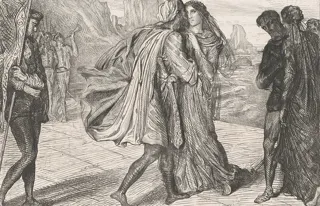
Elizabeth and Mary: “Who shall prevent me?”
Mary, Queen of Scots, has been Elizabeth's prisoner in England for years, and is condemned for plotting against her. Her friends have arranged for the two queens to meet in the park at Fotheringhay. Mary has knelt and begged for mercy, and Elizabeth answers with contempt, until Mary's patience breaks.
- 4 min 45 sec
- Dramatic
- Elizabeth: Woman, 35 to 55
- Mary: Woman, 25 to 45
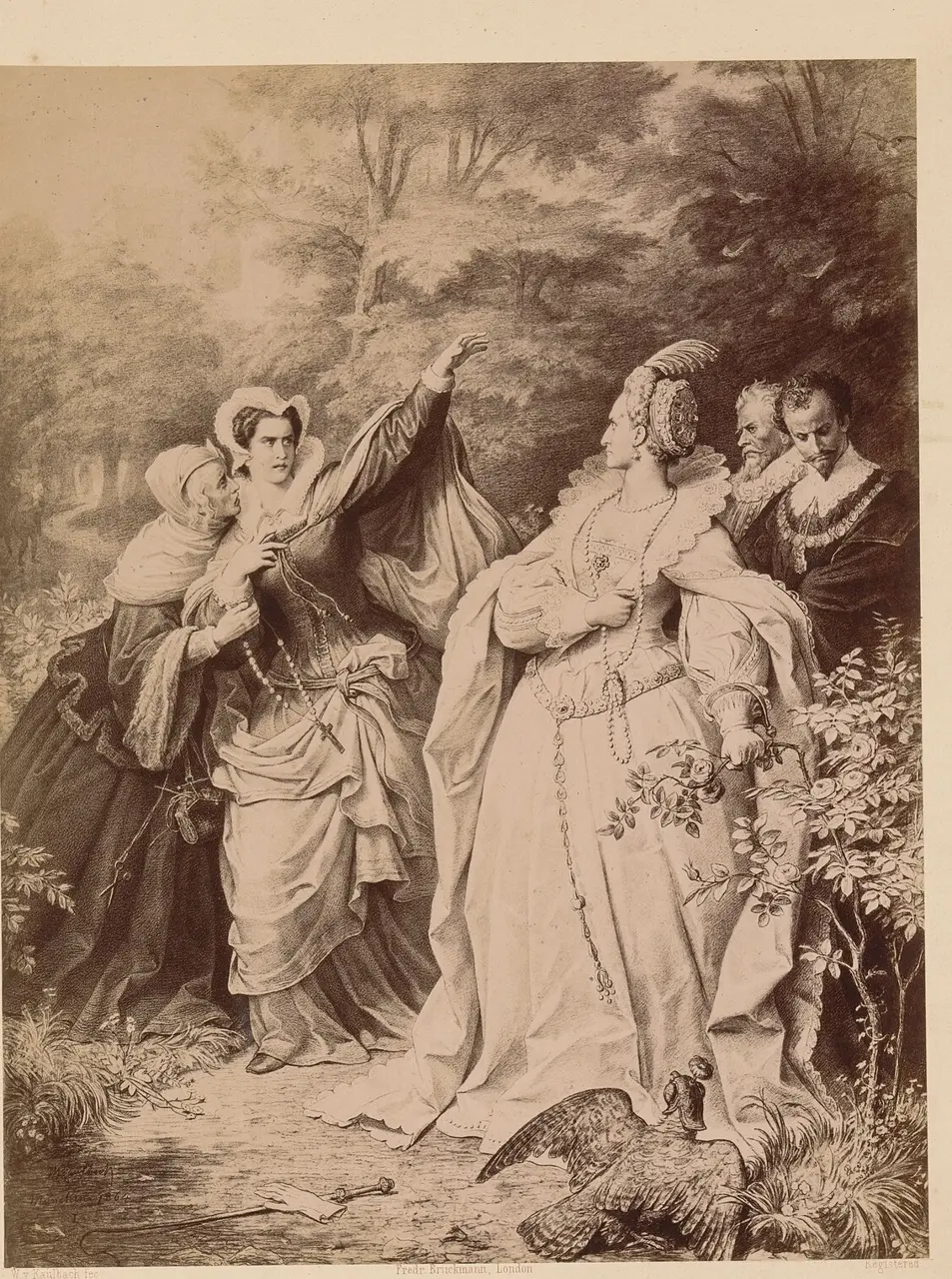
Act 3, Scene 4
Who shall prevent me? Say, did not your uncle
Set all the kings of Europe the example,
How to conclude a peace with those they hate.
Be mine the school of Saint Bartholomew;
What's kindred then to me, or nation's laws?
The church can break the bands of every duty;
It consecrates the regicide, the traitor;
I only practise what your priests have taught!
Say then, what surety can be offered me,
Should I magnanimously loose your bonds?
Say, with what lock can I secure your faith,
Which by Saint Peter's keys cannot be opened?
Force is my only surety; no alliance
Can be concluded with a race of vipers.
Oh! this is but your wretched, dark suspicion!
For you have constantly regarded me
But as a stranger, and an enemy.
Had you declared me heir to your dominions,
As is my right, then gratitude and love
In me had fixed, for you, a faithful friend
And kinswoman.
Your friendship is abroad,
Your house is papacy, the monk your brother.
Name you my successor! The treacherous snare!
That in my life you might seduce my people;
And, like a sly Armida, in your net
Entangle all our noble English youth;
That all might turn to the new rising sun,
And I--
O sister, rule your realm in peace;
I give up every claim to these domains
Alas! the pinions of my soul are lamed;
Greatness entices me no more: your point
Is gained; I am but Mary's shadow now
My noble spirit is at last broke down
By long captivity:--you've done your worst
On me; you have destroyed me in my bloom!
Now, end your work, my sister;--speak at length
The word, which to pronounce has brought you hither;
For I will ne'er believe that you are come,
To mock unfeelingly your hapless victim.
Pronounce this word;--say, "Mary, you are free:
You have already felt my power,--learn now
To honor too my generosity."
Say this, and I will take my life, will take
My freedom, as a present from your hands.
One word makes all undone;--I wait for it;
Oh, let it not be needlessly delayed.
Woe to you if you end not with this word!
For should you not, like some divinity,
Dispensing noble blessings, quit me now,
Then, sister, not for all this island's wealth,
For all the realms encircled by the deep,
Would I exchange my present lot for yours.
And you confess at last that you are conquered:
Are all your schemes run out? No more assassins
Now on the road? Will no adventurer
Attempt again for you the sad achievement?
Yes, madam, it is over:--you'll seduce
No mortal more. The world has other cares;
None is ambitious of the dangerous honor
Of being your fourth husband--you destroy
Your wooers like your husbands.
[starting angrily] Sister, sister!
Grant me forbearance, all ye powers of heaven!
[regards her long with a look of proud contempt] Those then, my Lord of Leicester, are the charms
Which no man with impunity can view,
Near which no woman dare to stand?
In sooth, this honor has been cheaply gained;
She who to all is common, may with ease
Become the common object of applause.
This is too much!
[laughing insultingly] You show us now, indeed,
Your real face; till now 'twas but the mask.
[burning with rage, yet dignified and noble] My sins were human, and the faults of youth:
Superior force misled me. I have never
Denied or sought to hide it: I despised
All false appearance, as became a queen.
The worst of me is known, and I can say,
That I am better than the fame I bear.
Woe to you! when, in time to come, the world
Shall draw the robe of honor from your deeds,
With which thy arch-hypocrisy has veiled
The raging flames of lawless, secret lust.
Virtue was not your portion from your mother;
Well know we what it was which brought the head
Of Anna Boleyn to the fatal block.
More duologues for two women
 Olivia and Viola: “Now, sir, what is your text?”Twelfth Night · 3 min 45 sec · Comic
 Gwendolen and Cecily: “Did you say Ernest?”The Importance of Being Earnest · 4 min · Comic
 Sonia and Helena: “Autumn roses, beautiful, sorrowful roses!”Uncle Vanya · 5 min · Dramatic
 Desdemona and Emilia: “I do not think there is any such woman”Othello · 4 min 15 sec · Dramatic