
Duologue from Hedda Gabler by Henrik Ibsen
Hedda and Thea: “Weren't we schoolfellows?”
Thea Elvsted, whom Hedda bullied at school, has come to town after Eilert Lovborg. Hedda draws her out, gently, until she tells her everything.
- 5 min
- Dramatic
- Hedda: Woman, 28 to 35
- Mrs. Elvsted: Woman, 25 to 32
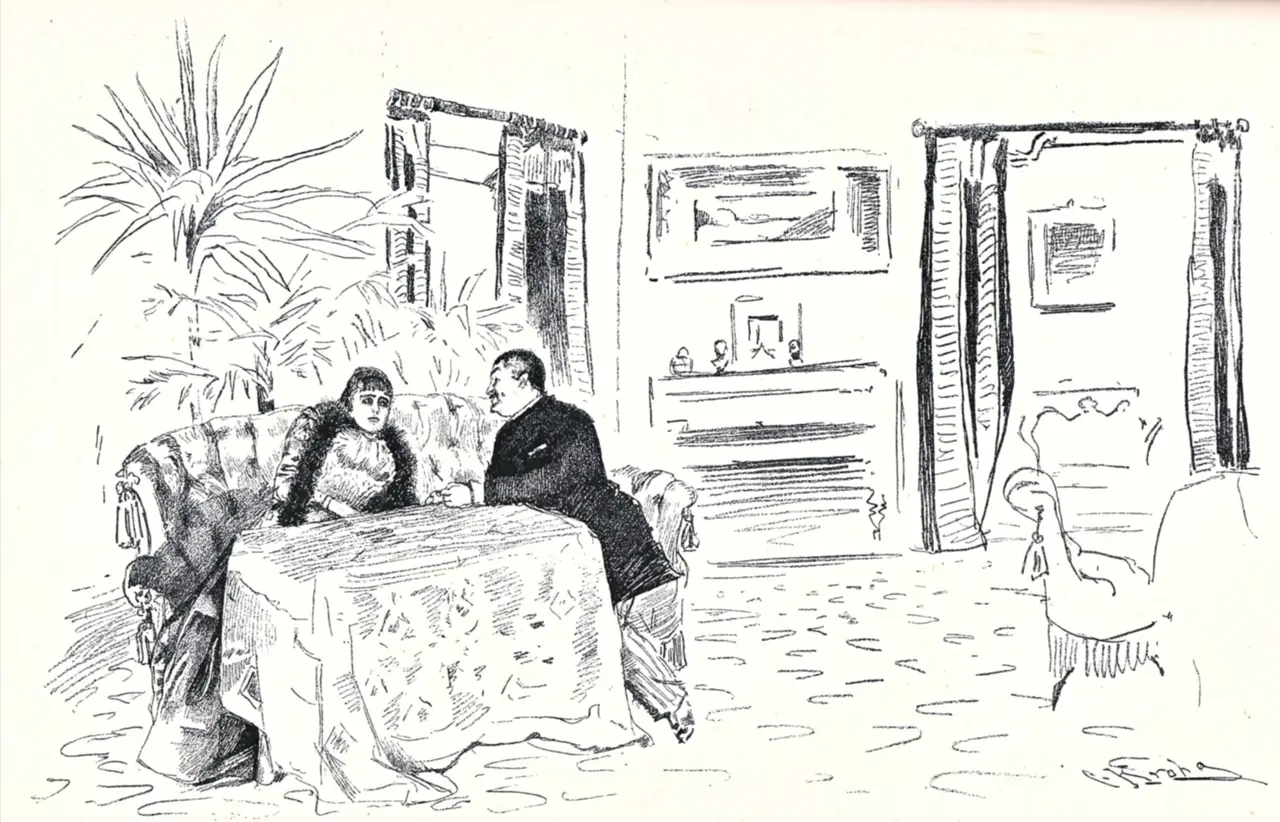

Act 1
[Goes up to MRS. ELVSTED, smiles, and says in a low voice] There! We have killed two birds with one stone.
What do you mean?
Could you not see that I wanted him to go?
Yes, to write the letter
And that I might speak to you alone.
[Confused] About the same thing?
Precisely.
[Apprehensively] But there is nothing more, Mrs. Tesman! Absolutely nothing!
Oh yes, but there is. There is a great deal more--I can see that. Sit here--and we'll have a cosy, confidential chat.
She forces MRS. ELVSTED to sit in the easy-chair beside the stove, and seats herself on one of the footstools.
[Anxiously, looking at her watch] But, my dear Mrs. Tesman--I was really on the point of going.
Oh, you can't be in such a hurry.--Well? Now tell me something about your life at home.
Oh, that is just what I care least to speak about.
But to me, dear--? Why, weren't we schoolfellows?
Yes, but you were in the class above me. Oh, how dreadfully afraid of you I was then!
Afraid of me?
Yes, dreadfully. For when we met on the stairs you used always to pull my hair.
Did I, really?
Yes, and once you said you would burn it off my head.
Oh that was all nonsense, of course.
Yes, but I was so silly in those days.--And since then, too--we have drifted so far--far apart from each other. Our circles have been so entirely different.
Well then, we must try to drift together again. Now listen. At school we said du to each other; and we called each other by our Christian names
No, I am sure you must be mistaken.
No, not at all! I can remember quite distinctly. So now we are going to renew our old friendship. [Draws the footstool closer to MRS. ELVSTED.] There now! [Kisses her cheek.] You must say du to me and call me Hedda.
[Presses and pats her hands] Oh, how good and kind you are! I am not used to such kindness.
There, there, there! And I shall say du to you, as in the old days, and call you my dear Thora.
My name is Thea.
Why, of course! I meant Thea. [Looks at her compassionately.] So you are not accustomed to goodness and kindness, Thea? Not in your own home?
Oh, if I only had a home! But I haven't any; I have never had a home.
[Looks at her for a moment] I almost suspected as much.
[Gazing helplessly before her] Yes--yes--yes.
I don't quite remember--was it not as housekeeper that you first went to Mr. Elvsted's?
I really went as governess. But his wife--his late wife--was an invalid,--and rarely left her room. So I had to look after the housekeeping as well.
And then--at last--you became mistress of the house.
[Sadly] Yes, I did.
Let me see--about how long ago was that?
My marriage?
Yes.
Five years ago.
To be sure; it must be that.
Oh those five years--! Or at all events the last two or three of them! Oh, if you could only imagine
[Giving her a little slap on the hand] De? Fie, Thea!
Yes, yes, I will try--. Well, if--you could only imagine and understand
[Lightly] Eilert Lovborg has been in your neighbourhood about three years, hasn't he?
[Looks at here doubtfully] Eilert Lovborg? Yes--he has.
Had you known him before, in town here?
Scarcely at all. I mean--I knew him by name of course.
But you saw a good deal of him in the country?
Yes, he came to us every day. You see, he gave the children lessons; for in the long run I couldn't manage it all myself.
No, that's clear.--And your husband--? I suppose he is often away from home?
Yes. Being sheriff, you know, he has to travel about a good deal in his district.
[Leaning against the arm of the chair] Thea--my poor, sweet Thea--now you must tell me everything--exactly as it stands.
Well, then you must question me.
What sort of a man is your husband, Thea? I mean--you know--in everyday life. Is he kind to you?
[Evasively] I am sure he means well in everything.
I should think he must be altogether too old for you. There is at least twenty years' difference between you, is there not?
[Irritably] Yes, that is true, too. Everything about him is repellent to me! We have not a thought in common. We have no single point of sympathy--he and I.
But is he not fond of you all the same? In his own way?
Oh I really don't know. I think he regards me simply as a useful property. And then it doesn't cost much to keep me. I am not expensive.
More duologues for two women
 Olivia and Viola: “Now, sir, what is your text?”Twelfth Night · 3 min 45 sec · Comic
 Gwendolen and Cecily: “Did you say Ernest?”The Importance of Being Earnest · 4 min · Comic
 Sonia and Helena: “Autumn roses, beautiful, sorrowful roses!”Uncle Vanya · 5 min · Dramatic
 Desdemona and Emilia: “I do not think there is any such woman”Othello · 4 min 15 sec · Dramatic