
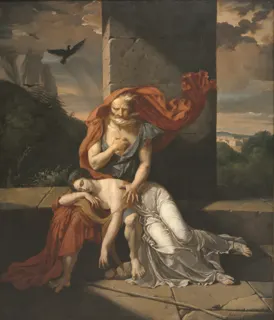
 Oedipus at Colonosby SophoclesOld, blind and banished, Oedipus comes to Athens to die, and both sides of a war want his grave.
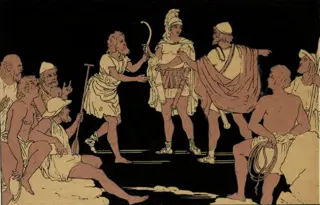 Philoctetesby SophoclesThe Greeks need the bow of a man they abandoned on a desert island, and send a boy to trick him out of it.
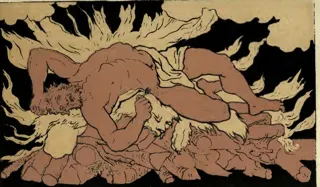 The Trachinian Maidensby SophoclesA wife tries to win back her husband's love with a charm, not knowing what it will do.
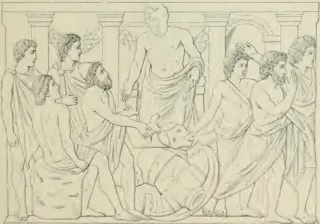 Aiasby SophoclesDenied the armour of Achilles, a great warrior sets out to kill his commanders, and wakes to his shame.
The play
OEDIPUS--Priest of Zeus [with the Train of Suppliants grouped before an altar].
Nurslings of Cadmus, children of my care,
Why press ye now to kneel before my gate
With sacred branches in those suppliant hands,
While o'er your city clouds of incense rise
And sounds of praise, mingling with sounds of woe?
I would not learn of your estate, my sons,
Through others, wherefore I myself am come,
Your Oedipus,--a name well known to men.
Speak, aged friend, whose look proclaims thee meet
To be their spokesman--What desire, what fear
Hath brought you? Doubt not of my earnest will
To lend all succour. Hard would be the heart
That looked unmoved on such a kneeling throng.
Great ruler of my country, thou beholdest
The different ages of our flock who here
Are gathered round thine altar,--some, whose wing
Hath not yet ventured far from home, and some
Burdened with many years, priests of the Gods,
Myself the arch priest of Zeus, and these fresh youths,
A chosen few. Others there are who crowd
The holy agora and the temples twain
Of Pallas, and Ismenus' hallowed fires,
A suppliant host. For, as thyself perceivest,
Our city is tempest tost, and all too weak
To lift above the waves her weary prow
That plunges in a rude and ravenous sea.
Earth's buds are nipped, withering the germs within,
Our cattle lose their increase, and our wives
Have fruitless travail; and that scourge from Heaven,
The fiery Pestilence abhorred of men,
Descending on our people with dire stroke
Lays waste the Home of Cadmus, while dark Death
Wins ample tribute of laments and groans.
We kneel, then, at thy hearth; not likening thee
Unto the gods, I nor these children here,
But of men counting thee the first in might
Whether to cope with earthly casualty
Or visiting of more than earthly Power.
Thou, in thy coming to this Theban land,
Didst take away the hateful tax we paid
To that stern songstress,--aided not by us
With hint nor counsel, but, as all believe,
Gifted from heaven with life-restoring thought.
Now too, great Oedipus of matchless fame,
We all uplift our suppliant looks to thee,
To find some help for us, whether from man,
Or through the prompting of a voice Divine.
Experienced counsel, we have seen and know,
Hath ever prosperous issue. Thou, then, come,
Noblest of mortals, give our city rest
From sorrow! come, take heed! seeing this our land
Now calls thee Saviour for thy former zeal;
And 'twere not well to leave this memory
Of thy great reign among Cadmean men,
'He raised us up, only again to fall.'
Let the salvation thou hast wrought for us
Be flawless and assured! As once erewhile
Thy lucky star gave us prosperity,
Be the same man to-day. Wouldst thou be king
In power, as in command, 'tis greater far
To rule a people than a wilderness.
Since nought avails or city or buttressed wall
Or gallant vessel, if unmanned and void.
Ye touch me to the core. Full well I know
Your trouble and your desire. Think not, my sons,
I have no feeling of your misery!
Yet none of you hath heaviness like mine.
Your grief is held within the single breast
Of each man severally. My burdened heart
Mourns for myself, for Thebe, and for you.
Your coming hath not roused me from repose:
I have watched, and bitterly have wept; my mind
Hath travelled many a labyrinth of thought.
And now I have tried in act the only plan
Long meditation showed me. I have sent
The brother of my queen, Menoeceus' son,
Creon, to learn, in Phoebus' Delphian Hall,
What word or deed of mine may save this city.
And when I count the time, I am full of pain
To guess his speed; for he is absent long,
Beyond the limit of expectancy.
But when he shall appear, base then were I
In aught to disobey the voice of Heaven.
Lo, in good time, crowning thy gracious word,
'Tis told me by these youths, Creon draws near.
Apollo! may his coming be as blest
With saving fortune, as his looks are bright.
Sure he brings joyful news; else had he ne'er
Worn that full wreath of thickly-berried bay.
We have not long to doubt. He can hear now.
Enter CREON.
Son of Menoeceus, brother of my queen,
What answer from Apollo dost thou bring?
Good; for my message is that even our woes,
When brought to their right issue, shall be well.
What saith the oracle? Thy words so far
Neither embolden nor dishearten me.
Say, must I tell it with these standing by,
Or go within? I am ready either way.
Speak forth to all. The burden of their grief
Weighs more on me than my particular fear.
CE. My lips shall utter what the God hath said.
Sovereign Apollo clearly bids us drive
Forth from this region an accursed thing
(For such is fostered in the land and stains
Our sacred clime), nor cherish it past cure.
What is the fault, and how to be redressed?
By exile, or by purging blood with blood.
Since blood it is that shakes us with this storm.
Whose murder doth Apollo thus reveal?
My gracious lord, before thy prosperous reign
King Laius was the leader of our land.
Though I ne'er saw him, I have heard, and know.
Phoebus commands us now to punish home,
Whoe'er they are, the authors of his death.
But they, where are they? Where shall now be read
The fading record of this ancient guilt?
He saith, 'tis in this land. And what is sought
Is found, while things uncared for glide away.
But where did Laius meet this violent end?
At home, afield, or on some foreign soil?
He had left us, as he said, to visit Delphi;
But nevermore returned since he set forth.
And was there none, no fellow traveller,
To see, and tell the tale, and help our search?
No, they were slain; save one, who, flying in fear,
Had nought to tell us but one only thing.
What was that thing? A little door of hope,
Once opened, may discover much to view.
A random troop of robbers, meeting him,
Outnumbered and o'erpowered him. So 'twas told.
What robber would have ventured such a deed,
If unsolicited with bribes from hence?
We thought of that. But Laius being dead,
We found no helper in our miseries.
When majesty was fallen, what misery
Could hinder you from searching out the truth?
A present trouble had engrossed our care.
The riddling Sphinx compelled us to observe
The moment's grief, neglecting things unknown.
But I will track this evil to the spring
And clear it to the day. Most worthily
Doth great Apollo, worthily dost thou
Prompt this new care for the unthought of dead.
And me too ye shall find a just ally,
Succouring the cause of Phoebus and the land.
Since, in dispelling this dark cloud, I serve
No indirect or distant claim on me,
But mine own life, for he that slew the king
May one day turn his guilty hand 'gainst me
With equal rage. In righting Laius, then,
I forward mine own cause.--Now, children, rise
From the altar-steps, and lift your suppliant boughs,
And let some other summon to this place
All Cadmus' people, and assure them, I
Will answer every need. This day shall see us
Blest with glad fortune through God's help, or fallen.
Rise then, my children. Even for this we came
Which our good lord hath promised of himself.
Only may Phoebus, who hath sent this word,
With healing power descend, and stay the plague. [Exeunt severally
[entering] Kind voice of Heaven, soft-breathing from the height I 1
Of Pytho's opulent home to Thebe bright,
What wilt thou bring to day?
Ah, Delian Healer, say!
My heart hangs on thy word with trembling awe:
What new giv'n law,
Or what returning in Time's circling round
Wilt thou unfold? Tell us, immortal sound,
Daughter of golden Hope, tell us, we pray, we pray!
First, child of Zeus, Pallas, to thee appealing, I 2
Then to sweet Artemis, thy sister, kneeling,
Who with benignant hand
Still guards our sacred land,
Throned o'er the circling mart that hears her praise,
And thou, whose rays
Pierce evil from afar, ho! come and save,
Ye mighty three! if e'er before ye drave
The threatening fire of woe from Thebe, come to day!
For ah! the griefs that on me weigh II 1
Are numberless; weak are my helpers all,
And thought finds not a sword to fray
This hated pestilence from hearth or hall.
Earth's blossoms blasted fall:
Nor can our women rise
From childbed after pangs and cries;
But flocking more and more
Toward the western shore,
Soul after soul is known to wing her flight,
Swifter than quenchless flame, to the far realm of Night.
So deaths innumerable abound. II 2
My city's sons unpitied lie around
Over the plague-encumbered ground
And wives and matrons old on every hand
Along the altar-strand
Groaning in saddest grief
Pour supplication for relief.
Loud hymns are sounding clear
With wailing voices near.
Then, golden daughter of the heavenly sire,
Send bright-eyed Succour forth to drive away this fire.
And swiftly speed afar, III 1
Windborne on backward car,
The viewless fiend who scares me with wild cries,
To oarless Thracian tide,
Of ocean-chambers wide,
About the bed where Amphitrite lies.
Day blights what night hath spared. O thou whose hand
Wields lightning, blast him with thy thundrous brand.
Shower from the golden string III 2
Thine arrows Lycian King!
O Phoebus, let thy fiery lances fly
Resistless, as they rove
Through Xanthus' mountain-grove!
O Thoeban Bacchus of the lustrous eye,
With torch and trooping Maenads and bright crown
Blaze on thee god whom all in Heaven disown.
[OEDIPUS has entered during the Choral song]
Your prayers are answered. Succour and relief
Are yours, if ye will heed my voice and yield
What help the plague requires. Hear it from me,
Who am hitherto a stranger to the tale,
As to the crime. Being nought concerned therewith,
I could not of myself divine the truth.
But now, as one adopted to your state,
To all of you Cadmeans I speak this:
Whoe'er among you knoweth the murderer
Of Laius, son of royal Labdacus,
Let him declare the deed in full to me.
First, if the man himself be touched with fear,
Let him depart, carrying the guilt away;
No harm shall follow him:--he shall go free.
Or if there be who knows another here,
Come from some other country, to have wrought
This murder, let him speak. Reward from me
And store of kind remembrance shall be his.
But if ye are silent, and one present here
Who might have uttered this, shall hold his peace,
As fearing for himself, or for his friend,
What then shall be performed, hear me proclaim.
I here prohibit all within this realm
Whereof I wield the sceptre and sole sway,
To admit the murderer, whosoe'er he be,
Within their houses, or to speak with him,
Or share with him in vow or sacrifice
Or lustral rite. All men shall thrust him forth,
Our dark pollution, so to me revealed
By this day's oracle from Pytho's cell.
So firm is mine allegiance to the God
And your dead sovereign in this holy war.
Now on the man of blood, whether he lurk
In lonely guilt, or with a numerous band,
I here pronounce this curse:--Let his crushed life
Wither forlorn in hopeless misery.
Next, I pray Heaven, should he or they be housed
With mine own knowledge in my home, that I
May suffer all I imprecate on them.
Last, I enjoin each here to lend his aid
For my sake, and the God's, and for your land
Reft of her increase and renounced by Heaven.
It was not right, when your good king had fallen,
Although the oracle were silent still,
To leave this inquisition unperformed.
Long since ye should have purged the crime. But now
I, to whom fortune hath transferred his crown,
And given his queen in marriage,--yea, moreover,
His seed and mine had been one family
Had not misfortune trampled on his head
Cutting him off from fair posterity,
All this being so, I will maintain his cause
As if my father's, racking means and might
To apprehend the author of the death
Of Laius, son to Labdacus, and heir
To Polydorus and to Cadmus old,
And proud Agenor of the eldest time.
Once more, to all who disobey in this
May Heaven deny the produce of the ground
And offspring from their wives, and may they pine
With plagues more horrible than this to-day.
But for the rest of you Cadmean men,
Who now embrace my word, may Righteousness,
Strong to defend, and all the Gods for aye
Watch over you for blessing in your land.
Under the shadow of thy curse, my lord,
I will speak. I slew him not, nor can I show
The man who slew. Phoebus, who gave the word,
Should name the guilty one.
Thy thought is just,
But man may not compel the Gods.
Again,
That failing, I perceive a second way.
Were there a third, spare not to speak it forth.
I know of one alone whose kingly mind
Sees all King Phoebus sees--Tiresias,--he
Infallibly could guide us in this quest.
That doth not count among my deeds undone.
By Creon's counsel I have sent twice o'er
To fetch him, and I muse at his delay.
The rumour that remains is old and dim.
What rumour? Let no tale be left untried.
'Twas said he perished by some wandering band.
But the one witness is removed from ken.
Well, if the man be capable of fear,
He'll not remain when he hath heard thy curse.
Words have no terror for the soul that dares
Such doings.
Yet lives one who shall convict him.
For look where now they lead the holy seer,
Whom sacred Truth inspires alone of men.
Enter TIRESIAS.
O thou whose universal thought commands
All knowledge and all mysteries, in Heaven
And on the earth beneath, thy mind perceives,
Tiresias, though thine outward eye be dark,
What plague is wasting Thebe, who in thee,
Great Sir, finds her one saviour, her sole guide.
Phoebus (albeit the messengers perchance
Have told thee this) upon our sending sent
This answer back, that no release might come
From this disaster, till we sought and found
And slew the murderers of king Laius,
Or drave them exiles from our land. Thou, then,
Withhold not any word of augury
Or other divination which thou knowest,
But rescue Thebe, and thyself, and me,
And purge the stain that issues from the dead.
On thee we lean: and 'tis a noble thing
To use what power one hath in doing good.
Ah! terrible is knowledge to the man
Whom knowledge profits not. This well I knew,
But had forgotten. Else I ne'er had come.
Why dost thou bring a mind so full of gloom?
Let me go home. Thy part and mine to-day
Will best be borne, if thou obey me in that.
Disloyal and ungrateful! to deprive
The state that reared thee of thine utterance now.
Thy speech, I see, is foiling thine intent;
And I would shield me from the like mishap. [Going.]
Nay, if thou knowest, turn thee not away:
All here with suppliant hands importune thee.
Yea, for ye all are blind. Never will I
Reveal my woe;--mine, that I say not, thine.
So, then, thou hast the knowledge of the crime
And wilt not tell, but rather wouldst betray
This people, and destroy thy fatherland!
You press me to no purpose. I'll not pain
Thee, nor myself. Thou wilt hear nought from me.
How? Miscreant! Thy stubbornness would rouse
Wrath in a breast of stone. Wilt thou yet hold
That silent, hard, impenetrable mien?
You censure me for my harsh mood. Your own
Dwells unsuspected with you. Me you blame!
Who can be mild and gentle, when thou speakest
Such words to mock this people?
It will come:
Although I bury it in silence here.
Must not the King be told of what will come?
No word from me. At this, an if thou wilt,
Rage to the height of passionate vehemence.
Ay, and my passion shall declare my thought.
'Tis clear to me as daylight, thou hast been
The arch-plotter of this deed; yea, thou hast done
All but the actual blow. Hadst thou thy sight,
I had proclaimed thee the sole murderer.
Ay, say'st thou so?--I charge thee to abide
By thine own ordinance; and from this hour
Speak not to any Theban nor to me.
Thou art the vile polluter of the land.
O void of shame! What wickedness is this?
What power will give thee refuge for such guilt?
The might of truth is scatheless. I am free.
Whence came the truth to thee? Not from thine art.
From thee, whose rage impelled my backward tongue.
Speak it once more, that I may know the drift.
Was it so dark? Or wouldst thou tempt me further?
I cannot say 'twas clear. Speak it again.
I say thou art the murderer whom thou seekest.
Again that baleful word! But thou shalt rue.
Shall I add more, to aggravate thy wrath?
All is but idleness. Say what thou wilt.
I tell thee thou art living unawares
In shameful commerce with thy near'st of blood,
Ignorant of the abyss wherein thou liest.
Think you to triumph in offending still?
If Truth have power.
She hath, but not for thee.
Blind as thou art in eyes and ears and mind.
O miserable reproach, which all who now
Behold thee, soon shall thunder forth on thee!
Nursed in unbroken night, thou canst not harm
Or me, or any man who seeth the day.
No, not from me proceeds thy fall; the God,
Who cares for this, is able to perform it.
Came this device from Creon or thyself?
Not Creon: thou art thy sole enemy.
O wealth and sovereign power and high success
Attained through wisdom and admired of men,
What boundless jealousies environ you!
When for this rule, which to my hand the State
Committed unsolicited and free,
Creon, my first of friends, trusted and sure,
Would undermine and hurl me from my throne,
Meanly suborning such a mendicant
Botcher of lies, this crafty wizard rogue,
Blind in his art, and seeing but for gain.
Where are the proofs of thy prophetic power?
How came it, when the minstrel-hound was here,
This folk had no deliverance through thy word?
Her snare could not be loosed by common wit,
But needed divination and deep skill;
No sign whereof proceeded forth from thee
Procured through birds or given by God, till I,
The unknowing traveller, overmastered her,
The stranger Oedipus, not led by birds,
But ravelling out the secret by my thought:
Whom now you study to supplant, and trust
To stand as a supporter of the throne
Of lordly Creon,--To your bitter pain
Thou and the man who plotted this will hunt
Pollution forth.--But for thy reverend look
Thou hadst atoned thy trespass on the spot.
Your friends would humbly deprecate the wrath
That sounds both in your speech, my lord, and his.
That is not what we need, but to discern
How best to solve the heavenly oracle.
Though thou art king and lord, I claim no less
Lordly prerogative to answer thee.
Speech is my realm; Apollo rules my life,
Not thou. Nor need I Creon to protect me.
Now, then: my blindness moves thy scorn:--thou hast
Thy sight, and seest not where thou art sunk in evil,
What halls thou dost inhabit, or with whom:
Know'st not from whence thou art--nay, to thy kin,
Buried in death and here above the ground,
Unwittingly art a most grievous foe.
And when thy father's and thy mother's curse
With fearful tread shall drive thee from the land,
On both sides lashing thee,--thine eye so clear
Beholding darkness in that day,--oh, then,
What region will not shudder at thy cry?
What echo in all Cithaeron will be mute,
When thou perceiv'st, what bride-song in thy hall
Wafted thy gallant bark with nattering gale
To anchor,--where? And other store of ill
Thou seest not, that shall show thee as thou art,
Merged with thy children in one horror of birth.
Then rail at noble Creon, and contemn
My sacred utterance! No life on earth
More vilely shall be rooted out, than thine.
Must I endure such words from him? Begone!
Off to thy ruin, and with speed! Away,
And take thy presence from our palace-hall!
Had you not sent for me, I ne'er had come.
I knew not thou wouldst utter folly here,
Else never had I brought thee to my door.
To thee I am foolish, then; but to the pair
Who gave thee life, I was wise.
Hold, go not! who?
Who gave me being?
To-day shall bring to light
Thy birth and thy destruction.
Wilt thou still
Speak all in riddles and dark sentences?
Methought thou wert the man to find them out.
Ay! Taunt me with the gift that makes me great.
And yet this luck hath been thy overthrow.
I care not, since I rescued this fair town.
Then I will go. Come, sirrah, guide me forth!
Be it so! For standing here you vex our eye,
But, you being gone, our trouble goes with you.
I go, but I will speak. Why should I fear
Thy frown? Thou ne'er canst ruin me. The word
Wherefore I came, is this: The man you seek
With threatening proclamation of the guilt
Of Laius' blood, that man is here to-day,
An alien sojourner supposed from far,
But by-and-by he shall be certified
A true-born Theban: nor will such event
Bring him great joy; for, blind from having sight
And beggared from high fortune, with a staff
In stranger lands he shall feel forth his way;
Shown living with the children of his loins,
Their brother and their sire, and to the womb
That bare him, husband-son, and, to his father,
Parricide and corrival. Now go in,
Ponder my words; and if thou find them false,
then say my power is naught in prophecy. [Exeunt severally
Whom hath the voice from Delphi's rocky throne I 1
Loudly declared to have done
Horror unnameable with murdering hand?
With speed of storm-swift car
'Tis time he fled afar
With mighty footstep hurrying from the land.
For, armed with lightning brand,
The son of Zeus assails him with fierce bounds,
Hunting with Death's inevitable hounds.
Late from divine Parnassus' snow-capped height I 2
This utterance sprang to light,
To track by every path the man unknown.
Through woodland caverns deep
And o'er the rocky steep
Harbouring in caves he roams the wild alone,
With none to share his moan.
Shunning that prophet-voice's central sound,
Which ever lives, and haunts him, hovering round.
The reverend Seer hath stirred me with strange awe. II 1
Gainsay I cannot, nor yet think him true.
I know not how to speak. My fluttering heart
In wild expectancy sees nothing clear.
Things past and future with the present doubt
Are shrouded in one mist. What quarrel lay
'Twixt Cadmus' issue and Corinthus' heir
Was never shown me, from old times till now,
By one on whose sure word I might rely
In running counter to the King's fair fame,
To wreak for Laius that mysterious death.
Zeus and Apollo scan the ways of men II 2
With perfect vision. But of mortals here
That soothsayers are more inspired than I
What certain proof is given? A man through wit
May pass another's wisdom in the race.
But never, till I see the word fulfilled,
Will I confirm their clamour 'gainst the King.
In open day the female monster came:
Then perfect witness made his wisdom clear.
Thebe hath tried him and delights in him.
Wherefore my heart shall still believe him good.
Enter CREON.
Citizens, hearing of dire calumny
Denounced on me by Oedipus the King,
I am here to make loud protest. If he think,
In this embroilment of events, one word
Or deed of mine hath wrought him injury,
I am not careful to prolong my life
Beneath such imputation. For it means
No trifling danger, but disastrous harm,
Making my life dishonoured in the state,
And meanly thought of by my friends and you.
Perchance 'twas but the sudden flash of wrath,
Not the deliberate judgement of the soul.
Who durst declare it, that Tiresias spake
False prophecies, set on to this by me?
Such things were said, I know not how advised.
And were the eyes and spirit not distraught,
When the tongue uttered this to ruin me?
I cannot say. To what my betters do
I am blind. But see, the King comes forth again.
Enter OEDIPUS.
Insolent, art thou here? Hadst thou the face
To bring thy boldness near my palace-roof,
Proved as thou art to have contrived my death
And laid thy robber hands upon my state?
Tell me, by heaven, had you seen in me
A coward or a fool, when you planned this?
Deemed you I should be blind to your attempt
Craftily creeping on, or, when perceived,
Not ward it off? Is't not a silly scheme,
To think to compass without troops of friends
Power, that is only won by wealth and men?
Wilt them be counselled? Hear as much in turn
As thou hast spoken, and then thyself be judge.
I know thy tongue, but I am slow to learn
From thee, whom I have found my grievous foe.
First on this very point, hear me declare
I will not hear that thou art not a villain.
Thine is a shallow judgement, if thou thinkest
Self-will without true thought can bring thee gain.
Thine is a shallow judgement, if thou thinkest
Thou canst abuse thy kinsman and be free.
A rightful sentence. But I fain would learn
What wrong is that you speak of?
Tell me this;
Didst thou, or not, urge me to send and bring
The reverend-seeming prophet?
Yea, and still
I hold that counsel firm.
How long is 't now
Since Laius
What? I do not catch your drift.
Vanished in ruin by a dire defeat?
'Twere long to count the years that come between.
And did this prophet then profess his art?
Wise then as now, nor less in reverence.
Then at that season did he mention me?
Not in my hearing.
But, I may presume,
Ye held an inquisition for the dead?
Yes, we inquired, of course: and could not hear.
Why was he dumb, your prophet, in that day?
I cannot answer, for I do not know.
This you can answer, for you know it well.
Say what? I will not gainsay, if I know.
That, but for your advice, he had not dared
To talk of Laius' death as done by me.
You know, that heard him, what he spake. But I
Would ask thee too a question in my turn.
No questioning will fasten blood on me.
Hast thou my sister for thine honoured queen?
The fact is patent, and denial vain.
And shar'st with her dominion of this realm?
All she desires is given her by my will.
Then, am not I third-partner with you twain?
There is your villany in breaking fealty.
Not so, if thou wouldst reason with thyself
As I do. First consider one thing well:
Who would choose rule accompanied with fear
Before safe slumbers with an equal sway?
'Tis not my nature, no, nor any man's,
Who follows wholesome thoughts, to love the place
Of domination rather than the power.
Now, without fear, I have my will from thee;
But were I king, I should do much unwillingly.
How then can I desire to be a king,
When masterdom is mine without annoy?
Delusion hath not gone so far with me
As to crave more than honour joined with gain.
Now all men hail me happy, all embrace me;
All who have need of thee, call in my aid;
For thereupon their fortunes wholly turn.
How should I leave this substance for that show?
No man of sense can harbour thoughts of crime.
Such vain ambition hath no charm for me,
Nor could I bear to lend it countenance.
If you would try me, go and ask again
If I brought Phoebus' answer truly back.
Nay more, should I be found to have devised
Aught in collusion with the seer, destroy me,
Not by one vote, but two, mine own with thine.
But do not on a dim suspicion blame me
Of thy mere will. To darken a good name
Without clear cause is heinous wickedness;
And to cast off a worthy friend I call
No less a folly than to fling away
What most we love, the life within our breast.
The certainty of this will come with time;
For time alone can clear the righteous man.
An hour suffices to make known the villain.
Prudence bids hearken to such words, my lord,
For fear one fall. Swift is not sure in counsel.
When he who hath designs on me is swift
In his advance, I must bethink me swiftly.
Should I wait leisurely, his work hath gained
Achievement, while my plans have missed success.
What would you then? To thrust me from the land?
Nay, death, not exile, is my wish for thee,
When all have seen what envy brings on men.
You'll ne'er relent nor listen to my plea.
You'll ne'er be governed or repent your guilt.
Because I see thou art blind.
Not to my need.
Mine must be thought of too.
You are a villain.
How if thy thought be vain?
Authority
Must be maintained.
Not when authority
Declines to evil.
O my citizens!
I have a part in them no less than you.
Cease, princes. Opportunely I behold
Jocasta coming toward you from the palace.
Her presence may attune your jarring minds.
Enter JOCASTA.
Unhappy that ye are, why have ye reared
Your wordy rancour 'mid the city's harms?
Have you no shame, to stir up private broils
In such a time as this? Get thee within! [To OED]
And thou too, Creon! nor enlarge your griefs
To make a mountain out of nothingness.
Sister, thy husband Oedipus declares
One of two horrors he will wreak on me,
Banishment from my native land, or death.
Yea, for I caught him practising, my queen,
Against our person with malignant guile.
May comfort fail me, and a withering curse
Destroy me, if I e'er planned aught of this.
I pray thee, husband, listen to his plea;
Chiefly respecting his appeal to Heaven,
But also me, and these who stand by thee.
1. Incline to our request I 1
Thy mind and heart, O King!
What would you I should yield unto your prayer?
2. Respect one ever wise,
Whose oath protects him now.
Know ye what thing ye ask?
3. I know.
Then plainly tell.
4. Thy friend, who is rendered sacred by his oath,
Rob not of honour through obscure surmise.
In asking that, you labour for my death
Or banishment. Of this be well assured.
5. No, by the Sun I swear, II 1
Vaunt-courier of the host of heaven.
For may I die the last of deaths,
Unblest of God or friend,
If e'er such thought were mine.
But oh! this pining land
Afflicts my sorrow-burdened soul,
To think that to her past and present woe
She must add this, which springs to her from you.
Then let him range, though I must die outright,
Or be thrust forth with violence from the land!
--Not for his voice, but thine, which wrings my heart:
He, wheresoe'er he live, shall have my hate.
You show yourself as sullen when you yield,
As unendurable in your fury's height.
Such natures justly give themselves most pain.
Let me alone, then, and begone!
I go,
Untainted in their sight, though thou art blind. [Exit
1. Lady, why tarriest thou I 2
To lead thy husband in?
Not till I learn what mischief is befallen.
2. A dim, unproved debate.
Reproach, though unfounded, stings.
From both?
3. From both alike.
How caused?
4. Enough for me,
Amply enough it seems, when our poor land
Is vexed already, not to wake what sleeps.
[to LEADER OF CH] See where thine honest zeal hath landed thee,
Bating my wrath, and blunting my desire!
5. My prince, I say it again: II 2
Assure thee, I were lost to sense,
Infatuate, void of wholesome thought,
Could I be tempted now
To loose my faith from thee,
Who, when the land I love
Laboured beneath a wildering load,
Didst speed her forth anew with favouring gale.
Now, too, if but thou may'st, be her good guide.
Let not thy queen be left in ignorance
What cause thou hadst to lift thy wrath so high.
I'll tell thee, lady, for I honour thee
More than these citizens. 'Twas Creon there,
And his inveterate treason against me.
Accuse him, so you make the quarrel plain.
He saith I am the murderer of the King.
Speaks he from hearsay, or as one who knows?
He keeps his own lips free: but hath suborned
A rascal soothsayer to this villany.
Hearken to me, and set your heart at rest
On that you speak of, while I make you learn
No mortal thing is touched by soothsaying.
Of that I'll give thee warrant brief and plain.
Word came to Laius once, I will not say
From Phoebus' self, but from his ministers,
The King should be destroyed by his own son,
If son were born to him from me. What followed?
Laius was slain, by robbers from abroad,
Saith Rumour, in a cross-way! But the child
Lived not three days, ere by my husband's hand
His feet were locked, and he was cast and left
By messengers on the waste mountain wold.
So Phoebus neither brought upon the boy
His father's murder, nor on Laius
The thing he greatly feared, death by his son.
Such issue came of prophesying words.
Therefore regard them not. God can himself
With ease bring forth what for his ends he needs.
What strange emotions overcloud my soul,
Stirred to her depths on hearing this thy tale!
What sudden change is this? What cares oppress thee?
Methought I heard thee say, King Laius
Was at a cross-road overpowered and slain?
So ran the talk that yet is current here.
Where was the scene of this unhappy blow?
Phocis the land is named. The parted ways
Meet in one point from Dauha and from Delphi.
And since the event how much of time hath flown?
'Twas just ere you appeared with prospering speed
And took the kingdom, that the tidings came.
What are thy purposes against me, Zeus?
Why broods thy mind upon such thoughts, my king?
Nay, ask me not! But tell me first what height
Had Laius, and what grace of manly prime?
Tall, with dark locks just sprinkled o'er with grey:
In shape and bearing much resembling thee.
O heavy fate! How all unknowingly
I laid that dreadful curse on my own head!
How?
I tremble as I gaze on thee, my king!
The fear appals me that the seer can see.
Tell one thing more, to make it doubly clear!
I am lothe to speak, but, when you ask, I will.
Had he scant following, or, as princes use,
Full numbers of a well-appointed train?
There were but five in all: a herald one;
And Laius travelled in the only car.
Woe! woe! 'Tis clear as daylight. Who was he
That brought you this dire message, O my queen?
A home-slave, who alone returned alive.
And is he now at hand within the house?
No, truly. When he came from yonder scene
And found thee king in room of Laius murdered,
He touched my hand, and made his instant prayer
That I would send him to o'erlook the flocks
And rural pastures, so to live as far
As might be from the very thought of Thebes.
I granted his desire. No servant ever
More richly merited such boon than he.
Can he be brought again immediately?
Indeed he can. But why desire it so?
Words have by me been uttered, O my queen,
That give me too much cause to wish him here.
Then come he shall. But I may surely claim
To hear what in thy state goes heavily.
Thou shalt not lose thy rights in such an hour,
When I am harrowed thus with doubt and fear.
To whom more worthy should I tell my grief?
--My father was Corinthian Polybus,
My mother, Dorian Merope.--I lived
A prince among that people, till a chance
Encountered me, worth wonder, but, though strange,
Not worth the anxious thought it waked in me.
For at a feasting once over the wine
One deep in liquor called aloud to me,
'Hail, thou false foundling of a foster-sire!'
That day with pain I held my passion down;
But early on the morrow I came near
And questioned both my parents, who were fierce
In anger at the man who broached this word.
For their part I was satisfied, but still
It galled me, for the rumour would not die.
Eluding then my parents I made way
To Delphi, where, as touching my desire,
Phoebus denied me; but brake forth instead
With other oracles of misery
And horrible misfortune, how that I
Must know my mother's shame, and cause to appear
A birth intolerable in human view,
And do to death the author of my life.
I fled forth at the word, conjecturing now
Corinthia's region by the stars of heaven,
And wandered, where I never might behold
Those dreadful prophecies fulfilled on me.
So travelling on, I came even to the place
Where, as thou tell'st, the King of Thebe fell.
And, O my wife, I will hide nought from thee.
When I drew near the cross-road of your tale,
A herald, and a man upon a car,
Like your description, there encountered me.
And he who led the car, and he himself
The greybeard, sought to thrust me from the path.
Then in mine angry mood I sharply struck
The driver-man who turned me from the way;
Which when the elder saw, he watched for me
As I passed by, and from the chariot-seat
Smote full upon my head with the fork'd goad;
But got more than he gave; for, by a blow
From this right hand, smit with my staff, he fell
Instantly rolled out of the car supine.
I slew them every one. Now if that stranger
Had aught in common with king Laius,
What wretch on earth was e'er so lost as I?
Whom have the Heavens so followed with their hate?
No house of Theban or of foreigner
Must any more receive me, none henceforth
Must speak to me, but drive me from the door!
I, I have laid this curse on mine own head!
Yea, and this arm that slew him now enfolds
His queen. O cruel stain! Am I not vile?
Polluted utterly! Yes, I must flee,
And, lost to Thebe, nevermore behold
My home, nor tread my country, lest I meet
In marriage mine own mother, and bring low
His head that gave me life and reared my youth,
My father, Polybus. Ah! right were he
Who should declare some god of cruel mood
Had sent this trouble upon my soul! Ye Powers,
Worshipped in holiness, ne'er may I see
That day, but perish from the sight of men,
Ere sins like these be branded on my name!
Thy fear is ours, O king: yet lose not hope,
Till thou hast heard the witness of the deed.
Ay, that is all I still have left of hope,
To bide the coming of the shepherd man.
What eager thought attends his presence here?
I'll tell thee. Should his speech accord with thine,
My life stands clear from this calamity.
What word of mine agreed not with the scene?
You said he spake of robbers in a band
As having slain him. Now if he shall still
Persist in the same number, I am free.
One man and many cannot be the same.
But should he tell of one lone traveller,
Then, unavoidably, this falls on me.
So 'twas given out by him, be sure of that.
He cannot take it back. Not I alone
But all the people heard him speak it so.
And should he swerve in aught from his first tale,
He ne'er can show the murder of the king
Rightly accordant with the oracle.
For Phoebus said expressly he should fall
Through him whom I brought forth. But that poor babe
Ne'er slew his sire, but perished long before.
Wherefore henceforth I will pursue my way
Regardless of all words of prophecy.
Wisely resolved. But still send one to bring
The labourer swain, and be not slack in this.
I will, and promptly. Go we now within!
My whole desire is but to work thy will. [Exeunt
O may my life be evermore I 1
Pure in each holy word and deed
By those eternal laws decreed
That pace the sapphire-paven floor!
Children of Heaven, of Ether born,
No mortal knew their natal morn,
Nor may Oblivion's waters deep
E'er lull their wakeful spirit asleep,
Nor creeping Age o'erpower the mighty God
Who far within them holds his unprofaned abode.
Pride breeds the tyrant: monstrous birth! I 2
Insolent Pride, if idly nursed
On timeless surfeit, plenty accursed,
Spurning the lowlier tract of Earth
Mounts to her pinnacle,--then falls,
Dashed headlong down sheer mountain walls
To dark Necessity's deep ground,
Where never foothold can be found.
Let wrestlers for my country's glory speed,
God, I thee pray! Be God my helper in all need!
But if one be, whose bold disdain I 2
Walks in a round of vapourings vain
And violent acts, regarding not
The Rule of Right, but with proud thought
Scorning the place where Gods have set their seat,
--Made captive by an Evil Doom,
Shorn of that inauspicious bloom,
Let him be shown the path of lawful gain
And taught in holier ways to guide his feet,
Nor with mad folly strain
His passionate arms to clasp things impious to retain.
Who in such courses shall defend his soul
From storms of thundrous wrath that o'er him roll?
If honour to such lives be given,
What needs our choir to hymn the power of Heaven?
No more to Delphi, central shrine II 2
Of Earth, I'll seek, for light divine,
Nor visit Abae's mystic fane
Nor travel o'er the well-trod plain
Where thousands throng to famed Olympia's town,
Unless, with manifest accord,
The event fulfil the oracular word.
Zeus, Lord of all! if to eternity
Thou would'st confirm thy kingdom's large renown,
Let not their vauntings high
Evade the sovereign look of the everlasting eye!
They make as though the ancient warning slept
By Laius erst with fear and trembling kept;
Apollo's glory groweth pale,
And holiest rites are prone to faint and fail.
Enter JOCASTA.
Princes of Thebes, it came into my thought
To stand before some holy altar-place
With frankincense and garlands. For the king,
Transported by the tempest of his fear,
Runs wild in grief, nor like a man of sense
Reasons of present things from what hath been.
Each tongue o'ermasters him that tells of woe.
Then since my counsels are of no avail,
To thee, for thou art nearest, Lykian God,
I bring my supplication with full hand.
O grant us absolution and relief!
For seeing him, our pilot, so distraught,
Like mariners, we are all amazed with dread.
Enter the CORINTHIAN SHEPHERD.
Are ye the men to tell me where to find
The mansion of the sovereign Oedipus?
Or better, where he may himself be found?
Here is the roof you seek, and he, our lord,
Is there within: and, stranger, thou behold'st
The queenly mother of his royal race.
May she and hers be alway fortunate!
Still may she crown him with the joys of home!
Be thou, too, blest, kind sir! Thy gracious tongue
Deserves no less. But tell me what request
Or what intelligence thou bring'st with thee?
Good tidings for thy house and husband, queen.
What are they? Who hath sent thee to our hall?
From Corinth come I, and will quickly tell
What sure will please you; though perchance 'twill grieve.
What news can move us thus two ways at once?
'Twas rumoured that the people of the land
Of Corinth would make Oedipus their king.
Is ancient Polybus not still in power?
No. Death confines him in a kingly grave.
Hold there! How say you? Polybus in his grave?
May I die for him if I speak not true!
[To an attendant] Run thou, and tell this quickly to my lord!
Voices of prophecy, where are ye now?
Long time hath Oedipus, a homeless man,
Trembled with fear of slaying Polybus.
Who now lies slain by Fortune, not by him.
Enter OEDIPUS.
Jocasta, my dear queen, why didst thou send
To bring me hither from our palace-hall?
Hear that man's tale, and then consider well
The end of yonder dreadful prophecy.
Who is the man, and what his errand here?
He comes from Corinth, to make known to thee
That Polybus, thy father, is no more.
How, stranger? Let me learn it from thy mouth.
If my first duty be to make this clear,
Know beyond doubt that he is dead and gone.
By illness coming o'er him, or by guile?
Light pressure lays to rest the timeworn frame.
He was subdued by sickness then, poor soul!
By sickness and the burden of his years.
Ah! my Jocasta, who again will heed
The Pythian hearth oracular, and birds
Screaming in air, blind guides! that would have made
My father's death my deed; but he is gone,
Hidden underneath the ground, while I stand hero
Harmless and weaponless:--unless, perchance,
My absence killed him,--so he may have died
Through me. But be that as it may, the grave
That covers Polybus, hath silenced, too,
One voice of prophecy, worth nothing now.
Did I not tell thee so, long since?
Thou didst.
But I was drawn to error by my fear.
Now cast it altogether out of mind.
Must I not fear my mother's marriage-bed?
Why should man fear, seeing his course is ruled
By fortune, and he nothing can foreknow?
'Tis best to live at ease as best one may.
Then fear not thou thy mother's nuptial hour.
Many a man ere now in dreams hath lain
With her who bare him. He hath least annoy
Who with such omens troubleth not his mind.
That word would be well spoken, were not she
Alive that gave me birth. But since she lives,
Though you speak well, yet have I cause for fear.
Your father's burial might enlighten you.
It doth. But I am darkened by a life.
Whose being overshadows thee with fear?
Queen Merope, the consort of your king.
What in her life should make your heart afraid?
A heaven-sent oracle of dreadful sound.
May it be told, or must no stranger know?
Indeed it may. Word came from Phoebus once
That I must know my mother's shame, and shed
With these my hands my own true father's blood.
Wherefore long since my home hath been removed
Far from Corinthos:--not unhappily;
But still 'tis sweet to see a parent's face.
Did fear of this make thee so long an exile?
Of this and parricide, my aged friend.
I came with kind intent--and, dear my lord,
I fain would rid thee from this haunting dread.
Our gratitude should well reward thy love.
Hope of reward from thee in thy return
Was one chief motive of my journey hither.
Return? Not to my parents' dwelling-place!
Son, 'tis too clear, you know not what you do.
Wherefore, kind sir? For Heaven's sake teach me this.
If for these reasons you avoid your home.
The fear torments me, Phoebus may prove true.
Lest from your parents you receive a stain?
That is the life-long torment of my soul.
Will you be certified your fears are groundless?
How groundless, if I am my parents' child?
Because with Polybus thou hast no kin.
Why? Was not he the author of my life?
As much as I am, and no more than I.
How can my father be no more to me
Than who is nothing?
In begetting thee
Nor I nor he had any part at all.
Why then did he declare me for his son?
Because he took thee once a gift from me.
Was all that love unto a foundling shown?
Heirless affection so inclined his heart.
A gift from you! Your purchase, or your child?
Found in Cithaeron's hollowy wilderness.
What led your travelling footstep to that ground?
The flocks I tended grazed the mountain there.
A shepherd wast thou, and a wandering hind?
Whatever else, my son, thy saviour then.
From what didst thou release me or relieve?
Thine instep bears memorial of the pain.
Ah! what old evil will thy words disclose?
Thy feet were pierced. 'Twas I unfastened them.
So cruel to my tender infancy!
From this thou hast received thy name.
By heaven
I pray thee, did my father do this thing,
Or was't my mother?
That I dare not say.
He should know best who gave thee to my hand.
Another gave me, then? You did not find me?
Another herdsman passed thee on to me.
Can you describe him? Tell us what you know.
Methinks they called him one of Laius' people.
Of Laius once the sovereign of this land?
E'en so. He was a shepherd of his flock.
And is he still alive for me to see?
You Thebans are most likely to know that.
Speak, any one of you in presence here,
Can you make known the swain he tells us of,
In town or country having met with him?
The hour for this discovery is full come.
Methinks it is no other than the peasant
Whom thou didst seek before to see: but this
Could best be told by queen Jocasta there.
We lately sought that one should come, my queen.
Know'st thou, is this of whom he speaks the same?
What matter who? Regard not, nor desire
Even vainly to remember aught he saith.
When I have found such tokens of my birth,
I must disclose it.
As you love your life,
By heaven I beg you, search no further here!
The sickness in my bosom is enough.
Nay, never fear! Were I proved thrice a slave
And waif of bondwomen, you still are noble.
Yet hearken, I implore you: do not so.
I cannot hear you. I must know this through.
With clear perception I advise the best.
Thy 'best' is still my torment.
Wretched one,
Never may'st thou discover who thou art!
Will some one go and bring the herdman hither?
Leave her to revel in her lordly line!
O horrible! O lost one! This alone
I speak to thee, and no word more for ever. [Exit
Oedipus, wherefore is Jocasta gone,
Driven madly by wild grief? I needs must fear
Lest from this silence she make sorrow spring.
Leave her to raise what storm she will. But I
Will persevere to know mine origin,
Though from an humble seed. Her woman's pride
Is shamed, it may be, by my lowliness.
But I, whilst I account myself the son
Of prospering Fortune, ne'er will be disgraced.
For she is my true mother: and the months,
Coheirs with me of the same father, Time,
Have marked my lowness and mine exaltation.
So born, so nurtured, I can fear no change,
That I need shrink to probe this to the root.
[OEDIPUS remains, and gazes towards the country,]
while the CHORUS sing
If I wield a prophet's might, 1
Or have sense to search aright,
Cithaeron, when all night the moon rides high,
Loud thy praise shall be confessed,
How upon thy rugged breast,
Thou, mighty mother, nursed'st tenderly
Great Oedipus, and gav'st his being room
Within thy spacious home.
Yea, we will dance and sing
Thy glory for thy kindness to our king.
Phoebus, unto thee we cry,
Be this pleasing in thine eye!
Who, dear sovereign, gave thee birth, 2
Of the long lived nymphs of earth?
Say, was she clasped by mountain roving Pan?
Or beguiled she one sweet hour
With Apollo in her bower,
Who loves to trace the field untrod by man?
Or was the ruler of Cyllene's height
The author of thy light?
Or did the Bacchic god,
Who makes the top of Helicon to nod,
Take thee for a foundling care
From his playmates that are there?
The THEBAN SHEPHERD is seen approaching, guarded.
If haply I, who never saw his face,
Thebans, may guess, methinks I see the hind
Whose coming we have longed for. Both his age,
Agreeing with this other's wintry locks,
Accords with my conjecture, and the garb
Of his conductors is well known to me
As that of mine own people. But methinks [to LEADER of CHORUS]
Thou hast more perfect knowledge in this case,
Having beheld the herdman in the past.
I know him well, believe me. Laius
Had no more faithful shepherd than this man.
Corinthian friend, I first appeal to you:
Was't he you spake of?
'Twas the man you see.
Turn thine eyes hither, aged friend, and tell
What I shall ask thee. Wast thou Laius' slave?
I was, not bought, but bred within the house.
What charge or occupation was thy care?
Most of my time was spent in shepherding.
And where didst thou inhabit with thy flock?
'Twas now Cithaeron, now the neighbouring tract.
And hadst thou there acquaintance of this man?
Following what service? What is he you mean?
The man you see. Hast thou had dealings with him?
I cannot bring him all at once to mind.
No marvel, good my lord. But I will soon
Wake to clear knowledge his oblivious sense.
For sure I am he can recall the time,
When he with his two flocks, and I with one
Beside him, grazed Cithaeron's pasture wide
Good six months' space of three successive years,
From spring to rising of Arcturus; then
For the bleak winter season, I drove mine
To their own folds, he his to Laius' stalls.
Do I talk idly, or is this the truth?
The time is far remote. But all is true.
Well, dost remember having given me then
A child, that I might nurture him for mine?
What means thy question? Let me know thy drift.
Friend, yonder stands the infant whom we knew.
Confusion seize thee, and thy evil tongue!
Check not his speech, I pray thee, for thy words
Call more than his for chastisement, old sir.
O my dread lord, therein do I offend?
Thou wilt not answer him about the child?
He knows not what he speaks. His end is vain.
So! Thou'lt not tell to please us, but the lash
Will make thee tell.
By all that's merciful,
Scourge not this aged frame!
Pinion him straight!
Unhappy! wherefore? what is't you would know?
Gave you this man the child of whom he asks you?
I gave it him. Would I had died that hour!
Speak rightly, or your wish will soon come true.
My ruin comes the sooner, if I speak.
This man will balk us with his baffling prate.
Not so. I said long since, 'I gave the child.'
Whence? Was't your own, or from another's hand?
'Twas not mine own; another gave it me.
What Theban gave it, from what home in Thebes?
O, I implore thee, master, ask no more!
You perish, if I have to ask again.
The child was of the stock of Laius.
Slave-born, or rightly of the royal line?
Ah me! Now comes the horror to my tongue!
And to mine ear. But thou shalt tell it me!
He was given out for Laius' son: but she,
Thy queen, within the palace, best can tell.
How? Did she give it thee?
My lord, she did.
With what commission?
I was to destroy him.
And could a mother's heart be steeled to this?
With fear of evil prophecies.
What were they?
'Twas said the child should be his father's death.
What then possessed thee to give up the child
To this old man?
Pity, my sovereign lord!
Supposing he would take him far away
Unto the land whence he was come. But he
Preserved him to great sorrow. For if thou
Art he this man hath said, be well assured
Thou bear'st a heavy doom.
O horrible!
Horrible! All fulfilled, as sunlight clear!
Oh may I nevermore behold the day,
Since proved accursed in my parentage,
In those I live with, and in him I slew! [Exeunt
O mortal tribes of men, I 1
How near to nothingness
I count you while your lives remain!
What man that lives hath more of happiness
Than to seem blest, and, seeming, fade in night?
O Oedipus, in this thine hour of gloom,
Musing on thee and thy relentless doom,
I call none happy who beholds the light.
Thou through surpassing skill I 2
Didst rise to wealth and power,
When thou the monstrous riddling maid didst kill,
And stoodst forth to my country as a tower
To guard from myriad deaths this glorious town;
Whence thou wert called my king, of faultless fame,
In all the world a far-resounded name,
Unparagoned in honour and renown.
But now to hear of thee, who more distressed? II 1
Who more acquainted with fierce misery,
Assaulted by disasters manifest,
Than thou in this thy day of agony?
Most noble, most renowned!--Yet one same room
Heard thy first cry, and in thy prime of power,
Received thee, harbouring both bride and groom,
And bore it silently till this dread hour.
How could that furrowing of thy father's field
Year after year continue unrevealed?
Time hath detected thine unwitting deed, II 2
Time, who discovers all with eyes of fire,
Accusing thee of living without heed
In hideous wedlock husband, son, and sire.
Ah would that we, thou child of Laius born,
Ah would that we had never seen thee nigh!
E'er since we knew thee who thou art, we mourn
Exceedingly with cries that rend the sky.
For, to tell truth, thou didst restore our life
And gavest our soul sweet respite after strife.
Enter Messenger.
O ye who in this land have ever held
Chief honour, what an object of dire woe
Awaits your eyes, your ears! What piercing grief
Your hearts must suffer, if as kinsmen should
Ye still regard the house of Laius!
Not Phasis, nor the Danube's rolling flood,
Can ever wash away the stain and purge
This mansion of the horror that it hides.
--And more it soon shall give to light, not now
Unconsciously enacted. Of all ill,
Self-chosen sorrows are the worst to bear.
What hast thou new to add? the weight of grief
From that we know burdens the heart enough.
Soon spoken and soon heard is the chief sum.
Jocasta's royal head is sunk in death.
The hapless queen! What was the fatal cause?
Her own determination. You are spared
The worst affliction, not being there to see.
Yet to the height of my poor memory's power
The wretched lady's passion you shall hear.
When she had passed in her hot mood within
The vestibule, straight to the bridal room
She rushes, tearing with both hands her hair.
Then having entered, shutting fast the door,
She called aloud on Laius, long dead,
With anguished memory of that birth of old
Whereby the father fell, leaving his queen
To breed a dreadful brood for his own son.
And loudly o'er the bed she wailed, where she,
In twofold wedlock, hapless, had brought forth
Husband from husband, children from a child.
We could not know the moment of her death,
Which followed soon, for Oedipus with cries
Broke in, and would not let us see her end,
But held our eyes as he careered the hall,
Demanding arms, and where to find his wife,
No, not his wife, but fatal mother-croft,
Cropped doubly with himself and his own seed.
And in his rage some god directed him
To find her:--'twas no man of us at hand.
Then with a fearful shout, as following
His leader, he assailed the folding-doors;
And battering inward from the mortised bolts
The bending boards, he burst into the room:
Where high suspended we beheld the queen,
In twisted cordage resolutely swung.
He all at once on seeing her, wretched king!
Undid the pendent noose, and on the ground
Lay the ill-starred queen. Oh, then 'twas terrible
To see what followed--for he tore away
The tiring-pins wherewith she was arrayed,
And, lifting, smote his eyeballs to the root,
Saying, Nevermore should they behold the evil
His life inherited from that past time,
But all in dark henceforth should look upon
Features far better not beheld, and fail
To recognize the souls he had longed to know.
Thus crying aloud, not once but oftentimes
He drave the points into his eyes; and soon
The bleeding pupils moistened all his beard,
Nor stinted the dark flood, but all at once
The ruddy hail poured down in plenteous shower.
Thus from two springs, from man and wife together,
Rose the joint evil that is now o'erflowing.
And the old happiness in that past day
Was truly happy, but the present hour
Hath pain, crime, ruin:--whatsoe'er of ill
Mankind have named, not one is absent here.
And finds the sufferer now some pause of woe?
He bids make wide the portal and display
To all the men of Thebes the man who slew
His father, who unto his mother did
What I dare not repeat, and fain would fling
His body from the land, nor calmly bide
The shock of his own curse on his own hall.
Meanwhile he needs some comfort and some guide,
For such a load of misery who can bear?
Thyself shalt judge: for, lo, the palace-gates
Unfold, and presently thine eyes will see
A hateful sight, yet one thou needs must pity.
Enter OEDIPUS, blind and unattended.
O horror of the world!
Too great for mortal eye!
More terrible than all I have known of ill!
What fury of wild thought
Came o'er thee? Who in heaven
Hath leapt against thy hapless life
With boundings out of measure fierce and huge?
Ah! wretched one, I cannot look on thee:
No, though I long to search, to ask, to learn.
Thine aspect is too horrible.--I cannot!
Me miserable! Whither am I borne?
Into what region are these wavering sounds
Wafted on aimless wings? O ruthless Fate!
To what a height thy fury hath soared!
Too far
For human sense to follow, or human thought
To endure the horror.
O dark cloud, descending I 1
Unutterably on me! invincible,
Abhorred, borne onward by too sure a wind.
Woe, woe!
Woe! Yet again I voice it, with such pangs
Both from these piercing wounds I am assailed
And from within through memory of my grief.
Nay, 'tis no marvel if thy matchless woe
Redouble thine affliction and thy moan!
Ah! Friend, thou art still constant! Thou remainest I 2
To tend me and to care for the blind man.
Alas!
I know thee well, nor fail I to perceive,
Dark though I be, thy kind familiar voice.
How dreadful is thy deed! How couldst thou bear
Thus to put out thine eyes? What Power impelled thee?
Apollo, dear my friends, Apollo brought to pass II 1
In dreadful wise, this my calamitous woe.
But I,--no being else,--I with this hand destroyed them.
[Pointing to his eyes]
For why should I have sight,
To whom nought now gave pleasure through the eye?
There speak'st thou truly.
What could I see, whom hear
With gladness, whom delight in any more?
Lead me away out of the land with speed!
Be rid of the destroyer, the accursed,
Whom most of all the world the Gods abhor.
O miserable in thy calamity
And not less miserable in thy despair,
Would thou wert still in ignorance of thy birth!
My curse on him who from the cruel bond II 2
That held my feet in that high pasture-land
Freed me, and rescued me from murder there,
And saved my life! Vain kindness! Then to have died
Had spared this agony to me and mine.
Ay, would it had been so!
Then had I ne'er
Been proved a parricide, ne'er borne the shame
Of marriage bonds incestuous! But now
I am God abandoned, Son of the unholy,
Rival of him who gave me being. Ah woe!
What sorrow beyond sorrows hath chief place?
That sorrow Oedipus must bear!
I know not how to call thee wise in this:
Thou wert better dead than to be blind and live.
That this last act hath not been for the best
Instruct me not, nor counsel me again.
How, if I kept my sight, could I have looked
In Hades on my father's countenance,
Or mine all hapless mother, when, toward both,
I have done deeds no death can e'er atone?
Ah! but my children were a sight of joy,
Offspring of such a marriage! were they so?
Never, to eyes of mine! nor town, nor tower,
Nor holy shrines o' the gods, which I myself,
Dowered with the fairest life of Theban men,
Have forfeited, alas, by mine own law,
Declaring men should drive from every door
One marked by Heaven as impious and impure,
Nay worse, of Laius born! And was I then,
By mine own edict branded thus, to look
On Theban faces with unaltered eye?
Nay verily, but had there been a way
To stop the hearing fountain through the ear,
I had not faltered, but had closed and barred
Each gate of this poor body, deaf and blind!
So thought might sweetly dwell at rest from ill
Cithaeron! Why didst thou receive me? Why
Not slay me then and there? So had I not
Told to the world the horror of my birth.
O foster home of Corinth and her king,
How bright the life ye cherished, filming o'er
What foulness far beneath! For I am vile,
And vile were both my parents. So 'tis proved
O cross road in the covert of the glen,
O thicket in the gorge where three ways met,
Bedewed by these my hands with mine own blood
From whence I sprang--have ye forgotten me?
Or doth some memory haunt you of the deeds
I did before you, and went on to do
Worse horrors here? O marriage twice accurst!
That gave me being, and then again sent forth
Fresh saplings springing from the selfsame seed,
To amaze men's eyes and minds with dire confusion
Of father, brother, son, bride, mother, wife,
Murder of parents, and all shames that are!
Silence alone befits such deeds. Then, pray you,
Hide me immediately away from men!
Kill me outright, or fling me far to sea,
Where never ye may look upon me more.
Come, lend your hand unto my misery!
Comply, and fear not, for my load of woe
Is incommunicable to all but me.
With timely presence to fulfil thy need
With act and counsel, Creon comes, who now
Is regent o'er this people in thy room.
Alas, what shall I say to him? What plea
For my defence will hold? My evil part
Toward him in all the past is clearly proved.
Enter CREON.
I come not, Oedipus, to mock thy woes,
Nor to reproach thee for thine evils past.
But ye, [to Chorus] if all respect of mortal eye
Be dead, let awe of the universal flame
Of life's great nourisher, our lord the Sun,
Forbid your holding thus unveiled to view
This huge abomination, which nor Earth
Nor sacred Element, nor light of Heaven
Can once endure. Convey him in with speed.
Religion bids that kindred eyes and ears
Alone should witness kindred crime and woe.
By Heaven, since thou hast reft away my fear,
So nobly meeting my unworthiness,
I pray thee, hear me for thine own behoof.
What boon dost thou desire so earnestly?
Fling me with speediest swiftness from the land,
Where nevermore I may converse with men.
Doubt not I would have done it, but the God
Must be inquired of, ere we act herein.
His sacred utterance was express and clear,
The parricide, the unholy, should be slain.
Ay, so 'twas spoken: but, in such a time,
We needs must be advised more perfectly.
Will ye then ask him for a wretch like me?
Yea. For even thou methinks wilt now believe.
Not only so. But I will charge thee too,
With urgent exhortation, to perform
The funeral rite for her who lies within
She is thy kinswoman--howe'er thou wilt.
But never let this city of my sires
Claim me for living habitant! There, there
Leave me to range the mountain, where my nurse,
Cithaeron, echoeth with my name,--Cithaeron,
Which both my parents destined for my tomb.
So my true murderers will be my death.
Yet one thing I can tell. Mine end will come
Not by disease nor ordinary chance
I had not lived when at the point to die,
But for some terrible doom. Then let my fate
Run out its full career. But for my children
Thou, Creon, shalt provide. As for my sons,
I pray thee burden not thyself with them.
They ne'er will lack subsistence--they are men.
But my poor maidens, hapless and forlorn,
Who never had a meal apart from mine,
But ever shared my table, yea, for them
Take heedful care, and grant me, though but once.
Yea, I beseech thee, with these hands to feel,
Thou noble heart! the forms I love so well,
And weep with them our common misery.
Oh, if my arms were round them, I might seem
To have them as of old when I could see
What! Am I fooled once more, or do I hear
My dear ones weeping! And hath Creon sent,
Pitying my sorrows, mine own children to me
Whom most I love? Can this be truth I utter?
Yea, I have done it. For I knew the joy
Thou ever hadst in this, thy comfort now.
Fair be thy fortune, and, for this last deed,
Heaven guide thee on a better course than mine.
Where are ye, O my children? Come, draw near
To these my hands of brother blood with you,
Hands that have made so piteous to your sight
The darkened gaze of his once brilliant eyes,
Who all in blindness, with no thought of ill,
Became your father at that fount of life,
Where he himself took being! Oh! for you
I weep, not seeing you, when I but think
Of all the bitter passages of fate
That must attend you amongst men. For where
Can ye find fellowship, what civic throng
Shall ye resort unto, what festival,
From whence, instead of sight or sound enjoyed,
Ye will not come in tears unto your home?
And when ye reach the marriageable bloom,
My daughters, who will be the man to cast
His lot with yours, receiving for his own
All those reproaches which have marred the name
Of both my parents and your name no less?
What evil is not here? Your father slew
His father, and then eared the mother field
Where he himself was sown, and got you from
The source of his own birth. Such taunts will fly.
And who will marry you? No man, my daughters;
But ye must wither childless and unwed.
Son of Menoeceus, who alone art left
As father to these maidens, for the pair
That gave them birth are utterly undone,
Suffer them not, being your kinswomen,
To wander desolate and poor, nor make
Their lot perforce the counterpart of mine.
But look on them with pity, left in youth
Forlorn of all protection save from thee.
Noble one, seal this promise with thy hand!
--For you, my children, were ye of an age
To ponder speech, I would have counselled you
Full carefully. Now I would have you pray
To dwell where 'tis convenient, that your life
May find more blessing than your father knew.
Thou hast had enough of weeping. Close thee in thy chamber walls.
I must yield, though sore against me.
Yea, for strong occasion calls.
Know'st thou on what terms I yield it?
Tell me, let us hear and know.
That ye send from the country.
God alone can let thee go.
But the Gods long since abhor me.
Thou wilt sooner gain that boon.
Then consent.
'Tis not my wont to venture promises too soon.
Lead me now within the palace.
Come, but leave thy children.
Nay!
Tear not these from my embraces!
Hope not for perpetual sway:
Since the power thou once obtainedst ruling with unquestioned might
Ebbing from thy life hath vanished ere the falling of the night.
Dwellers in our native Thebe, fix on Oedipus your eyes.
Who resolved the dark enigma, noblest champion and most wise.
Like a star his envied fortune mounted beaming far and wide:
Now he sinks in seas of anguish, whelmed beneath a raging tide.
Therefore, with the old-world sages, waiting for that final day,
I will call no mortal happy, while he holds his house of clay,
Till without one pang of sorrow, all his hours have passed away.