
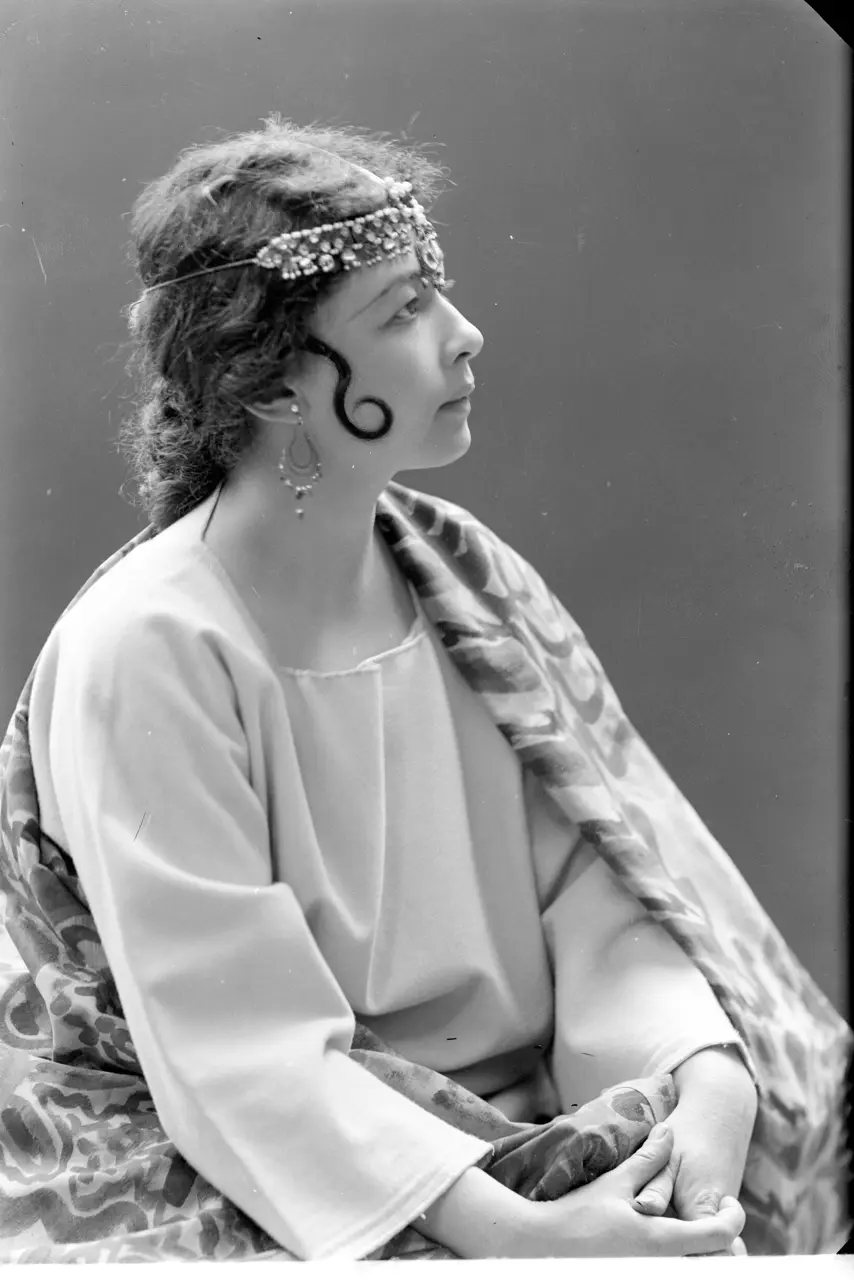
 Easterby August StrindbergOver Easter, a family shamed by the father's crime waits for its creditor, and the daughter comes home from the asylum.
 The Fatherby August StrindbergA cavalry captain and his wife fight over their daughter's future, and she makes him doubt the child is his.
 The Linkby August StrindbergA baron and his wife come to a country court to agree their separation, and end up fighting over their son.
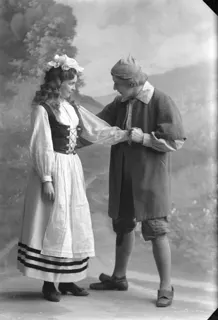 Lucky Pehrby August StrindbergA young man kept in a church tower is given a ring that grants every wish, and goes out to find happiness.
Prologue
The background represents cloud banks that resemble corroding slate cliffs with ruins of castles and fortresses.
The constellations of Leo, Virgo, and Libra are visible, and from their midst the planet Jupiter is shining with a strong light.
THE DAUGHTER OF INDRA stands on the topmost cloud.
[from above] Where are you, daughter, where?
Here, father, here.
You've lost your way, my child--beware, you sink--How got you there?
I followed from ethereal heights the ray Of lightning, and for car a cloud I took-- It sank, and now my journey downward tends. O, noble father, Indra, tell what realms I now draw near? The air is here so close, And breathing difficult.
Behind you lies the second world; the third Is where you stand. From Cukra, morning star You have withdrawn yourself to enter soon The vapoury circle of the earth. For mark The Seventh House you take. It's Libra called: There stands the day-star in the balanced hour When Fall gives equal weight to night and day.
You named the earth--is that the ponderous world And dark, that from the moon must take its light?
It is the heaviest and densest sphere Of all that travel through the space.
And is it never brightened by the sun?
Of course, the sun does reach it--now and then
There is a rift, and downward goes my glance--
What sees my child?
I see--O beautiful!--with forests green, With waters blue, white peaks, and yellow fields
Yes, beautiful as all that Brahma made-- But still more beautiful it was of yore, In primal morn of ages. Then occurred Some strange mishap; the orbit was disturbed; Rebellion led to crime that called for check--
Now from below I hear some sounds arise-- What sort of race is dwelling there?
See for yourself--Of Brahma's work no ill I say: but what you hear, it is their speech.
It sounds as if--it has no happy ring!
I fear me not--for even their mother-tongue Is named complaint. A race most hard to please, And thankless, are the dwellers on the earth
O, say not so--for I hear cries of joy, Hear noise and thunder, see the lightnings flash-- Now bells are ringing, fires are lit, And thousand upon thousand tongues Sing praise and thanks unto the heavens on high-- Too harshly, father, you are judging them.
Descend, that you may see and hear, and then Return and let me know if their complaints And wailings have some reasonable ground--
Well then, I go; but, father, come with me.
No, there below I cannot breathe--
Now sinks the cloud--what sultriness--I choke! I am not breathing air, but smoke and steam-- With heavy weight it drags me down, And I can feel already how it rolls-- Indeed, the best of worlds is not the third
The best I cannot call it, nor the worst. Its name is Dust; and like them all, it rolls: And therefore dizzy sometimes grows the race, And seems to be half foolish and half mad-- Take courage, child--a trial, that is all!
[Kneeling as the cloud sinks downward] I sink!
Curtain.
Scene 1
The background represents a forest of gigantic hollyhocks in bloom. They are white, pink, crimson, sulphureous, violet; and above their tops is seen the gilded roof of a castle, the apex of which is formed by a bud resembling a crown. At the foot of the castle walls stand a number of straw ricks, and around these stable litter is scattered. The side-scenes, which remain unchanged throughout the play, show conventionalised frescoes, suggesting at once internal decoration, architecture, and landscape.
Enter THE GLAZIER and THE DAUGHTER.
The castle is growing higher and higher above the ground. Do you see how much it has grown since last year?
[To himself] I have never seen this castle before--have never heard of a castle that grew, but--[To THE DAUGHTER, with firm conviction] Yes, it has grown two yards, but that is because they have manured it--and it you notice, it has put out a wing on the sunny side.
Ought it not to be blooming soon, as we are already past midsummer?
Don't you see the flower up there?
Yes, I see! [Claps her hands] Say, father, why do flowers grow out of dirt?
[Simply] Because they do not feel at home in the dirt, and so they make haste to get up into the light in order to blossom and die.
Do you know who lives in that castle?
I have known it, but cannot remember.
I believe a prisoner is kept there--and he must be waiting for me to set him free.
And what is he to pay for it?
One does not bargain about one's duty. Let us go into the castle.
Yes, let us go in.
They go toward the background, which opens and slowly disappears to either side.
The stage shows now a humble, bare room, containing only a table and a few chairs. On one of the chairs sits an officer, dressed in a very unusual yet modern uniform. He is tilting the chair backward and beating the table with his sabre.
[Goes to the officer, from whose hand she gently takes the sabre] Don't! Don't!
Oh, Agnes dear, let me keep the sabre.
No, you break the table. [To THE GLAZIER] Now you go down to the harness-room and fix that window pane. We'll meet later.
THE GLAZIER goes out.
You are imprisoned in your own rooms--I have come to set you free.
I have been waiting for you, but I was not sure you were willing to do it.
The castle is strongly built; it has seven walls, but--it can be done!--Do you want it, or do you not?
Frankly speaking, I cannot tell--for in either case I shall suffer pain. Every joy that life brings has to be paid for with twice its measure of sorrow. It is hard to stay where I am, but if I buy the sweets of freedom, then I shall have to suffer twice as much--Agnes, I'll rather endure it as it is, if I can only see you.
What do you see in me?
Beauty, which is the harmony of the universe--There are lines of your body which are nowhere to be found, except in the orbits of the solar system, in strings that are singing softly, or in the vibrations of light--You are a child of heaven
So are you.
Why must I then keep horses, tend stable, and cart straw?
So that you may long to get away from here.
I am longing, but it is so hard to find one's way out.
But it is a duty to seek freedom in the light.
Duty? Life has never recognised any duties toward me.
You feel yourself wronged by life?
Yes, it has been unjust
Now voices are heard from behind a 'partition, which a moment later is pulled away. THE OFFICER and THE DAUGHTER look in that direction and stop as if paralysed in the midst of a gesture.
At a table sits THE MOTHER, looking very sick. In front of her a tallow candle is burning, and every little while she trims it with, a pair of snuffers. The table is piled with new-made shirts, and these she is marking with a quill and ink. To the left stands a brown-coloured wardrobe.
[Holds out a silk mantilla toward THE MOTHER and says gently] You don't want it?
A silk mantilla for me, my dear--of what use would that be when I am going to die shortly?
Do you believe what the doctor says?
Yes, I believe also what he says, but still more what the voice says in here.
[Sadly] It is true then?--And you are thinking of your children first and last.
That has been my life and my reason for living--my joy and my sorrow
Christine, forgive me--everything!
What have I to forgive? Dearest, you forgive me! We have been tormenting each other. Why? That we may not know. We couldn't do anything else--However, here is the new linen for the children. See that they change twice a week--Wednesdays and Sundays--and that Louise washes them--their whole bodies--Are you going out?
I have to be in the Department at eleven o'clock.
Ask Alfred to come in before you go.
[Pointing to THE OFFICER] Why, he is standing right there, dear heart.
So my eyes are failing, too--Yes, it is turning dark. [Trims the candle] Come here, Alfred.
THE FATHER goes out through the middle of the wall, nodding good-bye as he leaves.
THE OFFICER goes over to THE MOTHER.
Who is that girl?
[Whispers] It is Agnes.
Oh, is that Agnes?--Do you know what they say?--That she is a daughter of the god Indra who has asked leave to descend to the earth in order that she may find out what the conditions of men are--But don't say anything about it.
A child of the gods, indeed!
[Aloud] My Alfred, I must soon part from you and from the other children--But let me first speak a word to you that bears on all the rest of your life.
[Sadly] Speak, mother.
Only a word: don't quarrel with God!
What do you mean, mother?
Don't go around feeling that life has wronged you.
But when I am treated unjustly
You are thinking of the time when you were unjustly punished for having taken a penny that later turned up?
Yes, and that one wrong gave a false twist to my whole life
Perhaps. But please take a look into that wardrobe now
[Embarrassed] You know, then? It is
The Swiss Family Robinson--for which
Don't say any more!
For which your brother was punished--and which you had torn and hidden away.
Just think that the old wardrobe is still standing there after twenty years--We have moved so many times, and my mother died ten years ago.
Yes, and what of it? You are always asking all sorts of questions, and in that way you spoil the better part of your life--There is Lena, now.
[Enters] Thank you very much, ma'am, but I can't go to the baptism.
And why not, my girl?
I have nothing to put on.
I'll let you use my mantilla here
Oh, no, ma'am, that wouldn't do!
Why not?--It is not likely that I'll go to any more parties.
And what will father say? It is a present from him
What small minds
[Puts his head through the wall] Are you going to lend my present to the servant girl?
Don't talk that way! Can you not remember that I was a servant girl also? Why should you offend one who has done nothing?
Why should you offend me, your husband?
Oh, this life! If you do anything nice, there is always somebody who finds it nasty. If you act kindly to one, it hurts another. Oh, this life!
She trims the candle so that it goes out. The stage turns dark and the partition is pushed back to its former position.
Men are to be pitied.
You think so?
Yes, life is hard--but love overcomes everything. You shall see for yourself.
They go toward the background.
The background is raised and a new one revealed, showing an old, dilapidated party-wall. In the centre of it is a gate closing a passageway. This opens upon a green, sunlit space, where is seen a tremendous blue monk's-hood [aconite]. To the left of the gate sits THE PORTRESS. Her head and shoulders are covered by a shawl, and she is crocheting at a bed-spread with a star-like pattern. To the right of the gate is a billboard, which THE BILLPOSTER is cleaning. Beside him stands a dipnet with a green pole. Further to the right is a door that has an air-hole shaped like a four-leaved clover. To the left of the gate stands a small linden tree with coal-black trunk and a few pale-green leaves. Near it is a small air-hole leading into a cellar.
[Going to THE PORTRESS] Is the spread not done yet?
No, dear. Twenty-six years on such a piece of work is not much.
And your lover never came back?
No, but it was not his fault. He had to go--poor thing! That was thirty years ago now.
[To THE BILLPOSTER] She belonged to the ballet? Up there in the opera-house?
She was number one--but when he went, it was as if her dancing had gone with him--and so she didn't get any more parts.
Everybody complains--with their eyes, at least, and often with words also
I don't complain very much--not now, since I have a dipnet and a green cauf
And that can make you happy?
Oh, I'm so happy, so--It was the dream of my youth, and now it has come true. Of course, I have grown to be fifty years
Fifty years for a dipnet and a cauf
A green cauf--mind you, green
[To THE PORTRESS] Let me have the shawl now, and I shall sit here and watch the human children. But you must stand behind me and tell me about everything.
She takes the shawl and sits down at the gate.
This is the last day, and the house will be closed up for the season. This is the day when they learn whether their contracts are to be renewed.
And those that fail of engagement
O, Lord have mercy! I pull the shawl over my head not to see them.
Poor human creatures!
Look, here comes one--She's not one of the chosen. See, how she cries.
THE SINGER enters from the right; rushes through the gate with her handkerchief to her eyes; stops for a moment in the passageway beyond the gate and leans her head against the wall; then out quickly.
Men are to be pitied!
But look at this one. That's the way a happy person looks.
THE OFFICER enters through the passageway; dressed in Prince Albert coat and high hat, and carrying a bunch of roses in one hand; he is radiantly happy.
He's going to marry Miss Victoria.
[Far down on the stage, looks up and sings] Victoria!
The young lady will be coming in a moment.
Good! The carriage is waiting, the table is set, the wine is on ice--Oh, permit me to embrace you, ladies! [He embraces THE PORTRESS and THE DAUGHTER. Sings] Victoria!
[Sings] I am here!
Do you know me?
No, I know one woman only--Victoria. Seven years I have come here to wait for her--at noon, when the sun touched the chimneys, and at night, when it was growing dark. Look at the asphalt here, and you will see the path worn by the steps of a faithful lover. Hooray! She is mine. [Sings] Victoria! [There is no reply] Well, she is dressing, I suppose. [To THE BILLPOSTER] There is the dipnet, I see. Everybody belonging to the opera is crazy about dipnets--or rather about fishes--because the fishes are dumb and cannot sing!--What is the price of a thing like that?
It is rather expensive.
[Sings] Victoria! [Shakes the linden tree] Look, it is turning green once more. For the eighth time. [Sings] Victoria!--Now she is fixing her hair. [To THE DAUGHTER] Look here, madam, could I not go up and get my bride?
Nobody is allowed on the stage.
Seven years I have been coming here. Seven times three hundred and sixty-five makes two thousand five hundred and fifty-five. [Stops and pokes at the door with the four-leaved clover hole] And I have been looking two thousand five hundred and fifty-five times at that door without discovering where it leads. And that clover leaf which is to let in light--for whom is the light meant? Is there anybody within? Does anybody live there?
I don't know. I have never seen it opened.
It looks like a pantry door which I saw once when I was only four years old and went visiting with the maid on a Sunday afternoon. We called at several houses--on other maids--but I did not get beyond the kitchen anywhere, and I had to sit between the water barrel and the salt box. I have seen so many kitchens in my days, and the pantry was always just outside, with small round holes bored in the door, and one big hole like a clover leaf--But there cannot be any pantry in the opera-house as they have no kitchen. [Sings] Victoria!--Tell me, madam, could she have gone out any other way?
No, there is no other way.
Well, then I shall see her here.
STAGE PEOPLE rush out and are closely watched by THE OFFICER as they pass.
Now she must soon be coming--Madam, that blue monk's-hood outside--I have seen it since I was a child. Is it the same?--I remember it from a country rectory where I stopped when I was seven years old--There are two doves, two blue doves, under the hood--but that time a bee came flying and went into the hood. Then I thought: now I have you! And I grabbed hold of the flower. But the sting of the bee went through it, and I cried--but then the rector's wife came and put damp dirt on the sting--and we had strawberries and cream for dinner--I think it is getting dark already. [To THE BILLPOSTER] Where are you going?
Home for supper.
[Draws his hand across his eyes] Evening? At this time?--O, please, may I go in and telephone to the Growing Castle?
What do you want there?
I am going to tell the Glazier to put in double windows, for it will soon be winter, and I am feeling horribly cold. [Goes into the gatekeeper's lodge.
Who is Miss Victoria?
His sweetheart.
Right said! What she is to us and others matters nothing to him. And what she is to him, that alone is her real self.
It is suddenly turning dark.
[Lights a lantern] It is growing dark early to-day.
To the gods a year is as a minute.
And to men a minute may be as long as a year.
[Enters again, looking dusty; the roses are withered] She has not come yet?
No.
But she will come--She will come! [Walks up and down] But come to think of it, perhaps I had better call off the dinner after all--as it is late? Yes, I will do that.
Goes back into the lodge and telephones.
[To THE DAUGHTER] Can I have my shawl back now?
No, dear, be free a while. I shall attend to your duties--for I want to study men and life, and see whether things really are as bad as they say.
But it won't do to fall asleep here--never sleep night or day
No sleep at night?
Yes, if you are able to get it, but only with the bell string tied around the wrist--for there are night watchmen on the stage, and they have to be relieved every third hour.
But that is torture!
So you think, but people like us are glad enough to get such a job, and if you only knew how envied I am
Envied?--Envy for the tortured?
Yes--But I can tell you what is harder than all drudging and keeping awake nights, harder to bear than draught and cold and dampness--it is to receive the confidences of all the unhappy people up there--They all come to me. Why? Perhaps they read in the wrinkles of my face some runes that are graved by suffering and that invite confessions--In that shawl, dear, lie hidden thirty years of my own and other people's agonies.
It is heavy, and it burns like nettles.
As it is your wish, you may wear it. When it grows too burdensome, call me, and I shall relieve you.
Good-bye. What can be done by you ought not to surpass my strength.
We shall see!--But be kind to my poor friends, and don't grow impatient of their complaints.
She disappears through the passageway. Complete darkness covers the stage, and while it lasts the scene is changed so that the linden tree appears stripped of all its leaves. Soon the blue monk's-hood is withered, and when the light returns, the verdure in the open space beyond the passageway has changed into autumnal brown.
[Enters when it is light again. He has gray hair and a gray beard. His clothes are shabby, his collar is soiled and wrinkled. Nothing but the bare stems remain of the bunch of roses. He walks to and fro] To judge by all signs, Summer is gone and Fall has come. The linden shows it, and the monk's-hood also. [Walks] But the Fall is my Spring, for then the opera begins again, and then she must come. Please, madam, may I sit down a little on this chair?
Yes, sit down, friend--I am able to stand.
[Sits down] If I could only get some sleep, then I should feel better--[He falls asleep for a few moments. Then he jumps up and walks back and forth again. Stops at last in front of the door with the clover leaf and pokes at] This door here will not leave me any peace--what is behind it? There must be something. [Faint dance music is heard from above] Oh, now the rehearsals have begun. [The light goes out and flares up again, repeating this rhythmically as the rays of a lighthouse come and go] What does this mean? [Speaking in time with the blinkings of the light] Light and dark--light and dark?
[Imitating him] Night and day--night and day! A merciful Providence wants to shorten your wait. Therefore the days are flying in hot pursuit of the nights.
The light shines unbrokenly once more.
THE BILLPOSTER enters with his dipnet and his implements.
There is the Billposter with his dipnet. Was the fishing good?
I should say so. The Summer was hot and a little long--the net turned out pretty good, but not as I had expected.
[With emphasis] Not as I had expected!--That is well said. Nothing ever was as I expected it to be--because the thought is more than the deed, more than the thing.
Walks to and fro, striking at the wall with the rose stems so that the last few leaves fall off.
Has she not come down yet?
Not yet, but she will soon be here--Do you know what is behind that door, Billposter?
No, I have never seen that door open yet.
I am going to telephone for a locksmith to come and open it. [Goes into the lodge.
THE BILLPOSTER posts a bill and goes toward the right.
What is the matter with the dipnet?
Matter? Well, I don't know as there is anything the matter with it--but it just didn't turn out as I had expected, and the pleasure of it was not so much after all.
How did you expect it to be?
How?--Well, I couldn't tell exactly
I can tell you! You had expected it to be what it was not. It had to be green, but not that kind of green.
You have it, madam. You understand it all--and that is why everybody goes to you with his worries. If you would only listen to me a little also
Of course, I will!--Come in to me and pour out your heart. [She goes into the lodge.
THE BILLPOSTER remains outside, speaking to her. The stage is darkened again. When the light is turned on, the tree has resumed its leaves, the monk's-hood is blooming once more, and the sun is shining on the green space beyond the passageway.
THE OFFICER enters. Now he is old and white-haired, ragged, and wearing worn-out shoes. He carries the bare remnants of the rose stems. Walks to and fro slowly, with the gait of an aged man. Reads on the posted bill.
A BALLET GIRL comes in from the right.
Is Miss Victoria gone?
No, she has not gone yet.
Then I shall wait. She will be coming soon, don't you think?
Oh, yes, I am sure.
Don't go away now, for I have sent word to the locksmith, so you will soon see what is behind that door.
Oh, it will be awfully interesting to see that door opened. That door, there, and the Growing Castle--have you heard of the Growing Castle?
Have I?--I have been a prisoner in it.
No, was that you? But why do they keep such a lot of horses there?
Because it is a stable castle, don't you know.
[With confusion] How stupid of me not to guess that!
A MALE CHORUS SINGER enters from the right.
Has Miss Victoria gone yet?
[Earnestly] No, she has not. She never goes away.
That is because she loves me--See here, don't go before the locksmith comes to open the door here.
No, is the door going to be opened? Well, that will be fun!--I just want to ask the Portress something.
THE PROMPTER enters from the right.
Is Miss Victoria gone yet?
Not that I know of.
Now, didn't I tell you she was waiting for me!--Don't go away, for the door is going to be opened.
Which door?
Is there more than one door?
Oh, I know--that one with the clover leaf. Well, then I have got to stay--I am only going to have a word with the Portress.
THE BALLET GIRL, THE CHORUS SINGER, and THE PROMPTER gather beside THE BILLPOSTER in front of the lodge window and talk by turns to THE DAUGHTER.
THE GLAZIER enters through the gate.
Are you the locksmith?
No, the locksmith had visitors, and a glazier will do just as well.
Yes, of course, of course--but did you bring your diamond along?
Why, certainly!--A glazier without his diamond, what would that be?
Nothing at all!--Let us get to work then.
Claps his hands together.
ALL gather in a ring around the door.
Male members of the chorus dressed as Master Singers and Ballet Girls in costumes from the opera "Aïda" enter from the right and join the rest.
Locksmith--or glazier--do your duty!
THE GLAZIER goes up to the door with the diamond in his hand.
A moment like this will not occur twice in a man's life. For this reason, my friends, I ask you--please consider carefully
[Enters] In the name of the law, I forbid the opening of that door!
Oh, Lord! What a fuss there is as soon as anybody wants to do anything new or great. But we will take the matter into court--let us go to the Lawyer. Then we shall see whether the laws still exist or not--Come along to the Lawyer.
Without lowering of the curtain, the stage changes to a lawyer's office, and in this manner. The gate remains, but as a wicket in the railing running clear across the stage. The gatekeeper's lodge turns into the private enclosure of the Lawyer, and it is now entirely open to the front. The linden, leafless, becomes a hat tree. The billboard is covered with legal notices and court decisions. The door with the four-leaved clover hole forms part of a document chest.
THE LAWYER, in evening dress and white necktie, is found sitting to the left, inside the gate, and in front of him stands a desk covered with papers. His appearance indicates enormous sufferings. His face is chalk-white and full of wrinkles, and its shadows have a purple effect. He is ugly, and his features seem to reflect all the crimes and vices with which he has been forced by his profession to come into contact.
Of his two clerks, one has lost an arm, the other an eye.
The people gathered to witness "the opening of the door" remain as before, bid they appear now to be waiting for an audience with the Lawyer. Judging by their attitudes, one would think they had been standing there forever.
THE DAUGHTER, still wearing the shawl, and THE OFFICER are near the footlights.
[Goes over to THE DAUGHTER] Tell me, sister, can I have that shawl? I shall keep it here until I have a fire in my grate, and then I shall burn it with all its miseries and sorrows.
Not yet, brother. I want it to hold all it possibly can, and I want it above all to take up your agonies --all the confidences you have received about crime, vice, robbery, slander, abuse
My dear girl, for such a purpose your shawl would prove totally insufficient. Look at these walls. Does it not look as if the wall-paper itself had been soiled by every conceivable sin? Look at these documents into which I write tales of wrong. Look at myself--No smiling man ever comes here; nothing is to be seen here but angry glances, snarling lips, clenched fists--And everybody pours his anger, his envy, his suspicions, upon me. Look--my hands are black, and no washing will clean them. See how they are chapped and bleeding--I can never wear my clothes more than a few days because they smell of other people's crimes--At times I have the place fumigated with sulphur, but it does not help. I sleep near by, and I dream of nothing but crimes--Just now I have a murder case in court--oh, I can stand that, but do you know what is worse than anything else?--That is to separate married people! Then it is as if something cried way down in the earth and up there in the sky--as if it cried treason against the primal force, against the source of all good, against love--And do you know, when reams of paper have been filled with mutual accusations, and at last a sympathetic person takes one of the two apart and asks, with a pinch of the ear or a smile, the simple question: what have you really got against your husband?--or your wife?--then he, or she, stands perplexed and cannot give the cause. Once--well, I think a lettuce salad was the principal issue; another time it was just a word--mostly it is nothing at all. But the tortures, the sufferings--these I have to bear--See how I look! Do you think I could ever win a woman's love with this countenance so like a criminal's? Do you think anybody dares to be friendly with me, who has to collect all the debts, all the money obligations, of the whole city?--It is a misery to be man!
Men are to be pitied!
They are. And what people are living on puzzles me. They marry on an income of two thousand, when they need four thousand. They borrow, of course--everybody borrows. In some sort of happy-go-lucky fashion, by the skin of their teeth, they manage to pull through--and thus it continues to the end, when the estate is found to be bankrupt. Who pays for it at last no one can tell.
Perhaps He who feeds the birds.
Perhaps. But if He who feeds the birds would only pay a visit to this earth of His and see for Himself how the poor human creatures fare--then His heart would surely fill with compassion.
Men are to be pitied!
Yes, that is the truth!--[To THE OFFICER] What do you want?
I just wanted to ask if Miss Victoria has gone yet.
No, she has not; you can be sure of it--Why are you poking at my chest over there?
I thought the door of it looked exactly
Not at all! Not at all!
All the church bells begin to ring.
Is there going to be a funeral?
No, it is graduation day--a number of degrees will be conferred, and I am going to be made a Doctor of Laws. Perhaps you would also like to be graduated and receive a laurel wreath?
Yes, why not. That would be a diversion, at least.
Perhaps then we may begin upon this solemn function at once--But you had better go home and change your clothes.
THE OFFICER goes out.
The stage is darkened and the following changes are made. The railing stays, but it encloses now the chancel of a church. The billboard displays hymn numbers. The linden hat tree becomes a candelabrum. The Lawyer's desk is turned into the desk of the presiding functionary, and the door with the clover leaf leads to the vestry.
The chorus of Master Singers become heralds with staffs, and the Ballet Girls carry laurel wreaths. The rest of the people act as spectators.
The background is raised, and the new one thus discovered represents a large church organ, with the keyboards below and the organist's mirror above.
Music is heard. At the sides stand figures symbolising the four academic faculties: Philosophy, Theology, Medicine, and Jurisprudence.
At first the stage is empty for a few moments.
HERALDS enter from the right.
BALLET GIRLS follow with laurel wreaths carried high before them.
THREE GRADUATES appear one after another from the left, receive their wreaths from the BALLET GIRLS, and go out to the right.
THE LAWYER steps forward to get his wreath.
The BALLET GIRLS turn away from him and refuse to place the wreath on his head. Then they withdraw from the stage.
THE LAWYER, shocked, leans against a column. All the others withdraw gradually until only THE LAWYER remains on the stage.
[Enters, her head and shoulders covered by a white veil] Do you see, I have washed the shawl! But why are you standing there? Did you get your wreath?
No, I was not held worthy.
Why? Because you have defended the poor, put in a good word for the wrong-doing, made the burden easier for the guilty, obtained a respite for the condemned? Woe upon men: they are not angels--but they are to be pitied!
Say nothing evil of men--for after all it is my task to voice their side.
[Leaning against the organ] Why do they strike their friends in the face?
They know no better.
Let us enlighten them. Will you try? Together with me?
They do not accept enlightenment--Oh, that our plaint might reach the gods of heaven!
It shall reach the throne--[Turns toward the organ] Do you know what I see in this mirror?--The world turned the right way!--Yes indeed, for naturally we see it upside down.
How did it come to be turned the wrong way?
When the copy was taken
You have said it! The copy--I have always had the feeling that it was a spoiled copy. And when I began to recall the original images, I grew dissatisfied with everything. But men called it soreheadedness, looking at the world through the devil's eyes, and other such things.
It is certainly a crazy world! Look at the four faculties here. The government, to which has fallen the task of preserving society, supports all four of them. Theology, the science of God, is constantly attacked and ridiculed by philosophy, which declares itself to be the sum of all wisdom. And medicine is always challenging philosophy, while refusing entirely to count theology a science and even insisting on calling it a mere superstition. And they belong to a common Academic Council, which has been set to teach the young respect--for the university. It is a bedlam. And woe unto him who first recovers his reason!
Those who find it out first are the theologians. As a preparatory study, they take philosophy, which teaches them that theology is nonsense. Later they learn from theology that philosophy is nonsense. Madmen, I should say!
And then there is jurisprudence which serves all but the servants.
Justice, which, when it wants to do right, becomes the undoing of men. Equity, which so often turns into iniquity!
What a mess you have made of it, you man-children. Children, indeed!--Come here, and I will give you a wreath--one that is more becoming to you. [Puts a crown of thorns on his head] And now I will play for you.
She sits down at the keyboards, but instead of organ-notes human voices are heard.
O Lord everlasting!
Last note sustained.
Have mercy upon us!
Last note sustained.
[Tenors] Save us for Thy mercy's sake!
Last note sustained.
[Basses] Spare Thy children, O Lord, and deliver us from Thy wrath!
Have mercy upon us! Hear us! Have pity upon the mortals!--? O Lord eternal, why art Thou afar?--Out of the depths we call unto Thee: Make not the burden of Thy children too heavy! Hear us! Hear us!
The stage turns dark. THE DAUGHTER rises and draws close to THE LAWYER. By a change of light, the organ becomes Fingal's Cave. The ground-swell of the ocean, which can be seen rising and falling between the columns of basalt, produces a deep harmony that blends the music of winds and waves.
Where are we, sister?
What do you hear?
I hear drops falling
Those are the tears that men are weeping--What more do you hear?
There is sighing--and whining--and wailing
Hither the plaint of the mortals has reached--and no farther. But why this never-ending wailing? Is there then nothing in life to rejoice at?
Yes, what is most sweet, and what is also most bitter--love--wife and home--the highest and the lowest!
May I try it?
With me?
With you--You know the rocks, the stumbling-stones. Let us avoid them.
I am so poor.
What does that matter if we only love each other? And a little beauty costs nothing.
I have dislikes which may prove your likes.
They can be adjusted.
And if we tire of it?
Then come the children and bring with them a diversion that remains for ever new.
You, you will take me, poor and ugly, scorned and rejected?
Yes--let us unite our destinies.
So be it then!
Curtain.
Scene 2
An extremely plain room inside THE LAWYER's office. To the right, a big double bed covered by a canopy and curtained in. Next to it, a window. To the left, an iron heater with cooking utensils on top of it. CHRISTINE is pasting paper strips along the cracks of the double windows. In the background, an open door to the office. Through the door are visible a number of poor clients waiting for admission.
I paste, I paste.
[Pale and emaciated, sits by the stove] You shut out all the air. I choke!
Now there is only one little crack left.
Air, air--I cannot breathe!
I paste, I paste.
That's right, Christine! Heat is expensive.
Oh, it feels as if my lips were being glued together.
[Standing in the doorway, with a paper in his hand] Is the child asleep?
Yes, at last.
[Gently] All this crying scares away my clients.
[Pleasantly] What can be done about it?
Nothing.
We shall have to get a larger place.
We have no money for it.
May I open the window--this bad air is suffocating.
Then the heat escapes, and we shall be cold.
It is horrible!--May we clean up out there?
You have not the strength to do any cleaning, nor have I, and Christine must paste. She must put strips through the whole house, on every crack, in the ceiling, in the floor, in the walls.
Poverty I was prepared for, but not for dirt.
Poverty is always dirty, relatively speaking.
This is worse than I dreamed!
We are not the worst off by far. There is still food in the pot.
But what sort of food?
Cabbage is cheap, nourishing, and good to eat.
For those who like cabbage--to me it is repulsive.
Why didn't you say so?
Because I loved you, I wanted to sacrifice my own taste.
Then I must sacrifice my taste for cabbage to you--for sacrifices must be mutual.
What are we to eat, then? Fish? But you hate fish?
And it is expensive.
This is worse than I thought it!
[Kindly] Yes, you see how hard it is--And the child that was to become a link and a blessing--it becomes our ruin.
Dearest, I die in this air, in this room, with its backyard view, with its baby cries and endless hours of sleeplessness, with those people out there, and their whinings, and bickerings, and incriminations--I shall die here!
My poor little flower, that has no light and no air
And you say that people exist who are still worse off?
I belong with the envied ones in this locality.
Everything else might be borne if I could only have some beauty in my home.
I know you are thinking of flowers--and especially of heliotropes--but a plant costs half a dollar, which will buy us six quarts of milk or a peck of potatoes.
I could gladly get along without food if I could only have some flowers.
There is a kind of beauty that costs nothing--but the absence of it in the home is worse than any other torture to a man with a sense for the beautiful.
What is it?
If I tell, you will get angry.
We have agreed not to get angry.
We have agreed--Everything can be over-come, Agnes, except the short, sharp accents--Do you know them? Not yet!
They will never be heard between us.
Not as far as it lies on me!
Tell me now.
Well--when I come into a room, I look first of all at the curtains--[Goes over to the window and straightens out the curtains] If they hang like ropes or rags, then I leave soon. And next I take a glance at the chairs--if they stand straight along the wall, then I stay. [Puts a chair back against the wall] Finally I look at the candles in their sticks--if they point this way and that, then the whole house is askew. [Straightens up a candle on the chest of drawers] This is the kind of beauty, dear heart, that costs nothing.
With bent head] Beware of the short accents, Axel!
They were not short.
Yes, they were.
Well, I'll be
What kind of language is that?
Pardon me, Agnes! But I have suffered as much from your lack of orderliness as you have suffered from dirt. And I have not dared to set things right myself, for when I do so, you get as angry as if I were reproaching you--ugh! Hadn't we better quit now?
It is very difficult to be married--it is more difficult than anything else. One has to be an angel, I think!
I think so, too.
I fear I shall begin to hate you after this!
Woe to us then!--But let us forestall hatred. I promise never again to speak of any untidiness--although it is torture to me!
And I shall eat cabbage though it means agony to me.
A life of common suffering, then! One's pleasure, the other one's pain!
Men are to be pitied!
You see that?
Yes, but for heaven's sake, let us avoid the rocks, now when we know them so well.
Let us try! Are we not decent and intelligent persons? Able to forbear and forgive?
Why not smile at mere trifles?
We--only we--can do so. Do you know, I read this morning--by the bye, where is the newspaper?
[Embarrassed] Which newspaper?
[Sharply] Do I keep more than one?
Smile now, and don't speak sharply--I used your paper to make the fire with
[Violently] Well, I'll be damned!
Why don't you smile?--I burned it because it ridiculed what is holy to me.
Which is unholy to me! Yah! [Strikes one clenched fist against the open palm of the other hand] I smile, I smile so that my wisdom teeth show--Of course, I am to be nice, and I am to swallow my own opinions, and say yes to everything, and cringe and dissemble! [Tidies the curtains around the bed] That's it! Now I am going to fix things until you get angry again--Agnes, this is simply impossible!
Of course it is!
And yet we must endure--not for the sake of our promises, but for the sake of the child!
You are right--for the sake of the child. Oh, oh--we have to endure!
And now I must go out to my clients. Listen to them--how they growl with impatience to tear each other, to get each other fined and jailed--Lost souls!
Poor, poor people! And this pasting!
She drops her head forward in dumb despair.
I paste, I paste.
THE LAWYER stands at the door, twisting the door-knob nervously.
How that knob squeaks! It is as if you were twisting my heart-strings
I twist, I twist!
Don't!
I twist!
No!
I
[In the office, on the other side of the door, takes hold of the knob] Will you permit me?
[Lets go his hold] By all means. Seeing that you have your degree!
Now all life belongs to me. Every road lies open. I have mounted Parnassus. The laurel is won. Immortality, fame, all is mine!
And what are you going to live on?
Live on?
You must have a home, clothes, food
Oh, that will come--if you can only find somebody to love you!
You don't say so!--You don't--Paste, Christine, paste until they cannot breathe!
Goes out backward, nodding.
I paste, I paste--until they cannot breathe.
Will you come with me now?
At once! But where?
To Fairhaven. There it is summer; there the sun is shining; there we find youth, children, and flowers, singing and dancing, feasting and frolicking.
Then I will go there.
Come!
[Enters again] Now I go back to my first hell--this was the second and greater. The sweeter the hell, the greater--And look here, now she has been dropping hair-pins on the floor again. [He picks up some hair-pins.
My! but he has discovered the pins also.
Also?--Look at this one. You see two prongs, but it is only one pin. It is two, yet only one. If I bend it open, it is a single piece. If I bend it back, there are two, but they remain one for all that. It means: these two are one. But if I break--like this!--then they become two.
Breaks the pin and throws the pieces away.
All that he has seen!--But before breaking, the prongs must diverge. If they point together, then it holds.
And if they are parallel, then they will never meet--and it neither breaks nor holds.
The hair-pin is the most perfect of all created things. A straight line which equals two parallel ones.
A lock that shuts when it is open.
And thus shuts in a braid of hair that opens up when the lock shuts.
It is like this door. When I close it, then I open--the way out--for you, Agnes!
Withdraws and closes the door behind him.
Well then?
The stage changes. The bed with its curtains becomes a tent.
The stove stays as it was. The background is raised. To the right, in the foreground, are seen hills stripped of their trees by fire, and red heather growing between the blackened tree stumps. Red-painted pig-sties and outhouses. Beyond these, in the open, apparatus for mechanical gymnastics, where sick persons are being treated on machines resembling instruments of torture.
To the left, in the foreground, the quarantine station, consisting of open sheds, with ovens, furnaces, and pipe coils.
In the middle distance, a narrow strait.
The background shows a beautiful wooded shore. Flags are flying on its piers, where ride white sailboats, some with sails set and some without. Little Italian villas, pavilions, arbors, marble statues are glimpsed through the foliage along the shore.
THE MASTER OF QUARANTINE, made up like a blackamoor, is walking along the shore.
[Meets him and they shake hands] Why, Ordström! Have you landed here?
Yes, here I am.
Is this Fairhaven?
No, that is on the other side. This is Foulstrand.
Then we have lost our way.
We?--Won't you introduce me?
No, that wouldn't do. [In a lowered voice] It is Indra's own daughter.
Indra's? And I was thinking of Varuna himself--Well, are you not surprised to find me black in the face?
I am past fifty, my boy, and at that age one has ceased to be surprised. I concluded at once that you were bound for some fancy ball this afternoon.
Right you were! And I hope both of you will come along.
Why, yes--for I must say--the place does not look very tempting. What kind of people live here anyhow?
Here you find the sick; over there, the healthy.
Nothing but poor folk on this side, I suppose.
No, my boy, it is here you find the rich. Look at that one on the rack. He has stuffed himself with paté de foie gras and truffles and Burgundy until his feet have grown knotted.
Knotted?
Yes, he has a case of knotted feet. And that one who lies under the guillotine--he has swilled brandy so that his backbone has to be put through the mangle.
There is always something amiss!
Moreover, everybody living on this side has some kind of canker to hide. Look at the fellow coming here, for instance.
An old dandy is pushed on the stage in a wheel-chair, he is accompanied by a gaunt and grisly coquette in the sixties, to whom THE FRIEND, a man of about forty, is paying court.
It is the major--our schoolmate!
Don Juan. Can you see that he is still enamored of that old spectre beside him? He does not notice that she has grown old, or that she is ugly, faithless, cruel.
Why, that is love! And I couldn't have dreamt that a fickle fellow like him would prove capable of loving so deeply and so earnestly.
That is a mighty decent way of looking at it.
I have been in love with Victoria myself--in fact I am still waiting for her in the passageway
Oh, you are the fellow who is waiting in the passageway?
I am the man.
Well, have you got that door opened yet?
No, the case is still in court--THE BILLPOSTER is out with his dipnet, of course, so that the taking of evidence is always being put off--and in the meantime the Glazier has mended all the window panes in the castle, which has grown half a story higher--This has been an uncommonly good year--warm and wet
But just the same you have had no heat comparing with what I have here.
How much do you have in your ovens?
When we fumigate cholera suspects, we run it up to one hundred and forty degrees.
Is the cholera going again?
Don't you know that?
Of course, I know it, but I forget so often what I know.
I wish often that I could forget--especially myself. That is why I go in for masquerades and carnivals and amateur theatricals.
What have you been up to then?
If I told, they would say that I was boasting; and if I don't tell, then they call me a hypocrite.
That is why you blackened your face?
Exactly--making myself a shade blacker than I am.
Who is coming there?
Oh, a poet who is going to have his mud bath.
THE POET enters with his eyes raised toward the sky and carrying a pail of mud in one hand.
Why, he ought to be having light baths and air baths.
No, he is roaming about the higher regions so much that he gets homesick for the mud--and wallowing in the mire makes the skin callous like that of a pig. Then he cannot feel the stings of the wasps.
This is a queer world, full of contradictions.
[Ecstatically] Man was created by the god Phtah out of clay on a potter's wheel, or a lathe--[sceptically], or any damned old thing! [Ecstatically] Out of clay does the sculptor create his more or less immortal masterpieces--[sceptically], which mostly are pure rot. [Ecstatically] Out of clay they make those utensils which are so indispensable in the pantry and which generically are named pots and plates--[sceptically], but what in thunder does it matter to me what they are called anyhow? [Ecstatically] Such is the clay! When clay becomes fluid, it is called mud--C'est mon affaire!--[shouts] Lena!
Lena enters with a pail in her hand.
Lena, show yourself to Miss Agnes--She knew you ten years ago, when you were a young, happy and, let us say, pretty girl--Behold how she looks now. Five children, drudgery, baby-cries, hunger, ill-treatment. See how beauty has perished and joy vanished in the fulfilment of duties which should have brought that inner satisfaction which makes each line in the face harmonious and fills the eye with a quiet glow.
[Covering the poet's mouth with his hand] Shut up! Shut up!
That is what they all say. And if you keep silent, then they cry: speak! Oh, restless humanity!
[Goes to Lena] Tell me your troubles.
No, I dare not, for then they will be made worse.
Who could be so cruel?
I dare not tell, for if I do, I shall be spanked.
That is just what will happen. But I will speak, even though the blackamoor knock out all my teeth--I will tell that justice is not always done--Agnes, daughter of the gods, do you hear music and dancing on the hill over there?--Well, it is Lena's sister who has come home from the city where she went astray--you understand? Now they are killing the fatted calf; but Lena, who stayed at home, has to carry slop pails and feed the pigs.
There is rejoicing at home because the stray has left the paths of evil, and not merely because she has come back. Bear that in mind.
But then they should give a ball and banquet every night for the spotless worker that never strayed into paths of error--Yet they do nothing of the kind, but when Lena has a free moment, she is sent to prayer-meetings where she has to hear reproaches for not being perfect. Is this justice?
Your question is so difficult to answer because--There are so many unforeseen cases THE POET. That much the Caliph, Haroun the Just, came to understand. He was sitting on his throne, and from its height he could never make out what happened below. At last complaints penetrated to his exalted ears. And then, one fine day, he disguised himself and descended unobserved among the crowds to find out what kind of justice they were getting.
I hope you don't take me for Haroun the Just!
Let us talk of something else--Here come visitors.
A white boat, shaped like a viking ship, with a dragon for figure-head, with a pale-blue silken sail on a gilded yard, and with a rose-red standard flying from the top of a gilded mast, glides through the strait from the left. He and She are seated in the stern with their arms around each other.
Behold perfect happiness, bliss without limits, young love's rejoicing!
The stage grows brighter.
[Stands up in the boat and sings] Hail, beautiful haven, Where the Springs of my youth were spent, Where my first sweet dreams were dreamt-- To thee I return, But lonely no longer! Ye hills and groves, Thou sky o'erhead, Thou mirroring sea, Give greeting to her: My love, my bride, My light and my life!
The flags at the landings of Fairhaven are dipped in salute; white handkerchiefs are waved from verandahs and boats, and the air is filled with tender chords from harps and violins.
See the light that surrounds them! Hear how the air is ringing with music!--Eros!
It is Victoria.
Well, what of it?
It is his Victoria--My own is still mine. And nobody can see her--Now you hoist the quarantine flag, and I shall pull in the net.
The MASTER OF QUARANTINE waves a yellow flag.
[Pulling a rope that turns the boat toward Foulstrand] Hold on there!
HE and SHE become aware of the hideous view and give vent to their horror.
Yes, it comes hard. But here every one must stop who hails from plague-stricken places.
The idea of speaking in such manner, of acting in such a way, within the presence of two human beings united in love! Touch them not! Lay not hands on love! It is treason!--Woe to us! Everything beautiful must now be dragged down--dragged into the mud!
HE and SHE step ashore, looking sad and shamefaced.
Woe to us! What have we done?
It is not necessary to have done anything in order to encounter life's little pricks.
So short-lived are joy and happiness!
How long must we stay here?
Forty days and nights.
Then rather into the water!
To live here--among blackened hills and pig-sties?
Love overcomes all, even sulphur fumes and carbolic acid.
[Starts a fire in the stove; blue, sulphurous flames break forth] Now I set the sulphur going. Will you please step in?
Oh, my blue dress will fade.
And become white. So your roses will also turn white in time.
Even your cheeks--in forty days!
[To The OFFICER] That will please you.
No, it will not!--Of course, your happiness was the cause of my suffering, but--it doesn't matter--for I am graduated and have obtained a position over there--heigh-ho and alas! And in the Fall I shall be teaching school--teaching boys the same lessons I myself learned during my childhood and youth--the same lessons throughout my manhood and, finally, in my old age--the self-same lessons! What does twice two make? How many times can four be evenly divided by two?--Until I get a pension and can do nothing at all--just wait around for meals and the newspapers--until at last I am carted to the crematorium and burned to ashes--Have you nobody here who is entitled to a pension? Barring twice two makes four, it is probably the worst thing of all--to begin school all over again when one already is graduated; to ask the same questions until death comes
An elderly man goes by, with his hands folded behind his back.
There is a pensioner now, waiting for himself to die. I think he must be a captain who missed the rank of major; or an assistant judge who was not made a chief justice. Many are called but few are chosen--He is waiting for his breakfast now.
No, for the newspaper--the morning paper.
And he is only fifty-four years old. He may spend twenty-five more years waiting for meals and newspapers--is it not dreadful?
What is not dreadful? Tell me, tell me!
Tell that who can!--Now I shall have to teach boys that twice two makes four. And how many times four can be evenly divided by two. [He clutches his head in despair] And Victoria, whom I loved and therefore wished all the happiness life can give--now she has her happiness, the greatest one known to her, and for this reason I suffer--suffer, suffer!
Do you think I can be happy when I see you suffering? How can you think it? Perhaps it will soothe your pains that I am to be imprisoned here for forty days and nights? Tell me, does it soothe your pains?
Yes and no. How can I enjoy seeing you suffer? Oh!
And do you think my happiness can be founded on your torments?
We are to be pitied--all of us!
[Raise their arms toward the sky and utter a cry of anguish that sounds like a dissonant chord] Oh!
Everlasting One, hear them! Life is evil! Men are to be pitied!
[As before] Oh!
For a moment the stage is completely darkened, and during that moment everybody withdraws or takes up a new position. When the light is turned on again, Foulstrand is seen in the background, lying in deep shadow. The strait is in the middle distance and Fairhaven in the foreground, both steeped in light. To the right, a corner of the Casino, where dancing couples are visible through the open windows. Three servant maids are standing outside on top of an empty box, with arms around each other, staring at the dancers within. On the verandah of the Casino stands a bench, where "Plain" EDITH is sitting. She is bare-headed, with an abundance of tousled hair, and looks sad. In front of her is an open piano.
To the left, a frame house painted yellow. Two children in light dresses are playing ball outside.
In the centre of the middle distance, a pier with white sailboats tied to it, and flag poles with hoisted flags. In the strait is anchored a naval vessel, brig-rigged, with gun ports. But the entire landscape is in winter dress, with snow on the ground and on the bare trees.
THE DAUGHTER and THE OFFICER enter.
Here is peace, and happiness, and leisure. No more toil; every day a holiday; everybody dressed up in their best; dancing and music in the early morning. [To the maids] Why don't you go in and have a dance, girls?
We?
They are servants, don't you see!
Of course!--But why is Edith sitting there instead of dancing?
EDITH buries her face in her hands.
Don't question her! She has been sitting there three hours without being asked for a dance.
Goes into the yellow house on the left.
What a cruel form of amusement!
[In a low-necked dress, enters from the Casino and goes up to EDITH] Why don't you go in as I told you?
Because--I cannot throw myself at them. That I am ugly, I know, and I know that nobody wants to dance with me, but I might be spared from being reminded of it.
Begins to play on the piano, the Toccata Con Fuga, Op. 10, by Sebastian Bach.
The waltz music from within is heard faintly at first. Then it grows in strength, as if to compete with the Bach Toccata. EDITH prevails over it and brings it to silence. Dancers appear in the doorway to hear her play. Everybody on the stage stands still and listens reverently.
[Takes ALICE, one of the dancers, around the waist and drags her toward the pier] Come quick!
EDITH breaks off abruptly, rises and stares at the couple with an expression of utter despair; stands as if turned to stone.
Now the front wall of the yellow house disappears, revealing three benches full of schoolboys. Among these THE OFFICER is seen, looking worried and depressed. In front of the boys stands THE TEACHER, bespectacled and holding a piece of chalk in one hand, a rattan cane in the other.
[To THE OFFICER] Well, my boy, can you tell me what twice two makes?
THE OFFICER remains seated while he racks his mind without finding an answer.
You must rise when I ask you a question.
[Harassed, rises] Two--twice--let me see. That makes two-two.
I see! You have not studied your lesson.
[Ashamed] Yes, I have, but--I know the answer, but I cannot tell it
You want to wriggle out of it, of course. You know it, but you cannot tell. Perhaps I may help you.
Pulls his hair.
Oh, it is dreadful, it is dreadful!
Yes, it is dreadful that such a big boy lacks all ambition
[Hurt] Big boy--yes, I am big--bigger than all these others--I am full-grown, I am done with school--[As if waking up] I have graduated--why am I then sitting here? Have I not received my doctor's degree?
Certainly, but you are to sit here and mature, you know. You have to mature--isn't that so?
[Feels his forehead] Yes, that is right, one must mature--Twice two--makes two--and this I can demonstrate by analogy, which is the highest form of all reasoning. Listen!--Once one makes one; consequently twice two must make two. For what applies in one case must also apply in another.
Your conclusion is based on good logic, but your answer is wrong.
What is logical cannot be wrong. Let us test it. One divided by one gives one, so that two divided by two must give two.
Correct according to analogy. But how much does once three make?
Three, of course.
Consequently twice three must also make three.
[Pondering] No, that cannot be right--it cannot--or else--[Sits down dejectedly] No, I am not mature yet.
No, indeed, you are far from mature.
But how long am I to sit here, then?
Here--how long? Do you believe that time and space exist?--Suppose that time does exist, then you should be able to say what time is. What is time?
Time--[Thinks] I cannot tell, but I know what it is. Consequently I may also know what twice two is without being able to tell it. And, teacher, can you tell what time is?
Of course I can.
Tell us then!
Time--let me see. [Stands immovable until one finger on his nose] While we are talking, time flies. Consequently time is something that flies while we talk.
[Rising] Now you are talking, teacher, and while you are talking, I fly: consequently I am time. [Runs out.
That accords completely with the laws of logic.
Then the laws of logic are silly, for Nils who ran away, cannot be time.
That is also good logic, although it is silly.
Then logic itself is silly.
So it seems. But if logic is silly, then all the world is silly--and then the devil himself wouldn't stay here to teach you more silliness. If anybody treats me to a drink, we'll go and take a bath.
That is a posterus prius, or the world turned upside down, for it is customary to bathe first and have the drink afterward. Old fogy!
Beware of a swelled head, doctor!
Call me captain, if you please. I am an officer, and I cannot understand why I should be sitting here to get scolded like a schoolboy
[With raised index finger] We were to mature!
[Enters] The quarantine begins.
Oh, there you are. Just think of it, this fellow makes me sit among the boys although I am graduated.
Well, why don't you go away?
Heaven knows!--Go away? Why, that is no easy thing to do.
I guess not--just try!
[To MASTER OF QUARANTINE] Save me! Save me from his eye!
Come on. Come and help us dance--We have to dance before the plague breaks out. We must!
Is the brig leaving?
Yes, first of all the brig must leave--Then there will be a lot of tears shed, of course.
Always tears: when she comes and when she goes--Let us get out of here.
They go out. THE TEACHER continues his lesson in silence.
THE MAIDS that were staring through the window of the dance hall walk sadly down to the pier. EDITH, who has been standing like a statue at the piano, follows them.
[To THE OFFICER] Is there not one happy person to be found in this paradise?
Yes, there is a newly married couple. Just watch them.
THE NEWLY MARRIED COUPLE enter.
[To his WIFE] My joy has no limits, and I could now wish to die
Why die?
Because at the heart of happiness grows the seed of disaster. Happiness devours itself like a flame--it cannot burn for ever, but must go out some time. And this presentiment of the coming end destroys joy in the very hour of its culmination.
Let us then die together--this moment!
Die? All right! For I fear happiness--that cheat! [They go toward the water.
Life is evil! Men are to be pitied!
Look at this fellow. He is the most envied mortal in this neighbourhood.
THE BLIND MAN is led in.
He is the owner of these hundred or more Italian villas. He owns all these bays, straits, shores, forests, together with the fishes in the water, the birds in the air, the game in the woods. These thousand or more people are his tenants. The sun rises upon his sea and sets upon his land
Well--is he complaining also?
Yes, and with right, for he cannot see.
He is blind.
The most envied of all!
Now he has come to see the brig depart with his son on board.
I cannot see, but I hear. I hear the anchor bill claw the clay bottom as when the hook is torn out of a fish and brings up the heart with it through the neck--My son, my only child, is going to journey across the wide sea to foreign lands, and I can follow him only in my thought! Now I hear the clanking of the chain--and--there is something that snaps and cracks like clothes drying on a line--wet handkerchiefs perhaps. And I hear it blubber and snivel as when people are weeping--maybe the splashing of the wavelets among the seines--or maybe girls along the shore, deserted and disconsolate--Once I asked a child why the ocean is salt, and the child, which had a father on a long trip across the high seas, said immediately: the ocean is salt because the sailors shed so many tears into it. And why do the sailors cry so much then?--Because they are always going away, replied the child; and that is why they are always drying their handkerchiefs in the rigging--And why does man weep when he is sad? I asked at last--Because the glass in the eyes must be washed now and then, so that we can see clearly, said the child.
The brig has set sail and is gliding off. The girls along the shore are alternately waving their handkerchiefs and wiping off their tears with them. Then a signal is set on the foremast--a red ball in a white field, meaning "yes." In response to it Alice waves her handkerchief triumphantly.
[To THE OFFICER] What is the meaning of that flag?
It means "yes." It is the lieutenant's troth--red as the red blood of the arteries, set against the blue cloth of the sky.
And how does "no" look?
It is blue as the spoiled blood in the veins--but look, how jubilant Alice is.
And how Edith cries.
Meet and part. Part and meet. That is life. I met his mother. And then she went away from me. He was left to me; and now he goes.
But he will come back.
Who is speaking to me? I have heard that voice before--in my dreams; in my youth, when vacation began; in the early years of my marriage, when my child was born. Every time life smiled at me, I heard that voice, like a whisper of the south wind, like a chord of harps from above, like what I feel the angels' greeting must be in the Holy Night
THE LAWYER enters and goes up to whisper something into THE BLIND MAN's ear.
Is that so?
That's the truth. [Goes to THE DAUGHTER] Now you have seen most of it, but you have not yet tried the worst of it.
What can that be?
Repetition--recurrence. To retrace one's own tracks; to be sent back to the task once finished--come!
Where?
To your duties.
What does that mean?
Everything you dread. Everything you do not want but must. It means to forego, to give up, to do without, to lack--it means everything that is unpleasant, repulsive, painful.
Are there no pleasant duties?
They become pleasant when they are done.
When they have ceased to exist--Duty is then something unpleasant. What is pleasant then?
What is pleasant is sin.
Sin?
Yes, something that has to be punished. If I have had a pleasant day or night, then I suffer infernal pangs and a bad conscience the next day.
How strange!
I wake up in the morning with a headache; and then the repetitions begin, but so that everything becomes perverted. What the night before was pretty, agreeable, witty, is presented by memory in the morning as ugly, distasteful, stupid. Pleasure seems to decay, and all joy goes to pieces. What men call success serves always as a basis for their next failure. My own successes have brought ruin upon me. For men view the fortune of others with an instinctive dread. They regard it unjust that fate should favour any one man, and so they try to restore balance by piling rocks on the road. To have talent is to be in danger of one's life, for then one may easily starve to death!--However, you will have to return to your duties, or I shall bring suit against you, and we shall pass through every court up to the highest--one, two, three!
Return?--To the iron stove, and the cabbage pot, and the baby clothes
Exactly! We have a big wash to-day, for we must wash all the handkerchiefs
Oh, must I do it all over again?
All life is nothing but doing things over again. Look at the teacher in there--He received his doctor's degree yesterday, was laurelled and saluted, climbed Parnassus and was embraced by the monarch--and to-day he starts school all over again, asks how much twice two makes, and will continue to do so until his death--However, you must come back to your home!
I shall rather die!
Die?--That is not allowed. First of all, it is a disgrace--so much so that even the dead body is subjected to insults; and secondly, one goes to hell--it is a mortal sin!
It is not easy to be human!
Hear!
I shall not go back with you to humiliation and dirt--I am longing for the heights whence I came--but first the door must be opened so that I may learn the secret--It is my will that the door be opened!
Then you must retrace your own steps, cover the road you have already travelled, suffer all annoyances, repetitions, tautologies, recopyings, that a suit will bring with it
May it come then--But first I must go into the solitude and the wilderness to recover my own self. We shall meet again! [To THE POET] Follow me.
Cries of anguish are heard from a distance. Woe! Woe! Woe!
What is that?
The lost souls at Foulstrand.
Why do they wail more loudly than usual to-day?
Because the sun is shining here; because here we have music, dancing, youth. And it makes them feel their own sufferings more keenly.
We must set them free.
Try it! Once a liberator appeared, and he was nailed to a cross.
By whom?
By all the right-minded.
Who are they?
Are you not acquainted with all the right-minded? Then you must learn to know them.
Were they the ones that prevented your graduation?
Yes.
Then I know them!
Curtain.
Scene 3
On the shores of the Mediterranean. To the left, in the foreground, a white wall, and above it branches of an orange tree with ripe fruit on them. In the background, villas and a Casino placed on a terrace. To the right, a huge pile of coal and two wheel-barrows. In the background, to the right, a corner of blue sea.
Two coalheavers, naked to the waist, their faces, hands, and bodies blackened by coal dust, are seated on the wheel-barrows. Their expressions show intense despair.
THE DAUGHTER and THE LAWYER in the background.
This is paradise!
This is hell!
One hundred and twenty degrees in the shadow.
Let's have a bath.
The police won't let us. No bathing here.
Couldn't we pick some fruit off that tree?
Then the police would get after us.
But I cannot do a thing in this heat--I'll just chuck the job
Then the police will get you for sure!-- [Pause] And you wouldn't have anything to eat anyhow.
Nothing to eat? We, who work hardest, get least food; and the rich, who do nothing, get most. Might one not--without disregard of truth--assert that this is injustice --What has the daughter of the gods to say about it?
I can say nothing at all--But tell me, what have you done that makes you so black and your lot so hard?
What have we done? We have been born of poor and perhaps not very good parents--Maybe we have been punished a couple of times.
Punished?
Yes, the unpunished hang out in the Casino up there and dine on eight courses with wine.
[To THE LAWYER] Can that be true?
On the whole, yes.
You mean to say that every man at some time has deserved to go to prison?
Yes.
You, too?
Yes.
Is it true that the poor cannot bathe in the sea?
Yes. Not even with their clothes on. None but those who intend to take their own lives escape being fined. And those are said to get a good drubbing at the police station.
But can they not go outside of the city, out into the country, and bathe there?
There is no place for them--all the land is fenced in.
But I mean in the free, open country.
There is no such thing--it all belongs to somebody.
Even the sea, the great, vast sea
Even that! You cannot sail the sea in a boat and land anywhere without having it put down in writing and charged for. It is lovely!
This is not paradise.
I should say not!
Why don't men do something to improve their lot?
Oh, they try, of course, but all the improvers end in prison or in the madhouse
Who puts them in prison?
All the right-minded, all the respectable
Who sends them to the madhouse?
Their own despair when they grasp the hopelessness of their efforts.
Has the thought not occurred to anybody, that for secret reasons it must be as it is?
Yes, those who are well off always think so.
That it is all right as it is?
And yet we are the foundations of society. If the coal is not unloaded, then there will be no fire in the kitchen stove, in the parlour grate, or in the factory furnace; then the light will go out in streets and shops and homes; then darkness and cold will descend upon you--and, therefore, we have to sweat as in hell so that the black coals may be had--And what do you do for us in return?
[To THE DAUGHTER] Help them!--[Pause] That conditions cannot be quite the same for everybody, I understand, but why should they differ so widely?
A GENTLEMAN and A LADY pass across the stage.
Will you come and play a game with us?
No, I must take a walk, so I can eat something for dinner.
So that he can eat something?
So that he can----?
Children enter and cry with horror when they catch sight of the grimy workers.
They cry when they see us. They cry
Damn it all!--I guess we'll have to pull out the scaffolds soon and begin to operate on this rotten body
Damn it, I say, too! [Spits.
[To THE DAUGHTER] Yes, it is all wrong. And men are not so very bad--but
But
But the government
[Goes out, hiding her face in her hands] This is not paradise.
No, hell, that's what it is!
Curtain.
Scene 4
Fingal's Cave. Long green waves are rolling slowly into the cave. In the foreground, a siren buoy is swaying to and fro in time with the waves, but without sounding except at the indicated moment. Music of the winds. Music of the waves.
THE DAUGHTER and THE POET.
Where are you leading me?
Far away from the noise and lament of the man-children, to the utmost end of the ocean, to the cave that we name Indra's Ear because it is the place where the king of the heavens is said to listen to the complaints of the mortals.
What? In this place?
Do you see how this cave is built like a shell? Yes, you can see it. Do you know that your ear, too, is built in the form of a shell? You know it, but have not thought of it. [She picks up a shell from the beach] Have you not as a child held such a shell to your ear and listened--and heard the ripple of your heart-blood, the humming of your thoughts in the brain, the snapping of a thousand little worn-out threads in the tissues of your body? All that you hear in this small shell. Imagine then what may be heard in this larger one!
[Listening] I hear nothing but the whispering of the wind.
Then I shall interpret it for you. Listen. The wail of the winds. [Recites to subdued music]
Born beneath the clouds of heaven, Driven we were by the lightnings of Indra Down to the sand-covered earth. Straw from the harvested fields soiled our feet; Dust from the high-roads, Smoke from the cities, Foul-smelling breaths, Fumes from cellars and kitchens, All we endured. Then to the open sea we fled, Filling our lungs with air, Shaking our wings, And laving our feet.
Indra, Lord of the Heavens, Hear us! Hear our sighing! Unclean is the earth; Evil is life; Neither good nor bad Can men be deemed. As they can, they live, One day at a time. Sons of dust, through dust they journey; Born out of dust, to dust they return. Given they were, for trudging, Feet, not wings for flying. Dusty they grow-- Lies the fault then with them, Or with Thee?
Thus I heard it once
Hush! The winds are still singing.
Recites to subdued music
We, winds that wander, We, the air's offspring, Bear with us men's lament.
Heard us you have During gloom-filled Fall nights, In chimneys and pipes, In key-holes and door cracks, When the rain wept on the roof: Heard us you have In the snowclad pine woods Midst wintry gloom: Heard us you have, Crooning and moaning In ropes and rigging On the high-heaving sea.
It was we, the winds, Offspring of the air, Who learned how to grieve Within human breasts Through which we passed-- In sick-rooms, on battle-fields, But mostly where the newborn Whimpered and wailed At the pain of living.
We, we, the winds, We are whining and whistling: Woe! Woe! Woe!
It seems to me that I have already
Hush! Now the waves are singing.
Recites to subdued music
We, we waves, That are rocking the winds To rest-- Green cradles, we waves!
Wet are we, and salty; Leap like flames of fire-- Wet flames are we: Burning, extinguishing; Cleansing, replenishing; Bearing, engendering.
We, we waves, That are rocking the winds To rest!
False waves and faithless! Everything on earth that is not burned, is drowned--by the waves. Look at this. [Pointing to pile of debris] See what the sea has taken and spoiled! Nothing but the figure-heads remain of the sunken ships--and the names: Justice, Friendship, Golden Peace, Hope--this is all that is left of Hope--of fickle Hope--Railings, tholes, bails! And lo: the life buoy--which saved itself and let distressed men perish.
[Searching in the pile] Here is the name-board of the ship Justice. That was the one which left Fairhaven with the Blind Man's son on board. It is lost then! And with it are gone the lover of Alice, the hopeless love of Edith.
The Blind Man? Fairhaven? I must have been dreaming of them. And the lover of Alice, "Plain" Edith, Foulstrand and the Quarantine, sulphur and carbolic acid, the graduation in the church, the Lawyer's office, the passageway and Victoria, the Growing Castle and the Officer--All this I have been dreaming
It was in one of my poems.
You know then what poetry is
I know then what dreaming is--But what is poetry?
Not reality, but more than reality--not dreaming, but daylight dreams
And the man-children think that we poets are only playing--that we invent and make believe.
And fortunate it is, my friend, for otherwise the world would lie fallow for lack of ministration. Everybody would be stretched on his back, staring into the sky. Nobody would be touching plough or spade, hammer or plane.
And you say this, Indra's daughter, you who belong in part up there
You do right in reproaching me. Too long have I stayed down here taking mud baths like you--My thoughts have lost their power of flight; there is clay on their wings--mire on their feet--and I myself--[raising her arms] I sink, I sink--Help me, father, Lord of the Heavens! [Silence] I can no longer hear his answer. The ether no longer carries the sound from his lips to my ear's shell the silvery thread has snapped--Woe is me, I am earthbound!
Do you mean to ascend--soon?
As soon as I have consigned this mortal shape to the flames--for even the waters of the ocean cannot cleanse me. Why do you question me thus?
Because I have a prayer
What kind of prayer?
A written supplication from humanity to the ruler of the universe, formulated by a dreamer.
To be presented by whom?
By Indra's daughter.
Can you repeat what you have written?
I can.
Speak it then.
Better that you do it.
Where can I read it?
In my mind--or here.
Hands her a roll of paper.
[Receives the roll, but reads without looking at it] Well, by me it shall be spoken then:
"Why must you be born in anguish? Why, O man-child, must you always Wring your mother's heart with torture When you bring her joy maternal, Highest happiness yet known? Why to life must you awaken, Why to light give natal greeting, With a cry of anger and of pain? Why not meet it smiling, man-child, When the gift of life is counted In itself a boon unmatched? Why like beasts should we be coming, We of race divine and human? Better garment craves the spirit Than one made of filth and blood! Need a god his teeth be changing----"
--Silence, rash one! Is it seemly For the work to blame its maker? No one yet has solved life's riddle.
"Thus begins the human journey O'er a road of thorns and thistles; If a beaten path be offered. It is named at once forbidden; If a flower you covet, straightway You are told it is another's; If a field should bar your progress, And you dare to break across it, You destroy your neighbour's harvest; Others then your own will trample, That the measure may be evened! Every moment of enjoyment Brings to some one else a sorrow, But your sorrow gladdens no one, For from sorrow naught but sorrow springs.
"Thus you journey till you die, And your death brings others' bread."
--Is it thus that you approach, Son of Dust, the One Most High?
Could the son of dust discover Words so pure and bright and simple That to heaven they might ascend----?
Child of gods, wilt thou interpret Mankind's grievance in some language That immortals understand?
I will.
[Pointing to the buoy] What is that floating there?--A buoy?
Yes.
It looks like a lung with a windpipe.
It is the watchman of the seas. When danger is abroad, it sings.
It seems to me as if the sea were rising and the waves growing larger
Not unlikely.
Woe! What do I see? A ship bearing down upon the reef.
What ship can that be?
The ghost ship of the seas, I think.
What ship is that?
The Flying Dutchman.
Oh, that one. Why is he punished so hard, and why does he not seek harbour?
Because he had seven faithless wives.
And for this he should be punished?
Yes, all the right-minded condemned him
Strange world, this!--How can he then be freed from his curse?
Freed?--Oh, they take good care that none is set free.
Why?
Because--No, it is not the Dutchman! It is an ordinary ship in distress. Why does not the buoy cry out now? Look, how the sea is rising--how high the waves are--soon we shall be unable to get out of the cave! Now the ship's bell is ringing--Soon we shall have another figure-head. Cry out, buoy! Do your duty, watchman! [The buoy sounds a four-voice chord of fifths and sixths, reminding one of fog horns] The crew is signalling to us--but we are doomed ourselves.
Do you not wish to be set free?
Yes, of course--of course, I wish it--but not just now, and not by water.
[Sings in quartet] Christ Kyrie!
Now they are crying aloud, and so is the sea, but no one gives ear.
[As before] Christ Kyrie!
Who is coming there?
Walking on the waters? There is only one who does that--and it is not Peter, the Rock, for he sank like a stone
A white light is seen shining over the water at some distance.
Christ Kyrie!
Can this be He?
It is He, the crucified
Why--tell me--why was He crucified?
Because He wanted to set free
Who was it--I have forgotten--that crucified Him?
All the right-minded.
What a strange world!
The sea is rising. Darkness is closing in upon us. The storm is growing
THE CREW set up a wild outcry.
The crew scream with horror at the sight of their Saviour--and now--they are leaping overboard for fear of the Redeemer
THE CREW utter another cry.
Now they are crying because they must die. Crying when they are born, and crying when they pass away!
The rising waves threaten to engulf the two in the cave.
If I could only be sure that it is a ship
Really--I don't think it is a ship--It is a two-storied house with trees in front of it--and--a telephone tower--a tower that reaches up into the skies--It is the modern Tower of Babel sending wires to the upper regions--to communicate with those above
Child, the human thought needs no wires to make a way for itself--the prayers of the pious penetrate the universe. It cannot be a Tower of Babel, for if you want to assail the heavens, you must do so with prayer.
No, it is no house--no telephone tower--don't you see?
What are you seeing?
I see an open space covered with snow--a drill ground--The winter sun is shining from behind a church on a hill, and the tower is casting its long shadow on the snow--Now a troop of soldiers come marching across the grounds. They march up along the tower, up the spire. Now they have reached the cross, but I have a feeling that the first one who steps on the gilded weathercock at the top must die. Now they are near it--a corporal is leading them--ha-ha! There comes a cloud sweeping across the open space, and right in front of the sun, of course--now everything is gone--the water in the cloud put out the sun's fire!--The light of the sun created the shadow picture of the tower, but the shadow picture of the cloud swallowed the shadow picture of the tower
While THE POET is still speaking, the stage is changed and shows once more the passageway outside the opera-house.
[To THE PORTRESS] Has the Lord Chancellor arrived yet?
No.
And the Deans of the Faculties?
No.
Call them at once, then, for the door is to be opened
Is it so very pressing?
Yes, it is. For there is a suspicion that the solution of the world-riddle may be hidden behind it. Call the Lord Chancellor, and the Deans of the Four Faculties also.
THE PORTRESS blows in a whistle.
And do not forget the Glazier and his diamond, for without them nothing can be done.
STAGE PEOPLE enter from the left as in the earlier scene.
[Enters from the background, in Prince Albert and high hat, with a bunch of roses in his hand, looking radiantly happy] Victoria!
The young lady will be coming in a moment.
Good! The carriage is waiting, the table is set, the wine is on ice--Permit me to embrace you, madam! [Embraces THE PORTRESS] Victoria!
[Sings] I am here!
[Begins to walk to and fro] Good! I am waiting.
It seems to me that all this has happened before
So it seems to me also.
Perhaps I have dreamt it.
Or put it in a poem, perhaps.
Or put it in a poem.
Then you know what poetry is.
Then I know what dreaming is.
It seems to me that we have said all this to each other before, in some other place.
Then you may soon figure out what reality is.
Or dreaming!
Or poetry!
Enter the LORD CHANCELLOR and the DEANS of the THEOLOGICAL, PHILOSOPHICAL, MEDICAL, and LEGAL FACULTIES.
It is about the opening of that door, of course--What does the Dean of the Theological Faculty think of it?
I do not think--I believe--Credo
I hold
I know
I doubt until I have evidence and witnesses.
Now they are fighting again!--Well, what does Theology believe?
I believe that this door must not be opened, because it hides dangerous truths
Truth is never dangerous.
What is truth?
What can be proved by two witnesses.
Anything can be proved by two false witnesses--thinks the pettifogger.
Truth is wisdom, and wisdom, knowledge, is philosophy itself--Philosophy is the science of sciences, the knowledge of knowing, and all other sciences are its servants.
Natural science is the only true science--and philosophy is no science at all. It is nothing but empty speculation.
Good!
[To THEOLOGY] Good, you say! And what are you, then? You are the arch-enemy of all knowledge; you are the very antithesis of knowledge; you are ignorance and obscuration
Good!
[To MEDICINE] You cry "good," you, who cannot see beyond the length of your own nose in the magnifying glass; who believes in nothing but your own unreliable senses--in your vision, for instance, which may be far-sighted, near-sighted, blind, purblind, cross-eyed, one-eyed, colour-blind, red-blind, green-blind
Idiot!
Ass! [They fight.
Peace! One crow does not peck out the other's eye.
If I had to choose between those two, Theology and Medicine, I should choose--neither!
And if I had to sit in judgment on the three of you, I should find--all guilty! You cannot agree on a single point, and you never could. Let us get back to the case in court. What is the opinion of the Lord Chancellor as to this door and its opening?
Opinion? I have no opinion whatever. I am merely appointed by the government to see that you don't break each other's arms and legs in the Council--while you are educating the young! Opinion? Why, I take mighty good care to avoid everything of the kind. Once I had one or two, but they were refuted at once. Opinions are always refuted--by their opponents, of course--But perhaps we might open the door now, even with the risk of finding some dangerous truths behind it?
What is truth? What is truth?
I am the truth and the life
I am the science of sciences
I am the only exact science
I doubt---- [They fight.
Instructors of the young, take shame!
Lord Chancellor, as representative of the government, as head of the corps of instructors, you must prosecute this woman's offence. She has told all of you to take shame, which is an insult; and she has--in a sneering, ironical sense--called you instructors of the young, which is a slanderous speech.
Poor youth!
She pities the young, which is to accuse us. Lord Chancellor, you must prosecute the offence.
Yes, I accuse you--you in a body--of sowing doubt and discord in the minds of the young.
Listen to her--she herself is making the young question our authority, and then she charges us with sowing doubt. Is it not a criminal act, I ask all the right-minded?
Yes, it is criminal.
All the right-minded have condemned you. Leave in peace with your lucre, or else
My lucre? Or else? What else?
Else you will be stoned.
Or crucified.
I leave. Follow me, and you shall learn the riddle.
Which riddle?
What did he mean with "my lucre"?
Probably nothing at all. That kind of thing we call talk. He was just talking.
But it was what hurt me more than anything else!
That is why he said it, I suppose--Men are that way.
Hooray! The door is open.
What was behind the door?
I can see nothing.
He cannot see anything--of course, he cannot! Deans of the Faculties: what was behind that door?
Nothing! That is the solution of the world-riddle. In the beginning God created heaven and the earth out of nothing
Out of nothing comes nothing.
Yes, bosh--which is nothing!
I doubt. And this is a case of deception. I appeal to all the right-minded.
[To THE POET] Who are the right-minded?
Who can tell? Frequently all the right-minded consist of a single person. To-day it is me and mine; to-morrow it is you and yours. To that position you are appointed--or rather, you appoint yourself to it.
We have been deceived.
Who has deceived you?
The Daughter!
Will the Daughter please tell us what she meant by having this door opened?
No, friends. If I did, you would not believe me.
Why, then, there is nothing there.
You have said it--but you have not understood.
It is bosh, what she says!
Bosh!
[To THE POET] They are to be pitied.
Are you in earnest?
Always in earnest.
Do you think the right-minded are to be pitied also?
They most of all, perhaps.
And the four faculties, too?
They also, and not the least. Four heads, four minds, and one body. Who made that monster?
She has not answered!
Stone her then!
I have answered.
Hear--she answers.
Stone her! She answers!
Whether she answer or do not answer, stone her! Come, prophet, and I shall tell you the riddle--but far away from here--out in the desert, where no one can hear us, no one see us, for
[Enters and takes THE DAUGHTER by the arm] Have you forgotten your duties?
Oh, heavens, no! But I have higher duties.
And your child?
My child--what of it?
Your child is crying for you.
My child! Woe, I am earth-bound! And this pain in my breast, this anguish--what is it?
Don't you know?
No.
It is remorse.
Is that remorse?
Yes, and it follows every neglected duty; every pleasure, even the most innocent, if innocent pleasures exist, which seems doubtful; and every suffering inflicted upon one's fellow-beings.
And there is no remedy?
Yes, but only one. It consists in doing your duty at once
You look like a demon when you speak that word duty--And when, as in my case, there are two duties to be met?
Meet one first, and then the other.
The highest first--therefore, you look after my child, and I shall do my duty
Your child suffers because it misses you--can you bear to know that a human being is suffering for your sake?
Now strife has entered my soul--it is rent in two, and the halves are being pulled in opposite directions!
Such, you know, are life's little discords.
Oh, how it is pulling!
If you could only know how I have spread sorrow and ruin around me by the exercise of my calling--and note that I say calling, which carries with it the highest duty of all--then you would not even touch my hand.
What do you mean?
I had a father who put his whole hope on me as his only son, destined to continue his enterprise. I ran away from the business college. My father grieved himself to death. My mother wanted me to be religious, and I could not do what she wanted--and she disowned me. I had a friend who assisted me through trying days of need--and that friend acted as a tyrant against those on whose behalf I was speaking and writing. And I had to strike down my friend and benefactor in order to save my soul. Since then I have had no peace. Men call me devoid of honour, infamous--and it does not help that my conscience says, "you have done right," for in the next moment it is saying, "you have done wrong." Such is life.
Come with me into the desert.
Your child!
[Indicating all those present] Here are my children. By themselves they are good, but if they only come together, then they quarrel and turn into demons--Farewell!
Outside the castle. The same scenery as in the first scene of the first act. But now the ground in front of the castle wall is covered with flowers--blue monk's-hood or aconite. On the roof of the castle, at the very top of its lantern, there is a chrysanthemum bud ready to open. The castle windows are illuminated with candles.
THE DAUGHTER and THE POET.
The hour is not distant when, with the help of the flames, I shall once more ascend to the ether. It is what you call to die, and what you approach in fear.
Fear of the unknown.
Which is known to you.
Who knows it?
All! Why do you not believe your prophets?
Prophets have always been disbelieved. Why is that so? And "if God has spoken, why will men not believe then?" His convincing power ought to be irresistible.
Have you always doubted?
No. I have had certainty many times. But after a while it passed away, like a dream when you wake up.
It is not easy to be human!
You see and admit it?
I do.
Listen! Was it not Indra that once sent his son down here to receive the complaints of mankind?
Thus it happened--and how was he received?
How did he fill his mission?--to answer with another question.
And if I may reply with still another--was not man's position bettered by his visit to the earth? Answer truly!
Bettered?--Yes, a little. A very little--But instead of asking questions--will you not tell the riddle?
Yes. But to what use? You will not believe me.
In you I shall believe, for I know who you are.
Then I shall tell! In the morning of the ages, before the sun was shining, Brahma, the divine primal force, let himself be persuaded by Maya, the world-mother, to propagate himself. This meeting of the divine primal matter with the earth-matter was the fall of heaven into sin. Thus the world, existence, mankind, are nothing but a phantom, an appearance, a dream-image
My dream!
A dream of truth! But in order to free themselves from the earth-matter, the offspring of Brahma seek privation and suffering. There you have suffering as a liberator. But this craving for suffering comes into conflict with the craving for enjoyment, or love--do you now understand what love is, with its utmost joys merged into its utmost sufferings, with its mixture of what is most sweet and most bitter? Can you now grasp what woman is? Woman, through whom sin and death found their way into life?
I understand!--And the end?
You know it: conflict between the pain of enjoyment and the pleasure of suffering--between the pangs of the penitent and the joys of the prodigal
A conflict it is then?
Conflict between opposites produces energy, as fire and water give the power of steam
But peace? Rest?
Hush! You must ask no more, and I can no longer answer. The altar is already adorned for the sacrifice--the flowers are standing guard--the candles are lit--there are white sheets in the windows--spruce boughs have been spread in the gateway
And you say this as calmly as if for you suffering did not exist!
You think so?--I have suffered all your sufferings, but in a hundredfold degree, for my sensations were so much more acute
Relate your sorrow!
Poet, could you tell yours so that not one word went too far? Could your word at any time approach your thought?
No, you are right! To myself I appeared like one struck dumb, and when the mass listened admiringly to my song, I found it mere noise--for this reason, you see, I have always felt ashamed when they praised me.
And then you ask me--Look me straight in the eye!
I cannot bear your glance
How could you bear my word then, were I to speak in your tongue?
But tell me at least before you go: from what did you suffer most of all down here?
From--being: to feel my vision weakened by an eye, my hearing blunted by an ear, and my thought, my bright and buoyant thought, bound in labyrinthine coils of fat. You have seen a brain--what roundabout and sneaking paths
Well, that is because all the right-minded think crookedly!
Malicious, always malicious, all of you!
How could one possibly be otherwise?
First of all I now shake the dust from my feet--the dirt and the clay
Takes off her shoes and puts them into the fire.
[Puts her shawl into the fire] Perhaps I may burn my shawl at the same time? [Goes out.
[Enters] And I my roses, of which only the thorns are left. [Goes out.
[Enters] My bills may go, but never the dipnet! [Goes out.
[Enters] The diamond that opened the door--good-bye! [Goes out.
[Enters] The minutes of the great process concerning the pope's beard or the water loss in the sources of the Ganges. [Goes out.
[Enters] A small contribution in shape of the black mask that made me a blackamoor against my will! [Goes out.
[Enters] My beauty, my sorrow! [Goes out.
[Enters] My plainness, my sorrow! [Goes out.
[Enters; puts his hand into the fire] I give my hand for my eye. [Goes out.
DON JUAN in his wheel chair; SHE and THE FRIEND.
Hurry up! Hurry up! Life is short!
Leaves with the other two.
I have read that when the end of life draws near, everything and everybody rushes by in continuous review--Is this the end?
Yes, it is my end. Farewell!
Give us a parting word.
No, I cannot. Do you believe that your words can express our thoughts?
[Enters in a rage] I am cast off by God and persecuted by man; I am deserted by the government and scorned by my colleagues! How am I to believe when nobody else believes? How am I to defend a god that does not defend his own? Bosh, that's what it is!
Throws a book on the fire and goes out.
[Snatches the book out of the fire] Do you know what it is? A martyrology, a calendar with a martyr for each day of the year.
Martyr?
Yes, one that has been tortured and killed on account of his faith! Tell me why?--Do you think that all who are tortured suffer, and that all who are killed feel pain? Suffering is said to be salvation, and death a liberation.
[With slips of paper] I paste, I paste until there is nothing more to paste
And if heaven should split in twain, you would try to paste it together--Away!
Are there no double windows in this castle?
Not one, I tell you.
Well, then I'll go. [Goes out.
The parting hour has come, the end draws near. And now farewell, thou dreaming child of man, Thou singer, who alone knows how to live! When from thy winged flight above the earth At times thou sweepest downward to the dust, It is to touch it only, not to stay!
And as I go--how, in the parting hour, As one must leave for e'er a friend, a place, The heart with longing swells for what one loves, And with regret for all wherein one failed! O, now the pangs of life in all their force I feel: I know at last the lot of man Regretfully one views what once was scorned; For sins one never sinned remorse is felt; To stay one craves, but equally to leave: As if to horses tied that pull apart, One's heart is split in twain, one's feelings rent, By indecision, contrast, and discord.
Farewell! To all thy fellow-men make known That where I go I shall forget them not; And in thy name their grievance shall be placed Before the throne. Farewell!
She goes into the castle. Music is heard. The background is lit up by the burning castle and reveals a wall of human faces, questioning, grieving, despairing. As the castle breaks into flames, the bud on the roof opens into a gigantic chrysanthemum flower.
Curtain.