How to learn lines fast
Learn the thoughts and the words follow. Then let the cue, not the page, call each line up.
Know what you're saying first
Read the whole scene, not just your part, and then the play. Put each of your speeches into your own words: what you mean, and why you say it now. A line you understand is a thought you can find again; a line learnt as a string of sounds is the first thing to go when you're nervous.
Give each line an action, a verb for what you're doing to the other person with it: I warn you, I tease you. The verb ties the words to something you're playing, so they come back with it.
Learn from the cue
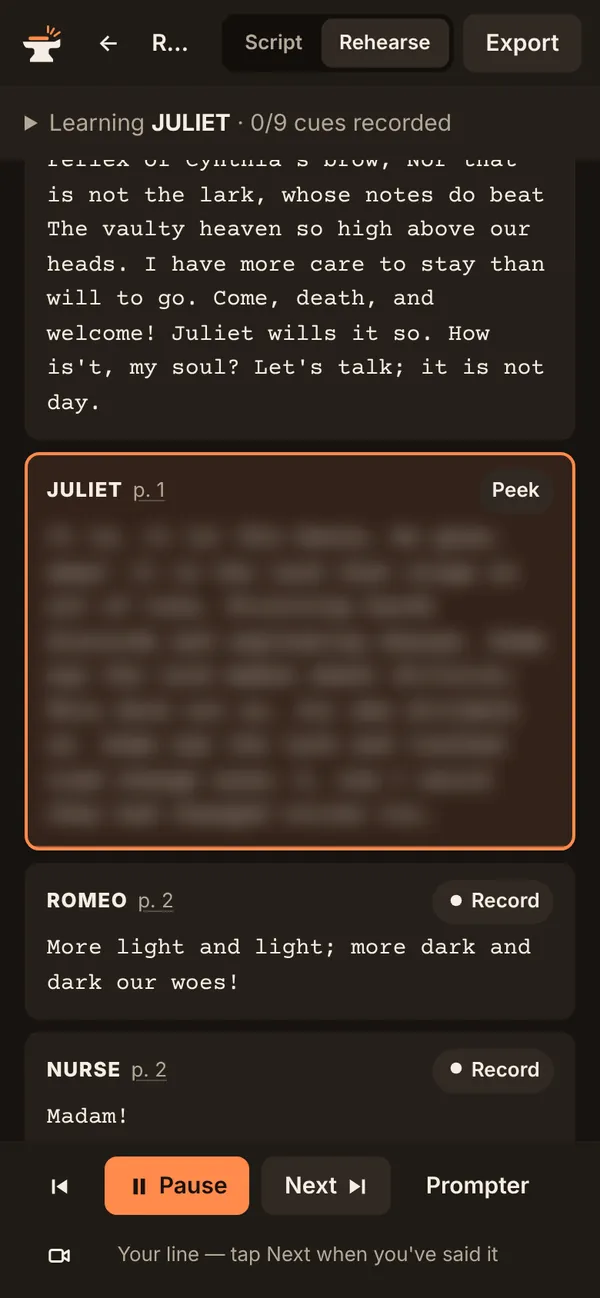
On stage you don't see your page, you hear your cue. So practise the way you'll need it: cover your line, read the cue, say your line, then check. Pay most attention to the last few words of each cue, since that's the moment you come in.
For a long speech, learn the order of its thoughts before the words: what it moves through, and what sets off each new thought. If you dry partway, you can find the next thought, and the words come with it.
Say it out loud, and test it
Reading a speech over feels like knowing it. Saying it aloud without looking, then checking it word by word, shows what you actually know. Typing it out and checking is stricter still: it catches the small words you swap or drop, which you'd never notice saying it.
Little and often
Several short sessions over a few days hold better than one long night. Each time, go back to the lines you got wrong rather than the ones you know. Run it the night before and again in the morning.
Once you're off book, stop learning and start playing: run it with a partner, or anyone who'll read in, and let the scene take over.
Learning LADY MACBETH
If we should fail?
We fail! But screw your courage to the sticking-place, And we'll not fail.
Read Lady Macbeth's line once.
In Linesmith
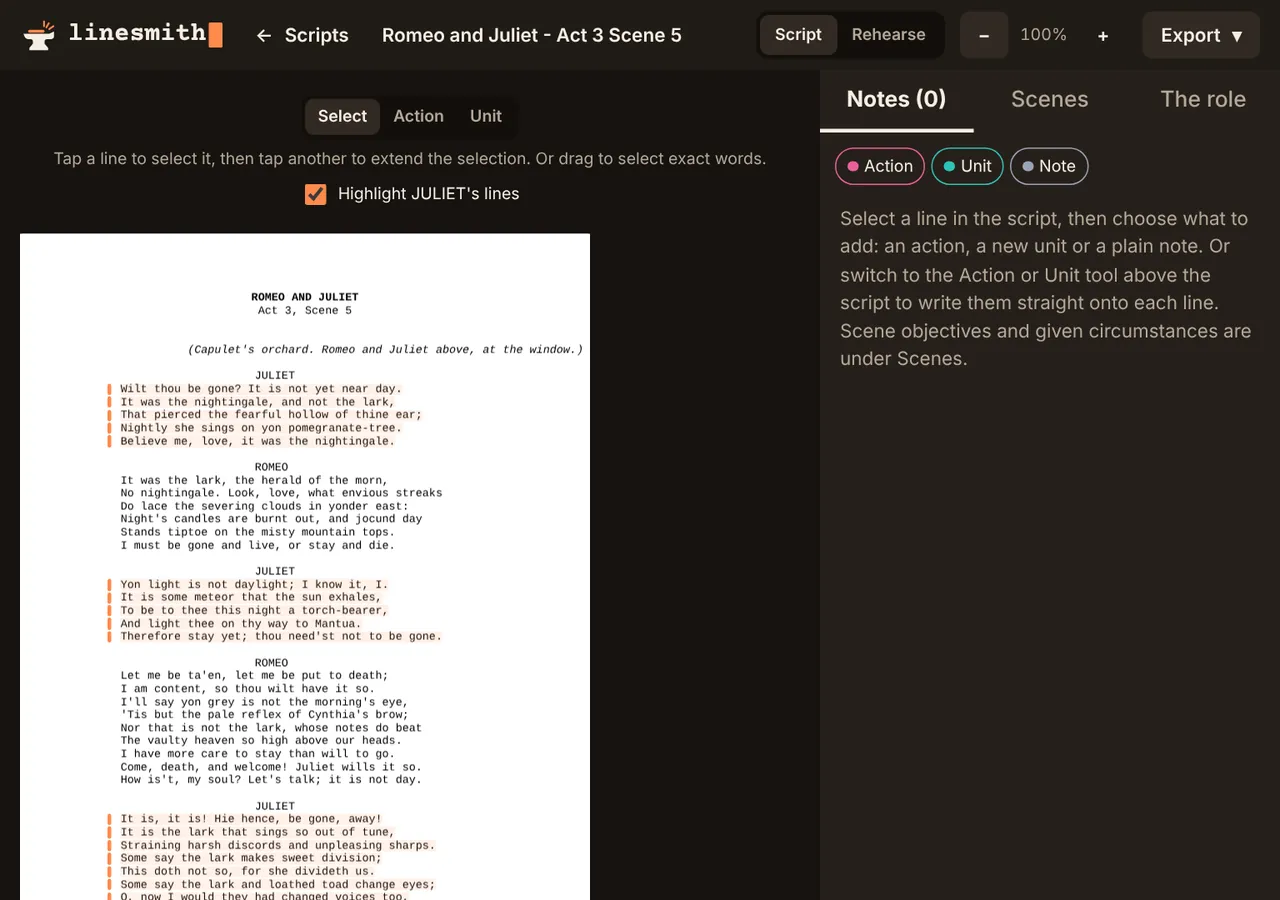
Add your script as a PDF, a Word file or pasted text, and pick the part you're learning. In Rehearse, the cue is read aloud, by your device's voice or a recording you make, and your line stays hidden until you've said it or typed it.
Typing checks every word and marks the ones you missed. Fade-out hides a few more words each time you get a line right, and the cue quiz asks your lines out of order. A line counts as off book once your latest go at it is word-perfect, and “Practise my weakest lines” goes straight to the ones you didn't.