
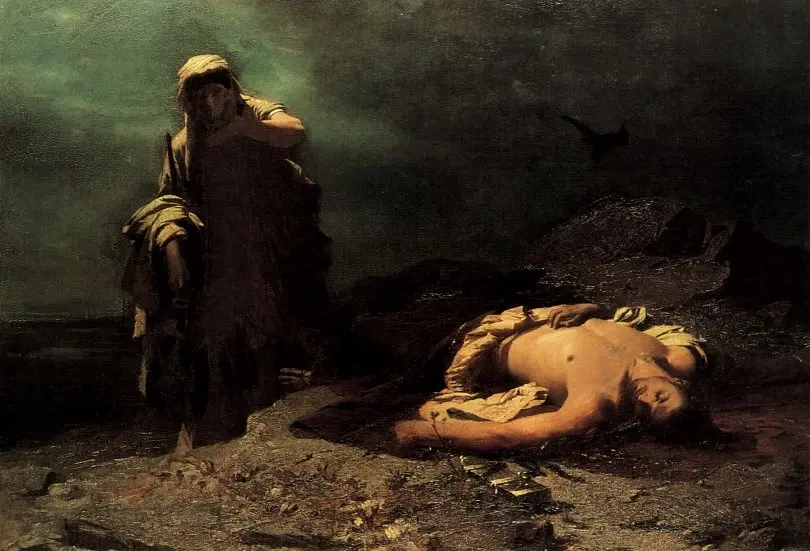
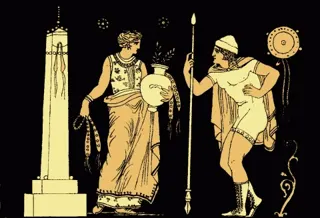
 Electraby SophoclesA daughter waits years for her brother to come home and avenge their father.
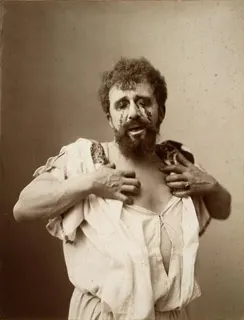 King Oedipusby SophoclesA king hunts for the murderer who brought plague on his city, and finds himself.
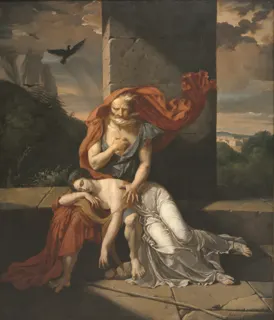 Oedipus at Colonosby SophoclesOld, blind and banished, Oedipus comes to Athens to die, and both sides of a war want his grave.
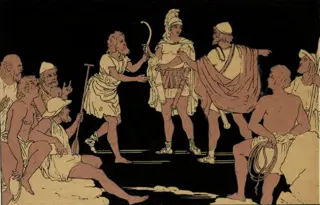 Philoctetesby SophoclesThe Greeks need the bow of a man they abandoned on a desert island, and send a boy to trick him out of it.

The play
Own sister of my blood, one life with me,
Ismene, have the tidings caught thine ear?
Say, hath not Heaven decreed to execute
On thee and me, while yet we are alive,
All the evil Oedipus bequeathed? All horror,
All pain, all outrage, falls on us! And now
The General's proclamation of to-day
Hast thou not heard?--Art thou so slow to hear
When harm from foes threatens the souls we love?
No word of those we love, Antigone,
Painful or glad, hath reached me, since we two
Were utterly deprived of our two brothers,
Cut off with mutual stroke, both in one day.
And since the Argive host this now-past night
Is vanished, I know nought beside to make me
Nearer to happiness or more in woe.
I knew it well, and therefore led thee forth
The palace gate, that thou alone mightst hear.
Speak on! Thy troubled look bodes some dark news.
Why, hath not Creon, in the burial-rite,
Of our two brethren honoured one, and wrought
On one foul wrong? Eteocles, they tell,
With lawful consecration he lays out,
And after covers him in earth, adorned
With amplest honours in the world below.
But Polynices, miserably slain,
They say 'tis publicly proclaimed that none
Must cover in a grave, nor mourn for him;
But leave him tombless and unwept, a store
Of sweet provision for the carrion fowl
That eye him greedily. Such righteous law
Good Creon hath pronounced for thy behoof
Ay, and for mine! I am not left out!--And now
He moves this way to promulgate his will
To such as have not heard, nor lightly holds
The thing he bids, but, whoso disobeys,
The citizens shall stone him to the death.
This is the matter, and thou wilt quickly show
If thou art noble, or fallen below thy birth.
Unhappy one! But what can I herein
Avail to do or undo?
Wilt thou share
The danger and the labour? Make thy choice.
Of what wild enterprise? What canst thou mean?
Wilt thou join hand with mine to lift the dead?
To bury him, when all have been forbidden?
Is that thy thought?
To bury my own brother
And thine, even though thou wilt not do thy part.
I will not be a traitress to my kin.
Fool-hardy girl! against the word of Creon?
He hath no right to bar me from mine own.
Ah, sister, think but how our father fell,
Hated of all and lost to fair renown,
Through self-detected crimes--with his own hand,
Self-wreaking, how he dashed out both his eyes:
Then how the mother-wife, sad two-fold name!
With twisted halter bruised her life away,
Last, how in one dire moment our two brothers
With internecine conflict at a blow
Wrought out by fratricide their mutual doom.
Now, left alone, O think how beyond all
Most piteously we twain shall be destroyed,
If in defiance of authority
We traverse the commandment of the King!
We needs must bear in mind we are but women,
Never created to contend with men;
Nay more, made victims of resistless power,
To obey behests more harsh than this to-day.
I, then, imploring those beneath to grant
Indulgence, seeing I am enforced in this,
Will yield submission to the powers that rule,
Small wisdom were it to overpass the bound.
I will not urge you! no! nor if now you list
To help me, will your help afford me joy.
Be what you choose to be! This single hand
Shall bury our lost brother. Glorious
For me to take this labour and to die!
Dear to him will my soul be as we rest
In death, when I have dared this holy crime.
My time for pleasing men will soon be over;
Not so my duty toward the Dead! My home
Yonder will have no end. You, if you will,
May pour contempt on laws revered on High.
Not from irreverence. But I have no strength
To strive against the citizens' resolve.
Thou, make excuses! I will go my way
To raise a burial-mound to my dear brother.
Oh, hapless maiden, how I fear for thee!
Waste not your fears on me! Guide your own fortune.
Ah! yet divulge thine enterprise to none,
But keep the secret close, and so will I.
O Heavens! Nay, tell! I hate your silence worse;
I had rather you proclaimed it to the world.
You are ardent in a chilling enterprise.
I know that I please those whom I would please.
Yes, if you thrive; but your desire is bootless.
Well, when I fail I shall be stopt, I trow!
One should not start upon a hopeless quest.
Speak in that vein if you would earn my hate
And aye be hated of our lost one. Peace!
Leave my unwisdom to endure this peril;
Fate cannot rob me of a noble death.
Go, if you must--Not to be checked in folly,
But sure unparalleled in faithful love! [Exeunt
[entering] Beam of the mounting Sun! I 1
O brightest, fairest ray
Seven-gated Thebe yet hath seen!
Over the vale where Dirce's fountains run
At length thou appearedst, eye of golden Day,
And with incitement of thy radiance keen
Spurredst to faster flight
The man of Argos hurrying from the fight.
Armed at all points the warrior came,
But driven before thy rising flame
He rode, reverting his pale shield,
Headlong from yonder battlefield.
In snow-white panoply, on eagle wing, [Half-Chorus
He rose, dire ruin on our land to bring,
Roused by the fierce debate
Of Polynices' hate,
Shrilling sharp menace from his breast,
Sheathed all in steel from crown to heel,
With many a plumed crest.
Then stooped above the domes, I 2
With lust of carnage fired,
And opening teeth of serried spears
Yawned wide around the gates that guard our homes;
But went, or e'er his hungry jaws had tired
On Theban flesh,--or e'er the Fire-god fierce
Seizing our sacred town
Besmirched and rent her battlemented crown.
Such noise of battle as he fled
About his back the War-god spread;
So writhed to hard-fought victory
The serpent struggling to be free.
High Zeus beheld their stream that proudly rolled [Half-Chorus
Idly caparisoned with clanking gold:
Zeus hates the boastful tongue:
He with hurled fire down flung
One who in haste had mounted high,
And that same hour from topmost tower
Upraised the exulting cry.
Swung rudely to the hard repellent earth II 1
Amidst his furious mirth
He fell, who then with flaring brand
Held in his fiery hand
Came breathing madness at the gate
In eager blasts of hate.
And doubtful swayed the varying fight
Through the turmoil of the night,
As turning now on these and now on those
Ares hurtled 'midst our foes,
Self-harnessed helper on our right.
Seven matched with seven, at each gate one, [Half-Chorus
Their captains, when the day was done,
Left for our Zeus who turned the scale,
The brazen tribute in full tale:
All save the horror-burdened pair,
Dire children of despair,
Who from one sire, one mother, drawing breath,
Each with conquering lance in rest
Against a true born brother's breast,
Found equal lots in death.
But with blithe greeting to glad Thebe came II 2
She of the glorious name,
Victory,--smiling on our chariot throng
With eyes that waken song
Then let those battle memories cease,
Silenced by thoughts of peace.
With holy dances of delight
Lasting through the livelong night
Visit we every shrine, in solemn round,
Led by him who shakes the ground,
Our Bacchus, Thebe's child of light.
But look! where Creon in his new-made power,
Moved by the fortune of the recent hour,
Comes with fresh counsel. What intelligence
Intends he for our private conference,
That he hath sent his herald to us all,
Gathering the elders with a general call?
Enter CREON.
My friends, the noble vessel of our State,
After sore shaking her, the Gods have sped
On a smooth course once more. I have called you hither,
By special messengers selecting you
From all the city, first, because I knew you
Aye loyal to the throne of Laius;
Then, both while Oedipus gave prosperous days,
And since his fall, I still beheld you firm
In sound allegiance to the royal issue.
Now since the pair have perished in an hour,
Twinned in misfortune, by a mutual stroke
Staining our land with fratricidal blood,
All rule and potency of sovereign sway,
In virtue of next kin to the deceased,
Devolves on me. But hard it is to learn
The mind of any mortal or the heart,
Till he be tried in chief authority.
Power shows the man. For he who when supreme
Withholds his hand or voice from the best cause,
Being thwarted by some fear, that man to me
Appears, and ever hath appeared, most vile.
He too hath no high place in mine esteem,
Who sets his friend before his fatherland.
Let Zeus whose eye sees all eternally
Be here my witness. I will ne'er keep silence
When danger lours upon my citizens
Who looked for safety, nor make him my friend
Who doth not love my country. For I know
Our country carries us, and whilst her helm
Is held aright we gain good friends and true.
Following such courses 'tis my steadfast will
To foster Thebe's greatness, and therewith
In brotherly accord is my decree
Touching the sons of Oedipus. The man
Eteocles I mean--who died for Thebes
Fighting with eminent prowess on her side,
Shall be entombed with every sacred rite
That follows to the grave the lordliest dead.
But for his brother, who, a banished man,
Returned to devastate and burn with fire
The land of his nativity, the shrines
Of his ancestral gods, to feed him fat
With Theban carnage, and make captive all
That should escape the sword--for Polynices,
This law hath been proclaimed concerning him:
He shall have no lament, no funeral,
But he unburied, for the carrion fowl
And dogs to eat his corse, a sight of shame.
Such are the motions of this mind and will.
Never from me shall villains reap renown
Before the just. But whoso loves the State,
I will exalt him both in life and death.
Son of Menoeceus, we have heard thy mind
Toward him who loves, and him who hates our city.
And sure, 'tis thine to enforce what law thou wilt
Both on the dead and all of us who live.
Then be ye watchful to maintain my word.
Young strength for such a burden were more meet.
Already there be watchers of the dead.
What charge then wouldst thou further lay on us?
Not to give place to those that disobey.
Who is so fond, to be in love with death?
Such, truly, is the meed. But hope of gain
Full oft ere now hath been the ruin of men.
WATCHMAN [entering].
My lord, I am out of breath, but not with speed.
I will not say my foot was fleet. My thoughts
Cried halt unto me ever as I came
And wheeled me to return. My mind discoursed
Most volubly within my breast, and said
Fond wretch! why go where thou wilt find thy bane?
Unhappy wight! say, wilt thou bide aloof?
Then if the king shall hear this from another,
How shalt thou 'scape for 't? Winding thus about
I hasted, but I could not speed, and so
Made a long journey of a little way.
At last 'yes' carried it, that I should come
To thee; and tell thee I must needs; and shall,
Though it be nothing that I have to tell.
For I came hither, holding fast by this
Nought that is not my fate can happen to me.
Speak forth thy cause of fear. What is the matter?
First of mine own part in the business. For
I did it not, nor saw the man who did,
And 'twere not right that I should come to harm.
You fence your ground, and keep well out of danger;
I see you have some strange thing to declare.
A man will shrink who carries words of fear.
CB. Let us have done with you. Tell your tale, and go.
Well, here it is. The corse hath burial
From some one who is stolen away and gone,
But first hath strown dry dust upon the skin,
And added what religious rites require.
Ha!
What man hath been so daring in revolt?
I cannot tell. There was no mark to show
No dint of spade, or mattock-loosened sod,
Only the hard bare ground, untilled and trackless.
Whoe'er he was, the doer left no trace.
And, when the scout of our first daylight watch
Showed us the thing, we marvelled in dismay.
The Prince was out of sight; not in a grave,
But a thin dust was o'er him, as if thrown
By one who shunned the dead man's curse. No sign
Appeared of any hound or beast o' the field
Having come near, or pulled at the dead body.
Then rose high words among us sentinels
With bickering noise accusing each his mate,
And it seemed like to come to blows, with none
To hinder. For the hand that thus had wrought
Was any of ours, and none; the guilty man
Escaped all knowledge. And we were prepared
To lift hot iron with our bare palms; to walk
Through fire, and swear by all the Gods at once
That we were guiltless, ay, and ignorant
Of who had plotted or performed this thing.
When further search seemed bootless, at the last
One spake, whose words bowed all our heads to the earth
With fear. We knew not what to answer him,
Nor how to do it and prosper. He advised
So grave a matter must not be concealed,
But instantly reported to the King.
Well, this prevailed, and the lot fell on me,
Unlucky man! to be the ministrant
Of this fair service. So I am present here,
Against my will and yours, I am sure of that.
None love the bringer of unwelcome news.
My lord, a thought keeps whispering in my breast,
Some Power divine hath interposed in this.
Cease, ere thou quite enrage me, and appear
Foolish as thou art old. Talk not to me
Of Gods who have taken thought for this dead man!
Say, was it for his benefits to them
They hid his corse, and honoured him so highly,
Who came to set on fire their pillared shrines,
With all the riches of their offerings,
And to make nothing of their land and laws?
Or, hast thou seen them honouring villany?
That cannot be. Long time the cause of this
Hath come to me in secret murmurings
From malcontents of Thebes, who under yoke
Turned restive, and would not accept my sway.
Well know I, these have bribed the watchmen here
To do this for some fee. For nought hath grown
Current among mankind so mischievous
As money. This brings cities to their fall:
This drives men homeless, and moves honest minds
To base contrivings. This hath taught mankind
The use of wickedness, and how to give
An impious turn to every kind of act.
But whosoe'er hath done this for reward
Hath found his way at length to punishment.
If Zeus have still my worship, be assured
Of that which here on oath I say to thee
Unless ye find the man who made this grave
And bring him bodily before mine eye,
Death shall not be enough, till ye have hung
Alive for an example of your guilt,
That henceforth in your rapine ye may know
Whence gain is to be gotten, and may learn
Pelf from all quarters is not to be loved.
For in base getting, 'tis a common proof,
More find disaster than deliverance.
Am I to speak? or must I turn and go?
What? know you not your speech offends even now?
Doth the mind smart withal, or only the ear?
Art thou to probe the seat of mine annoy?
If I offend, 'tis in your ear alone,
The malefactor wounds ye to the soul.
Out on thee! thou art nothing but a tongue.
Then was I ne'er the doer of this deed.
Yea, verily: self-hired to crime for gold.
Pity so clear a mind should clearly err!
Gloze now on clearness! But unless ye bring
The burier, without glozing ye shall tell,
Craven advantage clearly worketh bane.
By all means let the man be found; one thing
I know right well:--caught or not caught, howe'er
Fate rules his fortune, me you ne'er will see
Standing in presence here. Even now I owe
Deep thanks to Heaven for mine escape, so far
Beyond my hope and highest expectancy. [Exeunt severally
Many a wonder lives and moves, but the wonder of all is man, I 1
That courseth over the grey ocean, carried of Southern gale,
Faring amidst high-swelling seas that rudely surge around,
And Earth, supreme of mighty Gods, eldest, imperishable,
Eternal, he with patient furrow wears and wears away
As year by year the plough-shares turn and turn,
Subduing her unwearied strength with children of the steed.
And wound in woven coils of nets he seizeth for his prey I 2
The aery tribe of birds and wilding armies of the chase,
And sea-born millions of the deep--man is so crafty-wise.
And now with engine of his wit he tameth to his will
The mountain-ranging beast whose lair is in the country wild;
And now his yoke hath passed upon the mane
Of horse with proudly crested neck and tireless mountain bull.
Wise utterance and wind-swift thought, and city-moulding mind, II 1
And shelter from the clear-eyed power of biting frost,
He hath taught him, and to shun the sharp, roof-penetrating rain,
Full of resource, without device he meets no coming time;
From Death alone he shall not find reprieve;
No league may gain him that relief; but even for fell disease,
That long hath baffled wisest leech, he hath contrived a cure.
Inventive beyond wildest hope, endowed with boundless skill, II 2
One while he moves toward evil, and one while toward good,
According as he loves his land and fears the Gods above.
Weaving the laws into his life and steadfast oath of Heaven,
High in the State he moves but outcast he,
Who hugs dishonour to his heart and follows paths of crime
Ne'er may he come beneath my roof, nor think like thoughts with me.
What portent from the Gods is here?
My mind is mazed with doubt and fear.
How can I gainsay what I see?
I know the girl Antigone,
O hapless child of hapless sire!
Didst thou, then, recklessly aspire
To brave kings' laws, and now art brought
In madness of transgression caught?
Enter Watchman, bringing in ANTIGONE
Here is the doer of the deed--this maid
We found her burying him. Where is the King?
Look, he comes forth again to meet thy call.
Enter CREON.
What call so nearly times with mine approach?
My lord, no mortal should deny on oath,
Judgement is still belied by after thought
When quailing 'neath the tempest of your threats,
Methought no force would drive me to this place
But joy unlook'd for and surpassing hope
Is out of bound the best of all delight,
And so I am here again,--though I had sworn
I ne'er would come,--and in my charge this maid,
Caught in the act of caring for the dead
Here was no lot throwing, this hap was mine
Without dispute. And now, my sovereign lord,
According to thy pleasure, thine own self
Examine and convict her. For my part
I have good right to be away and free
From the bad business I am come upon.
This maiden!
How came she in thy charge? Where didst thou find her?
Burying the prince. One word hath told thee all.
Hast thou thy wits, and knowest thou what thou sayest?
I saw her burying him whom you forbade
To bury. Is that, now, clearly spoken, or no?
And how was she detected, caught, and taken?
It fell in this wise. We were come to the spot,
Bearing the dreadful burden of thy threats;
And first with care we swept the dust away
From round the corse, and laid the dank limbs bare:
Then sate below the hill-top, out o' the wind,
Where no bad odour from the dead might strike us,
Stirring each other on with interchange
Of loud revilings on the negligent
In 'tendance on this duty. So we stayed
Till in mid heaven the sun's resplendent orb
Stood high, and the heat strengthened. Suddenly,
The Storm-god raised a whirlwind from the ground,
Vexing heaven's concave, and filled all the plain,
Rending the locks of all the orchard groves,
Till the great sky was choked withal. We closed
Our lips and eyes, and bore the God-sent evil.
When after a long while this ceased, the maid
Was seen, and wailed in high and bitter key,
Like some despairing bird that hath espied
Her nest all desolate, the nestlings gone.
So, when she saw the body bare, she mourned
Loudly, and cursed the authors of this deed.
Then nimbly with her hands she brought dry dust,
And holding high a shapely brazen cruse,
Poured three libations, honouring the dead.
We, when we saw, ran in, and straightway seized
Our quarry, nought dismayed, and charged her with
The former crime and this. And she denied
Nothing;--to my delight, and to my grief.
One's self to escape disaster is great joy;
Yet to have drawn a friend into distress
Is painful. But mine own security
To me is of more value than aught else.
Thou, with thine eyes down-fastened to the earth!
Dost thou confess to have done this, or deny it?
I deny nothing. I avow the deed.
[to Watchman] Thou may'st betake thyself whither thou wilt,
Acquitted of the grievous charge, and free.
[to ANTIGONE]
And thou,--no prating talk, but briefly tell,
Knew'st thou our edict that forbade this thing?
I could not fail to know. You made it plain.
How durst thou then transgress the published law?
I heard it not from Heaven, nor came it forth
From Justice, where she reigns with Gods below.
They too have published to mankind a law.
Nor thought I thy commandment of such might
That one who is mortal thus could overbear
The infallible, unwritten laws of Heaven.
Not now or yesterday they have their being,
But everlastingly, and none can tell
The hour that saw their birth. I would not, I,
For any terror of a man's resolve,
Incur the God-inflicted penalty
Of doing them wrong. That death would come, I knew
Without thine edict;--if before the time,
I count it gain. Who does not gain by death,
That lives, as I do, amid boundless woe?
Slight is the sorrow of such doom to me.
But had I suffered my own mother's child,
Fallen in blood, to be without a grave,
That were indeed a sorrow. This is none.
And if thou deem'st me foolish for my deed,
I am foolish in the judgement of a fool.
Fierce shows the maiden's vein from her fierce sire;
Calamity doth not subdue her will.
Ay, but the stubborn spirit first doth fall.
Oft ye shall see the strongest bar of steel,
That fire hath hardened to extremity,
Shattered to pieces. A small bit controls
The fiery steed. Pride may not be endured
In one whose life is subject to command.
This maiden hath been conversant with crime
Since first she trampled on the public law;
And now she adds to crime this insolence,
To laugh at her offence, and glory in it.
Truly, if she that hath usurped this power
Shall rest unpunished, she then is a man,
And I am none. Be she my sister's child,
Or of yet nearer blood to me than all
That take protection from my hearth, the pair
Shall not escape the worst of deaths. For know,
I count the younger of the twain no less
Copartner in this plotted funeral:
And now I bid you call her. Late I saw her
Within the house, beyond herself, and frantic.
--Full oft when one is darkly scheming wrong,
The disturbed spirit hath betrayed itself
Before the act it hides.--But not less hateful
Seems it to me, when one that hath been caught
In wickedness would give it a brave show.
Wouldst thou aught more of me than merely death?
No more. 'Tis all I claim. Death closes all.
Why then delay? No talk of thine can charm me,
Forbid it Heaven! And my discourse no less
Must evermore sound noisome to thine ear.
Yet where could I have found a fairer fame
Than giving burial to my own true brother?
All here would tell thee they approve my deed,
Were they not tongue-tied to authority.
But kingship hath much profit; this in chief,
That it may do and say whate'er it will.
No Theban sees the matter with thine eye.
They see, but curb their voices to thy sway
And art thou not ashamed, acting alone?
A sister's piety hath no touch of shame.
Was not Eteocles thy brother too?
My own true brother from both parents' blood.
This duty was impiety to him.
He that is dead will not confirm that word.
If you impart his honours to the vile.
It was his brother, not a slave, who fell.
But laying waste the land for which he fought.
Death knows no difference, but demands his due.
Yet not equality 'twixt good and bad.
Both may be equal yonder; who can tell?
An enemy is hated even in death.
Love, and not hatred, is the part for me.
Down then to death! and, if you must, there love
The dead. No woman rules me while I live.
Now comes Ismene forth. Ah, see,
From clouds above her brow
The sister-loving tear
Is falling wet on her fair cheek,
Distaining all her passion-crimson'd face!
Enter ISMENE.
And thou, that like a serpent coiled i' the house
Hast secretly been draining my life-blood,
Little aware that I was cherishing
Two curses and subverters of my throne,
Tell us, wilt thou avouch thy share in this
Entombment, or forswear all knowledge of it?
If her voice go therewith, I did the deed,
And bear my part and burden of the blame.
Nay, justice will not suffer that. You would not,
And I refused to make you mine ally.
But now in thy misfortune I would fain
Embark with thee in thy calamity.
Who did the deed, the powers beneath can tell.
I care not for lip-kindness from my kin.
Ah! scorn me not so far as to forbid me
To die with thee, and honour our lost brother.
Die not with me, nor make your own a deed
you never touched! My dying is enough.
What joy have I in life when thou art gone?
Ask Creon there. He hath your care and duty.
What can it profit thee to vex me so?
My heart is pained, though my lip laughs at thee.
What can I do for thee now, even now?
Save your own life. I grudge not your escape.
Alas! and must I be debarred thy fate?
Life was the choice you made. Mine was to die.
I warned thee--
Yes, your prudence is admired
On earth. My wisdom is approved below.
Yet truly we are both alike in fault.
Fear not; you live. My life hath long been given
To death, to be of service to the dead.
Of these two girls, the one hath lost her wits:
The other hath had none since she was born.
My lord, in misery, the mind one hath
Is wont to be dislodged, and will not stay.
You have ta'en leave of yours at any rate,
When you cast in your portion with the vile.
What can life profit me without my sister?
Say not 'my sister'; she is nothing now.
What? wilt thou kill thy son's espousal too?
He may find other fields to plough upon.
Not so as love was plighted 'twixt them twain.
I hate a wicked consort for my son.
O dearest Haemon! how thy father wrongs thee!
Thou and thy marriage are a torment to me.
And wilt thou sever her from thine own son?
'Tis death must come between him and his joy,
All doubt is then resolved: the maid must die,
I am resolved; and so, 'twould seem, are you.
In with her, slaves! No more delay! Henceforth
These maids must have but woman's liberty
And be mewed up; for even the bold will fly
When they see Death nearing the house of life.
[ANTIGONE and ISMENE are led into the palace]
Blest is the life that never tasted woe. I 1
When once the blow
Hath fallen upon a house with Heaven-sent doom,
Trouble descends in ever-widening gloom
Through all the number of the tribe to flow;
As when the briny surge
That Thrace-born tempests urge
[The big wave ever gathering more and more]
Runs o'er the darkness of the deep,
And with far-searching sweep
Uprolls the storm-heap'd tangle on the shore,
While cliff to beaten cliff resounds with sullen roar.
The stock of Cadmus from old time, I know, I 2
Hath woe on woe,
Age following age, the living on the dead,
Fresh sorrow falling on each new-ris'n head,
None freed by God from ruthless overthrow.
E'en now a smiling light
Was spreading to our sight
O'er one last fibre of a blasted tree,
When, lo! the dust of cruel death,
Tribute of Gods beneath,
And wildering thoughts, and fate-born ecstasy,
Quench the brief gleam in dark Nonentity.
What froward will of man, O Zeus! can check thy might? II 1
Not all-enfeebling sleep, nor tireless months divine,
Can touch thee, who through ageless time
Rulest mightily Olympus' dazzling height.
This was in the beginning, and shall be
Now and eternally,
Not here or there, but everywhere,
A law of misery that shall not spare.
For Hope, that wandereth wide, comforting many a head, II 2
Entangleth many more with glamour of desire:
Unknowing they have trode the fire.
Wise was the famous word of one who said,
'Evil oft seemeth goodness to the mind
An angry God doth blind.'
Few are the days that such as he
May live untroubled of calamity.
Lo, Haemon, thy last offspring, now is come,
Lamenting haply for the maiden's doom,
Say, is he mourning o'er her young life lost,
Fiercely indignant for his bridal crossed?
Enter HAEMON.
We shall know soon, better than seers could teach us.
Can it be so, my son, that thou art brought
By mad distemperature against thy sire,
On hearing of the irrevocable doom
Passed on thy promised bride? Or is thy love
Thy father's, be his actions what they may?
I am thine, father, and will follow still
Thy good directions; nor would I prefer
The fairest bride to thy wise government.
That, O my son! should be thy constant mind,
In all to bend thee to thy father's will.
Therefore men pray to have around their hearths
Obedient offspring, to requite their foes
With harm, and honour whom their father loves;
But he whose issue proves unprofitable,
Begets what else but sorrow to himself
And store of laughter to his enemies?
Make not, my son, a shipwreck of thy wit
For a woman. Thine own heart may teach thee this;
There's but cold comfort in a wicked wife
Yoked to the home inseparably. What wound
Can be more deadly than a harmful friend?
Then spurn her like an enemy, and send her
To wed some shadow in the world below!
For since of all the city I have found
Her only recusant, caught in the act,
I will not break my word before the State.
I will take her life. At this let her invoke
The god of kindred blood! For if at home
I foster rebels, how much more abroad?
Whoso is just in ruling his own house,
Lives rightly in the commonwealth no less:
But he that wantonly defies the law,
Or thinks to dictate to authority,
Shall have no praise from me. What power soe'er
The city hath ordained, must be obeyed
In little things and great things, right or wrong.
The man who so obeys, I have good hope
Will govern and be governed as he ought,
And in the storm of battle at my side
Will stand a faithful and a trusty comrade.
But what more fatal than the lapse of rule?
This ruins cities, this lays houses waste,
This joins with the assault of war to break
Full numbered armies into hopeless rout;
And in the unbroken host 'tis nought but rule
That keeps those many bodies from defeat,
I must be zealous to defend the law,
And not go down before a woman's will.
Else, if I fall, 'twere best a man should strike me;
Lest one should say, 'a woman worsted him.'
Unless our sense is weakened by long time,
Thou speakest not unwisely.
O my sire,
Sound wisdom is a God implanted seed,
Of all possessions highest in regard.
I cannot, and I would not learn to say
That thou art wrong in this; though in another,
It may be such a word were not unmeet.
But as thy son, 'tis surely mine to scan
Men's deeds, and words, and muttered thoughts toward thee.
Fear of thy frown restrains the citizen
In talk that would fall harshly on thine ear.
I under shadow may o'erhear, how all
Thy people mourn this maiden, and complain
That of all women least deservedly
She perishes for a most glorious deed.
'Who, when her own true brother on the earth
Lay weltering after combat in his gore,
Left him not graveless, for the carrion few
And raw devouring field dogs to consume
Hath she not merited a golden praise?'
Such the dark rumour spreading silently.
Now, in my valuing, with thy prosperous life,
My father, no possession can compare.
Where can be found a richer ornament
For children, than their father's high renown?
Or where for fathers, than their children's fame?
Nurse not one changeless humour in thy breast,
That nothing can be right but as thou sayest.
Whoe'er presumes that he alone hath sense,
Or peerless eloquence, or reach of soul,
Unwrap him, and you'll find but emptiness.
'Tis no disgrace even to the wise to learn
And lend an ear to reason. You may see
The plant that yields where torrent waters flow
Saves every little twig, when the stout tree
Is torn away and dies. The mariner
Who will not ever slack the sheet that sways
The vessel, but still tightens, oversets,
And so, keel upward, ends his voyaging.
Relent, I pray thee, and give place to change.
If any judgement hath informed my youth,
I grant it noblest to be always wise,
But,--for omniscience is denied to man
Tis good to hearken to admonishment.
My lord, 'twere wise, if thou wouldst learn of him
In reason; and thou, Haemon, from thy sire!
Truth lies between you.
Shall our age, forsooth,
Be taught discretion by a peevish boy?
Only in what is right. Respects of time
Must be outbalanced by the actual need.
To cringe to rebels cannot be a need.
I do not claim observance for the vile.
Why, is not she so tainted? Is 't not proved?
All Thebes denies it.
Am I ruled by Thebes?
If youth be folly, that is youngly said.
Shall other men prescribe my government?
One only makes not up a city, father.
Is not the city in the sovereign's hand?
Nobly you'd govern as the desert's king.
This youngster is the woman's champion.
You are the woman, then--for you I care.
Villain, to bandy reasons with your sire!
I plead against the unreason of your fault.
What fault is there in reverencing my power?
There is no reverence when you spurn the Gods.
Abominable spirit, woman-led!
You will not find me following a base guide.
Why, all your speech this day is spent for her.
For you and me too, and the Gods below.
She will not live to be your wife on earth.
I know, then, whom she will ruin by her death.
What, wilt thou threaten, too, thou audacious boy?
It is no threat to answer empty words.
Witless admonisher, thou shalt pay for this!
Thou art my sire, else would I call thee senseless.
Thou woman's minion! mince not terms with me,
Wouldst thou have all the speaking on thy side?
Is 't possible? By yon heaven! thou'lt not escape,
For adding contumely to words of blame.
Bring out the hated thing, that she may die
Immediately, before her lover's face!
Nay, dream not she shall suffer in my sight
Nor shalt thou ever see my face again
Let those stay with you that can brook your rage! [Exit
My lord, he is parted swiftly in deep wrath!
The youthful spirit offended makes wild work.
Ay, let him do his worst. Let him give scope
To pride beyond the compass of a man!
He shall not free these maidens from their doom.
Is death thy destination for them both?
Only for her who acted. Thou art right.
And what hast thou determined for her death?
Where human footstep shuns the desert ground,
I'll hide her living in a cave like vault,
With so much provender as may prevent
Pollution from o'ertaking the whole city
And there, perchance, she may obtain of Death,
Her only deity, to spare her soul,
Or else in that last moment she will learn
'Tis labour lost to worship powers unseen. [Exit CREON
Love, never foiled in fight! 1
Warrior Love, that on Wealth workest havoc!
Love, who in ambush of young maid's soft cheek
All night keep'st watch!--Thou roamest over seas.
In lonely forest homes thou harbourest.
Who may avoid thee? None!
Mortal, Immortal,
All are o'erthrown by thee, all feel thy frenzy.
Lightly thou draw'st awry 2
Righteous minds into wrong to their ruin
Thou this unkindly quarrel hast inflamed
'Tween kindred men--Triumphantly prevails
The heart-compelling eye of winsome bride,
Compeer of mighty Law
Throned, commanding.
Madly thou mockest men, dread Aphrodite.
Ah! now myself am carried past the bound
Of law, nor can I check the rising tear,
When I behold Antigone even here
Touching the quiet bourne where all must rest.
Enter ANTIGONE guarded.
Ye see me on my way, I 1
O burghers of my father's land!
With one last look on Helios' ray,
Led my last path toward the silent strand.
Alive to the wide house of rest I go;
No dawn for me may shine,
No marriage-blessing e'er be mine,
No hymeneal with my praises flow!
The Lord of Acheron's unlovely shore
Shall be mine only husband evermore.
Yea, but with glory and fame,
Not by award of the sword,
Not with blighting disease,
But by a law of thine own,
Thou, of mortals alone,
Goest alive to the deep
Tranquil home of the dead.
Erewhile I heard men say, I 2
How, in far Phrygia, Thebe's friend,
Tantalus' child, had dreariest end
On heights of Sipylus consumed away:
O'er whom the rock like clinging ivy grows,
And while with moistening dew
Her cheek runs down, the eternal snows
Weigh o'er her, and the tearful stream renew
That from sad brows her stone-cold breast doth steep.
Like unto her the God lulls me to sleep.
But she was a goddess born,
We but of mortal line;
And sure to rival the fate
Of a daughter of sires Divine
Were no light glory in death.
O mockery of my woe! II 1
I pray you by our fathers' holy Fear,
Why must I hear
Your insults, while in life on earth I stand,
O ye that flow
In wealth, rich burghers of my bounteous land?
O fount of Dirce, and thou spacious grove,
Where Thebe's chariots move!
Ye are my witness, though none else be nigh,
By what enormity of lawless doom,
Without one friendly sigh,
I go to the strong mound of yon strange tomb,
All hapless, having neither part nor room
With those who live or those who die!
Thy boldness mounted high,
And thou, my child, 'gainst the great pedestal
Of Justice with unmeasured force didst fall.
Thy father's lot still presseth hard on thee.
That pains me more than all. II 2
Ah! thou hast touched my father's misery
Still mourned anew,
With all the world-famed sorrows on us rolled
Since Cadmus old.
O cursed marriage that my mother knew!
O wretched fortune of my sire, who lay
Where first he saw the day!
Such were the authors of my burdened life;
To whom, with curses dowered, never a wife,
I go to dwell beneath.
O brother mine, thy princely marriage-tie
Hath been thy downfall, and in this thy death
Thou hast destroyed me ere I die.
'Twas pious, we confess,
Thy fervent deed. But he, who power would show,
Must let no soul of all he rules transgress.
A self-willed passion was thine overthrow.
Friendless, uncomforted of bridal lay, III
Unmourned, they lead me on my destined way.
Woe for my life forlorn! I may not see
The sacred round of yon great light
Rising again to greet me from the night;
No friend bemoans my fate, no tear hath fallen for me!
Enter CREON.
If criminals were suffered to complain
In dirges before death, they ne'er would end.
Away with her at once, and closing her,
As I commanded, in the vaulty tomb,
Leave her all desolate, whether to die,
Or to live on in that sepulchral cell.
We are guiltless in the matter of this maid;
Only she shall not share the light of day.
O grave! my bridal chamber, prison-house
Eterne, deep-hollowed, whither I am led
To find mine own,--of whom Persephone
Hath now a mighty number housed in death:
I last of all, and far most miserably,
Am going, ere my days have reached their term!
Yet lives the hope that, when I go, most surely
Dear will my coming be, father, to thee,
And dear to thee, my mother, and to thee,
Brother! since with these very hands I decked
And bathed you after death, and ministered
The last libations. And I reap this doom
For tending, Polynices, on thy corse.
Indeed I honoured thee, the wise will say.
For neither, had I children, nor if one
I had married were laid bleeding on the earth,
Would I have braved the city's will, or taken
This burden on me. Wherefore? I will tell.
A husband lost might be replaced; a son,
If son were lost to me, might yet be born;
But, with both parents hidden in the tomb,
No brother may arise to comfort me.
Therefore above all else I honoured thee,
And therefore Creon thought me criminal,
And bold in wickedness, O brother mine!
And now by servile hands, for all to see,
He hastens me away, unhusbanded,
Before my nuptial, having never known
Or married joy or tender motherhood.
But desolate and friendless I go down
Alive, O horror! to the vaults of the dead.
For what transgression of Heaven's ordinance?
Alas! how can I look to Heaven? on whom
Call to befriend me? seeing that I have earned,
By piety, the meed of impious?
Oh! if this act be what the Gods approve,
In death I may repent me of my deed;
But if they sin who judge me, be their doom
No heavier than they wrongly wreak on me!
With unchanged fury beats the storm of soul
That shakes this maiden.
Then for that, be sure
Her warders shall lament their tardiness.
Alas! I hear Death's footfall in that sound.
I may not reassure thee.--'Tis most true.
O land of Thebe, city of my sires,
Ye too, ancestral Gods! I go--I go!
Even now they lead me to mine end. Behold!
Founders of Thebes, the only scion left
Of Cadmus' issue, how unworthily,
By what mean instruments I am oppressed,
For reverencing the dues of piety. [Exit guarded
Even Danae's beauty left the lightsome day. I 1
Closed in her strong and brass-bound tower she lay
In tomb-like deep confine.
Yet she was gendered, O my child!
From sires of noblest line,
And treasured for the Highest the golden rain.
Fated misfortune hath a power so fell:
Not wealth, nor warfare wild,
Nor dark spray-dashing coursers of the main
Against great Destiny may once rebel.
He too in darksome durance was compressed, I 2
King of Edonians, Dryas' hasty son,
In eyeless vault of stone
Immured by Dionysus' hest,
All for a wrathful jest.
Fierce madness issueth in such fatal flower.
He found 'twas mad to taunt the Heavenly Power,
Chilling the Maenad breast
Kindled with Bacchic fire, and with annoy
Angering the Muse that in the flute hath joy.
And near twin rocks that guard the Colchian sea, II 1
Bosporian cliffs 'fore Salmydessus rise,
Where neighbouring Ares from his shrine beheld
Phineus' two sons by female fury quelled.
With cursed wounding of their sight-reft eyes,
That cried to Heaven to 'venge the iniquity.
The shuttle's sharpness in a cruel hand
Dealt the dire blow, not struck with martial brand.
But chiefly for her piteous lot they pined, II 2
Who was the source of their rejected birth.
She touched the lineage of Erechtheus old;
Whence in far caves her life did erst unfold,
Cradled 'mid storms, daughter of Northern wind,
Steed-swift o'er all steep places of the earth.
Yet even on her, though reared of heavenly kind,
The long-enduring Fates at last took hold.
Enter TIRESIAS, led by a boy.
We are come, my lords of Thebes, joint wayfarers,
One having eyes for both. The blind must still
Thus move in frail dependence on a guide.
And what hath brought thee, old Tiresias, now?
I will instruct thee, if thou wilt hear my voice.
I have not heretofore rejected thee.
Therefore thy pilotage hath saved this city.
Grateful experience owns the benefit.
Take heed. Again thou art on an edge of peril.
What is it? How I shudder at thy word!
The tokens of mine art shall make thee know.
As I was sitting on that ancient seat
Of divination, where I might command
Sure cognisance of every bird of the air,
I heard strange clamouring of fowl, that screeched
In furious dissonance; and, I could tell,
Talons were bloodily engaged--the whirr
Of wings told a clear tale. At once, in fear,
I tried burnt sacrifice at the high altar:
Where from the offering the fire god refused
To gleam; but a dank humour from the bones
Dripped on the embers with a sputtering fume.
The gall was spirited high in air, the thighs
Lay wasting, bared of their enclosing fat.
Such failing tokens of blurred augury
This youth reported, who is guide to me,
As I to others. And this evil state
Is come upon the city from thy will:
Because our altars--yea, our sacred hearths
Are everywhere infected from the mouths
Of dogs or beak of vulture that hath fed
On Oedipus' unhappy slaughtered son.
And then at sacrifice the Gods refuse
Our prayers and savour of the thigh-bone fat
And of ill presage is the thickening cry
Of bird that battens upon human gore
Now, then, my son, take thought. A man may err;
But he is not insensate or foredoomed
To ruin, who, when he hath lapsed to evil,
Stands not inflexible, but heals the harm.
The obstinate man still earns the name of fool.
Urge not contention with the dead, nor stab
The fallen. What valour is 't to slay the slain?
I have thought well of this, and say it with care;
And careful counsel, that brings gain withal,
Is precious to the understanding soul.
I am your mark, and ye with one consent
All shoot your shafts at me. Nought left untried,
Not even the craft of prophets, by whose crew
I am bought and merchandised long since. Go on!
Traffic, get gain, electrum from the mine
Of Lydia, and the gold of Ind! Yet know,
Grey-beard! ye ne'er shall hide him in a tomb.
No, not if heaven's own eagle chose to snatch
And bear him to the throne supreme for food,
Even that pollution should not daunt my heart
To yield permission for his funeral.
For well know I defilement ne'er can rise
From man to God. But, old Tiresias, hear!
Even wisest spirits have a shameful fall
That fairly speak base words for love of gain.
Ah! where is wisdom? who considereth?
Wherefore? what means this universal doubt?
How far the best of riches is good counsel!
As far as folly is the mightiest bane.
Yet thou art sick of that same pestilence.
I would not give the prophet blow for blow.
What blow is harder than to call me false?
Desire of money is the prophet's plague.
And ill-sought lucre is the curse of kings.
Know'st thou 'tis of thy sovereign thou speak'st this?
Yea, for my aid gives thee to sway this city.
Far seeing art thou, but dishonest too.
Thou wilt provoke the utterance of my tongue
To that even thought refused to dwell upon.
Say on, so thou speak sooth, and not for gain.
You think me likely to seek gain from you?
You shall not make your merchandise on me!
Not many courses of the racing sun
Shalt thou fulfil, ere of thine own true blood
Thou shalt have given a corpse in recompense
For one on earth whom thou hast cast beneath,
Entombing shamefully a living soul,
And one whom thou hast kept above the ground
And disappointed of all obsequies,
Unsanctified and godlessly forlorn.
Such violence the powers beneath will bear
Not even from the Olympian gods. For thee
The avengers wait. Hidden but near at hand,
Lagging but sure, the Furies of the grave
Are watching for thee to thy ruinous harm,
With thine own evil to entangle thee.
Look well to it now whether I speak for gold!
A little while, and thine own palace-halls
Shall flash the truth upon thee with loud noise
Of men and women, shrieking o'er the dead.
And all the cities whose unburied sons,
Mangled and torn, have found a sepulchre
In dogs or jackals or some ravenous bird
That stains their incense with polluted breath,
Are forming leagues in troublous enmity.
Such shafts, since thou hast stung me to the quick,
I like an archer at thee in my wrath
Have loosed unerringly--carrying their pang,
Inevitable, to thy very heart.
Now, sirrah! lead me home, that his hot mood
Be spent on younger objects, till he learn
To keep a safer mind and calmer tongue. [Exit
Sire, there is terror in that prophecy.
He who is gone, since ever these my locks,
Once black, now white with age, waved o'er my brow,
Hath never spoken falsely to the state.
I know it, and it shakes me to the core.
To yield is dreadful: but resistingly
To face the blow of fate, is full of dread.
The time calls loud on wisdom, good my lord.
What must I do? Advise me. I will obey.
Go and release the maiden from the vault,
And make a grave for the unburied dead.
Is that your counsel? Think you I will yield?
With all the speed thou mayest: swift harms from heaven
With instant doom o'erwhelm the froward man.
Oh! it is hard. But I am forced to this
Against myself. I cannot fight with Destiny.
Go now to do it. Trust no second hand.
Even as I am, I go. Come, come, my people.
Here or not here, with mattocks in your hands
Set forth immediately to yonder hill!
And, since I have ta'en this sudden turn, myself,
Who tied the knot, will hasten to unloose it.
For now the fear comes over me, 'tis best
To pass one's life in the accustomed round. [Exeunt
O God of many a name! I 1
Filling the heart of that Cadmeian bride
With deep delicious pride,
Offspring of him who wields the withering flame!
Thou for Italia's good
Dost care, and 'midst the all-gathering bosom wide
Of Deo dost preside;
Thou, Bacchus, by Ismenus' winding waters
'Mongst Thebe's frenzied daughters,
Keep'st haunt, commanding the fierce dragon's brood.
Thee o'er the forked hill I 2
The pinewood flame beholds, where Bacchai rove,
Nymphs of Corycian grove,
Hard by the flowing of Castalia's rill.
To visit Theban ways,
By bloomy wine-cliffs flushing tender bright
'Neath far Nyseian height
Thou movest o'er the ivy-mantled mound,
While myriad voices sound
Loud strains of 'Evoe!' to thy deathless praise.
For Thebe thou dost still uphold, II 1
First of cities manifold,
Thou and the nymph whom lightning made
Mother of thy radiant head.
Come then with healing for the violent woe
That o'er our peopled land doth largely flow,
Passing the high Parnassian steep
Or moaning narrows of the deep!
Come, leader of the starry quire II 2
Quick-panting with their breath of fire!
Lord of high voices of the night,
Child born to him who dwells in light,
Appear with those who, joying in their madness,
Honour the sole dispenser of their gladness,
Thyiads of the Aegean main
Night-long trooping in thy train.
Enter Messenger.
Neighbours of Cadmus and Amphion's halls,
No life of mortal, howsoe'er it stand,
Shall once have praise or censure from my mouth;
Since human happiness and human woe
Come even as fickle Fortune smiles or lours;
And none can augur aught from what we see.
Creon erewhile to me was enviable,
Who saved our Thebe from her enemies;
Then, vested with supreme authority,
Ruled her aright; and flourish'd in his home
With noblest progeny. What hath he now?
Nothing. For when a man is lost to joy,
I count him not to live, but reckon him
A living corse. Riches belike are his,
Great riches and the appearance of a King;
But if no gladness come to him, all else
Is shadow of a vapour, weighed with joy.
What new affliction heaped on sovereignty
Com'st thou to tell?
They are dead; and they that live
Are guilty of the death.
The slayer, who?
And who the slain? Declare.
Haemon is dead,
And by a desperate hand.
His own, or Creon's?
By his own hand, impelled with violent wrath
At Creon for the murder of the maid.
Ah, Seer! how surely didst thou aim thy word!
So stands the matter. Make of it what ye list.
See, from the palace cometh close to us
Creon's unhappy wife, Eurydice.
Is it by chance, or heard she of her son?
Enter EURYDICE.
Ye men of Thebes, the tidings met mine ear
As I was coming forth to visit Pallas
With prayerful salutation. I was loosening
The bar of the closed gate, when the sharp sound
Of mine own sorrow smote against my heart,
And I fell back astonied on my maids
And fainted. But the tale? tell me once more;
I am no novice in adversity.
Dear lady, I will tell thee what I saw,
And hide no grain of truth: why should I soothe
Thy spirit with soft tales, when the harsh fact
Must prove me a liar? Truth is always best.
I duly led the footsteps of thy lord
To the highest point of the plain, where still was lying,
Forlorn and mangled by the dogs, the corse
Of Polynices. We besought Persephone
And Pluto gently to restrain their wrath,
And wash'd him pure and clean, and then we burned
The poor remains with brushwood freshly pulled,
And heaped a lofty mound of his own earth
Above him. Then we turned us to the vault,
The maiden's stony bride-chamber of death.
And from afar, round the unhallowed cell,
One heard a voice of wailing loud and long,
And went and told his lord: who coming near
Was haunted by the dim and bitter cry,
And suddenly exclaiming on his fate
Said lamentably, 'My prophetic heart
Divined aright. I am going, of all ways
That e'er I went, the unhappiest to-day.
My son's voice smites me. Go, my men, approach
With speed, and, where the stones are torn away,
Press through the passage to that door of death,
Look hard, and tell me, if I hear aright
The voice of Haemon, or the gods deceive me.'
Thus urged by our despairing lord, we made
Th' espial. And in the farthest nook of the vault
We saw the maiden hanging by the neck
With noose of finest tissue firmly tied,
And clinging to her on his knees the boy,
Lamenting o'er his ruined nuptial-rite,
Consummated in death, his father's crime
And his lost love. And when the father saw him,
With loud and dreadful clamour bursting in
He went to him and called him piteously:
'What deed is this, unhappy youth? What thought
O'ermaster'd thee? Where did the force of woe
O'erturn thy reason? O come forth, my son,
I beg thee!' But with savage eyes the youth
Glared scowling at him, and without a word
Plucked forth his two-edged blade. The father then
Fled and escaped: but the unhappy boy,
Wroth with himself, even where he stood, leant heavily
Upon his sword and plunged it in his side.
And while the sense remained, his slackening arm
Enfolded still the maiden, and his breath,
Gaspingly drawn and panted forth with pain,
Cast ruddy drops upon her pallid face;
Then lay in death upon the dead, at last
Joined to his bride in Hades' dismal hall:
A monument unto mankind, that rashness
Is the worst evil of this mortal state. [Exit EURYDICE
What augur ye from this? The queen is gone
Without word spoken either good or bad.
I, too, am struck with dread. But hope consoles me,
That having heard the affliction of her son,
Her pride forbids to publish her lament
Before the town, but to her maids within
She will prescribe to mourn the loss of the house.
She is too tried in judgement to do ill.
I cannot tell. The extreme of silence, too,
Is dangerous, no less than much vain noise.
Well, we may learn, if there be aught unseen
Suppressed within her grief-distempered soul,
By going within the palace. Ye say well:
There is a danger, even in too much silence.
Ah! look where sadly comes our lord the King,
Bearing upon his arm a monument
If we may speak it--of no foreign woe,
But of his own infirmity the fruit.
Enter CREON with the body of HAEMON.
O error of my insensate soul, I 1
Stubborn, and deadly in the fateful end!
O ye who now behold
Slayer and slain of the same kindred blood!
O bitter consequence of seeming-wise decree!
Alas, my son!
Strange to the world wert thou, and strange the fate
That took thee off, that slew thee; woe is me!
Not for thy rashness, but my folly. Ah me!
Alas for him who sees the right too late!
Alas!
I have learnt it now. But then upon my head
Some God had smitten with dire weight of doom;
And plunged me in a furious course, woe is me!
Discomforting and trampling on my joy.
Woe! for the bitterness of mortal pain!
Enter 2nd Messenger.
My lord and master. Thou art master here
Of nought but sorrows. One within thine arms
Thou bear'st with thee, and in thy palace hall
Thou hast possession of another grief,
Which soon thou shalt behold.
What more of woe,
Or what more woeful, sounds anew from thee?
The honoured mother of that corse, thy queen,
Is dead, and bleeding with a new-given wound.
O horrible! O charnel gulf I 2
Of death on death, not to be done away,
Why harrowest thou my soul?
Ill boding harbinger of woe, what word
Have thy lips uttered? Oh, thou hast killed me again,
Before undone!
What say'st? What were thy tidings? Woe is me!
Saidst thou a slaughtered queen in yonder hall
Lay in her blood, crowning the pile of ruin?
No longer hidden in the house. Behold!
[The Corpse of EURYDICE is disclosed]
Alas!
Again I see a new, a second woe.
What more calamitous stroke of Destiny
Awaits me still? But now mine arms enfold
My child, and lo! yon corse before my face!
Ah! hapless, hapless mother, hapless son!
She with keen knife before the altar place
Closed her dark orbs; but first lamented loud
The glorious bed of buried Megareus,
And then of Haemon; lastly clamoured forth
The curse of murdered offspring upon thee.
Ay me! Ay me! II 1
I am rapt with terror. Is there none to strike me
With doubly sharpened blade a mortal blow?
Ah! I am plunged in fathomless distress.
The guilt of this and of the former grief
By this dead lady was denounced on thee.
Tell us, how ended she her life in blood?
Wounding herself to the heart, when she had heard
The loud lamented death of Haemon here.
O me! This crime can come
On no man else, exempting me.
I slew thee--I, O misery!
I say the truth, 'twas I! My followers,
Take me with speed--take me away, away!
Me, who am nothing now.
Thou sayest the best, if there be best in woe.
Briefest is happiest in calamity.
Ah! let it come, II 2
The day, most welcome of all days to me,
That brings the consummation of my doom.
Come! Come! I would not see another sun.
Time will determine that. We must attend
To present needs. Fate works her own dread work.
All my desire was gathered in my prayer.
But prayer is bootless. For to mortal men
There is no saviour from appointed woe.
Take me away, the vain-proud man that slew
Thee, O my son! unwittingly,--and thee!
Me miserable, which way shall I turn,
Which look upon? Since all that I can touch
Is falling,--falling,--round me, and o'erhead
Intolerable destiny descends.
Wise conduct hath command of happiness
Before all else, and piety to Heaven
Must be preserved. High boastings of the proud
Bring sorrow to the height to punish pride:
A lesson men shall learn when they are old.