
 Estherby Jean RacineA Jewish queen of Persia risks her life to save her people from the king's favourite.
 Iphigeniaby Jean RacineThe Greek fleet is becalmed at Aulis, and the gods ask Agamemnon for his daughter's life.
 Mithridatesby Jean RacineThe old king Mithridates, thought dead, comes home to find both his sons in love with his bride.
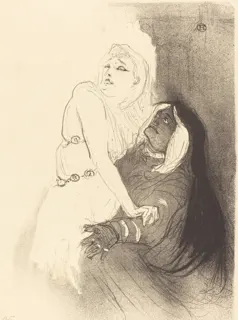 Phèdreby Jean RacineA queen's love for her stepson destroys them both.

Act 1, Scene 1
[AGRIPPINA, ALBINA]
Whilst Nero courts soft slumbers, why should you
Come here to tarry his awakening?
Shall Cæsar's mother wander thro' these halls,
And, unattended, watch beside his door,
Alone? Retire to your apartments, Madam.
I must not leave him for a single moment.
Here will I wait for him, engross'd with cares
He causes me, so long as he may sleep.
All I foretold is but too well confirm'd;
Nero has doom'd the prince Britannicus.
Nero has thrown the reins on his impatience;
Weary of being loved, he fain would be
A terror. Young Britannicus torments him,
And every day I feel myself becoming,
In my turn, irksome.
You, to whom he owes
The breath of life, who call'd him to the throne
From his low station, disinheriting
The son of Claudius, that Domitius might
Bear Cæsar's name? All speaks on your behalf,
And claims his love.
'Tis due to me, Albina;
All I have done would win a generous heart,
But all is odious to ingratitude.
Ingratitude? Nay, all his conduct shows
A soul well taught to heed the voice of duty.
For three whole years what has he said or done
But what gives Rome the promise of a reign
Of perfect justice? Under his mild sway
She deems the days return'd when consuls bore
Authority supreme. Paternal rule
Marks the young Nero virtuous as Augustus
In his old age.
Nay, interest cannot make
Me blind. 'Tis true that Nero has begun
E'en as Augustus ended, but the future
May make the past forgotten, and I fear
As one began, so will the other end.
Disguise is vain; I read upon his brow
The savage bent of a Domitius
Mix'd with Neronic pride derived from me.
The face of Tyranny is ever mild
At first; e'en Caius once was Rome's delight,
But his feign'd clemency soon turn'd to madness,
And Rome's delight became her detestation.
What matters it to me, in any case,
Tho' Nero's virtues should remain unsullied?
Did I commit to him the helm of State,
That he might please the people and the senate?
The father of his country let him be,
If so he will, but let him not forget
His mother's claims. How can that crime be call'd
Which daylight has reveal'd? He knows full well
That Junia by Britannicus is loved;
And this same Nero, who is virtue's model,
Makes night the screen to have her carried off!
What moves him? Is it hatred, or desire?
Is it his only joy to injure them?
Or does his malice visit on their heads
Spite against me for lending them support?
How lending them support?
Hush, dear Albina;
I know to me alone they owe their ruin;
That 'twas by me Britannicus was hurl'd
Down from the throne that he inherited;
That Junia's brother cast away his life,
Debarr'd by me from marriage with Octavia,
Silanus, upon whom Claudius had cast
An eye of favour, heir of great Augustus.
Nero has all, and I, for my reward,
Must hold the balance evenly between them,
That some day, in his turn, Britannicus
May do the same between my son and me.
With what design?
I thus secure a port
Against the coming storm. I cannot hold him,
Save with this bridle.
But against a son
Such care is surely vain.
I should soon fear him,
If he fear'd me no longer.
Your alarm
Perchance is groundless. But if Nero fails
In filial duty we have fail'd to mark
The change, and these are secrets between him
And you. Whate'er new titles Rome bestows,
Nero confers them all upon his mother.
His lavish love withholds not aught from you;
Your name in Rome is reverenced like his own,
Whilst poor Octavia is scarcely mention'd.
Your ancestor Augustus honour'd less
His Livia. The fasces, deck'd with bays,
March before Nero's mother, ne'er before
Had woman such distinction. How should he
Display his gratitude?
With less respect,
And greater confidence. I scorn such honours,
Seeing my influence wanes as these increase.
The time is gone when Nero, still a youth,
Answer'd the wishes of my doting heart,
When upon me he lean'd in every strait,
When my command gather'd the senate here,
And present, tho' conceal'd behind a screen,
Mine was the animating touch that moved them.
Uncertain then of Rome's capricious will,
His greatness had not turn'd the monarch's head.
My memory with pain recalls the day
When first I found him dazzled with the glare
Of glory; many a potentate had sent
From Earth's remotest realms envoys to greet him.
I went to take my place upon the throne
Beside him; by whose counsel he disgraced me
I know not, but, as soon as he perceived me,
He show'd displeasure on his countenance,
Whereby my heart grew ominous of ill.
Then with a feign'd respect that mask'd the insult,
He quickly rose, and, running to embrace me,
Turn'd my approaching footsteps from the throne.
Since that hard blow has Agrippina's pow'r
Been hurrying to its fall with rapid pace.
All but the shadow gone, my favour's sought
Less than the voice of Seneca or Burrus.
Ah, if your heart is fill'd with such suspicions,
Why keep the fatal poison in your breast?
Go, and at Cæsar's lips resolve your doubts.
Others are always by when Cæsar sees me,
He gives me audience at fix'd times, in public;
He answers or is silent as he's prompted.
We have two masters, and with watchful eye
One or the other marks each interview.
But I will follow him the more he shuns me,
And turn his own confusion to my profit.
I hear his door unfasten'd. Let us go,
And ask him what he means by this abduction,
And, unawares, he may the truth reveal.
Ha, Burrus! He has been with him already.
Act 1, Scene 2
[AGRIPPINA, BURRUS, ALBINA]
Madam, I come to tell you, in the name
Of Cæsar, that an order which alarm'd you
Is but a wise precaution, and of this
The Emperor wills that you should be inform'd.
Then let us enter, since it is his pleasure,
And learn his purpose better.
For some time
Cæsar has sought seclusion. By a postern,
Unknown to many, both the consuls came
Before you, Madam. But I will return,—
No, I will not disturb his privacy;
But let us two, with somewhat less constraint,
For once with frankness interchange our thoughts.
The tongue of Burrus ever scorn'd a falsehood.
How long do you intend to hide him from me?
Am I for ever to be held intrusive
When I would see him? Have I raised you then
So high, only to have you place a bar
Between my son and me? Dare you not trust him
A moment out of sight? Do you dispute
With Seneca the glory of effacing
His mother's image from his memory?
And has my trust fed your ingratitude,
Till 'neath the shadow of his name you rule
Supreme? I cannot think that you would make me,
Who might have left you in obscurity,
Your creature,—me, whose ancestors have fill'd
The throne,—me, daughter, sister, wife, and mother
Of your imperial masters. What, then, mean you?
Think you my voice has made an emperor
Only to place two others over me?
Nero's no more a child; is it not time
He ceased to fear you, and began to reign?
How long must he see all things thro' your eyes?
There are ancestral models he may copy,
And choose between Tiberius and Augustus,
Or follow, if he can, Germanicus,
My sire. I dare not rank myself with these,
But there are lessons he may learn from me,
At any rate, the caution that imposes
Due limits to a prince's confidence
In any subject.
I am charged to-day
T' excuse a single act on Cæsar's part;
But since, without desiring my defence,
You lay on me the blame for all his deeds,
I'll answer with the candour of a soldier,
Who knows not, Madam, how to gloze the truth.
To me you trusted Cæsar's youthful years,
I own it, and am bound ne'er to forget it;
But have I ever sworn I would betray him,
Or make him do your will in everything?
I am no more responsible to you,
But to imperial Rome, which in my hands
Sees safety or destruction. He who once
Was son of yours is master of the world.
If those were sought who might cajole his youth,
Could only Seneca and I mislead?
Why were not flatterers suffer'd to direct him?
Were we recall'd from exile as corrupters?
Could not the servile court of Claudius furnish
A thousand fitter than ourselves, all eager
To raise themselves by Cæsar's degradation,
Till he grew old in long protracted childhood?
What would you, Madam? Are you not respected?
Is not your name held sacred, link'd with Cæsar's?
The Emperor, 'tis true, no longer comes
Daily to lay his sceptre at your feet,
And pay you humble court. But gratitude
Need not involve dependence so unworthy.
Must Nero always be a timid child,
Nor dare, except in name, to be Augustus?
Rome, let me tell you, justifies his conduct,
So long in bondage to three base-born upstarts;
And, only just relieved from yoke so galling,
Dates her recover'd liberty from Nero!
Nay more. E'en Virtue's self seems born anew,
And to be master means no more to plunder;
The People freely choose their magistrates;
Those whom the soldiers trust are made commanders;
Still faithful in the army and the senate
Are Corbulo and Thrasea, tho' in fame
The foremost. Desert isles, which senators
Peopled with exiles, hold th' informers now.
What matters it that Nero trusts us still,
Provided that our counsels aid his glory,
And Rome, throughout a prosperous reign, have freedom
Unfailing as th' omnipotence of Cæsar?
But Nero, Madam, does not need our guidance;
Our part is to obey, not to direct him.
He has examples in his ancestors,
Whereby to regulate his steps aright;
And happy he if, link'd in one long chain,
His later virtues vie with those of youth!
So, daring not to count upon the future,
You think your prince will go astray without you.
Do you, who, thus far with your work content,
Come hither to bear witness of his virtues,
Tell me why Nero has become a robber,
And carried off the sister of Silanus?
Is it to sully by so gross an insult
My ancestors whose blood fills Junia's veins?
Of what does he accuse her? By what crime
Has she, in one day, grown so dangerous;
She who, till then, bore grandeur modestly;
Who, but for this night's work, would ne'er have seen him,
And would have counted it a signal favour
Had she been kept for ever from his sight?
She's under no suspicion of a crime,
Nor has the emperor as yet condemn'd her.
There is no object here to wound her eyes,
She is at home among her ancestors.
Her title to the throne is strong enough
To make her husband raise an insurrection;
'Tis right that Cæsar's blood should be allied
Only to such as Cæsar well can trust;
Nor without his consent, as you must own,
Should any wed the offspring of Augustus.
I understand you; Nero, by your mouth,
Tells me Britannicus relies in vain
Upon my choice; that I have vainly sought
To turn his eyes from his misfortunes with
A bait so tempting. 'Tis the Emperor's will
To show that Agrippina promises
More than she can fulfil; Rome rates too highly
A mother's influence; and by this affront
He'll undeceive her, and teach all the world
Not to confound an emperor with a son.
This he may do. Yet am I bold to tell him
To make his sceptre strong before he strikes.
In forcing me to match my feeble arm
Against him, he betrays how weak his own is;
And it may be that, in the balance tested,
My name will have more weight than he supposes.
What! will you always doubt your son's respect?
Can he not take one step but you mistrust it?
How can he think you Junia's partisan,
Or reconciled to young Britannicus?
Will you support your foes, that you may find
A pretext for complaining against him?
At every trivial rumour that you hear,
Will you be always ready to divide
The empire? Shall continual dread possess you,
That asks solution e'en when you embrace him?
Be not so careful to find food for censure,
But exercise a mother's fond indulgence.
Suffer some slight rather than make it public,
Lest so the Court be taught to disregard you.
And who would seek support from Agrippina,
When Nero doth himself proclaim my ruin,
When he would have me banish'd from his presence,
And Burrus dares to keep me at his threshold?
Madam, I see 'tis time that I were silent,
My frankness only causes your displeasure.
Pain is unjust; and all the arguments
That fail to soothe it aggravate suspicion.
Here comes Britannicus. I will retire,
And you shall hear with pity his disgrace,
Blaming for that, it may be, Madam, those
Whose counsels Cæsar has least deign'd to follow.
Act 1, Scene 3
[AGRIPPINA, BRITANNICUS, NARCISSUS, ALBINA]
Whither so fast? What restless ardour, Prince,
Casts you thus blindly in the midst of foes?
Whom do you come to seek?
Whom seek? By Heav'n,
Here, madam, here is all that I have lost.
Hemm'd in by multitudes of savage troops,
Hither has Junia been ignobly dragg'd.
Alas, what horror must her timid heart
Have felt at such unwonted spectacle!
Yes, they have torn her from me. Cruel mandate,
That parts two lovers misery united!
Doubtless they grudged that we, mingling our sorrows,
Should help each other to endure our woes.
Enough. I feel your wrongs as much as you do;
And my complaints have gone before your murmurs.
But I am well aware that helpless anger
Does not absolve me of my solemn promise.
You do not comprehend me. Would you do so,
Follow my steps to Pallas. There I'll wait you.
Act 1, Scene 4
[BRITANNICUS, NARCISSUS]
Narcissus, can I trust her word and make
Her umpire in my quarrel with her son?
What say you? Is she not that Agrippina
Whom erst my father married, to my ruin,
And who, you say, finding his ebbing life
Too long for her, cut the last remnant short?
No matter. She, like you, feels herself outraged.
Has she not promised you the hand of Junia?
Unite your griefs, combine your interests;
This palace vainly echoes your regrets;
And, whilst with suppliant voice you here are seen
Spreading complaints around instead of terrors,
Your fierce resentment lost in idle words,
Without a doubt you will complain for ever.
You know, Narcissus, whether I intend
To be inured to tame submissiveness.
If, by my fall affrighted, I renounced
The throne for ever which my birthright gave me.
But I am still alone. My father's friends
Are grown such strangers as to chill my heart;
And those who in the Court rest true to me
Yet hold themselves aloof from one so young.
After the brief experience of a year
Has made me know how wretched is my lot,
What see I round me but false friends suborn'd
To watch my every step with sleepless eyes?
Chosen by Nero for so base an office,
They sell to him the secrets of my soul,
And daily take their profit out of me.
He sees my aims beforehand, hears my converse,
And knows what passes in my breast as well
As you. What thinks Narcissus?
Feeble-minded—
You should choose friends on whom you can rely,
Nor be so lavish of your secrets, Sir.
Narcissus, you say true; but this mistrust
A noble heart is ever slow to learn,
Too long deceived; but I believe in you,
Or rather I have vow'd to trust no other.
My father oft assured me of your zeal,
Of all his freedmen, you alone have proved
Faithful, and kept your eyes open to aid me,
Saving me still from countless hidden rocks.
Go, see then if the noise of this new storm
Has fann'd the smouldering courage of my friends;
Watch well their eyes, attend to their discourse,
See if I may expect true help from them;
But chiefly in this palace well observe
With what precautions Nero guards the princess.
Learn if her precious life is out of danger,
And if I still may be allow'd to see her.
Meanwhile to Nero's mother I'll repair,
She is with Pallas, whom my father freed,
As he did you. I'll stir her wrath, and, may be,
Pledge her to move farther than she intends.
Act 2, Scene 1
[NERO, BURRUS, NARCISSUS, GUARDS]
Burrus, be sure of this! tho' she's unjust,
She is my mother, and I'll take no notice
Of her caprices; but I will not spare
The underling who dares to foster them.
Pallas instils his poison in her ears,
And every day corrupts Britannicus;
His voice alone they hear, and, if we follow'd
Their steps, with Pallas we perhaps should find them.
I've borne too much, he must be parted from them.
For the last time I say it, let him go;
'Tis my command, and, ere this day is done,
My Court and Rome too must be quit of them.
Despatch, the safety of the State's concern'd.
Come here, Narcissus.
[to the Guards]
Let my guards retire.
Act 2, Scene 2
[NERO, NARCISSUS]
Thank Heav'n, my lord, Junia is in your hands,
And so to-day the peace of Rome's secured;
Your enemies, cast down from their vain hopes,
Have gone to Pallas to bewail their weakness.
But what is this? I see you vex'd, confounded,
And more dismay'd than is Britannicus.
What does that frowning air of gloom portend,
Those random looks that roam uneasily?
All smiles on you, and Fortune crowns your wishes.
The die is cast, Narcissus; Nero loves.
You, Sire?
A moment since,—and yet for ever.
Love, said I love? Nay, Junia is my idol.
What, you love her?
My curiosity
Moved me this night to see her on arrival
Here. She was sad, and raised to Heav'n her eyes
Tear-stain'd, that shone amid the flash of arms;
In beauty unadorn'd, in simple garb,
As when they seiz'd her in her sleep. I know not
Whether that disarray, the torch-lit darkness,
The cries that broke the silence, and the faces
Of her ferocious ravishers, enhanced
The timid sweetness of those lovely eyes;
But, with so fair a spectacle entranced,
I tried to speak, but felt myself tongue-tied;
Amazement seized me, and I could not move,
And suffer'd her to pass to her apartments.
I sought my chamber. There, in solitude,
Vainly I tried to turn my thoughts from her;
But, ever present to my eyes, I seem'd
To talk with her. I loved the very tears
I caused to flow. And sometimes, but too late,
I sued for her forgiveness, and my sighs
Ended in threats. Thus, nursing my new passion,
I have not closed mine eyes, that watch'd for daylight.
But I may conjure up too fair an image
Of her whom I beheld at such advantage.
What says Narcissus?
Who'd believe, my lord,
That she has lived so long by you unseen?
You know it well, Narcissus. Moved by wrath,
That held me guilty of her brother's death,
Or treasuring with jealous care a pride
Severe, that grudged mine eyes her dawning charms;
True to her grief, and courting dim seclusion,
She stole away, and shunn'd all admiration:
And 'tis this virtue, to the Court so new,
That in its perseverance piques my love.
Is there another damsel here in Rome
Who, if I loved her, would not grow more vain
At such an honour? Is there one but tries
Her amorous glances upon Cæsar's heart,
Soon as she learns their pow'r? She alone,
The modest Junia, scorns the boon they covet,
Nor deigns, it may be, e'en to seek to learn
If Cæsar merits love, or knows its rapture.
Tell me, is young Britannicus her lover?
Her lover, asks my liege?
He is too young
To know himself, or love's enchanting poison.
Love never waits for reason, good my lord.
Doubt not, he loves. Taught by such potent charms,
His eyes have learn'd to melt with tenderness;
He knows how best to meet her slightest wish,
And, it may be, already can persuade her.
What? Can the boy have won her heart's allegiance?
I know not, Sire. But what I can, I'll tell you:
I've seen him sometimes tear himself away,
Full of a wrath which he conceals from you,
Vex'd at the Court's ingratitude that shuns him,
Chafing against your pow'r and his subjection;
Fear and impatience swaying him in turn,
He goes to Junia, and returns contented.
The more unhappy he, for learning how
To please her. He should rather wish her anger;
Nero will not be jealous without vengeance.
You, Sire? And why should you be ill at ease?
Junia has pitied him, and shared his sorrows;
Sure she has seen no other tears than his,
But now, my lord, that, with her eyes unseal'd,
She shall behold, so near, your royal splendour,
And kings uncrown'd stand in attendance round you,
Unknown amidst the crowd her lover too,
Hang on your eyes, and honour'd by a look
Which you, my prince, may chance to cast upon them;
When she shall see you, from that height of glory
Come to confess her victory with sighs,
The master of a heart already charm'd,
You'll have but to command, and she will love you.
How much chagrin must I prepare to meet!
What wearisome entreaties!
Why, who hinders
My lord's good pleasure?
All—Octavia, Burrus,
Seneca, Agrippina, Rome herself,
Three years all stainless. Not that for Octavia
Remains one tender relic of the tie
That bound us. Long since weary of her love
Rarely mine eyes deign to behold her tears;
Happy, if soon the favour of divorce
Relieve me of a yoke imposed by force!
The gods themselves have secretly condemn'd her;
Four years her earnest pray'rs have fruitless proved,
They show not that her virtue touches them
By honouring her couch with any pledge;
And vainly does the State demand an heir.
Why hesitate, my lord, to cast her off?
Your sceptre and your heart alike condemn her.
Did not Augustus, when he sigh'd for Livia,
By twin divorce unite her to himself?
And to that lucky severance you owe
The crown. Tiberius, whom his marriage link'd
With him and you, dared to repudiate
The daughter e'en before the father's eyes.
You only, thwarting your own wish, refuse
A course so welcome.
Know you not the rage
Of Agrippina? Her I seem to see
Bringing to me Octavia, and with eye
Of fury bidding me respect a bond
So sacred, tied by her, and charging me
In no soft terms with long ingratitude.
How shall I face her violent attacks?
Be your own master, Sire, and hers as well.
Will you submit to tutelage for ever?
Reign for yourself; too long you've reign'd for her.
Fear you to do so? Nay, you fear her not:
Have you not just now banish'd haughty Pallas,
Whose insolence you know that she supports?
Out of her sight, I threaten or command,
List to your counsels, venture to approve them;
My temper rises, and I think to brave her;
But I will lay my feelings bare before you.
Soon as ill luck into her presence brings me,
Either I dare not then disown the spell
Of eyes where I have read my duty long,
Or the remembrance of past kindness grants
To her control of all that she has giv'n,
And all my efforts are of no avail;
My spirit trembles, overawed by hers.
And 'tis to free myself from this dependence,
I everywhere avoid and so offend her,
Nor spare from time to time to rouse her anger,
That she may shun me, as I fly from her.
But I too long detain you: go, Narcissus,
Lest to Britannicus you seem intriguer.
No, no; I have his perfect confidence:
He thinks I see you, Sire, by his command,
To hear from you all that concerns himself,
And by my mouth would learn your secret plans.
Impatient to behold his love once more,
He waits the aid my trusty cares may bring him.
Thereto I give consent. Yes, he shall see her:
Convey the pleasing news.
Banish him from her.
I have my reasons. Trust me, good Narcissus,
He shall not see her without paying dearly.
But boast to him of your successful scheme,
Tell him that I have been deceived myself,
And that he sees her without my permission.
She comes. Go, find your master; bring him here.
Act 2, Scene 3
[NERO, JUNIA]
Your cheek is pale, and you seem anxious, lady.
Read you some gloomy presage in my eyes?
I cannot hide from you, Sire, my mistake;
I thought to see not Cæsar, but Octavia.
I know it, Madam, and Octavia's fortune
In gaining your good graces makes me envious.
You, Sire?
And think you that Octavia only
Within these walls has eyes to see your merits?
Whom else can I implore to pity me,
And tell what crime I've unawares committed?
You punish it, my lord, and needs must know it:
Let Junia learn her fault, I do beseech you.
Is it a light offence, then, to have kept
So long your beauty in concealment, Madam?
Has bounteous Heav'n its choicest gifts bestow'd,
That you should bury what was meant to shine?
Is not Britannicus afraid to hide
His growing passion and your charms from us?
Why, till to-day, have you so ruthlessly
Made us an exile in our Court from eyes
So bright? 'Tis said too, Madam, you permit
Without offence his amorous overtures:
I'll not believe that you have favour'd them
Without consulting us, nor been so heedless
Of due decorum, as to plight your troth,
And leave us to the voice of common rumour
For information.
I confess, my lord,
His sighs have sometimes told his heart's desires.
With eyes for ever fix'd upon a maid,
Sole relic of a famous family,
He thinks, perhaps, of how in happier days
His father destined her to be his bride:
He loves me, heeding his imperial sire,
Your mother's wish,—and may I add your own?
Your will is ever so conform'd to hers,—
My mother has her views, and I have mine.
We'll speak no more of her and Claudius;
'Tis not their choice that can determine mine;
I, and I only, must decide for you,
And at my hands I'll have you choose a husband.
My lord, bethink you that another union
Would bring dishonour on my ancestors.
Lady, not so; the spouse of whom I speak
Need feel no shame to range his parentage
With yours. You may consent without a blush
To his addresses.
Who, then, is he, Sire?
Madam, myself.
You?
I would name another,
If other name I knew higher than Nero's.
My eyes have search'd the Court, Rome, and the world,
To choose you such a partner as might meet
Your approbation; and the more I seek
Into what hands this treasure may be trusted,
The more I see Cæsar alone deserves
To hold it, he alone deserves your love,
And should entrust you to no hands but those
To which the empire of the world's committed.
Do you, yourself, recall your earliest years,
When Claudius betrothed you to his son;
'Twas at a time when he intended naming
That son, one day, the heir of all his empire.
The gods declared for me,—oppose them not,
But follow where they point to sovereignty.
Vainly have they bestow'd this signal honour,
Unless your heart should be united with it;
If cares so great be soothed not by your smiles,
If, while I give to vigilant alarms
Those days, by others envied, grudged by me,
I may not breathe some moments at your feet.
Let not Octavia's image cloud your eyes;
Rome, like myself, to you her suffrage gives,
Rejects Octavia, and would have me loose
A marriage tie that Heav'n itself disowns.
Consider what I say and ponder well
This choice, well worthy of a prince who loves you.
Worthy of those bright eyes too long immured,
And of the world to which your charms are due.
My lord, good cause have I to stand astonish'd:
All in the course of one short day I see
Myself brought hither as a criminal,
And, when I, trembling, come before your eyes,
Hardly confiding in my innocence,
At once you offer me Octavia's place.
Yet am I bold to say I have deserved
Neither this dazzling honour, nor this insult.
And can you wish, my liege, that a poor maid,
Who, almost soon as she was born, beheld
Her home destroy'd, and, in obscurity
Nursing her sorrow, learn'd to be resign'd,
Should, at a single step, pass from such darkness
To sit where all the world may gaze upon her,
In brilliance that she shrank from, seen afar,
Usurping majesty that is another's?
Have I not said already, I renounce her?
Dispel those timid fears, or bashful scruples;
Think not my present choice is blind and rash;
I know you worthy, only give consent.
Remember from what ancestry you spring;
Do not prefer to those substantial honours
Wherewith the hand of Cæsar would endue you,
The glory of refusal, to be follow'd
By vain regrets.
Heav'n knows my secret thoughts.
I take no pride in a vainglorious boast,
And know the greatness of the prize you offer;
But all the more should I, the brighter shone
My fortune, be ashamed to face the guilt
Of having plunder'd her whose right it is.
Nay, you consult her interests too much,
The claims of friendship scarce can reach so far.
But let us leave delusions, and be plain;
The sister moves you less than does the brother,
And for Britannicus—
He has known how
To touch my heart, and freely I confess it.
Such frankness may, perchance, be indiscreet,
But never have my lips belied my heart.
In absence from the Court I could not think
That I had need to learn the art of feigning.
I love Britannicus, his destined bride
When marriage was to lead to sovereignty;
But that ill fate which has denied the throne,
His honours fled, his palace desolate,
The courtiers whom his fall has banish'd from him,
Serve but as ties to Junia's constancy.
Here all things minister to your desires;
Your days flow calmly by in ceaseless pleasures,
Th' exhaustless source thereof your sovereign pow'r;
Or, if some trouble mar their placid course,
The universe solicitous to please you,
Hastens to blot it from your memory.
Lonely the lot of poor Britannicus;
In all his sorrows he has me alone
To sympathize, my tears his only solace,
That lead him sometimes to forget his woes.
Ah, 'tis that solace and those tears I envy.
For them another with his life should pay;
But milder treatment keep I for this prince;
He shall appear before you soon, fair lady.
Your virtues, Sire, have ever reassured me.
I might forbid him access to your presence;
But I would fain anticipate the danger
To which resentful wrath might carry him.
I do not wish his death; better that he
Should hear his sentence from the lips he loves.
Is his life dear to you? Then part him from you,
Without cause given to believe me jealous.
Incur the odium of his banishment,
And, whether by your words or by your silence,
In any case by frigid looks, persuade him
To take his wishes and his hopes elsewhere.
I! to pronounce a sentence so severe!
My tongue will swear I meant the contrary.
E'en could I so prove traitor to myself,
My eyes would still forbid him to obey me.
Curtain'd close by, I shall behold you, Madam.
Shut up your love within your inmost heart;
No secret language shall escape my notice,
Looks that you fancy mute I shall o'erhear;
And death to him shall be the sure reward,
If sigh or gesture unawares betray you.
Alas! if I dare still form any wish,
Grant me, my lord, that I may never see him.
Act 2, Scene 4
[NERO, JUNIA, NARCISSUS]
Britannicus, my lord, asks for the princess;
He is at hand.
Then let him enter.
Sire!
I leave you; and his fate on you depends
More than on me. Remember I shall see you.
Act 2, Scene 5
[JUNIA, NARCISSUS]
Ah! dear Narcissus, run to meet your master;
Tell him,—Oh! I'm undone, I see him coming.
Act 2, Scene 6
[BRITANNICUS, JUNIA, NARCISSUS]
What happiness, dear damsel, brings me near you?
May I then taste so sweet an interview?
But ah, amidst this pleasure, grief devours me
To think I may not hope to see you more.
Now must I steal, with many a subterfuge,
A privilege that erst you granted daily.
Ah! what a night I've pass'd, with what awakening!
Your tears have not disarm'd our cruel foes!
What was your lover doing? Did some god
Grudge me the boon of dying at your feet?
Alas! Have you in secret, struck with terror,
Made your complaint to me? Have you, my princess,
Vouchsafed to breathe a wish that I were with you?
Thought you upon the woes that you would cost me?
What! say you nought, looking as cold as ice?
Is't thus you comfort me for my disgrace?
Speak: we're alone. Our enemy, deceived,
Is busied somewhere else while we're together,
Take full advantage of his happy absence.
His pow'r pervades each corner of this palace,
Its very walls, Sir, may have eyes to see us;
Cæsar is never absent from this place.
And how long have you been so timorous?
What! does your love consent to be in bondage
Already? What has changed the heart that swore
To make e'en Nero envious of our love?
But banish, Madam, such uncall'd for fear;
All hearts have not yet lost their loyalty;
I see no eye but doth approve my anger.
We have the Emperor's mother on our side;
And Rome herself, offended at his conduct,—
Surely your tongue, Sir, contradicts your thought:
You have yourself told me a thousand times
That with one common voice Rome praises him;
You ever render'd homage to his merits,
'Tis grief distracts you, and dictates this language.
Your words surprise me, I must needs confess it;
To hear you praise him was not what I sought.
Scarce can I seize a favourable moment
To make you share the grief that overwhelms me,
And these few precious moments are consumed
In praises of the foe who crushes us!
How different from yourself has one day made you!
Why, e'en your looks have learn'd strange reticence.
What's this? You seem to fear to meet my eyes!
Am I then odious? Can it be that Nero
Finds favour? If I thought so,—Ah, by Heav'n,
Dispel this darkness you have cast around me.
Speak. Is Britannicus no more remember'd?
Pray, Sir, withdraw; the Emperor is coming.
This stroke, Narcissus, severs my last hope.
Act 2, Scene 7
[NERO, JUNIA, NARCISSUS]
Madam,—
No, Sire, I cannot hear a word.
I have obey'd you. Let at least my tears
Flow freely, now that he no more can see them.
Act 2, Scene 8
[NERO, NARCISSUS]
Well, my Narcissus, you have seen the ardour
With which they love, apparent e'en in silence!
My rival has her heart, 'tis plain enough;
My joy shall be to drive him to despair.—
How charmingly does fancy paint his anguish;
And I have seen him doubt whether she loves him.
I'll follow her. My rival waits your presence
To vent his fury. Go, with fresh suspicions
Torment him; and while I witness the tears
She fondly sheds for him, make him pay dearly
For boon that he despises.
[alone] Once more Fortune
Invites me: shall I then refuse her offer?
Nay, to the end I'll follow her behests,
And doom the wretched to secure my weal.
Act 3, Scene 1
[NERO, BURRUS]
Pallas will be obedient, Sire.
And how
Has Agrippina seen her pride confounded?
Doubt not, your Majesty, the blow strikes home,
And soon the storm will burst in loud reproaches.
Her wrath has long begun to show itself,
Nor can it stop at unavailing clamour.
Why, what design think you she meditates?
Always is Agrippina to be dreaded:
Your army and all Rome revere her lineage;
They ne'er forget Germanicus, her father.
She knows her influence; you know her courage;
And that which makes me dread her all the more
Is that her fury by yourself is fed,
And that you give her arms to fight against you.
I, Burrus?
Yes, my lord; that love which holds you—
I take your meaning. But it can't be help'd:
My own heart tells me more than you can say,
And yet I cannot choose but love.
'Tis fancy,
My liege; and, satisfied with slight resistance,
You fear an evil feeble at its birth.
But if your heart, strong in the course of duty,
Refuse to hold a parley with its foe;
If you consult the glory of your past;
If you recall to your remembrance, Sire,
Octavia's virtues of such recompense
Unworthy, and her love proof against scorn;
If, more than all, avoiding Junia's presence,
You doom your eyes to a brief spell of absence;
Trust me, howe'er this passion seems to charm you,
None love, my lord, unless they wish to love.
I'll trust you, Burrus, when, 'mid war's alarms,
Our martial glory needs your firm support;
Or when, in peaceful session of the senate,
The welfare of the State demands your voice,
I will rely on your experience.
But in a matter that concerns my heart
'Tis otherwise, and I should have some scruple
In bringing your grave judgment to such trifles.
Farewell. I'm ill at ease away from Junia.
Act 3, Scene 2
Burrus
Nero at last shows his true character.
Burrus, that fierceness which you thought to tame
Is ready to break loose from your weak bonds,
And, like a swollen river, spread destruction!
How shall I act in this unhappy hour?
Seneca's counsels may not soothe my cares;
Afar from Rome, he knows not of this danger.
Ah, if I could but touch the mother's feeling
Of tenderness—She comes: good fortune brings her.
Act 3, Scene 3
[AGRIPPINA, BURRUS, ALBINA]
Well, Burrus, was I wrong in my suspicions?
You have impress'd fine lessons on your pupil!
Pallas is banish'd, for the crime, perchance,
Of having raised your master to the purple.
You know full well that never but for him
Would Claudius, whom he sway'd, have father'd Nero.
You foist a rival in Octavia's place,
And set my son free from his nuptial oath:
Fit task for one, sworn foe to flatterers,
Chosen to curb the wild career of youth,
Thus to turn flatterer himself, and teach
How he may pour contempt on wife and mother!
Madam, you have no cause yet to accuse me;
This act of Cæsar's may be justified,
Pallas has well deserved his banishment,
Meet recompense for pride too long endured.
The Emperor has only, with regret,
Fulfill'd the secret wishes of his Court.
The evil that remains admits of cure,
Octavia's tears may at their source be dried.
But calm your rage, there is a milder method
That sooner will recall him to her arms,
While threats and angry words will make him wilder.
Ah, you will try in vain to stop my mouth.
I see my silence but provokes your scorn;
My handiwork has had too much respect.
All Agrippina's props fall not with Pallas;
The gods have left enough t' avenge my ruin.
The son of Claudius begins to feel
His wrongs, for which not I alone am guilty.
I'll show him to the army, doubt it not,
Complain before them of his young life blasted,
And make them, like myself, repair their error.
On one side shall they see an emperor's son
Reclaim a faith sworn to his family,
And hear a daughter of Germanicus;
Ahenobarbus' son, on th' other hand,
With his supporters, Seneca and Burrus,
By me recall'd from exile, both of them,
Who share the sovereign pow'r before my eyes.
I will take care they know our common crimes,
And by what paths I have conducted him.
To make his sway and yours detestable,
I will avow the most injurious rumours:
All shall be told, exiles, assassinations,
Poison itself,—
Madam, they'll not believe you.
They'll not be caught by your deceitful wiles,
But know 'tis pique that prompts self-accusation.
As to myself, who first advanced your plots,
And made the troops swear fealty to Nero,
My zealous efforts cause me no repentance.
A son succeeded to his father, Madam
For, in adopting Nero, Claudius chose
To give his son and yours an equal footing.
Rome's choice has been for Nero. So she took
Tiberius, adopted by Augustus,
Nor wrong'd the young Agrippa, his own grandson,
Who claim'd in vain to wield th' imperial sceptre.
His pow'r, establish'd upon such foundations,
Cannot be weaken'd by yourself to-day;
And, if he heeds me still, his bounty, Madam,
Will soon remove the wish to injure him.
I have begun the work, and will complete it.
Act 3, Scene 4
[AGRIPPINA, ALBINA]
In what a sea of passion grief has plunged you!
And can it be that Cæsar knows not of it!
Ah, should he venture in my sight himself,—
Madam, in Heaven's name, conceal this choler.
Let not your zeal for sister or for brother
Destroy your peace for ever! Must you check
The Emperor even in his love affairs?
Ah, see you not how they would humble me,
Albina? 'Tis to me they give a rival:
Soon, if I break not this ill-omen'd tie,
My place is occupied, and I am nothing.
Octavia has enjoy'd but hitherto
An empty title, by the Court ignored
As useless, and to me the eyes of all
Have look'd for profit. Now another love
Has cast out mine; she, as his wife and mistress,
Will reign alone, and in the pomp of pow'r
Reap the rich fruit of all my pains, as meed
Of one kind look. Already I'm forsaken—
I cannot, dear Albina, bear the thought.
E'en tho' I hasten the disastrous sentence
Of Heav'n, ungrateful Nero—
Lo! His rival!
Act 3, Scene 5
[BRITANNICUS, AGRIPPINA, NARCISSUS, ALBINA]
Our common foes are not invincible;
And there are hearts can feel for our misfortunes.
Your friends and mine, so silent hitherto,
While we were losing time in vain regrets,
Fired with the anger which injustice kindles,
Have made their grievance known to good Narcissus.
Not yet has Nero undisturb'd possession
Of her whose conquest means my sister's shame.
If still her wrongs can move you, he, tho' faithless,
May be brought back to tread the path of duty.
Sure we have half the senate on our side:
Sylla and Piso, Plautus,—
Prince, what say you?
You name the highest nobles of the State.
Madam, I see my words have wounded you,
And that your wrath, trembling irresolute,
Already fears to gain all it has wish'd for.
Nay, my disgrace has taken root too firmly;
You need not dread what any friend of mine
May venture; I have lost them all; your prudence
Has scatter'd them, or long ago seduced them.
Trust your suspicions less; our safety, Sir,
Depends upon our mutual understanding.
Rely upon my word. Despite your foes,
I will be true to all that I have promised.
Nero is guilty, and in vain he shuns me;
Sooner or later he must hear his mother.
Force and persuasion I will try by turns,
Or, if I fail, leading your sister with me,
I'll spread abroad my dread and her alarms,
And make all hearts responsive to her tears.
Farewell. On all sides I will ply th' attack;
And you, take my advice, avoid his presence.
Act 3, Scene 6
[BRITANNICUS, NARCISSUS]
Have you not flatter'd me with hopes fallacious?
Or can I place reliance on your statement?
You may, my prince; but this is not the place
Wherein this mystery must be unfolded.
Let us go forth. What wait you for?
I? Wait for?
Alas!
Explain yourself.
If scheme of yours
Could get me sight of her again,—
Of whom?
My weakness makes me blush. But then more firmly
I should meet fate.
What, after all my words,
Deem you her true?
No, I believe her false,
Deserving hot reproach; and yet despite
Myself, less than I ought do I believe it.
My stubborn heart condones her fickleness,
Finds reason for excuse, and still adores her.
Would I could crush my incredulity;
Would I could hate her with a mind at ease!
Yet who'd believe a heart that seem'd so noble,
Foe of a faithless Court from infancy,
Could so forget its glory, and at once
Hatch perfidy too base for courtiers.
Who knows if, in her long retreat, the wretch
Kept not the Emperor's conquest in her eye?
Sure that her beauty could not be conceal'd,
Perhaps she fled that she might be pursued,
Inciting Nero to the hard earn'd glory
Of quelling pride till then invincible.
May I not see her, then?
Sir, at this moment
She listens to the voice of her new lover.
Well, let us go.
But whom do I behold?
'Tis she.
[aside] Great gods! Cæsar must hear of this.
Act 3, Scene 7
[BRITANNICUS, JUNIA]
Fly, Sir, nor face a wrath that burns against you,
Inflamed by my determined resolution.
Nero is anger'd. I have just escaped,
While Agrippina labours to detain him.
Farewell. Wrong not my love, but look to see
The happy day when I shall be absolved
From blame. Your image in my soul shall dwell
For aye, and nought shall banish it.
I know
Your purpose, Madam: you would have me fly,
To leave you free t' indulge your new desire.
While I am here, no doubt a secret shame
Somewhat disturbs the relish of enjoyment.
Yes, I must go!
Impute not, Sir, to me—
You might have held the field a little longer.
I murmur not that your affection's fickle,
And that you join the side which Fortune favours;
That you are dazzled with imperial splendour,
And, at my sister's cost, would fain enjoy it;
But rather that, beguiled like others now,
You should have seem'd untouch'd by its deceits
So long. Despair has seized me, I confess it,
This was the only ill I never thought
To cope with. On my ruin I have seen
Injustice flourish, Heav'n itself accomplice
Of my oppressors, but such horrors have not
Drain'd its full cup of wrath; there yet remain'd
To be by you forgotten.
Happier moments
Might urge my just impatience to resent
Distrust; but Nero threatens, danger presses,
And I have other thoughts than to distress you.
Go, reassure your heart, and cease complaints;
Nero, who heard our words, bade me dissemble.
Ah, cruel—
Witness of our interview,
With eye severe he scann'd my countenance,
Ready to make his vengeance burst on you
If but a gesture should betray our secret.
Nero was list'ning? Yet your eyes, the while,
Might have look'd cold, without deceiving me;
They might have told me who imposed their rigour!
Love is not dumb, the language of the heart
Is varied. One glance might have saved me woe
Intense. There needed—
There was need of silence
To save you. Ah, how often was my heart
About to tell you its perplexity!
How many rising sighs did I suppress,
Afraid to meet the eyes I yearn'd to look on!
Silence is torture when a loved one grieves,
When to his groans we must ourselves contribute,
Knowing we might console him by a look!
Yet would such look have caused more bitter tears!
At that remembrance anxious and disturb'd,
I felt my feigning lack'd reality;
I fear'd the pallor of my quivering cheek,
My eye, too plainly full of my distress;
I fear'd each instant Nero in his wrath
Was coming to upbraid my want of rigour,
For vain seem'd all my efforts to keep down
The love I almost wish'd I ne'er had known.
Alas, for his own peace of mind and ours
Too clearly has he read your heart and mine!
Once more, go hence, and hide you from his sight.
At fitter season all shall be explain'd,
A thousand other secrets be discover'd.
Too much already, more than I can bear!
How guilty I have been, and you how kind!
And know you all that you forsake for me?
[Throwing himself at Junia's feet]
When may I at your feet blot out th' offence?
What are you doing? Look, your rival comes!
Act 3, Scene 8
[NERO, BRITANNICUS, JUNIA]
Prince, do not interrupt such charming transports.
Madam, his thanks show you are wondrous kind:
I have surprised him at your knees, to me
Some gratitude is surely due as well,
He finds this place convenient, where I keep you
In readiness for interviews so sweet.
I can my joy or sorrow lay before her
Where'er her kindness grants me audience;
Nor has this place where you think fit to keep her
Aught that can overawe Britannicus.
What, see you nothing that can warn a subject
To hold my pow'r respected, and obey me?
This palace saw us not brought up together,
Me, to obey you, you, to taunt my weakness.
The fortune of our birth ne'er made it likely
That I should own a master in Domitius.
Our wishes have been cross'd by destiny,
Once I obey'd, and now your turn is come.
If yet you have not learn'd so hard a lesson,
That shows you're still a boy, and must be taught it.
And who will teach me?
Rome, and all her empire.
Does Rome among your high prerogatives
Count cruelty and violent injustice,
Unfair imprisonment, rape, and divorce?
Rome prys not with too curious regard
Into the secrets that I choose to hide;
Copy her prudence.
What she thinks, we know.
At least she holds her tongue; do you the same.
Thus then has Nero ceased to curb his passions!
Nero has ceased to care to hear you longer.
All hearts should bless his reign for happiness.
Happy or wretched, 'tis enough they fear me.
I know not Junia, or such sentiments
Would scarce be likely to win praise from her.
If I am little skill'd how best to please her,
I can at least punish a saucy rival.
Whatever dangers threaten to o'erwhelm me,
I fear to lose her love, and that alone.
'Twere better wish'd for. I can say no more.
My sole ambition is t' enjoy her favour.
And she has pledged that favour yours for ever.
At least I have not learn'd to play the spy
Upon her words, but let her praise or blame me
Unwatch'd, nor hide myself to shut her mouth.
I see. Ho, guards, there!
What then, will you do?
Pardon the jealous love of one so near
Akin. A thousand miseries he suffers;
Can his rare happiness excite your envy?
Suffer me, Sire, to knit your hearts together,
And hide me from the eyes of both of you.
My absence then will heal your fatal discords,
And I will join the ranks of Vesta's virgins.
Let not my vows be longer ground of strife
Between you; let them trouble Heav'n alone.
This project is as strange as it is sudden.
Let her be taken, guards, to her apartments;
And with his sister keep Britannicus.
'Tis thus that Nero wooes a woman's heart!
Do not provoke him, Prince; bend to this storm.
Guards, do my bidding, and delay no longer.
Act 3, Scene 9
[NERO, BURRUS]
Ye gods! What do I see?
[without seeing Burrus] Thus fiercer glow
Their fires. I know what hand arranged their meeting:
'Twas but for this that Agrippina sought me,
And all her long protracted lecture tended
Only to further this vile scheme of hers.
[Perceiving Burrus]
Acquaint me if my mother still is here.
I would retain her, Burrus, in the palace:
And let my bodyguard relieve her own.
Your mother, Sire? Will you not hear her?
Stop!
I know not, Burrus, what you may be plotting,
But all my wishes have for some days past
Found you a censor ready to oppose them.
Answer for her, or else, if you refuse,
Others shall answer both for her and Burrus.
Act 4, Scene 1
[AGRIPPINA, BURRUS]
Ay, Madam, you may clear yourself at leisure,
Cæsar consents to give you audience here.
If his command restricts you to the palace,
His purpose, maybe, is to talk with you;
In any case, if I may speak my thought,
Forget that he has given you offence;
Be ready rather to receive him back
With open arms; defend yourself, and blame not
His conduct. See how all the Court observe him,
And him alone. Tho' he may be your son,
And owe you all, he is your emperor.
Like us, you're subject to the pow'r you gave.
Whether he threaten or caress you, Madam,
The Court will either shun or press around you,
'Tis his support they seek in seeking yours.
But, look, the Emperor comes.
Leave me with him.
Act 4, Scene 2
[NERO, AGRIPPINA]
[seating herself] Come hither, Nero, take your place beside me:
'Tis wish'd that I should clear your wrong suspicions.
I know not with what crime I have been slander'd;
All I have done admits of explanation.
You sway Earth's sceptre now; and yet you know
How far your birth removed you from such greatness.
My ancestors, whom Rome has deified,
Bestow'd a slender title without me.
When Messalina's doom open'd a field
Of competition for the couch of Claudius,
'Mid all the fair aspirants to his choice
Who begg'd the intercession of his freedmen,
I wish'd to win, with this sole thought, that I
Might give the throne, where I should sit, to you.
My pride I humbled to solicit Pallas;
His master, daily in my arms caress'd,
By slow degrees drew from his niece's eyes
The love to which I sought to lead his feelings.
But that close tie of kindred blood between us
Debarr'd incestuous union, nor did Claudius
Dare to espouse the daughter of his brother.
Th' obsequious senate by a law less strict
Placed Claudius in my arms, Rome at my feet.
Thus much I gain'd, but nothing yet for you.
Into his family I introduced you
Close on my steps, made you his son in law,
Gave you his daughter, whom Silanus loved,
And he, forsaken, with his life blood mark'd
That fatal day. But nothing yet was done:
Claudius would still prefer his son to you.
I begg'd the aid of Pallas once again,
And so prevail'd on Claudius to adopt you.
He call'd you Nero, and, before the time,
Desired that you should share the sovereign pow'r.
To all men then, as they recall'd the past,
My scheme, already too matured, lay bare.
His father's friends, true to Britannicus,
Murmur'd against his imminent disgrace.
The eyes of some with promises I dazzled,
Exile released me from the most seditious.
Claudius himself, weary of my complaints
Unceasing, took his son out of the care
Of those whose zeal, long constant to his cause,
Might yet prevail to set him on the throne.
Farther, I chose among my following
Those who I wish'd should have him in their charge:
Such, on the other hand, I named to be
Your governors, whom Rome held most respected;
Deaf to intrigues, I trusted fame's clear voice,
Recall'd from exile Seneca, and took
From martial service Burrus, those same men
Who since——Rome then esteem'd them for their virtues.
Meanwhile I drew on the imperial chest
For lavish largess, in your name bestow'd;
Presents, and shows, invincible attractions,
Gain'd you the people's hearts, and won the army,
Which, re-awakening to its first affections,
Favour'd in you my sire Germanicus.
Claudius grew feebler as the time pass'd on:
His eyes, long seal'd, were open'd at the last:
He knew his error, and in fear let fall
Some words of sorrow for his son, too late
He would have gather'd all his friends around him:
The guards, the palace, and the royal bed
Were under my control: I let his fondness
Be wasted in vain sighs, and kept close watch
On his last hours: feigning to spare him pain,
I hid his son's tears from the dying monarch.
He died. A thousand shameful rumours spreading,
I quickly stopp'd the tidings of his death:
And, while in secret Burrus was despatch'd
To make the army swear to you allegiance,
And you were marching to the camp, as I
Arranged, in Rome the smoke of sacrifice
Rose from her altars; and, deceived by me,
The anxious people pray'd that he might live,
When Claudius was no more. Your pow'r establish'd
On the obedience sworn by all the legions,
At length I show'd the corpse, and Rome, astonish'd
At what had happen'd, learn'd that he was dead
And Nero reign'd. This is the true confession
I wish'd to make. Thus have I sinn'd, and this
Is my reward. Now that you reap the fruit
Of all my pains, grateful for scarce six months,
You feel the burden of respect too irksome,
And do not care to recognize me more.
Burrus and Seneca have taught you how
To be ungrateful, sharp'ning your suspicions,
And overjoy'd to find a pupil fitter
To be their teacher. Gay gallants I see,
Like young Senecio and Otho, share
Your confidence, and pander to your pleasures:
And when, displeased at your disdainful treatment,
I have inquired the reason of such insults,
Unable to withstand my just complaints,
You have replied with ever fresh affronts.
Just now I promised Junia to your brother,
And both felt flatter'd at your mother's choice,
When, to your palace secretly convey'd,
One night makes Junia mistress of your heart,
From which I see Octavia has been banish'd;
And soon, I ween, the nuptial bond I tied
Will be dissolved; Britannicus arrested,
Pallas an exile, I await the fetters
In store for me; for Burrus dares to act
The gaoler. When you find your guile unmask'd,
Instead of seeking me to beg forgiveness,
You order me to justify myself.
I ne'er forget that 'tis to you I owe
The throne, nor need you trouble to repeat it;
Your kindness, Madam, may at peace repose
On Nero's gratitude. Besides these murmurs,
That breathe dissatisfaction and suspicion,
Have made all those who hear your plaints believe
That hitherto [this in your private ear],
You have in my name toil'd but for yourself.
"Such honours," say they, "such respectful homage,
Are these return too mean for her acceptance?
What is the crime for which she blames her son?
Was't only to obey her that she crown'd him?
Holds he the sceptre as her deputy?"
And yet, if I could thus have satisfied you,
I would have gladly yielded you that pow'r
Which you so loudly claim to reassume;
But Rome will have a master, not a mistress.
You know the uproar that my weakness raised,
The ferment of the senate and the people,
Hearing your will dictated thro' my lips;
How they declared that Claudius had bequeath'd
To me his tame submission with his throne.
A hundred times you've seen the indignation
With which our troops have before you paraded
Their eagles, shamed so to disgrace the heroes
Whose effigies are stamp'd upon them still.
No other woman would have braved their scorn;
But you, unless you reign, ne'er cease complaining.
Leagued with Britannicus, the match you purposed
'Tween him and Junia was design'd to strengthen
Him against me, and Pallas hatch'd the plot.
When, to my sore regret, I take such measures
As may secure my peace, your rage and hatred
Burst forth; you'll show my rival to the army,
Already has the rumour reach'd the camp.
I! make him emperor! Will you believe it?
What motive could I have, what end be gain'd?
What honours might I look for in his Court?
If malice spares me not while you are sovereign,
If my accusers closely dog my steps,
And venture to attack the Emp'ror's mother,
How should I fare amid a Court of strangers?
They would reproach me not with feeble murmurs,
With schemes condemn'd to failure at their birth,
But crimes wrought in your presence, for your sake,
And, all too soon, convict me of my guilt.
You cannot baffle me with your evasions,
You are ungrateful, and have always been so:
E'en from your earliest years my tender care
Has but extorted from you feign'd affection.
Nought has avail'd to win you, and your hardness
Ought to have stopp'd the channels of my heart.
What misery is mine! Must all my fondness
Be found a burden by my only son!
Ye gods, who hear my sorrowing words this day,
Have not my vows and pray'rs been all for him?
Fears, perils, and remorse have check'd me not,
No scorn subdued me; and I turn'd mine eyes
From all calamities that were predicted.
I've done my best; you reign, and I'm content.
Now, if you wish it, with the liberty
Of which I have been robb'd, take life as well,
Provided that the people, in their rage,
Deprive you not of what has cost me dear.
Speak, then. What is it you would have me do?
Punish the insolence of mine accusers;
Calm the resentment of Britannicus;
Let Junia have the partner of her choice;
Let both be free, and Pallas stay at Rome;
And suffer me to see you when I will;
[Perceiving Burrus at the back of the stage]
Lastly, let Burrus, who is come to hear us,
No longer dare detain me at your door.
Yes, Madam, I desire my gratitude
May henceforth stamp your pow'r on ev'ry heart;
And I already bless that happy frost
Which makes the fire of our affection brighter.
What Pallas may have done shall be forgotten,
My quarrel with Britannicus is over;
And as to what has most divided us,
My passion shall be subject to your judgment.
Go then, and tell my brother what will please him.
Guards, let my mother's orders be obey'd.
Act 4, Scene 3
[NERO, BURRUS]
With what delight did I behold, my lord,
Embraces that must bring back peace between you!
You know if e'er my voice was raised against her,
Or labour'd to estrange you from her love,
Or if I merit her unjust resentment.
I tell you plainly, Burrus, that I thought
One common understanding made you both
Traitors. But now her enmity restores you
My confidence. She grasps too hastily
At triumph. If my rival I embrace,
It is to crush him.
Sire?
Enough: his ruin
Must set me free from Agrippina's fury;
For while he breathes I have but half a life.
Mine ears are weary of his hateful name,
Nor will I suffer her audacity
To promise him my throne a second time.
Must she soon weep then for Britannicus?
Ere sunset I shall fear the boy no more.
What motive is it that inspires this purpose?
Honour and love, my safety, and my life.
Nay, tell me what you will, this foul design
Was never, Sire, conceived in your own breast.
Burrus!
To learn it from your lips confounds me!
Heav'ns! Did not you yourself shudder to hear it?
Think you what blood you are about to spill?
Is Nero tired of reigning in all hearts?
What will men say of you? Consider that.
Why, bound for ever to a blameless past,
Must I observe the shifting breeze of favour,
The gift of chance, nor certain for a day?
Slave to their will, that thwarts my own desires,
Am I their monarch but to do their pleasure?
And is it then no satisfaction, Sire,
That to your hand Rome owes her happiness?
You still are master, 'tis for you to choose.
You have been good, and you may yet remain so:
The way is well mark'd out, no obstacle
Forbids your steps to tread fresh heights of virtue.
But should you heed the voice of flattery,
Then will you have to rush from crime to crime,
Support your harshness by new cruelties,
And wade thro' ever-rising streams of blood.
The prince's death will rouse the fiery zeal
Of all his friends, impatient to take up
His quarrel, that shall fresh supporters find
To follow them when his avengers perish;
The flame you kindle shall be ne'er extinguish'd.
Tho' fear'd by all the world, you must yourself
Fear all, and, trembling as you strike unceasing,
Count ev'ry subject as an enemy.
Ah! does th' experience of your earliest years
Cause you to hate your youthful innocence?
Think you what happiness has mark'd their course?
Good gods! How tranquilly they glided by!
What joy to think, and say within yourself:
"All at this moment bless me ev'rywhere,
And love me; no one shudders at my name;
No tearful eyes are turn'd to Heav'n for me,
No looks of sullen hatred shun my presence,
But all hearts fly to meet me as I pass!"
Such thoughts once pleased you. O ye gods, what change!
The vilest blood was precious in your sight:
One day I well remember, when the Senate
Press'd you to sign a criminal's death doom,
You long opposed their just severity;
It seem'd too cruel to your tender heart,
And, troubled at the burden of a Crown,
You said:—"I would I knew not how to write."
No, be persuaded, or my death shall spare me
The sight and sorrow of a blow like this:
I cannot live, Sire, to survive your glory:
If you are bent upon so black a deed,
[throwing himself at Nero's feet]
Lo! I am ready; strike, ere you begin,
This heart that cannot to such crimes consent:
Send for those cruel men who so mislead you,
And let them try their faltering hand on me—
But I can see my tears have touch'd my master,
Your virtuous soul shrinks from their bloody counsels.
Oh! lose no time, tell me the traitors' names
Who dare to prompt you to such villanies;
Summon your brother; in his arms forget—
You know not what you ask.
He hates you not;
He is traduced, I know him innocent;
I'll answer for his loyalty, my liege.
I with all speed will hasten this glad meeting.
Bring him to my apartments. There await me.
Act 4, Scene 4
[NERO, NARCISSUS]
All is provided for so just a death;
I have the poison ready. Famed Locusta
Has exercised for me her utmost skill:
She kill'd a slave before my very eyes;
A dagger cannot make so quick an end
As this new poison she has giv'n to me.
Enough, Narcissus: for these pains I thank you,
But do not wish you to extend them further.
What! Is your hatred for Britannicus
So slack that you forbid—
Yes, we are friends.
Far be it from me to dissuade you, Sire.
But he so lately found himself in prison,
That this offence will rankle in his heart.
No secrets are there time does not reveal;
He'll know my hand was to have offer'd him
Poison prepared for him by your command.
May Heav'n divert his mind from such a purpose,
But he, perchance, will do the deed you dare not.
They answer for his heart; I'll conquer mine.
And Junia's marriage, does that seal the bond?
Are you to make this sacrifice for him?
You take too much concern. Be 't as it may,
He is no longer enemy of mine.
Your mother reckon'd upon this, my lord;
And she once more submits your will to hers.
What mean you, sirrah? Tell me what she says.
She boasts of it, and publicly enough.
Of what?
That she had but to see you, Sire,
One moment, and to all this vehemence
And anger modest silence would succeed;
That you would be the first to give assent
To peace, rejoiced that she should deign to pardon
What's past.
Narcissus, tell me how to act.
Glad would I be to punish her presumption;
And, if I had my wish, this foolish triumph
Should soon be follow'd by regret eternal.
But what will all the world say then of me?
Would'st have me follow in the steps of tyrants?
Shall Rome, all honourable titles cancell'd,
Leave me no other name than poisoner?
Such vengeance they would count a parricide.
Did you expect they'ld always hold their tongues?
Is it for you to heed their idle words?
Shall your own wishes fade from your remembrance?
And will you dare to thwart none but yourself?
But you, my lord, know not what Romans are;
They keep a better bridle on their tongue.
This caution is but weakness in a monarch:
They'll think that they deserve it, if you fear them.
They have been long accustom'd to the yoke,
And lick the hand that rivets fast their fetters.
You'll find them ever eager to content you:
Tiberius wearied of such cringing subjects.
Myself, invested with a borrow'd pow'r,
Which, with my freedom, I received from Claudius,
A hundred times, during my day of glory,
Tried hard their patience, but it never fail'd.
Fear you the odium of a cup of poison?
Destroy the brother, and desert the sister;
Rome on her altars will not spare the victims,
Nor fail to find them guilty, were they pure
From all offence; their birthdays you will see
Rank'd among luckless anniversaries.
I tell you once again, I cannot do it.
I've promised Burrus, being forced to yield:
Nor do I wish to break my word, and give
His virtue arms that he may use against me.
My courage fell before his arguments,
Nor could I listen calmly as he spoke.
Believe me, Burrus thinks not as he speaks,
His virtue shrewdly backs his interest,
Or rather they all work with one intent:
This stroke, they see, would shatter all their pow'r;
You would be free, my lord, and at your feet
Your masters then would bow their heads like us.
What! Know you not all that they dare to say?
"Nero, forsooth, was never born to rule.
His words and deeds are such as we prescribe;
Burrus directs his heart, and Seneca
His mind. The sole ambition that he knows
Is to be skilful in the chariot race,
To gain the prize in meanest competitions.
To show himself in public to the Romans,
To let his voice be heard upon the stage,
And win their admiration with his songs,
While ever and anon his soldiers force
The loud applause that greets each fresh performance."
Ah! will you not compel them to be silent?
Narcissus, let's go see what we should do.
Act 5, Scene 1
[BRITANNICUS, JUNIA]
Yes, Junia; Nero waits me in his hall,
However strange it seems, to make me welcome.
There all the youth at Court have been invited,
And there 'mid festal pomp and mirth he wills
Our mutual oaths should in their sight be seal'd,
And love revived with brotherly embraces.
His passion for yourself, source of our hatred,
He quenches, and makes you over his fate
Sole arbitress. Tho' banish'd from the rank
My fathers held, tho' in their spoils he decks him
Before my eyes, yet, ceasing to oppose
Our love, he yields me the delight of pleasing
You, and my heart in secret pardons him,
And gives up all the rest with small regret.
No longer shall I live apart from you!
This moment I can see without alarm
Those eyes which neither grief nor terror moved,
Which have for me refused th' imperial throne!
But what new fear, dear lady, thus constrains
Your hearts' participation in my joy?
How is it, while you hear me, your sad eyes
Cast lingering looks towards the sky above us?
What is it that you dread?
I scarcely know:
But I'm afraid.
You love me?
Can you ask it?
Nero no longer mars our happiness.
But can you guarantee me his good faith?
What! you suspect him of a secret hatred?
Just now did Nero love me, swore to slay you;
Me he avoids, seeks you; can change so great
Be but a moment's work?
A master-stroke
Of Agrippina's in this work I see:
She thought my death would bring her ruin with it,
Thanks to the foresight of her jealous spirit,
Our bitterest enemies have fought for us.
My trust is in the passions she display'd,
In Burrus, in the Emperor himself;
I trust, like me, incapable of treason,
He hates with open heart, or hates no longer.
Nay, judge not, Sir, his feelings by your own;
The course you follow is not that of Nero;
His Court and him I've known but for a day,
But here, alas, if I dare own the truth,
How diff'rent is their speech from what they think
How little do the heart and tongue agree!
How lightly here are promises belied!
How strange are all their ways to you and me!
But, be their friendship true or false, if you
Fear Nero, is he without fear himself?
No, no; he will not by so base a crime
Dare to arouse the people and the senate
Against himself. He own'd his latest wrong;
He show'd remorse even before Narcissus.
Ah! my dear princess, had he told you how—
But are you sure Narcissus is no traitor?
Why would you have me doubt him?
Nay, I know not.
But 'tis your life that is at stake, my prince,
And I read treachery in every eye;
Nero I fear, and fear the dark misfortunes
That dog my steps. Prescient, against my will,
Of woe, with fond regret I see you leave me.
Ah! if this peace, wherewith you feed your hopes,
Should hide some secret snare against your life;
If Nero, by our mutual love provoked,
Has chosen night's deep shadows to conceal
His vengeance, and makes ready, while I see you,
To strike; if I should ne'er behold you more!
My prince!
Dear Junia! Do I see you weep?
Are my concerns of such account to you?
To-day, when Nero, swelling in his pride,
Thought to bewitch your eyes with royal splendour,
Here, where all shun me and pay court to him,
Can you prefer my woes to all his pomp?
On this same day, and in his very palace,
Refuse a throne, and weep, my love, for me?
But dry those precious tears; soon my return
Will dissipate alarms. Longer delay
May wake suspicions. Fare you well. I go,
My heart is full of tender thoughts of you;
Amidst the mirth of young eyes that are blind
To what I see, on you I'll fondly gaze,
And hold sweet converse.
Prince—
They wait my coming,
And I must go.
At least stay till you're sent for.
Act 5, Scene 2
[BRITANNICUS, AGRIPPINA, JUNIA]
Why tarry, Prince? Go quickly; Nero sits
Impatiently complaining of your absence.
The joy of all the guests, still incomplete,
Waits to burst forth till you embrace each other.
Let not so flattering a wish grow cool:
Depart. And we will find Octavia, Madam.
Go, my fair Junia; with your mind at ease,
Hasten, and greet her warmly; she expects you.
As soon as I can do so, I will join you,
And give you thanks, Madam, for all your kindness.
Act 5, Scene 3
[AGRIPPINA, JUNIA]
Madam, if I mistake not, you have shed
Some parting tears, with which your eyes are dim.
Tell me what cloud has troubled your calm sky?
Doubt you the peace my pains have now secured?
After so many griefs this day has cost me,
I cannot still my agitated heart.
Scarce can I yet believe this miracle:
And, should I fear your goodness may be thwarted,
Forgive me, for I know the Court is fickle,
And some alarm always consorts with love.
I've said enough. The aspect of affairs
Is alter'd, and my cares leave you no ground
To doubt it. I will answer for this peace;
Nero has sworn to me with surest pledges.
I would that you had witness'd the endearments
With which he seal'd anew his solemn promise!
With what affection he just now detain'd me,
And kept his arms around me ere we parted!
His ready kindness, written on his features,
At first to lighter matters condescended;
With filial frankness, all his pride forgetting,
Into his mother's heart pour'd forth his feelings:
But soon resuming a severer manner,
As of an emperor who consults his mother,
Without reserve he trusted me with secrets
Whereon the fortune of mankind depends.
No, I must here confess it to his honour
He harbours now no taint of dark resentment;
Our enemies alone warp'd his good nature,
And gain'd his ear to bias him against us.
But in its turn their influence is waning;
Rome soon shall recognize my pow'r once more,
And gladly hails the end of my disfavour.
Meanwhile we must not tarry here till night,
But with Octavia close this happy day
I deem'd so fatal.
But what strikes mine ears?
Uproar and tumult! What can they be doing?
O gracious Heaven, save Britannicus!
Act 5, Scene 4
[AGRIPPINA, JUNIA, BURRUS]
Whither away so fast? Stop, Burrus, tell me—
Madam, 'tis done, Britannicus is dying.
Alas! my prince!
Dying?
Or rather, Madam,
Already dead.
Pardon this agony.
I go to succour, or to follow him.
Act 5, Scene 5
[AGRIPPINA, BURRUS]
O Burrus, what a crime!
I'll not survive it.
I needs must quit the Emperor and his Court.
What! Quail'd he not to shed his brother's blood?
More secretly he compass'd his design.
Scarce did the Emperor see his brother come,
When from his knees he raised him, and embraced him,
And, while all stood in silence, seized a cup:
"To crown this day," said he, "with better welcome,
I pour the first drops forth as my libation;
Ye gods, to whom I thus appeal, be present
To favour now our reconciliation."
By the same oaths the young prince binds himself.
The cup, still in his hand, is by Narcissus
Refill'd: but, as he touch'd it with his lips,
No sword-thrust ever caused effect so potent;
His eyes grew dim, their vital fire had vanish'd,
Lifeless and cold upon his couch he fell.
Think how this blow struck every trembling heart:
Half of the guests with cries of fear rushed out:
But those whose knowledge of the Court was longer
Conform'd their countenance to Cæsar's looks,
Which show'd no sign of wonder, as he lay
Still on his couch:—"This malady," said he,
"Of which you fear the violence, has ofttimes
Attack'd his childhood, and is free from danger."
Narcissus tried in vain to seem concern'd,
His treacherous joy betray'd itself too well.
Let Nero, if he will, punish my boldness,
I, passing thro' the crowd, left his vile Court;
And, overwhelm'd with grief at this foul murder,
Mourn for the prince, for Cæsar, and for Rome.
He comes. Now you shall see if I inspired him.
Act 5, Scene 6
[NERO, AGRIPPINA, BURRUS, NARCISSUS]
[seeing Agrippina] Great gods!
Stop, Nero; I must speak to you
A word or two: Britannicus is dead,
I know the hand that murder'd him.
Who, Madam?
You.
I? See how suspicion works upon you!
No evil happens but you hold me guilty;
And, if one chose to heed your reckless words,
'Twas I who cut the life of Claudius short.
You loved his son, his death may turn your brain;
But for the strokes of fate I cannot answer.
No, no; Britannicus has died of poison;
Narcissus did the deed, at your command.
Madam!—Who dares to tell you it was so?
Does this suspicion wrong you, Sire, so much?
Madam, Britannicus had secret projects
Which, carried out, would with good cause have grieved you;
His aim was higher than a match with Junia;
You would have suffer'd deeply for your kindness,
Much he deceived you, meaning, soon or late,
To take full vengeance for his cherish'd wrongs.
If fate has help'd you in your own despite,
Or Cæsar, with his knowledge of the plots
Against your life, trusted my faithful service,
Leave tears, my lady, to your enemies;
And let them number this calamity
With those they deem their worst: but you—
Go on:
Such ministers will win a glorious name
For Nero. You have gone too far already
Now to draw back. First with your brother's blood
Beginning, I foresee your hand will strike
Your mother next; for in your secret heart
You hate me, and would free you from the yoke
Of gratitude. But I will make my death
Useless, nor think that, dying, I will leave you
In peace; this light of day to which I gave you,
This city, always, ev'rywhere, will show me
Before your eyes; Remorse, like furies, haunt you.
By fresh atrocities you'll think to calm them,
And madness, rising like a swollen stream,
Shall brand your life with bloodshed dire and frequent.
But Heav'n at last, I hope, loathing your crimes,
Will add another victim to the heap,
And, after wallowing in their blood and mine,
That you will be compell'd to shed your own;
And that posterity shall hold your name
More odious than the cruellest of tyrants.
This my heart tells me is your destiny.
Farewell. Depart.
Narcissus, follow me.
Act 5, Scene 7
[AGRIPPINA, BURRUS]
Heav'ns! How unjust have my suspicions been,
Condemning you, and heark'ning to Narcissus!
Saw you, good Burrus, what a glance of fury
Nero left with me as his valediction?
The die is cast, nothing will stop him now;
The blow foretold me is about to fall:
And he will overwhelm you in your turn.
Ah! As for me I've lived a day too long.
Would Heav'n his cruelty had been so kind
As to have tried its 'prentice hand on me!
Then should I have been spared the certain prospect
Of Rome's impending ruin, which this crime
Reveals. It is not that the deed alone
Wakes my despair, since jealousy might prompt
The fratricide; but, to be candid, Madam,
'Twas Nero's coolness as he saw him die,
The look of unconcern already fix'd
That marks the tyrant long inured to crime.
Let him complete his work, and put to death
A troublesome adviser, who can bear him
No longer. Far from wishing to escape
The quickest doom shall be to me most welcome.
Act 5, Scene 8
[AGRIPPINA, BURRUS, ALBINA]
Ah, Madam! run and save the Emperor:
Go, Burrus, go; his madness masters him.
Parted for ever from all hope of Junia.
What! Has the princess then ended her life?
To overwhelm him with eternal sorrow,
Tho' yet alive, Junia is dead for him.
You know how hurriedly she left this spot,
Feigning that she would visit sad Octavia.
But soon she turn'd aside, and took her way
Where I could follow her, as on she sped.
She pass'd distracted thro' the palace gates;
But, when she saw the statue of Augustus,
She with her tears bedew'd his marble feet.
Clinging around them closely with her arms:
"Prince, by these knees," said she, "which I embrace,
Protect me now, last of thy family;
Rome has just witness'd, slaughter'd in thy palace,
The only one of thy descendants left
Who might have been like thee. They would have had me
Prove false to him. To keep my faith unsullied,
I here devote me to the immortal gods,
Whose altars, through thy virtue, thou dost share."
Meanwhile the people, wondering at the sight,
From all directions fly, and throng around her.
Pitying her sorrow, melted at her tears,
And with one voice they promise to defend her.
They lead her to the temple, where so long
Our virgins, vow'd to serve at Vesta's shrine,
Keep faithful watch over the precious fire
That burns for ever there. Cæsar looks on,
Nor dares to interfere as they depart.
Embolden'd by the wish to please his master,
Narcissus lays a sacrilegious hand
On Junia, and, without alarming her,
Tries to detain her. But a thousand blows
Punish his rashness, and the damsel's robes
Are sprinkled with his blood. In dumb surprise
The Emperor leaves him in their hand, and goes
Back to his palace, and his sullen silence
Forbids approach; only the name of Junia
Escapes his lips. With vague uncertain steps
He walks, with downcast and bewilder'd eyes;
And much I fear that, night and solitude
Combining to embitter his despair,
If you should longer fail to bring him succour,
His grief may hurry him to self-destruction.
Time presses: run! Or, in a fit of passion,
He'll take his life.
'Tis justly forfeited!
But Burrus, let us see how far his transports
Are like to go, whether remorse will change him,
And he henceforth will list to better counsel.
I would to Heav'n this crime might be his last!