
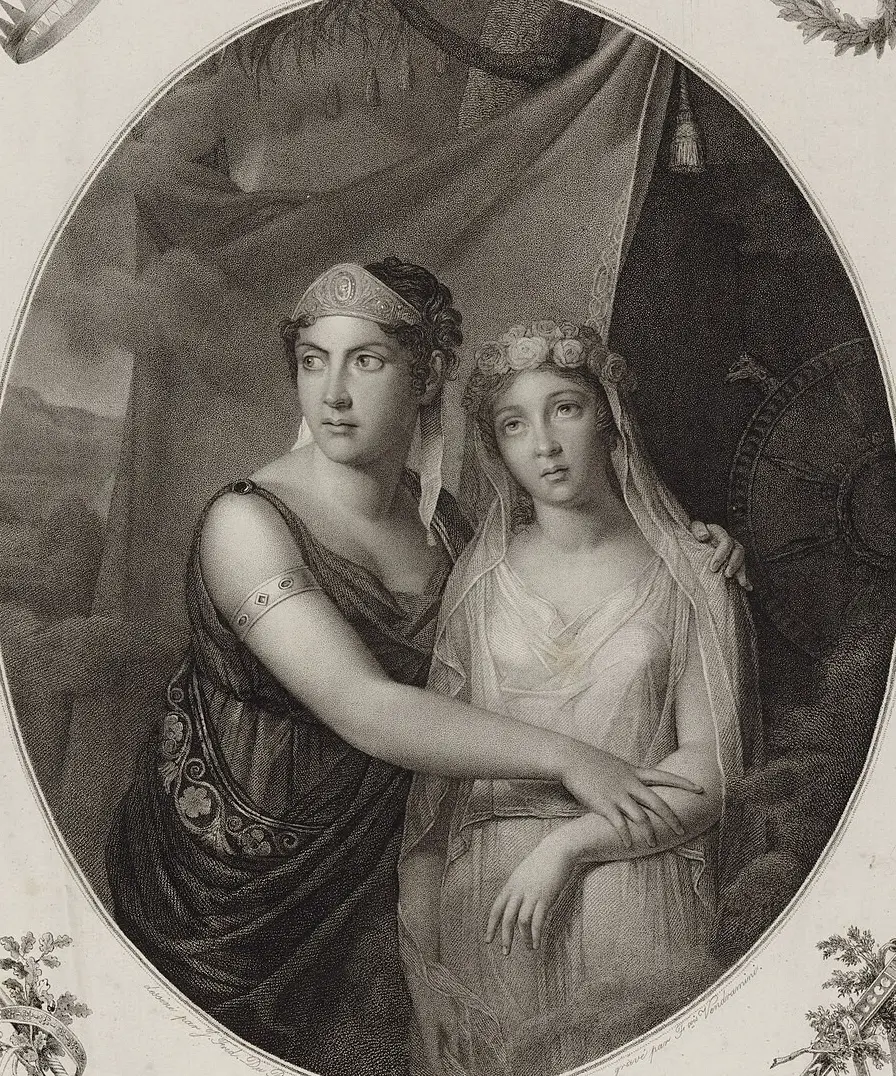
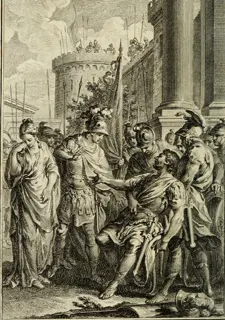
 Mithridatesby Jean RacineThe old king Mithridates, thought dead, comes home to find both his sons in love with his bride.
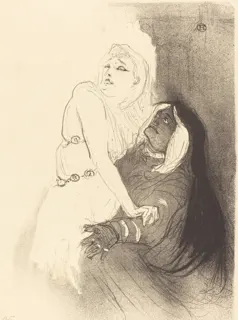 Phèdreby Jean RacineA queen's love for her stepson destroys them both.
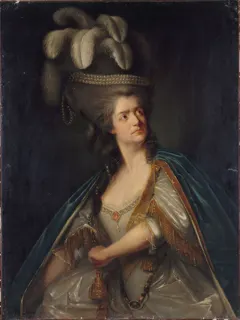 Andromacheby Jean RacineAfter Troy, the son of Achilles loves his captive, Hector's widow, and the woman he jilts sends her own lover to kill him.
 Athaliahby Jean RacineThe queen who murdered her grandsons to rule Judah dreams of a child in the Temple, and the child is the last of them.

Act 1, Scene 1
[AGAMEMNON, ARCAS]
Ay, it is Agamemnon, 'tis thy King
That wakes thee; his the voice that strikes thine ear.
Is't thou indeed, my lord? What grave concern
Has made thee leave thy couch before the dawn?
A feeble light scarce lets me see thy face,
No eyes but ours are open yet in Aulis.
Hast thou caught any sound of rising winds?
And can it be that Heav'n has heard our pray'r
This night? Nay, all are sleeping,—winds and waves
As sleeps the host.
Happy the man content
With humble fortune, free from the proud yoke
'Neath which I bow, who lives a life obscure,
Thanks to kind Heav'n!
How long, my lord, hast thou
Thought thus? What secret injury has work'd
This hatred and contempt of all the honours
That Heav'n's rich bounty has on thee bestow'd?
Blest as king, sire, and husband, son and heir
Of Atreus, the most favour'd land in Greece
Is thine, and thou canst boast kinship with Jove
Both by direct descent as well as marriage;
And young Achilles now, to whom the gods
Promise such fame by all their oracles,
Sues for thy daughter's hand, and at the flames
Of burning Troy would light the nuptial torch.
What glory, Sire, what triumphs can be match'd
With this grand sight display'd along these shores;
A thousand vessels and a score of kings,
All waiting here but for the winds to sail
'Neath thy command? 'Tis true this tedious calm
Delays thy conquests, and, for three months chain'd,
The winds have block'd thy course to Troy too long.
Supremely honour'd, thou art yet a mortal;
Nor has thy life from Fortune's shifting breeze
Been promised happiness without alloy.
Soon—
But what troubles, in that letter traced,
Force from thine eyes, my lord, a burst of tears?
Is thine Orestes doom'd in infancy
To death? For Clytæmnestra dost thou weep,
Or for Iphigenia? Prithee, tell me
What is writ there.
Thou shalt not die; no, never
Will I consent.
My lord!
Thou seest my grief,
Learn thou its cause, and judge if I can rest.
Thou dost remember when, in Aulis gather'd,
Our ships seem'd summon'd by the winds to sea:
Our sails unfurl'd, a thousand cries of joy
Already carried threats to distant Troy;
When, lo, a sudden marvel hush'd our shouts,
The favouring breeze deserted us in port.
In vain the oars smote the unruffled deep,
We were constrain'd to stop the fruitless toil.
That wondrous portent made me turn mine eyes
Toward the goddess who is worshipp'd here.
With Menelaus, Nestor, and Ulysses,
I sought her shrine and offer'd secret victims.
What was her answer! Ah, with what distress
I heard these awful words from Calchas' lips:—
"The force ye arm to conquer Troy is vain,
Unless with rites of sacrifice and pray'r
Upon Diana's altar here be slain
A maid of Helen's blood, divinely fair;
T' obtain the welcome wind that Heav'n denies,
'Tis needful that Iphigenia dies."
Thy daughter!
Thou may'st fancy how I felt
Astonishment that seem'd to freeze my blood.
Speechless I stood, while my sole utterance
Was in a thousand choking sighs express'd;
Then cursed the gods, and, without hearing more,
Vow'd, on their altars, I would disobey them.
Ah! would that I had trusted love's alarm,
And instantly disbanded all the host!
Ulysses seem'd content with what I wish'd,
Nor check'd the torrent of my angry words.
But soon, returning to his cruel wiles,
He set before me honour and the claims
Of country, kings and people to my sway
Subject, and sov'reignty o'er Asia promised
To Greece; how could I sacrifice, he ask'd,
The State to save a daughter, and go home
Disgraced for ever. I confess with shame,
My pow'r had yet some charm, and I was full
Of pride; those sounding titles, King of kings,
Leader of Greece, tickled my swelling heart.
To crown my trouble, ev'ry night the gods,
Oft as light slumber gave me rest from care,
Avenged their cruel altars, and reproach'd
My sacrilegious pity, brandishing
The lightning's bolts before my dazzled eyes,
With arm already raised as if to punish
My fault. I yielded, conquer'd by Ulysses,
And with wet eyes order'd my daughter's death.
But from a mother's arms she must be torn:
I had to have recourse to base deceit.
Achilles loved her, and I wrote to Argos,
As if at his request, saying that he,
Eager to start with us, wish'd for her presence,
That he might wed her ere we sail'd for Troy.
Fearest thou not Achilles, quick in quarrel?
Dost think this hero, arm'd by love and reason,
Will calmly let his name be thus abused
To expedite her murder, and be dumb
Seeing his loved one slain before his eyes?
Achilles was not here; his father Peleus,
Fearing the efforts of a neighbouring foe,
Had, as thou wilt remember, call'd him from us,
And there was ev'ry cause to think this war
Would have detain'd him longer than it did.
But who can stop that torrent in its course?
Achilles goes to fight, and wins forthwith;
The victor, pressing on the heels of Fame,
Arrived last night, and now is in the camp.
Yet stronger motives paralyze mine arm:
My daughter, who is hastening to her death,
Far from suspecting such a dreadful sentence,
Is pleased, perchance, her father is so kind;
My daughter—name that in itself is sacred,—
So near in blood, so young! Yet not for that
I mourn, but for her virtues and the love
Between us,—tenderness in me, in her
A piety that nothing can outweigh,
For which I promised a more meet return.
Can I believe thy justice, gracious Heav'n,
Approves this dark and savage sacrifice?
Thine oracles but put me to a test,
And thou thyself would'st punish my obedience.
Arcas, to thee this private task I trust;
Herein display thy prudence and thy zeal.
The Queen, who found thee faithful when at Sparta,
Has placed thee near my person. Take this letter,
And go to meet the Queen without delay,
Post-haste thy course pursuing tow'rd Mycenæ;
Whom when thou seest, forbid her to advance,
Giving to her this letter I have written.
Beware thou stray not; take a trusty guide.
If once my daughter dear sets foot in Aulis,
Her life is lost; Calchas, who waits her here,
Will with a voice from Heaven drown our cries,
The voice of angry gods, to which, alarm'd,
The Greeks will hearken and to that alone;
Those too whose proud ambition loathes my glory
Will reassert their claims with fresh intrigues,
Rob me of pow'r offensive in their eyes—
Go, save her from my weak irresolution.
But prithee let not zeal outrun discretion,
Give her no inkling of my wretched secret;
But, still deceived, let not my daughter know
The danger whereunto I had exposed her;
Spare me the outcry of an angry mother,
And with thy voice confirm what I have written.
To send the daughter and the mother home,
I tell them that Achilles' mind is changed,
And that he wishes to postpone this marriage,
For which he was so keen, till his return.
Add that the secret of this sudden coldness
Is thought to lie with fair young Eriphyle,
Whom he himself from Lesbos brought, a captive,
And who is kept at Argos with my daughter.
That is enough to say, and on all else
Be silent.
See how grows the light of day;
I hear a sound of voices. 'Tis Achilles.
Go. And—good Heav'ns—Ulysses follows him!
Act 1, Scene 2
[AGAMEMNON, ACHILLES, ULYSSES]
Prince, can it be with such a rapid course
That victory has brought thee back to Aulis?
Are these the first flights of an unfledged valour?
What triumphs will succeed such grand exploits!
All Thessaly reduced to peace, and conquest
Of Lesbos made while waiting our departure,
These would be trophies of eternal glory
To any other, but to thee the sport
Of idle moments.
Sir, my slight successes
Are too much praised. May Heav'n that now detains us,
Soon show a nobler field to rouse the heart
That fain would prove itself worthy of prize
So rare as that thou off'rest. But, my lord,
Am I to trust a rumour that I hear
With joy? Dost deign so to promote my wishes?
Am I so soon the happiest of mortals?
'Tis said Iphigenia comes to Aulis,
And soon our fortunes will be link'd together.
My daughter? Who has told thee she comes hither?
What is there to astonish thee in this?
[aside to Ulysses] Heav'ns! Can my fatal stratagem have reach'd
His ears!
The King's astonishment is just.
Dost thou forget how dark is all around us?
Nay, by the gods, this is no time for weddings!
While idly float our vessels, from the sea
Shut out, our forces wasting, and all Greece
Perturb'd, when, to avert the wrath of Heav'n,
We may be call'd on to spill blood most precious,
Achilles thinks of love and love alone!
Will he so rudely flout the general fear?
And shall the Grecian Leader so provoke
The Fates as here and now to celebrate
A marriage feast? Ah, is it thus thy soul
With patriotic fervour shares the woe
Of Greece?
Which loves her more, thou or myself,
Our deeds shall prove on the wide plains of Troy:
Till then I leave thee to display thy zeal,
Nor will I interrupt thy pious prayers
On her behalf. With victims load the altars,
Thyself consult the entrails, and inquire
Why Æolus imprisons all the winds:
But I, resigning all such cares to Calchas,
Must crave thy kind permission to despatch
A marriage inoffensive to the gods.
But thirst for glory will not let me rest,
Soon on this strand will I rejoin the Greeks;
'Twould vex me sorely if another foot
Than mine should first land on the Trojan shore.
Oh, why does Heav'n with secret envy stirr'd,
Close all approach to Asia 'gainst such heroes?
Have I beheld so noble a display
Of zeal, but to return more sick at heart?
Gods! How is this?
What dost thou dare to say?
That each and all, brave prince, must hence retire;
That, lured too long by hopes that have deceived us,
We vainly wait for winds that will not come.
Heav'n shelters Troy, and signifies its wrath
By supernatural obstacles that bar
Our passage thither.
By what signs has Heav'n
Declared its wrath?
Thou knowest thine own fate
Predicted by the gods,—forgive my freedom.
To thee have they assigned great Ilium's fall;
But, as the price of such a glorious conquest,
Thy tomb is mark'd out on the plains of Troy;
We know thy life, that else were long and happy,
Is destined there to perish in its prime.
Shall then so many kings, met to avenge
Thee and thine house, turn home disgraced and shamed
For ever? And shall Paris, in his love
Triumphant, keep unharm'd thy consort's sister?
Has not thy valour, prince, outstripping ours,
Sufficiently avenged our wounded honour?
Unhappy Lesbos, by thine hands laid waste,
Strikes terror into all th' Ægean isles:
Troy has beheld the flames, and to her ports
The waves have roll'd charr'd beams and mangled corpses.
Nay more,—the Trojans weep another Helen,
Whom to Mycenæ thou hast sent a captive:
For 'tis in vain to keep that birth a secret
Which pride and beauty in each glance betray;
Her very silence marks nobility,
And tells us her illustrious origin.
No, no, all this is plausible evasion:
Dim in far distance are the secrets known
To Heav'n. Shall I be daunted by vain threats,
And shun the path of honour in thy track?
The Fates, 'tis true, when to a mortal's couch
My mother came, warn'd her my choice would lie
Between a life long and inglorious,
Or else an early death with fame to follow.
But, since I soon or late must reach the tomb,
Shall I, a useless burden on the earth,
And chary of the blood a goddess gave,
Wait with my father for obscure old age,
And, scorning glory, leave behind no name
To outlive death? Away with obstacles
Unworthy! Honour speaks, it is enough;
That is my oracle. The gods command
Our span of life, but in our own hand rests
Our glory. Why should we torment ourselves
With what belongs to Heaven? Be it ours
To rival the Immortals, and, let fate
Act as it will, embrace the course that leads
To destinies as mighty as their own.
That goal is Troy, and, warn me as they may,
I ask no other boon than winds to waft
Me thither; and tho' I alone should wage
This war, Patroclus and myself will wreak
Your vengeance. But not so, to thee is giv'n
The task, I only crave a follower's place.
No more I urge approval of the passion
Which for a time would part me from these shores;
That very love, careful of thy renown,
Prompts me to stay, and by a firm example
Encourage all the army, nor consents
To leave thee to be sway'd by timid counsels.
Act 1, Scene 3
[AGAMEMNON, ULYSSES]
You hear, my lord: whatever price it cost,
He is resolved to speed his course to Troy.
We fear'd his love; and, happily mistaken,
To-day he arms our hands against himself.
Alas!
What must I deem this sigh portends?
Is it a protest of reluctant nature?
And has a single night sufficed to shake
Your purpose? Did your heart speak in the words
Just heard? Think well: you owe to Greece your daughter,
Your word is pledged to us, and on that promise
Calchas relying to the Greeks foretells
The sure return of favourable winds.
If the event conflicts with his prediction,
Think you that Calchas can continue silent,
That he will be persuaded to allow
The gods are false, without accusing you?
Who knows what in their wrath, that seems them just,
The Greeks may do, defrauded of their victim?
Beware of forcing an indignant people
To make their choice between the gods and you.
Was it not you yourself whose urgent voice
Summon'd us all to far Scamander's banks,
From town to town appealing to those oaths
Which Helen's suitors took in former days,
When all your brother's rivals throughout Greece
Sought her in marriage from Tyndareus
Her sire? Whatever bridegroom she might choose,
His right we then swore stoutly to defend;
And should his prize be stolen, we engaged
To bring him the presumptuous robber's head.
But without you that oath, which love imposed,
Would with that love have pass'd and been forgotten:
You made us loose the later ties that bound
Our hearts to home, leaving our wives and children.
And when, assembled here from land and sea,
The eyes of all flash vengeance for your sake;
When Greece, already voting you her leader,
Owns you the author of this grand emprise;
When all her kings, who might dispute that rank
With you, are ready in your cause to risk
Their very lives; lo, only Agamemnon
Refuses to buy victory and fame
With a few drops of blood, and, sore dismay'd
E'en at the outset, orders a retreat!
Ah, it is easy for a heart that knows
No woe like mine to be magnanimous!
But if you saw v your son Telemachus
Approach the altar, deck'd for sacrifice,
That dreadful spectacle would make you blench,
And we should see you soon exchange your scorn
For tears, pierced with such grief as now I feel,
And cast yourself 'tween Calchas and your boy!
You know that I have giv'n my solemn word,
And, if my daughter comes, she shall be slain;
But if a happier fate, in spite of me,
Keeps her at home, or stops her on the way,
Then let these savage rites be urged no more,!
Let me interpret in my daughter's favour
This obstacle, and welcome it as sent
By some kind god who watches o'er her life.
Your cruel counsels have prevail'd too far,
And now I blush—
Act 1, Scene 4
[AGAMEMNON, ULYSSES, EURYBATES]
My lord—
Ah, with what message
Come you?
The Queen, whose steps my haste outstripp'd,
Will soon consign your daughter to your arms;
She now draws near, but for some time she lost
The way, within these woods around the camp;
Amid their gloomy shades we hardly found
Again the right direction we had quitted.
Good Heav'ns!
She also brings young Eriphyle
Who fell into Achilles' hands in Lesbos,
And comes to Aulis, as she says, to ask
Of Calchas what her unknown destiny
May be. Already are the tidings spread
Of their approach, and an enchanted crowd
Admiring view Iphigenia's charms,
And cry aloud to Heav'n with ceaseless pray'rs
To bless her. Some greet with respectful homage
The Queen, while others fain would learn the cause
Which brings her. But they all alike confess
That if the gods never enthroned a king
More glorious, or with equal favours crown'd,
Never was father happier than yourself.
Enough, Eurybates; now you may leave us.
I must consider what is to be done.
Act 1, Scene 5
[AGAMEMNON, ULYSSES]
Just Heav'n, 'tis thus, making thy vengeance sure,
That thou dost break the web vain prudence spins!
Would that I were at least free to let fall
Tears that relieve the anguish of the heart!
Sad destiny of kings! Slaves that we are
To fate's severity and men's opinions,
We see ourselves beset with witnesses,
And the most wretched do not dare to weep.
I am no stranger to a father's weakness,
My own heart tells me all that thou must feel,
And, sympathizing with each troubled sigh,
I'm more disposed to share than blame thy tears.
But now no plea is left for love to urge
With justice. Lo, the gods have brought their victim
To Calchas, and he knows it. If she tarry,
He will not fail himself to come and claim her.
Are we not yet alone? Indulge thy grief,
Check not the tears that tenderness extorts.
Mourn for the maiden's blood, mourn; but, to soothe
Thine anguish, think what honour thence will spring:
See Hellespont all white beneath our oars,
And faithless Troy in flames, her people led
In fetters, Priam prostrate at thy knees,
And Helen to her spouse by thee restored;
See the gay garlands on each lofty stern
Of our triumphant fleet, with thee return'd
To Aulis here, in glory that shall be
The theme of countless ages yet unborn.
I know too well 'tis useless to resist.
Go; and the victim soon shall follow thee,
But silence Calchas until all is ready;
Help me the dreadful mystery to hide,
While far from sight so sad a mother's steps I guide.
Act 2, Scene 1
[ERIPHYLE, DORIS]
Let us relieve them of our presence, Doris,
While in the arms of father and of husband
They vie in demonstration of their love,
Thus setting free my sorrow and their joy.
Why, Madam, acting as your own tormentor,
Give you yourself up to tears and misery?
All is displeasing to a captive's eyes,
Joy vanishes with liberty, I know;
But when in sorer straits we cross'd the waves,
Against our will, with him who conquer'd Lesbos;
When in his vessel borne, a timid thrall,
You saw the victor who in human blood
Had waded, from your eyes fell fewer tears,
And sorrow was not then your sole employment.
Now all smiles brightly; sweet Iphigenia
Is bound to you by ties of true affection;
She pities you with all a sister's love,
And e'en at Troy you would not meet such kindness.
You wish'd to see the place to which her father
Call'd her, and here at Aulis you arrive
With her. Yet, strange fatality, your grief
Seems to increase with every step we take.
Nay, strange 'twould be if hapless Eriphyle
Could be a calm spectator of their joy.
Think you that my dejection ought to vanish
At sight of happiness I may not share?
I see a daughter in a father's arms,
The pride and glory of a mother's heart;
While I, exposed to perils ever new,
Indebted from my cradle to the care
Of strangers, live since first I saw the light
Without the comfort of a parent's smile.
I know not who I am, and, worst of all,
A dreadful oracle to ignorance
Attaches safety, saying that the day
That brings to light the source from which I spring
Must see me perish.
Nay, pursue your search
Undaunted. Heav'n delights in mystery,
And hides its meaning under strange disguise:
Losing a false name you will thus regain
Your own. No other danger need you dread;
'Tis thus that Eriphyle is to perish.
You know your name was changed in infancy.
Naught else about myself to me is known;
Your poor ill-fated sire, who knew the rest,
Never vouchsafed me any further light.
He said my proper rank should be restored
To me in Troy, whither, alas, I thought
To go invited, and resume the name
Derived from royal ancestors. Already
I seem'd to look upon that famous city.
But Heaven brought to Lesbos fell Achilles,
And all gave way before his dire attack.
Your father, buried 'neath a heap of slain,
Left me a captive, to myself unknown;
And there remain'd of all my promised greatness
To me, the slave of Greeks, naught but the pride
Of noble blood, which I am powerless
To prove.
In slaying such a faithful witness,
How cruel, Madam, must that hand appear
Which did the deed! But Calchas, famous Calchas
Is here, who reads the secrets of the gods.
They deign themselves to teach him, and he sees
The future and the past alike unveil'd:
He cannot fail to know your parentage.
This camp itself is full of kind protectors:
Wedding Achilles, soon Iphigenia
Will offer you a home beneath his care,
As promised in my presence and confirm'd
With oaths. She looks for this as the first pledge
Of faith from him.
What would you say, dear Doris,
If of my woes this marriage was the worst?
What, Madam!
It surprises you to see
That my distress refuses consolation.
Listen, and you will marvel that I live.
To be a stranger, captive, and unknown
E'en to myself, is but a light affliction;
Achilles, author of the woes of Lesbos,
Of thine and mine, who took me prisoner,
Who snatch'd your father from me, and with him
The knowledge of my birth, whose very name
Should make me shudder, is of mortals dearest
To me.
Ah! What is this you say!
I thought
To let eternal silence hide my weakness:
But when the heart is full it overflows,
And once for all I make a true confession.
Ask me not, on what slender hope relying,
I learn'd to entertain this fatal love.
I cannot charge therewith any false pity
That my misfortunes seem'd to wake in him:
The gods without a doubt take cruel joy
In shooting all the shafts of their ill-will
At me. Shall I recall the dread remembrance
Of that sad day which cast us both in chains?
Long in those hands that tore me from my home
I lay in darkness, lifeless and despairing.
At last my wan eyes sought the light of day;
Seeing myself seized by an arm inured
To blood, I trembled, Doris, and I fear'd
To meet a savage conqueror's frightful frown.
I went on board his vessel, holding him
A hateful monster that my eyes were loath
To look on. I beheld him; in his face
I saw no fierceness; on my lips reproach
Remain'd unutter'd, while against myself
My heart declared, and, all my wrath forgotten,
I could but weep, to such a gentle guide
Submissive. Loved at Lesbos, no less dear
Is he at Aulis. Offers of protection,
Of sympathy and succour, all are vain,
So works the madness that torments my heart
Iphigenia's proffer'd hand I take
Only, unseen, to arm myself against her,
And thwart the happiness I cannot bear.
How can a feeble spite avail to harm her?
Were it not better never to have left
Mycenæ, than t' encounter torture here,
Struggling against a hopeless, hidden flame?
I wish'd to stay, my Doris, but the more
I shunn'd the picture of her triumph here,
So sad to me, fate drew me to these shores:
I heard a secret voice that bade me come
And whisper'd that my presence might relieve
My aching heart, and, on their joy intruding
With near approach, some shadow of my woe
Might fall, perchance, on them with fatal blight.
That is what brings me hither, not impatience
To learn to whom I owe a birth so wretched:
Or rather that their marriage may to me
Serve as the sentence that shall end my life.
Yes, Doris, I will die; a sudden stroke
Shall bury in the darkness of the tomb
My shame, heedless of parents still unknown,
Whom my infatuation has dishonour'd.
Ah, how I pity you! What tyranny—
Lo, Agamemnon and Iphigenia!
Act 2, Scene 2
[AGAMEMNON, IPHIGENIA, ERIPHYLE, DORIS]
Whither so fast away? What urgent need
Calls thee, my lord, so soon from our embrace?
To what shall I impute this hasty flight?
With due respect I yielded to the Queen
The earliest greeting. May I not, in turn,
Detain thee for a moment, and display
The joy that—
Yes, my daughter, let thine arms
Clasp me; thy father has not ceased to love thee.
Dear is that love to me. How I rejoice
To see thee, in new majesty resplendent!
What pow'r and glory! Fame had told already
A tale of wonder which had reach'd our ears;
But seeing close at hand a sight so welcome,
How my surprise and pleasure are increased!
Ye gods! How Greece must love and honour him!
What bliss to be the child of such a sire!
Daughter, thou did'st deserve a happier father.
What happiness is wanting to thy wishes?
What king to greater honours can aspire?
Are not my thanks—thanks only—due to Heav'n?
[aside] Great gods! Shall I prepare her for her fate?
Why dost thou hide thy face, my lord, and sigh?
It seems to pain thee but to look on me.
Have we by thee unbidden left Mycenæ?
I see thee, child, with the same eyes of love
As ever; but, with change of time and place,
Gladness is overmatch'd with anxious thoughts.
Father, forget the cares of office now.
I know we must be parted, and for long.
Thou need'st not blush to give a father's love
A moment's sway. Thou seest that none is near
But a young princess who has heard me boast
Thy tenderness to me. A hundred times
I promised thou would'st love her for my sake,
And made no secret of my happiness:
What will she think of this indifference?
Have I buoy'd up her wishes with false hopes?
Wilt thou not clear this trouble from thy brow?
My daughter!
Speak, I hear.
Ah, no; I cannot.
Perish the Trojan prince, who caused these ills!
Ere that may be, 'twill cost us many a tear.
The gods with special care watch o'er thy life!
Long have I found them cruel and unheeding.
Calchas, I hear, a solemn sacrifice
Prepares.
Ah, might I first their hearts incline
To mercy!
Will it soon be offer'd?
Sooner
Than I could wish.
Shall I be free to join
My pray'rs with thine, shall thy glad family
Surround the altar?
Ah!—
Why art thou silent?
Thou shalt be there, my daughter!
Fare thee well.
Act 2, Scene 3
[IPHIGENIA, ERIPHYLE, DORIS]
What am I to expect from this sad greeting?
A secret horror makes my blood run cold:
Against my will I dread some ill unknown.
Just gods! Ye know whose safety I implore!
'Mid anxious cares that needs must overwhelm him,
Does but a little coldness make you tremble?
Alas! What reason then have I to sigh,
Who never knew a parent's tender care,
Cast among strangers from my very birth,
Not even then perchance welcomed with looks
Of love! If your affection by a father
Is scorn'd, at least you have a mother's breast
Whereon to weep. Your woe is not so keen,
But that a lover's hand can dry your tears!
I'll not gainsay it. Grief itself must yield
Ere long before the efforts of Achilles.
His love, his valour—ay, a daughter's duty
Give him just claim over my heart and soul.
But of himself I know not what to think:
This lover, so impatient to behold me,
Whom nothing could induce to leave these shores
Till from my distant home a father call'd me
To be his bride,—where is the eagerness
With which I deem'd him waiting to receive me?
For two days past, as ev'ry hour we came
Nearer this place, which I so wish'd to see,
I thought each timid glance would light on him
With which I scann'd the ways that led from Aulis,
Sending my heart far in advance to meet him,
And ask'd of all I saw, where was Achilles.
At last, without his escort, we arrive,
Jostled and stared at by a crowd of strangers;
Still he appears not. Agamemnon seems
Afraid to let his lips pronounce his name.
Where is he? Who can solve this mystery?
And shall I find the lover no less cold
Than the sad father? Have the cares of war
Extinguish'd in all hearts the warmth of love?
But no, unjust alarm wrongs his devotion.
'Twas I who urged him to assist the cause
Of Greece. He was not present when at Sparta
All Helen's suitors to her father took
Their solemn oath. Alone of all the Greeks
Unbound by any pledge, if against Troy
He sails, 'tis for my sake. Myself the prize
Sufficient, wedding me, thither he flies.
Act 2, Scene 4
[CLYTÆMNESTRA, IPHIGENIA, ERIPHYLE, DORIS]
My daughter, we must hence without delay,
And save by flight your honour and my own.
I am no more astonish'd that your father
Seem'd overwhelm'd with sorrow and confusion
At seeing us again: wishing to spare
The insult of rejection, he by Arcas
Had sent this letter, only just received,
For, as we went astray, he fail'd to find us.
Come then, and let us save our wounded honour:
Achilles, it would seem, has changed his mind
About your marriage, and declines the favour
We would bestow, postponing the espousals
Till his return.
What do I hear?
This insult
Flushes your cheek. Let pride your courage arm.
Though, of his suit approving, it was I
Myself who promised you to him in Argos,
Moved by the fame of his nobility
To wed you to the offspring of a goddess;
Yet, since his base repentance now belies
Birth so divine as rumour has reported,
It rests with us to show him who we are,
And see in him the lowest of mankind.
Shall we by staying longer make him think
We wish and wait for the return of love
To his cold heart. The nuptials he defers
Let us dissolve. Your father has been told
Of my intent, and comes to take farewell.
I must make ready for our prompt departure.
[To Eriphyle]
I do not urge you, Madam, to return
With us; in dearer hands I leave you here.
Your secret schemes have come to light, nor was it
Calchas who drew your willing steps to Aulis.
Act 2, Scene 5
[IPHIGENIA, ERIPHYLE, DORIS]
In what despair and woe these words have left me!
Achilles then is fickle in his love!
I must go back to Argos in disgrace!
And 'tis not Calchas you are seeking here!
Madam, I fail to understand such speech.
Nay, you can comprehend me if you will.
Fate's cruel sentence robs me of a husband;
Will you abandon me to my misfortune?
You could not stay without me at Mycenæ;
Are we to start from Aulis without you?
I wish to see the prophet ere I start.
Why do you then delay to let him know it?
A moment more will see you on your way.
A moment sometimes clears up many doubts.
But I am pressing you too closely, Madam;
I see what I was loath to think: Achilles—
In your impatience to get rid of me—
I? You suspect me of this treachery?
How can I love the cruel hand that crush'd me,
Dyed crimson in the blood of all my kin,
That lit the blazing torch, and laid in ashes
Lesbos—
Ah yes, you love him, base deceiver!
The savage conduct that you paint so well,
Those arms that you have seen stain'd red with gore,
Fury and flames, and Lesbos burnt to ashes,
All these have stamp'd his image on your heart,
And, far from shuddering at their remembrance,
It even gives you pleasure to repeat them.
When your complaints were loudest, more than once
I might have seen your thoughts, and so I did,
But always with good-natured readiness
Replaced the bandage from mine eyes removed.
You love him. Ah! What fatal misconception
Made me receive my rival in mine arms?
My heart I gave her blindly, and to-day
Pledged the protection of its perjured lover.
Little I thought so soon to see her triumph,
And be myself chain'd to her chariot wheels.
The selfishness of passion I can pardon
That robs me of the heart I deem'd mine own;
But not the treachery that laid a snare
To catch me, and then suffer'd me, unwarn'd,
To step therein, finding thus, far from home,
No ardent welcome, but a cold repulse.
This charge is one that fills me with surprise;
I have not been accustom'd to such words;
And though the gods have long press'd hard against me,
As yet they spared my ears a wound so grievous.
But some excuse is due to love's injustice.
What warning would you wish me to have giv'n?
Can you suppose Achilles could prefer
To Agamemnon's daughter one who knows
Naught of her birth save that within her veins
Flows blood such as Achilles burns to shed?
You triumph, cruel one, and flout my wrongs,
Making me feel my misery the more.
Why with the honours of my birth compare
Your exile, but the better to enhance
Your victory unjust? But curb your transports;
This Agamemnon whom you choose to mock
Holds sway o'er Greece, yet condescends to love
His daughter, and resents her injuries
More warmly than herself. My tears in prospect
Moved him to sighs he sought in vain to stifle.
Alas! His gloomy greeting I condemn'd
And dared to blame his want of tenderness!
Act 2, Scene 6
[ACHILLES, IPHIGENIA, ERIPHYLE, DORIS]
Can it be so? Is it yourself I see?
I thought that all the camp had been deceived.
You here in Aulis! With what purpose come you?
I heard another tale from Agamemnon.
Be of good cheer, my lord; I will not thwart
Your wishes, and shall soon be gone again.
Act 2, Scene 7
[ACHILLES, ERIPHYLE, DORIS]
She flies from me! Am I awake, or dreaming?
Into what fresh distraction am I plunged!
Madam, I know not if without offence
Achilles may present himself before you;
But if you will not scorn a foe's entreaty,
If e'er his captive touch'd a chord of pity
In him, you know what brings their footsteps hither,
You know—
And does my lord not know it too?
Did not your eager love a month ago
Desire their presence here without delay?
A month ago I was not here myself;
It was but yesterday that I return'd.
What! Was it not your love inspired the letter
That Agamemnon to Mycenæ wrote?
Were you not smitten with his daughter's charms—
Ay, and more captivated now than ever.
If wishes could have carried me to Argos,
I would myself this journey have forestall'd.
Yet she flies from me. What has been my crime?
I see around me none but hostile eyes:
This very moment Calchas and Ulysses,
With Nestor too, used all their eloquence
In opposition to my love, and seem'd
To urge that honour had superior claim.
What subtle scheme can they be hatching here!
Am I a laughing-stock to all the army?
I'll enter, and extort from them their secret.
Act 2, Scene 8
[ERIPHYLE, DORIS]
Ye gods, who see my shame, where shall I hide me?
Proud rival, thou art loved; yet dost thou murmur!
Must I at once thy triumph and reproaches
Endure? Ah, rather—
But I'm much mistaken,
Or over them a storm, ready to burst,
Threatens disturbance to their happiness:
Iphigenia is deceived, Achilles
Mock'd, Agamemnon groans. I'll not despair
And, if my hatred finds support from fate,
I shall know how to turn it to my profit,
Nor weep alone, nor die without revenge.
Act 3, Scene 1
[AGAMEMNON, CLYTÆMNESTRA]
'Tis true, my lord, we should have gone ere now
Far on our way to Argos, where your daughter
Might weep for her disgrace, leaving Achilles
And you in anger, had not he himself
Just now, astonish'd at our sudden flight,
Restrain'd us with such oaths as could not fail
To make us trust him, urgent for the marriage
We thought postponed, while love and wrath contended
For mastery, disowning the false rumour,
Eager to know its author and confound him:
Banish suspicions which have marr'd our joy.
Yes, Madam, with my sanction you may trust him.
I recognise the error that deceived me,
And share your joy to th' utmost of my pow'r.
Would you have Calchas to my family
Unite him? Send your daughter to the altar;
I will be there. But, ere proceeding further,
I wish'd to speak a word with you in private.
You see how you have brought her to a place
Where all breathes war, not hymeneal songs.
The tumult of a camp, soldiers and sailors
With spears and javelins bristling round the altar,
Offer a scene to swell Achilles' pride,
But to your tender sight harsh and uncouth.
Shall Greece there see the consort of their King
Bereft of dignity and royal state?
Hear me. Without you, let Iphigenia
Go to this marriage, by your maids attended.
What! Must I then, to other arms confiding
My child, not finish what I have begun,
And, after bringing her from Argos hither,
Refuse to guide her footsteps to the altar!
Is yours to be a nearer place than mine
By Calchas? Who will give her to Achilles,
Or order the procession as is meet?
This is not Atreus' palace, where you are,
But a rude camp—
Where all submits to you,
Where Asia's fate is to your hands intrusted,
Where marshall'd 'neath your sway I see the whole
Of Greece, where Thetis' son will call me mother.
In what proud palace upon all the earth
Could I appear with more magnificence?
Deign, Madam, for the sake of the Immortals
From whom we spring, to grant my love this favour.
I have my reasons.
By those selfsame gods
Deprive me not, my lord, of sight so sweet.
Why should my presence here make you ashamed?
I had hoped more from your obliging temper.
But, since the force of reason cannot move you
And my entreaty has so little pow'r,
My tone must change to one of stern command.
It is my will you do as I have said.
Obey.
Act 3, Scene 2
Clytæmnestra
What means he, cruel and unjust,
Thus from the marriage altar to debar me?
Proud of new rank, forgets he who I am?
And am I deem'd unworthy to appear
Beside him? Or, timid 'mid all his pow'r,
Fears he that Helen's sister may bring scorn
On him? Why should I hide me? Is it fair
His shame should be reflected on my brow?
But, since it is his will, my own submits.
Thy happiness, my daughter, makes amends
For all. Heav'n gives Achilles to thine arms,
And I am overjoy'd—
But, lo, himself!
Act 3, Scene 3
[ACHILLES, CLYTÆMNESTRA]
Madam, all goes according to my wishes;
Misunderstandings clear'd, the King is pleased
To trust my ardour, and, ere all is said,
With warm embrace accepts me for a son.
Few words express'd consent. But have you heard
What joy your presence to the camp has brought?
The gods will be appeased; Calchas proclaims
Their reconciliation in an hour;
That Neptune and the winds our pray'rs will grant,
Soon as his hand the victim's blood shall spill.
Already every ship with sails outspread
Is turn'd tow'rds Troy, relying on his promise.
As for myself, tho' love were gratified
If Heav'n were still to keep its breezes back,
Tho' I must grieve to quit this happy shore
Where soon for me the nuptial torch will glow;
Yet can I fail to welcome an occasion
To seal our marriage-bond with Trojan blood,
And 'neath Troy's ruins bury the disgrace
Of one whose family will then be mine.
Act 3, Scene 4
[ACHILLES, CLYTÆMNESTRA, IPHIGENIA, ERIPHYLE, DORIS, ÆGINA]
On you, dear princess, all my hopes depend;
Your father to our union yields consent,
And at the altar waits. There take a heart
Already yours.
'Tis not yet time to go.
With the queen's leave, my lord, I dare to ask
A pledge your love should grant right willingly.
On this young princess, for my sake, take pity:
Heav'n on her brow has stamp'd nobility.
Her eyes bedew'd with tears, she ever mourns
Her misery; you know it, for from you
It came. And I myself, unjustly wroth,
Have made her more unhappy than before.
I fain would counteract by timely help
The wrong my words have done her, if I may.
My voice I lend her now, I can no more.
My lord, you only can undo your work:
She is your captive; and at your command
Her chains will fall, and give my heart relief.
Thus then inaugurate this happy day,
Nor let the sight of us increase her woe.
Show that I am about to wed a king
Who, not content to strike men's hearts with fear,
Does not confine his fame to fire and sword,
But, melted by the tears of one he loves
And in his hour of victory disarm'd
By grief, can imitate the gods from whom
He springs.
Yes, Sir, assuage these poignant pangs.
Lesbos subdued, your captive I became;
But 'tis to push the rights of war too far
To add the torment that I suffer here.
You, Madam?
Yes, my lord; all else omitted,
What punishment more dire can you impose
Than this of giving my sad eyes the pain
Of seeing those who persecute me happy?
I hear on all sides threats against my people;
I see an army raging to attack them;
And now, to add a sorer wound, I see
Flames to devour my country in the torch
Of Hymen. Far from Aulis and from you,
For ever wretched and unknown for ever,
Let me go hide a fate that claims compassion,
Whose bitterness these tears but half express.
Too much, fair princess! Come that, in the sight
Of Greece, Achilles may pronounce you free.
This hour, to me more sweet than all before,
Shall gladden you with liberty once more.
Act 3, Scene 5
[ACHILLES, CLYTÆMNESTRA, IPHIGENIA, ERIPHYLE, ARCAS, ÆGINA, DORIS]
Madam, all's ready for the solemn rite.
Beside the altar the King waits his daughter;
I come to claim her: or, more truly, Sir,
I come for her thy succour to implore
Against him.
Arcas, what is this?
Great gods!
[to Achilles] Thou, Sir, and thou alone, canst now defend her.
'Gainst whom?
His name I utter with regret;
Too long already have I kept his secret;
The knife, the fire, the fillet, all are ready,
And, were the stroke on mine own head to fall,
I needs must speak.
Explain thyself. I tremble.
Speak, be it what may, and have no fear.
Thou her affianced husband, thou her mother,
Beware, send not the princess to her father.
Why, what have we to dread?
Wherefore distrust him?
He at the altar waits to offer her
In sacrifice.
Her sire!
His child!
My father!
Ye gods, what tidings!
What blind rage can arm
His mind against her? Who could hear of it
Without a shudder?
Would that I could doubt it!
By Calchas' voice the oracle demands her,
Refusing to accept another victim;
The gods, who hitherto have favour'd Paris,
At this price only promise favouring winds
And Troy's destruction.
Can the gods command
Foul murder!
For what guilt am I condemned
To such a fate?
No more am I surprised
That I should be forbidden to approach
The altar.
[to Achilles] This, then, is my destined marriage!
The King devised these nuptials to deceive you:
Deceived was all the army like yourselves.
See how I stoop to clasp thy knees!
[raising her] Ah, Madam!
I loathe my royal dignity. Forget it.
This sad humiliation suits a lot
Desp'rate, unless my tears can stir thy pity.
A mother feels no shame thus at thy feet
To fall. Alas! it is thy bride they snatch
Out of thine arms; whose tender hopes I nursed
From childhood. 'Twas in search of thee we reach'd
This fatal shore; thy name brings her to death.
Shall she go beg for justice from the gods,
And clasp their altars, for her sacrifice
Festoon'd? She has none other here than thee;
Thou art to her a father, husband, Heav'n,
Her only shelter. In thine eyes I read
Unutterable grief. With him, my child,
I leave thee. Quit her not, but wait for me;
To faithless Agamemnon must I hasten,
And overwhelm him with indignant fury;
Calchas will have to find another victim:
Or, if I cannot save my daughter's life,
My neck shall first be offer'd to the knife.
Act 3, Scene 6
[ACHILLES, IPHIGENIA]
Madam, my tongue is silent, and my limbs
Seem palsied. Is it to mine ears such words
Are spoken? Must a mother kneel and sue
To me for thee, a queen fall at my feet
Prostrate! And, wronging me by fears unjust,
Has she recourse to tears to melt my heart!
Thy life to me is dearer than to all
Besides. My faithful heart claims full reliance;
No harm to thee can fail to touch mine honour;
I answer for a life that to mine own
Is join'd. But indignation moves me further:
'Tis little to protect thee; to revenge
I run, and punishment for that vile scheme
Which dares to use my name for thy destruction.
Ah, stay, my lord, and deign to hear me.
What!
Shall I endure so barbarous an insult?
He sees me eager to avenge the wrong
His sister suffer'd, knows that it was I
Who voted first for him to be elected
Commander over twenty kings, his rivals;
And for the fruit of all my toil and care,
My sole reward for victory that will bring
Vengeance and wealth to him with glory's crown,
The height of my ambition was to hear
Thee call me husband, to be thine was all
I ask'd of him; yet savage and forsworn,
To-day he thinks it little to do outrage
To natural affection, and to show me
Thy bleeding heart consumed upon an altar;
Veiling this sacrifice with marriage rites,
He would that it were I should lead thee thither,
My hand should be his tool to hold the knife,
Thy promised bridegroom be thy murderer!
Ah, how these bloody nuptials might have ended,
Had I come one day later than I did!
This very moment, in their ruthless pow'r
Placed, thou wouldst search for me beside the altar
In vain, then unforeseen the knife would fall,
And dying thou wouldst blame me for deceit
Most base!
Then must I, in the sight of Greece,
Claim satisfaction for such treachery.
A husband's honour, Madam, is with thine
Involved, and thou must needs praise mine intent.
The cruel monster who has pour'd disdain
On me shall learn whose name he dared to stain.
Oh! If thou lovest me and one last favour
Wilt grant, attentive to a lover's pray'r,
Now is the time for me to prove it, Sir.
Bethink thee that this monster thou defiest,
This barbarous, bloodthirsty, unjust foe
Is still, whate'er he may have done, my father.
Thy father! Nay, after this horrid scheme,
I know him only as thy foul assassin.
He is my father, Sir, once more I say it,
Yea, and a father whom I love and honour;
Himself he holds me dear, and, till to-day,
No tokens but of tenderness from him
Have I received. My heart, from childhood taught
A daughter's duty, cannot but be grieved
At words that wound him. Far from being changed
So suddenly as to approve thy rage,
Still less to fan this fury with my breath,
Believe me, it is only the excess
Of love for thee that suffer'd me to hear
Those hateful names with which thou hast assail'd him.
Why will you deem him so unnatural
As not to groan at the impending blow?
What father gladly would bereave himself
Of his own offspring? Why should he destroy me
If he could save? I saw him weep, believe me;
Condemn him not, my lord, ere thou hast heard him.
Alas! his heart already is with horror
Sorely oppress'd, let not thy hatred crush it!
What, Madam! 'Mid such subjects for alarm,
Are these the terrors that distress thee most?
A cruel sire [how can I call him else?]
Intends to slay thee by the hand of Calchas;
And, when my love his fury would withstand,
Thy sole concern is to secure his peace,
To shut my mouth, to pity, and excuse.
'Tis I that do affright thee, and thy fears
Are all for him! So little has my care
Avail'd to reach thy soul and fix Achilles there!
Ah, it is cruel thus to doubt my love!
Have I so long waited to make it known?
Thou seest with what a calm indifference
I have received the tidings of my doom,
Nor did my cheek turn pale. Would thou hadst seen
How, just before, distracted with despair,
I heard, when we arrived, a false report
That thou hadst proved inconstant! In what anguish,
With what a torrent of upbraiding words
I blamed the spite alike of gods and men!
Ah! hadst thou seen me then, thou wouldst not need
To hear me say how much thy love is dearer
To me than life! Who knows if Heav'n, provoked
By my exceeding happiness, has will'd
Its end! Alas, a flame so fair and bright
Seem'd to uplift me to a higher sphere
Than earth.
My princess, live, if still to thee I'm dear.
Act 3, Scene 7
[ACHILLES, CLYTÆMNESTRA, IPHIGENIA, ÆGINA]
My lord, unless you save us, all is lost;
For Agamemnon fears to see my face,
Refusing me all access to the altar:
The guards whom he has station'd there himself
Have on all sides forbidden me to pass.
He shuns me, for my passion makes him quail.
Then, Madam, 'tis for me to take your place.
I'll see him, and accost him face to face.
Ah, mother!—
Whither will you go, my lord?
What mean you by unreasonable pray'rs?
Still must it be that first against yourself
I have to fight?
My child, explain your purpose.
In Heaven's name, restrain a frantic lover:
Let us avert this perilous encounter.
Your fierce reproaches, Sir, would leave a sting
Too sharp; exasperated love, I know,
Runs wild with rage. My father's jealousy
Brooks no control; proud are the sons of Atreus.
Leave it to lips more timid to address him.
Surprised at my delay, doubt not that hither
He will himself soon come in search of me.
A mother's lamentations he will hear,
And I, perchance, shall feel myself inspired
With arguments that may prevent your tears.
Your indignation quell, and let me live
For you.
Since such your pleasure, I submit.
Let sound advice fall from your lips together,
Recall his reason, and persuade his heart
Not to destroy our peace and, more than ours,
His own. In idle talk the precious moments
I lose. From me not words but deeds are wanted.
[To Clytæmnestra]
Madam, I will do all I can to serve you:
Go, seek your chamber, and take needful rest.
Your daughter shall not die, so I predict,
An oracle more sure than that of Calchas.
Believe me that as long as I draw breath
In vain the gods may have ordain'd her death.
Act 4, Scene 1
[ERIPHYLE, DORIS]
How say you? What strange madness makes you envy
Iphigenia's lot? Within an hour
She perishes. Yet never, so you tell me,
Were you more jealous of her happiness.
Who could believe it? Where is heart so wild—
My mouth has never utter'd word more true:
Never has her felicity so moved
My anxious soul with envious unrest.
Such danger were delight! But hope is vain!
Did you not see her triumph,—his concern?
I saw and shunn'd tokens I could not doubt.
This hero, terrible to all besides,
Who knows no tears but those he makes to flow,
Who steel'd himself from infancy against them,
And who, if rumour tells a tale of truth,
Suck'd the fierce blood of lions and of bears,
For her sake learns the language of alarm:
Yes, she has seen him weep, his cheek turn pale.
Yet Doris pities her! What dire misfortune
Would I not suffer, might those tears be shed
For me! Tho' I were doom'd to die like her
Within an hour—Die? Nay, believe it not.
Think you Achilles is an idle dreamer,
That, fearing for her safety, he will spare
His boldest efforts to achieve her rescue?
No, you shall find this oracle was spoken
But to enhance his glory and my torment,
To leave her fairer in his eyes than ever.
See you not all that in her favour works?
The fatal sentence has been kept a secret,
And, though the funeral pyre be now prepared,
The victim's name is still unknown: the camp
Remains in ignorance. This silence, Doris,
Cannot but indicate a wavering purpose.
What will he do? Has he a heart of iron,
To bear th' attack of their combined entreaties,
A mother's anger, and a daughter's tears,
Cries of despair from all his family,
His own affection ready to relent,
Nor least Achilles' threats that never fell
But to o'erwhelm? No, 'tis in vain that Heav'n
Condemns her. Misery is mine alone
For ever. If I follow'd mine own impulse—
What's in your mind?
I know not what restrains
My anger from revealing all the truth,
Divulging straightway what the gods have threaten'd,
And publishing abroad the guilty plots
Laid to dishonour them and cheat their altars,
Ah! What a thought!
What joy if it were done!
How would the Trojan temples smoke with incense,
If, in revenge for my captivity,
I could arm Agamemnon 'gainst Achilles,
And, Troy forgotten, make them turn the sword,
Whetted for her destruction, on each other,
And Greece, embroil'd in civil strife by me,
Be sacrificed to save my countrymen!
I hear a sound. I think the queen approaches.
Madam, compose your spirits, or retire.
Let us go in and think how best my rage
That Heaven sanctions may confound this marriage.
Act 4, Scene 2
[CLYTÆMNESTRA, ÆGINA]
It breaks my heart to see her, dear Ægina.
She sheds no tears, nor trembles for her life,
But all her care is to excuse her father,
And to persuade me to respect the hand
That slays her. Oh, what filial constancy!
He, in return for love so tender, chides
Delay, and soon will ask of me the reason,
Still hoping to conceal his treachery.
He comes. Let me not taunt him with injustice,
But see if he persists in his deceit.
Act 4, Scene 3
[AGAMEMNON, CLYTÆMNESTRA, ÆGINA]
What do you here? Where is your daughter, Madam?
How is she not with you, as I expected?
Why waits she? Did not Arcas bring my orders
To send her? Is it you who keep her back?
Do you resist my reasonable wishes,
And, save by you conducted, can she not
Approach the altar? Speak.
If she must go,
My child is ready. But have you, my lord,
No reason for delay?
I, Madam?
Have you
Forgotten naught?
The altar is prepared,
And Calchas by its side, all as it should be.
My lord, you do not tell me of the victim.
What mean you, Madam? Why should your concern—
Act 4, Scene 4
[AGAMEMNON, CLYTÆMNESTRA, IPHIGENIA, ÆGINA]
Come, daughter, come: they only wait for thee:
Come, thank a father who so loves his child
That he himself will lead her to the altar.
What do I see and hear? Why weeps my daughter,
With downcast eyes, as if ashamed to meet
Mine own? What troubles thee? Thy mother too
Is weeping. Arcas has betray'd me!
Father,
Cease to be anxious, thou art not betray'd:
What thou commandest shall by me be done.
Thy will it is to take the life thou gavest;
I know it, and all subterfuge is vain.
With heart no less submissive and content
Than when the bridegroom of thy choice I hail'd,
Will I, if need be, an obedient victim,
Offer a guiltless head to Calchas' knife,
And, since it is thy will, with due respect
Yield the existence that I owe to thee.
But if this dutiful obedience seem
To merit in thine eyes some recompense,
If thou hast pity for a mother's tears,
Let me be bold to say that, young and happy,
I well might find life sweet enough to make
Me wish that it should not be snatch'd away,
That cruel Fate had not so soon cut short
The thread of which so little has been spun.
I, Agamemnon's daughter, it was I
Who call'd thee first by the dear name of father,
And I, in whom so long your eyes delighted,
Have made thee thank the gods that name was thine.
How often hast thou lavish'd fond caresses
On me, nor scorn'd as weakness love so tender.
Ah! With what pleasure did I make thee tell
Of countries that await thy conquering arm;
And, auguring thy triumph over Troy,
I was already in my mind preparing
Glad welcome home. I little thought my blood
Would be the first that thou would'st have to shed.
It is not dread of this impending blow
That makes me call past kindness to thy mind.
Fear naught; my heart is jealous of thine honour,
Nor will I make my father blush to own me;
And, had I only to defend my life,
I never would have raised fond recollections.
But well thou knowest how on my sad lot
A lover's and a mother's happiness
Depend. A prince, worthy to be thy son,
Trusted this day would light for him the torch
Of Hymen, and, relying on my heart
And on thy promise, deem'd it one of joy.
He knows thy purpose, judge of his alarm.
Look on my mother, and behold her tears.
Forgive these efforts to prevent the grief
That I shall cost them, if I die.
My daughter,
Too true it is. I know not for what crime
The anger of the gods demands a victim;
But they have named thee, and an oracle
Dooms thee to death upon an altar here.
To guard thy life from this their murderous sentence,
My love forestall'd thy pray'rs. I will not say
How often I resisted; never doubt
That love to which thou hast thyself borne witness.
This very night, as thou perchance hast heard,
I had revoked the order I was forced
To write; and o'er the general good of Greece
Thou didst prevail. For thee I sacrificed
My rank, my safety. Arcas from the camp
Went to forbid thine entrance. Heav'n forbade
Your meeting, and frustrated my last hope
Of saving one condemn'd by its decree.
Rely not then upon my feeble pow'r:
What can avail to check a rebel army,
When Heav'n has giv'n us up to their blind zeal,
And frees them from a yoke that they resent?
We must submit, my child; thine hour is come.
Bethink thee of thy royal rank and nurture:
Alas, I need the counsel that I give;
The death stroke that awaits thee will no less
Strike me. Then, show thee worthy of thy birth,
And put to shame the gods who have condemn'd thee.
Go, let the Greeks, who to thy sacrifice
Consent, see in thy blood that shall be shed
Mine own.
Fit offspring of a fatal stock!
Thine is the blood of Atreus and Thyestes:
Thy daughter's murderer; there but remains
One horror more, to serve her as a feast
Before her mother. Savage, this is then
The gladsome sacrifice thou wast preparing
With artful care! Did not thy hand refuse
The infamy of writing a command
So cruel! Why dost thou pretend to feel
A false distress? Think not that tears can prove
A love that shrinks from bold defence in arms.
Why has not blood been shed for her in torrents?
What wreck and ruin tell of thy resistance?
What field with corpses cover'd seals my mouth?
Proofs such as these I would have had thee bring me
Of thine affection and desire to save her.
A fatal oracle ordains her death!
But what an oracle may seem to say
Not always is its meaning. Can just Heav'n
Thirst for the blood of innocence, or be
Honour'd by murder? If for Helen's crime
Her kin are punish'd, for her daughter send
To Sparta. So let Menelaus ransom
The wife whose frailty in his eyes seems small
Match'd with her charms. But surely it is madness
To make thyself the victim for her sin.
And why should I, smiting upon my breast,
With my own flesh and blood pay for her folly?
Does Helen then, for whom such jealous fires
Were kindled, curse of Europe and of Asia,
Seem worthy of thine efforts to regain her?
How often have we blush'd to speak her name!
Ere, to his woe, thy brother link'd his fate
With hers, she had been carried off by Theseus,
Who, as thou knowest and hast heard from Calchas
A thousand times, clandestinely unloosed
Her virgin zone; and, pledge of that amour,
A princess of her blood has been by her
Kept in concealment. But a brother's honour
Is the least cause of thy solicitude:
That lust of empire nothing can extinguish,
The pride of seeing twenty monarchs serve
And fear thee, empire to thine hands confided,
These are the gods who claim this sacrifice
From thee, who far from offering resistance
Dost make a barbarous merit of submission.
Jealous of pow'r that can excite their envy,
Thou dost not grudge to pay a heavy price
From thine own veins, that so thou mayest quell
All opposition to thy sovereign sway.
Is this to be a father? Outraged nature
Revolts at this perfidious cruelty.
A priest, surrounded by a brutal crowd,
Will on my child lay hands of violence,
Rend her bared bosom, and with curious eye
For omens search her palpitating heart!
While I, who brought her hither proud and happy,
Must needs go back alone and in despair!
Still will the ways be scented with the flow'rs
That 'neath her feet were scatter'd as we came!
It shall not be that to her doom I brought her,
Or thou wilt have to add my death to hers.
Ay, thou shalt never tear her from these arms,
While life is mine: no fears can shake my purpose.
Ruthless alike as husband and as father
Come, if thou darest, snatch her from the breast
That nursed her!
Go within again, my child!
And for the last time heed thy mother's voice.
Act 4, Scene 5
Agamemnon
Such frenzied outburst might have been expected:
These are the cries of anger that I fear'd.
And I were happy, if my harass'd soul
Had nothing worse to dread than idle clamour!
Alas! Great gods, who have imposed this task,
Why were the feelings of a father left me?
Act 4, Scene 6
[AGAMEMNON, ACHILLES]
My lord, a strange report has reach'd mine ears,
Which I am slow to credit. It is said,
And 'tis with horror I repeat the tale,
This day Iphigenia is to die
By thy command; that, stifling every instinct
Of pity, thou wilt give her up to Calchas,
And that the maiden whom I thought to wed
Shall be by me conducted to the altar
A victim not a bride, so vile a part
Assign'd to me, deceived as well as she
By a mock marriage. What am I to think?
Wilt thou not silence such offensive rumours?
I am not bound, my lord, to give account
Of my designs. My daughter knows not yet
My sovereign will; when she shall be inform'd,
Thou too shalt learn what all the host shall hear.
Too well I know what fate thou dost reserve
For her.
If known to thee, why ask it then?
Why ask? O Heavens, am I to believe
Thou darest to confess so foul a crime?
Dost think I will abet thy villainy,
And let thee slay thy child before my face,
Forgetful of my faith, my love, mine honour?
But thou, who thus assailest me with threats,
Dost thou forget to whom thou speakest here?
Thou hast forgotten that it is thy daughter
Whom thou dost wrong, and whom I love.
Who gave thee
Charge of my family? Art thou her husband
To question my disposal of my daughter?
Am I no more her father? May she not—
She is no longer thine. Vain promises
Shall not deceive me. While a drop of blood
Flows in my veins, her life is link'd to mine;
I will protect my rights, based on thine oaths.
Was 't not for me that thou didst summon her?
Blame then the gods, who ask her at my hands:
Accuse the prophet Calchas, the whole army,
Ulysses, Menelaus,—most thyself.
Myself!
Ay: dost thou not complain to Heaven
Daily, for checking thee in thy desire
To conquer Asia? Wast thou not offended
At my just fears, making thy fury fill
The camp? I show'd thee how she might be saved;
But thou canst think of nothing else than Troy.
I would have closed the course thou fain would'st run;
Go, have thy wish: her death will open it
Before thee.
How, ye gods, can I endure
This language that adds taunts to perjury?
I, at the cost of her dear life, to wish
To leave this shore! What has Troy done to me?
What is my interest in her destruction?
Deaf to the warnings of a goddess mother,
Nor heeding a distracted father's voice,
Why should I seek the death so oft predicted
As there my doom? No ships e'er left Scamander
To plunder and lay waste Thessalian fields:
No soft seducer to Larissa came
To carry off my sister or my wife.
What private grudge have I? What loss sustain'd?
'Tis but for thee, barbarian, that I go,
Tho' I alone of all the Greeks to thee
Owe nothing, and by my voice thou was made
Their chief and mine. Did not mine arm avenge thee
In Lesbos, ere thou hadst this host assembled?
And with what purpose are we gather'd here
But to restore his wife to Menelaus?
How long have I been thought so chicken-hearted
As to let any snatch away from me
The bride I love? Is then thy brother's right
To punish such an outrage his alone?
Thy daughter pleased me; I essay'd to win
Her favour, and my vows of love were paid
Only to her; the prospect of our bliss
Made me pledge all to her, nothing to him,
Ships, soldiers, arms. Let him, if so he will,
Recover Helen, seek the victory
My blood must purchase. Priam, Paris, Helen,
I know them not; I wish'd thy daughter's hand,
And sail not else.
Fly then: to Thessaly
Return. Lo, I release thee from thine oath.
Of others more submissive I shall find
No lack, to wear the laurels promised thee,
To force the Fates to grant their arms success,
And see the day of Ilium's overthrow.
Thy scornful speech tells me how dear a price
For thy proud succour I should have to pay.
Self-constituted arbiter of Greece,
Thou fain wouldst leave me but an empty name.
Vaunting thy valour thou wouldst claim the lead,
And make all Greece cringe to thy sovereign will.
A benefit that serves as ground for censure
Is an offence. Less care I for thy valour
Than for obedience. Fly. Thy feeble anger
I fear not, and I snap all ties between us.
Be thankful for the single tie that holds
My wrath in check. Iphigenia's father
I still respect. Haply, without that name,
Great as thy pow'r may be, such bold defiance
Were thy last utterance. Hear but one word.
I have thy daughter and my fame alike
To guard. If her thou art resolved to slay,
Thy sword must through this body carve its way.
Act 4, Scene 7
Agamemnon
Thus is it made impossible to save her!
My child, unaided, had more pow'r to move me.
His saucy love, that thinks to make me tremble,
Will speed the stroke that he would fain prevent.
No more demur! Defy his violence!
My honour is at stake, and turns the scale.
Achilles' threats settle my wavering heart:
Pity would seem the consequence of fear.
Ho! Guards, advance!
Act 4, Scene 8
[AGAMEMNON, EURYBATES, GUARDS]
My lord.
[aside] What shall I do?
How can I give them orders so inhuman?
For what fierce conflict must I make me ready?
Who is this foe whom they are to arrest?
A mother waits, intrepid to defend
Her offspring from a father bent on slaughter:
My troops, than I less cruel, will respect
The daughter of their King clasp'd in her arms.
Achilles utters scornful threats: does that
Lessen my daughter's dutiful submission?
Has she been eager to escape the altar,
Or cried in terror at the stroke I wish
To deal her? Why such wish? This impious zeal,
What can it gain by sacrificing her?
However glorious be the prize proposed,
What bays can please me, water'd with her blood?
I wish to move th' almighty pow'rs of Heav'n:
What gods can be more cruel than myself?
I cannot do it. No, a father's love
Shall conquer, and compassion raise no longer
A blush of shame. Yes, she shall live.
But, what!
Shall proud Achilles trample on mine honour?
His arrogant presumption, so puff'd up,
Will think he made me tremble, made me yield—
Vain cares perplex my mind. Can I not bring
The haughty spirit of Achilles low?
Let my child be a sight to vex his eyes:
He loves her, he shall see her wed another.
[To Eurybates]
Go, call the princess and the queen, and say
That they have naught to fear.
Act 4, Scene 9
[AGAMEMNON, GUARDS]
Great gods, if still
Determined to bereave me of my child,
Before your hatred what can mortals do?
My love I know, that fain would rescue her,
But weighs her down; but such a costly victim
Is worth a second summons to obey
The harsh injunction that on me ye lay.
Act 4, Scene 10
[AGAMEMNON, CLYTÆMNESTRA, IPHIGENIA, ERIPHYLE, EURYBATES, DORIS, GUARDS]
Go, Madam, go, be careful of her life:
I give you back your child, a sacred trust:
Hasten her steps far from this dangerous place.
Arcas shall be your escort, with my guards;
His happy indiscretion I will pardon.
All hangs on secrecy and quick despatch:
As yet no word have Calchas or Ulysses
Spoken; beware they hear not of this flight.
Let no one see your daughter; all the camp
Must think I keep her still, and send you home
Alone. Now speed you hence. May Heav'n content
With tears already shed, withhold her long
From my sad eyes!
[To his Guards]
Follow the queen.
My lord!
Father!
Let Calchas, thirsting for her blood,
Be foil'd: delay not. And, to mask your flight,
I will beguile him with some feign'd excuse:
I'll cause the fatal rites to be suspended,
Claiming a respite till this day be ended.
Act 4, Scene 11
[ERIPHYLE, DORIS]
Follow me, Doris: our way lies not there.
Go you not with them?
Ah! At last I yield.
Achilles loves her,—thought that burns like fire
I will not carry hence a useless rage;
I hesitate no more; I must destroy her,
Or die myself. Come. Calchas shall know all.
Act 5, Scene 1
[IPHIGENIA, ÆGINA]
Hinder me not, Ægina. To the queen
Go back; the wrathful Gods must be appeased.
In wishing to deprive them of my blood,
Look what a storm they rouse, ready to fall;
Consider how my mother needs your care;
See how our flight is block'd by all the army,
With what insulting gestures everywhere
They flash their spear-points in our very faces.
Our guards have been repulsed,—the queen has fainted—
Ah! 'tis too great a risk: detain me not:
Why should I here await her feeble succour?
Leave me to take advantage of this swoon.
My father too, if I must tell the truth,
E'en while he saves my life, tells me to die.
Your father, Madam! Why, what then has happen'd?
Achilles, in his zeal, may to the king
Have giv'n offence; and he would have me share
His hatred, and commands my heart to make
This sacrifice. Arcas convey'd his wishes.
Ægina, he forbids me e'er again
To breathe his name.
Ah, Madam!
Cruel sentence!
The gods are kinder, they but ask my life!
Then let me die.
But who is this I see?
Heav'ns! 'Tis Achilles!
Act 5, Scene 2
[ACHILLES, IPHIGENIA]
Madam, follow me;
Fear not the clamour of the crowd who press
Around this tent, they bay but cannot bite.
Face them, and, without waiting for my arm
To strike, these roaring billows will be parted
To give you passage. See, Patroclus brings,
With other captains in my train, the flower
Of my Thessalian troops. Around my standard
The rest are gather'd, with a wall of iron
To guard you. There take refuge from the storm
Of persecution: 'neath Achilles' tent
Let Calchas find you.
What! And is it thus
You welcome timely aid, tears the sole answer
To my appeal? Still look you for support
To arms so weak? Delay not; tears already
Have fail'd to move your sire.
I know it well,
And in the death I am resolved to meet
Lies my last hope.
Death! Speak not of your death.
Think of the oath which binds us to each other;
And, to cut short such foolish words, believe me,
My happiness depends upon your life.
Nay, to a life so darken'd by misfortune
Heav'n has not join'd Achilles' happiness.
Our love deceived us; and, by Fate's decree,
My death will make you happier than my life.
Think of the honours to be reap'd, my lord,
Which Victory offers to your valiant arm;
That field of fame to which you all aspire
Is barren, if not water'd with my blood.
Thus to my father have the gods pronounced
Their will: and, deaf to Calchas, he in vain
Struggled against it. Greece, with one consent,
Confirms the voice of Heaven. Go to Troy;
I will not be a hindrance to your glory:
Redeem the credit of those oracles
That promise your heroic aid to Greece;
And turn your rage against her enemies.
Priam grows pale already, and Troy trembles,
Dreading my death, in terror at your tears.
Go; and, within her walls, of men bereft,
Make Trojan widows wail and weep for me:
This prospect lets me die calm and content.
If life with my Achilles is denied me,
I hope at least, in happier times to come,
My memory to your immortal deeds
May cling, my death the fountain of your fame,
Wherewith the stirring story shall begin.
Farewell, dear prince, live worthy of the gods
From whom you spring.
No, no, we part not thus.
In spite of cruel words, you cannot wish
To serve your father by the sacrifice
Of love like mine: vainly, to death devoted,
You try to make me leave you to your doom,
For glory's sake. In serving you, ambition
Finds honours and renown ready to hand.
And what could win my favour, if your safety
Be not secured by our intended marriage?
My glory, no less than my love, says—Live!
Come, trust them, and, dear damsel, follow me.
Who? I, a rebel to my father's orders,
Worthy to die the death that I would shun!
Shall I so disregard my highest duty—
You will but trust yourself to one whose claims
Were sanction'd by himself. He shall not rob me
Of what he once bestow'd. Are oaths by him
Made to be broken? Was he not your father
What time he made you mine, to be obey'd
As strictest duty bids? Why do you heed him
Only when he has ceased to recognize
His child? Too long you linger, and my fears—
Surely, my lord, you will not use constraint?
Let not the warmth of passion so mislead you.
You surely would not add to my afflictions
This crowning ill, holding in less esteem
My honour than my life! Spare me, my lord!
Subject to orders I am bound t' obey,
Too long, Sir, have I listen'd to your voice;
It were unfair to press your victory
Farther; or else, by my own hands set free
From danger of the succour you propose,
I would prefer self-slaughter to disgrace.
Ah, cruel maid! I say no more. Obey,
And seek a death you deem so glorious:
Offer your sire a heart wherein I read
Hatred for me more than respect for him.
Just indignation fires my soul with fury:
If you must to the altar go, then I
Will thither hie me too. If Heaven thirsts
For blood, its altars never will have reek'd
With more. To my blind love naught shall be sacred;
The priest himself shall be the foremost victim;
The funeral pyre by me thrown down, destroy'd,
Shall in the blood of the vile butchers swim;
And if, amid the carnage and confusion,
Your father should be wounded, fall, and perish,
Then, seeing the sad fruits of your respect,
Take to yourself the blame for every blow.
Cruel Achilles!—He has fled and left me!
Smite, ye just gods who have decreed my death,
Lo, here am I alone; end with my life
This terror, and me only overwhelm.
Act 5, Scene 3
[CLYTÆMNESTRA, IPHIGENIA, EURYBATES, ÆGINA, GUARDS]
Yes, I'll defend her against all the host,
Cowards, will ye betray your injured queen?
No, Madam; 'tis enough for us that you
Have giv'n command, and you shall see us fight
Till at your feet we fall. But what can hands
So weak avail? Against so many foes
Who can defend you? 'Tis no idle crowd
Raising a tumult, but the fatal zeal
Of the whole camp, where Calchas reigns despotic.
Pity is banish'd and severe religion
Its offering claims. The King sees himself stript
Of pow'r, and bids us to the torrent yield.
Invincible Achilles would himself
Vainly oppose his valour to this storm.
What will he do? Who can disperse these waves,
Foaming with rage, all ready to engulf him?
On me then let their impious zeal be proved,
And rob me of what little life is left!
Death, death alone can burst the knotted bands
With which these arms of mine would fain unite us:
My body shall be parted from my soul,
Ere I will ever suffer—Ah, my child!
Under what baleful planet did you bear
Th' unhappy object of a love so tender!
What can you do in our forlorn estate?
How can you struggle against gods and men?
Will you confront an angry multitude?
Ah, go not to a camp that has revolted
Against your husband, nor alone resist
Their will, lest, haled in an unseemly manner
By soldiers' hands, you offer to mine eyes,
As fruit of wasted efforts, a worse sight
Than death itself. Go; let the Greeks complete
Their work, and quit this doleful shore for ever;
Linger not near, or on your eye may strike
The flame uprising from the pyre that waits me.
And, mother, if you love me, above all
Never reproach my father with my death.
By whom your heart, offered to cruel Calchas,—
What efforts to restore me to your tears
Has he not made?
What treason left untried
To trick me?
He but renders to the gods
The gift they gave. My death bereaves you not
Of all the pledges of your mutual love:
Your eyes will see my image in Orestes.
Ah, may he prove less fatal to his mother!
You hear the cries of an impatient people;
Open your arms that in a last embrace
Our lips may meet. Take courage.—
To the altar,
Eurybates, conduct the willing victim.
Act 5, Scene 4
[CLYTÆMNESTRA, ÆGINA, GUARDS]
You shall not go alone; I am determined—
But crowds press forward to arrest my steps.
Traitors! Come, gratify your thirst for blood.
What would you do, dear Madam? Whither haste you?
Alas! I waste my strength in fruitless efforts,
Rising from anguish but to sink again.
How can I die so often and yet live?
Ah, Madam, know you whose the crime, and whose
The treason? Know you what ungrateful serpent
Iphigenia cherish'd in her bosom?
'Twas Eriphyle, by yourself brought hither,
And none but she, who to the Greeks betray'd
Your flight.
The monster! offspring of Megæra!
Cast out of hell to harbour in our arms!
What! Wilt not die! To punish crimes so foul—
But where shall indignation seek a victim?
Wilt thou not, placid sea, vast gulfs disclose,
To whelm a thousand vessels with their crews?
When Aulis, casting up that guilty fleet,
Shall drive it forth out of the port that hides it,
Will not those self-same winds, so long accused,
Cover thy surface o'er with shatter'd ships?
And thou, O Sun, who in this land dost see
And know the genuine son and rightful heir
Of Atreus, thou who didst refuse to light
The father's feast, go back, as they have taught thee.
Meanwhile [immortal gods! unhappy mother!]
My daughter, crown'd with hateful chaplet, bares
Her throat, and in her father's hands are knives.
See Calchas treads on blood—Barbarians, stop;
That blood is drawn from him who wields the lightning—
I hear the thunder roar, feel the earth shake:—
Another crash! A god comes swift revenge to take.
Act 5, Scene 5
[CLYTÆMNESTRA, ÆGINA, ARCAS, GUARDS]
Doubt it not, Madam, a god fights for you;
Achilles even now answers your pray'rs.
He, forcing the weak barrier of the Greeks,
Stands at the altar. Calchas is dismay'd,
The fatal sacrifice is interrupted;
The air resounds with threats, and to and fro
Men run with flashing swords; around your child
Achilles musters all his friends, devoted
To save her. Agamemnon, loath to own
His grief (whether to hide his eyes from that
He dreads to see, or to conceal his tears),
Covers his face. Come, speak while he is silent,
And with wise words support your brave defender.
He longs with his own hand, deep dyed in blood,
To give you back unharm'd the maid he loves;
Himself he charged me to conduct your steps.
Fear nothing.
Fear, say you? Ah, let us hasten!
I dread no danger, will go anywhere—
But, O ye gods, do I not see Ulysses?
'Tis he: my child is dead! Too late, too late!
Act 5, Scene 6
[ULYSSES, CLYTÆMNESTRA, ARCAS, ÆGINA, GUARDS]
No, your child lives; the gods are satisfied.
Be of good cheer; Heav'n deigns to give her back.
She lives! And is it you who tell me so?
Yes, it is I, who long against you both
Have thought it right to steel your husband's heart:
Who, jealous of the honour of our arms,
By counsels stern have caused your tears to flow;
Who come, since Heav'n is now at last appeas'd,
To heal the wound that I erewhile inflicted.
My child! Good Heav'ns! Marvel most astounding!
Ah, prince, what god restores her to my arms?
You see me, Madam, at this happy moment
Struck with religious awe, with joy and rapture.
Never did day appear to Greece more fatal.
Discord, already mistress in the camp,
Had spread a fatal blindness over all,
And given the dread signal for the conflict.
Your daughter, at the horrid sight alarm'd,
Saw the whole host against her, on her side
Achilles, only he, but arm'd with fury
That daunted all and gave the gods themselves
Divided counsels. In the air arose
A cloud of arrows; blood already flow'd,
First-fruits of carnage; Calchas in the midst
Stepp'd forth; stern was his look, his bristling hair
And wild eyes show'd him master'd by the god.
He cried: "Achilles, hear me, hear ye Greeks!
The god who by my voice now speaks to you
Explains his oracle, declares his choice.
Another child of Helen's blood, another
Iphigenia must be sacrificed
Here on this shore. Helen, erst carried off
By Theseus, was with him in secret wedlock
Soon after join'd, and from that union sprang
A daughter, whom her mother hid; her name
Iphigenia. I myself then saw
The infant, and foretold disaster dire
Threatening her future. Under a false name
Has Fate and her own madness brought her hither.
She sees me, hears me, is before your eyes:
Yes, she it is whose life the gods demand."
Thus Calchas speaks. In silence and in awe
All listening stand, and look on Eriphyle.
She was beside the altar, in her heart
Perhaps impatient for the sacrifice:
For she herself had gone with hasty steps
To tell the Grecian leaders of your flight.
All wonder at her birth and destiny;
But, since the sack of Troy hangs on her death,
The army with loud voice declare against her,
And ratify the prophet's fatal sentence.
Already Calchas lifts his arm to seize her.
"Stop there," she cries, "approach me not. The blood
Of heroes whom you make my ancestors
Needs not your impious hands to give it exit;"
Then, springing wildly to the altar, snatches
The sacred knife, and plunges it amain
Into her breast. Scarce has her life's blood dyed
The earth, when peals of thunder from the gods
Are heard, auspiciously the rustling winds
Begin to blow, the roaring sea responds,
And the white breakers on the distant shore
Make moan; self-kindled flames the funeral pyre;
The heav'ns are open'd, and the lightning's flash
Inspires a holy awe, that reassures
Our hearts. Some say that, riding on a cloud,
Diana to the blazing pile descended,
That, rising then above the flames once more,
She bore to Heav'n our incense and our pray'rs.
All is astir—soon all are gone. Your daughter,
Amid the general joy, alone deplores
Her enemy. Go, from her father's hands
Receive her: longing to see you again,
He and Achilles, henceforth reconciled,
Are ready to confirm the marriage contract.
How can the thanks I owe be paid to Heav'n,
And to Achilles meet reward be giv'n?