
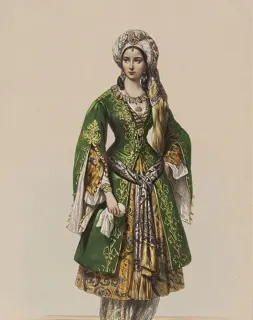
 Bajazetby Jean RacineIn the Sultan's absence, his favourite offers his imprisoned brother the throne, if he will marry her.
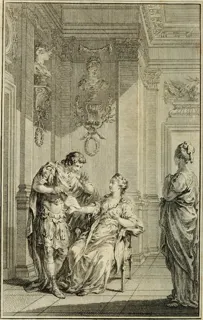 Bereniceby Jean RacineThe new emperor Titus loves the Queen of Judæa, but Rome will not have a queen.
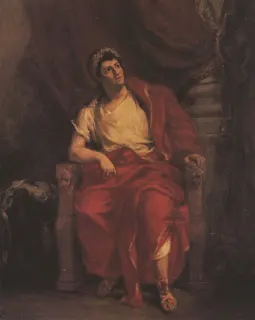 Britannicusby Jean RacineThe young emperor Nero falls for his rival's betrothed and takes his first step into murder.
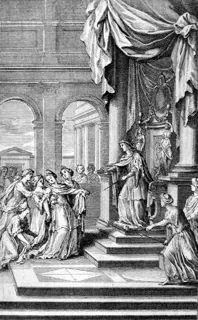 Estherby Jean RacineA Jewish queen of Persia risks her life to save her people from the king's favourite.
Act 1, Scene 1
Jehoiada and Abner
Yea, to the Temple of the Lord I come,
To worship with the solemn rites of old,
To celebrate with thee the famous day
When from the holy mount our Law was giv'n.
How times are changed! Soon as the sacred trump
With joyous blast announced this day's return,
The Temple porticoes, with garlands gay,
Could not contain the crowds of the devout;
Before the altar they in order due,
Bringing the earliest harvest of their fields,
Offered those firstfruits to the Lord of all;
Nor were there priests enough for sacrifice.
A woman's will has dared to check these throngs,
And turn'd the day's bright glory into gloom.
Scarce dare a few most zealous worshippers
Recall for us some shadow of the past;
The rest are all forgetful of their God,
Or, e'en to Baal's altars flocking now,
In shameful orgies learn to bear their part,
And curse the Name on which their fathers call'd.
My soul is troubled,—naught will I conceal—
Lest Athaliah visit upon thee
Her vengeance, spurn all remnant of respect,
And tear thee from the altar of the Lord.
Whence comes to thee this presage dark to-day?
Holy and righteous, how canst thou escape?
Long has she hated that rare constancy
Which adds new brilliance to thy mitred brow;
Long has she treated thy religious zeal
As obstinate sedition and revolt.
The shining virtues of thy faithful spouse
Have earned the special hatred of the Queen.
If Aaron's priesthood has devolved on thee,
Thy wife is sister to our latest king.
Mattan moreover, that apostate priest,
His foul desertion from our altars crowns
With eager persecution of all good,
And, worse than Athaliah, spurs her on.
'Tis not enough that in a foreign garb
The Levite serves at Baal's altar now,
This Temple is to him a sore offence,
And he would fain destroy the God he left.
No means he leaves untried to ruin thee,
And undermines with praise no less than blame.
He feigns for thee a treacherous kindliness,
Masking the blackness of his venom thus.
Sometimes he prompts the Queen to dread thy power,
And sometimes, looking to her lust for gold,
Pretends that somewhere known to thee alone,
Thou hidest treasures David had amass'd.
For two days past the proud imperious Queen
Has seem'd as though consumed by baffled spite.
I saw her yesterday with furious eyes
Glare at this sacred place, and mark'd her well,
As if within the Temple's deep recess
Lurk'd God's avenger arm'd to punish her.
The more I think thereon, the less I doubt
On thee her wrath is ready now to burst,
And that, with all her mother's thirst for blood,
E'en in His shrine she will defy our God.
He who enchains the fury of the waves
Knows how to curb the plots of wicked men.
Submitting humbly to His holy will,
I fear my God, and know no other fear.
And yet, I thank thee, Abner, for thy zeal
That o'er my peril keeps a watchful eye.
I see injustice chafes thine inmost heart,
Thou art a faithful son of Israel still.
For that may Heaven be bless'd! But secret wrath
And passive worth, art thou content with these?
Is faith sincere, if it declines to act?
An impious foreigner for eight long years
Has David's throne usurp'd, with all its rights,
Unpunish'd waded in our princes' blood,
Foul murderess of the children of her son,
And e'en against our God has raised her arm.
And thou, a pillar of this trembling state,
Bred in the camp of good Jehoshaphat,
Under his son Jehoram in command,
On whom alone our towns in terror lean'd
When Ahaziah's unexpected death
Scatter'd his armies before Jehu's face,
Say'st thou—"I fear the Lord and own His truth!"
Lo, by my mouth to thee the Lord replies,—
"What boots it that thou boast zeal for My Law?
Thinkest to honour Me by barren vows?
What fruit have I of all thy sacrifice?
Need I the blood of heifers and of goats?
Thy princes' blood cries out, and is not heard.
Break, break all compact with impiety,
Root up the crimes amidst My people rife,
And come and sacrifice thy victims then."
What can I do? The people have lost heart,
Judah is cow'd, and Benjamin is weak;
The day that saw their royal line extinct
Extinguish'd all their ancient valour too.
The Lord Himself, they say, withdraws from us,
Tho' once so jealous of His people's praise;
He sees unmoved their majesty abased,
And His compassion is at last worn out.
No more for us His mighty arm outstretch'd
With countless marvels terrifies our foes;
His Ark is dumb,—utters no oracle.
Yet when did miracles abound as now?
When by more signs has God display'd His power?
Will ye have always eyes that cannot see,
Ungrateful people? Shall His mightiest deeds
Strike on your ears, nor ever move your hearts?
Say, my dear Abner, must I needs repeat
The wonders brought to pass in these our days;
The signal fall of Israel's tyrant kings,
And God found faithful to perform His threats;
Ahab destroy'd, and with his blood defiled
The plot of land which murder had usurp'd;
Hard by that fatal field Jezebel slain,
A Queen down trampled under horse's hoofs,
The dogs that lick'd up her inhuman blood,
The mangled limbs of her dishonour'd corpse;
The troop of lying prophets brought to shame,
The fire from heav'n that on the altar fell;
Elijah's voice ruling the elements,
The skies thereby shut up, the earth like brass,
For three whole years left without rain or dew;
The dead arising at Elisha's word?
Recall, O Abner, these portentous signs,
God is to-day as He has always been,
He can unfold His glory when He will,
And ever in His mind His people dwell.
But where the promises so often made
To David and to Solomon his son?
Alas! We hoped that from their fruitful stock
Kings were to issue in a numerous train;
That over every nation, tribe, and tongue
One of their lineage should extend his sway,
Should everywhere make war and strife to cease,
And at his footstool see earth's proudest kings.
And why distrust the promises of Heaven?
That son of David, where shall he be found?
Can Heav'n itself restore the living sap
Of that dry tree, now wither'd at the root?
E'en in his cradle Athaliah slew
The babe, and eight years after can he live?
Ah! might it be her fury miss'd its aim,
That of our royal blood some drop escaped—
What would'st thou do?
O happy day for me!
How gladly would I go to meet my king!
Doubt not that to his feet our eager tribes,—
But wherefore mock me with these idle dreams?
Ill-fated heir of our victorious kings,
We had but Ahaziah, with his sons;
By Jehu's darts I saw the father slain,
And thou his sons by his own mother murder'd.
I cannot now explain; but when the sun
Shall the third portion of his course complete,
Bringing the morning hour that bids to prayer,
Hither return and with the self-same zeal.
Then God may prove to thee by gracious deeds
His word is faithful still, and never fails.
So, for this solemn day I must prepare
And dawn already gilds the temple roof.
What gracious deed is this, to me unknown?
Tow'rd thee Jehosheba directs her steps;
I leave thee, and will join the faithful band
Brought hither by this solemn festival.
Act 1, Scene 2
Jehoiada and Jehosheba
Princess, the time is come for us to speak,
Thy happy theft can be no longer hid.
The insults of the enemies of God,
Abusing this our silence, have too long
Charged with unfaithfulness His promises.
Nay more; success has animated rage,
And Athaliah would to Baal burn,
E'en in God's courts, incense idolatrous.
Rear'd in His Temple 'neath th' Almighty's wing,
'Tis ours to show the King thine hands have saved.
He'll prove himself courageous as his sires,
Already in his wit beyond his age.
Ere I unfold his wondrous destiny,
I offer him to God by Whom kings reign;
Then, gathering straight our Levites and our priests,
I will proclaim their masters' long lost heir.
Knows he his name and noble fortune yet?
He owns no other than Eliakim,
And thinks himself some foundling left to die,
Whom I in pity treated as my son.
Ah! from what perils I deliver'd him!
What danger is he now to meet once more!
What! Fails thy faith already in alarm?
My lord, I yield me to thy counsels wise.
Since first I snatch'd this precious babe from death,
I placed his welfare in thy careful hands;
Yea, dreading e'en the fervour of my love,
I shun his presence where and when I can,
For fear lest my unguarded heart betray
My secret with the tears I cannot check.
Three days and nights I thought that duty bade
Devote to weeping and impassion'd prayer.
Yet may it be allow'd me now to ask,
What friends thou hast ready to take thy side?
Abner, brave Abner, will he lend his aid?
Say, has he sworn to stand beside his King?
Abner, though on his faith we may rely,
Knows not as yet that any King is ours.
Who is to guard young Joash? Wilt thou trust
Obed or Amnon with so high a charge?
My father's kindness they have often proved,—
And sold themselves to Athaliah's will.
Whom to her hirelings wilt thou then oppose?
Have I not said? Our Levites and our priests.
I know that, secretly assembled near,
Their numbers have been doubled by thy care;
That full of love for thee, horror for her,
A great oath binds them, ere the trial come,
To David's heir when he shall be reveal'd.
But though with loyal ardour they may burn,
Can they unaided vindicate their king?
Is zeal enough to cope with such a task?
Doubt not the Queen, when the first rumour spreads
Of Ahaziah's son in hiding here,
Will gather all her savage troops around,
Besiege the Temple, and break down its gates.
Against such foes will sanctity avail,
And holy hands raised to the Lord in prayer?
Their province is to intercede for guilt,
No blood but that of victims have they shed;
Joash, perchance, sore wounded in their arms,—
Countest as naught the God who fights for us?
God, who protects the orphan's innocence,
And e'en in weakness manifests His might;
God, who hates tyrants, and in Jezreel swore
He would root out Ahab and Jezebel;
Who, striking Joram, husband of their child,
And Joram's son, their family pursued;
Whose threatening arm, though for a time withheld,
Over that impious race is ever stretch'd?
Yea, 'tis His righteous sentence on them all
That makes me tremble for my brother's son.
Who knows if he, inheriting their guilt,
Was not at birth condemn'd to share their fate?
Or whether God exempts him from the curse,
And will for David's sake his pardon seal?
Ah! his sad state when Heaven gave him me
Returns each moment to alarm my soul.
With slaughter'd princes was the chamber full;
Dagger in hand, th' inexorable Queen
To bloodshed urged her barbarous soldiery,
And eagerly her murderous course pursued!
Young Joash, left for dead, there met my eyes;
I seem to see his terror-stricken nurse
Still vainly crouching at the assassin's feet,
His drooping form clasp'd to her feeble breast.
I took him stain'd with blood. Bathing his face
My copious tears restored his vanish'd sense
And, whether yet with fear or fond caress,
I felt the pressure of his tender arms.
Great God, forbid my love should be his bane,
Last relic of the faithful David now.
Bred in Thine House, and taught to love Thy Law,
He knows no other Father than Thyself.
If, ready to attack a murderous Queen,
Faith falters trembling at the danger nigh;
If flesh and blood, disquieted this day,
Have shed too many tears, alarm'd for him;
Heir of Thy holy promise, guard him well,
And for such weakness punish only me!
Thy tears, Jehosheba, no blame deserve,
But God would have us trust Him as a Father.
He visits not with blind resentment sins
Of impious ancestors on pious sons.
All that remains of faithful Israel still
Will come to-day here to renew their vows;
Deep as their reverence for David's race,
They hold abhorr'd the child of Jezebel;
Joash will move them with his modest grace,
Seeming to light anew the glorious past;
And the Lord's Voice, making our cause His own,
Will in His Temple to their hearts appeal.
Two faithless kings in turn have Him defied,
Now must a monarch to the throne be raised
Whose grateful memory shall bless the day
When God by His own priests his rights restored,
Who pluck'd him from th' oblivion of the tomb,
And David's lamp rekindled when put out.
Great God, if Thy foreknowledge sees him base,
Bent to forsake the paths that David trod,
Then let him be like fruit ere ripeness pluck'd
Or flower wither'd by a noisome blast!
But if this child, obedient to Thy will,
Is destined to advance Thy wise designs,
Now let the rightful heir the sceptre sway,
Give to my feeble hands his pow'rful foes,
And baffle in her plots a cruel Queen.
Vouchsafe, my God, on Nathan and on her
That spirit of blind foolishness to pour
Which leads deluded monarchs to their fall!
No more; fare well. Our children with them bring
Maidens, of holiest stock the hallow'd seed.
Act 1, Scene 3
[JEHOSHEBA, ZACHARIAH, SALOME, CHORUS]
Dear Zachariah, go, nor stay thy steps,
Accompany thy venerable sire.
Daughters of Levi, young and faithful band,
Whom with His zeal the Lord already fires,
Who come so often here to share my sighs,
Children, my only joy in griefs profound;
These gay festoons and coronets of flow'rs
Once well accorded with our stately feasts,
But now, alas, when shame and sorrow reign,
What offering is more fit than one of tears!
Already do I hear the solemn trump,
Soon will the Temple doors be opened wide,
While thither I myself prepare to go,
Sing, praise the God whose presence here ye seek.
Act 1, Scene 4
The Chorus
[sings] His glory fills the universe sublime,
Lift to this God for aye the voice of prayer!
He reign'd supreme before the birth of Time;
Sing of His loving care.
[alone] Vainly unrighteous force
Would still His people's praise that must have course;
His Name shall perish ne'er.
Day tells to day His pow'r, from time to time;
His glory fills the universe sublime;
Sing of His loving care.
[repeats] His glory fills the universe sublime;
Sing of His loving care.
[alone] He paints the flow'rs with all their lovely hues;
The fruit to ripeness grows,
For daily He bestows
The day's warm sunshine, and the night's cool dews,
Nor does the grateful earth t' o'erpay the debt refuse.
The sun at His command spreads joy around,
'Tis from His bounteous hand its light proceeds;
But in His Law, so pure, so holy found,
We hail His richest gift to meet our needs.
Oh! mount of Sinai, let the memory stay
Of that for ever great and famous day,
When on thy flaming head,
In clouds conceal'd, the Lord reveal'd
To mortal eyes a ray from His own glory shed.
Tell us, why glow'd those lightning fires up there,
Why roll'd the smoke, why peal'd in troubled air
Thunder and trumpet's blare?
Came He that, back to primal Chaos hurl'd,
On its foundations of past ages whirl'd,
Came He to shake the world?
He came that He to Israel might reveal
Th' immortal lustre of His holy Law;
He came that to their hearts He might appeal,
To claim their lasting love, based upon reverent awe.
O Law divine and full of grace!
Justice and goodness all supreme!
What reason and what joy extreme,
Our love and trust in such a God to place!
[alone] From slavery's yoke He did our fathers save,
And for their desert-food sweet manna gave;
To us He gives His Laws, all gifts above
Save of Himself; for all He only claims our love.
Justice and goodness all supreme!
For them divided He the waters of the sea,
From the dry rock He made the torrent stream;
To us He gives His Laws, all gifts above
Save of Himself, for all He only claims our love.
O Law divine and full of grace!
What reason, and what joy extreme,
Our love and trust in such a God to place!
[alone] You who can only know a servile fear,
Whose thankless souls God's goodness fails to move;
Does it to you so hard a task appear,
So difficult to love?
Slaves dread the tyrant's lash that makes them smart,
But children feel a love that binds the heart;
To share God's lavish bounty you are fain,
But not to love again!
O Law divine and full of grace!
Justice and goodness all supreme!
What reason and what joy extreme,
Our love and trust in such a God to place!
Act 2, Scene 1
[JEHOSHEBA, SALOME, CHORUS]
Maidens, it is enough; your songs must cease;
'Tis time for us to join the public prayers.
The hour is come to celebrate the feast,
And in our turn before the Lord appear.
Act 2, Scene 2
[JEHOSHEBA, ZACHARIAH SALOME AND CHORUS]
What do I see? My son, what brings thee back?
So pale and breathless, whither dost thou run?
Mother!
Speak, then!
The Temple is profaned!
What?
And the altar of the Lord forsaken!
I tremble. Quickly tell thy mother all.
My father, the High Priest, with all due rites
Presented to the Lord, Who feeds mankind,
The first loaves of the harvest we have reap'd,
And then, while offering with blood-stain'd hands
The smoking inwards of the victims slain;
And, standing by his side, Eliakim
Help'd me to serve him, clad in linen stole;
While with the blood of sacrifice the priests
Sprinkled the altar and the worshippers;
There rose a tumult, and the people turn'd,
Sudden astonishment in every eye.
A woman—is to name her blasphemy?—
A woman—it was Athaliah's self.
Great Heav'n!
Within the court reserved for men
This woman enters with uplifted brow,
Yea, and attempts to pass the limit set,
Where none but Levites have a right to come.
The people fly, all scatter'd in dismay;
My father—ah, what wrath blazed from his eyes!
Moses to Pharaoh seem'd less terrible,—
"Go, Queen," my father said, "and leave this place,
Bann'd to thy sex and thine impiety!
Comest to brave the majesty of God?"
And then the Queen, fiercely confronting him,
Seem'd as in act to utter blasphemies;
I know not if the Angel of the Lord
Appear'd before her with a glittering sword,
But straight her tongue seem'd frozen in her mouth,
And all her boldness utterly abash'd;
She could not move her eyes, in terror fix'd
And strange surprise on young Eliakim.
What! Did he stand there in her very sight?
We both stood gazing on that cruel Queen,
Stricken with equal horror at our hearts;
But soon the priests encompass'd us around,
And forced us to withdraw. I came to thee,
To tell the outrage done; I know no more.
Ah! she would doubtless tear him from our arms,
E'en at God's altar hunting for her prey.
Perchance, ere now, this child of many tears—
Oh God, remember David, see and save!
Who is he, thus to cause your tears to flow?
Why should his life be threaten'd? Can it be?
What can the boy have done to enrage the Queen?
What fear they from a helpless orphan child?
She comes! She must not see us, let us go.
Act 2, Scene 3
[ATHALIAH, ABNER, HAGAR, ATTENDANTS OF ATHALIAH]
Madam, why stay in such a place as this,
Where every sight offends and wounds thine eye?
Leave to the priests this temple where they dwell;
Fly from this scene of tumult; and within
Thy palace, lull each troubled sense to rest.
I cannot. Thou dost see me vex'd and weak.
Go thou, send word to Mattan that he come
With haste: oh! happy still, if by his aid
I find that peace I seek, and seek in vain!
She seats herself
Act 2, Scene 4
[ATHALIAH, ABNER, ATTENDANTS OF ATHALIAH]
Madam, forgive me if I dare defend him,
His zeal should not surprise you. For the God,
Whom we adore, Himself ordain'd it so,
And gave us charge to guard his altar well;
The work of sacrifice to Aaron's sons,
And to the Levites place and task assign'd;
To their descendants strictly He forbade
All fellowship with other deities.
Art thou the wife and mother of our kings,
A stranger to our customs on this point?
Dost thou not know our laws? And must to-day—
But Mattan comes: with him I leave thee now.
We need thy presence, Abner. Let it pass,
Jehoiada's presumptuous insolence,
With all that heap of superstitions vain
Which bid you keep your Temple to yourselves:
A subject far more urgent wakes alarm.
I know that from a child, rear'd in the camp,
Abner is generous, knowing how to pay
Alike to God and King the debt he owes.
Remain.
Act 2, Scene 5
[ATHALIAH, ABNER, MATTAN, ATTENDANTS OF ATHALIAH]
Great Queen, is this a place for thee?
What trouble stirs, what terror chills thine heart?
What dost thou in the midst of enemies?
Darest thou this unhallowed fane approach?
Hast thou that bitter hatred cast away—
Both of you lend me an attentive ear.
I do not wish now to recall the past,
Nor give account to you for blood I shed.
A sense of duty prompted all my acts.
Nor will I take for judge a hasty crowd;
Whate'er they may presume to spread abroad,
My vindication Heav'n has made its care.
My pow'r, establish'd on renown'd success,
Has magnified my name from sea to sea;
Jerusalem enjoys profoundest peace;
The wandering Arab Jordan sees no more
Ravage his borders with continual raids;
Nor boasts Philistia over Judah now,
And Syria owns me for a sister Queen.
Lastly the traitor, who destroy'd my House,
And e'en to me thought to extend his rage,
Jehu, fierce Jehu, in Samaria quails
Before a mighty rival's rapid strokes,
Whom I incited to attack my foe;
And thus th' assassin leaves me mistress here,
To reap the fruits of policy in peace.
But for some days a gnawing care has come,
To check the flood of my prosperity.
A dream [why should a dream disquiet me?]
Preys on my heart, and keeps it ill at ease;
I try to banish it; it haunts me still.
'Twas deepest night, when horror falls on man,
My mother Jezebel before me stood,
Richly attired as on the day she died,
Her pride undaunted by misfortune's touch.
That borrow'd brightness still her features wore,
Which she would paint upon her wither'd face,
To hide the ravages of ruthless age:
"Tremble," she said, "child worthy of myself;
O'er thee too triumphs Judah's cruel god,
And thou must fall into his dreadful hands,
Whereat I grieve." With these alarming words,
Her spectre o'er my bed appear'd to bend;
I stretch'd my hands to clasp her; but I found
Only a hideous mass of flesh and bones,
Horribly bruised and mangled, dragg'd thro' mire,
Bleeding and torn, whose limbs the dogs of prey
Were growling over with devouring greed.
Great God!
While thus disturb'd, before me rose
The vision of a boy in shining robe,
Such as the Hebrew priests are wont to wear.
My drooping spirits at his sight revived:
But while my troubled eyes, to peace restored,
Admired his noble air and modest grace,
I felt the sudden stroke of murderous steel
Plunged deeply by the traitor in my breast.
Perhaps to you this dream, so strangely mix'd,
May seem a work of chance, and I myself,
For long ashamed to let my fears prevail,
Referr'd it to a melancholy mood;
But while its memory linger'd in my soul,
Twice in my sleep I saw that form again,
Twice the same child before my eyes appear'd,
Always about to stab me to the heart.
Worn out at last by horror's close pursuit,
I went to claim Baal's protecting care,
And, kneeling at his altars, find repose.
How strangely fear may sway our mortal minds!
And instinct seem'd to drive me to these courts,
To pacify the god whom Jews adore;
I thought that offerings might appease his wrath,
That this their god might grow more merciful.
Baal's High Priest, my feebleness forgive!
I enter'd; and the sacrifice was stay'd,
The people fled, Jehoiada in wrath
Advanced to meet me. As he spake, I saw
With terror and surprise that self-same boy
Who haunts me in my dreams. I saw him there;
His mien the same, the same his linen stole,
His gait, his eyes, each feature of his face;
It was himself; beside th' High Priest he walk'd,
Till quickly they removed him from my sight.
That is the trouble which detains me here,
And thereon would I fain consult you both.
Mattan, what means this omen marvellous?
Coincidence so strange fills me with dread.
But, Abner, hast thou seen this fatal child?
Who is he? What his family, his tribe?
Two children at the altar lend their aid,
One is the High Priest's son, the other is
To me unknown.
Why hesitate to act?
Your Majesty must needs secure them both.
'Tis known how I regard Jehoiada,
Seeking no vengeance for my private wrongs,
In all my warnings studying to be fair;
But, after all, were this indeed his son,
Would he one moment let the guilty live?
Of what crime can a child be capable?
Heav'n show'd him with a dagger in his hand;
And Heav'n is just and wise, nor works in vain.
What more dost want?
But, trusting to a dream
Say, would'st thou have us bathe in infant blood?
Ye know not yet his father nor his name.
Enough for fear! I have considered all.
If from illustrious parentage he springs,
His ruin should be hasten'd by his rank;
If fate has placed him in a lot obscure,
What matters it if worthless blood be spilt?
Must kings keep pace when justice lags behind?
On promptitude their safety oft depends;
No irksome scruples need their freedom check;
To be suspected is all one with guilt.
Mattan! Is this the language of a priest?
Nursed in the lap of war, in carnage reared,
Stern agent of the vengeful wrath of Kings,
'Tis I who now must urge misfortune's plea!
And thou, who owest him a father's love,
A minister of peace in times of wrath,
Cloaking resentment with pretended zeal
Dost chafe that blood should flow so tardily!
Thou badest me, Madam, speak my honest thought:
What, then, is this that moves thy fear so much?
A dream, a feeble child, whom, it may be
Too readily thy fancy recognised.
Abner, I will admit I may be wrong,
Heeding too much, perchance, an idle dream.
More closely then must I behold that child,
And at my leisure scan his features well.
Let both the boys be brought before me now.
I fear—
What! Can they fail to grant me this?
What reason could they have to say me no?
'Twould rouse suspicion. Bid Jehosheba,
Or else her husband bring the children here;
I can at pleasure use a monarch's tone.
Abner, I tell thee candidly, your priests
Have cause to bless my kindness hitherto;
I know how far they freely have discuss'd
My conduct, and abused my sovereign power;
And yet they live, and yet their temple stands.
But soon, I feel, the limit may be pass'd
Jehoiada must curb his savage zeal,
And not provoke my wrath a second time.
Go.
Act 2, Scene 6
[ATHALIAH, MATTAN, ATTENDANTS OF ATHALIAH]
I may now at last in freedom speak,
And clearly set the truth before thine eyes.
A growing monster in this temple lurks;
A tempest threatens, wait not till it breaks.
Ere daylight Abner with th' High Priest conferr'd;
Thou knowest well his love for David's line.
What if Jehoiada should in their ranks
Foist this young child with whom Heav'n threatens thee,
His son or not—
Thou hast unseal'd mine eyes,
And Heaven's warning vision grows distinct.
But I would fain be free from every doubt:
Children will readily betray their thoughts,
One word will oft disclose some deep design.
Let me, dear Mattan, see him, question him.
Go thou, meanwhile, and secret orders give
That all my Tyrians quickly arm themselves.
Act 2, Scene 7
[JOASH, ATHALIAH, JEHOSHEBA, ZACHARIAH, ABNER, SALOME, TWO LEVITES, CHORUS, ATTENDANTS OF ATHALIAH]
[to the two Levites] Keep constant watch, ye servants of the Lord,
Over these children, precious and beloved.
[to Jehosheba] Take courage, Princess; they shall be my charge.
Heav'ns! the more closely I examine him,—
'Tis he! And horror seizes me again.
pointing to Joash
Wife of Jehoiada, is this thy son?
He, Madam?
He.
His mother? No, not I.
pointing to Zachariah
There is my son.
[to Joash] Who is thy father, child?
Answer, thyself.
Heav'n till this very day—
Why in such haste to answer for the boy?
It is for him to speak.
From one so young
What revelation canst thou hope to gain?
The young are innocent; and simple truth
Their honest frankness knows not to disguise:
Let him explain all that concerns himself.
[aside] Great God, put now Thy wisdom in his mouth!
What is thy name?
My name's Eliakim.
Thy father?
Fatherless, they say, I am,
Cast since my birth upon the arms of God;
I never knew my parents, who they were.
Hast thou no parents?
They abandon'd me.
How? and how long ago?
When I was born.
Where is thy home? This can at least be told.
This Temple is my home; none else I know.
Where wast thou found? Hast thou been told of that?
'Midst cruel wolves, ready to eat me up.
Who placed thee in this temple?
One unknown,
She gave no name, nor was she seen again.
Whose guardian hands preserved thine infant years?
When did God e'er neglect His children's needs?
The feather'd nestlings He provides with food,
And o'er all nature spreads His bounty wide.
Daily I pray; and with a Father's care
He feeds me from the sacred offerings.
New wonder comes to trouble and perplex!
The sweetness of his voice, his infant grace
Unconsciously make enmity give way
To—can it be compassion that I feel!
Madam, is this thy dreaded enemy?
'Tis evident thy dreams have played thee false;
Unless thy pity, which now seems to vex,
Should be the fatal blow that terrified.
[to Joash and Jehosheba] Why are ye leaving?
Thou hast heard his tale:
His presence longer might be troublesome.
[to Joash] Nay, child, come back. What dost thou all the day?
I worship God, and hear His Law explain'd;
His holy volume I am taught to read,
And now to write it has my hand begun.
What says that Law?
That God requires our love,
Avenges, soon or late, His Name blasphemed,
Is the protector of the fatherless,
Resists the proud, the murderer punishes.
I understand. But all within these walls,
How are they occupied?
In praising God.
Does God claim constant service here and prayer?
All else is banish'd from His holy courts.
What pleasures hast thou?
Where God's altar stands,
I sometimes help th' High Priest to offer salt
Or incense, hear His lofty praises sung,
And see His stately ritual perform'd.
What! Hast thou pastime none more sweet than that?
Sad lot for one so young; but come with me,
And see my palace and my splendour there.
God's goodness then would from my memory fade.
I would not force thee to forget Him, child.
Thou dost not pray to Him.
But thou shalt pray.
There I should hear another's name invoked.
I serve my god: and thou shalt worship thine.
There are two powerful gods.
Thou must fear mine;
He only is the Lord, and thine is naught.
Pleasures untold will I provide for thee.
The happiness of sinners melts away.
Of sinners, who are they?
Madam, excuse
A child—
I like to see how ye have taught him;
And thou hast pleased me well, Eliakim,
Being, and that past doubt, no common child.
See thou, I am a queen, and have no heir;
Forsake this humble service, doff this garb,
And I will let thee share in all my wealth;
Make trial of my promise from this day;
Beside me at my table, everywhere,
Thou shalt receive the treatment of a son.
A son!
Yes, speak.
And such a Father leave
For—
Well, what?
Such a mother as thyself!
[to Jehosheba] His memory is good; in all he says
I recognise the lessons ye have given.
Yes, this is how, corrupting guileless youth,
Ye both improve the freedom ye enjoy,
Inciting them to hatred and wild rage,
Until they shudder but to hear my name.
Can our misfortunes be conceal'd from them?
All the world knows them; are they not thy boast?
Yea; with just wrath, that I am proud to own,
My parents on my offspring I avenged.
Could I see sire and brother massacred,
My mother from the palace roof cast down,
And the same day beheaded all at once
[Oh, horror!] fourscore princes of the blood;
And all to avenge a pack of prophets slain,
Whose dangerous frenzies Jezebel had curb'd.
Have queens no heart, daughters no filial love,
That I should act the coward and the slave,
Too pitiful to cope with savages,
By rendering death for death, and blow for blow?
David's posterity from me received
Treatment no worse than had my father's sons!
Where should I be to-day, had I not quell'd
All weakness and a mother's tenderness,
Had not this hand of mine like water shed
My own heart's blood, and boldly check'd your plots?
Your god has vow'd implacable revenge;
Snapt is the link between thine house and mine,
David and all his offspring I abhor,
Tho' born of mine own blood I own them not.
Thy plans have prospered. Let God see, and judge!
Your god, forsooth, your only refuge left,
What will become of his predictions now?
Let him present you with that promised King,
That Son of David, waited for so long,—
We meet again. Farewell. I go content:
I wished to see, and I have seen.
[to Jehosheba] The trust
I undertook to keep, I thus resign.
Act 2, Scene 8
[JOASH, JEHOSHEBA, ZACHARIAH, SALOME, JEHOIADA, ABNER, LEVITES, THE CHORUS]
[to Jehoiada] My lord, did'st hear the Queen's presumptuous words?
I heard them all, and felt for thee the while.
These Levites were with me ready to aid
Or perish with you, such was our resolve.
To Joash, embracing him
May God watch o'er thee, child, whose courage bore,
Just now, such noble witness to His Name.
Thy service, Abner, has been well discharged:
I shall expect thee at th' appointed hour.
I must return, this impious murderess
Has stain'd my vision, and disturb'd my prayers;
The very pavement that her feet have trod
My hands shall sprinkle o'er with cleansing blood.
Act 2, Scene 9
Chorus
What star has burst upon our eyes?
What shall this wondrous child become one day?
Vain pomp and show he dares despise,
Nor lets those charms, where danger lies,
Lead his young feet from God astray.
While all to Baal's altar flock,
And for the Queen their faith disown,
A child proclaims that Israel's Rock
Is the eternal God alone,
And though this Jezebel may mock,
Elijah's spirit he has shown.
Who will the secret of thy birth explain?
Dear child, some holy prophet lives in thee again!
Thus grew the gentle Samuel of yore,
Beneath the shadow of God's dwelling-place;
And he became the hope of Israel's race,
To guide and comfort; this be thou and more!
Oh! blest beyond compare,
The child who knows His love,
Who early hears His voice, and keeps with care
The teaching he receives from God above!
Far severed from the world, from birth endued
With all the gifts of Heaven,
No evil influence has imbued
His innocence with sin's infectious leaven.
A happy youth he spends,
Whom the Lord teaches, whom the Lord defends!
[alone] As in sequester'd vale,
Where a clear streamlet flows,
Shelter'd from every stormy gale
Darling of Nature, some young lily grows.
Far severed from the world, from birth endued
With all the gifts of Heaven,
No evil influence has imbued
His innocence with sin's infectious leaven.
Blest more than tongue can tell,
The child whom God inclines to keep His statutes well!
[alone] With faltering steps doth dawning Virtue tread
'Mid countless perils that beset the way;
What hindrances and snares for him are spread
Who seeks Thee, Lord, and fears from innocence to stray!
Where can Thy saints a shelter find,
With foes in front and foes behind?
Sinners fill all the earth, my God, look where we may.
Palace and City, David loved so well,
O Mount, where God Himself long deigned to dwell,
What has thy crime that draws down vengeance been?
What sayest thou, dear Zion, to behold,
Seated where sat thy kings from days of old,
An impious foreign Queen?
What sayest thou, dear Zion, to behold
An impious foreign Queen,
Seated where sat thy kings from days of old?
[continues] Where once the Lord was bless'd,
Father and God confess'd,
Where David's holy strains so sweet had been,
What sayest thou, dear Zion, to behold
Cursing the Name thy kings adored of old,
Praising her own false gods, an impious foreign Queen?
[alone] How often, Lord, how often yet shall we
Against Thee rising up the wicked see?
They with unhallow'd feet Thy courts defile,
And all who worship Thee as fools revile.
How often, Lord, how often yet shall we
Against Thee rising up the wicked see?
Ah, what avails, say they, this virtue stern,
That from sweet Pleasures voice
Morosely bids you turn?
Your God does naught for you to justify your choice.
Where Pleasure leads, laughter and song be ours
Thus speak those impious throngs:
Care for the future to dull fools belongs,
To passion give the reins, cull the sweet flow'rs;
Too quickly at the best years take their flight,
Who knows if he shall see to-morrow's light?
Let us to-day enjoy life's fragrant bowers!
Let tears and terrors, Lord, their portion be,
These outcast wretches, who shall never see
Thy holy city with eternal glory crown'd;
Be ours, on whom Thy beams immortal shine,
To hymn Thy gifts divine,
Be ours with voice of praise Thy majesty to sound!
[alone] Of all their false delights what will remain
To souls absorb'd therein? As visions vain,
That vanish with the dawning day,
When they awaken with dismay!
While for the poor Thy table shall be spread,
Deep shall they drain the cup of judgment dread
That Thou shalt offer to all such as they,
When Mercy's hour has fled.
Oh, wakening of dismay
From dream too quickly sped,
From error's dangerous sway!
Act 3, Scene 1
[MATTAN, NABAL, THE CHORUS]
Go, damsels: let Jehosheba be told
That Mattan would in private speak with her.
Mattan! May God in Heav'n confound his plots!
They all disperse in flight without reply!
Let us draw near.
Act 3, Scene 2
[ZACHARIAH, MATTAN, NABAL]
Rash man, where would'st thou go?
Beware thou do not step beyond this spot;
This is a dwelling sacred to the priests;
Our laws forbid all common entrance here.
Whom seekest thou? This solemn day, my sire
Shuns contact with impure idolatry,
And prostrate now before Jehovah's shrine,
My mother will not have her pray'r disturb'd.
My son, be not distress'd, we will wait here.
To your illustrious mother I would speak;
I come charged with a message from the Queen.
Act 3, Scene 3
[MATTAN, NABAL]
Their very children ape their insolence!
But what means Athaliah now to do?
Whence springs this indecision in her plans?
This morn, rebuff'd by that presumptuous priest,
When dreams had warn'd of danger from a child,
Her mind was to destroy Jehoiada,
And in this temple Baal's altar place,
With thee to serve him; in thy joy I shared,
Hoping to gain my part in the rich spoil.
What made her change her fickle purpose thus?
She has not been herself these two days past.
No more is she the bold, clear sighted Queen,
With spirit raised above her timid sex,
Whose rapid action overwhelm'd her foes,
Who knew the value of an instant lost:
Fear and remorse disturb that lofty soul;
She wavers, falters, all the woman now.
Not long ago I fill'd with bitter wrath
Her heart already moved by threats from Heav'n,
And she, intrusting vengeance to my care,
Bade me assemble all her guard in haste;
But whether that young child, before her brought,
[A poor, unhappy foundling, as they say,]
Assuaged the terror that her dream had caused,
Or seeing in the boy some secret charm,
I find her shaken in her dire resolve,
Postponing vengeance to some future day;
And fatal strife in all her counsels reigns.
"I have inquired," said I, "about that child,
And hear strange boasts of royal ancestry,
How to the malcontents, from time to time,
The High Priest shows him, bids the Jews expect
In him a second Moses, and supports
His speech with lying oracles." These words
Made her brow flush. Swiftly the falsehood work'd.
"Is it for me," she said, "to pine in doubt?
Let us be rid of this perplexity.
Convey my sentence to Jehosheba:
Soon shall the fire be kindled, and the sword
Deal slaughter, soon their Temple shall be razed,
Unless, as hostage for their loyalty,
They yield this child to me."
For one unknown,
Whom chance, may be, has thrown into their arms,
Will they behold their Temple buried low—
Ah! but no mortals have such pride as they.
Rather than to my hands resign a child,
Whom to his God Jehoiada has vow'd,
He will endure to die the worst of deaths,
Besides, they manifestly love this child,
And, if I construe right the Queen's account,
Jehoiada knows more than he will say
Touching his birth. Refusal I foresee,
In any case, with fatal consequence,
The rest be my concern; with fire and sword
To wipe this odious Temple from my eyes
Is my last hope.
What prompts so fierce a hate?
Is it consuming zeal for Baal's cause?
Myself a child of Ishmael, as thou knowest,
I worship neither thine, nor Israel's god.
Dost think, my friend, that any senseless zeal
For a dumb idol could my judgment blind,—
A perishable log, that worms destroy
In spite of all my efforts, day by day?
From birth devoted to the God, who here
Is worshipp'd, Mattan still might be his priest,
If but the love of grandeur, thirst for pow'r,
Could be consistent with his stringent yoke.
Nabal, I hardly need to thee recall
The quarrel 'tween Jehoiada and me,
When against him I dared the censer claim;
They made some stir, my struggle, tears, despair.
Vanquish'd, I enter'd on a new career,
And bound me, soul and body, to the Court.
By slow degrees I gain'd the ear of kings,
And soon my voice was deem'd oracular.
Their hearts I studied, flatter'd each caprice,
And sprinkled flow'rs for them on danger's brink.
Nothing to me was sacred that they craved,
Measure and weight I alter'd as they will'd.
As often as Jehoiada's blunt speech
Boldly offended their fastidious ears,
So often I had pow'r and skill to charm;
Concealing from their eyes unpleasant truths,
Gilding their savage passion with fair tints.
And lavish more than all of human blood.
At length was raised by Athaliah's hands
A temple to the god she introduced.
Jerusalem with tears the outrage saw;
The sons of Levi, stricken with alarm,
Appeal'd to Heaven with indignant cries.
I only, leading cowards in my train,
Deserter from their Law, that act approved,
And Baal's priesthood thereby merited.
Thus made my rival's formidable foe,
I donn'd the mitre; march'd along, his peer.
Still, I confess, e'en at my glory's height,
Harass'd by memories of the God I left,
Some fear remain'd to discompose my soul,
And this it is that fans and feeds my rage:
Happy if, wreaking vengeance on His shrine,
I may reduce His wrath to impotence,
And amidst ruin, desolation, death,
Lose my remorse in plenitude of crime!
Here comes Jehosheba.
Act 3, Scene 4
[JEHOSHEBA, MATTAN, NABAL]
Sent by the Queen
To bring back peace, and hatred drive away,
Be not surprised that I should thee accost,
Princess, whose gentle spirit comes from Heav'n,
A rumour, which of falsehood I suspect,
Supports the warning that a dream had giv'n,
Accusing the High Priest of dangerous plots,
And raising in the Queen a storm of ire.
I wish not here to vaunt my services,
Knowing Jehoiada to me unjust;
But good for evil is a due return.
In short, I come commission'd to speak peace.
Live, keep your feasts without a shade of fear.
For your obedience she but asks a pledge,—
[My efforts to dissuade her have been vain],
This orphan, whom she says that she has seen.
Eliakim?
Whereat I feel some shame
On her account, making an idle dream
Of too much moment. But unless ye give
This child to me forthwith, her mortal foes
Ye prove yourselves. Your answer she awaits,
Impatient.
These, then, are her words of peace!
And can ye for one moment hesitate
By slight concession such a boon to gain?
Strange would it be, if Mattan, free of guile,
Could trample down th' injustice of his heart,
And, after being of all ill contriver,
Could be the author of some shade of good!
What is your grievance? Has the Queen, in rage,
Sent to tear Zachariah from your arms?
He is your son; the other why so dear?
This fondness, in my turn, surprises me.
What treasure find ye there of priceless worth?
Has Heav'n in him sent a deliverer?
Bethink you, your refusal may confirm
A secret rumour that begins to grow.
What rumour?
That illustrious is his birth,
And that thy husband hatches some grand part
For him to play.
And Mattan, by this tale
That soothes his rage—
Princess, it is for thee
To disabuse my mind. I know thou would'st,
As falsehood's ruthless foe, resign thy life
Sooner than sully thy sincerity
By the least word that is opposed to truth.
Hast thou no clue then to this mystery?
Is his birth buried in the deepest night?
Knowest thou not thyself from whom he sprang?
Whose hands they were that gave him to thy spouse?
I pause for answer; ready to believe thee.
Give glory, Princess, to the God thou servest.
Base man, it suits thee well to dare to name
A God whom thou hast taught men to blaspheme!
Can such a wretch as thou invoke His truth,
Thou on the seat of foul corruption throned,
Where falsehood reigns and spreads its poison round,
Whose lip with treachery and imposture teems!
Act 3, Scene 5
[JEHOIADA, JEHOSHEBA, MATTAN, NABAL]
Where am I? Is this Baal's priest I see?
Does David's daughter with a traitor talk,
And turn a listening ear? Dost thou not fear
That 'neath his feet should gape a gulf profound,
And flames forth issuing straight scorch and consume thee,
Or these walls crush thee falling upon him?
What would he? Why this bold effrontery?
Why comes God's foe to taint this holy air?
To rail is but to be Jehoiada!
Yet might he well, in reverence for the Queen,
Show greater prudence, and forbear to insult
The chosen envoy of her high command.
With what ill-omened tidings art thou charged?
What dreadful mission brings such messenger?
Jehosheba has heard the royal will.
Then get thee from my presence, impious wretch;
Go, and fill up the measure of thy crimes.
Soon will God make thee join the perjured crew
Of Dathan, Doeg, and Ahithophel;
The dogs He fed with fallen Jezebel,
Waiting to glut their fury upon thee,
Besiege thy door, all howling for their prey!
[in confusion] Ere the day close—which of us is to be—
'Twill soon be seen—but, Nabal, let us go.
Where dost thou stray? Is then thy sense distraught?
There lies thy way.
Act 3, Scene 6
[JEHOIADA, JEHOSHEBA]
The storm's about to burst:
The angry Queen demands Eliakim.
Already they begin to penetrate
The mystery of his birth and thy designs,
Mattan could all but tell his father's name.
Who to the traitor can have giv'n a clue?
Thine agitation may have told too much.
I have done all I could to master it:
And yet, believe me, danger presses close.
Let us reserve this child for happier times.
While still our wicked foes deliberate,
Ere they come round to tear him from our arms,
Let me, my lord, hide him a second time:
The gates stand open, and the way is free.
To wildest deserts must I carry him?
Ready am I. I know a secret path,
By which, without a chance of being seen,
Crossing the Kedron's torrent with the lad,
The wilderness I'll gain, where wept of old
David, in flight from his rebellious son,
And seeking safety from pursuit like us.
I shall fear less for him lions and bears—
But why reject Jehu's good offices?
Is not the counsel sound that I unfold?
Let us in Jehu's charge this treasure place,
And one may reach his realm this very day;
The way that leads to him is short. Nor starts
The heart of Jehu from compassion's touch;
The name of David he in honour holds.
Ah! lives there king so cruel and so hard,
Unless his mother were a Jezebel,
Who would not pity such a suppliant's cry?
Must not all monarchs make his cause their own?
What timid counsels, and how boldly urged!
Canst thou then place thy hopes in Jehu's aid?
Does God forbid all forethought and all care?
Condemns He not too blind a confidence?
Making mankind fulfil His holy ends,
Is it not God Himself arms Jehu's hands?
Jehu, whom God in His deep wisdom chose,
Jehu, on whom I see thy hopes are based,
Ungratefully forgets His benefits;
Ahab's fierce daughter he has left in peace,
And follows the vile steps of Israel's kings,
Keeps up the shrines of Egypt's bestial god,
And on high places rashly dares to burn
An incense that the Lord our God abhors.
Jehu too surely lacks the upright heart,
And clean hands, needed to promote His cause.
No, we must cling to God, and Him alone.
We must not hide but plainly show the boy,
With royal diadem around his brow;
I e'en intend to advance the appointed hour,
Ere Mattan can mature his counterplot.
Act 3, Scene 7
JEHOIADA, JEHOSHEBA, AZARIAH [followed by the CHORUS, and a number of LEVITES
Well, Azariah, is the Temple closed?
I have seen all the gates securely barr'd.
Remain there none but thou and thine allies?
Twice have I gone all round the sacred courts,
All have fled hence, nor think they of return,
Scatter'd by panic like a flock of sheep;
The holy tribe are left sole worshippers.
Never, since they escaped from Pharaoh's pow'r,
Has such dismay as this the people seized.
Faint-hearted people, born for slavery,
Bold only against God! Let us pursue
The work we have in hand. But who still keeps
These children in our midst?
Could we, my lord,
Sever ourselves from you? No strangers we
Here, in God's House, where ranged beside thee stand
Our fathers and our brothers.
If to avenge
The shame of Israel we lack Jael's pow'r,
Who pierced the temples of God's impious foe,
We may at least for Him our lives lay down;
When for His threaten'd shrine your arms shall fight,
At least our tears may to His throne appeal.
Lo, what avengers of Thy holy cause,
O Wisdom infinite,—these priests and babes!
But, Thou supporting, who can make them fall?
Thou canst, at will, recall us from our graves,
Canst wound and heal, canst kill and make alive.
They put no trust in merits of their own,
But in Thy Name, for them so oft invoked,
Thy promise to the holiest of their kings,
This Temple where Thou dost vouchsafe to dwell,
Destined to last long as the sun in heaven.
Why throbs my heart with holy ecstasy?
Is it God's Spirit thus takes hold of me,
Glows in my breast, speaks, and unseals mine eyes?
Before me spread dim distant ages rise.
Ye Levites, let your melodies conspire
To fan the flame of inspiration's fire.
[singing to the accompaniment of musical instruments] Lord, be Thy voice to our dull ears conveyed,
Thy holy message to our hearts be borne,
As to the tender blade
Comes, in the spring, the freshness of the morn!
Ye heavens hear my voice; thou earth give ear:
That the Lord sleeps, no more let Israel fear:
The Lord awakes! Ye sinners, disappear!
The music begins again, and Jehoiada immediately resumes
How has pure gold changed into worthless lead?
What Pontiff's blood is at the altar shed?
Weep, Salem; faithless city, weep in vain!
Thy murderous hands have God's own prophets slain:
Therefore His love for thee hath banish'd been,
Thine incense is to Him a smoke unclean.
Oh, whither are these tender captives led?
The Lord the queen of cities hath discrown'd,
Cast off her kings, her priests in fetters bound;
Within her streets no festal throngs are found:
The Temple falls! high leap the flames with cedar fed!
Jerusalem, sad spectacle of woe,
How in one day thy beauty disappears!
Would that mine eyes might be a fount of tears,
To weep thine overthrow!
Oh, holy shrine!
Oh, David!
Lord, restore.
Favour to Thine own Zion, as of yore!
The music begins again, and Jehoiada, a moment afterwards, breaks in upon it
What new Jerusalem is this draws nigh,
With beams of light that from the desert shine?
She bears upon her brow a mark divine:
Ye peoples, raise your joyous song on high!
Zion is born anew, far fairer to the eye.
From every side a gathering crowd I view,
Children that thine own bosom never knew;
Jerusalem arise, lift up thine head!
Thy glory fills with wonder all these kings,
Each monarch of the earth his homage brings,
Her mightiest kiss the dust where thou dost tread;
All press to hail the light around thee shed.
Blessèd be he whose soul with ardour glows
To see fair Zion rise!
Drop down your dews, ye skies,
And let the earth her Saviour now disclose!
Ah, whence may we expect a gift so rare,
If those, from whom that Saviour is to spring,—
Prepare, Jehosheba, the royal crown,
Which David wore upon his sacred brow:
To the Levites
And ye, to arm yourselves, come, follow me
Where are kept hidden, far from eyes profane,
That dread array of lances, and of swords,
Which once were drench'd with proud Philistia's blood,
And conquering David, full of years and fame,
Devoted to the Lord who shelter'd him.
Can we employ them for a nobler use?
Come; and I will myself distribute them.
Act 3, Scene 8
[SALOME, THE CHORUS]
What fearful scenes, my sisters, must we see!
These arms, great God, strange sacrifice portend:
What incense, what firstfruits do they intend
To offer on Thine altar unto Thee?
What sight is this to meet our timid eyes!
Who would have thought that we should e'er behold
Forests of spears arise,
And swords flash forth, where Peace has dwelt from days of old?
How comes it that, when danger is at hand,
Our city shows such dull indifference?
How comes it, sisters, that for our defence
E'en valiant Abner leads no succouring band?
Ah! In a Court that owns no other laws
Than force and violence,
Who would embrace the inauspicious cause
Of youthful innocence?
Baseness and blind submission there provide
High honours that to virtue are denied.
When danger and disorder grimly frown,
For whom thus bring they forth the consecrated crown?
The Lord hath deign'd to speak
But vainly do we seek
His prophet's utterance to comprehend.
Arms He destructions upon us to wreak?
Or arms He to defend?
[sings] Promise and threat! What may this mystery be?
What evil and what good in turn foretold!
How with such anger can such love agree?
Who shall the clue unfold?
[alone] Zion shall perish in devouring flame
And all her beauty shall be overthrown.
Zion's defence is in Jehovah's Name,
His deathless word her sure foundation stone.
I see her glory sink before mine eyes!
The spreading radiance of her light I see!
Plunged in the deepest gulf of misery!
Zion uplifts her forehead to the skies!
What ruin!
Endless life to her belongs!
What cries of pain!
Hark to victorious songs!
Cease these perplexing thoughts to trace,
God will the mystery solve, we know not how.
Before His wrath in reverence let us bow,
And let our hopes His love embrace.
The heart whose love is Thine,
My God, who can disturb its peace?
Thy will supreme its guiding star doth shine,
With beams that never cease:
What happiness in earth or heav'n can be
Like peace that keeps in sweet tranquillity,
The heart that loveth Thee?
Act 4, Scene 1
[JOASH, JEHOSHEBA, ZACHARIAH, SALOME, A LEVITE, THE CHORUS]
With step majestic, by my mother's side,
Comes with my brother young Eliakim.
Sisters, what bear they wrapp'd within those veils?
What means that sword carried in front of them?
[to Zachariah] My son, with reverence on this table place
The awful volume of our holy Law.
And thou, my sweet Eliakim, lay here,
Close to the book of God, this diadem.
Levite, it is Jehoiada's command,
Let David's sword be placed beside his crown.
Dear Princess, tell me, what new sight is this?
The sacred scroll, the sword, the diadem?
Since God within His Temple shelter'd me,
No preparation have I seen like this.
Soon will thy wondering doubts be clear'd, my son.
Try not that diadem upon my brow!
'Tis profanation of the glorious dead!
The King who wore it claims more reverence.
A poor unhappy child, left for the bears—
[trying the crown upon him] Let be, my son: thus has it been enjoin'd.
But do I hear thee sob? Princess, thy cheeks
Are wet with tears! What pity touches thee?
Am I, as Jephthah's daughter was of old,
To be presented for a sacrifice,
And, by my death, appease the wrath of God?
A son has naught his Father may not claim.
Ah me!
Lo, here is one who will declare God's will
To thee, alone: fear not.
Come, let us go.
Act 4, Scene 2
[JOASH, JEHOIADA]
[running into the High Priest's arms] Father!
My son!
What preparation's here?
'Tis right, my son, that thou should'st know the truth,
And, sooner than all others, learn God's will,
His purpose for His people and for thee.
Arm thee with courage, and renew thy faith.
The time is come to prove that fervent zeal
Which I have cherish'd in thy heart with care,
And to discharge the debt due to thy God.
Art thou resolv'd to show a generous mind?
Yea, ready if He will to give my life.
Oft hast thou heard the story of our kings;
Dost bear in mind, my son, how strict the laws
A king must follow, worthy of the crown?
Wise kings, for thus hath God Himself declared,
Will not rely on riches and on gold,
But fear the Lord their God, regarding still
His precepts, and His judgments, and His laws,
Nor yoke oppressive on their brethren lay.
But wert thou bound to copy one such king,
Which would'st thou choose to imitate, my son?
There seems to me none worthy to compare
With faithful David, full of love divine.
Thou would'st not follow then the erring steps
Of faithless Joram and his impious son?
Father!
Proceed, and tell me all thy mind.
Whoso resembles them perish as they!
Jehoiada prostrates himself at his feet
Father, why dost thou kneel before my face?
I pay thee the respect I owe my King.
Joash, prove worthy of thine ancestor,
Of David.
Am I Joash?
Thou shalt know
How graciously God foil'd the savage plot
Of Athaliah, saving thee from death,
Already with the dagger in thy breast.
Nor from her fury art thou yet escaped:
With the same eagerness that would erewhile
Have slain in thee her son's posterity,
Her cruelty is bent on thy destruction,
Nor does a change of name elude pursuit.
But 'neath thy standard I have gather'd here,
Prompt to avenge thee, an obedient band.
Enter, brave captains of the holy seed,
Honour'd by sacred service in your turns.
Act 4, Scene 3
[JEHOIADA, JOASH, AZARIAH, ISHMAEL, AND THE THREE OTHER CHIEFS OF THE LEVITES]
[continues] Lo there, the King's avengers 'gainst his foes!
And there, ye priests, behold your promised King!
Why, 'tis Eliakim!
Is that sweet child—
The rightful heir of Judah's kings, the last
Of hapless Ahaziah's lineage,
Call'd by the name of Joash, as ye know.
All Judah, like yourselves, bewail'd the fate
Of that fair tender flow'r so soon cut down,
Believing him with all his brethren slain.
With them he met the traitor's cruel knife:
But Heaven turn'd aside the mortal stroke.
Kept in his heart the smouldering spark of life,
And let my wife, eluding watchful eyes,
Convey him in her bosom, bathed in blood,
And hide him in the Temple with his nurse,
I being sole accomplice of her theft.
Ah, how, my father, can I e'er repay
The kindness and the love so freely giv'n?
The time will come to prove that gratitude.
Look then upon your King, your only hope!
My care has been to keep him for this hour;
Servants of God, 'tis yours that care to crown.
The child of Jezebel, the murderess queen,
Inform'd that Joash lives, will soon be here,
Opening for him the tomb a second time,
His death determined, though himself unknown.
Priests, 'tis for you her fury to forestall,
And Judah's shameful slavery to end,
Avenge your princes slain, your Law restore,
Make Benjamin and Judah own their King.
The enterprise, no doubt, is dangerous,
Attacking a proud queen upon her throne,
Who rallies to her standard a vast host
Of hardy strangers and of faithless Jews:
But He who guides and strengthens me is God.
Think, on this child all Israel's hope depends.
The wrath of God already marks the Queen;
Here have I muster'd you, in her despite,
Nor lack ye warlike arms as she believes.
Haste, crown we Joash, and proclaim him King,
Then, our new Prince's valiant soldiers, march,
Calling on Him with Whom all victory lies,
And, waking loyalty in slumbering hearts,
E'en to her palace track our enemy.
What hearts, so sunk in sloth's inglorious sleep,
Will not be roused to follow in our steps,
When in our sacred ranks they see advance
A King whom God has at His altar fed,
Aaron's successor, and a train of priests
Leading to battle Levi's progeny,
And in those self-same hands, by all revered,
The arms that David hallow'd to the Lord?
Our God shall spread His terror o'er His foes.
Shrink not from bathing you in heathen blood;
Hew down the Tyrians, yea, and Jacob's seed.
Are ye not from those famous Levites sprung
Who, when inconstant Israel wickedly
At Sinai worshipp'd the Egyptian god,
Their dearest kinsmen slew with righteous zeal,
And sanctified their hands in traitors' blood,
Gaining the honour, by this noble deed,
Of serving at the altars of the Lord?
But I perceive your zeal already fired;
Swear then upon this holy volume, first,
Before this King whom Heav'n restores to-day,
To live, to fight, yea, or to die for him!
Here swear we, for ourselves and brethren all,
To establish Joash on his fathers' throne,
Nor, having taken in our hands the sword,
To lay it down till we have slain his foes.
If anyone of us should break this vow,
Let him, great God, and let his children feel
Thy vengeance, from Thine heritage shut out,
And number'd with the dead disown'd by Thee!
And thou, my King, wilt thou not swear to be
Faithful to this eternal Law of God?
How could I ever wish to disobey?
My son,—once more to call thee by that name,—
Suffer this fondness, and forgive the tears
Prompted by too well founded fears for thee.
Far from the throne, in ignorance brought up
Of all the poisonous charms of royalty,
Thou knowest not th' intoxicating fumes
Of pow'r uncurb'd, and flattery's magic spells;
Soon will she whisper that the holiest laws,
Tho' governing the herd, must kings obey;
A monarch owns no bridle but his will;
All else must bow before his majesty;
Subjects are rightly doom'd to toil and tears,
And with a rod of iron should be ruled,
For they will crush him if they be not crush'd.
Thus will fresh pitfalls for your feet be dug,
New snares be spread to spoil your innocence,
Till they have made you hate the truth at last,
By painting virtue in repulsive guise.
Alas! our wisest king was led astray.
Swear on this book, before these witnesses,
That God shall be thy first and constant care;
Scourge of the evil, refuge of the good,
That you will judge the poor as God directs;
Rememb'ring how, in simple linen clad,
Thou wast thyself a helpless orphan child.
I promise to observe the Law's commands.
If I forsake Thee, punish me, my God!
I must anoint thee with the holy oil.
Jehosheba, thou mayest show thyself.
Act 4, Scene 4
[JOASH, JEHOIADA, JEHOSHEBA, ZACHARIAH, SALOME, AZARIAH, ISHMAEL, THE THREE OTHER CHIEFS OF THE LEVITES, THE CHORUS]
[embracing Joash] My King, and son of David!
Mother dear,
My only mother! Zachariah, come,
Embrace thy brother.
[to Zachariah] Kneel before thy king.
Zachariah casts himself at the feet of Joash
[while they embrace one another] My children be united ever thus!
[to Joash] Thou knowest then whose blood has giv'n thee life?
And who had robb'd me of it, but for thee.
I then may call thee Joash, thy true name.
And thee shall Joash never cease to love.
Why, there is—
Joash.
Hear this messenger.
Act 4, Scene 5
[JOASH, JEHOIADA, JEHOSHEBA, ZACHARIAH, SALOME, AZARIAH, ISHMAEL, THE THREE OTHER CHIEFS OF THE LEVITES, A LEVITE, THE CHORUS]
I know not what their impious plan may be,
But everywhere resounds the threatening trump,
And amid standards fires are seen to shine;
The Queen is doubtless mustering her troops;
Already, every way of succour closed,
The sacred mount on which the Temple stands
Insolent Tyrians on all sides invest;
And one of these blasphemers now brings word
That Abner is in chains, so cannot help.
[to Joash] Ah! dearest child, by Heav'n in vain restored,
Alas! for safety I can do no more.
God has forgotten David and his seed!
[to Jehosheba] Dost thou not fear to draw the wrath divine
Down on thyself, and on the King thou lovest?
And e'en tho' God should snatch him from thine arms,
And will that David's house perish with him,
Art thou not here upon the holy hill,
Where Abraham our father raised his hand
Obediently to slay his blameless son,
Nor murmur'd as he to the altar bound
The fruit of his old age; leaving to God
Fulfilment of His promise, though this son
Held in himself the hope of all his race?
Friends, let us take our several posts: the side
That looks towards the east let Ishmael guard;
Guard thou the north; thou, west; and thou the south.
Take heed that no one, with imprudent zeal,
Levite or priest, unmasking my designs,
Burst forth in headlong haste before the time;
Let each, as with one common will inspired,
Wherever placed, till death his post maintain.
Our foes regard you, in their blinded rage,
As timid flocks for slaughter set aside,
And think that ye will scatter in dismay.
Let Azariah on the King attend.
To Joash
Come, precious scion of a vigorous stock,
And with fresh courage thy defenders fill;
Come, don the diadem before their eyes,
And die, if it must be so, like a King.
To Jehosheba
Follow him, Princess.
To a Levite
Give me thou those arms.
To the Chorus
Offer to God the tears of innocence.
Act 4, Scene 6
[SALOME, THE CHORUS]
[sings] Go forth, ye sons of Aaron, go:
Never did cause of greater fame
The spirit of your sires inflame.
Go forth, ye sons of Aaron, go:
'Tis for your God and King this day ye strike the blow.
[alone] Hast Thou no shafts in store,
That Justice may let fly?
Art Thou the jealous God no more,
No longer God of Vengeance throned on high?
Where, God of Jacob, is Thy goodness fled?
With horrors all around us pressing near,
Have but our sins a voice which Thou canst hear?
Wilt Thou on us no more Thy pardon shed?
Where is Thine ancient lovingkindness fled?
[alone] 'Tis against Thee that in this fray,
The wicked set the arrow to the bow;
"Let us destroy His feasts," say they,
"No longer let the earth His worship show;
Nor his vexatious yoke let mortals longer know.
His altars overturn, His votaries slay,
Till of His name and glory
Remains not e'en the story;
Of Him and His Anointed break the sway."
Hast Thou no shafts in store,
That Justice may let fly?
Art Thou the jealous God no more,
No longer God of Vengeance throned on high?
[alone] Sad relic of our kings,
Last precious blossom of a stem so fair,
Ah! will the knife this time refuse to spare,
Which to his breast a cruel parent brings?
Tell us, sweet Prince, if o'er thy cradle hovered
Some Angel that protected thee from death?
Or did thy lifeless form in darkness covered,
At God's awakening voice resume its breath?
Great God, dost Thou the guilt upon him lay,
That his rebellious sires forsook Thy way?
Is Thy compassion then clean gone for aye?
Where, God of Jacob, is Thy goodness fled?
Wilt Thou no more Thy gracious pardon shed?
ONE OF THE MAIDENS OF THE CHORUS [speaking, not singing]. Dear sisters, cruel Tyrians hem us round,
Do ye not hear their trumpets' dreadful sound?
Yea, and I hear them raise their savage cry;
I tremble with alarm;
Haste, let us to our place of refuge fly,
Where God's Almighty Arm
Shall in His Temple shelter us from harm.
Act 5, Scene 1
[ZACHARIAH, SALOME, THE CHORUS]
What news, dear Zachariah, dost thou bring?
Double the fervour of your prayers to Heav'n!
Sister, our latest hour perhaps draws nigh.
For the dread conflict orders have been giv'n.
And what does Joash?
He has just been crown'd,
And by the High Priest with the holy oil
Anointed. Oh, what joy in every eye
Welcomed a sovereign ransom'd from the tomb,
A scar still showing where the dagger fell!
There too might have been seen his faithful nurse,
Who, almost hidden in a far recess,
Was watching her loved charge, tho' none but God
And our dear mother witness'd her concern.
Our Levites wept in tenderness and joy,
Mingling with sobs their cries of glad delight:
He 'mid these transports, all untouch'd by pride,
Gave gracious smiles, words, pressure of the hand;
And, swearing to conform with their advice,
This one his father, that his brother call'd.
And has our secret reach'd the world without?
'Tis known to none beyond the Temple walls.
The sons of Levi, in divided bands,
Are ranged in solemn silence at the doors,
All in an instant ready to rush forth
And raise the signal shout, "Long live the King!"
But Azariah has been strictly charged
To guard the Prince's life from any risk.
Meanwhile the scornful Queen, dagger in hand,
Laughs at our frail defence of brazen doors,
Awaits the engines that shall break them down,
And threatens blood and ruin with each breath.
Some priests, my sister, ventured to advise
That in a crypt, dug in the days of old,
We should at least the precious Ark conceal;
"Such fears insult our God," my father said,
"Shall then the Ark that caused proud tow'rs to fall,
That drove the waters of the Jordan back,
And shatter'd to the earth Philistia's gods,
Flee from before a shameless woman's face!"
Our mother, standing near in mortal dread,
Now to the Prince, now to the altar turns
Her wavering glance, yielding to mute alarm,
A sight to make a very savage weep.
From time to time the King, with fond embrace,
Soothes her—Dear sisters, follow in my steps,
And, if this day our King is doom'd to die,
Let the same fate with him unite us all.
What rude hand knocks with quick repeated strokes?
What makes these Levites in confusion run?
Why with such caution do they hide their arms?
Say, is the Temple forced?
Your fears dispel,
God sends us Abner.
Act 5, Scene 2
[JEHOIADA, JEHOSHEBA, ZACHARIAH, SALOME, ABNER, ISHMAEL, TWO LEVITES, THE CHORUS]
Can I trust mine eyes?
How did dear Abner find his way to us,
Right through the enemy's blockading camp?
'Twas said that Athaliah, to insure
The execution of her cruel plots,
Had bound in iron chains thy generous hands.
My lord, she fear'd my courage and my zeal,
And worse than fetters gave me for reward,
Confining me within a loathsome den,
To wait until the Temple should be burn'd,
And she, unsated still with streams of blood,
Should come to free me from an irksome life,
And cut short days, which sorrows to survive
My princes should have ended long ago.
What miracle procured thee thy release?
God only knows how works her cruel heart.
She sent for me; and said with anxious air,—
"Thou seest this temple by my troops beset:
Soon will the vengeful flames but ashes leave,
In spite of all thy god can do to save.
Yet upon two conditions may his priests
Redeem their lives, but no time must be lost,
That in my pow'r they place Eliakim,
With treasure known to them, and them alone,
Amass'd by David when he reign'd of yore,
And left a secret in the High Priest's charge,
Go, tell them on these terms I let them live."
What course, dear Abner, thinkest thou the best?
Give her the gold, if it indeed be true,
That in thy keeping David's treasure lies,
And all besides, that from her greedy hands
Thou hitherto hast saved, precious and rare.
Give all; or thou wilt have vile murderers come,
To break the altar, burn the cherubim,
And, on our sacred Ark laying rude hands,
Stain with thy priestly blood the inner shrine.
But, Abner, how can I in honour yield
To punishment a poor unhappy child,
Whom God Himself intrusted to my care,
And save our lives by sacrificing his?
Would to Almighty God, Who sees my heart,
That Athaliah might forget the boy,
And be content her cruelty to slake
With Abner's blood, thinking thereby to soothe
Her angry gods! but what avails your care?
If ye all perish, will he die the less?
Does God command what is impossible?
When, in obedience to a tyrant's law,
His mother trusted Moses to the Nile,
Almost as soon as born, condemn'd to die;
Yet God, against all hope, his life preserved,
And made the King himself his childhood rear.
Who knows His purpose tow'rd Eliakim?
E'en such a lot may be for him in store,
And the fell murderess of the royal seed
Be render'd sensitive to pity's touch.
Not long ago I saw steal o'er her face
A tender look, that by Jehosheba
Was mark'd as well, calming her wrathful mood.
Princess, the hour of danger claims thy voice!
What! Shall Jehoiada, with thy consent,
For a mere stranger, let his son and thee,
Yea all this people, fruitlessly be slain,
And flames devour the only spot on earth
Where God is worshipp'd? What could ye do more,
Were he the sole survivor of our Kings,
Your ancestors?
[aside to Jehoiada] Thou seest his loyal heart;
Tell him the truth.
The time is not yet come.
Time is more precious than thou thinkest, Sir.
While thou art doubting what reply to give,
Mattan, at Athaliah's ear, demands,
Burning with rage, a speedy massacre.
Must I fall prostrate at thy hallow'd knees?
Now in the name of that Most Holy Place,
Unseen by mortal eye save thine, where dwells
God's glory; howsoever hard the task,
Let us think how to meet the sudden blow.
I only beg a moment's breathing space:
To-morrow, yea to-night, I will secure
The Temple, and make outrage dangerous.
But I perceive my words are lost on thee,
Tears and entreaties pow'rless to persuade,
Too strict thy sense of duty to give way.
Well, find me then some weapon, spear or sword,
And, where the foe await me, at these gates,
Abner at least can die a soldier's death.
I yield. Your proffer'd counsel I embrace:
Abner, we will avert these threaten'd ills.
'Tis true that David left a treasure here,
That to my charge was trusted, the last hope
Left to the Jews in their calamities;
My watchful care bestowed it secretly,
But, since we cannot hide it from your Queen,
She shall be satisfied, and through these doors
Enter, attended by her officers;
But from these altars let her keep afar
The savage fury of her foreign troops,
And spare the House of God from pillage dire.
Arrange with her the number of her train,
Children and priests can small suspicion rouse.
Touching this child she dreads so much, to thee,
Knowing thine upright heart, I will unfold
The secret of his birth, when she can hear;
And thou shalt judge between us, if I must
Place this young boy in Athaliah's pow'r.
I take him under my protection now;
Fear naught, my lord. Back to the Queen I haste.
Act 5, Scene 3
[JEHOIADA, JEHOSHEBA, ZACHARIAH, SALOME, ISHMAEL, TWO LEVITES, THE CHORUS]
Great God! The hour is come that brings Thy prey!
Hark, Ishmael.
He whispers in his ear
Almighty King of Heav'n,
Place a thick veil before her eyes once more,
As when, making her crime of none effect,
Thou in my bosom didst her victim hide.
Good Ishmael, go, there is no time to lose;
Fulfil precisely this important task;
And, above all, take heed, when she arrives
And passes, that no threatening signs be seen.
Children, for Joash be a throne prepared;
Let our arm'd Levites on his steps attend.
Princess, bring hither too his trusty nurse,
And dry the copious fountain of thy tears.
To a Levite
Soon as the Queen, madly presumptuous,
Has cross'd the threshold of the Temple gates,
Let all retreat be made impossible;
That very moment let the martial trump
Wake sudden terror in the hostile camp:
Call all the people to support their King,
And make her ears ring with the wondrous tale
Of Joash by God's providence preserved.
He comes.
Act 5, Scene 4
[JEHOIADA, JEHOSHEBA, ZACHARIAH, SALOME, JOASH, AZARIAH, A BAND OF PRIESTS AND LEVITES, THE CHORUS]
[continues] Ye Levites, and ye priests of God,
Range yourselves round, but do not show yourselves;
Leave it to me to keep your zeal in check,
And tarry till my voice bids you appear.
[They all hide themselves] My King, methinks this hope rewards thy vows;
Come, see thy foes fall prostrate at thy feet.
She who in fury sought thine infant life
Comes hither in hot haste to slay thee now;
But fear her not: think that upon our side
Stands the destroying angel as thy guard.
Ascend thy throne—The gates are opening wide;
One moment let this curtain cover thee.
He draws a curtain
Princess, thy colour changes.
Can I see
Assassins fill God's house, and not grow pale?
Why, look how numerous the retinue—
I see them shut the Temple doors again.
All is secure.
Act 5, Scene 5
[JOASH, JEHOIADA, JEHOSHEBA, ABNER, ATHALIAH, AND HER ATTENDANTS]
Joash is hidden behind the curtain
[to Jehoiada] Deceiver, there thou art!
Author of mischief, plots, conspiracies,
Whose hopes are all upon disturbance based,
Inveterate foe of sovereign majesty!
Dost thou still lean upon thy god's support,
Or has that flimsy trust forsaken thee?
He leaves thee and thy temple in my pow'r.
Well might I on the altar thou dost serve—
But no, thine offer'd ransom shall suffice;
Fulfil what thou hast promised. That young boy,
That treasure which thou must to me resign,
Where are they?
Straight shalt thou be satisfied:
I am about to show them both at once.
The curtain is drawn up. Joash is discovered on his throne; his nurse is kneeling on his right; Azariah, sword in hand, is standing on his left; and near him Zachariah and Salome are kneeling on the steps of the throne; a number of Levites, with swords in their hands, are ranged on either side
Appear, dear child, worthy of royal sires.
Queen, dost thou recognize King David's heir?
Observe at least these marks thy dagger left:
Behold thine offspring, Ahaziah's son!
Welcome King Joash, Abner, people all!
Heav'ns!
Traitor!
See this faithful Jewess here,
Whose bosom, as thou knowest, nursed him then.
Saved from thy fury by Jehosheba,
Within this temple God has guarded him.
Lo, here is all of David's treasure left!
Traitor, thy fraud will but destroy the child:
Rid me, my soldiers, of this vile pretence!
Soldiers of God, draw near, defend your King!
The back of the stage opens: the interior of the temple is shown; and armed Levites enter from all around upon the stage
Treason! Oh, where am I, unhappy Queen!
Weapons and enemies on every side!
Thy search is vain, thou canst not 'scape the toils
Cast round thee by the God whom thou hast scorn'd.
Into our hands has He deliver'd thee;
Drunken with blood He calls thee to His bar.
My warriors are turn'd craven, numb with fear:
Abner, is this thy coward's snare?
My Queen,
As God is witness—
Never mind thy god,
Avenge me.
[throwing himself at the feet of Joash] Upon whom? Joash? My prince?
He Joash! He thy King! Bethink you, knaves,
That ye are still beleaguer'd by my arms;
I hear my soldiers call me with loud shouts.
Tremble, ye rebels! Succour is at hand.
Act 5, Scene 6
JOASH, ATHALIAH, JEHOIADA, ISHMAEL, and all the actors in the preceding scene
[to Jehoiada] My lord, our foes have left the Temple free:
The foreigners are fled, the Jews submit.
As smoke is driv'n away before the wind,
Th' Almighty's voice this army has dispersed.
Our Levites, high above the courts around,
Have Ahaziah's son to all proclaim'd,
Told of his infant life saved from the sword,
And Athaliah's fall into the snare.
The trumpets sounded from all sides at once,
And, mingled with their cries, such terror spread
Throughout the camp as struck with wild dismay
Proud Midian at the flash of Gideon's sword.
The Tyrians, casting arms and shields away,
The first, in all directions disappear'd.
Some Jews, in dazed confusion, shared their flight;
The rest for Joash loudly have declared,
Owning herein the guiding hand of God.
Yea, all the people, with one heart inspired,
Women, old men, and babes embrace with joy,
Blessing Jehovah and the King He sends,
And hymn the son of David raised to life.
All in the holy city execrate
The name of Baal, and destroy his shrine.
Mattan is slain.
Jehovah, thou hast won!
Yes, it is Joash. Vain denial now!
'Twas here I gave command to have him slain;
He has the mien and features of his sire;
I trace his kinship with the line I hate.
Thus David triumphs, Ahab is destroy'd.
Relentless god, this is thy work alone,
With hopes of easy vengeance luring me,
And twenty times a day setting my thoughts
In conflict, now remorseful for this child,
Now dazzled with the prospect of rich spoil,
And loath to give it to devouring flames.
Well, let him reign, thy care and handiwork!
And, to inaugurate his sovereignty,
Bid him direct this dagger to my heart!
This for my grandson is my dying wish,—
My wish, nay more than wish, my trust and hope;
That weary of thy law, thy yoke contemn'd,
True to the blood of Ahab, drawn from me,
Following his grandsire's and his father's steps,
He, David's heir, shall make himself abhorr'd,
Profane thine altar, rob thee of thy rites,
So avenge Ahab, Jezebel, and me!
Athaliah goes out, the Levites follow her
Out of the Temple precincts have her forth
At once, nor be its holy courts profaned.
Go, and avenge your princes massacred,
Whose blood cries out till pacified by hers.
If any venture to defend her cause,
Him let the sword, along with her, devour.
Act 5, Scene 7
JOASH, JEHOIADA, JEHOSHEBA, ABNER, and all the actors in the preceding scene
[after descending from his throne] Thou seest, O Lord, the anguish of my soul,
Oh, turn her malediction from me far,
And never suffer it to be fulfill'd!
Let Joash die ere he forgets his God!
[to the Levites] Call all the people, they shall see their King
Let them approach, and fresh allegiance swear.
King, priests, and people, let us all confirm
The covenant that Jacob made with God
Grateful for mercy, for our sins ashamed,
And with new vows binding ourselves to Him.
Abner, resume thy post beside the King.
Act 5, Scene 8
JOASH, JEHOIADA, A LEVITE, and all the actors in the preceding scene
[to the Levite] Well, has that monster met with punishment?
Her guilt has been atoned for with the sword.
Jerusalem, so long her fury's prey,
Relieved at last from her detested yoke.
With joy beholds her weltering in her blood.
By this, the dreadful end her crimes deserved,
Learn, King of Judah, nor this truth forget:—
Kings have in Heav'n their Judge severe, Who to the fatherless
Is Father, and will punish those who innocence oppress!