
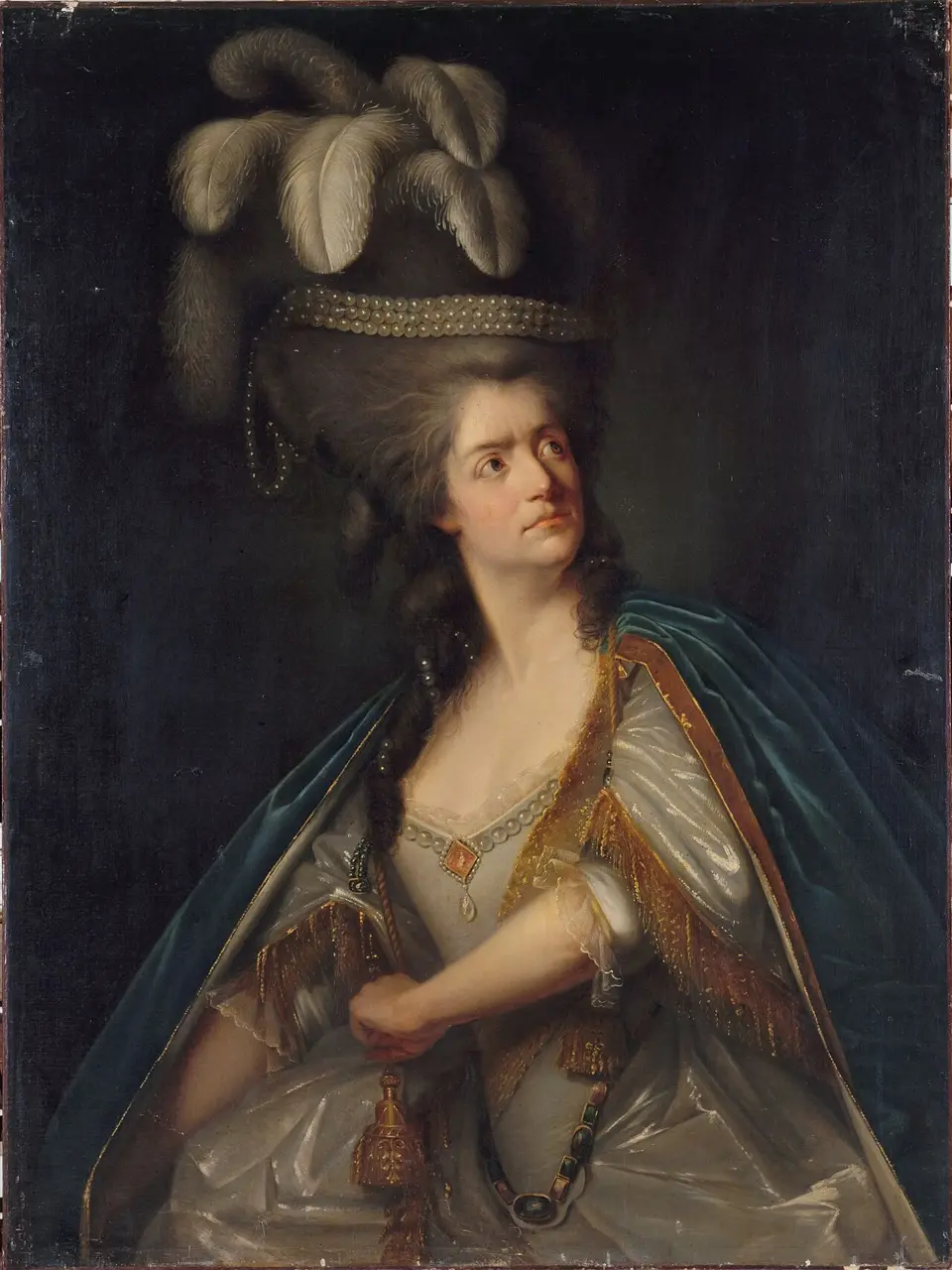
 Athaliahby Jean RacineThe queen who murdered her grandsons to rule Judah dreams of a child in the Temple, and the child is the last of them.
 Bajazetby Jean RacineIn the Sultan's absence, his favourite offers his imprisoned brother the throne, if he will marry her.
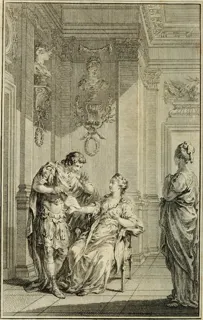 Bereniceby Jean RacineThe new emperor Titus loves the Queen of Judæa, but Rome will not have a queen.
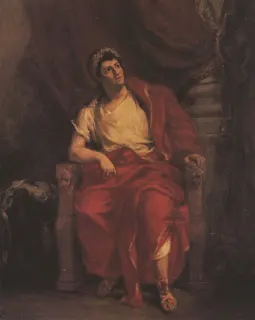 Britannicusby Jean RacineThe young emperor Nero falls for his rival's betrothed and takes his first step into murder.

Act 1, Scene 1
Orestes, Pylades
Yes, since I find again a friend so true,
My fortune 'gins to wear another face;
Already seems her wrath to have been soothed,
Permitting us to meet each other here.
Who would have thought that this detested coast
Would first present you to Orestes' eyes;
And, lost six months and more, you should be found
Where in Epirus Pyrrhus holds his court?
Thanks be to Heav'n, that has detain'd my steps
So oft, and seem'd to shut me out from Greece,
Since that disastrous day when winds and waves
Scatter'd our vessels almost in the sight
Of this Epirus. How I mourn'd and wept,
Myself an exile, for Orestes' fate;
Dreading for him ever some danger new,
Some sorrow that my friendship could not share!
That melancholy most of all I fear'd
Which I have seen so long your soul o'ercloud;
I fear'd that Heav'n might grant you cruel aid,
And offer what you ever sought,—a tomb.
But now I see you, and, if I may dare
To say it, happier fortune brings you here:
This stately train that on your steps attends
Looks not like that of wretch who seeks his death.
Alas! Who knows what fortune is my guide?
Love bids me seek a cruel mistress here;
But I am ignorant of Fate's decrees,
Whether 'tis life or death that I shall find.
Is then your soul so bound in slavery,
That for Love's sake alone you care to live?
What spell constrains you to those fires again,
The tortures you have suffer'd all forgot?
Will she, who would not listen to your pray'rs
At Sparta, in Epirus prove more kind?
Ashamed of having utter'd vows so vain,
You should despise her; speak no more of her.
Your words deceived me.
I deceived myself.
O'erwhelm not, friend, a wretch who clings to you:
Have I from you e'er hidden heart's desire?
You knew my flame fresh born, my earliest sighs:
When Menelaus pledged his daughter's hand
To Pyrrhus, the avenger of his race,
You witness'd my despair; since then you've seen
How I have dragg'd my chains from sea to sea.
I saw you, pitying my forlorn estate,
Ready to follow me where'er I went;
Checking my madness in its wild career,
You saved me from myself from day to day.
But when, distracted by my fears, I thought
Hermione was lavishing her charms
On Pyrrhus, well you know how, fill'd with wrath,
I strove to make forgetfulness repay
Her scorn. I made you think, and thought myself,
The victory achieved; deem'd passion changed
To hatred, and, disparaging her charms,
Abhorr'd her harshness, and defied her eyes
To raise the tender feelings I had crush'd.
In that deceitful calm I came to Greece,
And found her princes muster'd to withstand
A danger, and no mean one, that appear'd
Fraught with fresh troubles. Eagerly I join'd
Their ranks, and hoped in war to find release
From other cares, that, former strength regain'd,
My heart would lose all memory of love.
But mark with me how persecuting Fate
Entrapp'd me in the snare I thought to shun.
On every side I heard murmurs and threats
Raised against Pyrrhus from the whole of Greece,
Complaining that, forgetful of his blood
And promise, at his court he rears her foe,
Astyanax, the young ill-fated son
Of Hector, relic of so many kings
Buried 'neath Troy. To save the babe from death,
Andromache, as I have heard, deceived
Wily Ulysses, while another child,
Torn from her arms, was slaughter'd in his stead.
They say Hermione has fail'd to charm
My rival, that elsewhere his heart and crown
He offers. Menelaus, loath to trust
The rumour, is sore vex'd at long delay.
The cause of his displeasure is to me
A source of secret triumph, yet at first
I deem'd it but a feeling of revenge,
A thought that flatter'd pride. But soon I found
The fair tormentor had resumed her place
Within my heart; the smouldering fire revived,
I felt my hatred melt and disappear,
Or rather felt my love had never ceased.
Soliciting support from all the Greeks,
To Pyrrhus I was sent, and here I am.
My mission is to try if I can wrest
This infant from his arms, who, while he lives,
Brings fear to many. Happy shall I be,
If I can carry off, not Hector's son,
But my princess! Nor fancy that my flame,
Fann'd by repression, can extinguished be
By any peril. All resistance proved
To be in vain, I blindly yield myself
To Passion's sway; I love Hermione,
Am come to win her, fly with her, or die.
Pyrrhus you know; what think you will he do?
Tell me what passes in his court, and what
Within his heart. Still to Hermione
Is he enslaved? Will he restore the prize
Of which he robb'd me?
Should I promise that,
I should deceive you; not with his consent
Shall she be yours. Not that he seems much pleased
T' have won her; Hector's widow fires his heart
With warmer passion, but she proves unkind,
And hitherto has paid his love with hate,
Tho' daily he attempts in every way
To bind her stubborn will or rouse her fears.
From her he hides her boy, threatens his life,
Then fain would dry the tears he forced to flow.
Hermione has seen a hundred times
Her lover's wrath submit to sue again,
And offer humbly oft rejected vows,
With troubled sighs of mingled love and rage.
You must not then expect that I can tell
Th' emotions of a heart so ill controll'd.
In its distraction he may wed, perchance,
The one he scorns, and lose the one he loves.
But tell me how Hermione beholds
Her charms contemn'd, the marriage rites delay'd.
To all appearance she would seem, my lord,
Disdainful of her suitor's fickleness,
And thinks that anxious to be reconciled,
He'll soon entreat her to take back his heart.
To me indeed she has her grief reveal'd;
She mourns in secret his indifference;
Ready to leave him, still she always stays,
And sometimes calls Orestes to her aid.
Ah, if I thought so, Pylades, full soon
Would I go, cast myself—
Fulfil your task;
Wait on the King, and tell him that all Greece
Is banded against Hector's son. So far
From giving up the child of her he loves,
Their hatred will but make his heart more fond;
All efforts made to part them will the more
Unite them. Urge your mission, and its end
Must fail. He comes.
Prepare her then to see
A lover who comes hither but for her.
Act 1, Scene 2
Pyrrhus, Orestes, Phœnix
Ere by my voice all Greece addresses you,
Let me express my pleasure in her choice
Of me, and at beholding face to face
Achilles' offspring, conqueror of Troy.
Yes, we admire your exploits like his own;
Before him Hector fell, Troy before you;
Your daring and success alike have shown
Achilles' son alone can fill his place.
But what he never would have done, with pain
We see you do, giving unhappy Troy
Fresh pow'r to injure, letting pity move
Your heart with fatal touch, prolonging feud
Already waged so long. Do you forget
The might of Hector? We remember still
What blood he cost us; at his very name
Widows and orphans tremble; not a home
But calls for vengeance on this son of his,
For father or for husband lost thro' him.
Who knows what harm this child may one day work?
Perchance he may come down upon our ports,
As we have seen his sire do, burn our ships,
And, fire in hand, pursue them o'er the waves.
Sir, shall I dare to tell you what I think?
You fear what recompense your cares may meet,
And lest this serpent, in your bosom nursed,
May punish you one day for sheltering him.
Be the desire of Greece then satisfied,
Secure your life by wreaking her revenge;
Destroy a dangerous foe, who will on you
Practise the sword hereafter to be used
Against her.
Greece alarms herself too much
On my behalf. By more important cares
I thought her moved, and that such envoy brought
Some grander project than I yet have heard.
Who would suppose that Agamemnon's son
Would deign to intervene in this affair:
Or that all Greece, after such triumphs won,
Could thus conspire against an infant's life?
To whom am I to make the sacrifice?
Greece may no longer claim his life as hers;
Or is it not allow'd to me, alone
Of all the Greeks, to treat as I may please
A captive won by lot? When 'neath the walls
Of smoking Troy the victors, blood besprent,
The spoil divided, to my share there fell
Andromache and Hector's infant son;
Ulysses made the cup of misery
O'erflow for Hecuba; to Argos went
Cassandra with your sire. Have I controll'd
Them or their captives, or presumed to claim
The fruit of their brave deeds? They fear the day
When Hector shall revive,—his son may take
My life if his be spared. Such caution shows
Care in excess. Misfortunes so remote
Are quite beyond my ken. I see proud Troy
As once she was, Mother of heroes, Queen
Of Asia, crown'd with tow'rs; and then I see
How she fell headlong, how she prostrate lies;
For walls but heaps of ashes I behold,—
A river that runs blood, forsaken fields,
A child in chains; and little can I think
That Troy, so fallen, meditates revenge.
If it were sworn that Hector's son should die,
Why did we let a year pass o'er his head?
Why could we not have slain him in the arms
Of Priam? Troy might well have been his tomb
No less than that of others. Age and Youth
Pleaded alike in vain their weakness then;
War's frenzy and night's darkness, worse than we,
Left no distinctions to our murderous swords.
My rage was fierce as that of any there
Against the vanquish'd. But should cruelty
Outlive one's fury? Can I in cool blood,
Discarding pity, slaughter a poor child?
No, Sir; let Greece hunt up some other prey,
Efface elsewhere all vestiges of Troy:
My enmity is finish'd, and what war
Has spared Epirus safely shall preserve.
You know, my lord, full well what cunning trick
Brought to the sword a false Astyanax
Instead of Hector's son. It is not Troy
Nor Trojans, it is Hector they pursue;
Greece tracks the father's footsteps in the son;
The wrath his bloodshed kindled must in blood
Be quench'd, and none but Hector's can avail;
E'en to Epirus will they follow it:
Prevent them.
No, the challenge I accept
With joy, and in Epirus let them seek
A second Troy: while hatred makes them class
With foes the friend who brought them victory.
Greece will not then for the first time requite
Unjustly all Achilles' services;
Once Hector profited, the day may come
When Hector's Son shall profit in his turn.
So Greece in you finds a rebellious son!
Have I then conquer'd only to depend
On her?
Hermione will check your course;
Between her father and yourself her eyes
Will interpose.
She may be dear to me,
And yet I need not be her father's slave
Because I love her. Time may reconcile
Honour, perchance, with what affection claims.
Meanwhile fair Helen's daughter you may see,
I know what tie of blood links you and her.
No longer will I keep you after that;
Go, say that I refuse what Greece demands.
Act 1, Scene 3
Pyrrhus, Phœnix
Thus then you send him to his mistress' feet!
Long for the princess has his passion burn'd,
They say.
What, if that fire should be revived,
His heart be giv'n to her, and hers to him?
Let them love, Phœnix! She may take her leave
With my consent. Ay, let th' enamour'd pair
Go back to Sparta; not a port shall bar
Their exit. Let her spare me more constraint!
My lord!
I'll bare my soul another time,
Andromache approaches.
Act 1, Scene 4
Pyrrhus, Andromache, Phœnix, Cephissa
Is it I,
Madam, you seek? May I indulge a hope
So pleasing?
I was passing to the place
That holds my son, permitted once a day
To see the only being left to me
Of Troy and Hector; and I have not yet
Wept with him, no, nor held him in my arms
A moment.
Greece, if her alarm tells truth,
Will give you other causes soon for tears.
What is this terror that has struck her heart?
Has then some Trojan managed to escape?
Not yet extinguish'd is the hatred felt
For Hector. And they dread his son.
Their fear
Has found a worthy object! He, poor child,
Yet knows not Hector for his sire, nor you
For master!
All the same, the Greeks demand
His blood, and Agamemnon's son is here
To urge his punishment.
Will you pronounce
Sentence so hard? My interest in him
Is his sole crime; it is not that they fear
He will avenge his father, but will dry
His mother's tears. He would have filled the place
Of sire and husband. I must lose them all,
And at your hand.
Weep not, I have refused
To do their bidding, tho' they threaten war;
Shall they again with twice five hundred ships
Set sail, to force you to give up your son;
Tho' all the blood that Helen caused to flow
Must be the price, and, after ten years' war,
My palace sink in flames, I falter not,
And with my own will I defend his life.
But 'mid these perils, suffer'd for your sake,
Will you refuse to grant a kinder look?
Press'd on all sides, and hated by the Greeks,
Must I still strive against your cruelty?
My arm is at your service: may I hope
You will accept the heart's devotion too?
Let not your champion have to reckon you
Among the number of his enemies.
Think what you do, my lord, what Greece will say.
Can soul so great as yours such weakness show?
You would not have your generous purpose pass
For the mere madness of a lovesick swain.
How can you wish a captive sad as I
To love you,—I, who cannot bear myself?
Can eyes that sorrow haunts have charms for you,
Doom'd by yourself to everlasting tears?
No, no; respect your captive's misery,
Relieve the wretched, to a mother's arms
Restore a son, withstand the cruelty
Of all the Greeks, nor make my heart the price
Of succour; and, at need against my will,
Protect him. That were conduct that befits
Achilles' son.
What! Is your wrath still hot?
Shall hatred and the punishment it prompts
Ne'er cease? Much woe I doubtless caused, and Troy
Has seen this hand dyed crimson with your blood,
A hundred times. But, smitten by the shafts
From Beauty's eyes, have I not dearly paid
For all their tears, and long since learn'd remorse?
I suffer all the ills I gave to Troy;
Vanquish'd and taken prisoner, with regrets
Loaded, consumed with fires more fierce than those
I kindled. Such anxiety, such tears,
Such restless longings,—was I e'er so harsh
As you are now? Have you not punish'd me
Indeed enough? Nay, let our common foes
Unite us. Tell me only I may hope,
I give you back your son, will be to him
A father, and will teach him to avenge
His country. I myself will punish Greece
For your calamities and mine. One look
Shall give me strength for all. Troy shall revive,
E'en from her ashes; sooner than its siege
Lasted, her walls shall rise, your son be crown'd
Her king.
I care not for such glory now,
That prospect pleased me while his father lived.
Troy's sacred walls that Hector could not save
May never hope to see our faces more.
My lord, the wretched are content with less;
'Tis exile only that these tears demand.
Far from the Greeks, ay, too, and far from you,
Let me go hide my son, and mourn my loss.
Your love inflames their hatred against us;
Return to Helen's daughter, oh, return!
That can I not. Then why distress me more?
How may a heart that's yours be giv'n to her?
I know that she was promised its command,
I know she hither came to reign as queen;
Fate to Epirus brought you both alike,
Her to impose the chains of slavery,
And you to wear them. But I took no pains
To please her. Seeing how your charms prevail
And hers are scorn'd, it might be rather thought
That she is captive here, and you are queen.
Ah, how a single sigh, of all I breathe
For you, would carry joy if giv'n to her!
How should they not be welcome? Can she e'er
Forget the services that you have wrought?
Hector and Troy are names that do not cause
A shudder, nor is all her tenderness
Devoted to the dead. Ah, what a loss
Was mine, bitter to think on! Slaying him
Your father made himself immortal, gain'd
The crown of all his glory, and my tears
Have made you both renown'd.
It needs must be
That I obey you, Madam, and forget,
Nay, hate you. Love has been too violent
To change its course to mere indifference.
Be well assured, the heart henceforth that loves
No more with passion must with fury hate.
Nought will I in my righteous anger spare;
The son shall answer for the mother's scorn;
Greece asks his life, why should I always stoop
To save th' ungrateful? I'll do so no more.
Alas, then he must die! His mother's tears
His sole protection, and his innocence—
And yet, perchance, so wretched is my lot,
His death may lift this load of misery.
Life and its woes I bore but for his sake;
To follow him will bring me to his sire.
Thus reunited, thanks to you, my lord,
We three shall—
Madam, go and see your son;
The sight of him may teach your heart to shun
The path to which your anger beckons you.
I'll choose another hour to learn my fate.
Think how to save him, while you clasp him close.
Act 2, Scene 1
Hermione, Cleone
Yes, he shall see me, since you'll have it so;
That pleasure will I grant him once again.
Soon Pylades will bring him; but were I
To use my judgment, it should not be so.
What evil lurks there in the sight of him?
Say, is he not the same Orestes still
For whose return you sigh'd a hundred times,
Whose love and constancy has been the theme
Of your regret?
Paid with ingratitude!
That love it is which makes his presence here
Repugnant; shame for me, triumph for him,
To see my misery so like his own!
Is that the proud Hermione, he'll say,
Lo, she who scorn'd me once herself despised!
The wretch who on her heart set price so high
Learns in her turn the pangs of outraged love!
Oh, Heav'ns!
Dispel these most unworthy fears:
Too deeply has he felt your pow'r to charm.
He comes to urge his love, not to insult,
He brings a heart from which he cannot blot
Your image. But you have not told me yet
What writes your sire.
If Pyrrhus still delays,
And if he will not let the Trojan die,
My father bids me with the Greeks depart.
'Tis well: then hear Orestes. You at least
May finish that which Pyrrhus has begun;
You must forestall him to obtain success.
Have you not told me that you hated him?
Hate him, Cleone? Can just pride do less,
When he forgets the favour freely giv'n?
That heart was treacherous which I learn'd to love;
Too dear he was, not to be hated now!
Fly from him then, and since you are beloved—
Ah, let my rage have time to grow more strong;
Leave me to guard myself against my foe.
Cleone, it is terrible to part,
And he will force me to it but too well,
The faithless wretch!
Wait you for some new wrong?
To love his slave, before your very eyes!
What more can make him odious, if not that?
What greater insult can he offer yet?
Had he known how, he would have left undone
Nothing that could displease you.
Why provoke
Fresh torture? I would fain disguise the truth.
Try to believe not what your eyes have seen;
Think that my love is banish'd; give me joy
That I have conquer'd, and my heart is steel'd
Against its weakness. Make me think so too.
You'ld have me fly; there's nought to hinder it,
Let us depart, and leave him to enjoy
A conquest that degrades him; to his slave
Himself submissive. Let us fly! But what
If Faith and Duty should reclaim his heart,
If he should crave his pardon at my feet,
And Love have pow'r to make him all my own?
But no, he only seeks to humble me.
Yet let us stay to mar their happiness,
Finding some pleasure still in spoiling theirs;
Or, making him renounce his solemn pledge,
Render him guilty in the eyes of Greece.
Already have I drawn upon the son
Their anger, I would have them ask of him
The mother too, and so those pangs repay
Which she has made me feel. Let her lose him,
Nay, let him cause her death.
Think you that she,
Whose eyes run down with tears, can pleasure find
In trying to supplant you, that, bow'd down
With grief, she courts her persecutor's love?
What signs have shown her anguish soothed thereby?
Why is her soul then plunged in misery?
Why 'gainst a favour'd lover so severe?
Ah, I have lent too credulous an ear
To faithless vows, and utter'd what I felt.
I saw no danger in sincerity,
My eyes unguarded let their secret out,
And my own heart pleaded his cause too well.
What woman would not have declared her love,
As I did, trusting to his solemn oaths?
Did his eye scorn me then, as it does now?
You cannot but remember all combined
To aid his suit,—my family avenged,
The joy of Greece, our vessels charged with spoils
From Troy, his father's exploits by the son's
Eclipsed, his passion deem'd to pass my own,
My heart—Yes, and his fame e'en dazzled you;
E'er he betray'd me, all of you conspired
To that same end. Enough; if Pyrrhus has,
I have not ceased to feel; Orestes' heart
Is noble as his deeds, and he can love
Without return.—Ay, and perhaps can make
Himself beloved. I'll see him.
Look, he comes.
Ah me! I had not thought he was so nigh.
Act 2, Scene 2
Hermione, Orestes, Cleone
Sir, shall I think some tender traces left
Of former Love prompt you to visit me,
In my distress, or is it Duty's voice,
And that alone, which urges you to come?
Such is the fatal blindness of my heart,
Known to you well, that I am destined still
To come, and come again, to worship you,
In spite of all my vows to come no more.
To see you will, I know, reopen wounds;
Each step that brings me near makes me forsworn;
I know it, and I blush thereat. But Heav'n,
That saw how our last parting wrung my heart,
Be witness how I strove to free myself,
By certain death, from oath so hard to keep
And ceaseless torture; how to savage tribes,
Whose gods are only pleased with human blood,
I offer'd life; they shut their temple doors,
Sparing to take such willing sacrifice.
To you at length I come, and from your eyes
Must seek the Death that shuns my close pursuit,
And their indifference shall end despair;
They need but cut the last fond cord of hope
To bring the fatal hour for which I yearn,
They need but say what they have said before,—
Said always. For a year past, that has been
My only aim: be yours the victim's blood
That Scythians might have spilt instead of you,
Had any so relentless there been found.
Have done, Sir, with these accents of despair;
With matters more momentous you are charged.
Why talk of Scythia, or my cruelty?
Think of the many kings you represent.
And must their vengeance on your transports hang?
Is it Orestes' blood that they demand?
Discharge the office they imposed on you.
Pyrrhus refuses, and my task is done.
Madam, he sends me back. Some other pow'r
Makes him defend the cause of Hector's son.
False and forsworn!
So, ready to depart,
My own fate at your lips I come to learn.
Ere utter'd, your reply I think I hear,
That you detest me in your secret heart.
What always so unjust? Why will your grief
For ever of my enmity complain?
How have I shown the harshness that you blame
So often? 'Twas obedience to my sire
That brought me hither; but who knows if I
Have not been sick at heart since then, and shared
Alarms no less than yours? I may have shed,
In this Epirus, bitter tears. And none
Can say I have not sometimes wish'd you here,
Despite my duty.
Wish'd me here! Oh, joy!—
But can it be to me that you address
These heavenly words? Open your eyes, and see
Orestes, upon whom they frown'd so long.
Yes, you—who first taught them to know their pow'r,
Whose love with their attractions grew, whose worth
I could not but esteem, and who have had
My sighs, and whom indeed I fain would love.
I understand how hopeless is my lot;
Your heart is giv'n to Pyrrhus, and to me
Vain wishes.
Ah, you need not envy him,
Unless you crave my hatred.
Yes; for then
Love well might follow from a source opposed;
I cannot please you whom you fain would love,
But, if you wish'd to hate me, Love alone
Would be obey'd, and I should win your heart.
Ye gods! Such worship, and such tender love—
Speak they not for me, could you lend an ear?
Your voice alone supports a prior claim
For Pyrrhus, it may be against your will,
Against his, certainly; for in his soul
He hates you, loves another—
Who has dared
To tell you that he scorns me? Have his looks
And words reveal'd it? Think you that my eyes
Can light no lasting fire, but soon must rouse
Contempt? Perhaps more favourable judge
May somewhere else be found.
'Tis well to taunt
Me thus! Am I the one who scorns your charms?
Have you not tried my constancy enough?
Am I a witness that your eyes lack pow'r?
Despise them? Ah, how gladly would they see
My rival so despise them as do I!
What care I, Sir, whether he loves or hates?
Go, and against a rebel arm all Greece;
Pay him the price of disobedience;
Go, let them make this land a second Troy!
Will you say now, my heart is giv'n to him?
Madam, do more, and come to Greece yourself.
Will you remain here as a hostage? Come;
To every heart let your fair eyes appeal,
Till common hatred prompts our joint attack.
What if he wed Andromache meanwhile?
Madam!
What deep disgrace must then be mine,
To have this Phrygian woman hold my place!
And yet you hate him! Madam, own the truth;
We cannot shut Love's fires within the breast,
Our very eyes betray us,—silence, speech;
And fires we hide in vain burst forth more fierce.
Your mind is prepossess'd, I see it well,
And spreads a deadly venom o'er my words,
In every argument detects deceit,
And thinks my hatred prompted by my love.
I must explain myself, and you shall act
Accordingly. You know 'twas Duty led
My footsteps hither, and detains me here;
I cannot leave till Pyrrhus or my sire
Compel me. Make my father understand
The foe of Greece will form no marriage bond
With us; between the Trojan and myself
Make Pyrrhus choose, which he will keep, and which
Dismiss. Farewell. I wait but his consent
To follow you.
Act 2, Scene 3
Yes, you will follow me,
No doubt of that. Already his consent
Is sure, nor need I fear that Pyrrhus wants
To keep you, for he has no eyes forsooth
Save for his dear Andromache, all else
Irksome, and seeks some pretext that may part
Himself and you. One word, and all is done!
What joy to rob Epirus of a prize
So rare! Troy's relics she may save, and keep
Unharm'd brave Hector's widow and his son,
And thousand others; 'tis enough for me,
That, ne'er again to see thee or thy prince,
Hermione departs.
Good Fortune brings
Him hither. To such charms, Love, close his eyes.
While we hold converse.
Act 2, Scene 4
Pyrrhus, Orestes, Phœnix
I have sought you, Sir,
To own that in a fit of violence
I fought against your reasons. Since I went,
Their justice and their force have shown themselves.
I feel, like you, that I have thwarted Greece,
My father's efforts, and, indeed, my own,
In aiding Troy, frustrating all achieved
Both by Achilles and myself; nor now
Do I condemn resentment which was based
On solid ground. Your victim soon shall be
At your disposal.
By this firm resolve,
Prudent as firm, a caitiff's blood buys peace.
And to assure you further, I consent
To wed Hermione, the pledge of peace
For ever. Such a pleasing spectacle
Can have no better witness here than you,
Who represent all Greece, and most her sire,
For in yourself his brother lives again.
Go to her, tell her that to-morrow morn
I will receive her at your hands with peace.
[aside] Great gods!
Act 2, Scene 5
Pyrrhus, Phœnix
Well, Phœnix, has Love won the day?
Say, do your eyes refuse to know me still?
I see you as you were; that righteous wrath
Restores you to the Greeks and to yourself.
No more the plaything of a servile flame,
'Tis Pyrrhus, 'tis Achilles' son, and more
His rival, who at last obeys the laws
Of honour, and a second triumph wins
O'er Troy.
Say rather that my victory
Begins to-day when I can feel its joy
And my heart, lifted from its low estate,
Seems to have triumph'd o'er a thousand foes
In crushing love. Think, Phœnix, what a host
Of troubles I avoid that follow close
On passion; how content to sacrifice
Duty and friendship, danger I despised,
Courting destruction from the arms of Greece,
Might I but win a single look of love.
I bless, my lord, the kind severity
Which gives you back—
See how she treated me!
I thought that, when the mother's fears were roused,
She would have yielded for her infant's sake,
Disarm'd by his caresses, but I found
No signs of weakness mingled with her tears.
Embitter'd by her woes, more fierce she seem'd
Each time the name of Hector pass'd her lips.
Oft as I promised to protect her son,
"'Tis Hector," she would say, as in her arms
She held him, "his those eyes, that mouth, the heart
Already bold. My husband I embrace
In this his image." Does she think that I
Will let her keep him thus to feed her love
For Hector?
Such were doubtless the return
That she would make. But leave her now.
I see
How consciousness of beauty flatters her,
And makes her proudly wait, despite my wrath,
To see me at her knees. Rather at mine
I'll see her crouch in vain; eternal hate
Parts Hector's widow and Achilles' son!
Then speak of her no more to me, my liege.
Go, see Hermione; and at her feet
Be your sole thought her pleasure, and forget
What's past. Prepare her for the nuptial rites
Yourself, nor to a rival leave that task
Who loves her but too well.
Think you will she
Be jealous if I wed Hermione?
What, harping on the Trojan woman still!
What matters it to you if vex'd or glad?
What spell attracts you tow'rds her, in despite
Of your own will?
I have not told her all
I meant to say; I show'd but half the rage
I feel; she knows not what a bitter foe
She has in me. Let us return and flout
Her vengeance, to my hatred give full scope,
And see her pride and beauty in the dust.
Come.
Go and cast yourself before her, Sir,
Go swear that in your heart you love her still,
And so encourage her to scorn you more!
I see you think my heart, ready to find
Excuses, hankers after her, and seeks
Atonement.
Yes, you love her. That's enough.
Love her, forsooth, who hates me all the more,
The more she's flatter'd! Friendless, with no hope
But over me! A stranger, ay, a slave!
I can destroy her son, perhaps I ought.
To her I give that son, myself, my throne;
And in her treacherous heart can gain no rank
Better than that of persecutor! No,
No, I have sworn it, my revenge is sure,
And shall for once her hatred justify;
Her infant I abandon, let her shed
What tears she may, call me whatever name
Anguish can prompt! Ah, what a sight, to-day,
Her eyes will see! Phœnix, 'twill be her death,
And I shall cause it, yea, myself shall hold
The dagger to her breast!
Why blazon it
Abroad? Too highly did you rate your strength
Some hours ago.
Pardon the tenderness
Of an old wound. You need not fear it, match'd
With my resentment; 'tis the final spark
Of love extinct. I'll follow your advice:
Must I give up her son, and must I see
The princess?
Yes, Sire; and with humble vows
Assure her—
What I promised, I'll perform.
Act 3, Scene 1
Orestes, Pylades
My friend, restrain this most imprudent rage:
You are no more yourself, I know you not.
Let me—
No, no, your counsel comes too late,
The voice of Reason only wearies me.
I must cut short the torture of this life.
I'll bear her hence, or perish. My resolve
Is taken, and I'll execute the same:
Yes, that I will.
By all means be it so;
I sanction that. But, still, think where you are;
To show your hand is but to court defeat;
Learn to disguise your feelings, calm your rage;
Bid your eyes keep the secret of your heart.
These guards, these very walls, each breath of air
Serve Pyrrhus, and yet more Hermione;
Hide your resentment with most care from her.
Why did you seek her, in the name of Heav'n,
In such a state?
I knew not what I did;
Master'd by rage, I may have gone so far
As to vent open threats against them both.
And what fruit did that fit of passion bear?
Was not the blow sufficient to distract
The coolest, and drive reason from her seat?
To-morrow he will wed Hermione,
And from my hand receive her, as a mark
Of honour. Sooner may it with his blood—
You blame him for a purpose he pursues
In desperation. Rather, pity him
As I do you: his tortures are as great.
Nay, I know well, he laughs at my despair;
He scorn'd her till he knew her loved by me,
Her charms were lost upon him but for that;
He takes her but to tear her from my arms.
Gods! when already I had deem'd her won,
Prepared to leave his sight for evermore;
Her heart, divided between love and hate,
But waited his refusal to become
My own. Her eyes were open'd, and her ears
Hearken'd to me with pity. One word more,
And sure success.
You think so?
Ay, her wrath
Was hot against the wretch.
Never more loved!
Had Pyrrhus giv'n her up, do you suppose
No other pretext would have held her back?
Let not her charms beguile you more, but fly
From her for ever, rather than attempt
To carry off a Fury who detests
Your love, and would embitter all your life
With vain regret, having so nearly gain'd
Her dearest object.
'Tis that very thought
Urges me on. All things would smile on her,
And nought but bootless rage be mine, compell'd
To seek oblivion far from her, once more
An exile. No, those torments she must share
Which I have borne too long alone. Enough
Of being pitied. She shall, in her turn,
Feel what it is to fear me, weep with woe,
And call me cruel, e'en as I did her!
Thus as a ravisher Orestes crowns
His embassy!
What matter, Pylades?
Greece shall not wreak revenge at my expense,
Nor an ungrateful princess mock my tears.
How will our country's praises profit me,
When jeer'd at in Epirus as a fool?
What would you? To confess the truth, I feel
My innocence a heavy load to bear.
When did the gods before prove so perverse
As to pursue the guiltless, and leave crime
Unpunish'd? Wheresoe'er I turn my eyes,
I see around me troubles that condemn
Their justice. Let me earn their wrath, deserve
Their hatred, eat the fruit if I must pay
The penalty of crime. But why draw down
Their anger on yourself, when aimed at me?
My friendship has procured you harm enough;
Leave me alone to guilt and misery.
Dear Pylades, your pity warps your sense;
Avoid the dangers that encompass me.
Convey to Greece the infant given up
By Pyrrhus. Go!
We'll carry off his bride!
A brave heart faces peril without fear.
Where love leads, friendship follows, and can act
As boldly. Let us arm your company
With zeal; our fleet is ready, and the breeze
Invites us. Every winding passage dark
I know; the sea washes these palace walls,
And by a secret way this very night
Your prize shall be conducted to your ship.
Dear friend, I trespass on your love too far;
Those griefs, that you alone could pity, beg
Forgiveness for a wretch, who loses all
He sets his heart on; hated by the world
He hates himself. But under happier stars
I, in my turn,—
Do not betray yourself;
Before the blow conceal your purpose, that
Is all I ask; till then forget your wrongs,
Forget your love. But see, she comes.
Go, friend.
Answer for her as I will for myself.
Act 3, Scene 2
Hermione, Orestes, Cleone
Well, Madam, you have won, thanks to my care:
I have seen Pyrrhus, and your marriage now
Will soon take place.
So I am told, and you
Were seeking me that I might be prepared.
And will you not reject these tardy vows?
Who would have fancied Pyrrhus faithful still?
That passion could have been delay'd so long
From bursting into flame, and its return
Should linger till I was about to leave him?
I'll think with you, 'tis Greece he dreads; not love
But prudence moves him; o'er your soul my eyes
Had pow'r more absolute.
No, no; 'tis love,
I cannot doubt it; and your eyes have wrought
All that they wish'd, nor would displease him now.
What can I do, Sir, when my faith is pledged?
Rob him of what it was not I who gave?
The star that rules a princess is not love,
No other glory than obedience left
For her. Yet I was going, and you saw
How I made duty yield to your desire.
Ah, cruel one, you knew—But every heart
Is free to follow its own choice, and yours
Was at your own disposal; and if giv'n,
I had no right to claim it as my own.
And yet I hoped; but Fortune more than you
I blame, and why should I your patience try
With vain complaints? Act as your duty bids,
Mine is to spare you words of sad reproach.
Act 3, Scene 3
Hermione, Cleone
Did you expect his wrath to be so mild?
A silent sorrow need not be for that
Less fatal. As the cause of his own woe
I pity him the more; 'tis his own stroke
That slays him. How long has your marriage been
In preparation? When Orestes spoke,
Pyrrhus declared himself.
You think 'tis fear?
Fear! And of whom? Those who for twice five years
Fled before Hector, and, Achilles lost,
Crouch'd in alarm within their burning ships,
And who, but for his son, would have left Troy
Unpunish'd, and foregone a fruitless quest!
Why should he fight against himself? Whate'er
He does, he wishes; if he marries me,
He loves me. Let Orestes, if he will,
Charge me with all his sorrows, better cheer
Awaits me than his sighs. Pyrrhus returns!
Ah, dear Cleone, what a rapturous thought!
Know you his exploits? Have you heard them told,
Too many to be number'd? And himself,
So brave, so charming, and so faithful too
As shown at last, his glory nothing lacks.
Think—
Hide your feelings! Look, your rival comes,
To cast her troubles, doubtless, at your feet.
Ah, 'tis too soon to check this flood of joy!
Let us begone; what should I say to her?
Act 3, Scene 4
Andromache, Hermione, Cleone, Cephissa
Why fly you, Madam? Is it not a sight
To please you, Hector's widow at your knees,
Weeping? But not with tears of jealousy
I come, nor do I envy you the heart
Surrender'd to your charms. A cruel hand
Robb'd me of him whom only I admired.
Love's flame was lit by Hector long ago,
With him it was extinguish'd in the tomb.
But he has left a son. Some day you'll know
How closely to one's heart a son can cling;
But you will never know, I wish it not,
How keen the pang when danger threatens him,
And they would take him from you, all that's left
To soothe a blighted heart. Ah, when worn out
With ten long years of woe, the Trojans sought
Your mother's life, on Hector I prevail'd
To succour her. O'er Pyrrhus you have pow'r
As I had then o'er Hector. Can they dread
The infant he has left? Him let me hide
In some far distant isle. And they may trust
My fears to keep him there, taught but to weep
With me.
I feel for you, but duty holds
My tongue tied, when my sire declares his will:
It is by him that Pyrrhus' wrath is stirr'd.
But who can bend him better than yourself?
His soul has long been subject to your eyes;
Make him pronounce the word, and I'll consent.
Act 3, Scene 5
Andromache, Cephissa
How scornfully did she refuse my prayer!
Accept her counsel. See him, as she says:
One look of yours may Greece and her confound—
But, look, he seeks you of his own accord.
Act 3, Scene 6
Pyrrhus, Andromache, Phœnix, Cephissa
[to Phœnix] Where is the princess? Said you not that she
Was here?
I thought so.
[to Cephissa] Now you see what pow'r
My eyes have over him!
What says she?
All
Is lost!
Hermione is gone, and we
Will follow.
Speak! Why obstinately dumb?
Has he not promised them my child?
But not
Given him up.
Vain are my tears, his death
Is certain.
How her pride disdains to look
My way!
I should but irritate him more.
Let us retire.
Come, Hector's son shall be
Yielded to Greece.
[throwing herself at his feet] Stop, Sire. What will you do?
Give up the son? Why not the mother then?
Where is the kindness that you swore to me
So lately? Can I touch no chord at least
Of pity? Does this sentence bar all hope
Of pardon?
Phœnix knows my word is pledged.
No dangers were too great for you to brave
On my behalf!
Blind then, I now can see.
Your wishes might have won his pardon once;
You ne'er so much as ask'd it. Now you come
Too late.
Full well you understood, my lord,
The sigh that fear'd repulse. Forgive the trace
Of pride, that died not with my royal rank,
And made me shrink from importunity.
My lord, you know, had it not been for you,
Andromache would never have embraced
A master's knees.
No, in your secret soul
You hate me, scorn to owe me anything.
This son, the only object of your care,
You would have loved him less, had he been saved
Thro' me. You hate me with a bitter scorn,
You hate me more than all the Greeks together.
Enjoy at leisure such a noble rage.
Come, Phœnix.
I will go where Hector's gone.
Madam—
What further can I say to him?
The author of my woes, he knows them all.
[To Pyrrhus.] See to what state you have reduced me, Sire!
I've seen my father slain, our walls enwrapt
In flames, and all our family cut off,
My husband's bloody corpse dragg'd thro' the dust,
His only son reserved for chains with me.
For his sake I endure to live a slave.
Yea, more, this thought has sometimes brought relief,
That Fate has fix'd my place of exile here;
The son of many kings beneath your sway
Is happier as a slave than he could be
Elsewhere, and I had hoped his prison walls
Might be a place of refuge. Priam found
Achilles could respect his fallen state;
I thought his son more generous still. That trust,
My Hector, pardon, when I deem'd thy foe
Too noble to commit a dastard's crime!
Ah, would he but allow us to abide
Where for thine ashes I have raised a tomb,
And, ending there his hatred and our woes,
Divide us not from thy beloved remains!
Go, and await me, Phœnix.
Act 3, Scene 7
Pyrrhus, Andromache, Cephissa
Madam, stay.
Your tears may yet win back this cherish'd son.
Yes, I regret that, moving you to weep,
I arm'd you with a weapon 'gainst myself;
I thought I could have brought more hatred here.
You might at least consent to look at me:
See, are my eyes those of an angry judge,
Whose pleasure 'tis to cause you misery?
Why force me to be faithless to yourself?
Now for your son's sake let us cease to hate.
'Tis I who urge you, save the child from death.
Must sighs of mine beg you to spare his life?
And must I clasp your knees to plead for him?
Once more, but once, save him and save yourself.
I know what solemn vows for you I break,
What hatred I bring down upon myself.
Hermione shall go, and on her brow
For crown I set a burning brand of shame:
And in the fane deck'd for her marriage rites
Her royal diadem yourself shall wear.
This offer, lady, is no longer one
You can afford to scorn. Perish or reign!
A year's contempt has made me desperate,
Nor can I any longer live in doubt,
Harass'd by fears and mingling threats with groans.
To lose you is to die,—'tis death to wait.
I leave you to consider, and will come
To bring you to the temple where this child
My fury shall destroy before your eyes,
Or where in love I crown you as my queen.
Act 3, Scene 8
Andromache, Cephissa
Is't not as I foretold? In spite of Greece,
You are still mistress of your destiny.
Alas, that it should be as you have said!
I have no choice but to condemn my son.
That were to stretch fidelity too far.
Excess of virtue may be fraught with guilt.
Hector himself would urge a milder course.
Pyrrhus in Hector's place! I loathe the thought.
Think of his son, torn from your arms by force;
More than aught else his shade would blush at that.
It would not shame him that your conqueror
Should reinstate you in your royal rank,
Trample your foes beneath his feet in wrath,
Forget that fierce Achilles was his sire,
And frustrate all his exploits.
How can I
Cease to remember them, tho' he forget?
Hector's unburied corpse, dishonour'd, dragg'd
Around the walls of Troy? His father slain
Before mine eyes, and grasping as he fell
The altar stain'd with his own blood? That night,
That cruel night, think how its horrors brought
Eternal night to Troy! Recall the look
Of Pyrrhus, crossing in the lurid light
Our burning threshold; how his eyeballs glared,
My fallen brothers spurn'd beneath his tread,
Kindling the carnage, dyed from head to foot
With gore! Canst hear the victor's shouts, the groans
From dying lips, as fire and sword rush on?
Canst see Andromache's despair, and how
Pyrrhus confronts her with those frightful deeds
Wherewith he won his glory? There behold
The husband you would give me! No, my friend,
I will not be th' accomplice of his crimes.
His latest victim let him make of me,
And I without a murmur will submit.
Then let us go and see your son expire;
Your presence only do they wait for. How
You shudder!
Yes, remembrance sends a pang
That pierces deep. What! See him perish too,
My only joy, on whom my Hector stamp'd
His image, token of the love I lost!
Ah me! I call to mind the day he sought
Achilles, fatal day for him. He press'd
His boy to his courageous heart, and said,
Drying my tears,—"Dear wife, I know not how
Fate may decide the fight to which I go.
I leave you this my son, a faithful pledge;
And should he lose his father, be to him
Father and mother both; if you hold dear
The happiness we shared, then show to him
How much you loved me." Shall that precious blood
Be shed before my eyes, his line extinct
With him? Ah, cruel King, must my offence
Be counted his? He has not hated thee,
Nor yet reproach'd thee with his kinsmen's death,
Resenting not the ills he cannot feel.
Yet thou must die, my son, unless I turn
The sword aside that hangs above thy head.
The choice is mine; and shall I let it fall?
No, never can I suffer thee to die.
Let us find Pyrrhus. No, Cephissa, go,
Find him for me.
What shall I say to him?
Tell him a mother loves her son enough—
But has he sworn indeed to slay the child?
Can passion make Pyrrhus so merciless?
Madam, in fury he will soon return.
Then go, assure him—
Of your faith, or what?
Alas! have I that promise still to give?
O ashes of my husband and my sire!
How dearly must I buy thy life, my son!
Come, let us go.
Whither? With what resolve?
To Hector's tomb, there to consult his will.
Act 4, Scene 1
Andromache, Cephissa
My lady, 'tis your husband, doubt it not;
'Tis Hector works this miracle in you!
Surely he wishes Troy should rise again
Under that son whose life he bids you guard.
Pyrrhus has promised you the boy. Just now
You heard him say he waits but for your word
To make him yours; and you may trust his love.
Your heart contents him; father, sceptre, friends,
He recks them not, if you will reign o'er him
And o'er his people. Does he then deserve
Hatred? Indignant, he confronts the Greeks,
And pities the poor babe no less than you,
Guards him from outrage, and withstands their rage,
Exposing his own life to shelter his.
But all is ready. You have promised—
Yes,
I will be there. Let us go see my son.
Why in such haste? No one forbids you now
To visit him; therewith be satisfied,
And soon your tenderness shall have full scope
In many a fond and unrestrain'd caress.
Will it not bring you joy to rear your babe
No longer for a life of slavery,
But to revive the glories of his line?
Cephissa, 'tis the last time I shall see
My child.
Why, what is this?
O my dear friend,
With whom my soul should wear no mask, for you
Have proved in all my trouble faithful still,
I hoped you knew me better than to deem
Myself so faithless found as to betray
The husband who within my heart survives,
That, caring not how much I vex'd the dead,
I should think only of my own repose.
Is that to keep my promise made so oft
To Hector's ashes? But I am obliged
To save his son. Pyrrhus, on wedding me,
Vows to protect him,—I may trust his word.
I know his nature, violent but sincere;
He will do more, Cephissa, than he said.
And I rely too on the wrath of Greece,
Her hatred will on Hector's son bestow
A father. Since a victim is required
I will assure to Pyrrhus all that's left
Of life to me, and by most sacred bonds
Indissolubly bind him to my boy.
But straightway shall this hand with fatal stroke
Sever the chord of life no longer true,
And so preserve me stainless, and yet pay
Pyrrhus his due, nor fail in what I owe
To son and husband, ay, and to myself.
This is the harmless plot my love suggests,
Or rather Hector's spirit. So, alone,
Him and my sires I join. Close you mine eyes.
Ah, if you die, think not that I will live.
Nay, I forbid you, friend, to follow me.
My only treasure to your care I trust:
You lived for me, live now for Hector's son.
Sole guardian of the hopes of fallen Troy,
Her royal line requires your constant care.
Watch Pyrrhus well, and make him keep his faith;
If he shall need it, speak to him of me.
Remind him I consented to be his
Before my death, teach him to prize that bond
And blot out all resentment from his soul;
That, leaving him my son, I show'd how much
I valued him. And to that son make known
The heroes of his race; direct his steps
To follow them; tell him of all their fame,
Of what they did rather than what they were.
Dwell on his father's virtues day by day,
And sometimes whisper of a mother's love.
But of avenging me he must not dream;
His master's friendship let him strive to win.
Regarding his high birth with modesty,
Let him remember, tho' of Hector's blood,
Troy lives in him alone; and for his sake,
In one day, I lay down life, hatred, love!
Alas!
You must not come with me, unless
Your heart is brave and can command your tears.
Cephissa, dry your eyes. I hear a step.
Remember your great trust. Hermione
Approaches; let us shun her violence.
Act 4, Scene 2
Hermione, Cleone
This silence, Madam, fills me with surprise;
You utter not a word; this cruel slight
Seems not to ruffle your tranquillity!
Tamely you suffer such a rude rebuff
Who shudder'd but to hear your rival's name!
You who could scarce endure without despair
The passing glance that Pyrrhus cast on her!
He weds her, makes her partner of his throne,
And plights the troth so lately giv'n to you;
Yet still your lips are dumb, your tongue disdains
T' upbraid the traitor with deserved reproach!
I fear what such a fatal calm forebodes!
It would be better far—
You sent for him,
Is it not so?
Orestes will be here,
And, as you may believe, will place himself
Wholly at your disposal, without hope
Of recompense. Your eyes are sure enough
To charm him. See, he enters.
Act 4, Scene 3
Orestes, Hermione, Cleone
Can it be
That I, for once, in seeking you obey
Your bidding, or has false hope flatter'd me?
Have you indeed wish'd me to come to you?
Shall I believe your eyes, at last disarm'd,
Will—
I would know whether you love me, Sir.
Love you! Great gods! My vows too hard to keep,
My flight, return, reverence that curb'd reproach,
My dark despair, my eyes all drown'd in tears:
What witness will you, if you trust not these?
I trust them all; avenge me.
Let us go,
My mistress, and once more set Greece on fire.
This arm shall make your name renown'd; and you
Shall rival Helen, I the King of Men.
Let us revive the miseries of Troy
Here in Epirus, and our fathers' fame
Eclipse. Yes, I am ready; let us start.
No, let us stay, nor carry these affronts
So far. What! crown the insults of my foes,
And wait elsewhere to wreak a slow revenge!
Resign myself to the arbitrament of war,
That after all might fail to vindicate
My wrongs! I will have all Epirus weep
When I depart. Avenge me in an hour,
Or not at all. Delay,—and you refuse.
Haste to the temple. You must slay—
Ay, whom?
Pyrrhus.
The King?
Your hatred hesitates?
Run quickly thither, lest I call you back.
Speak not of duties I would fain forget,
Nor will I hear a word in his defence,
And least from you.
From me! Your tenderness
Has stamp'd his crime too deeply on my soul.
Let us take vengeance, but by other means,
Become his foes, but not his murderers;
And with the arms of justice ruin him.
Shall I for answer to the Greeks bring back
His head? And have I taken on myself
This charge from them, to turn assassin? No.
In Heaven's name let Greece the challenge meet,
And crush'd beneath her hatred let him die.
The name of king is sacred, and the brow—
Is not my sentence then enough for you?
That my offended dignity demands
A victim to be offer'd to myself?
That if you quell the tyrant you shall have
Me for reward? That I hate him whom once
I loved. Yes, I confess it, he knew how
To win my heart; whether my father's will
Or inclination moved me matters not.
Act on that knowledge. Tho' he broke his vows,
Tho' with just horror I regard his crime,
Yet, while he lives, fear I may still forgive.
Distrust my wavering wrath, till death removes
The monster. For unless he dies to-day,
To-morrow I may love him.
Then must death
Prevent his pardon. How shall I proceed?
Can I so soon avenge your injuries?
Where lies the path that leads him to his doom?
I have but just set foot upon this soil,
And you would have me overturn the State,
And slay the King; and for his punishment
You grant me but a day; no, not an hour.
It must be done before his people's eyes;
My victim to the altar shall be brought.
No longer I demur, I will but go
And view th' appointed place of sacrifice:
This night I do your bidding, and he dies!
Meanwhile to-day he weds Andromache;
Already in the shrine his throne is set,
His crime accomplish'd, and my shame confirm'd.
Why should you wait? He offers you his life;
No guards attend him to this festival,
He makes them all encircle Hector's son,
And gives himself to my avenger's arm.
Will you then of his life take greater care
Than he does? Arm my followers, with your Greeks;
Stir up your friends; on mine you may rely.
Me he betrays, fools you, and scorns us all.
Surely their hatred is as great as mine,
The Trojan woman's husband loath to spare.
Speak, and my foe cannot escape your hands,
Or rather they will strike him dead themselves.
Lead or be led by this their noble rage;
Dyed with the faithless wretch's blood, return;
Thus only can you gain my heart. Now go.
But, Madam, think—
This really passes bounds,
Your scruples grate upon my angry mood.
I show the way to win Hermione,
And make Orestes happy; but I see
He will do nought to earn her, only whine
For ever. Go; boast of your constancy
Elsewhere, and leave me to avenge myself.
My weak concessions fill my soul with shame,
One day of such refusals is too much.
When all is ready for the marriage rite,
And where you dare not venture, I will go
Alone, find means t' approach my enemy,
And stab the heart I could not touch with love.
Then shall my blood-stain'd hands, turn'd on myself,
Unite our destiny in spite of him:
And, traitor tho' he be, 'twill be more sweet
For me to die with him than live with you.
No, I will rob you of that dismal joy;
He shall not die but by Orestes' hand.
Yes, by my arm your enemies shall fall,
And you shall then reward me, if you will.
Go. Leave your future fortune in my care
Let all your ships be ready for our flight.
Act 4, Scene 4
Hermione, Cleone
Think, Madam, ere your ruin you invoke—
Ruin or no, I mean to have revenge.
I doubt, whatever promises be made,
The trust reposed on others than myself:
The guilt of Pyrrhus does not scorch his eyes
As it does mine; my stroke would be more sure.
To be my own avenger would be sweet,
To stain this fair arm with the traitor's blood,
And, to increase my pleasure and his pain,
To hide my rival from his dying gaze!
What if Orestes fail to let him know
He dies a victim sacrificed to me!
Go, find and tell him to inform the wretch
He owes his death to me, and not to Greece.
Run, dear Cleone, my revenge is balk'd,
If he should die unconscious that his doom
Proceeds from me.
I will obey you.—Ah!
What do I see? Who would have fancied it?
The King himself!
Follow Orestes straight,
He must do nought till he sees me again!
Act 4, Scene 5
Pyrrhus, Hermione, Phœnix
You are surprised that I should seek you here,
And my approach disturbs your colloquy.
I do not come arm'd with unworthy wiles,
No feign'd excuse shall gloss the wrong I do:
My heart condemns me with no doubtful voice,
Nor can I urge a plea I know is false.
I wed a Trojan woman. Yes, I own
The faith I plight to her was giv'n to you.
I might remind you that our fathers form'd
These ties at Troy without consulting us,
And we were bound together by no love
Or choice of ours; but 'tis enough for me
That I submitted. My ambassadors
Made you the promise of my heart and hand;
So far from wishing to revoke the pledge,
I willingly confirm'd it; you, with them,
Came hither, and, altho' another eye
Already had subdued me and forestall'd
Your sway, that passion did not make me pause,
And I resolved still to be true to you.
I welcomed you as queen, and, till this day,
I thought my oath would hold the place of love.
But love prevail'd, and, by a fatal stroke,
Andromache has won the heart she hates:
Each drawn by th' other in our own despite,
We hasten to the altar, there to swear
Union for ever. Blame me as you may
For traitor, tho' a willing one I grieve
To prove defaulter; nor do I presume
To check the just resentment that relieves
Myself as much as you. Call me forsworn,
I fear your silence more than your reproach;
Wrung by the secret witness in my heart,
The less you say the more I feel my guilt.
Sir, this confession, stripp'd of all deceit,
Shows that at least you to yourself are just;
And, tho' resolved to snap this solemn tie,
Crime makes you in your own eyes criminal.
Yet, after all, why should a conqueror stoop
To common honesty that keeps its word?
No, perfidy for you has secret charms;
You seek me but to glory in your shame;
Unhinder'd by your duty or your oath,
A maid of Greece and then a dame of Troy
Attract your fickle fancy, flying off,
Returning, and then leaving me once more;
Crowning in turn the princess and the slave,
Making Troy bow to Greece, and Greece to Troy!
Thus acts a heart that's master of itself,
Heroic, and no slave of promises!
Your bride might be displeased were I to stint
Such honey'd terms as wretch and perjurer.
You came to look whether my face were pale,
And then to mock my sorrow in her arms.
You would be glad if I would follow her
In tears; but one day has brought joy enough.
You need not seek new titles to renown,
Those that you have may well suffice your greed,
The agèd sire of Hector smitten down
Dying before the eyes of all his kin,
While your sword, thrust into his feeble heart,
Seeks the few frozen drops that linger there;
Troy all in flames, plunged in a sea of blood;
Your hand too cut Polyxena's fair throat,
A cruel sight that Greece herself condemn'd.
Such glorious deeds claim fit acknowledgment.
I know full well to what excess of rage
Revenge for Helen's rape transported me:
To you, her child, I might impute the blood
That I have shed; but be the past forgot.
I thank high Heaven that your indifference
Sanctions a happier passion in my breast.
My heart, too ready to torment itself,
Should know you better, and excuse its change.
Madam, I did you wrong to feel remorse;
Can one be faithless who was never loved?
You have not tried to keep me bound to you:
Fearing to injure, it may be that I
Serve you. No sympathy unites our hearts;
'Twas duty that I follow'd, as did you:
You never loved me in reality.
I never loved you! What then did I do?
For you our native princes I despised,
Sought you myself in your remotest realms;
Still am I here, tho' you have proved untrue,
And all my Greeks my weakness view with shame.
I have commanded them to hide my wrongs;
In secret I awaited your return
To duty; trusting, whether soon or late,
You would bring back a heart I claim'd as mine.
I loved you tho' inconstant; could I more
If faithful found? E'en while your cruel lips
Calmly announce the death of all my hopes,
I doubt if I have ceased to love you yet.
But if it must be so, and Heav'n in wrath
Reserves for other eyes the pow'r to charm,
Complete this marriage; but at least refrain
From forcing me to witness my disgrace.
Listen, for this may be my last appeal;
Let one day pass, to-morrow you shall wed—
You answer nought? Ah, faithless wretch, 'tis clear
You count those moments lost you spend with me!
Impatient your enchantress to behold
Once more, you grudge with others to converse:
With her your heart inspires each word, each look.
Escape where you are free, I hold you not
From going; swear as you have sworn to me.
Go, and profane the majesty of Heav'n,
The justice of the gods, who'll ne'er forget
How those same oaths have bound you to myself.
Haste, to their altars take that perjured heart;
There dread to meet Hermione once more.
Act 4, Scene 6
Pyrrhus, Phœnix
My lord, you heard her: be upon your guard,
Beware the vengeance of a baffled love
Inflamed to fury, arm'd with the support
Of Greece that is the champion of her cause:
Orestes loves her still, perchance that prize—
Andromache awaits me. Guard her son!
Act 5, Scene 1
Where am I? and what is it I have done?
What yet remains? What rage possesses me?
How thro' these halls I roam irresolute,
Devour'd with grief, and know not if I love
Or hate! His eye at parting seem'd to freeze
My soul, nor did he ever feign to pity;
No, not a moment's tenderness or sorrow;
His heart refused to grant a single groan.
Deaf to my sighs, 'mid all my anguish calm,
My tears awoke no sympathy in him.
And yet I mourn his loss! And for a crown
Of sorrow, still this weak heart throbs for him.
I tremble at the blow so soon to fall,
Forget revenge, and almost pardon him!
But no, my sentence shall not be revoked:
Perish the traitor, since he's dead to me!
Triumphantly he laughs my wrath to scorn,
And thinks this tempest will dissolve in tears,
That, always feeble and irresolute,
With one hand I'll ward off the other's blows:
Past kindness makes him deem it measureless.
But other thoughts, rather, his mind engross:
The traitor in his triumph little cares
Whether the absent wish him life or death,
And leaves to me this dire perplexity.
One stroke shall end it; at Orestes' hand
He meets the death he ought to have foreseen,
Which he himself has forced me to desire.
What! Is it I then who pronounce his doom?
And must he die because Hermione
Has loved him? He whose oft repeated deeds
Gave ever fresh delight when heard again,
To whom in secret I had link'd my lot
Ere to the fatal contract we were bound.
Have I then cross'd so many lands and seas,
And come so far, only to dig his grave,
To be his murderer? Ah, ere he dies—
Act 5, Scene 2
Hermione, Cleone
What have I done, Cleone? Have you aught
To tell me? Where is Pyrrhus?
At the height
Of love and happiness; proudest of men,
I saw him to the temple lead his bride,
His latest conquest: in his eye there shone
The light of joy and hope. Gazing on her,
He seem'd to drink intoxicating draughts.
Andromache, 'midst all the glad acclaim,
Bore in her heart sad memories of Troy;
Incapable alike of love and hate,
Submissive, she nor murmur'd nor rejoiced.
And Pyrrhus? Carried he his bold affront
To th' end? Observed you well his countenance?
Seem'd he to taste calm pleasure unalloy'd?
Did he not hither cast a single look?
Tell me, Cleone, did you meet his eye?
And did he blush when he perceived you there?
Show'd he with troubled brow a sense of guilt,
Or did his pride support him to the last?
He noticed nothing; and his safety seem'd,
With honour's voice, forgotten like yourself.
Heedless of those who follow, friends or foes,
He hastens onward to Love's wish'd for goal.
Round Hector's son he has bestow'd his guards,
And fancies danger threatens him alone.
Phœnix has him in charge, who to a fort
Far from the temple and the palace brings
The child, whose safety seems the only care
That Pyrrhus knows.
The wretch shall die! What said
Orestes?
He has enter'd with his men
The temple.
Is he ready to avenge
My wrongs?
I know not.
What, you know not! Will
Orestes too prove false?
He worships you;
But with a thousand scruples of remorse
Contending, now to Honour he gives heed,
And now to Love. In Pyrrhus he respects
The throne, Achilles, and Achilles' son.
He fears the wrath of Greece and all the world;
But more than all, he said, he fears himself.
As victor he would bring the traitor's head,
But not as an assassin, odious name!
At last he enter'd, knowing not if thence
He should go forth blood guilty, or a mere
Spectator.
No; their triumph he will watch
Without the wish to strike a jarring note.
I know what scruples make his courage blench;
The coward fears to die, and fears nought else.
My mother stoop'd not to a single prayer,
Yet in her cause all Greece rose up in arms.
Her eyes, thro' ten years' war, saw twenty kings,
Whose names she scarcely knew, die for their sake:
While I but ask death to a perjurer,
Charging a lover to avenge my wrongs,
And so to win me at no risk to him;
I give myself, and yet I am refused!
Go to, my own arm must for justice strike.
Let cries of pain thro' all the temple ring;
Their fatal bridal shall in bloodshed end,
And but one moment see them man and wife.
Nor shall my fury halt to choose its prey,
Orestes shall as Pyrrhus be to me;
And if by death I purchase my revenge,
I'll gladly die in such good company.
Act 5, Scene 3
Orestes, Hermione, Cleone
Madam, 'tis over, and your will is done;
Yes, at the altar now the traitor yields
His life.
Is Pyrrhus dead?
He breathes his last,
Our Greeks have blotted out his guilt in blood.
I gave my promise, tho' this plot to me
Appear'd too horrible. With hasty steps
I sought the temple, when I found our men
Had to the very altar crept unseen
Amid the crowd. With countenance unchanged,
Pyrrhus perceived me, and his courage seem'd
Warm'd at the sight; Greece, in my person braved,
Lending fresh glory to his nuptial rites.
Proudly he raised on high the diadem,
And placed it on the Trojan woman's brow
With his own hand, saying: "I give to you
My crown, and plight my troth; reign o'er my realms
And o'er myself; your son shall find in me
A father's love; may Heav'n confirm the vow
I make to you his mother, and his foes
Be mine. I hail him as the King of Troy."
Applause resounded as he spake these words,
Answer'd by cries of wrath from Grecian throats.
They throng'd around the traitor where he stood,
So that I found no place to strike, for each
Vied with his neighbour who should lay him low.
Cover'd with blood, vainly he sought escape
From countless blows, and at the altar fell.
Thence passing thro' the terror-stricken crowds,
I came, to bring my princess to the port.
There will our friends, their hands with slaughter red,
Be with us soon. My promise is fulfill'd.
What have they done?
If their excess of zeal
Has marr'd your vengeance, pardon them for that.
You would have had me be the first to strike,
That he might feel it was for you he died;
But 'twas my ardour prompted them to act;
For your sake, and yours only, were they brought
Within the temple; you may justly claim
As sacrificed to you the life they took,
As agents of the vengeance you had plann'd.
Traitor, be silent, nor impute to me
The crime which brands you coward. Let the Greeks
Applaud the impious act. Go; I disown
Your cruelty and you, who have destroy'd
The noblest of mankind this fatal day.
Did no compunction visit your fell hearts
To check such slaughter? Who made you the judge
To sentence him to death? What was his crime?
What right had you to slay him? Tell me that!
Who bade you do it?
Heav'ns! It was you yourself,
Just now, upon this spot, the order gave.
You should have paid no heed to love bereft
Of reason, but have read my deeper thoughts.
Saw you not while I raved distractedly,
My heart belied whatever words I spoke?
E'en had I meant them, you should have refused,
A hundred times repeated, such a wish:
Ask'd me again before the blow was struck,
And then return'd, or rather shunn'd my sight.
You should have let me wreak my own revenge.
What lured you hither, hateful to mine eyes?
Behold what bitter fruit your love has borne!
You bring me all the ills that follow you:
Your embassy it was, fatal to both,
That to my rival made his thoughts incline,
He might have else admitted me to share
His heart again, or feign'd at least to love.
Go you, in this Epirus I will stay.
Greece and my Spartan home I here renounce,
Yea, all my family; enough for me
That they have bred a monster like yourself!
Act 5, Scene 4
Was that Hermione I saw and heard?
She for whom flow'd the blood that I have shed?
Did she not call me traitor, murderer?
Am I Orestes? And is Pyrrhus slain?
Was reason's light extinguish'd in my heart
That I should kill a king whom I revere,
In one day violate a sovereign's rights,
An envoy's office, and all human ties,
Profane the altars where he stood at bay,
And turn a sacrilegious regicide?
And all for one who knows no gratitude,
Who made me vow to slay him, or she ne'er
Would see me more. When I have done the task
Her fury set, she taunts me with his blood!
She loves him! As a monster looks on me!
Far from mine eyes for ever she withdraws,
And in her thankless flight leaves me for hire
Names of reproach, incurr'd to please her rage!
Act 5, Scene 5
Orestes, Pylades, Soldiers of Orestes
We must depart, and leave this palace, Sir;
Or be content never to leave at all.
Our Greeks defend the gate one moment more,
Ere our pursuers' forces grow too strong.
All here obey Andromache's commands,
They treat her as their queen, and us as foes:
And she herself, stubborn while Pyrrhus lived,
All duties of a faithful widow pays,
And urges vengeance, haply all the more
That Hector's shade too claims the blood of Greece.
Let us not wait, then, till they hem us round;
Our men will join us, and, while all the crowd
Still gaze and gape upon Hermione,
We may pass thro' in safety. Come this way.
No, friends; it is Hermione I fain
Would follow, her last sentence can I not
Survive. Go; let me expiate my crime.
Hermione! Forget her. Would you still,
The instrument and object of her rage,
Invite fresh insult e'en among the dead?
And, because she dies, must you perish too?
She dies! Ye gods, what is it that I hear?
Did you not know? We met her, as we came;
With hurrying feet, and frenzy in her eyes.
She sought the temple, and found Pyrrhus borne
By soldiers whom his blood to vengeance roused:
Doubtless that sight stirr'd madness too in her.
We saw her, as we stood above the gate,
O'er Pyrrhus bending low, dagger in hand;
Then, eyes uplifting, plunge it in her breast,
And fall.
Ah, Heav'n has been pleased t' inflict
Woes worse than I had look'd for! Never turn'd
One moment from relentless punishment,
The gods have made my agony supreme,
And found delight devising miseries,
That I might serve as an example meet
Of wrath celestial, born to wretchedness.
Well, I have drain'd the cup, and die content.
Where are the lovers? To complete my joy,
Let me be drown'd in blood, their own and mine.
Let me behold them as they both expire
And three hearts be united, that were long
Discordant—
But what thickness of black night
Enshrouds me suddenly! What horror thrills
Thro' all my frame, with no way of escape!
Thank heav'n! I see a glimmering light. 'Tis blood,
Streams of red blood all round me!
Ah, my lord!
What, Pyrrhus! Must I meet thee everywhere?
How has my hated rival 'scaped his wounds?
Hold, I have yet a stroke reserved for thee.
But what is this? Hermione, with arms
Encircling, tears him from the threaten'd blow!
Ye gods! What frightful looks she casts on me!
Serpents and fiendish faces dog her steps.
Why are your hands outstretch'd, Furies of Hell?
Whom do these snakes, that hiss above your heads,
Threaten to sting? What means this horrid train?
Come ye to bear me to eternal night?
So be it, to your rage Orestes yields.
But no, leave vengeance to Hermione;
'Twere better that she tear me limb from limb,
Yea, and devour the heart I offer her!
Friends, he has lost his senses. While there's time,
Let's take advantage of this fit, and save
The prince. Our efforts will be vain if once
His madness here with consciousness return.