
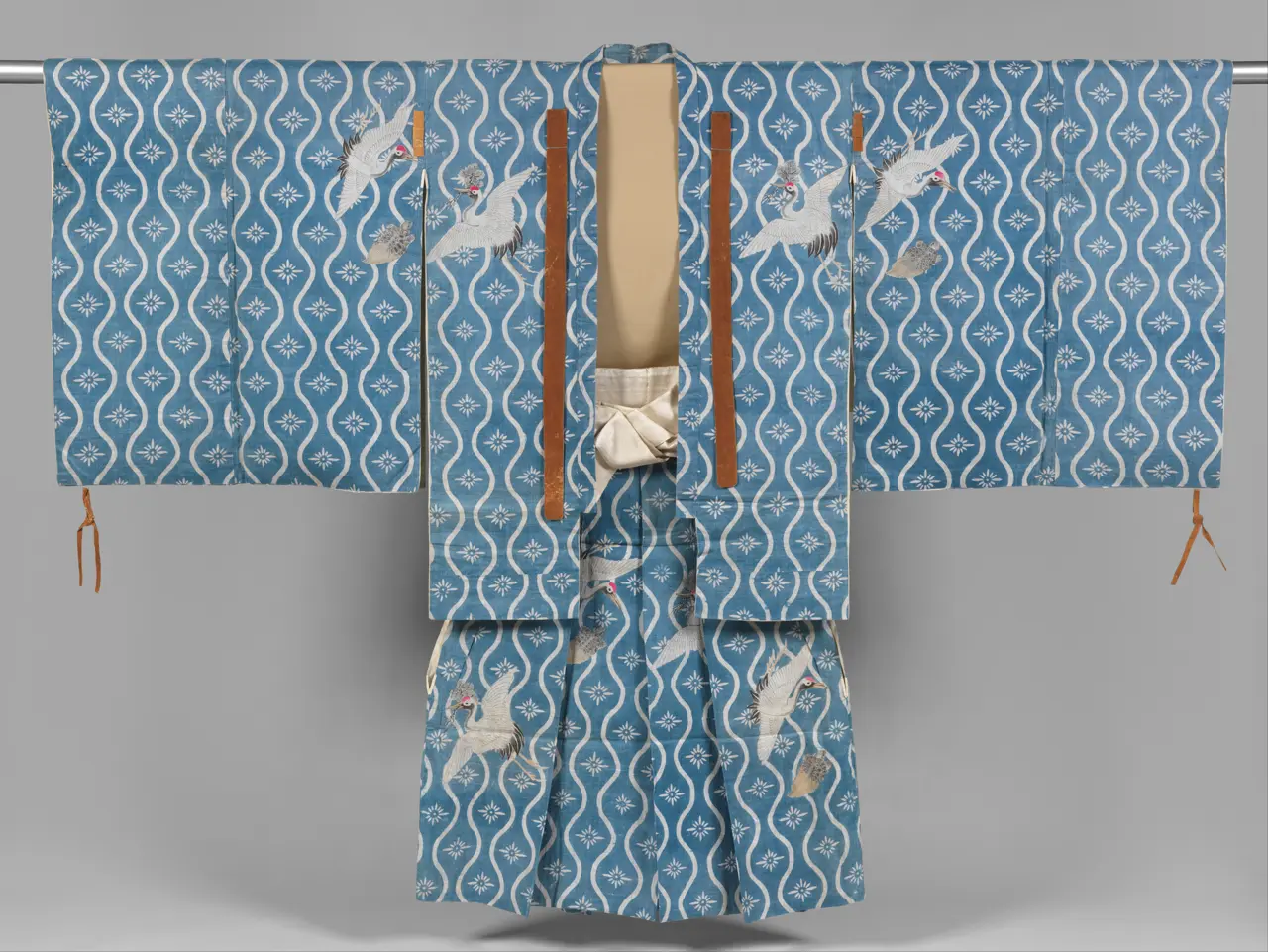
 The Robe of FeathersNoh and kyōgenA fisherman finds a fairy's robe on a pine by the shore, and will give it back only for a dance.
 The Death-StoneNoh and kyōgenA priest crossing a lonely moor finds a stone that kills whatever touches it, and the spirit inside it.
 Life Is a DreamNoh and kyōgenA young man seeking the meaning of life lies down on a magic pillow and lives fifty years in a dream.
Act 1
SCENE.—The Temple of Chiynuzañzhi, and my Lord Mitsunaka's palace in Kiyauto. TIME.—Early in the tenth century.
I am Nakamitsu, a man of the Fujihara clan, and retainer of Mitsunaka, Lord of Tada in the land of Setsushiu. Now you must know that my lord hath an only son, and him hath he sent to a certain monastery amid the mountains named Chiynuzañzhi, while I, too, have a son called Kauzhiyu, who is gone as page to young my lord. But young my lord doth not condescend to apply his mind unto study, loving rather nothing so well as to spend from morn to night in quarrelling and disturbance. Wherefore, thinking doubtless to disinherit young my lord, my lord already this many a time, hath sent his messengers to the temple with summons to return home to Kiyauto. Nevertheless as he cometh not, me hath he now sent on the same errand.
The above words are supposed to be spoken during the journey, and Nakamitsu now arrives at the monastery.
Prithee! is any within?
Who is it that deigneth to ask admittance?
What! is that Kauzhiyu? Tell young my lord that I have come to fetch him home.
Your commands shall be obeyed. [He goes to his youthful master's apartment.] How shall I dare to address my lord? Nakamitsu is come to fetch my lord.
Call him hither.
Your commands shall be obeyed. [He returns to the outer hall and addresses his father.] Condescend to come this way.
They go to Bijiyau's apartment.
It is long since I was last here.
And what is it that hath now brought thee?
'Tis that my lord your father hath sent me to bid your lordship follow me home without delay.
Shall I, then, go without saying anything to the priests my preceptors?
Yes; if the priests be told, they will surely wish to see your lordship on the way, whereas my lord your father's commands were, that I alone was to escort you.
Then we will away.
Kauzhiyu! thou, too, shalt accompany thy master.
Your commands shall be obeyed.
They depart from the temple, and arrive at Mitsunaka's palace.
How shall I dare to address my lord? I have brought hither his lordship Bijiyau.
Well, Bijiyau! my only reason for sending thee up to the monastery was to help thy learning; and I would fain begin, by hearing thee read aloud from the Scriptures.
And with these words, and bidding him read on, / He lays on ebon desk before his son / The sacred text in golden letters writ.
But how may he who never bent his wit / To make the pencil trace Asáka's line / Spell out one letter of the book divine? / In vain, in vain his sire's behest he hears: / Nought may he do but choke with idle tears.
Ah! surely 'tis that, being my child, he respecteth the Scriptures too deeply, and chooseth not to read them except for purposes of devotion. What of verse-making, then?
I cannot make any.
And music?
Bijiyau makes no answer.
What! no reply? Hast lost thy tongue, young fool?
Whom, then, to profit wentest thou to school? / And can it be that e'en a father's word, / Like snow that falling melts, is scarcely heard, / But 'tis unheeded? Ah! 'twill drive me wild / To point thee out to strangers as my child! / No sooner said, than out the scabbard flies / His trusty sword, and with fierce flashing eyes / Forward he darts; but, rushing in between, / Good Nakamitsu checks the bloody scene,— / Firm though respectful, stays his master's arm, / And saves the lad from perilous alarm.
Good my lord, deign to be merciful this once!
Why stayedst thou my hand? Haste thou now and slay Bijiyau with this my sword.
Your commands shall be obeyed. [He retires into another apartment.] What is this horror unutterable? 'Tis no mere passing fit of anger. What shall I do?—Ah! I have it! I have it! I will take upon myself to contrive some plan for his escape. Kauzhiyu, Kauzhiyu, art thou there?
Behold me at thy service.
Where is my lord Bijiyau?
All my prayers have been unavailing to make him leave this spot.
But why will he not seek refuge somewhere? Here am I come from my lord his father as a messenger of death!
Bijiyau shows himself.
That I am alive here at this moment is thy doing. But through the lattice I heard my father's words to thee just now.
Little imports it an' I die or live, / But 'tis for thee I cannot choose but grieve / If thou do vex thy lord: to avert his ire / Strike off my head, and show it to my sire!
My lord, deign to be calm! I will take upon myself to contrive some plan for your escape.—What! say you a messenger hath come? My heart sinks within me.—What! another messenger?
These are messengers from Mitsunaka to ask whether his orders be not yet carried into execution.
Alas! each joy, each grief we see unfurl'd / Rewards some action in a former world.
In ages past thou sinnedst;
And to-day
Comes retribution: think not then to say / 'Tis others' fault, nor foolishly upbraid / The lot thyself for thine own self hast made. / Say not the world's askew! with idle prate / Of never-ending grief the hour grows late. / Strike off my head! with many a tear he cries, / And might, in sooth, draw tears from any eyes.
Ah! young my lord, were I but of like age with thee, how readily would I not redeem thy life at the cost of mine own! Alas! that so easy a sacrifice should not be possible!
Father, I would make bold to speak a word unto thee.
What may it be?
'Tis, father, that the words thou hast just spoken have found a lodgement in mine ears. Thy charge, truly, is Mitsunaka; but Mitsunaka's son is mine. This, if any, is a great occasion, and my years point to me as of right the chief actor in it. Be quick! be quick! strike off my head, and show it to Mitsunaka as the head of my lord Bijiyau!
Thou'st spoken truly, Nakamitsu cries, / And the long sword from out his scabbard flies, / What time he strides behind his boy.
But no! / The youthful lord on such stupendous woe / May never gaze unmov'd; with bitter wail / The father's sleeve he clasps. Nought may't avail, / He weeping cries, e'en should the deed be done, / For I will slay myself if falls thy son.
But 'tis the rule,—a rule of good renown,— / That for his lord a warrior must lay down / His lesser life.
But e'en if lesser, yet / He, too, is human; neither shouldst forget / What shame will e'er be mine if I survive.
Alas! alas! and 'tis for death they strive!
Me deign to hear.
No! mine the truer word!
Ah! this my child!
And there behold thy lord!
Betwixt the two see Nakamitsu stand:
His own brave life, an' 'twere his lord's command, / Were freely giv'n; but now, in sore dismay, / E'en his fierce courage fades and droops away.
Why heed a life my sire himself holds cheap? / Nought may thy pity do but sink more deep / My soul in wretchedness.
Mistake me not! / Think not 'tis pity moves me; but a blot / The martial honour of our house will stain, / If, when I might have bled, my lord be slain.
On either side 'tis infancy that pleads.
And yet how well they've learnt where duty leads!
Dear is thy lord!
And mine own child how dear!
But Nakamitsu knows full well that ne'er, / To save the child his craven heart ador'd, / Warrior yet dar'd lay hands upon his lord. / He to the left, the trembling father cries, / Was sure my boy, nor lifts his tear-stain'd eyes: / A flash, a moment, the fell sabre gleams, / And sends his infant to the land of dreams.
Oh, horror unutterable! to think that I should have slain mine own innocent child! But I must go and inform my lord. [He goes to Mitsunaka's apartment.] How shall I dare to address my lord? I have slain my lord Bijiyau according to your commands.
So thou hast killed the fellow? I trow his last moments were those of a coward. Is it not true?
Not so, my lord. As I stood there aghast, holding in my hand the sword your lordship gave me, your son called out, "Why doth Nakamitsu thus delay?" and those were the last words he was pleased to utter.
As thou well knowest, Bijiyau was mine only child. Go and call thy son Kauzhiyu, and I will adopt him as mine heir.
Kauzhiyu, my lord, in despair at being separated from young my lord, hath cut off his locks, and vanished none knows whither.
I, too, thy gracious license would obtain / Hence to depart, and in some holy fane / To join the priesthood.
Harsh was my decree, / Yet can I think what thy heart's grief must be / That as its own my recreant child receiv'd, / And now of both its children is bereav'd. / But 'tis a rule of universal sway / That a retainer ever must obey.
Thus would his lord, with many a suasion fond, / Have rais'd poor Nakamitsu from despond. / Nor eke himself, with heart all stony hard, / Mote, as a father, ev'ry pang discard: / Behold him now, oh! lamentable sight! / O'er his own son perform the fun'ral rite.
Act 2
Some time is supposed to have elapsed, and Weshiñ, abbot of the monastery on Mount Hiyei, comes down from that retreat to Mitsunaka's palace in the capital, bringing with him Bijiyau, who had been persuaded by Nakamitsu to take refuge with the holy man.
I am the priest Weshiñ, and am hastening on my way to my lord Mitsunaka's palace, whither certain motives guide me. [They arrive at the gate, and he cries out:] I would fain crave admittance.
Who is it that asks to be admitted? Ah! 'tis his reverence Weshiñ.
Alas for poor Kauzhiyu!
Yes; but prithee speak not of this before his lordship.
I understand. Pray tell my lord that I am come.
Wait here, I pray thee, while I go and inform his lordship. [He goes to Mitsunaka's apartment.] How shall I venture to address my lord? His reverence Weshiñ hath arrived from Mount Hiyei.
Call him hither.
Your commands shall be obeyed. [He goes to the room where Weshiñ is waiting, and says:] Be pleased to pass this way.
They enter Mitsunaka's apartment.
What may it be that has brought your reverence here to-day?
'Tis this, and this only. I come desiring to speak to your lordship anent my lord Bijiyau.
Respecting him I gave orders to Nakamitsu, which orders have been carried out.
Ah! my lord, 'tis that, 'tis that I would discourse of. Be not agitated, but graciously deign to give me thine attention while I speak. Thou didst indeed command that my lord Bijiyau's head should be struck off. But never might Nakamitsu prevail upon himself to lay hands on one to whom, as his lord, he knew himself bound in reverence through all the changing scenes of the Three Worlds. Wherefore he slew his own son, Kauzhiyu, to save my lord Bijiyau's life. And now here I come bringing Bijiyau with me, and would humbly supplicate thee to forgive one who was so loved that a man hath given his own son in exchange for him.
Then he was a coward, as I thought! Wherefore, if Kauzhiyu was sacrificed, did he, too, not slay himself?
My lord, put all other thoughts aside, and, if it be only as an act of piety towards Kauzhiyu's soul,—Curse not thy son!
As thus the good man speaks, / Tears of entreaty pour adown his cheeks. / The father hears, and e'en his ruthless breast, / Soft'ning at last, admits the fond request, / While Nakamitsu, crowning their delight, / The flow'ry wine brings forth, and cups that might / Have serv'd the fays: but who would choose to set / Their fav'rite's bliss that, home returning, met / His grandsons' grandsons' still remoter line, / Beside the joy that doth itself entwine / Round the fond hearts of father and of son, / Parted and now in the same life made one?
Prithee, Nakamitsu, wilt thou not dance and sing to us a while in honour of this halcyon hour?
During the following song Nakamitsu dances.
Water-bird, left all alone / Now thy little mate hath flown, / On the billows to and fro / Flutter, flutter, full of woe!
Full of woe, so full of woe, / Flutter, flutter, full of woe!
Ah! if my darling were but here to-day / I'd make the two together dance and play / While I beat time, and, gazing on my boy, / Instead of tears of grief, shed tears of joy!
Behold him weep!
But the gay throng perceive / Nought but the rhythmic waving of my sleeve,
Hither and thither flutt'ring in the wind,
Above, beneath, with many a dewdrop lin'd!
Ah, dewy tears! in this our world of woe / If any stay, the friends he loves must go: / Thus 'tis ordain'd, and he that smiles to-day / To-morrow owns blank desolation's sway. / But now 'tis time to part, the good priest cries. / Him his disciple follows, and they rise; / While Nakamitsu, walking in their train, / The palanquin escorts; for he would fain / Last counsel give: "Beware, young lord, beware! / Nor cease from toilsome study; for if e'er / Thy sire again be anger'd, all is lost!" / Then takes his leave, low bending to the dust. / Forward they're borne; but Nakamitsu stays, / Watching and watching with heart-broken gaze, / And, mutely weeping, thinks how ne'er again / He'll see his child borne homeward o'er the plain.